
You're sourcing a new humidifier and the supplier sends a list of certifications. You feel relieved, but what if those papers are worthless in your target market, leaving you with unsellable inventory?
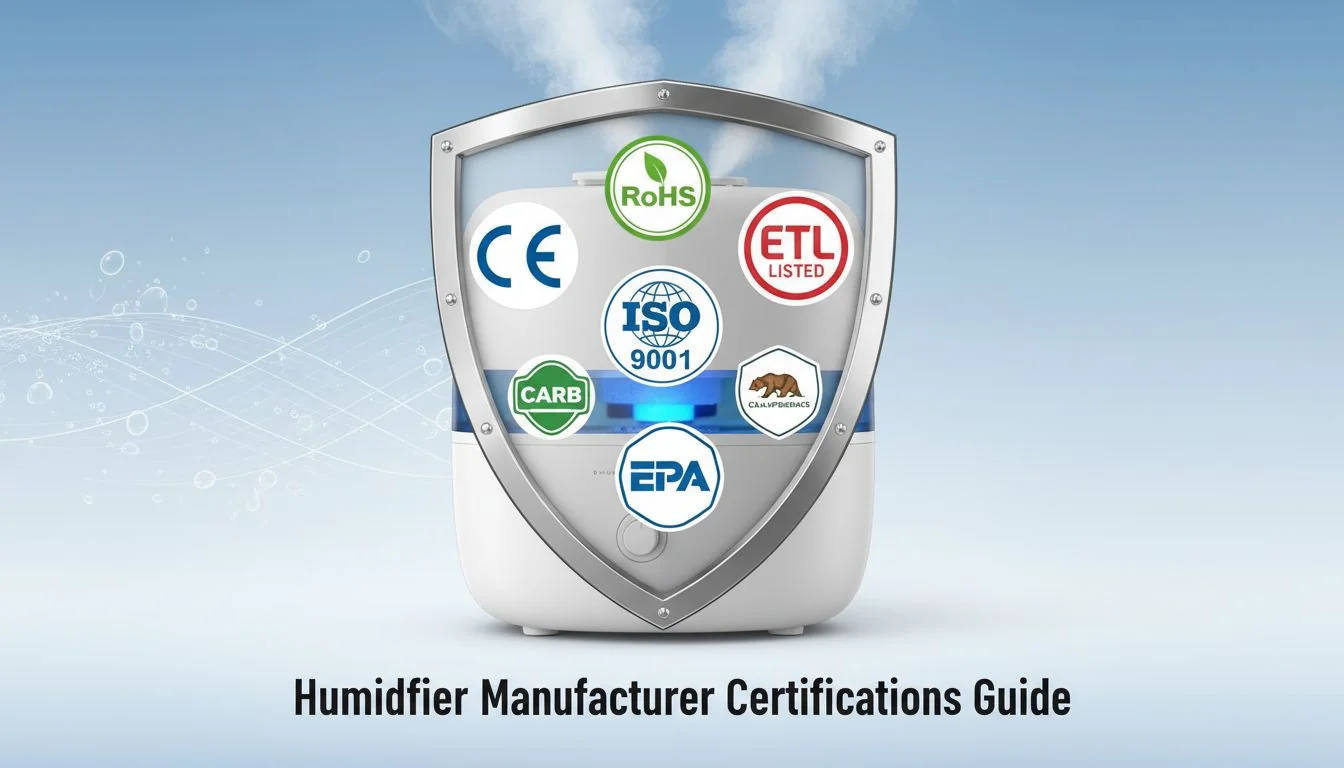
CE and RoHS are vital for EU market access, ensuring a product meets safety and hazardous substance rules. ISO 90011 certifies the factory's quality management process. These are important baseline indicators, but they don't guarantee quality or access to every market, especially the United States.
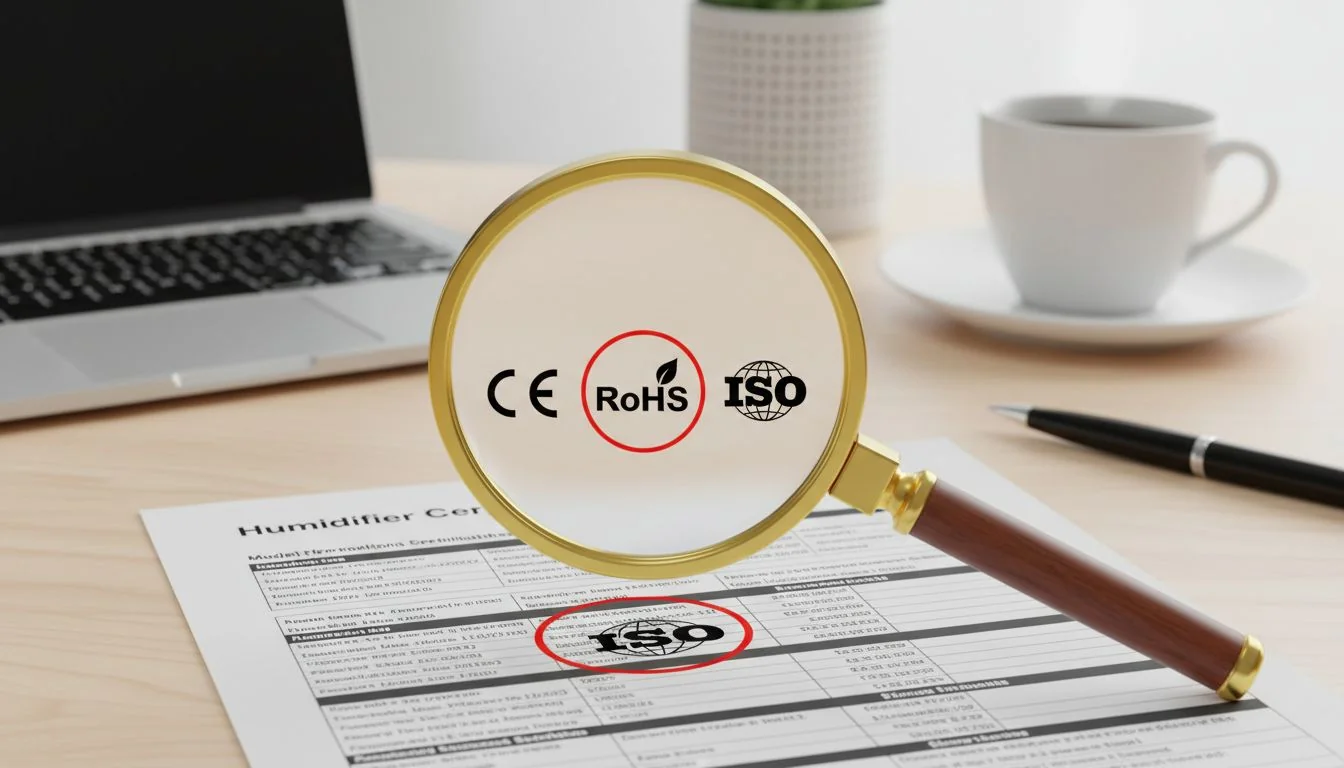
I've seen so many brands get excited when a factory says, "Yes, we are certified." It feels like a stamp of approval. But here's a secret most suppliers won't tell you: the type of certification is everything. Relying on the wrong ones is one of the biggest and most expensive mistakes you can make. It's a trap that can sink your entire product launch before it even starts. Let's break down what these acronyms really mean for your business and how to spot the difference between a real asset and a dangerous liability.
CE marking is a third-party quality certification recognized worldwide.Falso
CE is a self-declaration by the manufacturer that the product meets EU standards. It is not a third-party quality mark and is not recognized in markets like the US.
ISO 9001 certifies the quality of a specific product.Falso
ISO 9001 certifies a company's quality management system (its processes), not a specific product. A factory can be ISO 9001 certified and still produce a low-quality product if the specifications are poor.
Why are "Boring" Certifications Your Brand's #1 Shield, and What are CE & RoHS?
Ignoring certifications feels like a fast way to get to market. But a single compliance issue can get your shipment seized by customs, destroying your launch, your budget, and your brand's reputation.
CE (Conformité Européenne) marking shows a product meets EU safety, health, and environmental rules. RoHS (Restriction of Hazardous Substances) limits specific hazardous materials in electronics. Together, they are your product's essential "passport" to enter and sell legally within the European Union.
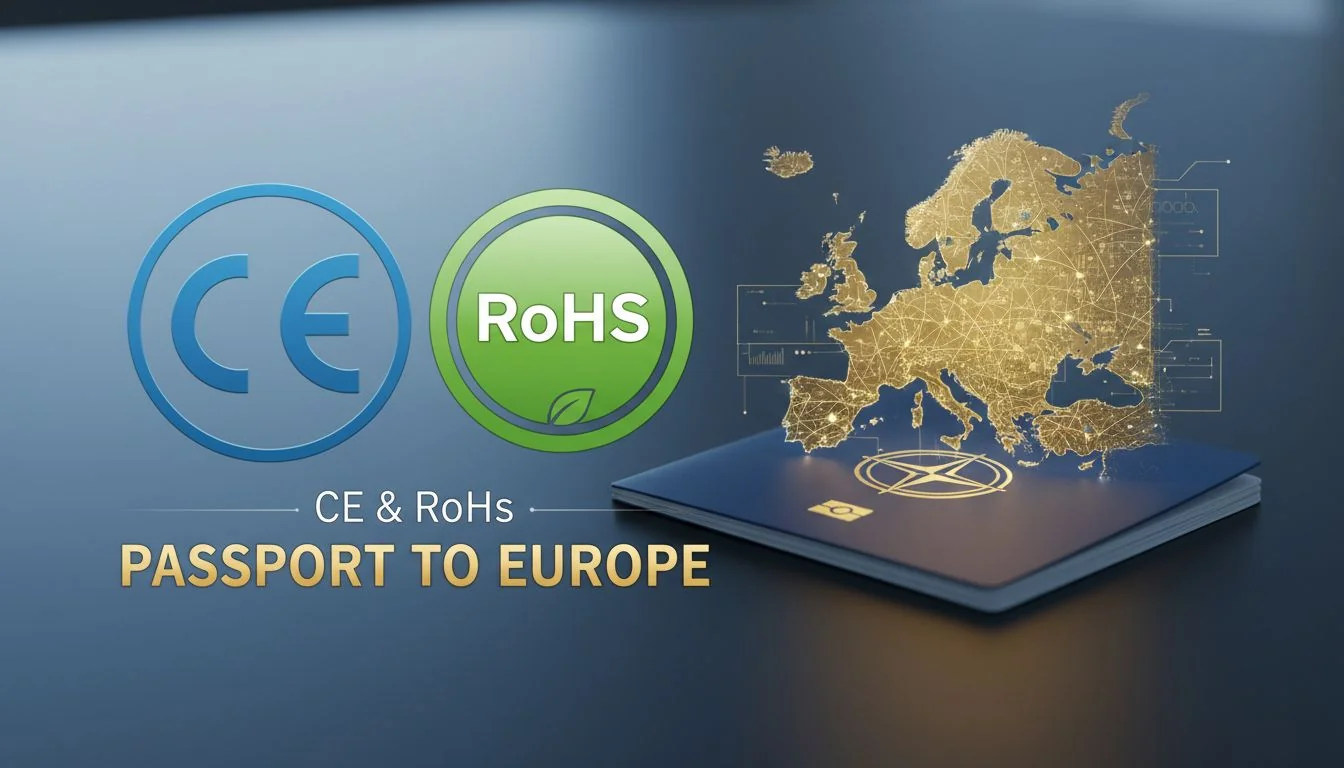
Think of these two as the absolute baseline. If you plan to sell in Europe, they are not optional. I remember a client years ago who found a cheap supplier for an electronic gadget. The supplier promised everything was fine, but they had no RoHS documentation. The first shipment was stopped in Germany and eventually sent back, a total loss of over $50,000. It was a brutal lesson in the power of these "boring" documents.
CE: The "Right to Sell" in Europe
CE marking2 is a manufacturer's declaration that their product complies with the EU's New Approach Directives. It's not a quality mark. It simply means the manufacturer claims it meets the minimum legal requirements for health and safety. For some products, this can be a self-declaration, while for others, it requires assessment by a Notified Body. For a humidifier, it's your ticket into the EU.
RoHS: The "Safe Materials" Promise
RoHS is more specific. It restricts the use of ten hazardous materials, like lead, mercury, and cadmium, in electrical and electronic equipment. This is about consumer safety and environmental protection. It ensures your product isn't slowly poisoning your customer or the planet.
| Certificação | What It Covers | Geographic Scope | Key Takeaway |
|---|---|---|---|
| CE | Health, Safety, Environmental Protection | European Union (EU) | A self-declared "passport" for the EU market. |
| RoHS | Restriction of Hazardous Substances | European Union (EU) | Ensures the materials in your product are safe. |
A product with a CE mark can be legally sold in the United States.Falso
The US does not recognize CE marking. Products sold in the US must comply with US-specific standards and often require certification from a Nationally Recognized Testing Laboratory (NRTL).
RoHS compliance is primarily focused on the electrical safety of a product.Verdadeiro
RoHS is focused on the material composition of the product, restricting specific hazardous substances to protect human health and the environment.
What is the Factory "Process" Standard, ISO 9001?
You found a factory with CE and RoHS, so they can sell in the EU. But how do you know they can produce your 10,000th unit with the same quality as the first sample?
ISO 9001 is not a product certification; it's a process certification. It verifies that a manufacturer has a documented and audited Quality Management System3 (QMS). This means they have reliable procedures for production, problem-solving, and continuous improvement, ensuring consistency and accountability.
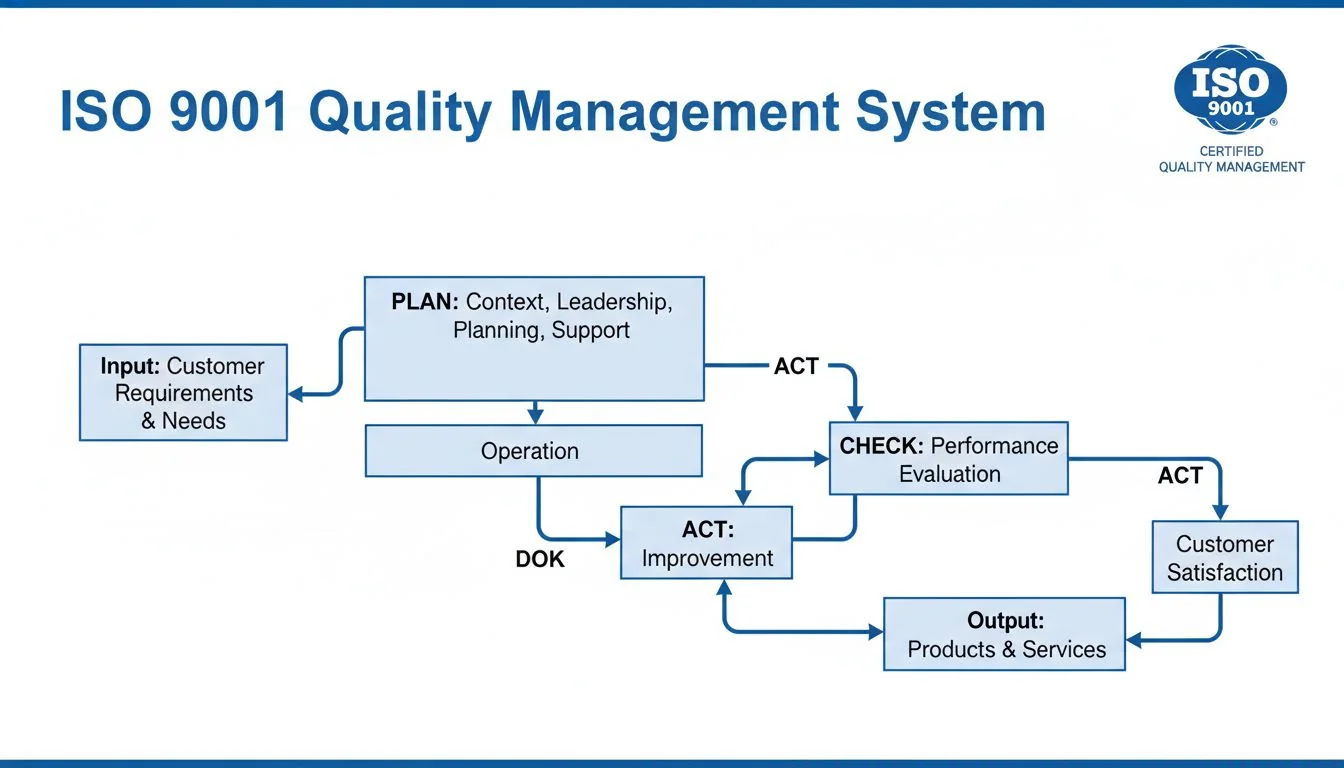
This is what separates the professional factories from the small workshops. An ISO 9001 certificate tells me that if something goes wrong—and in manufacturing, something always goes wrong—the factory has a structured system to identify the root cause, fix it, and prevent it from happening again. Without it, you're relying on luck and promises. I always feel more confident when I see that ISO 9001 certificate. It means the factory is serious about its operations. It's the difference between a partner who says "we'll look into it" and one who provides a formal Corrective Action Report.
What a Quality Management System (QMS) Really Means
An effective QMS, as defined by ISO 9001, includes:
- Customer Focus: A process for understanding and meeting customer requirements.
- Leadership: Top management is committed to quality.
- Process Approach: Managing activities as interrelated processes.
- Improvement: A permanent objective to continuously improve.
- Evidence-based Decision Making: Decisions are based on data and analysis.
This is the "Better" on our "Good, Better, Best" ladder. It doesn't guarantee a perfect product, but it guarantees a professional process for aiming for one.
ISO 9001 is a mandatory certification for all manufacturing companies.Falso
ISO 9001 is a voluntary standard. While many companies choose to become certified to demonstrate their commitment to quality, it is not a legal requirement for manufacturing.
An ISO 9001 certified factory is more likely to handle production issues systematically.Verdadeiro
The core of ISO 9001 is establishing a Quality Management System, which includes procedures for identifying, documenting, and resolving non-conformities and implementing corrective actions.
The "Great Trap": Why Are CE & RoHS Worthless in the US Market?
Your supplier proudly shows you their CE certificate. They tell you, "Don't worry, we are certified, good for USA market." You feel confident and place a huge order. This is a huge mistake.
The "Great Trap" is the false belief that CE and RoHS certifications are valid or sufficient for the United States. The US has its own separate safety and compliance standards, and CE marking is not recognized by US customs, retailers, or regulatory bodies like OSHA.
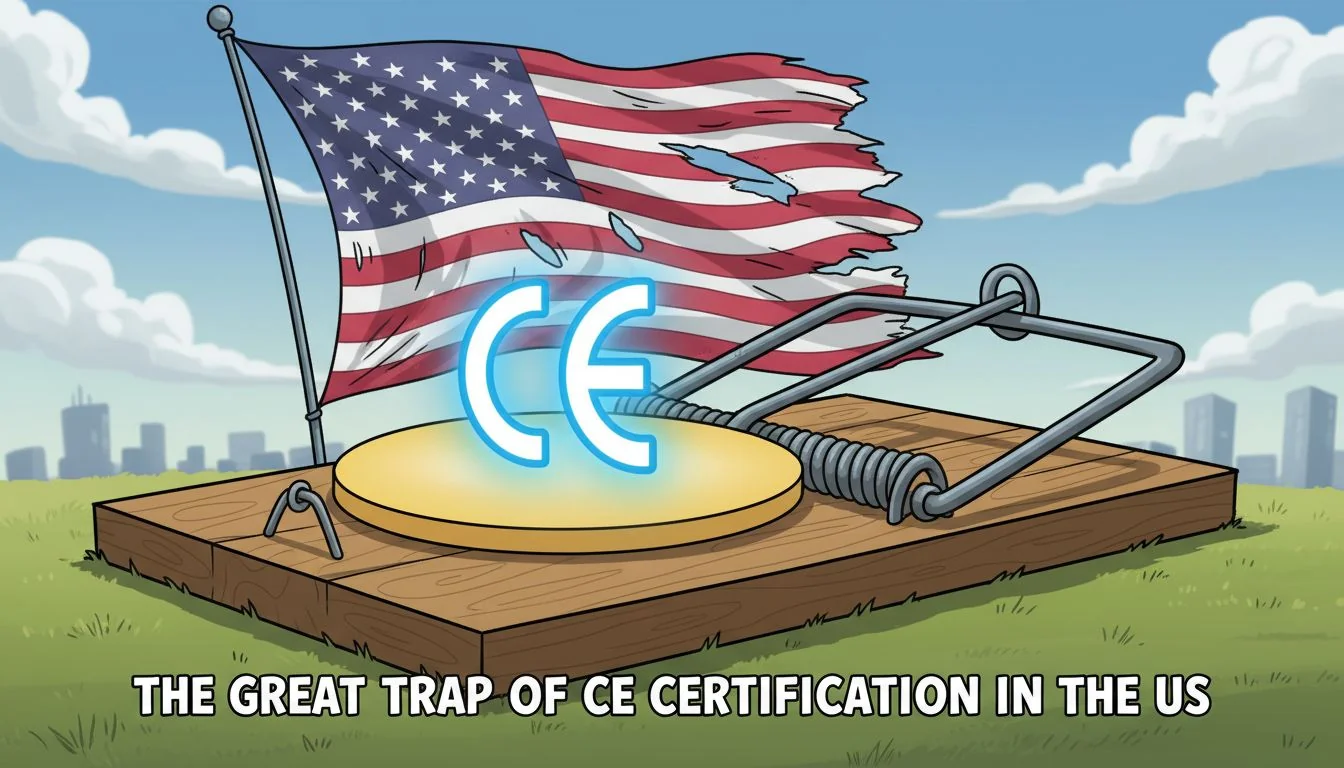
This is the most important section of this article. I have seen brands lose their entire investment because of this misunderstanding. A supplier, either through ignorance or a desire to make a sale, will tell you that CE is an international standard. It is not. The moment your container lands in a US port, you, the importer, are 100% liable for ensuring the product meets US regulations. If it doesn't have the right US-specific certifications4, you could face seized goods, forced recalls, or even lawsuits. Amazon FBA is particularly strict about this; they will not allow you to list many electronic products without proof of US compliance from a Nationally Recognized Testing Laboratory (NRTL). Your supplier's CE mark means nothing to them. Don't fall for it.
EU Self-Declaration vs. US Third-Party Testing
- CE (Europe): Often a self-declaration. The manufacturer tests the product themselves and declares it compliant.
- NRTL Mark (USA): Requires testing by a third-party Nationally Recognized Testing Laboratory5, like ETL or UL. This independent verification is what US authorities and retailers trust.
Relying on a CE mark for US sales is like trying to use a library card as a driver's license. They are both forms of ID, but one is completely invalid in the wrong context.
A supplier telling you 'CE is fine for the USA' is giving you reliable advice.Falso
This is incorrect and dangerous advice. The importer of record is solely responsible for compliance with US regulations, and CE is not a recognized standard in the United States.
Products sold on Amazon in the US may require certification from a Nationally Recognized Testing Laboratory (NRTL).Verdadeiro
Amazon's policies for many product categories, especially electronics, require sellers to provide proof of compliance with US standards, which typically involves testing and certification by an NRTL like UL, ETL, or TÜV.
You've wisely avoided the CE trap. Now, how do you identify a supplier who is truly ready to help you conquer the lucrative but complex US market? You need to look for the premium tier of certifications.
For the US market, ETL or UL certification is the non-negotiable standard for electrical safety. CARB compliance6 is vital for selling in California, and EPA registration is a powerful differentiator for any product making health or antimicrobial claims, like a hygienic humidifier.
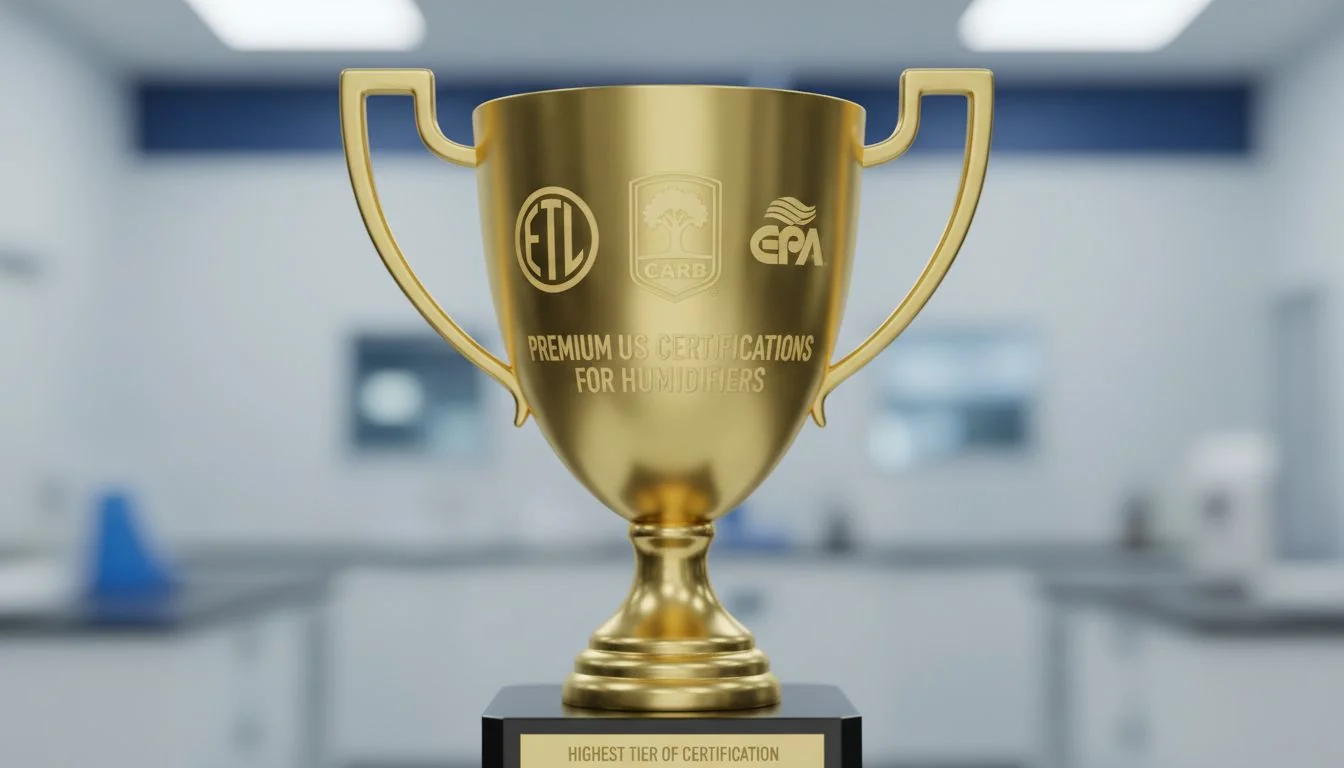
These are the certifications that show a manufacturer has invested serious time and money to access the US market. They haven't just done the bare minimum; they've prepared for the toughest standards. This is the "Best" on our ladder and the true sign of a premium partner.
The US-Ready Checklist
- ETL (or UL): This is the real "passport" for the US. The ETL Listed Mark from Intertek (or the UL Mark from Underwriters Laboratories) proves a product has been independently tested by an NRTL and meets US safety standards. For any electronic device, this is mandatory.
- CARB: The California Air Resources Board sets some of the strictest air quality regulations in the world. For a humidifier, this often relates to ozone emissions. If you want to sell in California—the 5th largest economy in the world—you need CARB compliance.
- EPA: Your Ace Card. This is what separates the average supplier from the elite. The Environmental Protection Agency regulates products that claim to kill germs or prevent bacteria. Most plastic humidifiers can't get this. But a product designed for hygiene, like a stainless steel humidifier, can pursue EPA registration7 for its antimicrobial properties. This is a massive competitive advantage, allowing you to make marketing claims your competitors can't.
| Certificação | What It Covers | Geographic Scope | Key Takeaway |
|---|---|---|---|
| ETL / UL | Electrical Product Safety | USA & Canada | The mandatory "safety passport" for North America. |
| CARB | Air Pollutant Emissions | California, USA | Essential for selling in the massive California market. |
| EPA | Antimicrobial/Pesticidal Claims | EUA | A premium certification for making health-related claims. |
CARB compliance is only necessary if your company is based in California.Falso
CARB compliance is required for products sold within the state of California, regardless of where the selling company is based. Given California's market size, it's crucial for any brand selling nationwide.
EPA registration allows a humidifier to be marketed with claims of preventing mold or bacteria.Verdadeiro
Under FIFRA, any product that claims to kill or repel pests, including microorganisms like mold and bacteria, is considered a pesticide and must be registered with the EPA before it can be legally sold with such claims.
How to Stop Asking "Do You Have CE?" and Start Asking "Are You US-Ready?"
You're tired of confusing conversations with suppliers. Asking the wrong questions wastes your time and, worse, leads you to the wrong partners, putting your entire business at risk.
Shift your focus from generic compliance to strategic market access. Instead of asking "Do you have certifications?", ask "What US-specific certifications like ETL, CARB, or EPA do you have for this product?". This single question immediately qualifies or disqualifies a potential partner.
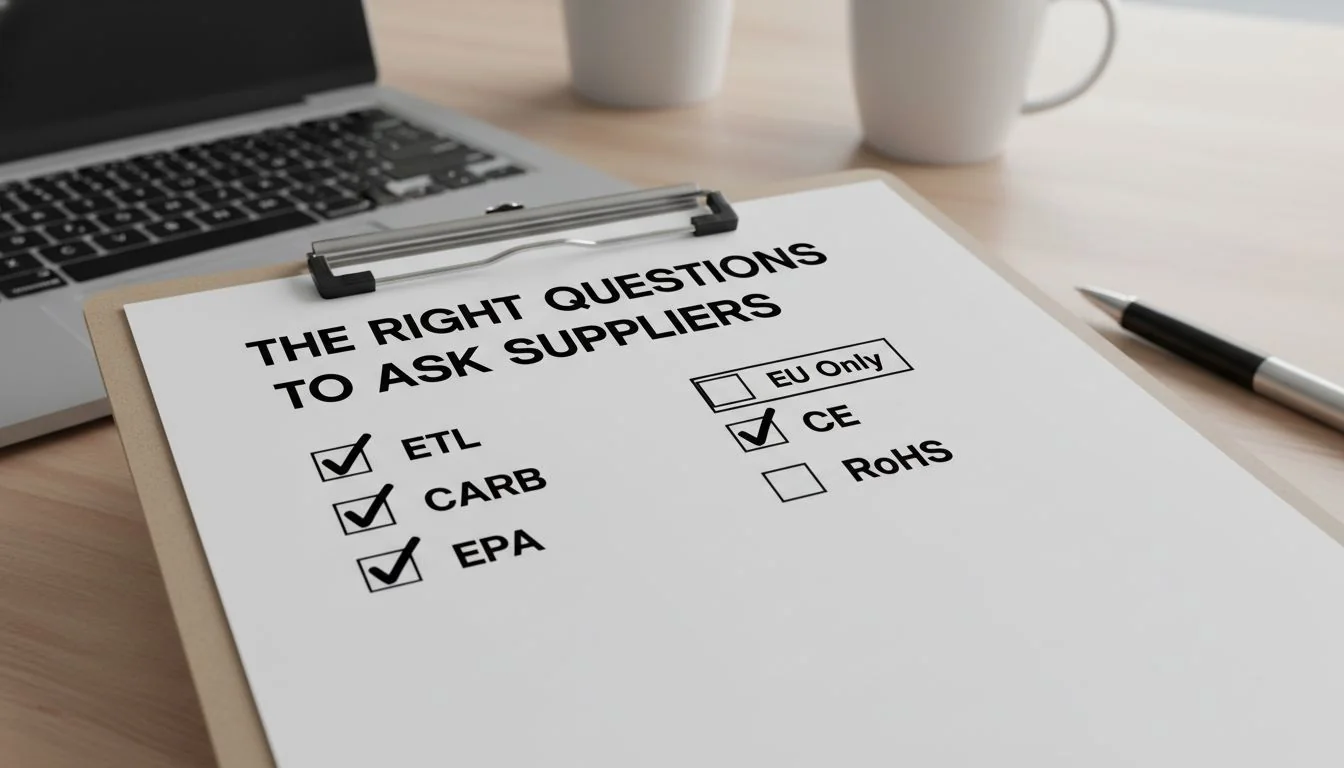
By asking the right question, you change the entire dynamic. You are no longer a novice asking for basic assurances; you are a serious buyer vetting a partner for a specific, high-value market. This shows you've done your homework and can't be fooled by the "CE trap." The answer will tell you everything you need to know about their experience, investment, and suitability for your brand.
The Certification Ladder: Your Path to a Global Partner
Let's put it all together. Think of it as a ladder to finding the perfect manufacturing partner:
- Good (EU-Ready): The factory has CE & RoHS. They can serve the European market. This is the baseline.
- Better (Process-Ready): They also have ISO 9001. This shows they are a professional organization with a mature quality system.
- Best (US-Ready Premium Partner): They have the full suite: ETL, CARB, and even EPA registration. This is a "total solution" partner. They have de-risked your entry into the world's most valuable markets and can support a premium, health-focused brand strategy.
Finding a factory that has already climbed this entire ladder is rare. It shows they are a serious global player, not just a low-cost supplier. They are an enabler for your brand's global ambitions.
A manufacturer with CE, RoHS, ISO 9001, ETL, CARB, and EPA is over-certified.Falso
This manufacturer is not over-certified; they are globally-ready. They have the necessary certifications to legally and safely sell products in both the EU and the demanding US market, making them a strategic partner.
Asking about US-specific certifications early in the vetting process saves time and money.Verdadeiro
This question quickly filters out suppliers who are not equipped to serve the US market, preventing you from wasting resources on a partnership that is doomed from the start due to compliance issues.
Conclusão
Choosing a manufacturer is about de-risking your business. By understanding this certification hierarchy, you can find a true partner, not just a supplier, and build a resilient global brand.
References
-
ISO 9001 certification demonstrates a commitment to quality management processes, enhancing product reliability. ↩
-
CE marking indicates compliance with EU safety standards, essential for market entry in Europe. ↩
-
Understanding QMS is crucial for ensuring consistent product quality and reliability in manufacturing. ↩
-
Knowing US-specific certifications helps avoid costly compliance issues and ensures market access. ↩
-
NRTL certification is crucial for ensuring products meet US safety standards, especially for electronics. ↩
-
CARB compliance is vital for selling products in California, ensuring they meet strict air quality regulations. ↩
-
EPA registration is crucial for products making health claims, providing a competitive edge in the market. ↩



 English
  Français
  Español
  Italiano
  Deutsch
  Português
  Русский
  العربية
  日本語
日本語  한국어
한국어  Tiếng Việt

