
Designing water filter housings is hard. You face strict buyer demands for PFAS and lead removal, but picking the wrong internal tech ruins your product. Let us fix this.
To match filter technology to buyer needs, you must work backward from a water test report1. Use activated carbon for chlorine taste, reverse osmosis for heavy metals like lead, and specialized ion exchange for PFAS. Match the internal technology to specific procurement claims and certification evidence.
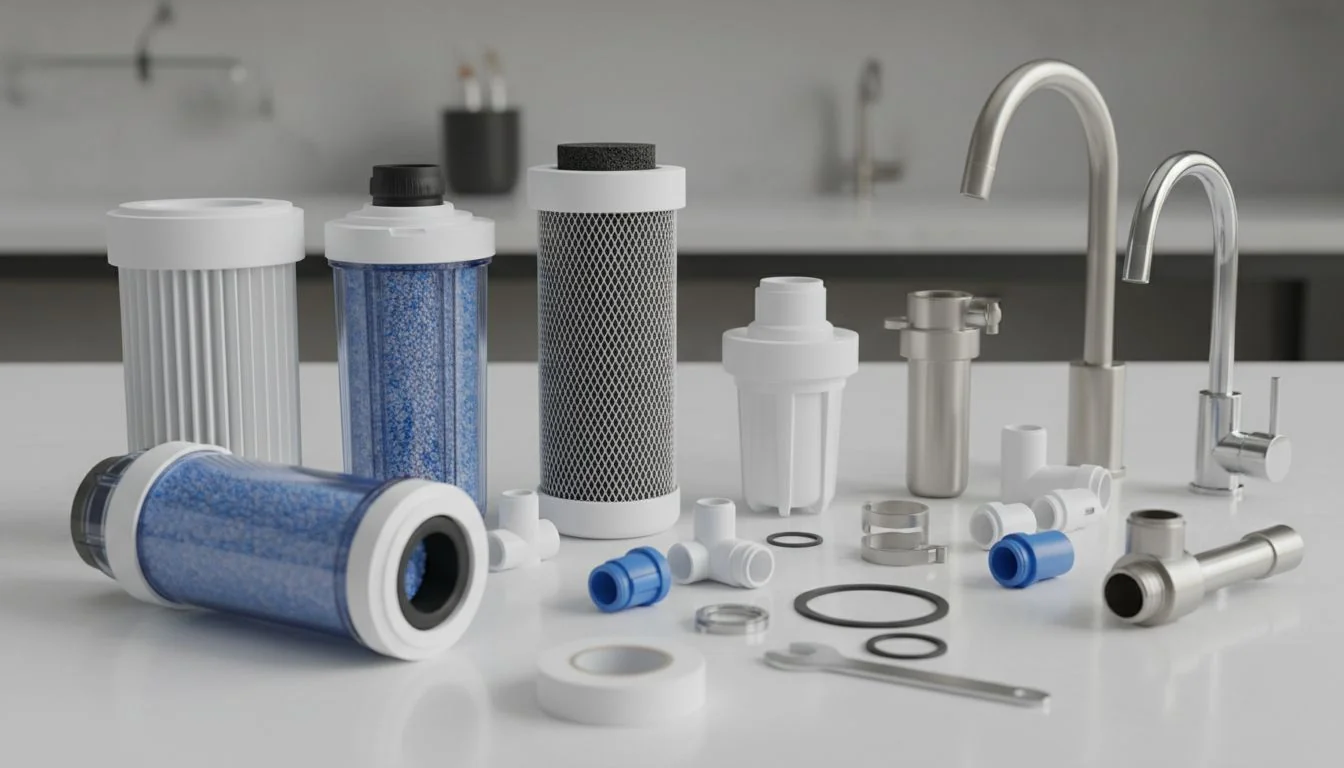
I remember my early days in the mold factory. A client asked me to build a single plastic housing for a "magic" filter that claimed to do everything. The project failed because the internal filter clogged in days. That taught me a big lesson. You cannot just design a box; you must understand the tecnologia de filtragem2 inside. If you want to design products that facility managers actually buy, you need to know how to match filter claims to the right technology. Let us look at how to do this right.
A single filter type can easily remove all water contaminants.Falso
Different contaminants require specific filtration technologies, making a single filter ineffective for all targets.
Facility managers use water test reports to select filtration systems.Verdadeiro
Water test reports provide the baseline data needed to match specific contaminants with the correct filtration technology.
Why “One Filter Fits All” Rarely Works?
Buyers often want one cheap filter for everything. This creates impossible design constraints. You end up with a product that fails certification. Here is why that happens.
A "one filter fits all" approach rarely works because different contaminants have different physical and chemical properties. Chlorine is a gas, lead is a heavy metal, and PFAS are complex chemicals. Each requires a unique filtration method to meet strict procurement claims and certification standards.
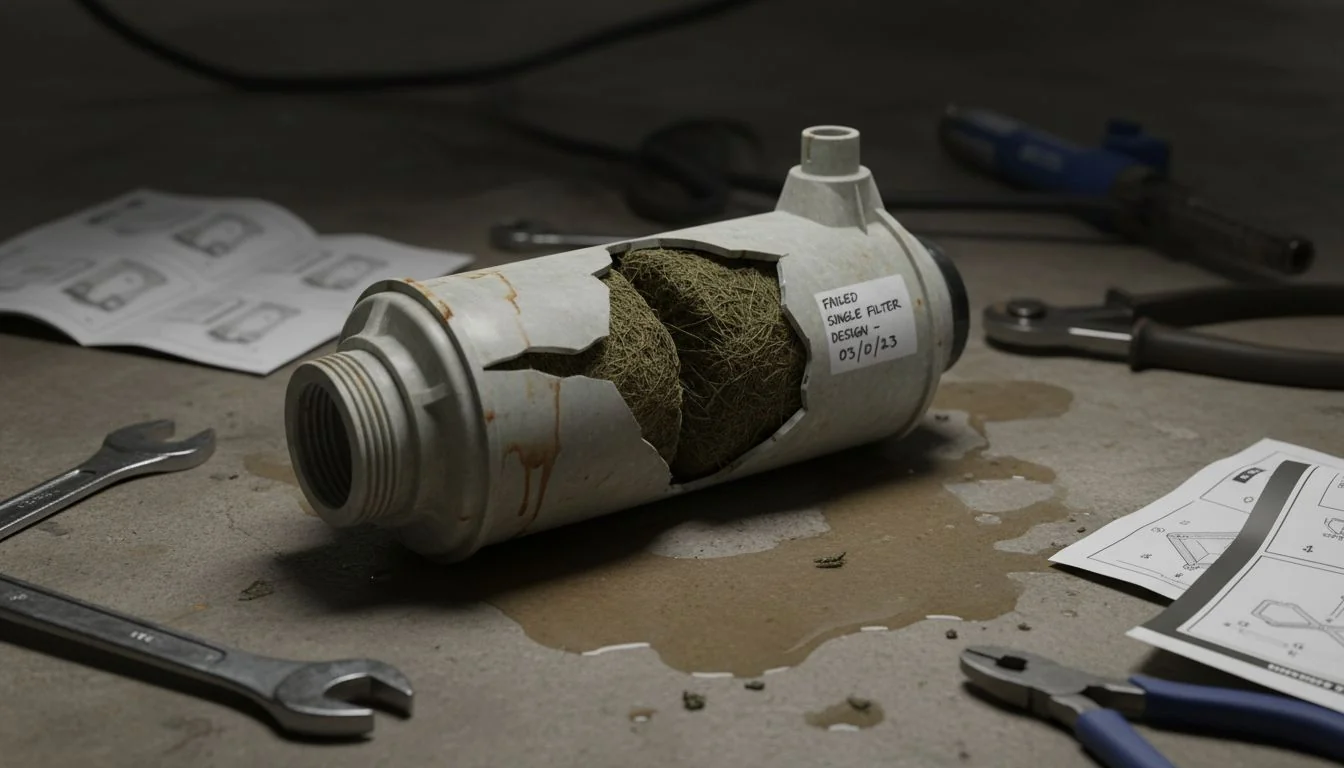
The Myth of the Universal Filter
When I started my CNC trading company, clients often asked for simple, single-stage mold designs. They wanted to cut costs. But water chemistry does not care about your budget. If you design a product for a facility manager, they will look at the certification evidence3. They do not want a magic box. They want proof.
You must break down the problem. Contaminants fall into different categories. You cannot use a simple mechanical screen to catch dissolved chemicals. If you try to pack carbon, resin, and membranes into one small plastic cartridge, the water flow drops. The filter life becomes too short. You will face angry customers and rejected products.
Here is how different targets require different approaches:
| Contaminant Target | Physical State | Required Action |
|---|---|---|
| Dirt and Rust | Solid particles | Mechanical trapping |
| Chlorine Taste | Dissolved gas | Chemical adsorption |
| Lead | Dissolved metal | ion exchange4 or RO |
| PFAS | Complex chemical | Specialized adsorption |
As a product designer, you must plan for multiple stages. You need to design manifolds and housings that can hold different filter types. This is the only way to meet specific procurement targets.
Packing multiple filter media into one small cartridge improves water flow.Falso
Combining too many media types in a small space restricts water flow and reduces filter lifespan.
Chlorine and lead require different filtration actions.Verdadeiro
Chlorine requires chemical adsorption, while lead requires ion exchange or reverse osmosis.
What Do Common Water Quality Concerns Require?
Facility managers hand you complex water test reports. If you do not know how to read them, your product design will fail their needs. Let us decode these concerns.
Common water quality concerns require specific, tested claims. Chlorine taste and odor require carbon adsorption. Lead requires certified reduction through reverse osmosis5 or specific binders. PFAS requires advanced ion exchange or specialized carbon. You must match the concern directly to the tested technology.
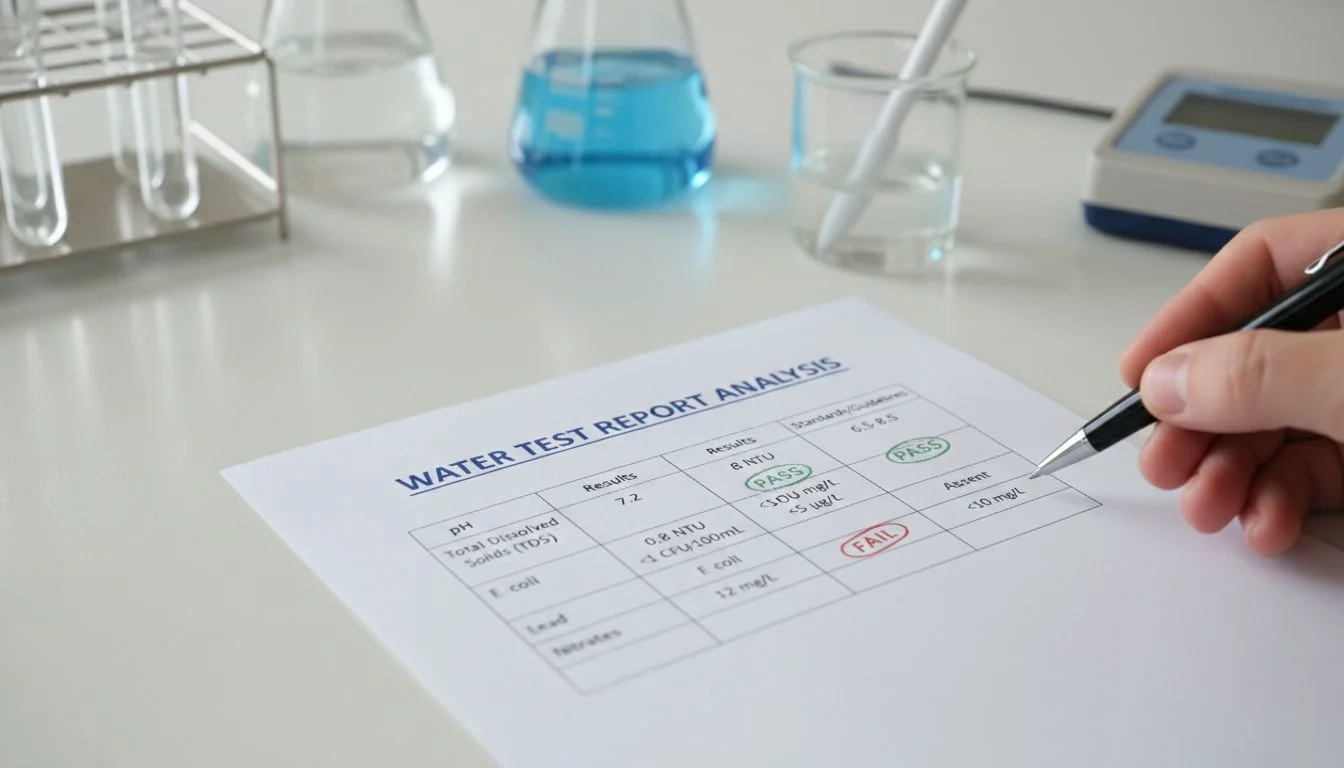
Decoding Procurement Targets
I once helped a client design a multi-stage water purifier for a commercial building. The facility manager gave us a detailed water test report. We had to work backward from that report to select the right technologies. This is how you win contracts. You do not sell health claims. You sell certified performance.
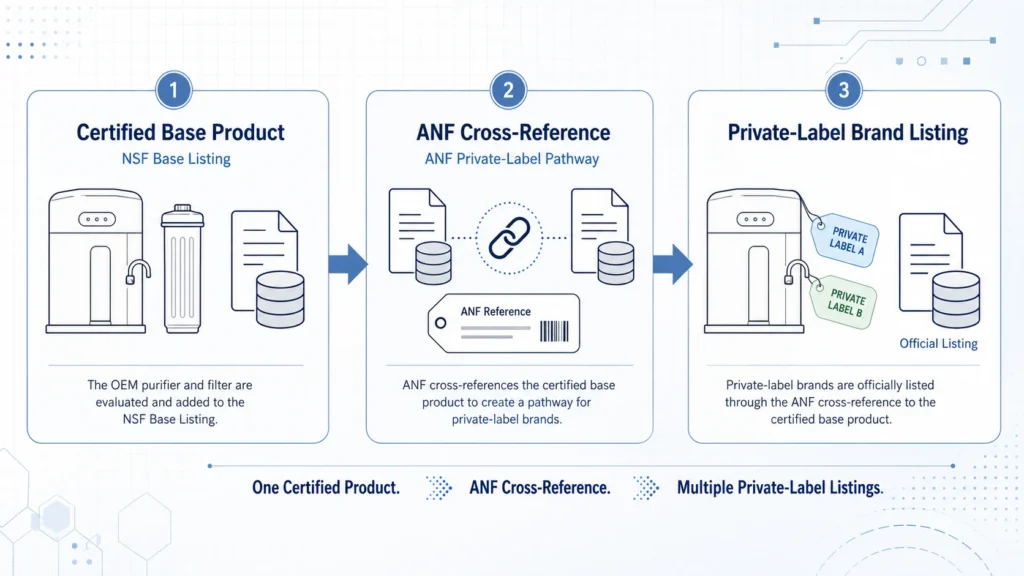
When a buyer looks at your product, they check the claims. They want to see NSF or WQA certifications. You must design your plastic housings to fit the specific filters that hold these certifications. You cannot fake this part of the process.
Let us look at the common concerns and their requirements:
| Water Concern | Procurement Target | Required Evidence |
|---|---|---|
| Chlorine Odor | Aesthetic improvement | Taste and odor reduction claims |
| Lead | Heavy metal reduction | Certified lead reduction data |
| PFAS | Chemical removal | Specific PFAS reduction testing |
| Sediment | Clarity improvement | Micron rating certification |
You must understand these targets. If the buyer needs PFAS removal, your mold design must accommodate the larger filter volume required for that specific media. You cannot just guess the size. You must design for the required technology.
Facility managers buy water filters based on health claims rather than certified performance.Falso
Commercial buyers rely on certified performance data and tested claims, not vague health promises.
PFAS removal often requires a larger filter volume.Verdadeiro
Specialized media for PFAS removal typically needs more contact time, requiring larger filter housings.
How Do Carbon, RO, and Other Filter Technologies Work?
Choosing the wrong filter media wastes money. Your clients will complain about poor performance. You need to know exactly how each technology works to design the right product.
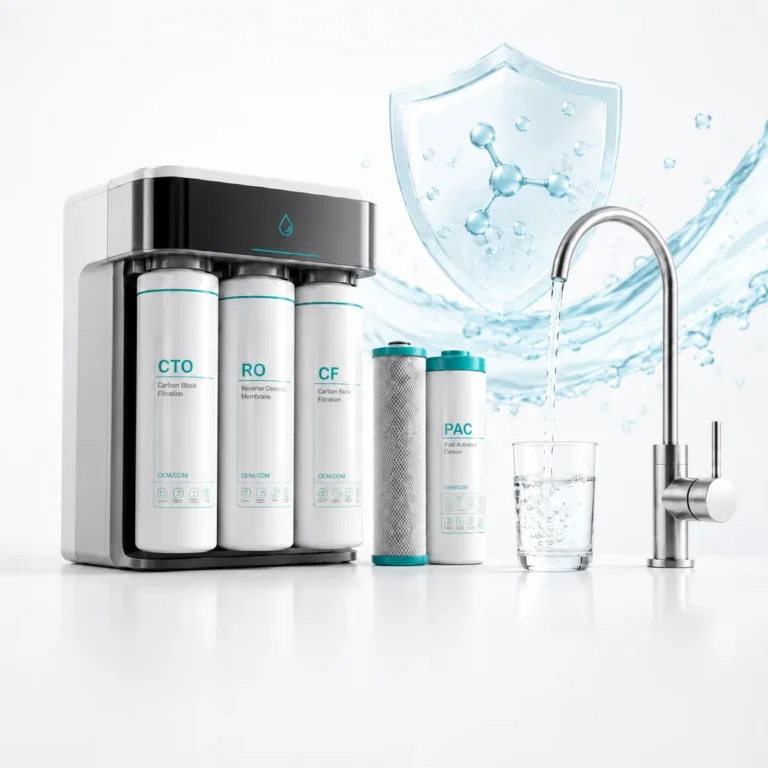
activated carbon6 works by adsorbing chemicals like chlorine to improve taste and odor. Reverse Osmosis pushes water through a semi-permeable membrane to remove dissolved solids like lead. Ion exchange uses resins to swap harmless ions for specific targets like PFAS. Each technology serves a distinct purpose.
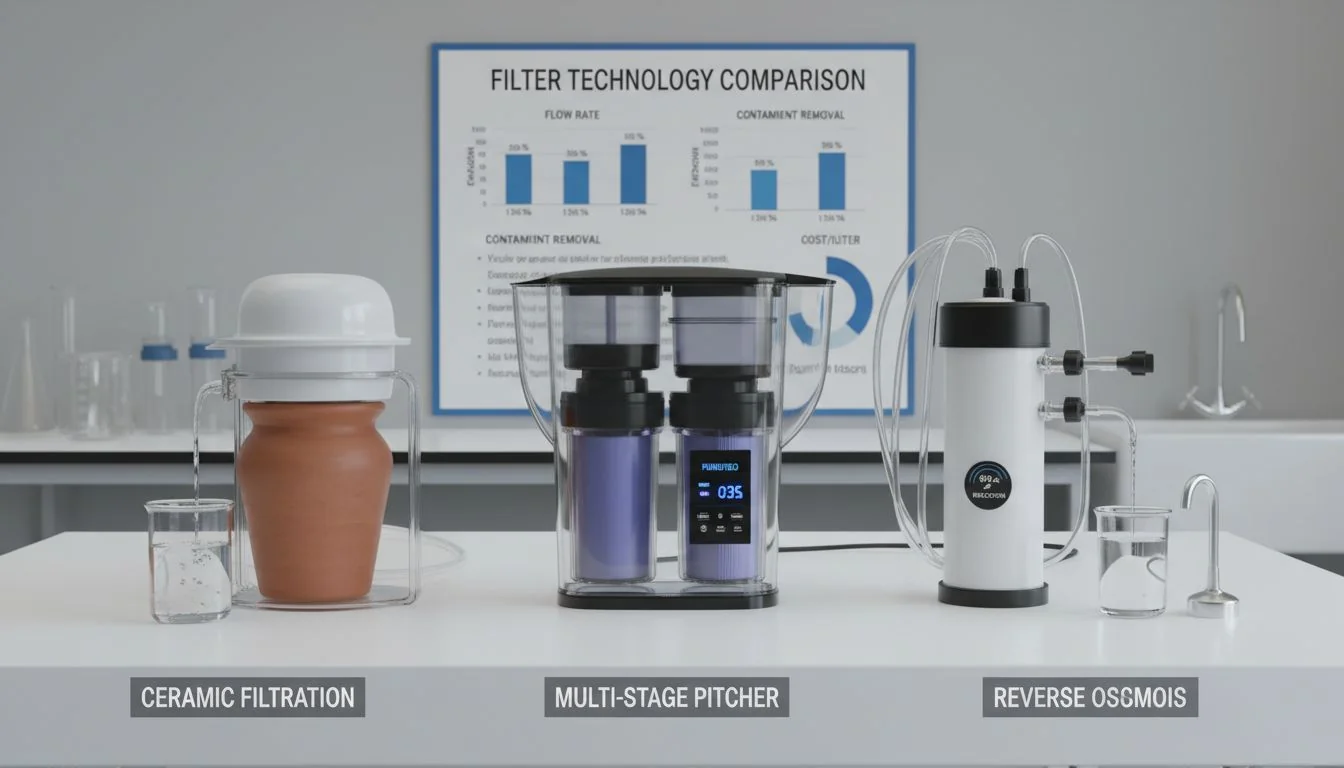
Inside the Filter Housing
When I design a mold for a filter housing, I always ask the client what goes inside. The internal technology dictates the external design. If they use Reverse Osmosis, I must design ports for waste water. If they use carbon block, I must ensure the housing can handle the pressure drop.
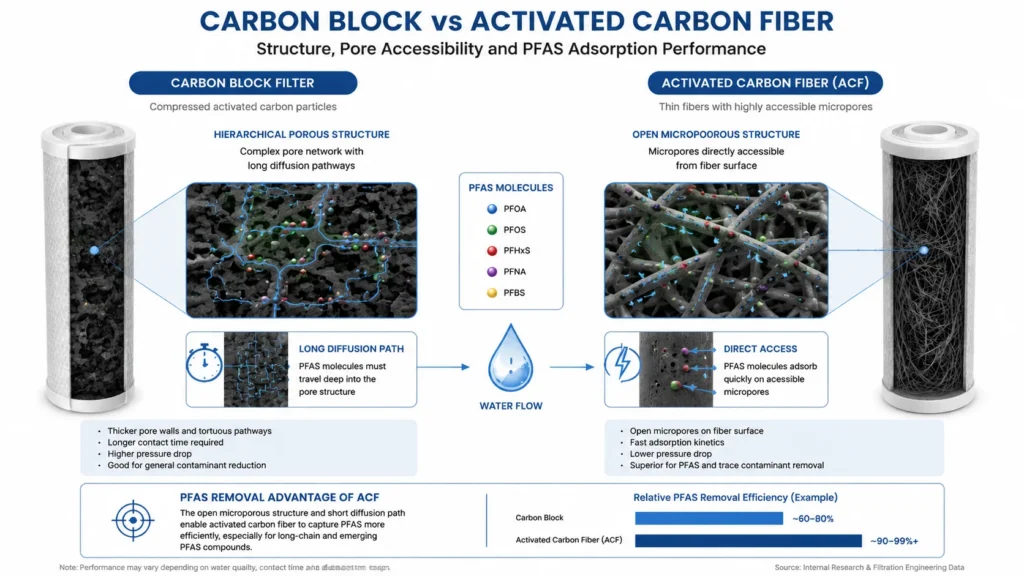
You need to know the basics of these technologies. Activated carbon is like a sponge for chemicals. It is great for chlorine taste and odor. But it is not enough for heavy metals. Reverse Osmosis is a physical barrier. It removes almost everything, including lead. But it wastes water. Ion exchange uses tiny resin beads. It targets specific things like PFAS.
Here is a quick overview for your design reference:
| Tecnologia | Função principal | Design Consideration |
|---|---|---|
| Carvão ativado | Adsorbs chlorine and organics | Needs good water flow design |
| Reverse Osmosis | Removes dissolved solids | Requires a drain port for waste |
| Ion Exchange | Targets specific ions | Needs space for resin expansion |
| Mechanical Spun | Traps dirt and rust | Needs easy replacement access |
Knowing this helps you design better products. You can anticipate the engineering needs before you even start your CAD software.
Reverse Osmosis systems do not require a drain port.Falso
RO systems produce wastewater during the filtration process and must have a drain port.
Activated carbon is highly effective at removing chlorine taste and odor.Verdadeiro
Carbon acts like a sponge, adsorbing the chemicals that cause bad taste and odor in water.
How to Match Technology to Each Contaminant Category?
Guessing the right technology leads to failed water tests. This ruins your reputation with buyers. You must match the exact technology to the specific contaminant category every time.
To match technology to contaminants, align the tested claims with the water test report. Use carbon blocks for aesthetic issues like chlorine. Use certified RO membranes or specialized binders for heavy metals like lead. Use advanced ion exchange resins specifically tested for PFAS reduction.

Aligning Claims with Technology
In my trading company, I see many designers make a simple mistake. They try to use a basic carbon filter for a lead problem. The buyer tests the water, finds lead, and rejects the product. You must match the technology to the category.
Think of it as a procurement checklist. The facility manager has a list of targets. You must provide a list of matching technologies. If the target is PFAS, you cannot just use standard carbon. You need specialized media. This means your mold design might need to accommodate a longer cartridge to increase the contact time between the water and the media.
Here is how you match them up:
| Contaminant Category | Best Technology Match | Certification Focus |
|---|---|---|
| Aesthetic (Chlorine) | Standard Activated Carbon | Taste and Odor |
| Heavy Metals (Lead) | RO or Lead-specific Carbon | Heavy Metal Reduction |
| Emerging Chemicals (PFAS) | Specialized Ion Exchange | PFAS Specific Claims |
| Particulates (Rust) | Melt-blown Polypropylene | Particulate Reduction |
When you understand this matching process, you can guide your clients. You can tell them why their housing needs to be bigger or why they need a multi-stage system.
Standard activated carbon is the best technology for removing heavy metals like lead.Falso
Standard carbon is for aesthetics; lead requires RO or specially formulated lead-specific binders.
Matching technology to specific contaminants ensures the product passes buyer water tests.Verdadeiro
Using the correct targeted technology is the only way to meet specific procurement claims and pass tests.
When Do Multi-Stage or Combined Systems Make Sense?
Single filters clog fast when water is very dirty. Your clients will hate replacing them every week. multi-stage systems7 solve this, but they require careful design planning.
Multi-stage systems make sense when a water test report shows multiple contaminant categories. You use a cheap sediment filter first to protect the expensive carbon block. Then, you add an RO membrane for lead, followed by a specialized resin for PFAS. This protects each stage and extends filter life.
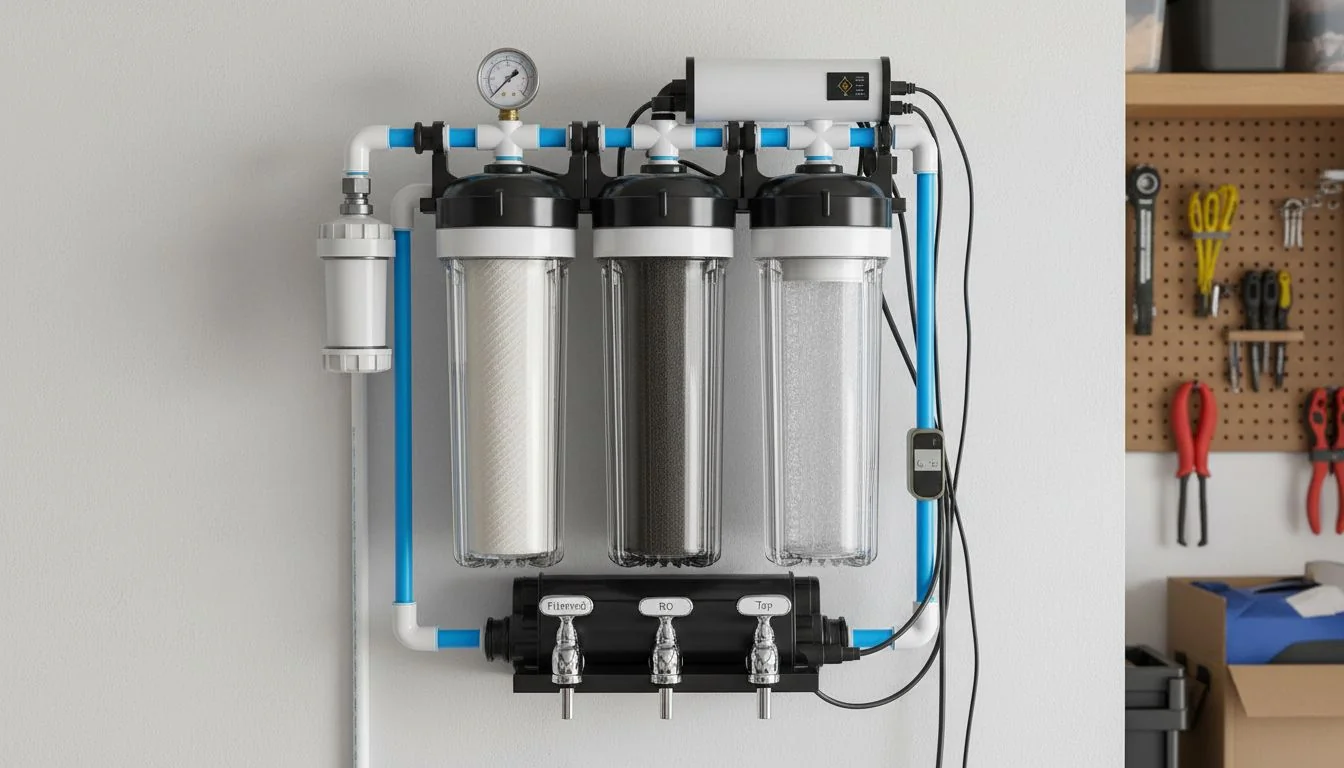
Designing for Multiple Stages
I love designing multi-stage systems. It is a great challenge for a mold designer. You have to create a manifold that routes water perfectly from one stage to the next. Why do we do this? Because it saves the buyer money in the long run.
If you put an expensive RO membrane in water full of dirt, it will clog in a day. You must protect it. You put a cheap sediment filter in front of it. This is called pre-filtration. If the buyer needs to remove chlorine, lead, and PFAS, you need a stage for each. You cannot skip steps.
Here is a common multi-stage setup:
| Stage Order | Tecnologia de filtragem | Purpose in System |
|---|---|---|
| Stage 1 | Sediment Filter | Removes dirt, protects later stages |
| Stage 2 | Carbon Block | Removes chlorine, protects RO membrane |
| Stage 3 | Reverse Osmosis | Removes lead and dissolved solids |
| Stage 4 | Specialized Resin | Targets remaining PFAS |
As a designer, you must ensure the plastic manifold can handle the pressure changes across these stages. You must also design easy-to-use locking mechanisms so facility managers can change the filters quickly.
A sediment filter should be placed at the very end of a multi-stage system.Falso
Sediment filters must be placed first to remove dirt and protect the more sensitive, expensive filters that follow.
Multi-stage systems extend the lifespan of expensive filter media.Verdadeiro
By removing larger particles first, pre-filters prevent expensive media like RO membranes from clogging prematurely.
How to Build a Selection Matrix for Buyers and Specifiers?
Buyers get confused by too many filter options. If they cannot decide, they will not buy your product. You need a clear tool to help them choose easily.
Build a selection matrix8 by listing water test results on one side and tested technology claims on the other. This helps buyers and specifiers work backward from their specific water problems to your exact product. It turns a complex technical decision into a simple, evidence-based procurement choice.
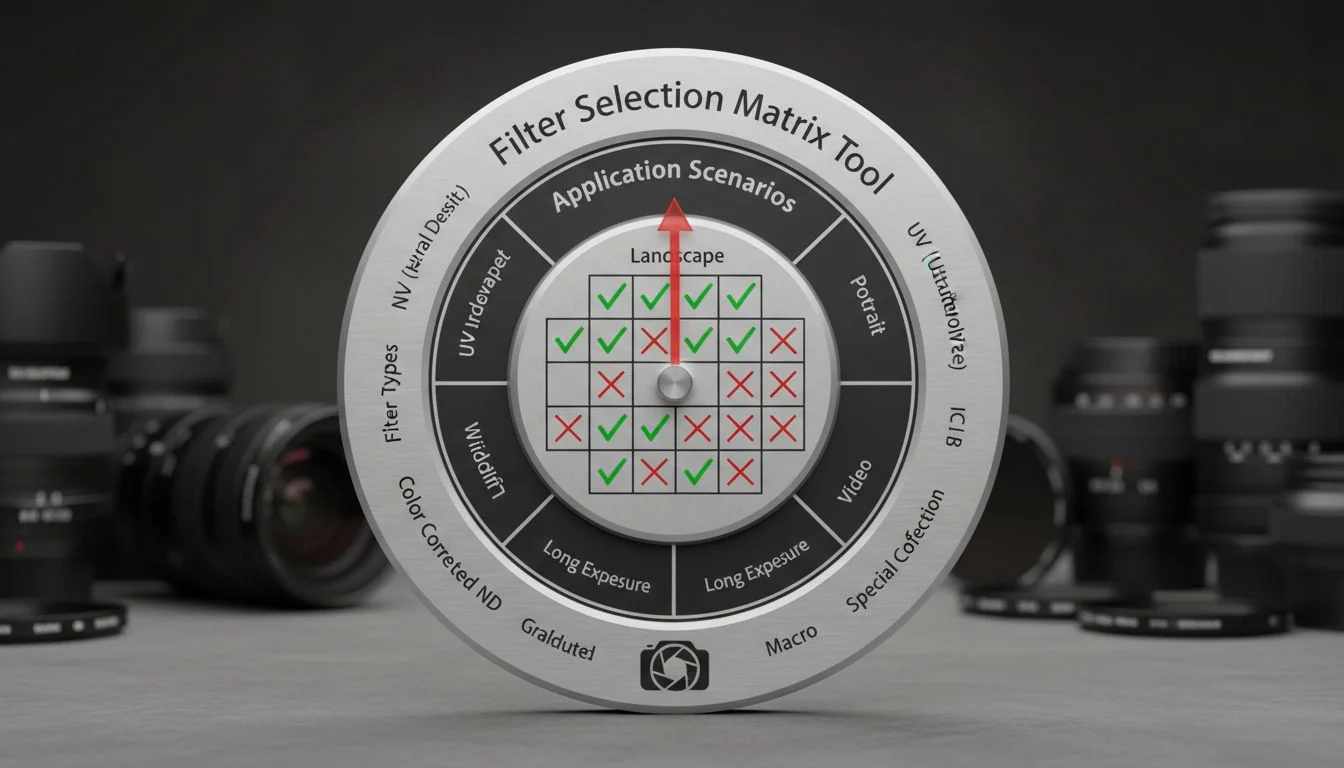
Creating the Selection Tool
In my trading business, I learned that making things easy for the buyer is the secret to success. Facility managers do not want to read a textbook on water chemistry. They want a simple chart. They want to look at their water test report and immediately know which product to buy.
You can help your clients build a selection matrix. This matrix connects the problem to the tested claim and the technology. It removes all the guesswork. It also keeps the focus on certification evidence, not vague health promises. This builds trust with your buyers.
Here is an example of a simple selection matrix:
| Water Test Result | Required Claim | Recommended Technology | Product Series |
|---|---|---|---|
| High Chlorine | Taste & Odor Reduction | Carbon Block | Series A Housing |
| Lead Present | Heavy Metal Reduction | RO System | Series B Manifold |
| PFAS Detected | PFAS Reduction | Advanced Ion Exchange | Series C Extended |
| High Sediment | Particulate Reduction | Spun Polypropylene | Series D Clear |
When you design your molds, you can create modular systems. This allows the buyer to mix and match filters based on this matrix. It makes your design much more valuable to the market.
A selection matrix makes it harder for facility managers to choose a product.Falso
A selection matrix simplifies the process by directly linking water problems to the correct technological solutions.
Modular mold designs allow buyers to customize their filtration systems.Verdadeiro
Modular designs let users mix and match different filter housings to meet their specific water test results.
Conclusão
Matching filter technology to buyer needs requires understanding water test reports and tested claims. By designing for specific technologies, you create products that facility managers trust and buy.
References
-
Understanding water test reports is crucial for matching filtration technology to specific contaminants. ↩
-
Understanding various filtration technologies helps in designing effective and compliant water filtration systems. ↩
-
Certification evidence builds trust with buyers, ensuring that products meet safety and performance standards. ↩
-
Ion exchange is critical for targeting specific contaminants like PFAS, making it important for effective filtration. ↩
-
Reverse osmosis is vital for heavy metal removal, including lead, and understanding it can enhance product design. ↩
-
Activated carbon is essential for removing chlorine taste and odor, making it a key technology in filtration. ↩
-
Multi-stage systems improve filter lifespan and efficiency, essential for meeting diverse water quality needs. ↩
-
A selection matrix simplifies the buying process, helping clients choose the right filtration technology. ↩




 English
  Français
  Español
  Italiano
  Deutsch
  Português
  Русский
  العربية
  日本語
日本語  한국어
한국어  Tiếng Việt

