
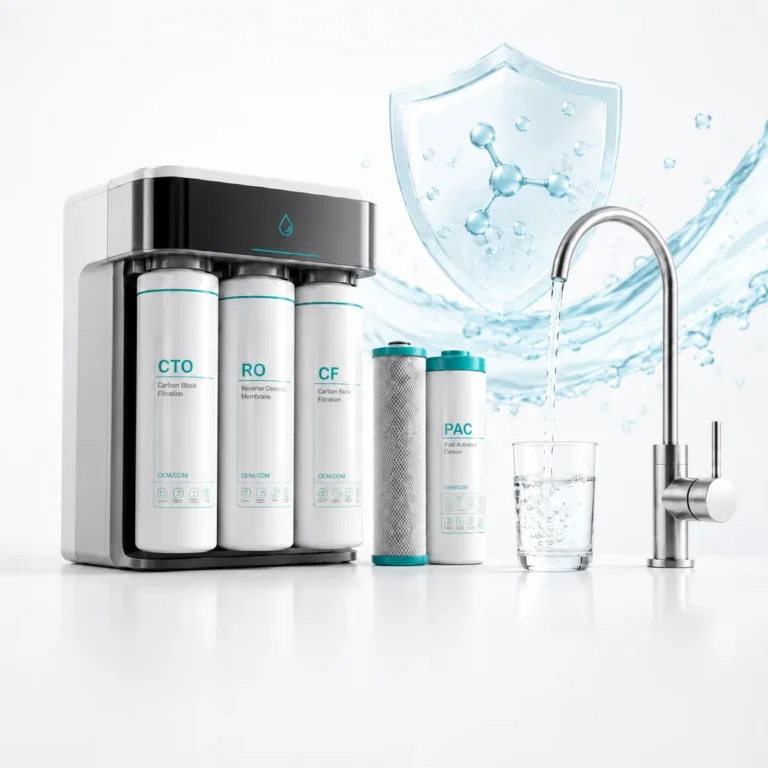
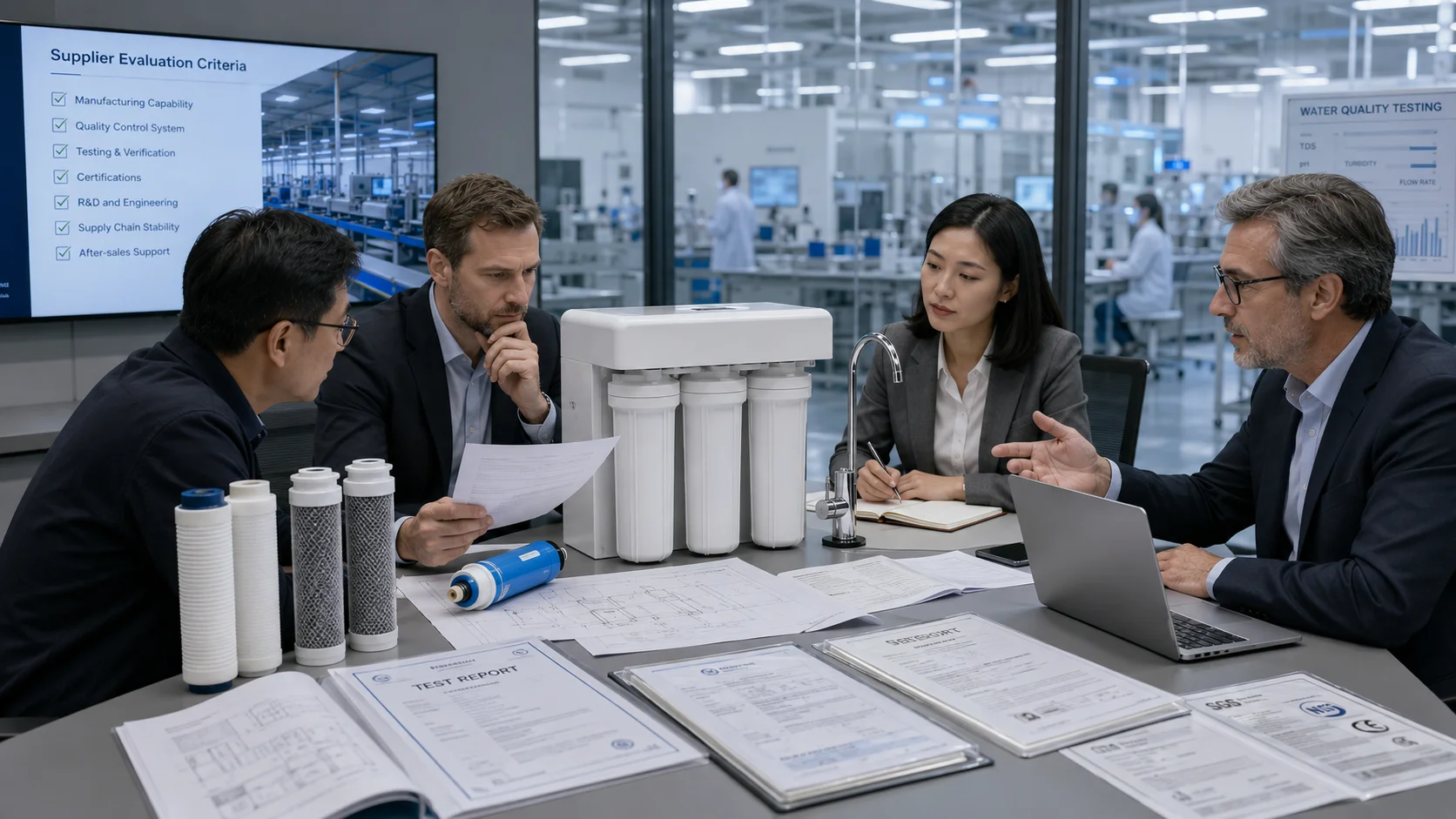
Finding a water purifier manufacturer in China is easy. Finding a factory that can support your target contaminants, certification pathway, product positioning and long-term replacement-filter business is much more difficult.
Some suppliers manufacture components. Some assemble standard systems from purchased parts. Others provide private-label catalog products with limited customization. A smaller group can support filtration engineering, industrial design, testing coordination, certification planning and mass-production control.
The right choice depends on your project. A catalog-based factory may be sufficient for a basic private-label launch. However, a product intended for North America, Europe, Japan or another regulated market may require a more structured OEM or ODM partner.
Direct answer: Do not choose a water purifier factory based only on its catalog, quoted GPD or unit price. First determine whether the supplier can define the complete filtration system, substantiate the intended performance claims, support the correct certification pathway and maintain consistent replacement-filter performance after launch.
This guide answers the 12 questions B2B buyers should ask before requesting a quotation or approving a water purifier sample.
Contents
- What type of manufacturer do you need?
- How can you identify an engineering partner?
- What should a factory prove about PFAS reduction?
- What does NSF certification actually cover?
- What can be customized?
- What should you ask before sending an RFQ?
1. What Type of Water Purifier Manufacturer Do You Actually Need?
Question 1: What is the difference between a component supplier, assembly factory, OEM factory and ODM partner?
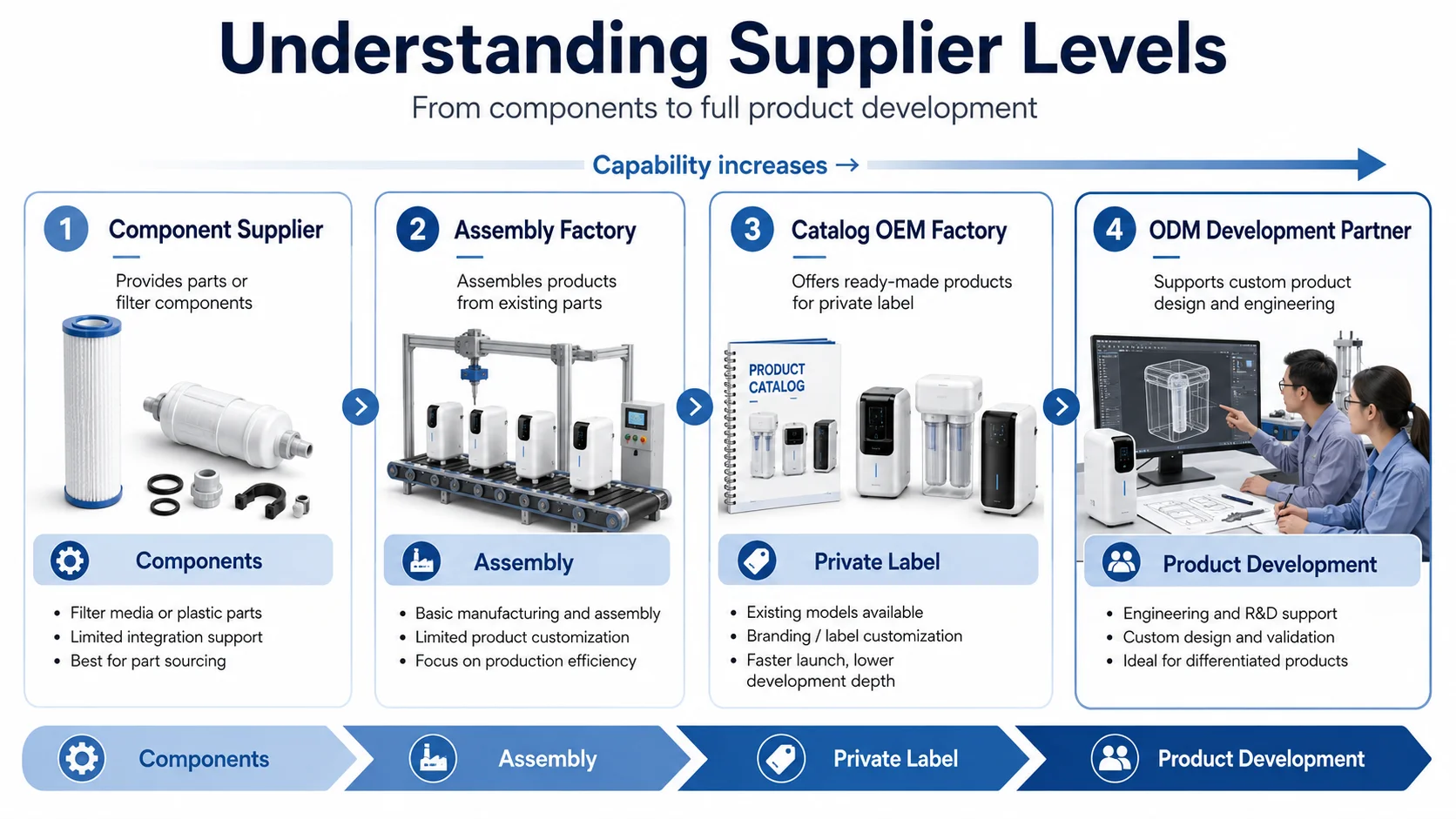
Direct answer: These suppliers may all describe themselves as water purifier manufacturers, but they provide different levels of responsibility and technical support.
| Supplier Type | What It Normally Provides | Best Suited For |
|---|---|---|
| Component supplier | RO membranes, carbon blocks, housings, pumps, valves, tubing or faucets | Buyers with their own system engineering and assembly capability |
| Assembly factory | Assembly of externally sourced components into a finished unit | Cost-sensitive, established products with a complete specification |
| Catalog-based OEM factory | Existing models with logo, color, packaging or minor configuration changes | Fast private-label launches with limited differentiation |
| ODM development partner | Product definition, filtration configuration, structure, electronics, testing and manufacturing support | Brands requiring differentiated products or market-specific compliance |
A component supplier may produce an excellent carbon block but have no experience managing the pressure, flow, leakage, electronics and certification risks of a complete purifier. An assembly factory may build a stable product but depend on the buyer to define every technical requirement.
An OEM factory usually begins with an existing product. An ODM partner should begin with the intended market, source-water conditions, contaminant-reduction objectives, usage scenario, certification requirements and target price.
Question 2: When is a catalog-based water purifier factory sufficient?
Direct answer: A catalog factory can be suitable when the product is mature, the customization is limited and the buyer does not require a new performance or certification claim.
A standard private-label solution may be appropriate when you need:
- An existing countertop or undersink model
- Logo, packaging and manual customization
- A relatively fast sample and launch process
- Limited structural or electronic changes
- No new contaminant-reduction claim
- No exclusive product architecture
Choosing a catalog product is not automatically a poor decision. The risk arises when a standard product is marketed as a custom-engineered or fully certified system without sufficient evidence.
If your goal is to launch a differentiated premium product, build a replacement-filter platform or support PFAS-related claims, the factory must take greater responsibility for system definition and verification.
2. How Can You Tell an Engineering Partner From a Catalog Factory?
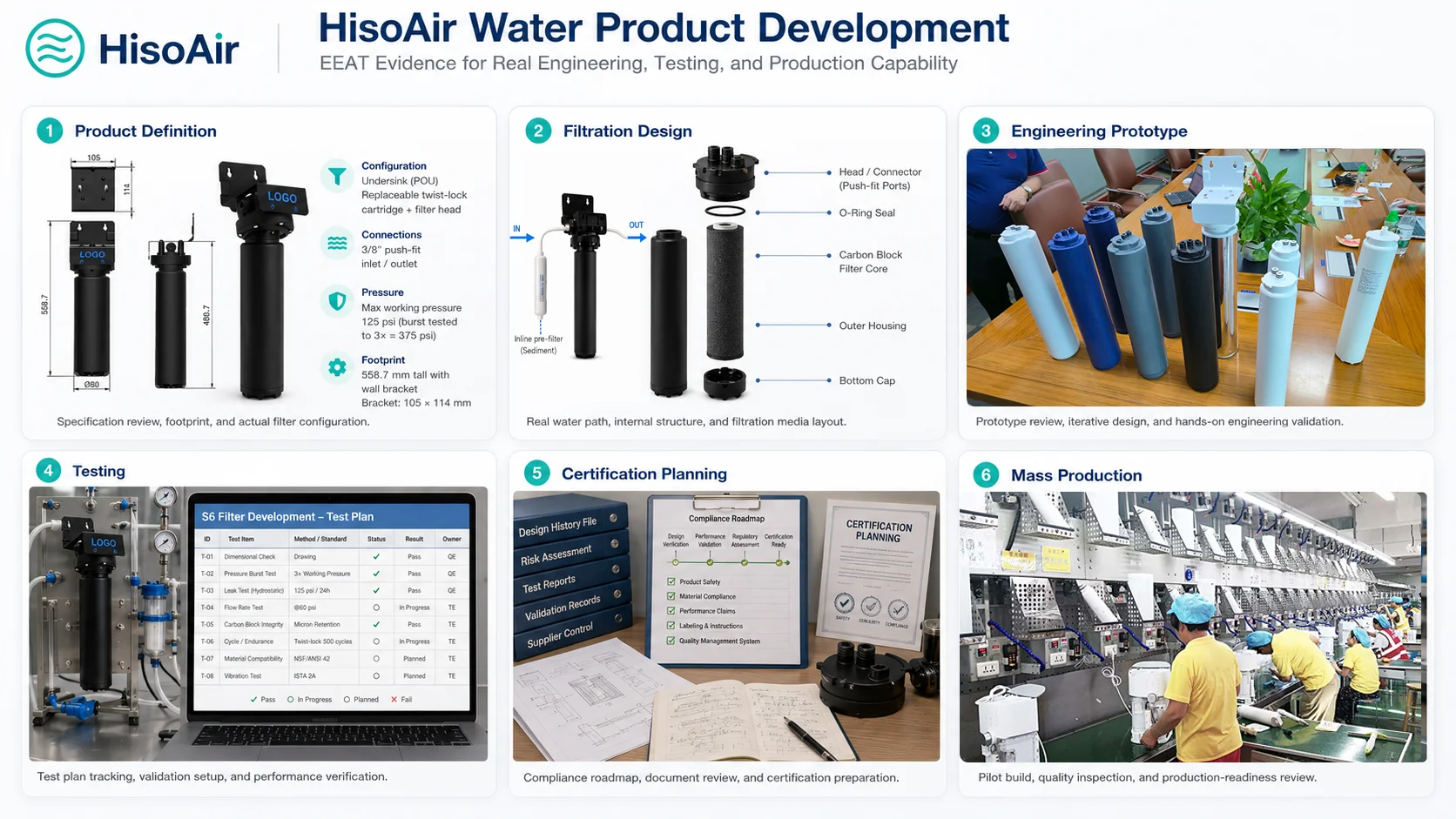
Question 3: What should a water purifier manufacturer ask before recommending a product?
Direct answer: A serious engineering partner should ask about the application before recommending a model or filter configuration.
The initial questions should normally include:
- Which country or region will the product be sold in?
- Is the source water municipal water, well water or another supply?
- Which contaminants or water-quality problems are being targeted?
- Is the product intended for residential, commercial, hospitality or project use?
- Is an RO, UF, carbon block or combined filtration architecture required?
- What flow rate, daily capacity or GPD is expected?
- What is the target filter life?
- Which certifications or third-party tests are required?
- What claims will appear on the packaging and marketing materials?
- What is the expected annual order volume?
- What is the target retail price and channel?
- Is a long-term replacement-filter business part of the plan?
A supplier that immediately recommends a 600 GPD or 800 GPD machine without understanding the market and water conditions may be selling a catalog rather than defining a suitable system.
Question 4: What evidence shows that the factory can develop a complete water purification system?
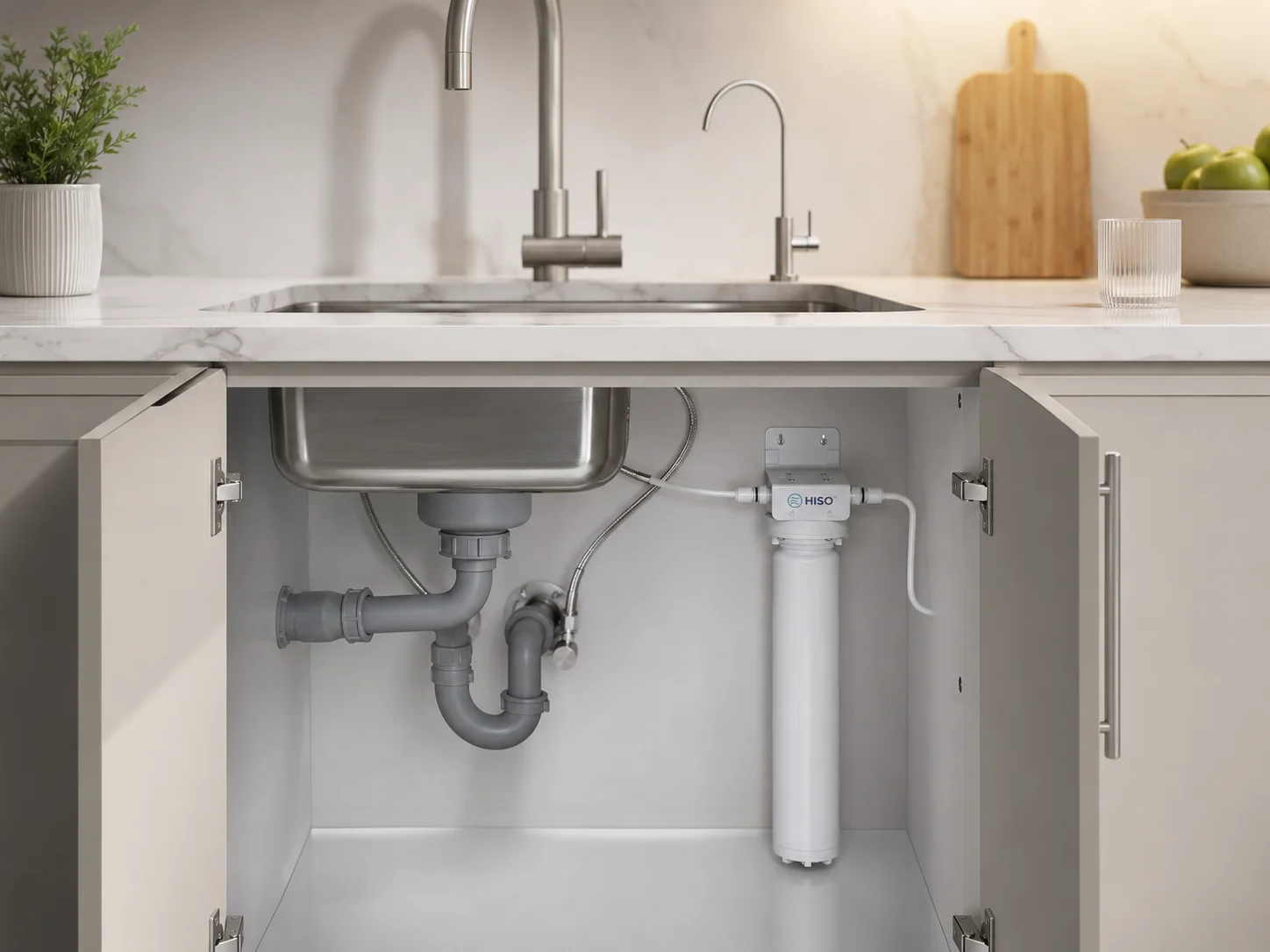
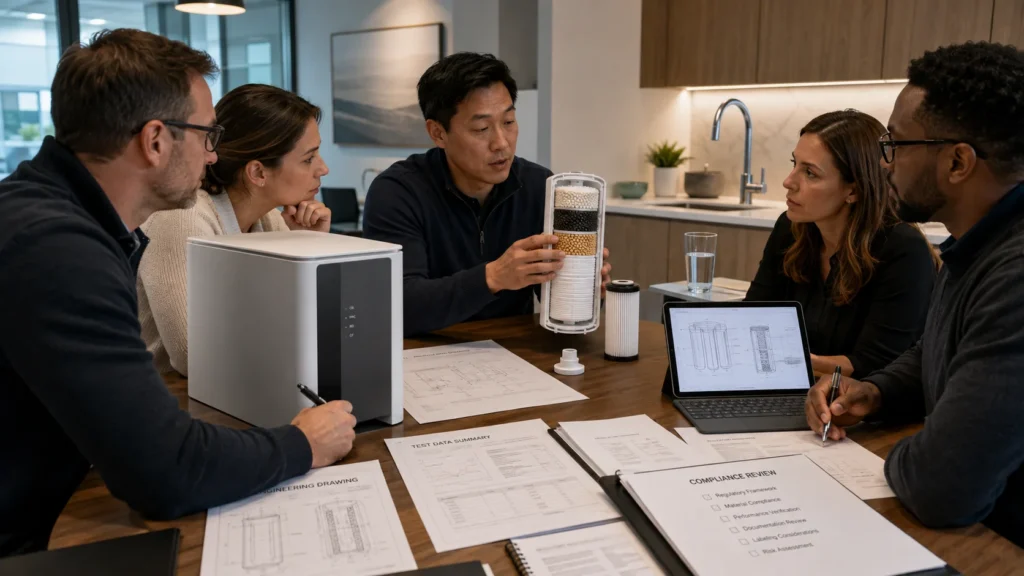
Direct answer: Look for engineering documents, test procedures and project controls—not only product photographs and sales brochures.
Depending on the development scope, a capable supplier should be able to discuss or provide:
- Product requirement specifications
- Filtration-stage definitions
- Water-flow diagrams
- Critical component specifications
- Wetted-material documentation
- Pressure and leakage test conditions
- Flow-rate and recovery-rate validation
- Contaminant-reduction test plans
- Filter-capacity assumptions
- Software, display and faucet requirements
- Design verification and pilot-production plans
- Quality control points for mass production
The factory does not need to provide all confidential documents before an NDA is signed. However, it should be able to explain how these documents are created, reviewed and controlled.
Typical Catalog Factory vs HisoAir Project Approach
| Evaluation Area | Typical Catalog-Based Factory | HisoAir Project Approach |
|---|---|---|
| Starting point | Select an existing model | Define the market, application and performance objectives |
| Filtragem | Use the existing filter combination | Evaluate RO, UF and carbon configurations for the intended application |
| Personalização | Logo, color and packaging | Filtration, structure, faucet, UI, sensing and documentation |
| Ensaios | Basic functional and leakage checks | Define required performance tests and coordinate appropriate validation |
| Certificação | Provide available component certificates | Review the intended claim and certification pathway at the project-definition stage |
| Business model | Focus on the initial hardware order | Consider the product platform and long-term replacement-filter supply |
HisoAir is not necessarily the right supplier for every project. A buyer seeking only the lowest-cost generic model may be better served by a catalog factory. HisoAir is more relevant when the project requires product differentiation, technical coordination, certification planning or a scalable filter platform.
Explore HisoAir’s current OEM and ODM water purifier platforms.
3. What Should a Manufacturer Prove Before Making PFAS Reduction Claims?
Question 5: Is an activated carbon block or RO membrane report enough to claim PFAS reduction?
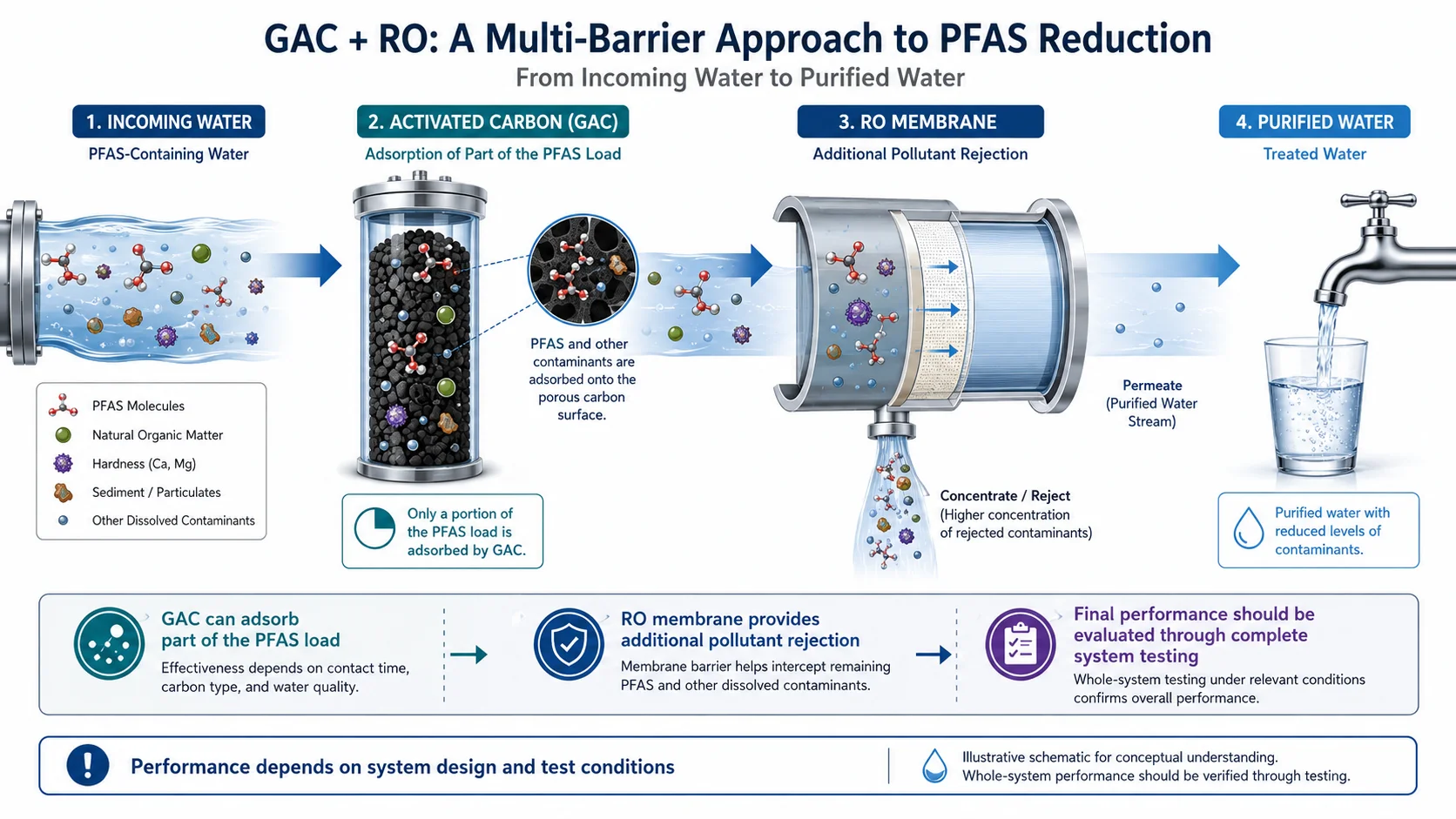
Direct answer: No. A media or component report does not automatically prove the performance of the complete water purifier.
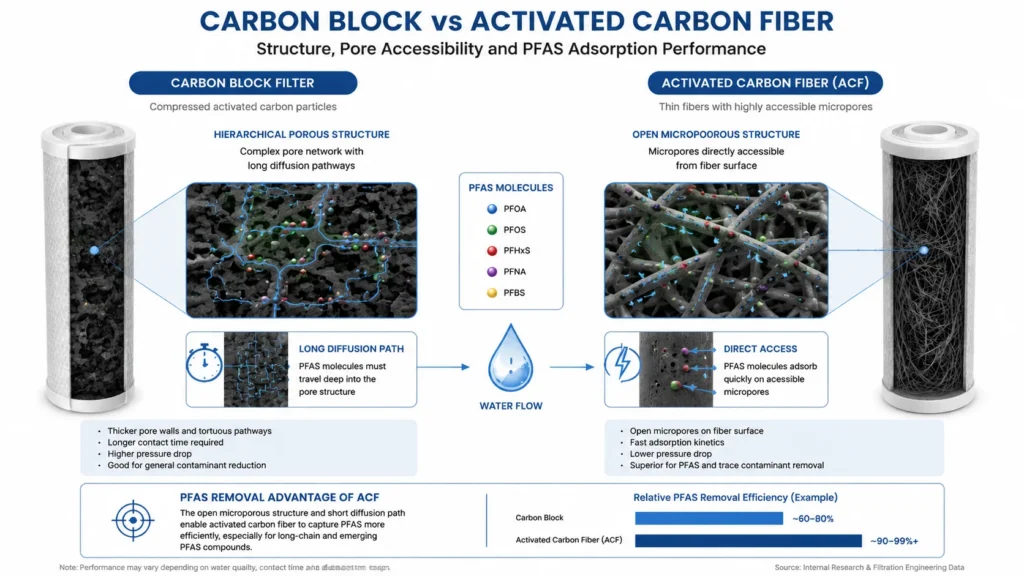
Activated carbon, ion-exchange media and reverse osmosis can all be relevant to PFAS reduction. However, system performance can be affected by:
- The specific PFAS compounds being evaluated
- Influent concentration
- Source-water chemistry
- Water temperature
- Operating pressure
- Flow rate
- Media quantity
- Contact time
- Membrane selection
- Filter capacity
- Bypass or sealing conditions
- Filter replacement timing
A carbon supplier may test its media under one set of conditions, while the finished purifier operates at a different flow rate and capacity. The report may still be useful as supporting evidence, but it should not be presented as proof that every finished system achieves the same result.
Before using a PFAS-related statement on packaging, the buyer and manufacturer should define exactly what is being claimed. “Helps reduce selected PFAS under specified test conditions” is materially different from a broad statement such as “removes all forever chemicals.”

Question 6: What PFAS testing information should a B2B buyer request?
Direct answer: Ask for enough information to connect the test result to the exact product, filter configuration and marketing claim.
A useful test report or validation plan should identify:
- The complete model tested
- The exact replacement-filter model
- The filtration-stage configuration
- The PFAS compounds included in the test
- The influent concentration
- The measured effluent concentration
- The operating flow rate and pressure
- The total volume processed before sampling
- The sampling frequency
- The rated capacity evaluated
- The laboratory and test method
- The pass criteria or certification requirement
Initial performance is only part of the question. If a product is advertised with a specific filter capacity, the buyer should understand how performance is evaluated over that capacity and when the filter must be replaced.
The U.S. Environmental Protection Agency identifies granular activated carbon, ion exchange and reverse osmosis as relevant PFAS treatment technologies. The EPA also emphasizes selecting certified products and replacing filters according to the manufacturer’s instructions.
For consumer point-of-use filtration products, PFAS reduction claims may be evaluated under standards such as NSF/ANSI 53 for filtration devices and NSF/ANSI 58 for reverse osmosis systems. The correct pathway depends on the product architecture, intended claim and current requirements of the certification body.
HisoAir’s role: HisoAir can help define a PFAS-oriented filtration configuration, identify the required claim, align the complete system with the intended test conditions and coordinate third-party testing or certification activities. Final claims should be based on the report and listing for the exact tested system.
4. What Does NSF Certification Actually Cover?
Question 7: Does using an NSF-certified component make the complete purifier NSF certified?
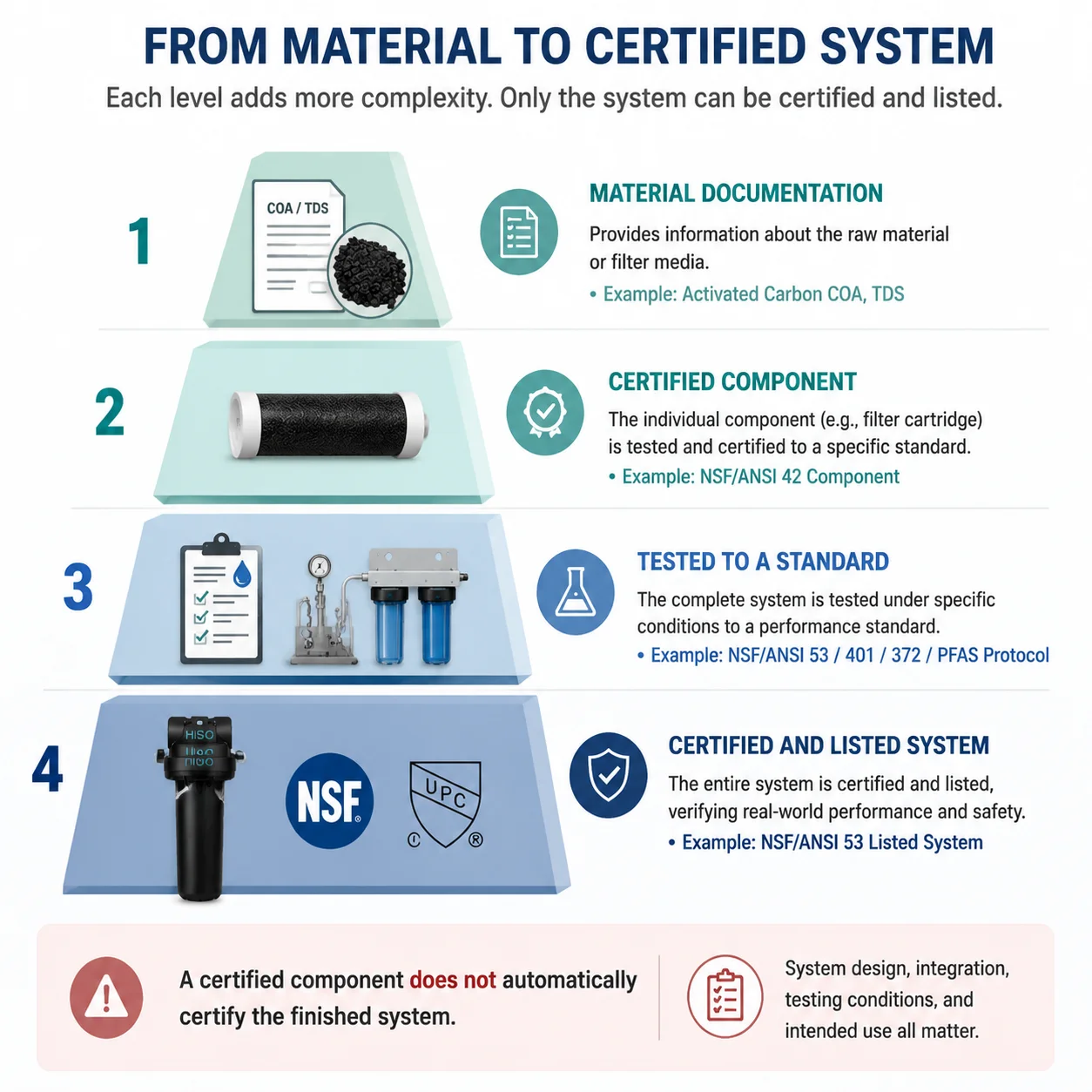
Direct answer: No. Certification of a membrane, tubing, carbon block, faucet or other component applies to the listed component and its approved scope. It does not automatically transfer to the assembled water purifier.
Buyers commonly encounter four different types of statements:
| Statement | What It Normally Means | What the Buyer Should Verify |
|---|---|---|
| Material documentation available | The supplier has information about the composition or suitability of a material | The document, material grade, supplier and applicable requirement |
| Certified component | A specific part is listed under a defined standard and scope | Manufacturer, model number, standard and official listing |
| Tested to a standard | A laboratory conducted tests using some or all requirements of a standard | Whether this is a test report or a formal product certification |
| Complete system certified | The finished system is listed for defined safety or performance claims | The exact brand, model, replacement element, claim and current listing |
A third-party laboratory test can provide valuable performance evidence. However, “tested to” and “certified by” are not interchangeable. Formal certification generally includes an official listing, defined product scope and ongoing compliance requirements.
Question 8: Which NSF standards may be relevant to a water purifier?
Direct answer: The applicable standard depends on the product type and the claims being made. A purifier does not need every NSF standard, and one standard does not cover every contaminant.
| Padrão | Typical Scope |
|---|---|
| NSF/ANSI 42 | Aesthetic effects such as chlorine, taste, odor and selected particulate claims |
| NSF/ANSI 53 | Health-effects claims for specified contaminants |
| NSF/ANSI 58 | Reverse osmosis systems, including defined performance and contaminant-reduction claims |
| NSF/ANSI 401 | Selected emerging compounds or incidental contaminants |
| NSF/ANSI/CAN 61 | Health effects of drinking-water system components and materials within its applicable scope |
| NSF/ANSI/CAN 372 | Lead-content compliance for applicable drinking-water products and components |
The buyer should not begin by asking, “Is this product NSF certified?” A more useful question is:
“Which exact model is certified, under which standard, for which claims, with which replacement filter, and where can I verify the official listing?”
Question 9: Who owns the certification and official product listing?
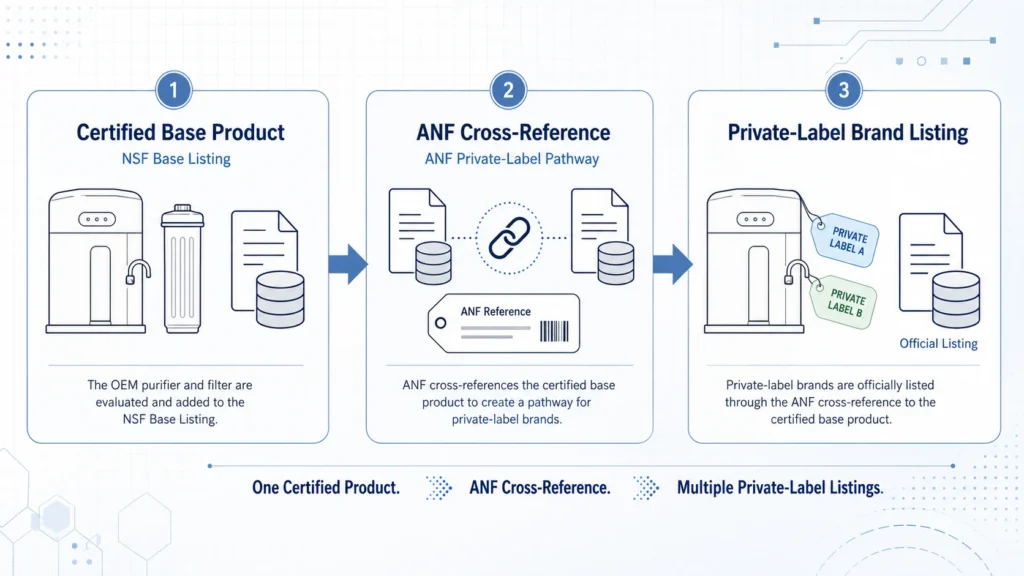
Direct answer: This must be clarified before product development because certification ownership affects branding, model changes, ongoing fees and future supplier decisions.
Common arrangements include:
- The factory owns the certification and adds the buyer’s brand or trade name where permitted.
- The buyer owns an independent certification for its branded system.
- A component supplier owns a listing that covers only a specific component.
- The product is tested by a laboratory but does not have a formal certification listing.
Before approving a supplier, confirm:
- Whose company name appears on the listing?
- Is the buyer’s brand or model included?
- Which filter element is approved for use with the system?
- Which design changes require review or retesting?
- Who manages annual fees and factory inspections?
- What happens to the certification if the manufacturing site changes?
- Can the official listing be verified in the certification body’s database?
Certification requirements and official listings can change. Always verify the exact product in the current database of NSF, WQA, IAPMO or the relevant accredited certification body before using a certification mark or performance claim.
Need help defining the pathway? Send HisoAir your target market, product type and intended claims. Our team can review which documents, tests and certification steps should be considered during product definition.
5. What Can Be Customized—and How Should You Compare Factory Quotations?
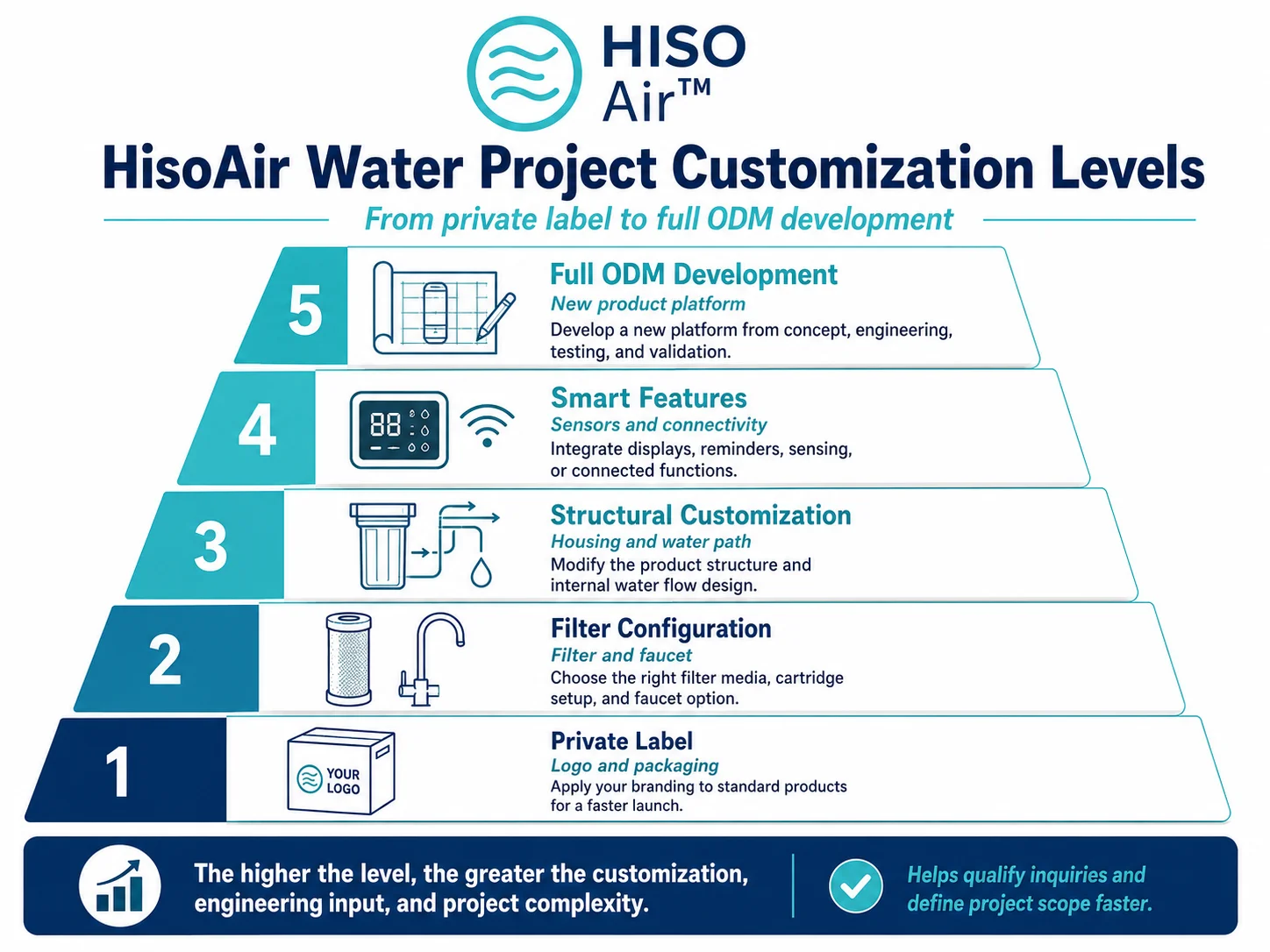
Question 10: What parts of an OEM or ODM water purifier can be customized?
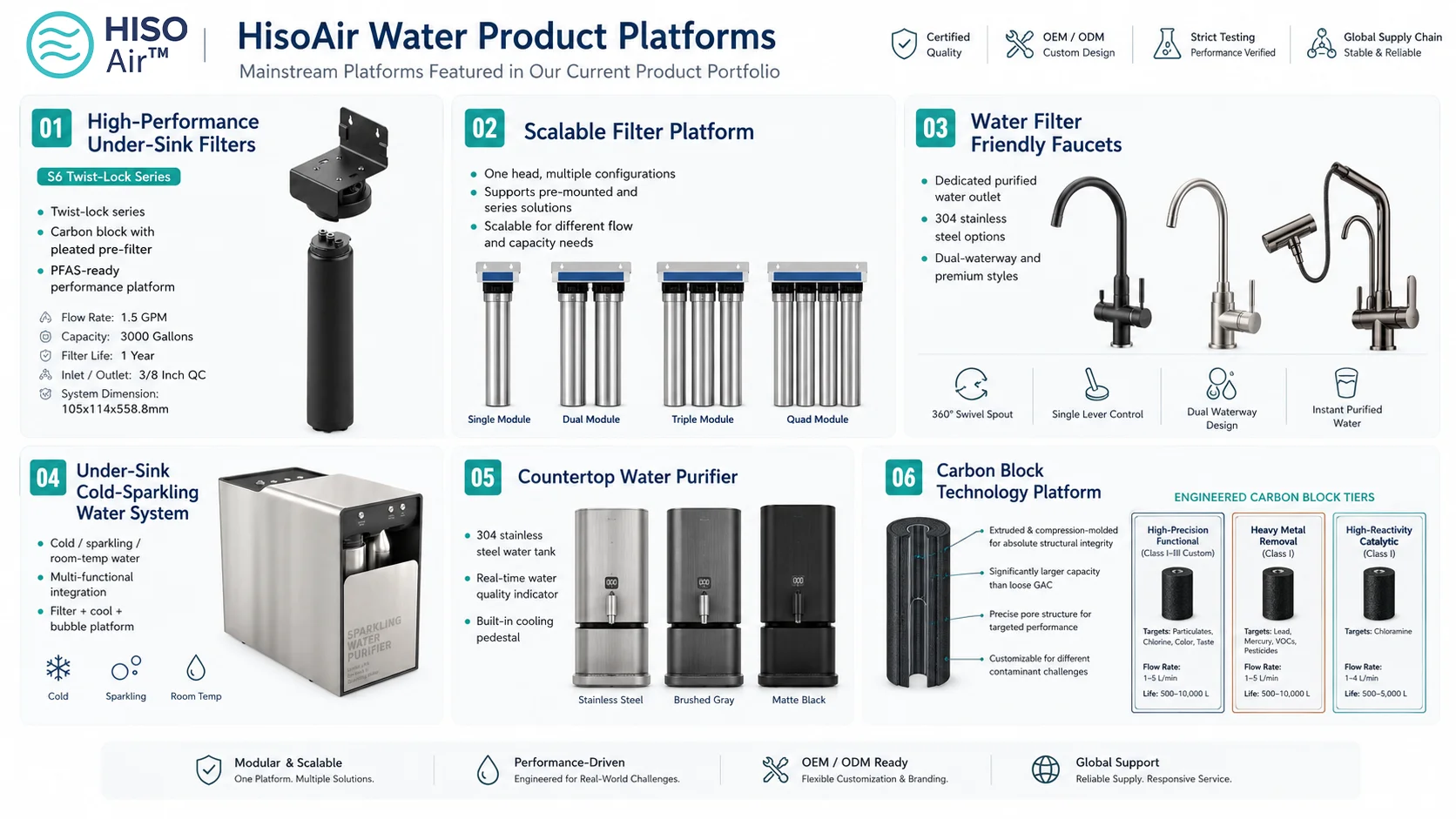
Direct answer: Water purifier customization ranges from simple branding to a completely new filtration and hardware platform. The quotation, MOQ, development time and validation requirements depend on the level selected.
| Nível de personalização | Typical Scope | Development Impact |
|---|---|---|
| Private label | Logo, carton, labels, manual and basic CMF changes | Lowest engineering impact |
| Configuration customization | Filter combination, faucet, flow rate, voltage, accessories or user settings | May require performance and compatibility validation |
| Structural customization | Housing, internal layout, filter interface, water path or mechanical parts | May require tooling, reliability testing and certification review |
| Smart feature customization | TDS display, filter-life monitoring, sensors, Wi-Fi, app or platform integration | Requires hardware, firmware, software and validation work |
| Full ODM development | New industrial design, filtration platform, mechanical structure, electronics and user experience | Highest investment, development time and project-management requirement |
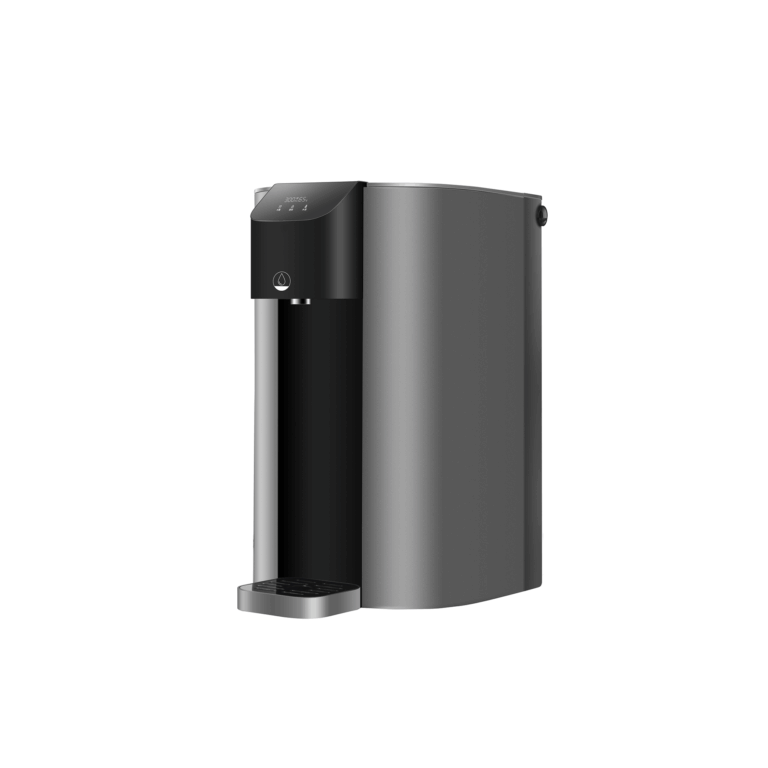
HisoAir’s current water platform range includes undersink RO water purifiers, countertop water purifiers, UF, RO and carbon-based configurations, smart faucets and connected-product options.
The goal of customization should not be to change as many parts as possible. It should be to create meaningful differentiation while controlling tooling, certification and supply-chain risk.
How should buyers compare quotations from different factories?
Two quotations may appear to describe the same purifier but contain significantly different components, test coverage and responsibilities.
Compare quotations using the following categories:
- Exact filtration configuration
- Membrane and filter specifications
- Pump, valve, tubing and faucet suppliers
- Rated flow and test conditions
- Recovery or pure-to-waste ratio
- Filter capacity and replacement assumptions
- Wetted-material requirements
- Testing included in the quotation
- Tooling and engineering charges
- Certification scope and ownership
- Packaging and accessory specifications
- Spare-parts and replacement-filter supply
- Warranty assumptions
- Production lead time
- Change-control process
A low unit price may exclude the test reports, certification work, premium components or quality controls required by your market. Compare the complete commercial and compliance scope rather than only the EXW price.
If tariff exposure or production outside China is part of your sourcing strategy, read our separate guide: Top Water Purifier Manufacturers Outside China: A B2B Sourcing Guide.
6. What Should You Ask Before Sending an RFQ or Approving a Sample?
Question 11: What information should be included in a serious water purifier RFQ?

Direct answer: A useful RFQ should describe the market and performance requirements, not only the order quantity.
Include the following information:
- Target country: Where will the product be sold?
- Customer segment: Retail, distributor, builder, hospitality, commercial project or another channel?
- Application: Countertop, undersink, whole-house, point-of-use or commercial?
- Source water: Municipal water, well water or known water-quality conditions?
- Target contaminants: Chlorine, taste and odor, lead, PFAS, TDS or other defined concerns?
- Technology preference: RO, UF, carbon block, ion exchange or combined treatment?
- Flow requirement: Required L/min, GPD or daily capacity?
- Filter-life target: Expected capacity or replacement interval?
- Certification target: Which standards, listings or retailer requirements apply?
- Customization scope: Private label, configuration change, structural customization or full ODM?
- Commercial volume: Sample quantity, first order and estimated annual volume?
- Project schedule: Target sample, certification, pilot production and launch dates?
Also provide any existing product specification, industrial design, competitor reference, water report, technical drawing or certification requirement. The more precise the inputs, the more useful the manufacturer’s proposal will be.
Question 12: What documents should the supplier provide before sample approval?
Direct answer: Sample approval should be based on an agreed specification and test plan, not appearance alone.
Depending on the project, request:
- Final sample specification
- Model and filter configuration
- Water-flow diagram
- Critical component list
- Available component certificates
- Wetted-material documentation
- Flow-rate test results
- Recovery-rate or wastewater-ratio results
- Pressure and leakage test records
- Electrical safety information, where applicable
- Filter-capacity or contaminant-reduction data
- Certification status and official listing information
- Packaging and labeling specification
- User manual draft
- Development and mass-production timeline
- Open-issue list and change history
The sample should be tested under conditions that resemble its intended use. A purifier that performs well with one source-water condition may behave differently with higher TDS, lower pressure, colder water or a different contaminant profile.
Water Purifier Factory Evaluation Checklist
| Area | Question to Ask | Evidence to Request |
|---|---|---|
| Manufacturer type | Do you manufacture components, assemble systems or provide ODM development? | Factory scope, project examples and engineering process |
| Filtration design | Why is this filter configuration suitable for our market? | System definition and water-flow diagram |
| PFAS | Was the complete system evaluated or only the media? | Exact model, test conditions and third-party report |
| NSF | Which model is certified under which standard and claim? | Official current listing |
| Filter life | How was the rated capacity determined? | Capacity test method and replacement criteria |
| Controlo de qualidade | How are critical components and filter batches controlled? | Incoming, process and finished-product QC records |
| Personalização | Which changes require new tooling or retesting? | Development scope and validation plan |
| Replacement supply | How will filters remain available after launch? | Supply plan, specifications and change-control agreement |
| Certification ownership | Who owns the listing and manages ongoing compliance? | Certification agreement and listing details |
| Mass production | How is the approved sample transferred into production? | Golden sample, control plan and pilot-production records |
Conclusion: Choose the Factory That Matches the Risk Level of Your Project
There is no single best water purifier manufacturer in China for every buyer. The correct supplier depends on how much engineering, testing, certification support and product differentiation your project requires.
A catalog-based OEM factory may be suitable for a fast, low-complexity private-label launch. A compliance-oriented ODM partner becomes more important when the project involves:
- Specific contaminant-reduction claims
- PFAS-oriented product development
- NSF, WQA or IAPMO certification planning
- Custom filtration architecture
- Premium industrial design
- Smart faucets, sensing or connected features
- Long-term replacement-filter revenue
- Multiple manufacturing-country options
The most important question is not, “Which factory has the largest catalog?” It is:
“Which supplier can provide the evidence, engineering process and production controls required for our exact product and market?”
HisoAir supports brands, distributors, project companies and environmental-hardware businesses developing differentiated countertop and undersink water purification systems. Our role can include product definition, filtration configuration, industrial design coordination, smart-feature integration, testing coordination, certification planning and scalable manufacturing support.
Discuss Your Water Purifier Project With HisoAir
Send us your target country, source-water conditions, required flow rate, target contaminants, certification requirements, expected annual volume and launch schedule.
References and Verification Resources
- U.S. EPA — Identifying Drinking Water Filters Certified to Reduce PFAS
- U.S. EPA — Reducing PFAS in Drinking Water With a Home Filter
- NSF — NSF/ANSI 42, 53 and 401 Filtration System Standards
- NSF — Product Certification for Reducing PFAS in Drinking Water
- NSF — Certified Products and Systems
- Water Quality Association — Product Certification
- IAPMO R&T Product Listing Directory
Editorial note: Certification standards, reduction claims and official product listings may change. Buyers should verify the exact model, replacement element, manufacturing location, standard and claim in the current database of the applicable certification body.

 English
  Français
  Español
  Italiano
  Deutsch
  Português
  Русский
  العربية
  日本語
日本語  한국어
한국어  Tiếng Việt

