
Abre num novo separador
Soluções inovadoras para a qualidade do ar

What Wi-Fi Protocol Means for Smart Air Purifier OEM Projects

Related Products

As the founder of HisoAir, I've spent years immersed in the evolution of indoor air quality solutions. What started as a simple appliance has transformed into a sophisticated, connected device, a true sentinel of our indoor environments. This shift, however, brings with it a critical challenge for every Original Equipment Manufacturer (OEM) in this space: the choice of Wi-Fi protocol. It's no longer a mere technical specification; it's a pivotal strategic decision that dictates user experience, product reliability, and your brand's future relevance.

From my perspective, while older, seemingly cheaper Wi-Fi protocols might offer a tempting low Bill of Materials (BOM) cost, they introduce performance and security risks that are simply unacceptable in today's demanding market. This isn't just about connectivity; it's about delivering on the promise of a truly "smart" product. This is why I firmly believe and advocate that 802.11ax (Wi-Fi 6) is not just a premium feature, but the only logical and strategic choice for any new smart air purifier project.

What Your Smart Air Purifier is Really Doing: A Tale of Two Data Types

To truly understand the importance of the right Wi-Fi protocol, we must first deconstruct what a smart air purifier actually does from a data perspective. It's a sophisticated, networked data hub, constantly generating, processing, and consuming information. This creates a distinctly bimodal data profile, each with unique demands on your network.

The Constant "Trickle": Sensor Data and User Commands
Imagine your smart air purifier continuously monitoring particulate matter (PM2.5), volatile organic compounds (VOCs), temperature, and humidity. This stream of sensor data consists of small, frequent packets, often just tens to a few hundred bytes, sent every few seconds. For a responsive mobile app dashboard and effective "Auto Mode" — where the device intelligently adjusts fan speed based on real-time air quality — low latency is absolutely critical. A laggy response to a sudden spike in pollution is not just an inconvenience; it's a failed promise of "smart" functionality.

Similarly, user commands, whether from a mobile app or voice assistant ("set fan speed to high"), are tiny data packets. The user experience here is directly tied to how quickly the device responds. A delay of even a few hundred milliseconds makes the product feel unresponsive and unreliable.

The Occasional "Flood": Over-the-Air (OTA) Firmware Updates
On the other end of the spectrum are Over-the-Air (OTA) firmware updates. These are infrequent but large data transactions, typically ranging from 1 to 4 MB. OTA updates are mission-critical for patching security vulnerabilities, fixing bugs, improving performance, and even introducing new features, thereby extending the product's lifecycle.

The key requirement for OTA is not just bandwidth, but extreme reliability. A stable, uninterrupted connection is paramount. A dropped connection or data corruption during a firmware download can "brick" the device, rendering it permanently inoperable. This leads to significant downstream costs for the OEM in the form of customer support, product returns, warranty claims, and, most damagingly, a tarnished brand reputation.
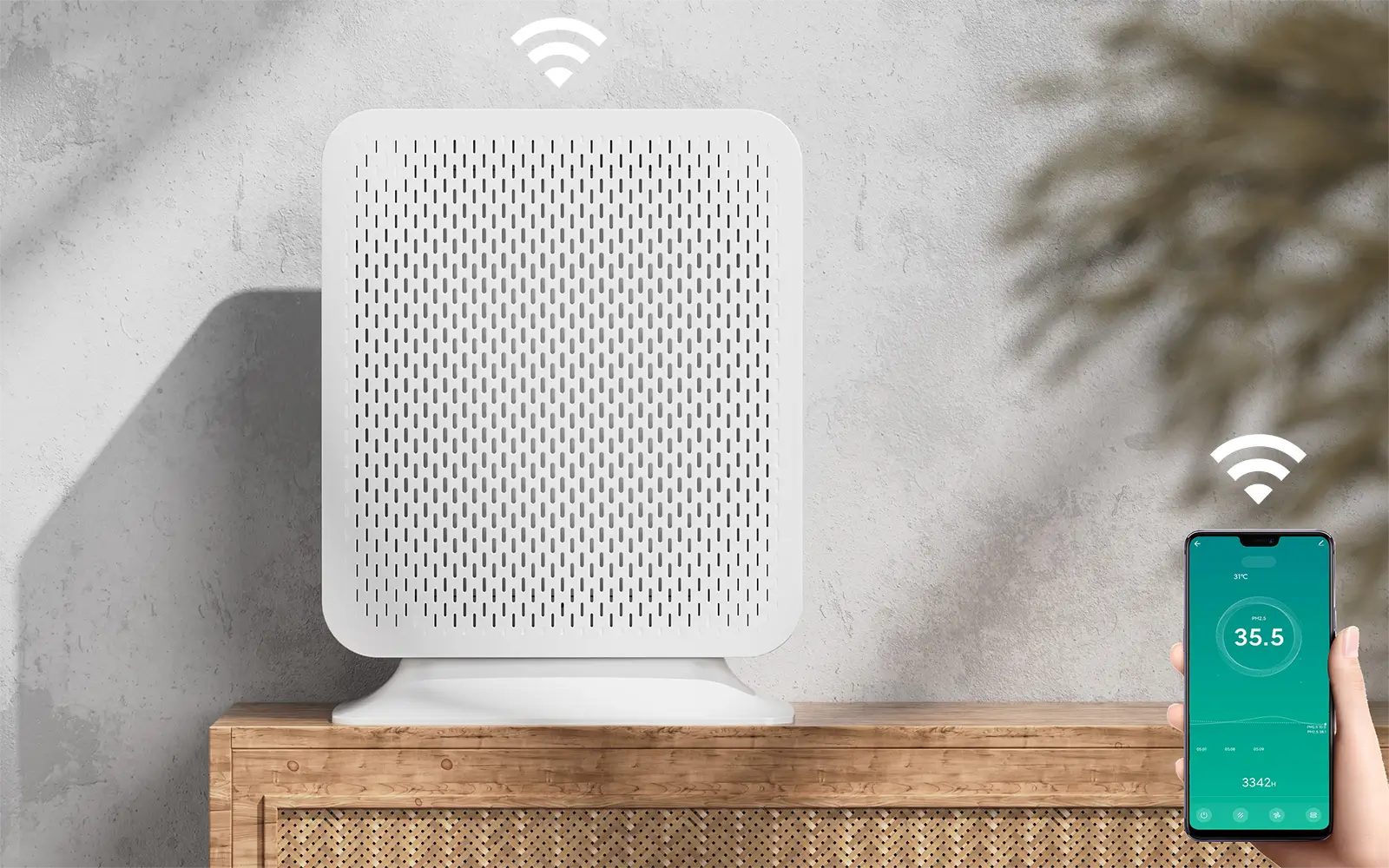
ha200 wifi

The Old Guard Can't Keep Up: Why Wi-Fi 4 & 5 Fail in the Modern Home

Given these distinct data demands, let's look at why older Wi-Fi standards, despite their lower module costs, are increasingly inadequate for competitive smart air purifiers.

The Wi-Fi 4 (802.11n) Trap
Introduced in 2009, 802.11n (Wi-Fi 4) modules are indeed the most inexpensive on the market. On paper, its theoretical bandwidth seems sufficient for both sensor data and OTA updates. However, its critical weakness lies in its poor performance in congested environments. The 2.4 GHz band, where most low-cost IoT devices operate, is notoriously crowded with interference from neighboring Wi-Fi networks, Bluetooth devices, and even microwave ovens.

Wi-Fi 4 lacks the modern efficiency mechanisms of its successors. As the number of devices in a home increases, its performance degrades rapidly. It struggles to handle small, frequent data packets efficiently, leading to increased latency and a degraded real-time responsiveness. Furthermore, its security is typically limited to WPA2, which has documented vulnerabilities. For any OEM aiming for a reliable, responsive product, Wi-Fi 4 is a significant compromise.

The Wi-Fi 5 (802.11ac) Compromise
Released in 2013, 802.11ac (Wi-Fi 5) offered a substantial performance boost by operating exclusively on the less-congested 5 GHz band. It's faster and more reliable than Wi-Fi 4, and modules are widely available and competitively priced.

However, Wi-Fi 5 still relies on the same fundamental channel access method as Wi-Fi 4, which is inefficient for managing traffic from multiple IoT devices sending small, frequent data packets. Think of it like this: using a large lorry to deliver a single small postcard. The entire channel is occupied for a tiny payload, creating inefficiency and contention. This means that even with higher theoretical speeds, Wi-Fi 5 can still cause traffic jams and delays for your air purifier's critical sensor data and commands in a busy smart home. Like Wi-Fi 4, its primary security is WPA2.
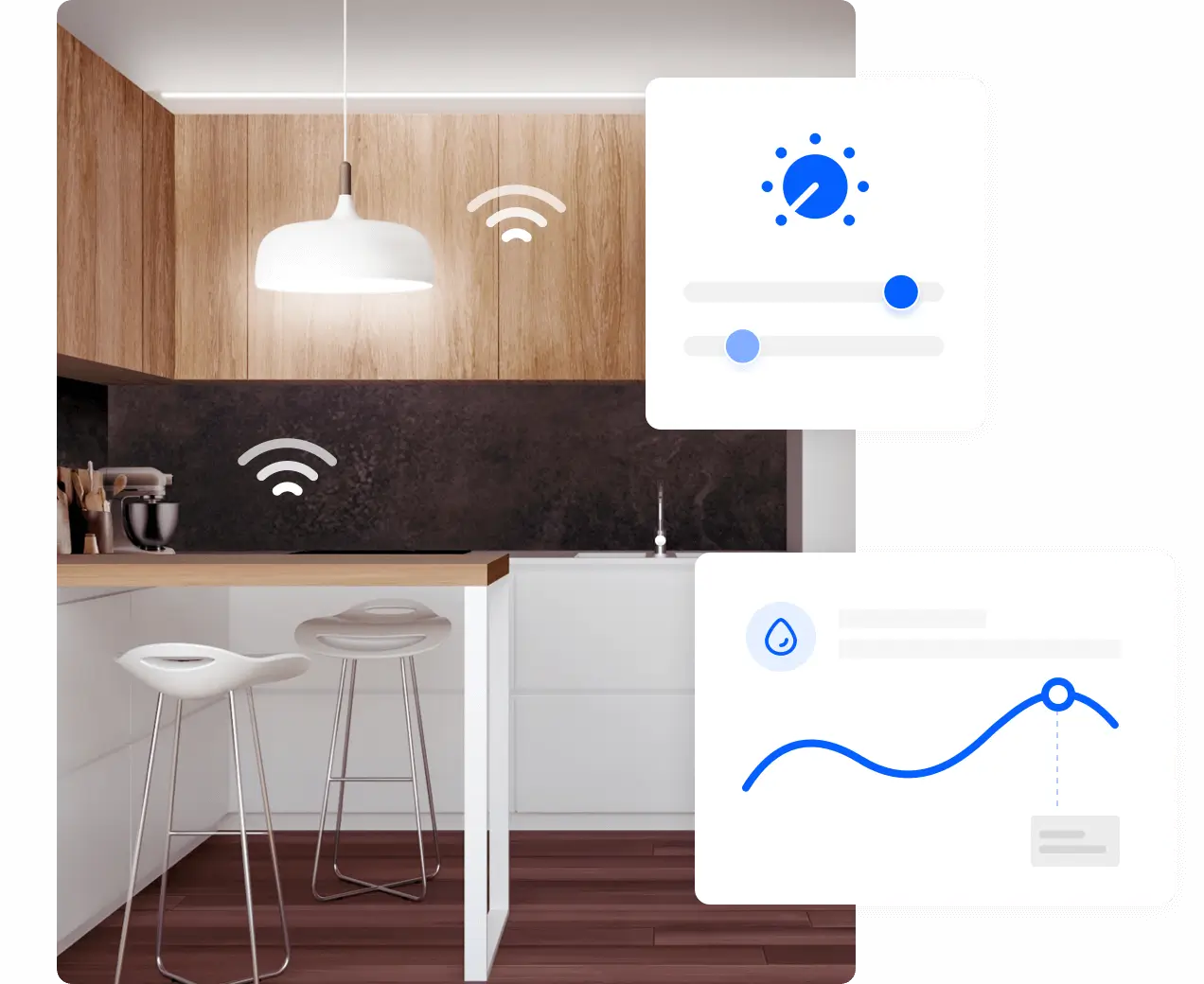
tuya

The Solution is Here: Why Wi-Fi 6 is Purpose-Built for the Smart Home

This brings us to 802.11ax (Wi-Fi 6 and Wi-Fi 6E1). Designed from the ground up to address the challenges of high-density device environments, Wi-Fi 6 is the definitive choice for any new product development aiming for a premium, reliable user experience.

The Secret Weapon: OFDMA
This is the cornerstone technology of Wi-Fi 6 for IoT. Unlike older standards that make devices wait in line, Orthogonal Frequency-Division Multiple Access (OFDMA) allows the router to subdivide the wireless channel into smaller sub-channels. This means your router can communicate with multiple devices—like your air purifier, a smart light, and a thermostat—simultaneously within the same transmission window.

This dramatically reduces latency and contention, making it perfectly suited for handling the small, frequent sensor updates from a fleet of smart home devices. It directly solves the "lorry and postcard" problem, ensuring sensor data arrives promptly and predictably, even in a highly congested network. For a product whose value is predicated on providing real-time environmental data, the consistent low-latency performance of Wi-Fi 6 is not an incremental improvement but a transformative one.

Smart Power Management: Target Wake Time (TWT)
While often highlighted for battery savings in low-power devices, Target Wake Time (TWT) also offers significant benefits for mains-powered devices like air purifiers. TWT allows the air purifier and router to negotiate specific times for data transmission. In between these times, the device's Wi-Fi radio can enter a deep-sleep state. For an air purifier, the primary benefit is a reduction in network congestion. By preventing dozens of IoT devices from constantly contending for airtime, TWT leads to a more orderly and efficient network for all connected devices.

Security by Default: Mandatory WPA3
Wi-Fi 6 certification requires support for WPA3, the latest security protocol. WPA3 replaces the vulnerable Pre-Shared Key (PSK) method of WPA2 with Simultaneous Authentication of Equals (SAE), which provides robust protection against offline dictionary attacks. It also offers individualized data encryption even on open networks and is immune to vulnerabilities like KRACK (Key Reinstallation Attacks). For an OEM, offering WPA3 is a significant security and marketing advantage, building crucial consumer trust.

The Ultimate Advantage: Wi-Fi 6E
Wi-Fi 6E extends Wi-Fi 6 by giving devices access to the new 6 GHz frequency band. This band is a pristine, wide-open highway for Wi-Fi traffic, free from the interference of legacy devices. For an air purifier, this means an ultra-reliable, low-latency connection, which is especially beneficial for critical tasks like large OTA updates, minimizing the risk of a failed update to the greatest extent possible.

matter

Future-Proofing for What's Next: The Matter Imperative
As a founder, I'm always looking ahead. The most significant development in the smart home landscape is the Matéria2 standard. Backed by industry giants like Apple, Google, and Amazon, Matter is designed to unify the fragmented smart home market, ensuring devices from different manufacturers can communicate seamlessly.

Matéria2 is not a wireless protocol itself; it's an application layer protocol that runs on top of existing IP-based networks. For a smart air purifier, this means Matter will use the device's Wi-Fi connection as its transport layer. The key takeaway here is simple: a rock-solid Wi-Fi 6 connection is a foundational prerequisite for a good Matter experience and for achieving Matter compliance. Building a single Matter-compliant air purifier will allow it to work natively with all major ecosystems, drastically expanding your potential customer base and simplifying product development. A non-Matter device risks being locked out of these ecosystems or requiring clunky, custom integrations that lead to a poor user experience.

purificador de ar de secretária ha100d 3

Conclusion: Don't Save a Dollar Today to Lose a Customer Tomorrow

The role of connectivity in a smart air purifier has evolved from a simple add-on to a core component of the product's architecture and value proposition. For us as OEMs, the decision is no longer simply "does it connect?" but "how well does it connect under real-world conditions?"

The evidence overwhelmingly indicates that the features of the 802.11ax (Wi-Fi 6) standard are not just incremental upgrades but are targeted solutions to the specific challenges of IoT devices operating in congested home networks. While legacy protocols like Wi-Fi 4 and Wi-Fi 5 may offer short-term BOM cost advantages, they introduce significant risks to performance, security, and brand reputation that can lead to much higher long-term costs.

The investment in Wi-Fi 6 is an investment in a responsive user experience, robust security, reliable long-term serviceability via OTA updates, and critical future-readiness for the Matter-dominated smart home ecosystem. For any OEM developing a new smart air purifier for today's market, the strategic imperative is clear: build on a foundation of Wi-Fi 6. It's about positioning your company for success in a demanding and increasingly intelligent connected world, ensuring your product not only performs well upon release but remains a capable and secure network citizen for years to come.

References:


  1. What is Wi-Fi 6? Retrieved from https://www.intel.com/content/www/us/en/gaming/resources/wifi-6.html ↩

  2. HisoAir. What Matter Protocol Means for Smart Air Purifier OEM Projects. Retrieved from https://hisoair.com/what-matter-protocol-means-for-smart-air-purifier-oem-projects/ ↩ ↩

Partilhar:
o fundador da hisoair, sr. lee
Alwen Lee, an air purification expert with over 10 years of experience, is a devoted father of two and a passionate traveler, having explored more than 30 countries. With a love for public speaking and swimming, he has dedicated his life to the indoor air quality industry. His mission is to ensure that people around the world enjoy the freedom to breathe clean air and lead happy, healthy lives.

Envie-nos uma mensagem

Related Products

Mais para ler

Modern living room with a family enjoying a healthy indoor environment monitored by smart devices, natural lighting, and greenery.

After IFA 2026: The Healthy Home Is Moving Beyond Smart Devices

In our previous IFA 2026 column, Air Purification Is Becoming Part of the Healthy-Home Platform, we argued that the next generation of indoor-health products would ...
Notícias
Modern living room and kitchen with smart home air quality devices including an air purifier, humidifier, and water filtration system, connected with visualized blue connectivity lines.

IFA 2026: Air Purification Is Becoming Part of the Healthy-Home Platform

Pre-IFA Industry Perspective | September 4, 2026 This article is based on official announcements and regulatory information available ahead of IFA 2026, which takes place ...
Notícias
A modern office room with a gray wall-mounted air purifier, large wooden desk, office chairs, indoor plants, and glass windows offering a city view.

Luftreiniger gegen Staub: HEPA-Luftreinigung für Büro, Gewerbe und Industrie

Kurz gesagt: Ein Luftreiniger entfernt Staub aus der Luft – nicht vom Schreibtisch. Er reduziert die Konzentration schwebender Partikel und damit auch die Menge an ...
Air purifier, Filter
Comparison infographic showcasing the differences between carbon block filter and activated carbon fiber. Detailed diagrams illustrate the hierarchical porous structure of the carbon block with long diffusion paths and the open microporous structure of the activated carbon fiber with direct access for PFAS adsorption.

Carbon Block vs. Activated Carbon Fiber (ACF): Matching Media to Target Contaminants

Two carbon media. Same adsorption chemistry. Very different behaviour in a point-of-use cartridge. If you are specifying a water purifier platform for a PFAS-aware market, ...
Notícias
NSF base listing and ANF private-label certification pathway for OEM water filters

What Is an NSF Master Listing? A Guide to Base Listings, ANF Certification and OEM Water Filters

For a brand preparing to launch an OEM water purifier, one of the most common supplier claims is: “We already have an NSF master listing, ...
News, Water Purifiers
Healthy-home brand team reviewing PFAS water filter certification, test data and product engineering

Entering the Water Category Is Easy. Building a Credible PFAS Claim Is Much Harder

For air purification, appliance and healthy-home brands, entering the water category can look surprisingly easy. A company can select an existing undersink system, customize its ...
Notícias
Contaminant Engineering•3 min read

PFAS Water Filtration Technologies Explained: Carbon, Resin & RO

Key Takeaway:

PFAS reduction depends on the specific compounds present, treatment media, contact time, water chemistry, and system design. Activated carbon, ion exchange, and Reverse Osmosis address PFAS through different mechanisms.

PFAS are a large family of persistent fluorinated compounds that can occur in drinking-water supplies. Their treatment behavior varies significantly by molecular structure, chain length, functional group, concentration, and the chemistry of the source water.

Granular Activated Carbon (GAC) removes PFAS primarily through adsorption. It is generally more effective for many longer-chain PFAS, while shorter-chain compounds tend to break through more quickly. Carbon performance depends on media properties, Empty Bed Contact Time (EBCT), competing organic matter, loading, and replacement frequency.

Ion-exchange resins use charged functional sites to capture many PFAS compounds. Properly selected anion-exchange media can provide high capacity and may perform better than conventional activated carbon for some shorter-chain PFAS, although performance still depends on water chemistry and competing ions.

Reverse Osmosis (RO) uses membrane separation rather than adsorption. Properly designed RO systems can provide broad reduction across many PFAS compounds as well as dissolved salts and other contaminants. Unlike carbon or resin, however, RO also produces a concentrate stream that must be managed.

No single technology should be selected from a PFAS label alone. System design should consider which PFAS compounds are present, their concentrations, required reduction targets, flow rate, media life, and the applicable third-party certification or validation requirements.

HisoAir Water Technical Series
Product Discovery•3 min read

How to Choose an Under-Sink Water Purifier for Modern Kitchens

Key Takeaway:

Match the treatment technology to your water quality first, then evaluate cabinet space, faucet configuration, flow rate, drain and power requirements, and filter replacement needs.

Choosing an under-sink water purifier starts with water chemistry. Carbon filtration is well suited to chlorine, taste, odor, and many organic contaminants, while Reverse Osmosis is more appropriate when dissolved salts, fluoride, nitrates, or broader dissolved contaminants need to be reduced.

For compact kitchens, tankless RO systems eliminate the conventional storage tank and can significantly reduce the space required under the sink. However, membrane capacity stated in GPD does not directly equal faucet flow. When comparing systems, check the actual dispensing flow rate, inlet-pressure requirement, recovery ratio, and whether a booster pump is required.

Installation architecture also matters. Many RO systems require a drain connection, electrical power, and either a dedicated drinking-water faucet or a compatible multi-function faucet. High-flow carbon systems can often connect directly to the existing cold-water line with a simpler installation, but pressure drop and available faucet flow should still be verified.

RO also removes much of the naturally occurring dissolved mineral content. Where taste or mineral balance is a priority, a post-RO remineralization stage can be added. Filter life should be evaluated by both rated capacity and local water quality rather than replacement time alone.

The right system is therefore not simply the smallest or highest-GPD model. It is the configuration that matches the target contaminants, available cabinet space, desired faucet setup, peak dispensing demand, and maintenance expectations.

HisoAir Water Technical Series
Water Quality•2 min read

What Does TDS Mean in Drinking Water? Measurement vs Contaminant Reality

Key Takeaway:

A TDS meter estimates the overall concentration of dissolved ionic substances from electrical conductivity. It cannot identify specific contaminants or determine whether water is chemically safe.

Total Dissolved Solids (TDS) refers to the combined concentration of dissolved substances in water. Most handheld TDS meters do not measure TDS directly. Instead, they measure electrical conductivity (EC) and convert that reading into an estimated parts-per-million (ppm) value.

This means a TDS reading can indicate how much dissolved ionic material is present, but not what that material actually is. Calcium, magnesium, sodium, nitrates, and other dissolved ions can all contribute to conductivity, yet a simple TDS meter cannot distinguish between them.

TDS meters are also not suitable for detecting trace contaminants such as PFAS, many VOCs, pesticides, pharmaceuticals, or disinfection byproducts. These substances may be present at concentrations far below the level needed to noticeably change electrical conductivity.

A low TDS reading therefore does not guarantee safe drinking water, and a higher TDS reading does not automatically indicate contamination. Water-treatment decisions should be based on laboratory testing for specific contaminants of concern rather than TDS alone.

HisoAir Water Technical Series
Technology Selection•2 min read

RO vs UF Water Filtration: Understanding Pore Sizes & Dissolved Minerals

Key Takeaway:

Ultrafiltration can reduce bacteria, turbidity, and suspended particles while retaining most naturally occurring dissolved minerals. Reverse Osmosis provides much broader reduction of dissolved salts and smaller contaminants.

Ultrafiltration (UF) typically uses hollow-fiber membranes with pore sizes in the approximate 0.01–0.1 micron range. These membranes physically retain turbidity, suspended solids, colloids, and many microorganisms while allowing dissolved minerals and salts to remain in the water.

Reverse Osmosis (RO) operates at a much finer separation level. Unlike UF, RO can substantially reduce dissolved ions such as sodium, calcium, fluoride, nitrates, and other contributors to total dissolved solids (TDS). This makes RO more suitable when dissolved-salt reduction is a primary treatment objective.

UF generally requires less system pressure and produces little or no continuous concentrate stream in many point-of-use configurations. RO typically requires greater pressure and produces a reject-water stream, but delivers broader contaminant reduction.

For water with acceptable TDS and mineral content, UF can be a simpler mineral-retaining treatment option. Where dissolved salts, fluoride, nitrates, or broader dissolved contaminants are a concern, RO is generally the more appropriate technology.

HisoAir Water Technical Series
Technology Selection•4 min read

Carbon Block vs Reverse Osmosis: Which Fits Your Need?

Key Takeaway:

Choose RO for dissolved inorganic salts and heavy metals; choose Carbon Block for chemical taste/odor, no wastewater, and high line-pressure flow.

Reverse Osmosis (RO) and Carbon Block filtration represent two fundamentally different treatment methods: membrane separation and adsorption. Understanding these differences helps determine which technology is better suited to a specific water-quality requirement.

Reverse Osmosis uses a semi-permeable membrane with pore sizes of approximately 0.0001 microns. It can significantly reduce dissolved inorganic contaminants such as TDS, fluoride, nitrates, and certain heavy metals. Because water must be forced through the membrane, RO systems require sufficient pressure or a booster pump and generate a concentrated wastewater stream.

Carbon Block filtration relies primarily on adsorption through compressed activated carbon, commonly with nominal pore sizes around 0.5–5 microns. It is highly effective for chlorine, chloramines, VOCs, taste, and odor, while allowing substantially higher direct-flow rates without producing wastewater.

From an operating perspective, Carbon Block systems are generally simpler, require less energy, and avoid the water loss associated with RO. RO involves higher system complexity and operating cost, but provides substantially broader reduction of dissolved contaminants that Carbon Block alone cannot address.

HisoAir Water Technical Series

SOLICITAR UM ORÇAMENTO