

In the sprawling, hyper-competitive world of e-commerce, a new type of brand has emerged. Seemingly materializing from nowhere, these "phantom brands" can rapidly dominate product categories on platforms like Amazon and Walmart, armed with thousands of five-star reviews, sleek marketing, and aggressive pricing. A prime example of this phenomenon is Aroeve, a name that has become ubiquitous in the online air purifier market. For any business operating in the B2B or D2C space, understanding the Aroeve model is not just a matter of curiosity; it's a critical case study in modern global commerce, digital marketing, and corporate strategy.
The central question—"Where are Aroeve air purifiers manufactured?"—seems simple. But the answer peels back the layers of a sophisticated international operation designed to maximize market access while minimizing liability. The short answer is China. The long answer, however, reveals a playbook that every digital-first brand needs to understand.
Pinpointing the Source: Manufacturing, Origins, and Strategic Ambiguity
Let's be unequivocal: Aroeve is a Chinese company, and its air purifiers are manufactured in China. This conclusion is not based on speculation but on verifiable data from multiple independent sources.
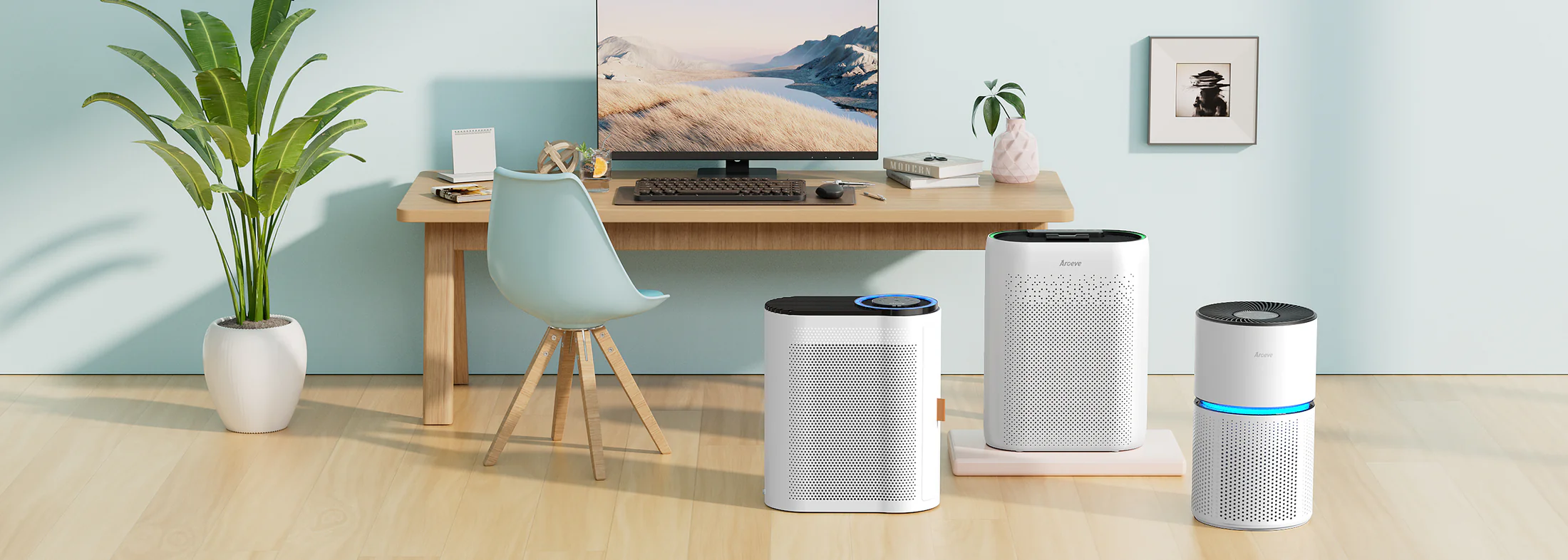
Corporate intelligence firm Tracxn identifies Aroeve as an "unfunded company based in China, founded in 2021". This places the brand's inception and operational headquarters firmly within China's formidable consumer electronics manufacturing ecosystem. This finding is independently corroborated by detailed, hands-on product teardowns. A technical review of the Aroeve MK01 model by the testing organization HouseFresh.com explicitly lists the "Country of manufacture: China" in its specifications. The same investigation went a step further, performing a WHOIS query on the brand's official website, aroeve.com. The results were telling: the domain is registered in China and hosted on Alibaba, a titan of Chinese technology and e-commerce. This led the reviewers to the clear conclusion that "this is a Chinese company that sells primarily on Amazon.com".
Despite this clear evidence, Aroeve engages in a deliberate and calculated strategy of geographic ambiguity. A thorough review of the company’s official website, from its "About Us" page to its product descriptions, reveals a conspicuous absence of any mention of China. The brand narrative is meticulously crafted to resonate with a Western audience, focusing on a universal vision of wellness and providing "fresh, clean air".
This Western-facing persona is reinforced by the site's architecture. The only language and currency options are for the United States and several major European countries, including the UK, Germany, France, Italy, and Spain. The company’s "Sales Regions" section further cements this perception, stating, "Today, Aroeve's products are primarily sold in North America". This focus is echoed in the FAQ, which highlights "free shipment all over the contiguous U.S.".
This digital sleight of hand can be amplified by the logistics of e-commerce. An eBay listing for an Aroeve purifier might show the item's location as "Beloit, Wisconsin, United States". While factually correct for that specific unit's point of departure, it reflects a third-party fulfillment center, not the factory floor. For the average consumer, this detail contributes to the illusion of a domestic product. This strategy allows Aroeve to leverage the significant cost advantages of Chinese manufacturing while sidestepping potential consumer biases and positioning itself against brands perceived to be of Western origin.
A Masterclass in Corporate Architecture: The Three-Tiered Liability Shield
For B2B and D2C leaders, the most instructive part of the Aroeve story is its corporate structure. It is not a single, monolithic company but a fragmented, multi-jurisdictional arrangement engineered to protect assets, access markets, and insulate the core brand from risk.
-
The Core Entity: Aroeve (China)
The operational heart of the brand is the entity founded in China in 2021. This company is the engine of the operation, responsible for product design, development, and manufacturing. It exists within a fiercely competitive domestic market of Chinese tech firms like CoClean, Beiang Technology, and Homvana, all vying for a piece of the global smart home appliance market. -
The Intellectual Property Fortress: AIROVA, INC. (United States)
While the products are made in China, the brand's most valuable assets—its name, trademarks, and goodwill—are domiciled in the United States. Aroeve's official website contains a critical legal disclosure: "In the United States, all rights, title, and interest in and to the AROEVE, including all associated trademarks, copyrights, goodwill, and other intellectual property rights, are solely and exclusively owned by AIROVA, INC."
This U.S.-based corporation, AIROVA, INC., also "maintains ultimate authority over all sales channels of AROEVE products in the United States," including Amazon, Walmart, and Temu. By vesting ownership of its brand and control of its sales channels in a U.S. entity, Aroeve places its intellectual property under the robust legal protection of the United States, cleanly separating these intangible assets from the foreign manufacturing operations. (It is important to note that AIROVA, INC. is entirely unrelated to AirNova, Inc., a New Jersey-based environmental services firm specializing in industrial emissions testing since 1987.) -
The Point of Liability: Antadi LLC (United States)
The third and final piece of this corporate puzzle was revealed not through marketing materials, but through legal filings. In December 2024, a proposed class-action lawsuit was filed concerning Aroeve air purifiers, alleging that they were falsely advertised as containing HEPA filters. The defendant named in the suit was not the Chinese parent company, nor the IP-holding AIROVA, INC. It was a U.S. entity named Antadi LLC.
This is a crucial detail. It strongly suggests that Antadi LLC functions as the importer of record and primary seller in the U.S. market. This three-tiered structure is a textbook model for a cross-border e-commerce liability shield:- Manufacturing is handled by the Chinese parent company.
- Valuable IP is securely held by a separate U.S. corporation (AIROVA, INC.).
- Sales and Distribution are conducted through another U.S. entity (Antadi LLC), which absorbs the direct risk of consumer lawsuits and product liability claims.
Should the class-action lawsuit succeed, any financial judgment would likely be levied against Antadi LLC, an entity that may be structured with limited assets. This insulates the far more valuable Aroeve brand and its trademarks, legally owned by AIROVA, INC. It is a sophisticated legal architecture that maximizes market penetration while actively minimizing exposure to financial and legal risk.
The "Internet-First" Playbook: How to Win on Amazon
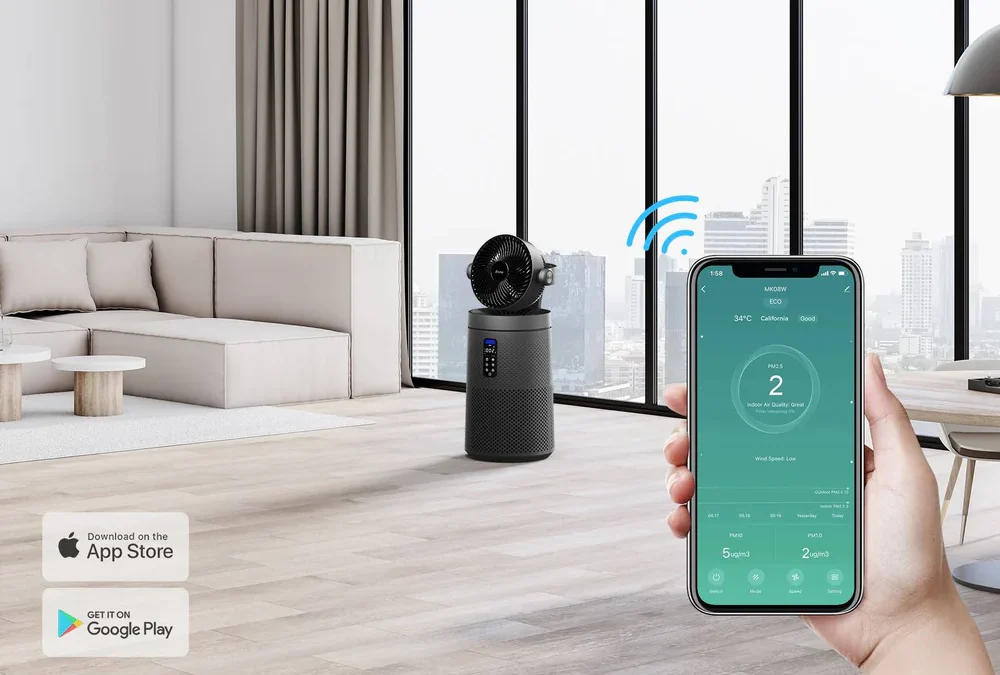
Aroeve’s go-to-market strategy is a case study in digital-era efficiency. It completely bypasses traditional retail, focusing its entire operation on the ecosystems of e-commerce giants. This marketplace-centric model is the engine of its growth.
The brand's success is built on two pillars: social proof and lifestyle appeal. Aroeve’s marketing prominently boasts of having "over 16,000 five-star ratings on Amazon". This metric is presented as a primary validator of quality, demonstrating a keen understanding that on these platforms, the perception of popularity is a powerful sales driver. This mass of positive sentiment creates a "bandwagon effect" that can overwhelm more critical, technical assessments.
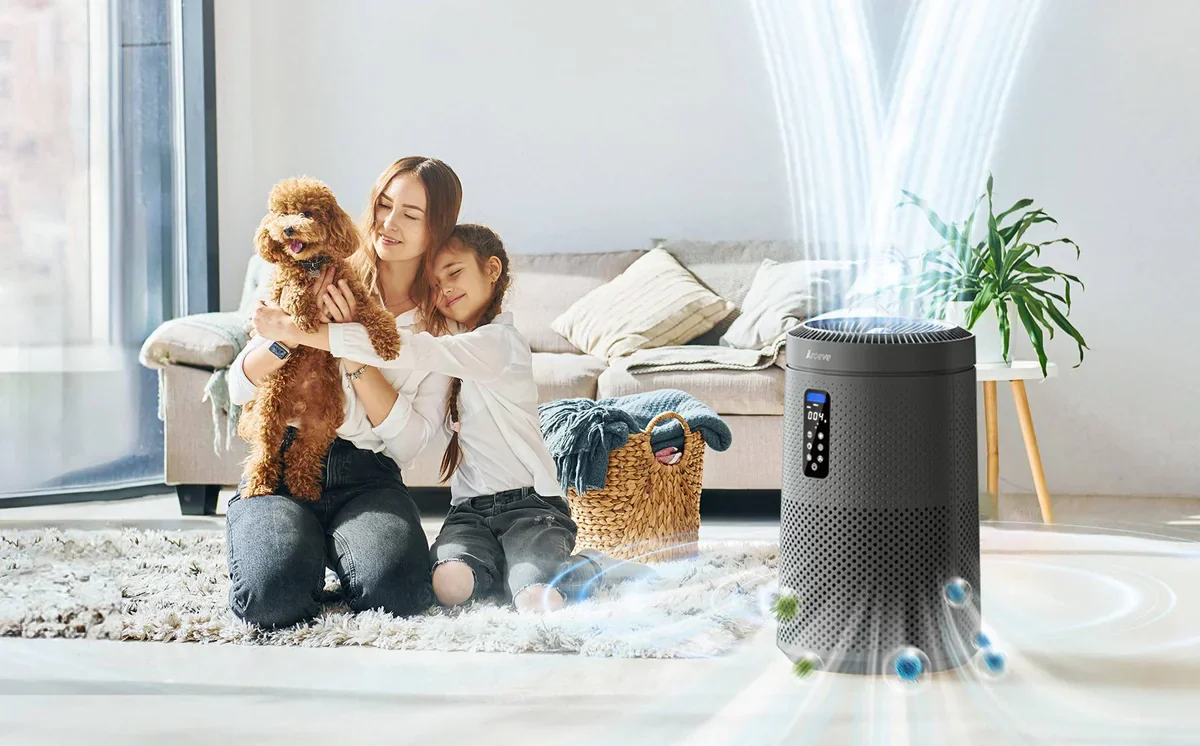
Furthermore, Aroeve's marketing language studiously avoids technical jargon, instead focusing on accessible, wellness-oriented benefits. The brand slogan, "Release Your Breathing Instinct," and descriptions of air that is "fresh as a daisy" create an emotional connection with the consumer. A key example is the marketing of the "aroma pad," a feature that allows users to add essential oils to the device. This has little to do with air purification, but it brilliantly reframes the product as a tool for creating a "peaceful and relaxing indoor environment," thereby broadening its appeal from allergy sufferers to the much larger home ambiance and wellness market.
The takeaway for D2C brands is that Aroeve's core competency may not be in engineering superior air purification technology, but in mastering the Amazon-era sales funnel. The product appears reverse-engineered to win on the platform by hitting key algorithmic triggers: a low price point to drive initial sales, lifestyle features that generate positive reviews, and quiet operation that makes it popular for bedrooms. This creates a self-reinforcing flywheel where sales drive reviews, which in turn drive visibility and more sales, often independent of the product's actual technical efficacy.
The Performance Gap: A Chasm Between Marketing and Reality
For any business where product quality is paramount, the Aroeve story serves as a cautionary tale. There is a profound and documented disconnect between the brand's marketing narrative and the product's independently verified technical performance.
The Marketing Narrative: Aroeve presents itself as "committed to providing fresh, clean air" through "high-performance air purifiers" made under "stringent quality control". Customer testimonials on its website claim the purifier "effectively improved the room's air quality after only two to three minutes".
The Technical Reality: Independent testing reveals a starkly different story.
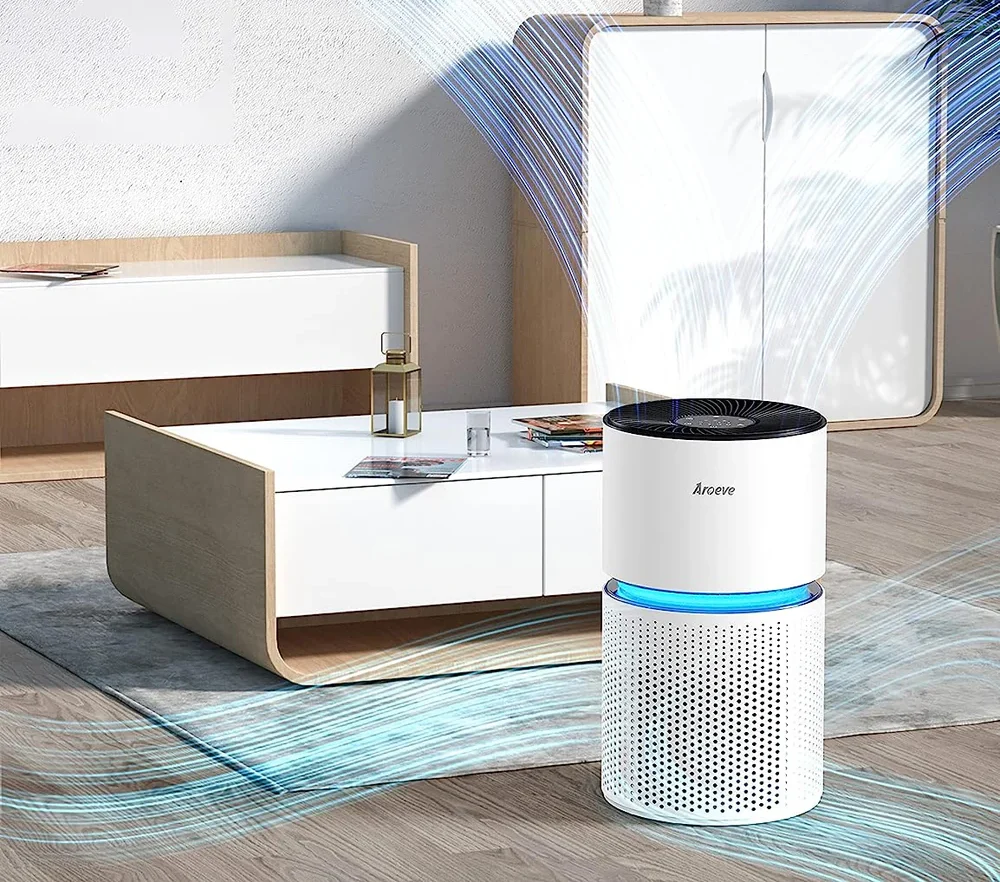
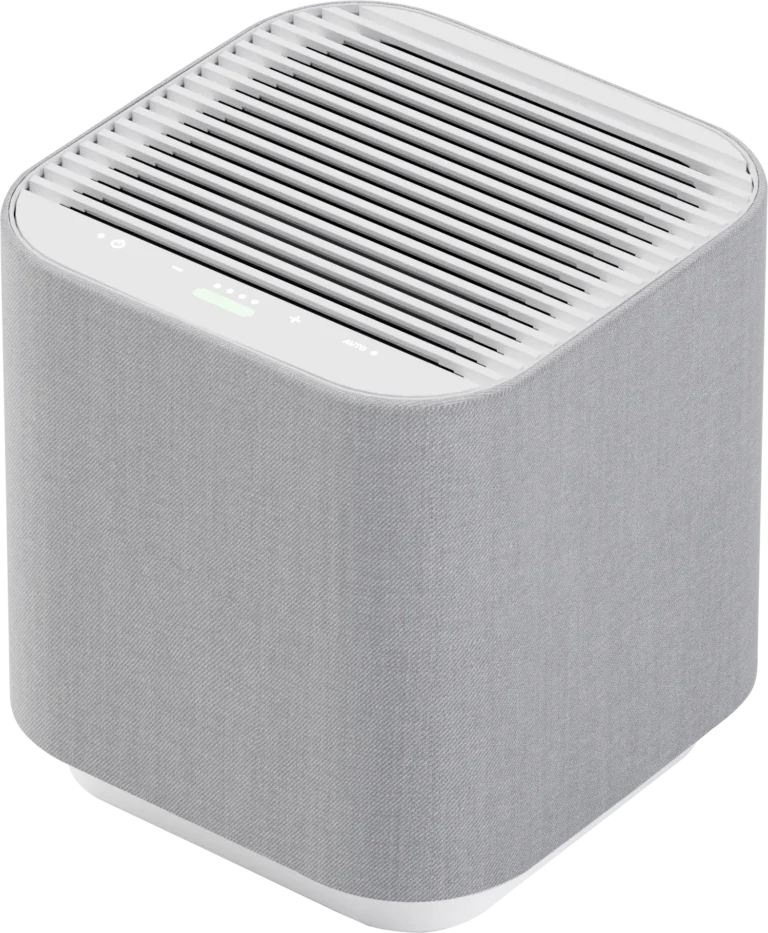
- Insufficient Power (CADR): An air purifier's effectiveness is measured by its Clean Air Delivery Rate (CADR). Independent tests of the popular Aroeve MK01 found it has a "very small CADR of just 30 CFM". This makes the device "unsuitable for rooms larger than 47 sq. ft.". For context, that is the size of a small walk-in closet. Marketing it for standard bedrooms or living areas is functionally misleading.
- Subpar Filtration: The core of the product, its filter, has been described as "not top-notch" and prone to getting dirty quickly due to its small size. An analysis of the larger MK04 model was even more damning, calling its carbon filter "very very poor grade. and very. small". Tests of the MK01 and MK06 models showed only a 10% reduction in Volatile Organic Compounds (VOCs), a result described as "not particularly good".
- Deceptive Advertising Allegations: The most serious issue is the class-action lawsuit alleging that Aroeve purifiers were falsely advertised as using HEPA filters. HEPA is a regulated standard guaranteeing 99.97% capture of 0.3-micron particles. If proven, this would represent a fundamental deception at the heart of its marketing.
- Gimmicky Features: Many models are advertised with a UV light, implying germicidal capability. Technical reviews have dismissed this as a "gimmick," with one analysis concluding the "UV light isn't germicidal" and may be nothing more than a standard LED for marketing effect.
- No Warranty: In a major red flag for any consumer electronic, the HouseFresh.com review notes that the AROEVE MK01 model "does not come with a warranty". This suggests a product philosophy centered on disposability, not durability and customer support.
This chasm between marketing and reality is the central pillar of the business model. It exploits the information asymmetry between the company and the average consumer, who is more likely to be swayed by a low price and a high volume of reviews than by technical specifications like CADR.
Conclusion: Lessons from the Aroeve Blueprint
Aroeve is a quintessential digital arbitrageur. Its model is built on exploiting the cost differential between Chinese manufacturing and Western retail prices, using the frictionless infrastructure of e-commerce to bridge the gap. Its competitive advantage is not engineering, but a mastery of digital marketing and cross-border logistics.
However, this model is fraught with vulnerabilities:
- Legal Risk: The class-action lawsuit is a direct threat. A negative judgment could trigger regulatory scrutiny and force a complete overhaul of its marketing claims.
- Reputational Risk: The brand's foundation of five-star user reviews is vulnerable to erosion as more credible, data-driven technical reviews gain traction in search results.
- Platform Risk: Aroeve's total dependence on marketplaces like Amazon is a strategic liability. A policy change—for instance, requiring independent CADR verification for all air purifiers—could decimate its market position overnight.
For B2B and D2C businesses, the Aroeve case study is a double-edged sword. It demonstrates the immense power of mastering digital sales channels and the potential for rapid growth. But it also serves as a stark warning about the long-term risks of building a brand on a foundation of marketing perception rather than demonstrable product value. In an increasingly transparent market, the gap between promise and reality is not a sustainable competitive advantage. The future belongs to brands that can combine Aroeve's digital savvy with a genuine commitment to product efficacy and corporate transparency.


 English
  Français
  Español
  Italiano
  Deutsch
  Português
  Русский
  العربية
  日本語
日本語  한국어
한국어  Tiếng Việt

