Abre num novo separador
Soluções inovadoras para a qualidade do ar

Where Are BWT Water Purifiers Manufactured?

Related Products

You want to trust your water purifier. But where it's made says a lot about its quality. We'll show you exactly where BWT products come from.

BWT water purifiers1 are primarily manufactured in Europe, with key production sites in Austria, Germany, France, and Switzerland. They also operate a new, modern smart factory in Qingdao, China, which was established in 2023 to specifically serve the growing Asian markets with the same high standards.
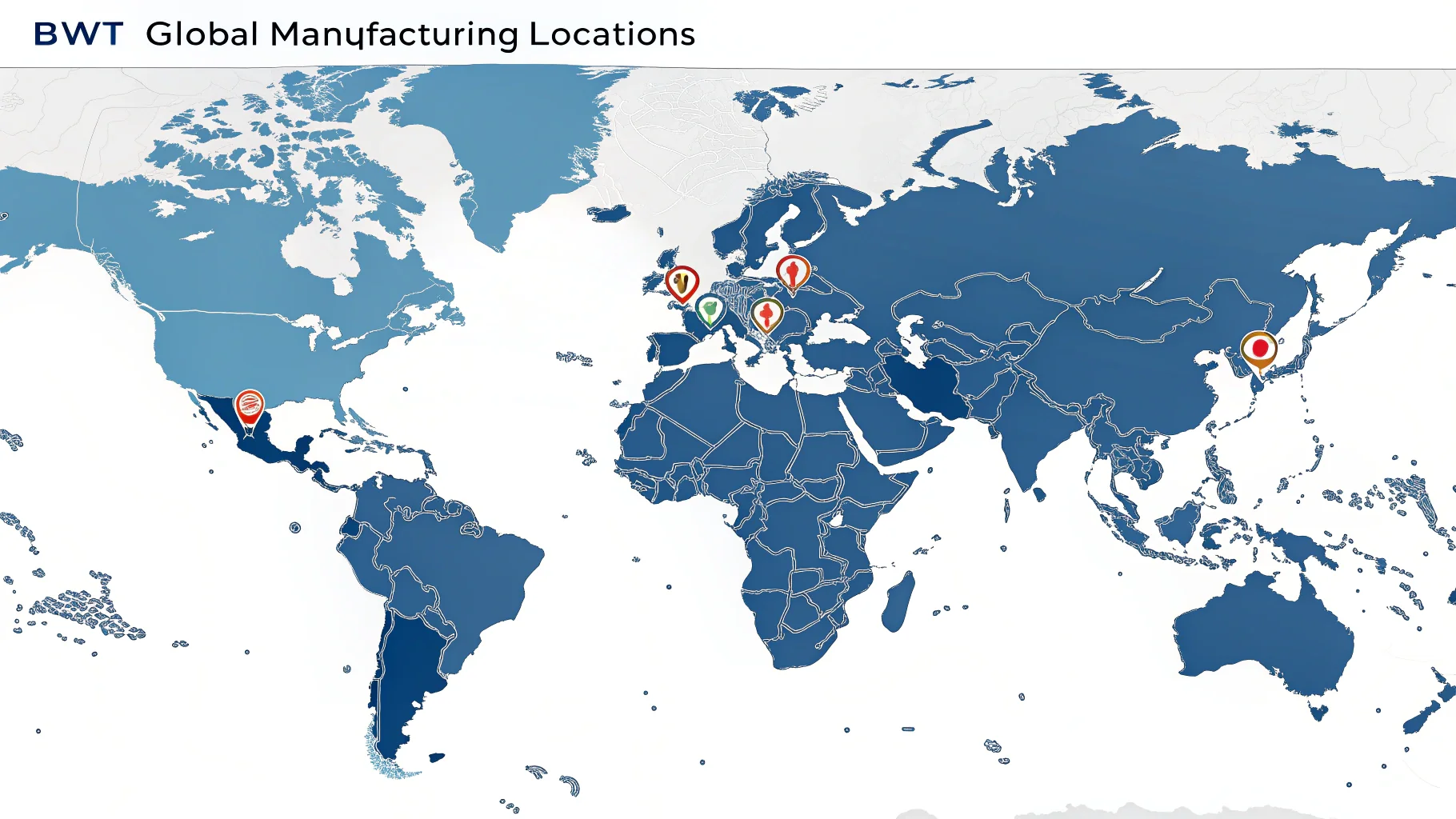
Map showing BWT manufacturing locations in Europe and Asia

When I first got into the water purifier business, I learned a valuable lesson. The "Made In" label is more than just a sticker. It's a story about quality, standards, and the people behind the product. Understanding where a brand like BWT builds its purifiers tells you a lot about what you can expect. It’s a key piece of the puzzle for anyone who cares about clean, safe water. Let's dive into the details of their global manufacturing footprint.

Does BWT Have a Global Presence?

You might think a European brand only focuses on Europe. This can make you overlook their worldwide expertise. Let's explore the true scale of their operations.

BWT is a truly global company. It operates far beyond its European roots, with a network of production facilities, sales offices, and service partners across the world. This global reach ensures they can deliver their high-quality water solutions to customers everywhere.

When a company operates globally, it means they have to understand a wide variety of challenges. The water quality2 in my city might be completely different from the water in a city on another continent. BWT's presence in different regions shows they have experience with these local conditions. Their motto, "For You and Planet Blue," isn't just a slogan; it's a commitment they fulfill worldwide. This global strategy allows them to combine their central European engineering excellence with local market knowledge. This is a huge advantage for both home users and business clients. It means you get a product designed with world-class technology but adapted for your specific needs.

BWT's Reach by Region

Região Significance for Customers
Europe The heart of R&D, engineering, and quality control.
Ásia Growing presence with a new factory for faster delivery and local support.
Americas Established sales and service networks for reliable customer care.
Mundial A wide network of partners ensures you can find BWT products and support almost anywhere.

Where Exactly Are BWT Water Purifiers Manufactured?

You see "Made in Europe" on a label, but that can feel vague. You deserve to know the real story. Let's pinpoint the exact factory locations.

BWT’s core manufacturing happens in four key European locations: Mondsee, Austria; Schriesheim, Germany; Paris, France; and Aesch, Switzerland. To meet Asian demand, they also launched a state-of-the-art smart factory3 in Qingdao, China, in 2023.
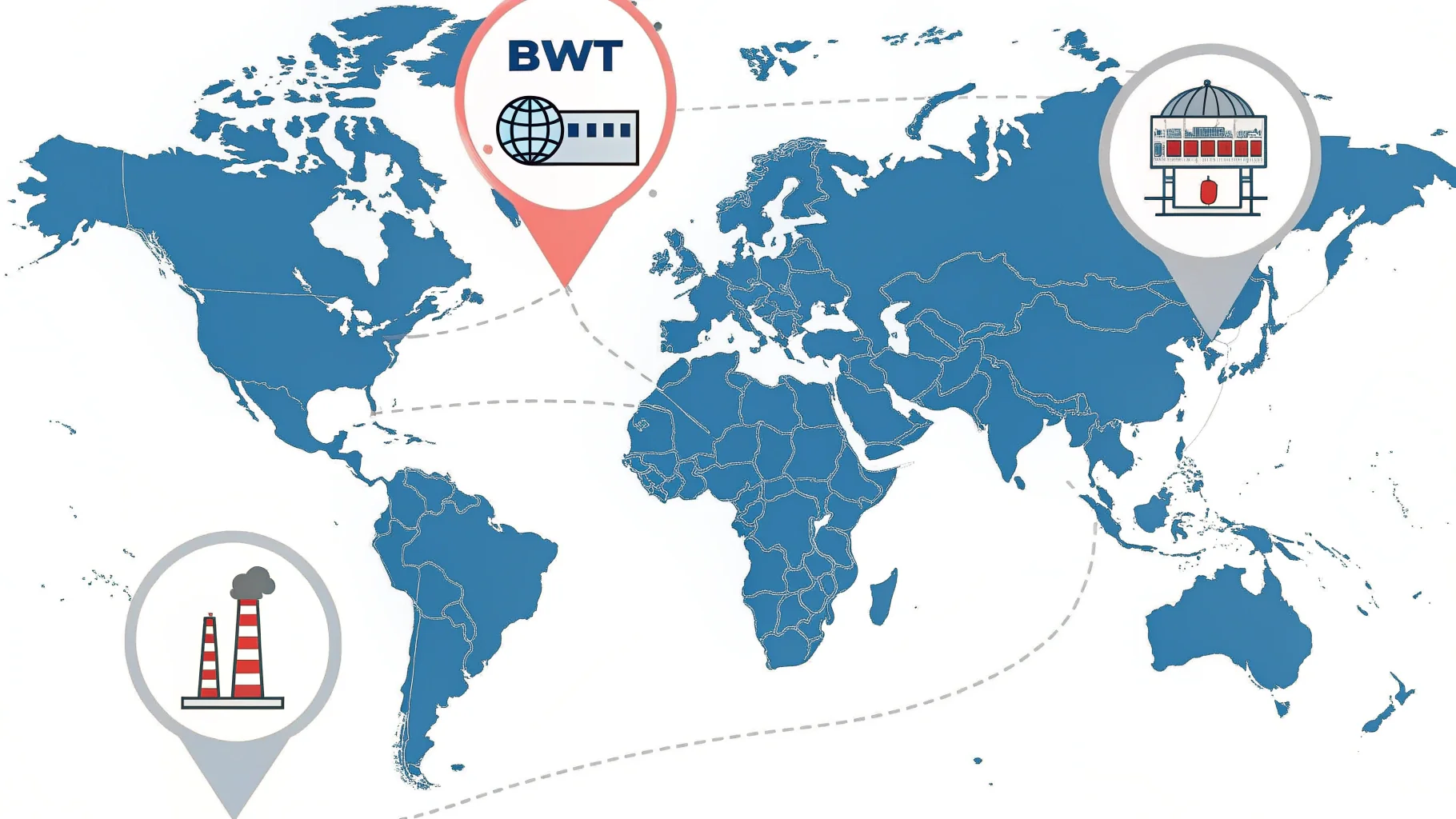
An infographic showing the four European BWT factory locations and the one in China

I always tell my clients to look past the brand and at the infrastructure. BWT’s manufacturing strategy is a great example of this. Their European factories are the foundation of their reputation for quality. These aren't just assembly lines; they are centers of innovation. The Austrian site in Mondsee, for example, is also their global headquarters, driving research and development. Then, you have the new factory in Qingdao, China. This was a smart move. Instead of just outsourcing to a random facility, BWT built their own modern factory. This means they control the entire process, from the raw materials to the final product, ensuring the same high standards as their European plants. This hybrid approach gives them the best of both worlds: European engineering and regional production for faster, more efficient service in Asia.
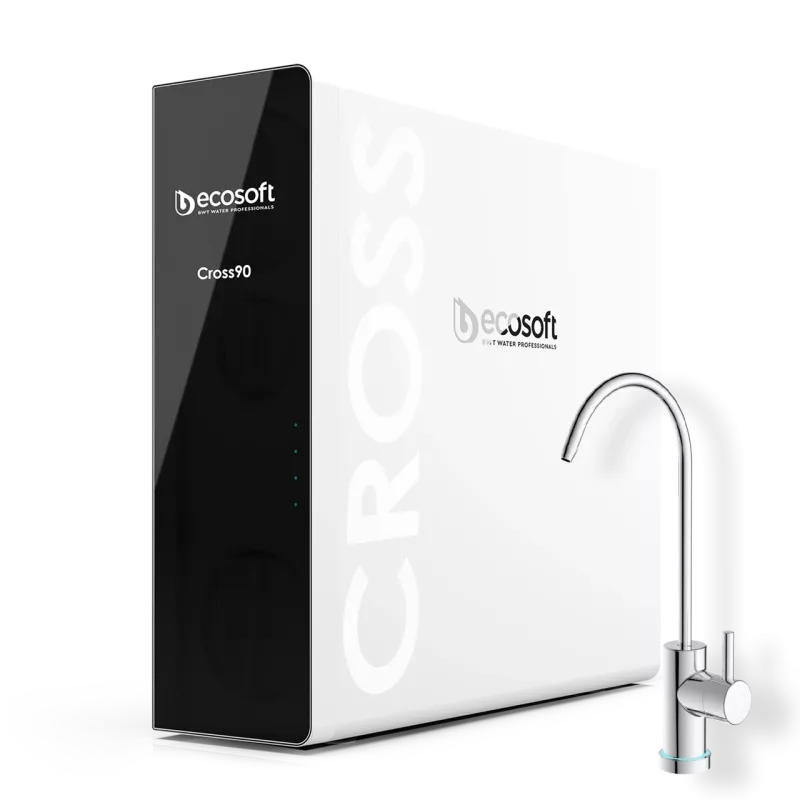
bwt water purifier ecosoft cross90 cover 800x800

BWT's Key Production Sites

Localização País Primary Focus
Mondsee Austria Headquarters, R&D, and Key Production
Schriesheim Alemanha Specialized Water Treatment Systems
Paris France Point-of-Use and Point-of-Entry Systems
Aesch Switzerland High-Purity Water Systems for Pharma
Qingdao China Smart Factory for Asian Markets

What Are Their Manufacturing Standards and Certifications?

Knowing the factory location is a good start. But if the standards are low, it doesn't matter. Let's look at the certifications that guarantee quality.

BWT manufactures its products under strict quality and environmental management systems. Their facilities are certified to international standards like ISO 90014 for quality and ISO 14001 for environmental protection, ensuring every purifier is effective, safe, and responsibly made.

Certifications can seem like boring technical details, but for me, they are a promise. When I see a certification like ISO 9001, it tells me the company has a system in place to prevent mistakes. It means they are committed to consistency, so the first product off the line is just as good as the last. Then there's ISO 140015, which is about environmental management. This shows the company cares about its impact on the planet. They actively work to reduce waste, save energy, and operate sustainably. These standards are not a one-time check. They require regular audits to ensure the company continues to meet the requirements. This applies to all their main production sites, including the new one in China, holding them all to the same high bar.
Logos of ISO 9001 and ISO 14001 certifications

Key Standards Explained

  • ISO 9001 (Quality Management): This is the global benchmark for quality. It means BWT has documented processes for everything from design to production to customer service. It’s all about delivering a reliable product every single time.
  • ISO 14001 (environmental management6): This standard proves a company is actively minimizing its environmental footprint. It covers energy consumption, waste management, and sustainable resource use.
  • HACCP Concept: BWT also follows hygiene standards based on the HACCP concept, which is critical for ensuring that products touching your drinking water are perfectly safe and clean.

Why Does Manufacturing Location Matter for B2B Buyers?

As a business, you need a supplier you can count on. A weak link in your supply chain can hurt your reputation. Here's why BWT's locations are a business advantage.

For B2B buyers7, BWT's European manufacturing base guarantees product consistency, adherence to strict regulations, and supply chain reliability. The new factory in Asia further provides logistical advantages and faster service for partners in that region.

When I work with my business clients, their biggest concerns are always risk and reputation. Choosing a supplier is a major decision. The fact that BWT's core manufacturing is in stable, highly regulated European countries is a huge selling point. It minimizes the risk of supply chain disruptions. It also guarantees that the products meet some of the world's toughest safety and performance standards, which protects my clients from legal and reputational issues. The addition of the Qingdao factory is also a strategic benefit. For my clients in Asia, it means shorter lead times, lower shipping costs, and service from people who understand their market. It shows that BWT is not just a distant European company but a committed local partner.
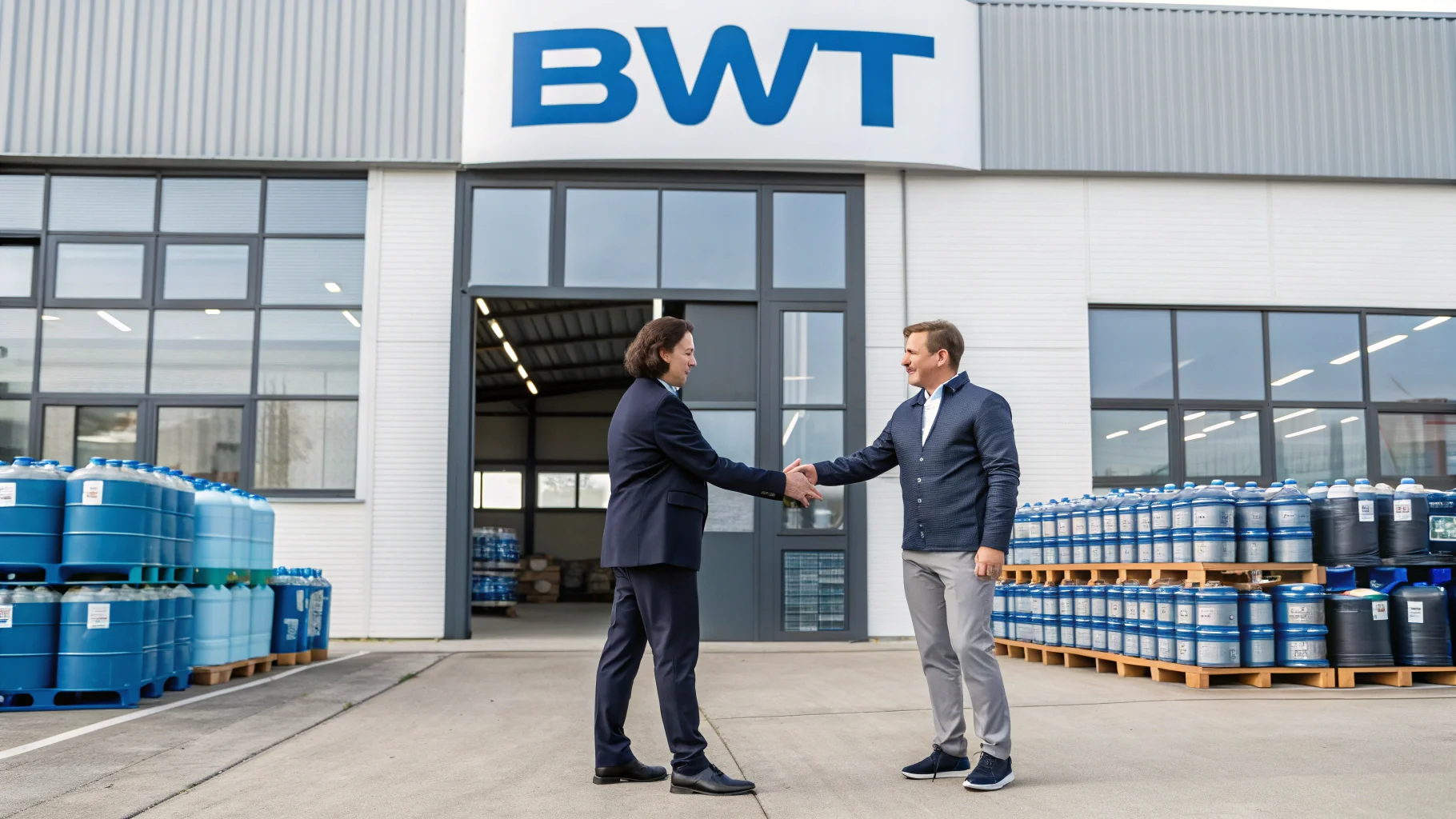
Two business people shaking hands in front of a warehouse of water purifiers

B2B Advantages of BWT's Manufacturing Strategy

Benefício European Factories Asian Factory
Quality & Consistency Proven track record of high-quality engineering. Built to the same high European standards.
Cadeia de fornecimento Stable and reliable. Reduced shipping times and costs for Asia.
Conformidade Meets strict EU regulations. Meets international standards, adapted for local needs.
Brand Value Associates your business with European quality. Shows commitment to the local Asian market.

Why Does It Matter for D2C Customers?

You just want safe, clean water for your family. But where your purifier is made directly impacts its safety. Here is why you, as a consumer, should care.

For a direct customer, the manufacturing location is a promise of safety and performance. Knowing your BWT purifier was made under strict European standards gives you peace of mind that the materials are safe and the technology is reliable.

When I choose a product for my own home, especially something for my family's health, I look closely at its origin. The "Made in Europe" mark on a BWT product means something very specific to me. It means the plastics and other materials used in the purifier have been tested under strict regulations, so I don't have to worry about harmful chemicals leaching into our water. It also means the product was built to last. High-quality manufacturing results in better durability and performance, so I know it will work as promised day after day. Finally, there's the ethical side. Supporting a company that invests in environmentally certified factories (ISO 14001) makes me feel better about my purchase. It’s a small way to know that my choice is better for the planet, too.

A family happily drinking glasses of water in their kitchen

What Manufacturing Origin Means for You

  • Health & Safety: European standards for food-grade materials are among the strictest in the world. This ensures your water is not contaminated by the purifier itself.
  • Performance & Durability: Quality manufacturing processes lead to a more robust product that performs effectively for its entire lifespan. You get what you pay for.
  • Paz de espírito: Knowing your product comes from a facility with high environmental and quality standards provides confidence in your purchase for your family and the environment.

Conclusão

BWT's strategic manufacturing in Europe and Asia ensures high-quality, reliable water purifiers for all customers, backed by strict international standards and a clear vision for clean, safe water.

References


  1. Explore the advantages of BWT water purifiers, including their quality and safety standards. ↩

  2. Explore the various factors that influence water quality and how companies adapt to them. ↩

  3. Learn how smart factories enhance efficiency and quality in manufacturing processes. ↩

  4. Discover the importance of ISO 9001 certification in ensuring consistent product quality. ↩

  5. Find out how ISO 14001 certification helps companies minimize their environmental footprint. ↩

  6. Learn about effective environmental management practices that companies can adopt. ↩

  7. Gain insights into the key factors B2B buyers should evaluate when selecting suppliers. ↩

Partilhar:
o fundador da hisoair, sr. lee
Alwen Lee, an air purification expert with over 10 years of experience, is a devoted father of two and a passionate traveler, having explored more than 30 countries. With a love for public speaking and swimming, he has dedicated his life to the indoor air quality industry. His mission is to ensure that people around the world enjoy the freedom to breathe clean air and lead happy, healthy lives.

Envie-nos uma mensagem

Mais para ler

Modern living room with a family enjoying a healthy indoor environment monitored by smart devices, natural lighting, and greenery.

After IFA 2026: The Healthy Home Is Moving Beyond Smart Devices

In our previous IFA 2026 column, Air Purification Is Becoming Part of the Healthy-Home Platform, we argued that the next generation of indoor-health products would ...
Notícias
Modern living room and kitchen with smart home air quality devices including an air purifier, humidifier, and water filtration system, connected with visualized blue connectivity lines.

IFA 2026: Air Purification Is Becoming Part of the Healthy-Home Platform

Pre-IFA Industry Perspective | September 4, 2026 This article is based on official announcements and regulatory information available ahead of IFA 2026, which takes place ...
Notícias
Comparison infographic showcasing the differences between carbon block filter and activated carbon fiber. Detailed diagrams illustrate the hierarchical porous structure of the carbon block with long diffusion paths and the open microporous structure of the activated carbon fiber with direct access for PFAS adsorption.

Carbon Block vs. Activated Carbon Fiber (ACF): Matching Media to Target Contaminants

Two carbon media. Same adsorption chemistry. Very different behaviour in a point-of-use cartridge. If you are specifying a water purifier platform for a PFAS-aware market, ...
Notícias
NSF base listing and ANF private-label certification pathway for OEM water filters

What Is an NSF Master Listing? A Guide to Base Listings, ANF Certification and OEM Water Filters

For a brand preparing to launch an OEM water purifier, one of the most common supplier claims is: “We already have an NSF master listing, ...
News, Water Purifiers
Healthy-home brand team reviewing PFAS water filter certification, test data and product engineering

Entering the Water Category Is Easy. Building a Credible PFAS Claim Is Much Harder

For air purification, appliance and healthy-home brands, entering the water category can look surprisingly easy. A company can select an existing undersink system, customize its ...
Notícias
Team in a business meeting discussing a water filtration system with product components and a comparison table displayed on a screen.

5 Leading OEM Water Purifier Manufacturers in China for Private Label Brands

China has thousands of companies selling water filters, reverse osmosis systems and drinking-water appliances. However, only a portion of them are suitable for private-label, OEM ...
Notícias
Contaminant Engineering•3 min read

PFAS Water Filtration Technologies Explained: Carbon, Resin & RO

Key Takeaway:

PFAS reduction depends on the specific compounds present, treatment media, contact time, water chemistry, and system design. Activated carbon, ion exchange, and Reverse Osmosis address PFAS through different mechanisms.

PFAS are a large family of persistent fluorinated compounds that can occur in drinking-water supplies. Their treatment behavior varies significantly by molecular structure, chain length, functional group, concentration, and the chemistry of the source water.

Granular Activated Carbon (GAC) removes PFAS primarily through adsorption. It is generally more effective for many longer-chain PFAS, while shorter-chain compounds tend to break through more quickly. Carbon performance depends on media properties, Empty Bed Contact Time (EBCT), competing organic matter, loading, and replacement frequency.

Ion-exchange resins use charged functional sites to capture many PFAS compounds. Properly selected anion-exchange media can provide high capacity and may perform better than conventional activated carbon for some shorter-chain PFAS, although performance still depends on water chemistry and competing ions.

Reverse Osmosis (RO) uses membrane separation rather than adsorption. Properly designed RO systems can provide broad reduction across many PFAS compounds as well as dissolved salts and other contaminants. Unlike carbon or resin, however, RO also produces a concentrate stream that must be managed.

No single technology should be selected from a PFAS label alone. System design should consider which PFAS compounds are present, their concentrations, required reduction targets, flow rate, media life, and the applicable third-party certification or validation requirements.

HisoAir Water Technical Series
Product Discovery•3 min read

How to Choose an Under-Sink Water Purifier for Modern Kitchens

Key Takeaway:

Match the treatment technology to your water quality first, then evaluate cabinet space, faucet configuration, flow rate, drain and power requirements, and filter replacement needs.

Choosing an under-sink water purifier starts with water chemistry. Carbon filtration is well suited to chlorine, taste, odor, and many organic contaminants, while Reverse Osmosis is more appropriate when dissolved salts, fluoride, nitrates, or broader dissolved contaminants need to be reduced.

For compact kitchens, tankless RO systems eliminate the conventional storage tank and can significantly reduce the space required under the sink. However, membrane capacity stated in GPD does not directly equal faucet flow. When comparing systems, check the actual dispensing flow rate, inlet-pressure requirement, recovery ratio, and whether a booster pump is required.

Installation architecture also matters. Many RO systems require a drain connection, electrical power, and either a dedicated drinking-water faucet or a compatible multi-function faucet. High-flow carbon systems can often connect directly to the existing cold-water line with a simpler installation, but pressure drop and available faucet flow should still be verified.

RO also removes much of the naturally occurring dissolved mineral content. Where taste or mineral balance is a priority, a post-RO remineralization stage can be added. Filter life should be evaluated by both rated capacity and local water quality rather than replacement time alone.

The right system is therefore not simply the smallest or highest-GPD model. It is the configuration that matches the target contaminants, available cabinet space, desired faucet setup, peak dispensing demand, and maintenance expectations.

HisoAir Water Technical Series
Water Quality•2 min read

What Does TDS Mean in Drinking Water? Measurement vs Contaminant Reality

Key Takeaway:

A TDS meter estimates the overall concentration of dissolved ionic substances from electrical conductivity. It cannot identify specific contaminants or determine whether water is chemically safe.

Total Dissolved Solids (TDS) refers to the combined concentration of dissolved substances in water. Most handheld TDS meters do not measure TDS directly. Instead, they measure electrical conductivity (EC) and convert that reading into an estimated parts-per-million (ppm) value.

This means a TDS reading can indicate how much dissolved ionic material is present, but not what that material actually is. Calcium, magnesium, sodium, nitrates, and other dissolved ions can all contribute to conductivity, yet a simple TDS meter cannot distinguish between them.

TDS meters are also not suitable for detecting trace contaminants such as PFAS, many VOCs, pesticides, pharmaceuticals, or disinfection byproducts. These substances may be present at concentrations far below the level needed to noticeably change electrical conductivity.

A low TDS reading therefore does not guarantee safe drinking water, and a higher TDS reading does not automatically indicate contamination. Water-treatment decisions should be based on laboratory testing for specific contaminants of concern rather than TDS alone.

HisoAir Water Technical Series
Technology Selection•2 min read

RO vs UF Water Filtration: Understanding Pore Sizes & Dissolved Minerals

Key Takeaway:

Ultrafiltration can reduce bacteria, turbidity, and suspended particles while retaining most naturally occurring dissolved minerals. Reverse Osmosis provides much broader reduction of dissolved salts and smaller contaminants.

Ultrafiltration (UF) typically uses hollow-fiber membranes with pore sizes in the approximate 0.01–0.1 micron range. These membranes physically retain turbidity, suspended solids, colloids, and many microorganisms while allowing dissolved minerals and salts to remain in the water.

Reverse Osmosis (RO) operates at a much finer separation level. Unlike UF, RO can substantially reduce dissolved ions such as sodium, calcium, fluoride, nitrates, and other contributors to total dissolved solids (TDS). This makes RO more suitable when dissolved-salt reduction is a primary treatment objective.

UF generally requires less system pressure and produces little or no continuous concentrate stream in many point-of-use configurations. RO typically requires greater pressure and produces a reject-water stream, but delivers broader contaminant reduction.

For water with acceptable TDS and mineral content, UF can be a simpler mineral-retaining treatment option. Where dissolved salts, fluoride, nitrates, or broader dissolved contaminants are a concern, RO is generally the more appropriate technology.

HisoAir Water Technical Series
Technology Selection•4 min read

Carbon Block vs Reverse Osmosis: Which Fits Your Need?

Key Takeaway:

Choose RO for dissolved inorganic salts and heavy metals; choose Carbon Block for chemical taste/odor, no wastewater, and high line-pressure flow.

Reverse Osmosis (RO) and Carbon Block filtration represent two fundamentally different treatment methods: membrane separation and adsorption. Understanding these differences helps determine which technology is better suited to a specific water-quality requirement.

Reverse Osmosis uses a semi-permeable membrane with pore sizes of approximately 0.0001 microns. It can significantly reduce dissolved inorganic contaminants such as TDS, fluoride, nitrates, and certain heavy metals. Because water must be forced through the membrane, RO systems require sufficient pressure or a booster pump and generate a concentrated wastewater stream.

Carbon Block filtration relies primarily on adsorption through compressed activated carbon, commonly with nominal pore sizes around 0.5–5 microns. It is highly effective for chlorine, chloramines, VOCs, taste, and odor, while allowing substantially higher direct-flow rates without producing wastewater.

From an operating perspective, Carbon Block systems are generally simpler, require less energy, and avoid the water loss associated with RO. RO involves higher system complexity and operating cost, but provides substantially broader reduction of dissolved contaminants that Carbon Block alone cannot address.

HisoAir Water Technical Series

SOLICITAR UM ORÇAMENTO