Открывается в новой вкладке
Инновационные решения в области качества воздуха
HisoAir-Logo
Запрос сейчас
Hospitality Collection

Commercial Wall-Mounted

Hotel Air Purifiers.
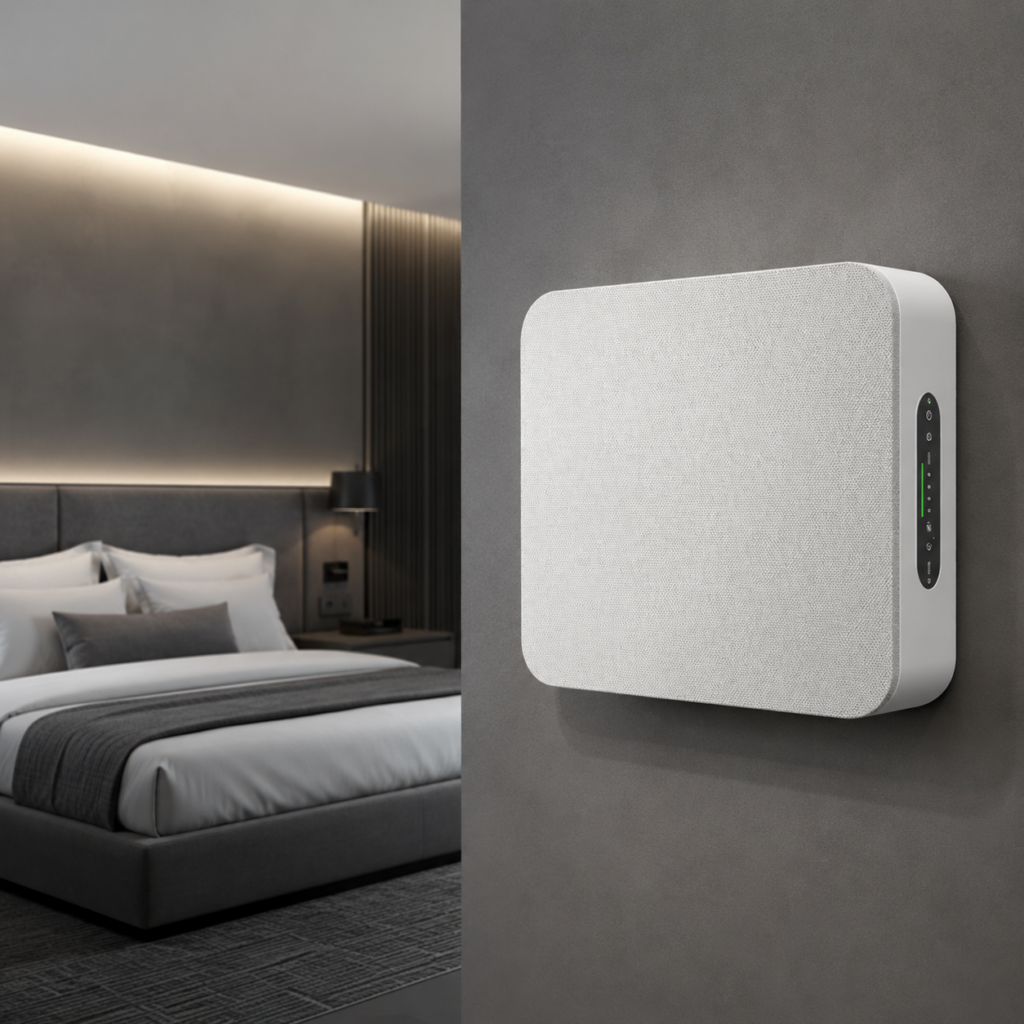
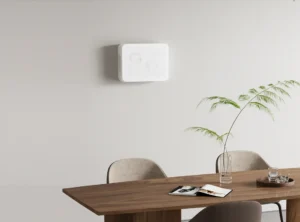
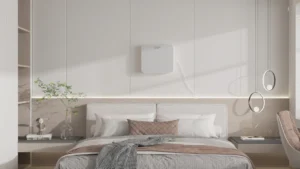
Eliminate odors, smoke, and allergens to boost guest satisfaction. HisoAir's True HEPA H13 hospitality air purifiers run at a whisper-quiet 25dB, save valuable floor space, and offer seamless IoT integration for centralized hotel building management.
Запрос сейчас
800sq.ft
Зона покрытия
25дБ
Whisper Quiet
H13
Настоящий HEPA
Hotel Air
Why Hotels Choose HisoAir

Solving Hospitality Air Quality
Вызовы

From eradicating lingering odors to providing allergy-friendly rooms, our commercial
wall-mounted air purifiers are designed to elevate guest reviews and streamline
housekeeping operations.

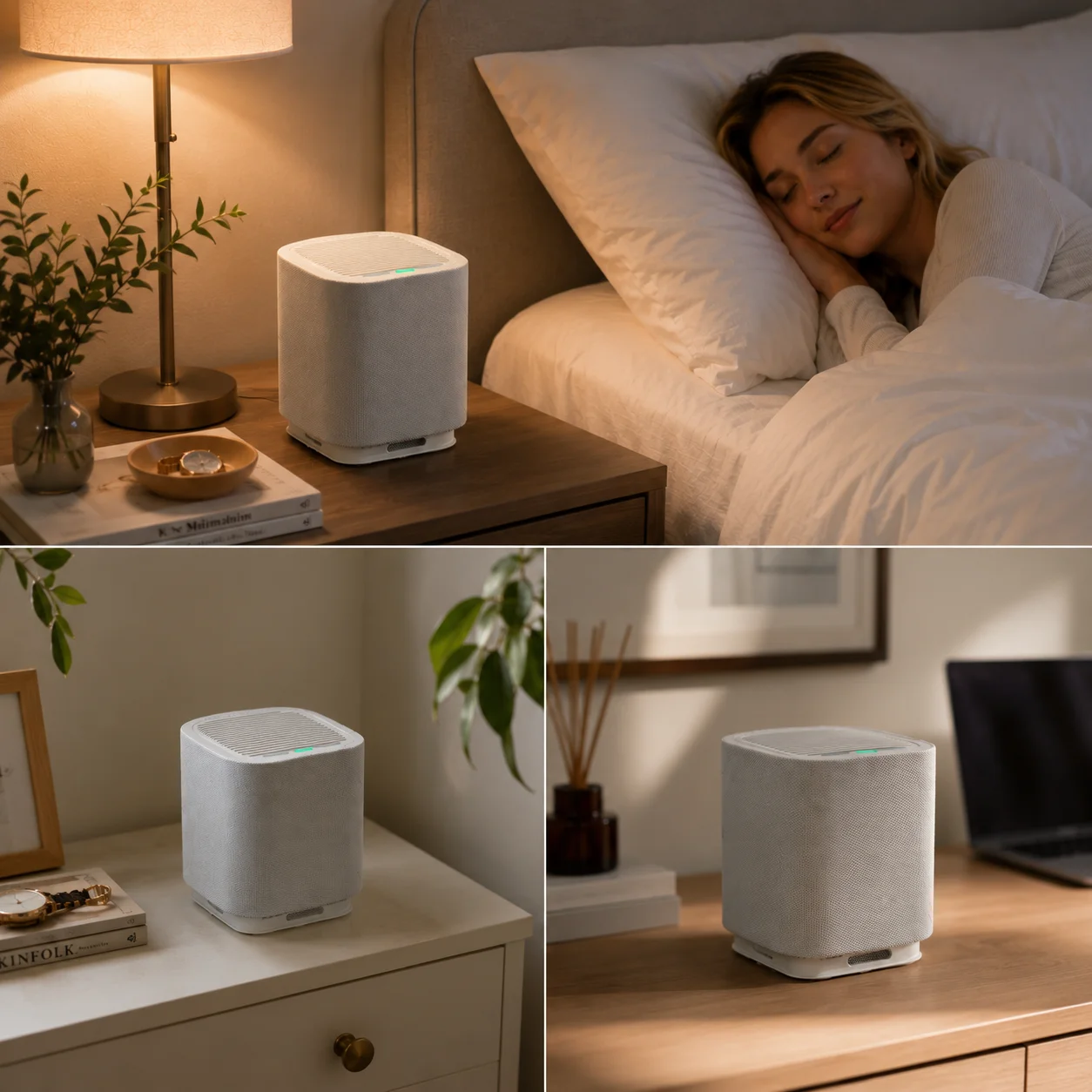
Ultra-Quiet 25dB Operation for Sleep

Engineered specifically for hotel bedrooms. Our Decibel Cancellation™ technology operates at a near-silent 25dB, guaranteeing guests a restful night's sleep without disruptive fan noise.

Space-Saving Wall-Mounted Design

Keep floor space clear. The secure wall-mounted installation eliminates tripping hazards, fits narrow corridors, and protects the unit from accidental damage by guest luggage.

Rapid Odor & Smoke Eradication

Speed up room turnover. Medical-grade True HEPA H13 and active carbon composite filters instantly neutralize stale odors, VOCs, and unauthorized cigarette smoke.

Automated IAQ Monitoring

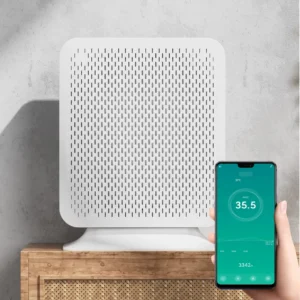
Built-in PM2.5, Light, and Noise sensors actively monitor Indoor Air Quality (IAQ) and automatically adjust fan speeds, ensuring pristine air with zero guest intervention required.
Our Models

Wall-Mounted & Desktop Air Purifiers

Choose the right purifier for every hotel zone — from guestrooms and nightstands to lobbies and shared spaces.
Most Popular
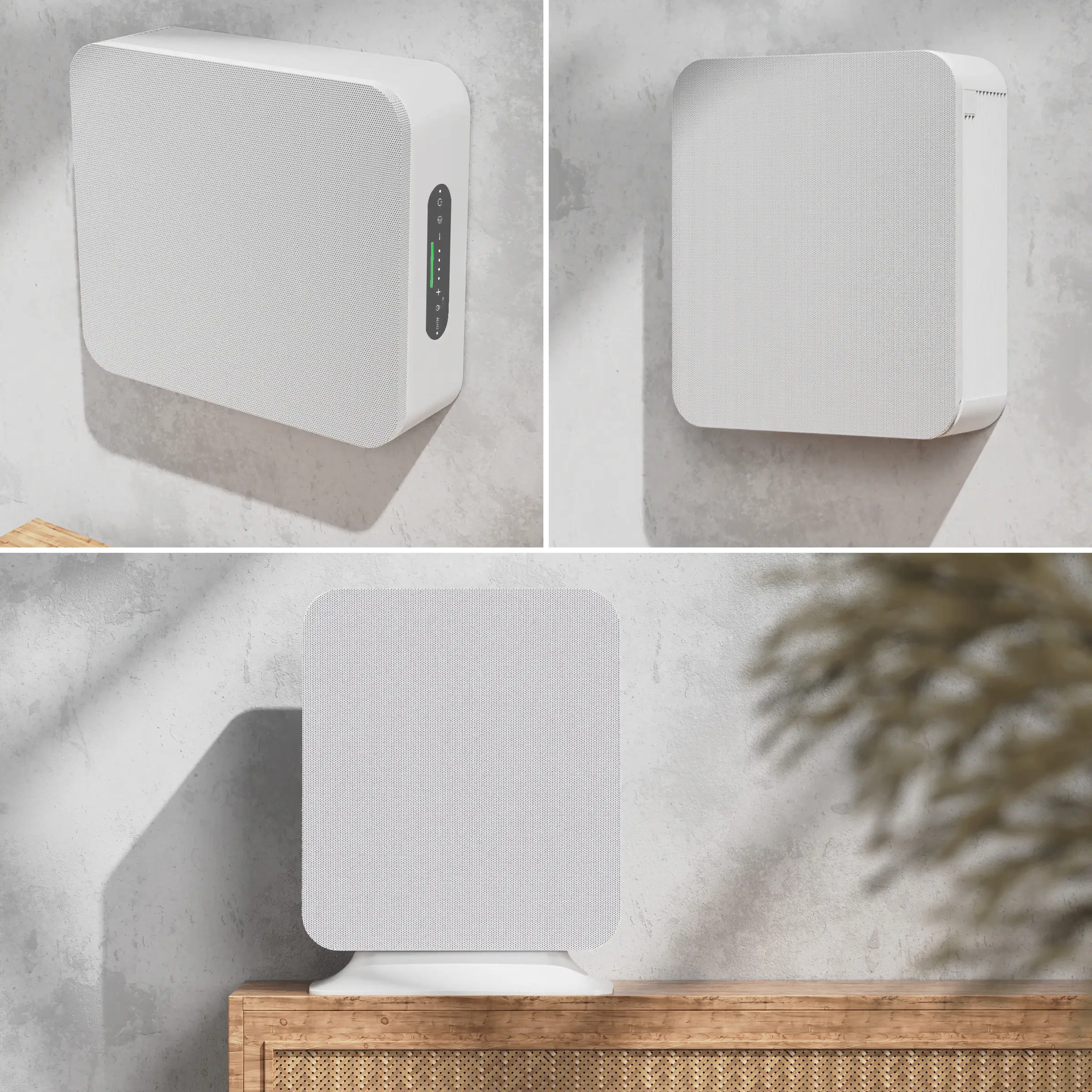
HA180 & HA380 Pro

HA180 & HA380 Pro

CADR: 360 m³/h
Up to 538 sq ft
  • Ultra-Quiet Operation (Decibel Cancellation™)
  • Wall-Mounted or Freestanding Design
  • Smart PM2.5 Air Quality Monitoring
  • Flexible HEPA Filtration System
  • Customizable Fabric Panel
Request Specs
HA100D

HA100D

CADR: 120 m³/h
Up to 250 sq ft
  • Sleep-Quiet™ Operation ≤32 dB(A)
  • Compact Bedside / Desktop Design
  • HEPA H13 Filtration, 99.97% at 0.3 μm
  • Built-in PM2.5 Sensor with Auto Mode
  • Activated Carbon Layer for Guestroom Odors
Request Specs
— SCENARIOS

С сайта lobby
to guestroom,
one solution covers all

Every space has different filtration needs. Hisoair matches model and runtime strategy to each of the four common hotel zones, with a unified zone-orchestration plan.
A modern living room featuring beige furniture, soft lighting, and two air purifiers on the wall and floor for a clean and elegant environment.
Recommended · HA180

Let every guest breathe clean from the first step in

The first 90 seconds inside the room decide 60% of the satisfaction score. After checkout, the purifier runs a Quick-Purge cycle to clear odors and particulates before the next guest arrives — no extra labor.
  • Модель HA180
  • Покрытие 20–35 m²
  • Режим Checkout → Away · 30 min
  • Запахи TVOC / Smoke / Perfume
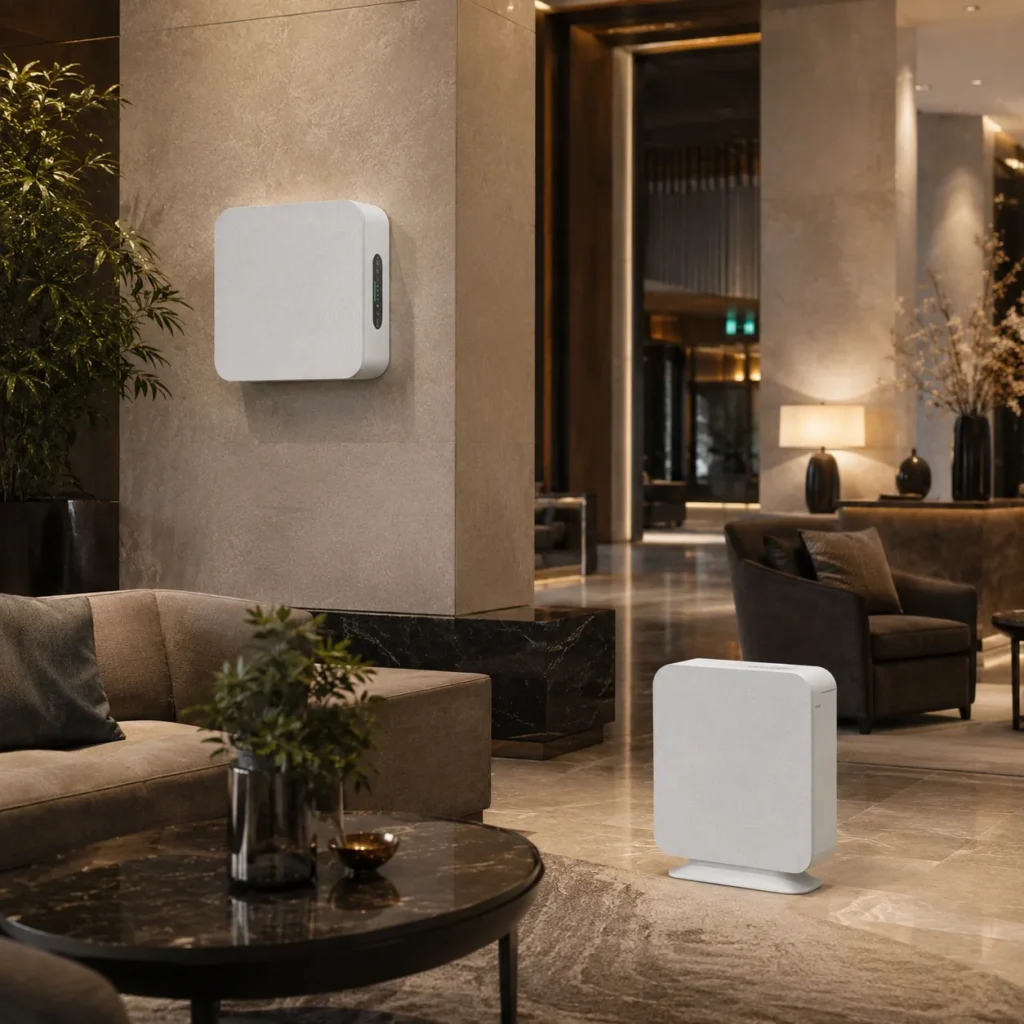
Two modern air purifiers, one wall-mounted and one freestanding, in a sophisticated lounge with elegant furniture and soft lighting.
Recommended · HA380

Quiet air in large spaces — the foundation of luxury

Lobbies see 800+ daily footfalls and particulate levels up to 1.4× outdoor air. HA380 pairs with central HVAC for positive-pressure filtration, covering up to 60 m² at just 26 dB(A) — quiet enough for the softest conversation.
  • Модель HA380
  • Покрытие 40-60 m²
  • Интеграция BMS central scheduling
  • PM2.5 →
Stylish living room with wall-mounted and floor air purifiers, leather furniture, warm lighting, and modern decor elements.
Recommended · 2× HA180

Turn smoking rooms from complaint hotspots into revenue

Residual smoke between turnovers is a top keyword in OTA reviews. The activated-carbon module in HA180 brings TVOC below non-smoking-room levels in 25 minutes — keeping smoking rooms sellable without removing them.
  • Setup 2× HA180 per room
  • Clear time 25 min
  • Final TVOC ≤ 0.08 mg/m³
  • Bad reviews ↓ 73% (partner data)
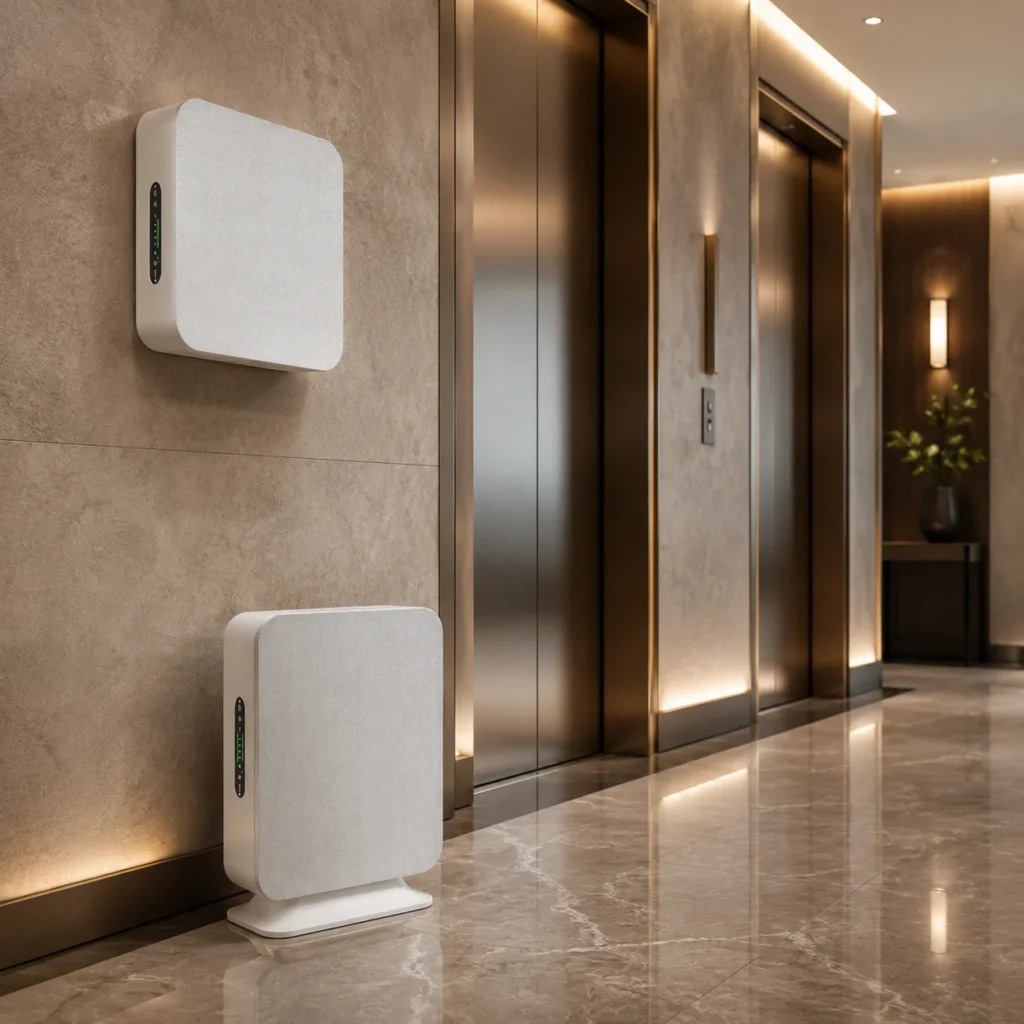
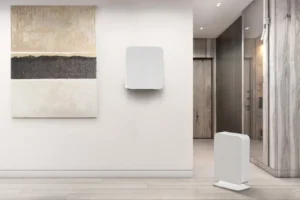
Two sleek and modern air purifiers on the wall and floor in a luxury building lobby with glossy marble flooring and elevator doors nearby.
Recommended · HA380

Hide the sanitation step inside the wall

What guests don't see decides trust. Wall-mounted at corridor ends, combined UV + HEPA filtration preserves the post-pandemic sanitation signal without breaking the interior flow.
  • Модель HA380
  • Расположение Corridor end / Elevator hall
  • Режим 24h silent run
  • Telemetry Real-time PM / TVOC reporting
ROI

Put air on the P&L

Adjust the inputs below to see the revenue lift and payback HisoAir delivers for your property.

Room count 20 rooms
20 800
Average daily rate $60
$60 $600
Occupancy 30 %
30% 95%
Est. hardware cost $10,480
Review score lifts to 4.23 / 5.0
Est. annual revenue lift $1,051
Payback period 119.7 months
— CERTIFICATIONS

Not marketing, but auditable proof

From particulate CADR to long-term efficacy, international standards to hospitality-specific credentials — ready for ESG reports, RFPs and OTA scrutiny.

CE

European Conformity

FCC

U.S. Federal Communications

LVD

Low Voltage Directive 2014/35/EU

RoHS

Restriction of Hazardous Substances

WELL

WELL Building Standard

TÜV

TÜV Rheinland Long-term Efficacy

АХАМ

Assoc. of Home Appliance Mfrs.

DOE

U.S. Dept. of Energy Efficiency

CARB

Калифорнийский совет по воздушным ресурсам
- FAQ

What buyers ask most

Don't see your question? Talk to a sales advisor — our hospitality PMs reply within 24 hours.

No. HA180/HA380 ship with a rear quick-mount plate; cabling runs inside the chassis, leaving only four Ø8 wall anchors. A 24V low-voltage port at the base ties into central HVAC, so units can be retrofit during construction or operation.

For a 200-room business hotel — one HA180 per room plus 6 HA380 in public areas — total hardware runs around US$66K. Factoring in reduced bad reviews, upgraded room positioning and ESG reporting, average payback is 14–18 months (see the ROI calculator above).

Yes. A magnetic front panel lifts off by hand to expose the filter. A full swap takes under 90 seconds with no tools. Particulate and carbon modules are independent quick-release cartridges, replaceable on their own schedules.

Yes — Modbus, BACnet and MQTT are all supported, with full OpenAPI documentation. Existing integrations include Honeywell, Schneider, Hisense and Guangtian. A standalone management console is also provided for hotels without BMS.

Minimum order is 30 units. Custom chassis colors (4 options) and partner-brand engraving available. Orders above 50 units include a dedicated project manager, on-site survey, install training and first-year filter supply.

Yes. Central HVAC handles air exchange (CO₂); our wall-mounted purifier handles air quality (PM / TVOC / odor). The two complement each other, and an in-room visible unit signals a premium amenity to the guest.

ЗАПРОСИТЬ ЦИТАТУ

отправьте сообщение ниже

Мы свяжемся с вами как можно скорее!

БУДЬТЕ НА СВЯЗИ

Контактная информация

Ваш запрос важен для нас.
Мы свяжемся с вами в ближайшее время, а ваши данные всегда остаются в безопасности.
sales@hisoair.com
+86 138 0961 9940

Офис в США2180 S WINEVILLE AVE ONTARIO, CA 91761

Офис: Комната 712~713, здание 1, № 4, Вторая дорога, парк озера Соншань, город Дунгуань, провинция Гуандун, 523429.

Фабрика: Китай | Вьетнам | Таиланд | Малайзия

Contaminant Engineering•3 min read

PFAS Water Filtration Technologies Explained: Carbon, Resin & RO

Key Takeaway:

PFAS reduction depends on the specific compounds present, treatment media, contact time, water chemistry, and system design. Activated carbon, ion exchange, and Reverse Osmosis address PFAS through different mechanisms.

PFAS are a large family of persistent fluorinated compounds that can occur in drinking-water supplies. Their treatment behavior varies significantly by molecular structure, chain length, functional group, concentration, and the chemistry of the source water.

Granular Activated Carbon (GAC) removes PFAS primarily through adsorption. It is generally more effective for many longer-chain PFAS, while shorter-chain compounds tend to break through more quickly. Carbon performance depends on media properties, Empty Bed Contact Time (EBCT), competing organic matter, loading, and replacement frequency.

Ion-exchange resins use charged functional sites to capture many PFAS compounds. Properly selected anion-exchange media can provide high capacity and may perform better than conventional activated carbon for some shorter-chain PFAS, although performance still depends on water chemistry and competing ions.

Reverse Osmosis (RO) uses membrane separation rather than adsorption. Properly designed RO systems can provide broad reduction across many PFAS compounds as well as dissolved salts and other contaminants. Unlike carbon or resin, however, RO also produces a concentrate stream that must be managed.

No single technology should be selected from a PFAS label alone. System design should consider which PFAS compounds are present, their concentrations, required reduction targets, flow rate, media life, and the applicable third-party certification or validation requirements.

HisoAir Water Technical Series
Product Discovery•3 min read

How to Choose an Under-Sink Water Purifier for Modern Kitchens

Key Takeaway:

Match the treatment technology to your water quality first, then evaluate cabinet space, faucet configuration, flow rate, drain and power requirements, and filter replacement needs.

Choosing an under-sink water purifier starts with water chemistry. Carbon filtration is well suited to chlorine, taste, odor, and many organic contaminants, while Reverse Osmosis is more appropriate when dissolved salts, fluoride, nitrates, or broader dissolved contaminants need to be reduced.

For compact kitchens, tankless RO systems eliminate the conventional storage tank and can significantly reduce the space required under the sink. However, membrane capacity stated in GPD does not directly equal faucet flow. When comparing systems, check the actual dispensing flow rate, inlet-pressure requirement, recovery ratio, and whether a booster pump is required.

Installation architecture also matters. Many RO systems require a drain connection, electrical power, and either a dedicated drinking-water faucet or a compatible multi-function faucet. High-flow carbon systems can often connect directly to the existing cold-water line with a simpler installation, but pressure drop and available faucet flow should still be verified.

RO also removes much of the naturally occurring dissolved mineral content. Where taste or mineral balance is a priority, a post-RO remineralization stage can be added. Filter life should be evaluated by both rated capacity and local water quality rather than replacement time alone.

The right system is therefore not simply the smallest or highest-GPD model. It is the configuration that matches the target contaminants, available cabinet space, desired faucet setup, peak dispensing demand, and maintenance expectations.

HisoAir Water Technical Series
Water Quality•2 min read

What Does TDS Mean in Drinking Water? Measurement vs Contaminant Reality

Key Takeaway:

A TDS meter estimates the overall concentration of dissolved ionic substances from electrical conductivity. It cannot identify specific contaminants or determine whether water is chemically safe.

Total Dissolved Solids (TDS) refers to the combined concentration of dissolved substances in water. Most handheld TDS meters do not measure TDS directly. Instead, they measure electrical conductivity (EC) and convert that reading into an estimated parts-per-million (ppm) value.

This means a TDS reading can indicate how much dissolved ionic material is present, but not what that material actually is. Calcium, magnesium, sodium, nitrates, and other dissolved ions can all contribute to conductivity, yet a simple TDS meter cannot distinguish between them.

TDS meters are also not suitable for detecting trace contaminants such as PFAS, many VOCs, pesticides, pharmaceuticals, or disinfection byproducts. These substances may be present at concentrations far below the level needed to noticeably change electrical conductivity.

A low TDS reading therefore does not guarantee safe drinking water, and a higher TDS reading does not automatically indicate contamination. Water-treatment decisions should be based on laboratory testing for specific contaminants of concern rather than TDS alone.

HisoAir Water Technical Series
Technology Selection•2 min read

RO vs UF Water Filtration: Understanding Pore Sizes & Dissolved Minerals

Key Takeaway:

Ultrafiltration can reduce bacteria, turbidity, and suspended particles while retaining most naturally occurring dissolved minerals. Reverse Osmosis provides much broader reduction of dissolved salts and smaller contaminants.

Ultrafiltration (UF) typically uses hollow-fiber membranes with pore sizes in the approximate 0.01–0.1 micron range. These membranes physically retain turbidity, suspended solids, colloids, and many microorganisms while allowing dissolved minerals and salts to remain in the water.

Reverse Osmosis (RO) operates at a much finer separation level. Unlike UF, RO can substantially reduce dissolved ions such as sodium, calcium, fluoride, nitrates, and other contributors to total dissolved solids (TDS). This makes RO more suitable when dissolved-salt reduction is a primary treatment objective.

UF generally requires less system pressure and produces little or no continuous concentrate stream in many point-of-use configurations. RO typically requires greater pressure and produces a reject-water stream, but delivers broader contaminant reduction.

For water with acceptable TDS and mineral content, UF can be a simpler mineral-retaining treatment option. Where dissolved salts, fluoride, nitrates, or broader dissolved contaminants are a concern, RO is generally the more appropriate technology.

HisoAir Water Technical Series
Technology Selection•4 min read

Carbon Block vs Reverse Osmosis: Which Fits Your Need?

Key Takeaway:

Choose RO for dissolved inorganic salts and heavy metals; choose Carbon Block for chemical taste/odor, no wastewater, and high line-pressure flow.

Reverse Osmosis (RO) and Carbon Block filtration represent two fundamentally different treatment methods: membrane separation and adsorption. Understanding these differences helps determine which technology is better suited to a specific water-quality requirement.

Reverse Osmosis uses a semi-permeable membrane with pore sizes of approximately 0.0001 microns. It can significantly reduce dissolved inorganic contaminants such as TDS, fluoride, nitrates, and certain heavy metals. Because water must be forced through the membrane, RO systems require sufficient pressure or a booster pump and generate a concentrated wastewater stream.

Carbon Block filtration relies primarily on adsorption through compressed activated carbon, commonly with nominal pore sizes around 0.5–5 microns. It is highly effective for chlorine, chloramines, VOCs, taste, and odor, while allowing substantially higher direct-flow rates without producing wastewater.

From an operating perspective, Carbon Block systems are generally simpler, require less energy, and avoid the water loss associated with RO. RO involves higher system complexity and operating cost, but provides substantially broader reduction of dissolved contaminants that Carbon Block alone cannot address.

HisoAir Water Technical Series

ЗАПРОСИТЬ ЦИТАТУ