Sẽ mở trong thẻ mới
Air & Water Purification OEM/ODM Manufacturer | HisoAir
hm 3000

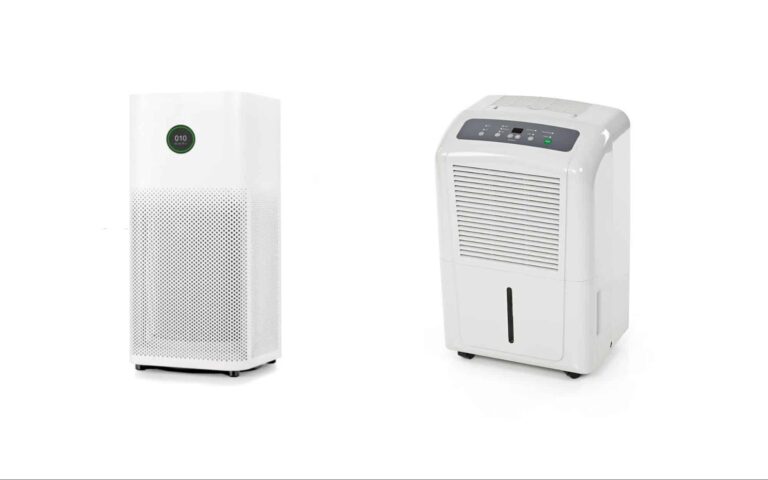
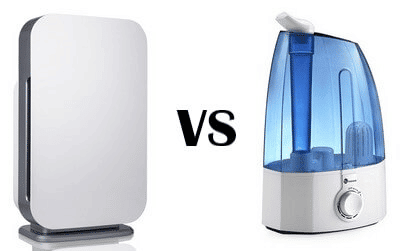
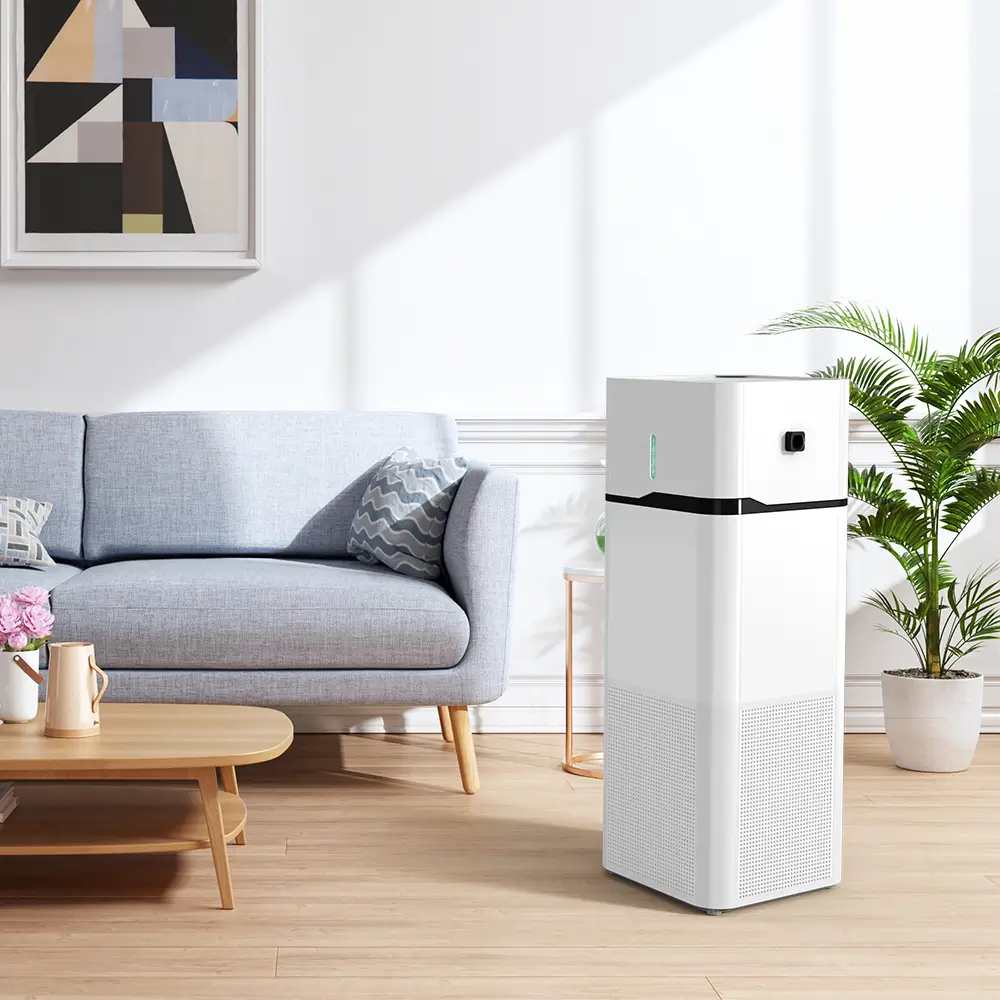
Air Purifier with Humidifier HA-M3000

  • Mold-Free Evaporative Technology: Harness advanced cold evaporative technology to achieve consistent humidity without mist or mold, with an active electrolyte module ensuring 99.99% mold and bacteria-free air.
  • High-Efficiency Humidification and Purification: Enjoy 500ml/h humidification and a CADR of 300 for rapid air purification and perfectly balanced indoor comfort.
  • Whisper-Quiet Operation: Low-noise design ensures peaceful nights and productive days with clean, fresh air.
  • Comfort Meets Cleanliness: Achieve the perfect balance between air purification and humidification, ideal for homes and offices alike.
  • Mist-Free Moisture: Experience fresh, moist air without the hassles of excess humidity or mist accumulation.
Request a Quote

Product Description

Mold-Free Evaporative Technology: Breathe Easy, Stay Healthy
HisoAir’s evaporative air purifier and humidifier utilizes cutting-edge cold evaporative technology, delivering optimal humidity levels without the risk of mold or mist. With its active electrolyte module, the system effectively removes 99.99% of mold and bacteria, ensuring safe, clean air for you and your family.

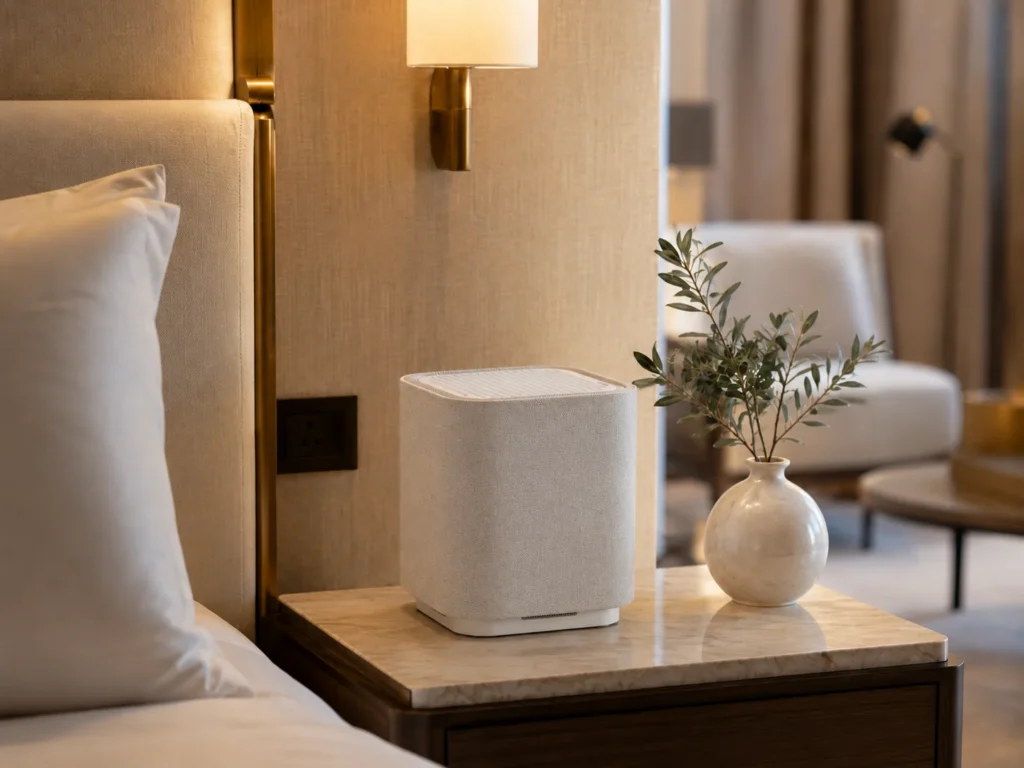
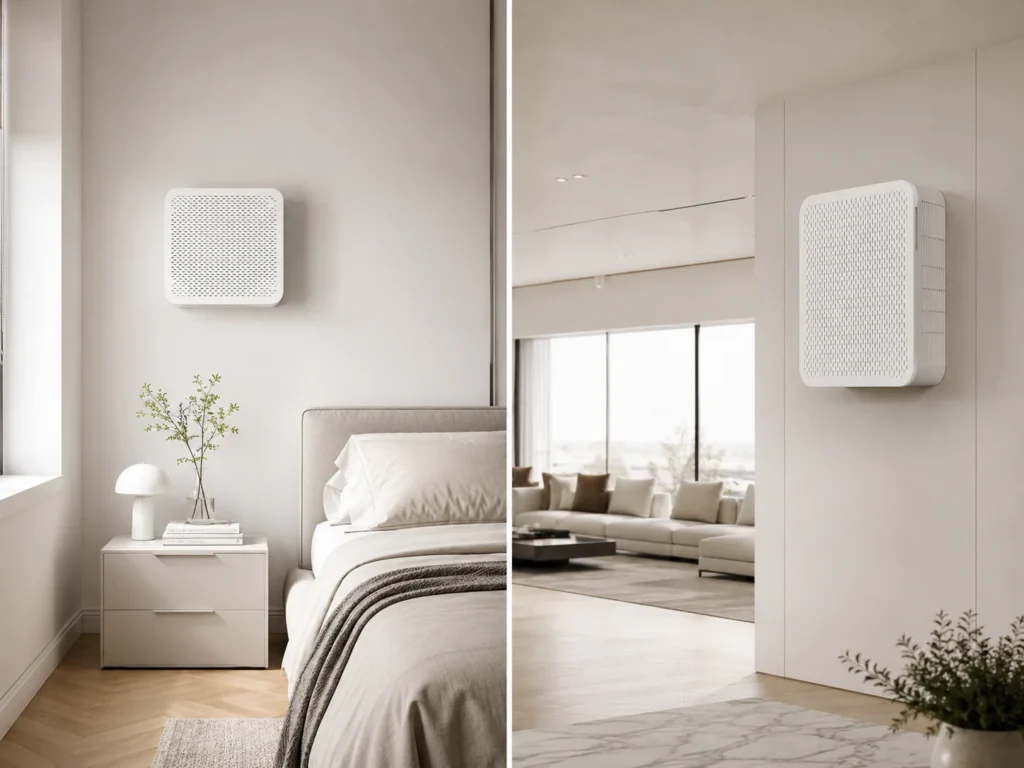
air purifier with humidifier hm3000

High Efficiency in Humidification and Purification
With a powerful 500ml/h humidification capacity and a CADR of 300, the HisoAir system provides rapid air purification while maintaining ideal humidity levels. Perfect for any indoor space, it enhances both comfort and cleanliness effortlessly.

air purifier with humidifier hm3000 (7)

Whisper-Quiet Operation: Air Care Without Disruption
Designed for peaceful living, the HisoAir purifier and humidifier operates quietly, ensuring undisturbed sleep and enhanced productivity during the day. Enjoy the benefits of fresh, clean air without the noise.

air purifier with humidifier hm3000 (6)

Comfort and Cleanliness in Perfect Harmony
This advanced system balances efficient air purification with effective humidification, creating an ideal indoor environment. Whether in your home or office, it ensures you breathe comfortably and healthily.
air purifier with humidifier hm3000 (5)

Mist-Free Humidity for a Refreshing Experience
The HisoAir evaporative humidifier eliminates the common challenges of mist-based humidifiers, providing consistent and natural moisture without the risks of over-humidification. It’s the ultimate solution for a healthier, more comfortable space.

air purifier with humidifier hm3000 (3)

Choose HisoAir for mold-free, whisper-quiet, and efficient air purification and humidification—tailored for your modern lifestyle.

air purifier with humidifier hm3000 (2)

Specifications

Rated voltage
110-240V~
Working frequency
50/60Hz
Rated power
50W
Noise
≤60dB
CADR
300m³/h
Tank capacity
3L
Humidification Rate
580ml/h
Coverage Area
40m²
Optional
UV lights,TUYA WIFI,Anion,Infrared remote control
Dimensions
276 × 302 × 795mm
Net Weight
7.6kg

Why Brands Choose HisoAir

Engineering Expertise. Flexible Manufacturing. Verified Performance.
20+ Years of Engineering Experience

Air treatment heritage and product engineering

OEM / ODM / JDM Expertise

From concept to production

Air & Water Filtration Engineering

HEPA, carbon, UF, RO and tailored systems

Product-Specific Performance Validation

Third-party testing and certification support

Flexible Product Customization

Design, function, filters, branding and packaging

Qualified Manufacturing Network

Product-matched production capabilities

Manufacturing Quality Management

Material controls and final product checks

Long-Term Technical Partnership

Ongoing engineering and product support

OEM/ODM Manufacturing & Engineering Partner for Air and Water Solutions

HisoAir supports global brands with product engineering, filtration technology, customization, and quality-managed manufacturing through qualified partners.

Filtration development concept illustration

Filtration R&D & Design

Media selection and filtration system engineering

Manufacturing illustration

Precision Manufacturing

Assembly with manufacturing quality controls

Product testing illustration

Performance & Reliability Testing

Flow, pressure and leakage verification

Shipping and supply illustration

Scalable Production & Supply

Flexible planning for different market needs

Ready to Develop Your Next Air or Water Product?

Tell us your requirements, target market and project plan. Our team will review suitable options.

Contact Our Team

The Top 3 OEM/ODM Air purifier Manufacturer in China

Private labeling for branded Air Purifiers for decades

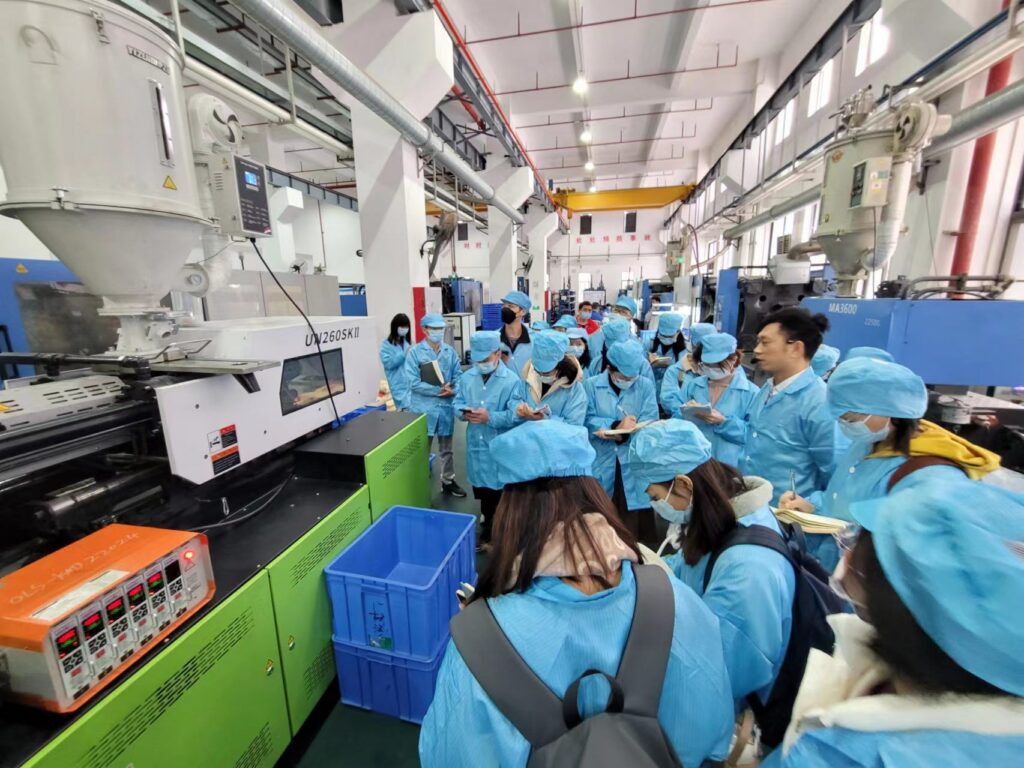
HisoAir offers private labeling air purifier services to clients who have already reviewed and agreed with HisoAir’s air purifier design and specifications. Once the agreement is signed, the selected products will be labeled with the client’s name.

OEM Air purifiers from start to end

HisoAir provides OEM air purifier services to partners who have the necessary specifications in a product. HisoAir provides research, design, engineering, mock ups or modifications, testing, and mass productions based on the client’s finalized design.

3M company logo in red.
carrier logo
haier logo
Alen Logo - Trusted in Air Purification
tcl logo 0
Honeywell Logo - Leader in Air Purification and Filtration Solutions
LG Logo - Innovator in Smart Home Appliances and Air Purification Solutions
Philips Logo - Leader in Health Technology and Air Purification Solutions

Trusted by Renowned Global Brands

With over 20 years of expertise, we specialize in delivering IAQ solutions that seamlessly integrate with the needs of the world’s most recognized brands. Partner with us to achieve exceptional performance tailored to your market

TESTIMONIALS

“ I found hisoair's website from Google and to be honest, I wasn't sure if they were reliable at first, but they completed my project requirements in a month and a half. And when the project required the urgent addition of a CO2 Sensor, they had a new sample completed within a week, making them the most professional, customer-focused manufacturer I've ever worked with ”
tms 1
Thomas
Government supplier from Germany
“ We all know that the COVID has been a terrible disaster for the whole world, specially for the India, I've bought air purifier from HisoAir, this has been very useful for me and my office, home, families and friends.I've been working with Alwen for the last 7 years, who is from HisoAir, I can that he is a very reliable person, very efficient and very professional ”
customer testimonials 2
Ranjith Bala
Medical products importer from India
“ We are a company with over 15 years of experience in working with private institutions and private sectors, we have made collaboration with Hiso for 3 years, and we are really grateful for the works that Hiso has provided to us. We are grateful for the collaboration with Cherry and Mr. Lee ”
customer testimonials
Herina
Hospitals and government supplier from Romania

Join the global leaders who rely on our expertise in air filtration solutions.

Your query matters to us. We’ll connect shortly, and your details remain secure always.
we have made collaboration with Hiso for 3 years, and we are really grateful for the works that Hiso has provided to us. We are grateful for the collaboration with Cherry and Mr. Lee.
tms 1
Thomas
Government Supplier from Germany
Contaminant Engineering•3 min read

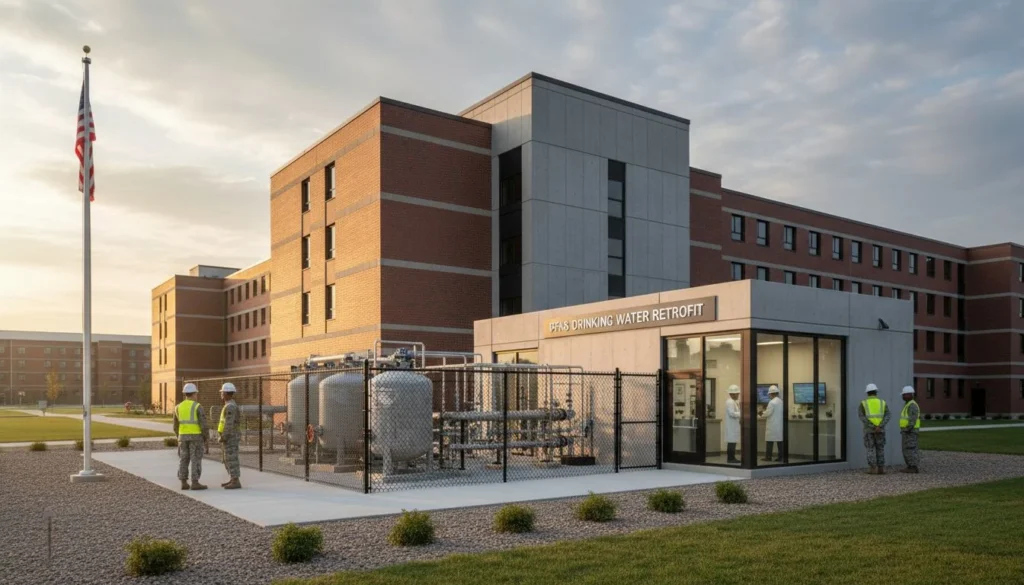
PFAS Water Filtration Technologies Explained: Carbon, Resin & RO

Key Takeaway:

PFAS reduction depends on the specific compounds present, treatment media, contact time, water chemistry, and system design. Activated carbon, ion exchange, and Reverse Osmosis address PFAS through different mechanisms.

PFAS are a large family of persistent fluorinated compounds that can occur in drinking-water supplies. Their treatment behavior varies significantly by molecular structure, chain length, functional group, concentration, and the chemistry of the source water.

Granular Activated Carbon (GAC) removes PFAS primarily through adsorption. It is generally more effective for many longer-chain PFAS, while shorter-chain compounds tend to break through more quickly. Carbon performance depends on media properties, Empty Bed Contact Time (EBCT), competing organic matter, loading, and replacement frequency.

Ion-exchange resins use charged functional sites to capture many PFAS compounds. Properly selected anion-exchange media can provide high capacity and may perform better than conventional activated carbon for some shorter-chain PFAS, although performance still depends on water chemistry and competing ions.

Reverse Osmosis (RO) uses membrane separation rather than adsorption. Properly designed RO systems can provide broad reduction across many PFAS compounds as well as dissolved salts and other contaminants. Unlike carbon or resin, however, RO also produces a concentrate stream that must be managed.

No single technology should be selected from a PFAS label alone. System design should consider which PFAS compounds are present, their concentrations, required reduction targets, flow rate, media life, and the applicable third-party certification or validation requirements.

HisoAir Water Technical Series
Product Discovery•3 min read

How to Choose an Under-Sink Water Purifier for Modern Kitchens

Key Takeaway:

Match the treatment technology to your water quality first, then evaluate cabinet space, faucet configuration, flow rate, drain and power requirements, and filter replacement needs.

Choosing an under-sink water purifier starts with water chemistry. Carbon filtration is well suited to chlorine, taste, odor, and many organic contaminants, while Reverse Osmosis is more appropriate when dissolved salts, fluoride, nitrates, or broader dissolved contaminants need to be reduced.

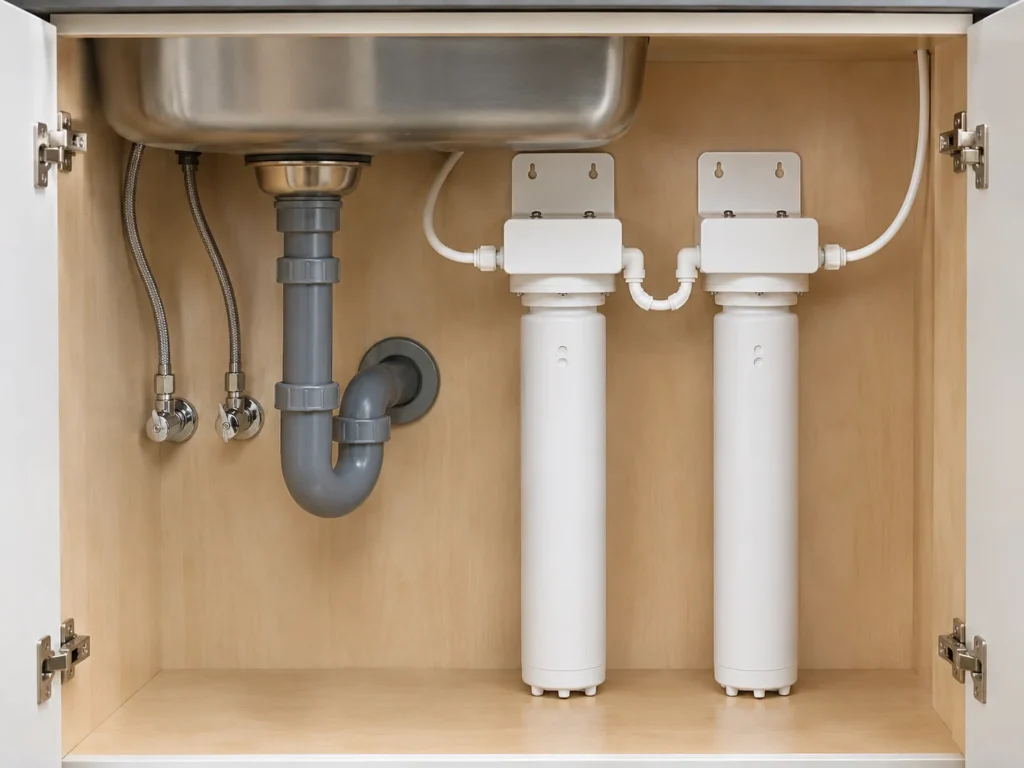
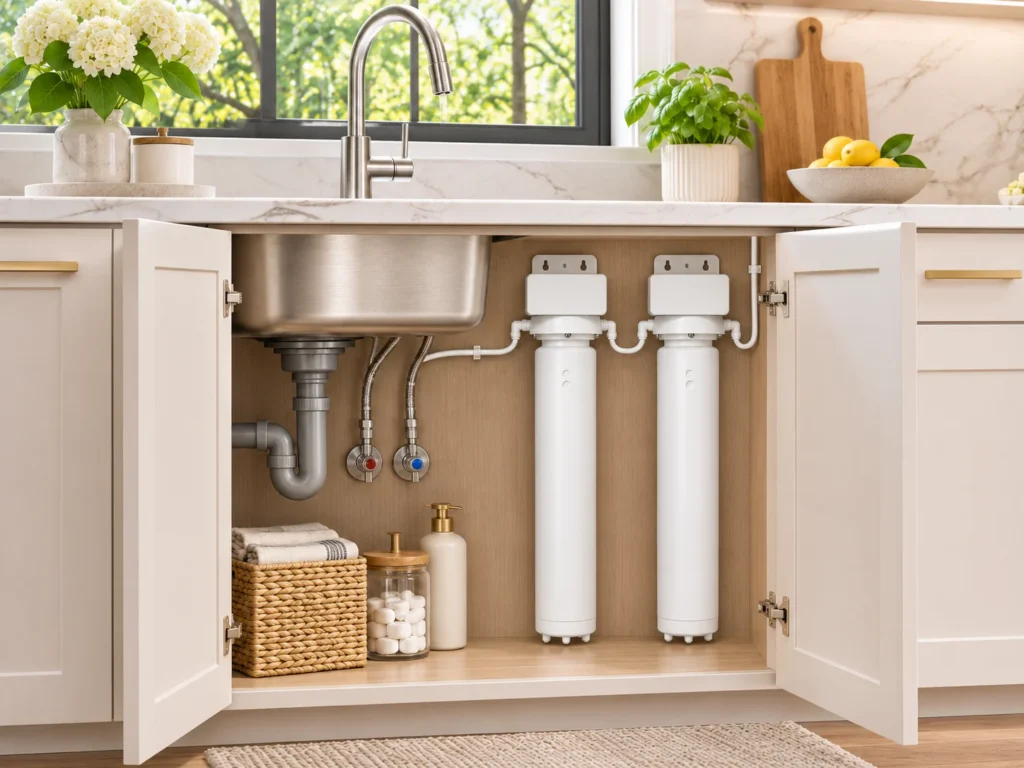
For compact kitchens, tankless RO systems eliminate the conventional storage tank and can significantly reduce the space required under the sink. However, membrane capacity stated in GPD does not directly equal faucet flow. When comparing systems, check the actual dispensing flow rate, inlet-pressure requirement, recovery ratio, and whether a booster pump is required.

Installation architecture also matters. Many RO systems require a drain connection, electrical power, and either a dedicated drinking-water faucet or a compatible multi-function faucet. High-flow carbon systems can often connect directly to the existing cold-water line with a simpler installation, but pressure drop and available faucet flow should still be verified.

RO also removes much of the naturally occurring dissolved mineral content. Where taste or mineral balance is a priority, a post-RO remineralization stage can be added. Filter life should be evaluated by both rated capacity and local water quality rather than replacement time alone.

The right system is therefore not simply the smallest or highest-GPD model. It is the configuration that matches the target contaminants, available cabinet space, desired faucet setup, peak dispensing demand, and maintenance expectations.

HisoAir Water Technical Series
Water Quality•2 min read

What Does TDS Mean in Drinking Water? Measurement vs Contaminant Reality

Key Takeaway:

A TDS meter estimates the overall concentration of dissolved ionic substances from electrical conductivity. It cannot identify specific contaminants or determine whether water is chemically safe.

Total Dissolved Solids (TDS) refers to the combined concentration of dissolved substances in water. Most handheld TDS meters do not measure TDS directly. Instead, they measure electrical conductivity (EC) and convert that reading into an estimated parts-per-million (ppm) value.

This means a TDS reading can indicate how much dissolved ionic material is present, but not what that material actually is. Calcium, magnesium, sodium, nitrates, and other dissolved ions can all contribute to conductivity, yet a simple TDS meter cannot distinguish between them.

TDS meters are also not suitable for detecting trace contaminants such as PFAS, many VOCs, pesticides, pharmaceuticals, or disinfection byproducts. These substances may be present at concentrations far below the level needed to noticeably change electrical conductivity.

A low TDS reading therefore does not guarantee safe drinking water, and a higher TDS reading does not automatically indicate contamination. Water-treatment decisions should be based on laboratory testing for specific contaminants of concern rather than TDS alone.

HisoAir Water Technical Series
Technology Selection•2 min read

RO vs UF Water Filtration: Understanding Pore Sizes & Dissolved Minerals

Key Takeaway:

Ultrafiltration can reduce bacteria, turbidity, and suspended particles while retaining most naturally occurring dissolved minerals. Reverse Osmosis provides much broader reduction of dissolved salts and smaller contaminants.

Ultrafiltration (UF) typically uses hollow-fiber membranes with pore sizes in the approximate 0.01–0.1 micron range. These membranes physically retain turbidity, suspended solids, colloids, and many microorganisms while allowing dissolved minerals and salts to remain in the water.

Reverse Osmosis (RO) operates at a much finer separation level. Unlike UF, RO can substantially reduce dissolved ions such as sodium, calcium, fluoride, nitrates, and other contributors to total dissolved solids (TDS). This makes RO more suitable when dissolved-salt reduction is a primary treatment objective.

UF generally requires less system pressure and produces little or no continuous concentrate stream in many point-of-use configurations. RO typically requires greater pressure and produces a reject-water stream, but delivers broader contaminant reduction.

For water with acceptable TDS and mineral content, UF can be a simpler mineral-retaining treatment option. Where dissolved salts, fluoride, nitrates, or broader dissolved contaminants are a concern, RO is generally the more appropriate technology.

HisoAir Water Technical Series
Technology Selection•4 min read

Carbon Block vs Reverse Osmosis: Which Fits Your Need?

Key Takeaway:

Choose RO for dissolved inorganic salts and heavy metals; choose Carbon Block for chemical taste/odor, no wastewater, and high line-pressure flow.

Reverse Osmosis (RO) and Carbon Block filtration represent two fundamentally different treatment methods: membrane separation and adsorption. Understanding these differences helps determine which technology is better suited to a specific water-quality requirement.

Reverse Osmosis uses a semi-permeable membrane with pore sizes of approximately 0.0001 microns. It can significantly reduce dissolved inorganic contaminants such as TDS, fluoride, nitrates, and certain heavy metals. Because water must be forced through the membrane, RO systems require sufficient pressure or a booster pump and generate a concentrated wastewater stream.

Carbon Block filtration relies primarily on adsorption through compressed activated carbon, commonly with nominal pore sizes around 0.5–5 microns. It is highly effective for chlorine, chloramines, VOCs, taste, and odor, while allowing substantially higher direct-flow rates without producing wastewater.

From an operating perspective, Carbon Block systems are generally simpler, require less energy, and avoid the water loss associated with RO. RO involves higher system complexity and operating cost, but provides substantially broader reduction of dissolved contaminants that Carbon Block alone cannot address.

HisoAir Water Technical Series

REQUEST A QUOTE