Sẽ mở trong thẻ mới
Innovative Air Quality Solutions

From Filtration to Health: How Water Quality Impacts Skin, Sleep & Energy

water filtration system design health benefits skin sleep energy

We often focus on diet and exercise, but we ignore the water we drink every day. Is your current water filter actually harming your health instead of helping it?

True water quality1 goes beyond simple filtration; it requires a balance of minerals and the removal of inflammatory agents. Advanced filtration systems that remove chlorine and microplastics while adding back magnesium and calcium can significantly improve skin hydration, regulate sleep cycles, and boost daily energy levels.

woman drinking water glowing skin healthy lifestyle

Most people think all clear water is the same, but as a designer and engineer, I know the details matter. Let me explain how specific engineering choices in water systems impact your biology.

Standard Reverse Osmosis (RO) systems remove 99% of contaminants but also strip essential minerals.True

RO membranes are extremely effective at filtration, but they cannot distinguish between harmful toxins and beneficial minerals like calcium and magnesium.

Drinking demineralized water hydrates the body faster than mineral-rich water.False

Water without electrolytes can actually leach minerals from the body and is less effective at cellular hydration compared to electrolyte-balanced water.

Why Must We View Water as Biology Rather Than Just Hydration?

Many designers treat water purifiers as simple appliances, but they are actually complex biological tools. How does viewing water as a living element change how we design filtration?

Water is the delivery system for nutrients in our bodies, but standard filtration often creates "Dead Water2" by stripping everything out. To support biology, we must design systems that not only clean the water but also restore its life-giving properties through precise remineralization.

biological cell hydration water molecules diagram

When we look at water through the lens of bio-engineering, we see a major flaw in standard Reverse Osmosis (RO) and distilled water units. We call this "Dead Water." While these systems are excellent at removing dirt, they also remove the life. They strip away the minerals that our bodies need to function. As a "Bio-Engineering Partner" rather than just a factory, I have learned that we need to change our approach.

We must pitch the concept of "Life-Giving" water. This is the antidote to the scary idea of dead water. The solution lies in the remineralization3 stage of the design. We are not just selling a machine that cleans; we are selling a machine that rebuilds. This justifies a premium price point. When we design these units, we are acting as health engineers. We understand pH balance and gut health. This makes us the only credible partner for wellness brands. We are not just molding plastic; we are molding a delivery system for health.

Dead water refers to water that has been stripped of all mineral content.True

The term describes water, often from distillation or RO, that lacks the natural minerals found in spring water.

Bio-engineering in appliances focuses solely on aesthetic design.False

Bio-engineering focuses on how the device interacts with human biology, such as mineral intake and chemical exposure.

How Does Water Quality Directly Affect Skin Inflammation and Aging?

The beauty industry sells expensive creams, but the water used to wash and hydrate is often ignored. Can a water filter really be the ultimate beauty device?

Inflammation is a primary cause of skin aging, often triggered by chlorine and microplastics found in tap water. A high-quality filtration system acts as an anti-inflammatory device4, protecting the skin barrier and maximizing the effectiveness of skincare products by providing a clean base.

skincare products water splash beauty tech

This is the highest-margin angle for any product designer working in the wellness space. We need to pivot to "Beauty Tech." Think about it this way: customers spend $100 on a small jar of face cream. We should tell skincare brands to sell the $500 device that makes that cream work better. The root of the problem is systemic inflammation.

Chlorine and microplastics5 are inflammatory agents. They irritate the skin and cause redness. If a user washes their face with chlorinated water, they are fighting a losing battle. We position our stainless steel RO systems as "Anti-Inflammatory Devices." This connects with the deep fears consumers have about aging and disease. By removing these irritants, we allow the skin to heal. This is not just a filter; it is a beauty tool. It turns a utility product into a luxury wellness necessity. This is how we add value through design logic.

Chlorine in tap water can strip natural oils from the skin.True

Chlorine is a strong oxidant that can damage the skin barrier, leading to dryness and irritation.

Drinking more water automatically cures all skin conditions.False

While hydration is vital, the quality of water matters; water with contaminants can still cause inflammation.

Can the Right Mineral Balance in Water Actually Improve Your Sleep?

We often blame screens or stress for poor sleep, but mineral deficiency is a silent disruptor. Could the solution to better rest be in your water glass?

Magnesium and calcium are essential minerals that help the nervous system relax and regulate sleep patterns. A filtration system that remineralizes water ensures you get these nutrients, preventing the restless sleep often caused by mineral imbalances.

sleeping woman peaceful bedroom nightstand water

Sleep quality is a massive concern for modern consumers. The role of mineral balance here is critical. "Dead Water" fails us again because it lacks magnesium. Magnesium is known as the relaxation mineral. It helps calm the nervous system. If we drink empty water all day, we might actually flush minerals out of our body.

We need to design our remineralization units to specifically address this. But we can go further with the hardware design. We should look at temperature control6 as a "Wellness Protocol." It is not just about convenience. Hot water is for "Sleep Hygiene." A warm cup of tea or warm water before bed aids relaxation. By branding the hot water function as a sleep tool, we elevate the user experience. We are solving a biological problem with a hardware feature. This is the kind of thinking that separates a generic product from a market leader.

Magnesium plays a key role in regulating the body's stress response system.True

Magnesium binds to GABA receptors in the brain, helping to calm nerve activity and support sleep.

Temperature of water has no impact on how the body feels.False

Warm water can soothe the gut and relax the body, while cold water can provide a metabolic shock.

Is Your Water Filter Causing Brain Fog by Stripping Electrolytes?

Brain fog kills productivity, and many of us reach for coffee to fix it. What if the real cause is a lack of electrolytes7 in your filtered water?

The brain requires electrical signals to function, and these signals rely on electrolytes like sodium, potassium, and magnesium. Drinking water that has been remineralized helps maintain this electrical balance, fighting fatigue and keeping your mind sharp throughout the workday.

man working laptop energetic office setting

We often feel tired in the afternoon. We call it "brain fog." This is often linked to dehydration or a lack of electrolytes. Standard filters remove the bad stuff, but they also remove the conductive elements our brain needs. We need to fight this with electrolytes.

Here is where the "Cold" function of our machine becomes a health tool. We rebrand the cold setting as "Metabolic Activation." A shock of cold water can wake up the system. It alerts the body. Combined with the right minerals, this becomes a productivity tool. As designers, we are not just putting a compressor in a box. We are giving the user a way to hack their biology. We are "Health Engineers." We understand that the user wants to feel alert. By combining remineralization with precise temperature control, we offer a solution to the daily energy crash.

Electrolytes are necessary for nerve impulse transmission.True

Minerals like sodium and potassium carry electrical charges that allow nerve cells to communicate.

Brain fog is solely caused by lack of sleep.False

Brain fog can be caused by dehydration, nutritional deficiencies, and inflammation, not just sleep deprivation.

Why Do Generic Plastic Filters Fail to Support Human Biology?

Plastic is cheap and easy to mold, but it might be undermining the entire purpose of filtration. Why is material selection the most important design choice?

Generic filters often use low-grade plastics that can leach chemicals back into the clean water, especially when heated. Using stainless steel components ensures the water remains pure and free from microplastics, acting as a true anti-inflammatory device for the body.

stainless steel water filter internal components

This brings us back to my roots in mold design and manufacturing. I know materials. Many generic filters use cheap plastic tubing and tanks. We call this a failure of biology. Why filter the water if you are just going to let it sit in a plastic tank that might leach chemicals?

We must position Microplastics as "Inflammatory Agents." They are the enemy. The solution is a Stainless Steel RO System. This is the "Anti-Inflammatory Device." It sounds medical. It sounds premium. It connects with the deepest health fears of the customer. As a "Bio-Engineering Partner," Hisoair understands this. We do not just stamp out parts. We choose materials that respect the biology of the end user. This is why we are the only credible partner for supplement brands looking to launch hardware. We build for health, not just for cost.

Microplastics have been found in human blood and tissues.True

Recent studies confirm that tiny plastic particles can enter the human body through water and food.

All plastic grades are toxic and unsafe for water storage.False

While some plastics are safer (BPA-free), stainless steel is generally considered superior for preventing any potential leaching or biofilm buildup.

Conclusion

Water is not just a utility; it is a biological necessity. By choosing systems that remineralize, control temperature, and use safe materials, we upgrade our health, skin, and energy.


References


  1. Understanding water quality is crucial for overall health, as it impacts hydration, skin, and energy levels. ↩

  2. Dead Water lacks essential minerals, which can negatively affect hydration and overall health. ↩

  3. Remineralization restores essential minerals to water, enhancing hydration and supporting bodily functions. ↩

  4. High-quality filtration systems can protect the skin and body from inflammation caused by contaminants. ↩

  5. Microplastics can leach into water and pose serious health risks, making their removal vital. ↩

  6. Temperature control can enhance the health benefits of water, aiding in relaxation and digestion. ↩

  7. Electrolytes are essential for maintaining brain function and preventing fatigue. ↩

Share:
hisoair founder mr lee
Alwen Lee, an air purification expert with over 10 years of experience, is a devoted father of two and a passionate traveler, having explored more than 30 countries. With a love for public speaking and swimming, he has dedicated his life to the indoor air quality industry. His mission is to ensure that people around the world enjoy the freedom to breathe clean air and lead happy, healthy lives.

Send Us A Message

More to Read

Modern living room with a family enjoying a healthy indoor environment monitored by smart devices, natural lighting, and greenery.

After IFA 2026: The Healthy Home Is Moving Beyond Smart Devices

In our previous IFA 2026 column, Air Purification Is Becoming Part of the Healthy-Home Platform, we argued that the next generation of indoor-health products would ...
News
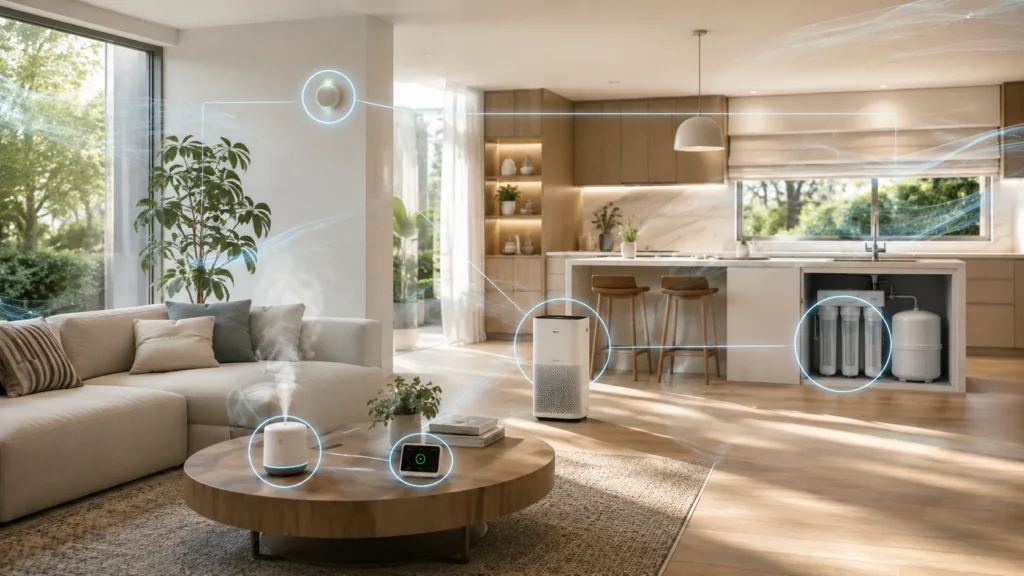
Modern living room and kitchen with smart home air quality devices including an air purifier, humidifier, and water filtration system, connected with visualized blue connectivity lines.

IFA 2026: Air Purification Is Becoming Part of the Healthy-Home Platform

Pre-IFA Industry Perspective | September 4, 2026 This article is based on official announcements and regulatory information available ahead of IFA 2026, which takes place ...
News
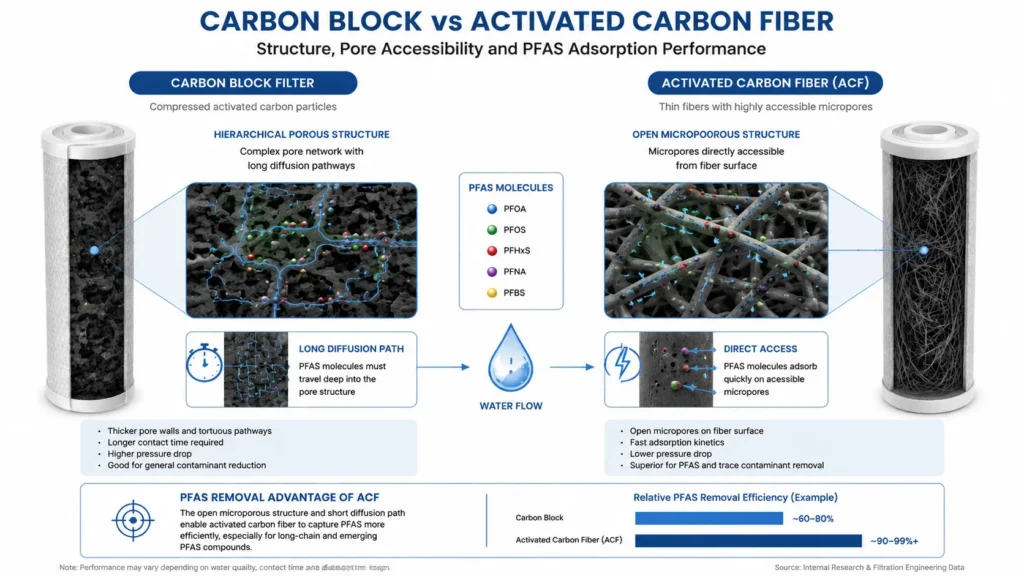
Comparison infographic showcasing the differences between carbon block filter and activated carbon fiber. Detailed diagrams illustrate the hierarchical porous structure of the carbon block with long diffusion paths and the open microporous structure of the activated carbon fiber with direct access for PFAS adsorption.

Carbon Block vs. Activated Carbon Fiber (ACF): Matching Media to Target Contaminants

Two carbon media. Same adsorption chemistry. Very different behaviour in a point-of-use cartridge. If you are specifying a water purifier platform for a PFAS-aware market, ...
News
NSF base listing and ANF private-label certification pathway for OEM water filters

What Is an NSF Master Listing? A Guide to Base Listings, ANF Certification and OEM Water Filters

For a brand preparing to launch an OEM water purifier, one of the most common supplier claims is: “We already have an NSF master listing, ...
News, Water Purifiers
Healthy-home brand team reviewing PFAS water filter certification, test data and product engineering

Entering the Water Category Is Easy. Building a Credible PFAS Claim Is Much Harder

For air purification, appliance and healthy-home brands, entering the water category can look surprisingly easy. A company can select an existing undersink system, customize its ...
News
Team in a business meeting discussing a water filtration system with product components and a comparison table displayed on a screen.

5 Leading OEM Water Purifier Manufacturers in China for Private Label Brands

China has thousands of companies selling water filters, reverse osmosis systems and drinking-water appliances. However, only a portion of them are suitable for private-label, OEM ...
News
Contaminant Engineering•3 min read

PFAS Water Filtration Technologies Explained: Carbon, Resin & RO

Key Takeaway:

PFAS reduction depends on the specific compounds present, treatment media, contact time, water chemistry, and system design. Activated carbon, ion exchange, and Reverse Osmosis address PFAS through different mechanisms.

PFAS are a large family of persistent fluorinated compounds that can occur in drinking-water supplies. Their treatment behavior varies significantly by molecular structure, chain length, functional group, concentration, and the chemistry of the source water.

Granular Activated Carbon (GAC) removes PFAS primarily through adsorption. It is generally more effective for many longer-chain PFAS, while shorter-chain compounds tend to break through more quickly. Carbon performance depends on media properties, Empty Bed Contact Time (EBCT), competing organic matter, loading, and replacement frequency.

Ion-exchange resins use charged functional sites to capture many PFAS compounds. Properly selected anion-exchange media can provide high capacity and may perform better than conventional activated carbon for some shorter-chain PFAS, although performance still depends on water chemistry and competing ions.

Reverse Osmosis (RO) uses membrane separation rather than adsorption. Properly designed RO systems can provide broad reduction across many PFAS compounds as well as dissolved salts and other contaminants. Unlike carbon or resin, however, RO also produces a concentrate stream that must be managed.

No single technology should be selected from a PFAS label alone. System design should consider which PFAS compounds are present, their concentrations, required reduction targets, flow rate, media life, and the applicable third-party certification or validation requirements.

HisoAir Water Technical Series
Product Discovery•3 min read

How to Choose an Under-Sink Water Purifier for Modern Kitchens

Key Takeaway:

Match the treatment technology to your water quality first, then evaluate cabinet space, faucet configuration, flow rate, drain and power requirements, and filter replacement needs.

Choosing an under-sink water purifier starts with water chemistry. Carbon filtration is well suited to chlorine, taste, odor, and many organic contaminants, while Reverse Osmosis is more appropriate when dissolved salts, fluoride, nitrates, or broader dissolved contaminants need to be reduced.

For compact kitchens, tankless RO systems eliminate the conventional storage tank and can significantly reduce the space required under the sink. However, membrane capacity stated in GPD does not directly equal faucet flow. When comparing systems, check the actual dispensing flow rate, inlet-pressure requirement, recovery ratio, and whether a booster pump is required.

Installation architecture also matters. Many RO systems require a drain connection, electrical power, and either a dedicated drinking-water faucet or a compatible multi-function faucet. High-flow carbon systems can often connect directly to the existing cold-water line with a simpler installation, but pressure drop and available faucet flow should still be verified.

RO also removes much of the naturally occurring dissolved mineral content. Where taste or mineral balance is a priority, a post-RO remineralization stage can be added. Filter life should be evaluated by both rated capacity and local water quality rather than replacement time alone.

The right system is therefore not simply the smallest or highest-GPD model. It is the configuration that matches the target contaminants, available cabinet space, desired faucet setup, peak dispensing demand, and maintenance expectations.

HisoAir Water Technical Series
Water Quality•2 min read

What Does TDS Mean in Drinking Water? Measurement vs Contaminant Reality

Key Takeaway:

A TDS meter estimates the overall concentration of dissolved ionic substances from electrical conductivity. It cannot identify specific contaminants or determine whether water is chemically safe.

Total Dissolved Solids (TDS) refers to the combined concentration of dissolved substances in water. Most handheld TDS meters do not measure TDS directly. Instead, they measure electrical conductivity (EC) and convert that reading into an estimated parts-per-million (ppm) value.

This means a TDS reading can indicate how much dissolved ionic material is present, but not what that material actually is. Calcium, magnesium, sodium, nitrates, and other dissolved ions can all contribute to conductivity, yet a simple TDS meter cannot distinguish between them.

TDS meters are also not suitable for detecting trace contaminants such as PFAS, many VOCs, pesticides, pharmaceuticals, or disinfection byproducts. These substances may be present at concentrations far below the level needed to noticeably change electrical conductivity.

A low TDS reading therefore does not guarantee safe drinking water, and a higher TDS reading does not automatically indicate contamination. Water-treatment decisions should be based on laboratory testing for specific contaminants of concern rather than TDS alone.

HisoAir Water Technical Series
Technology Selection•2 min read

RO vs UF Water Filtration: Understanding Pore Sizes & Dissolved Minerals

Key Takeaway:

Ultrafiltration can reduce bacteria, turbidity, and suspended particles while retaining most naturally occurring dissolved minerals. Reverse Osmosis provides much broader reduction of dissolved salts and smaller contaminants.

Ultrafiltration (UF) typically uses hollow-fiber membranes with pore sizes in the approximate 0.01–0.1 micron range. These membranes physically retain turbidity, suspended solids, colloids, and many microorganisms while allowing dissolved minerals and salts to remain in the water.

Reverse Osmosis (RO) operates at a much finer separation level. Unlike UF, RO can substantially reduce dissolved ions such as sodium, calcium, fluoride, nitrates, and other contributors to total dissolved solids (TDS). This makes RO more suitable when dissolved-salt reduction is a primary treatment objective.

UF generally requires less system pressure and produces little or no continuous concentrate stream in many point-of-use configurations. RO typically requires greater pressure and produces a reject-water stream, but delivers broader contaminant reduction.

For water with acceptable TDS and mineral content, UF can be a simpler mineral-retaining treatment option. Where dissolved salts, fluoride, nitrates, or broader dissolved contaminants are a concern, RO is generally the more appropriate technology.

HisoAir Water Technical Series
Technology Selection•4 min read

Carbon Block vs Reverse Osmosis: Which Fits Your Need?

Key Takeaway:

Choose RO for dissolved inorganic salts and heavy metals; choose Carbon Block for chemical taste/odor, no wastewater, and high line-pressure flow.

Reverse Osmosis (RO) and Carbon Block filtration represent two fundamentally different treatment methods: membrane separation and adsorption. Understanding these differences helps determine which technology is better suited to a specific water-quality requirement.

Reverse Osmosis uses a semi-permeable membrane with pore sizes of approximately 0.0001 microns. It can significantly reduce dissolved inorganic contaminants such as TDS, fluoride, nitrates, and certain heavy metals. Because water must be forced through the membrane, RO systems require sufficient pressure or a booster pump and generate a concentrated wastewater stream.

Carbon Block filtration relies primarily on adsorption through compressed activated carbon, commonly with nominal pore sizes around 0.5–5 microns. It is highly effective for chlorine, chloramines, VOCs, taste, and odor, while allowing substantially higher direct-flow rates without producing wastewater.

From an operating perspective, Carbon Block systems are generally simpler, require less energy, and avoid the water loss associated with RO. RO involves higher system complexity and operating cost, but provides substantially broader reduction of dissolved contaminants that Carbon Block alone cannot address.

HisoAir Water Technical Series

REQUEST A QUOTE