

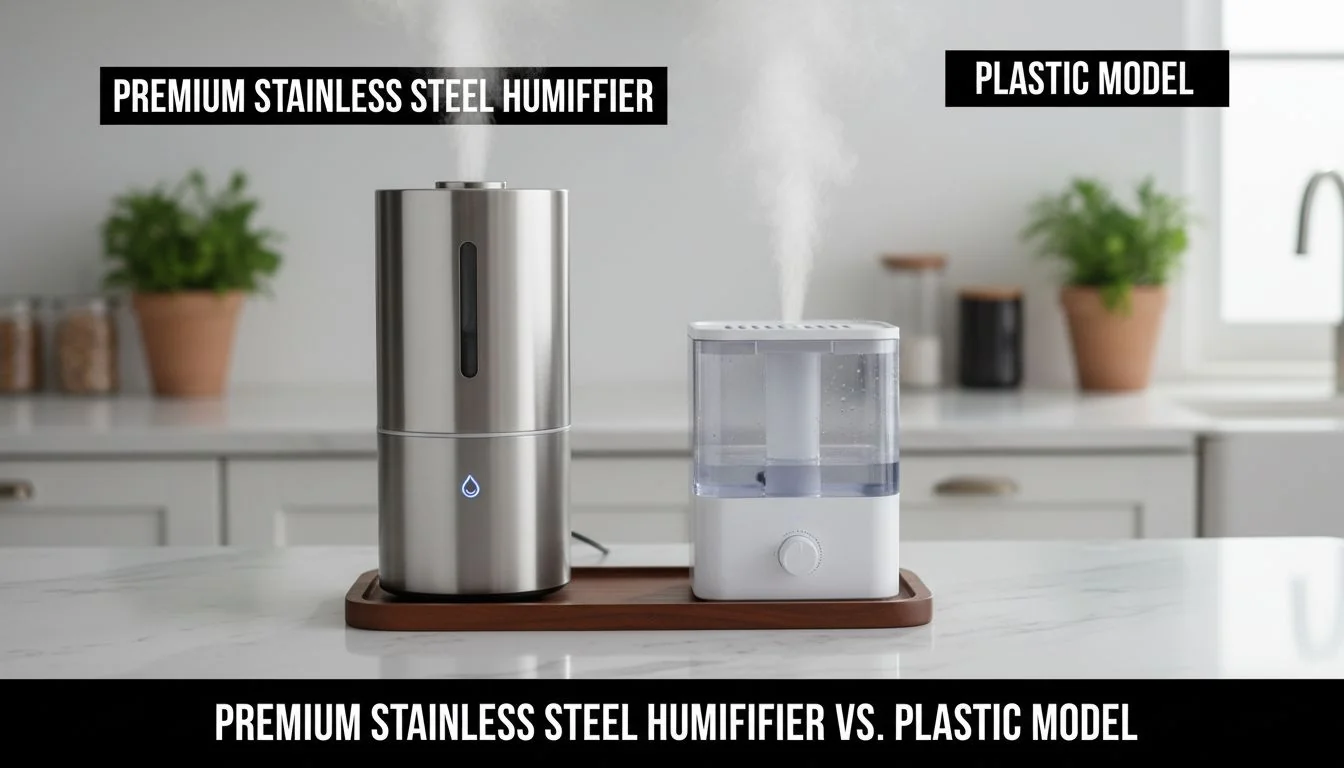
You're building a premium D2C brand and need a world-class humidifier. You believe "Made in Korea" is the key. But the top players are inaccessible. What's the real path forward?
The top Korean humidifier manufacturers1 are giants like LG, Samsung, and Cuckoo, who do not offer private label services. The accessible options for D2C brands are smaller Original Design Manufacturers (ODMs) that often provide more standard, less innovative products.
I've walked this path many times with clients. They come to me with a clear vision: a premium humidifier2 with the design excellence and quality perception of a top Korean brand. They have the budget and the ambition. But when we start making calls, a frustrating reality sets in. The brands they admire aren't in the business of making products for anyone else. This realization is often a major roadblock, but it's also the starting point for a much smarter sourcing strategy. It forces us to ask a better question: what does "premium" truly mean for your product and your customer?
Let's break down the Korean manufacturing landscape together. I want to give you the insider's view I've gained over the years, so you can avoid the dead ends and find a partner that delivers true innovation, not just a label on a box.
South Korea is the world's 5th largest exporter of goods.True
According to the World Trade Organization (WTO) and multiple economic reports, South Korea consistently ranks among the top global exporters, known for its electronics, vehicles, and machinery.
All Korean electronics factories offer private label services to global brands.False
This is a common misconception. Major conglomerates like Samsung and LG protect their brand and R&D fiercely and do not offer private label or ODM services for their core consumer electronics and home appliances.
You want your product to stand out in a crowded market. Associating your brand with Korea's reputation for quality and design seems like a brilliant shortcut to building trust and commanding a higher price.
D2C brands look to Korea for its powerful "halo effect." The country is synonymous with cutting-edge technology3, sophisticated design, and high consumer trust, especially in electronics and beauty. Brands hope this "K-quality" perception will elevate their own premium positioning.
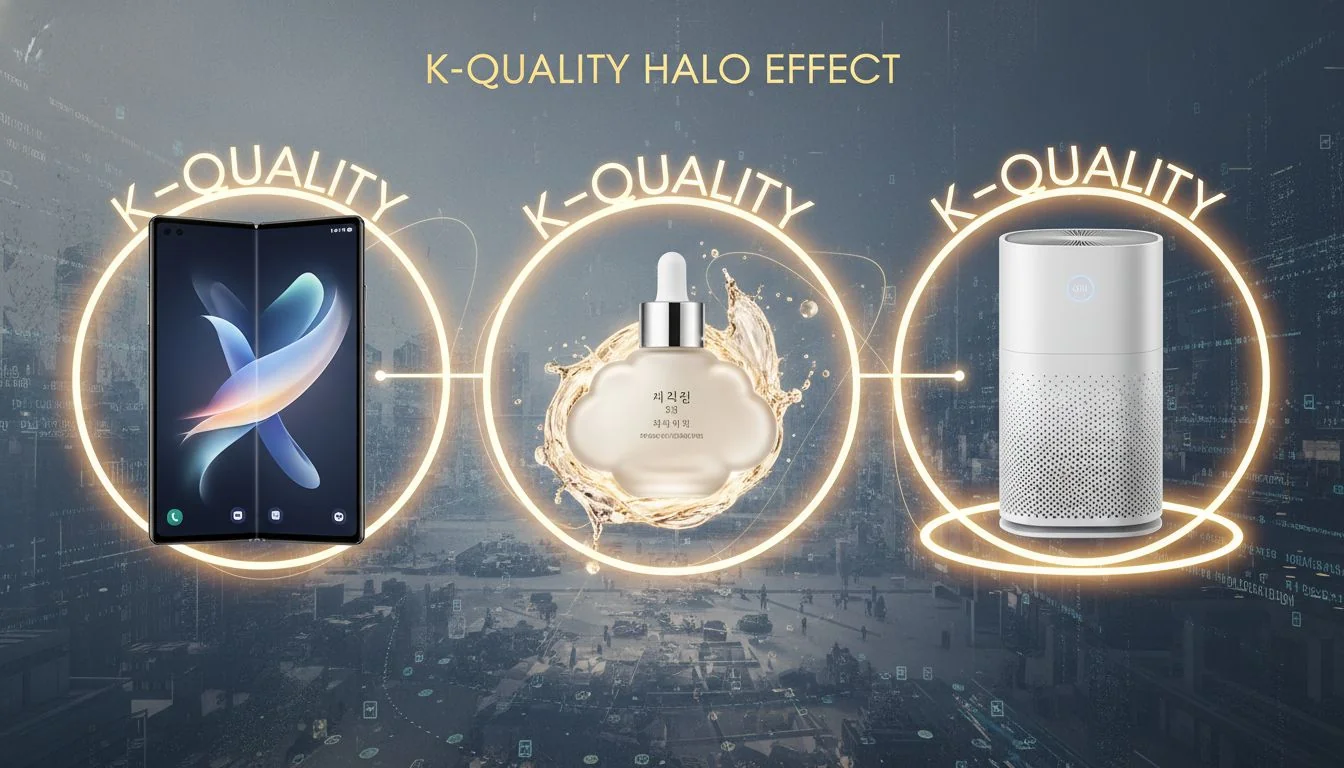
In my experience helping brands grow, I see this logic all the time. A product designer like you, Jacky, understands that perception is a huge part of product value. You see how Samsung dominates high-end displays and how Korean skincare brands have set global standards. You want to bottle that magic for your own home appliance line. The "Made in Korea" stamp feels like an instant mark of credibility. It tells the customer, "This isn't just another cheap appliance; this is a thoughtfully designed, high-performance machine." This strategy is based on a solid premise, but it runs into a practical wall when it meets the manufacturing reality4 on the ground. The very companies that built this reputation are the least likely to be your partner.
The Korean Premium Promise vs. The D2C Reality
| Perceived Korean Advantage | The Manufacturing Reality for D2C |
|---|---|
| Cutting-Edge Innovation | Innovation is held by giants (LG, Samsung) who don't do private label. |
| Superior Design Aesthetic | Accessible ODMs often use generic, dated molds for cost efficiency. |
| High-Quality Materials | Most ODMs default to standard ABS plastic, not premium materials. |
| Brand Trust by Association | This trust is tied to the giant brands, not the smaller, unknown ODMs. |
South Korea's R&D spending as a percentage of GDP is one of the highest in the world.True
The OECD and World Bank data consistently show South Korea as a top country for R&D investment relative to its economy, which fuels its technological innovation.
The 'Made in Korea' label automatically guarantees a product uses the most innovative materials.False
Country of origin does not guarantee material innovation. Many factories, regardless of location, use standard, cost-effective materials like ABS plastic unless a client specifically commissions and funds R&D for new materials.
What is the Korean Manufacturing Reality: The "Giants" vs. "Private Label"?
You've benchmarked the sleek designs of LG and Cuckoo. You're ready to partner with the best. But you quickly discover these giants operate in a closed loop, making a partnership impossible.
The Korean manufacturing scene is a two-tiered system. Global giants like Samsung and LG drive innovation but are completely inaccessible for private label projects. This leaves smaller, often less innovative, factories as the only viable option for most D2C brands looking to manufacture there.
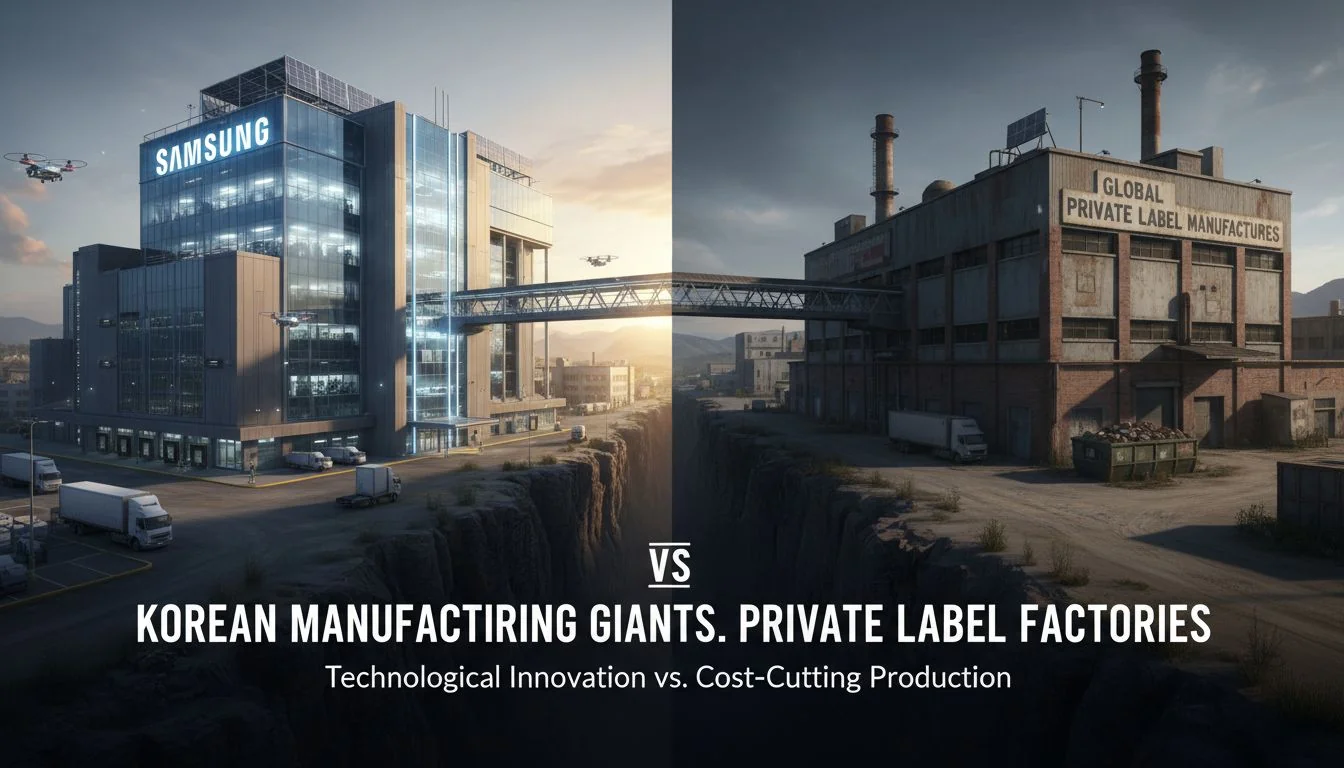
Let me be direct and save you months of wasted effort: you will not get a private label humidifier from LG, Samsung, or even a high-end domestic player like Cuckoo. I've seen ambitious founders spend a lot of time and money trying to find a way in. It doesn't exist. These companies have invested billions in their brand identity and proprietary R&D. Their entire business model is built on selling their brand, not lending their factory to yours. They see private label as a dilution of their brand equity. The factories that are available for private label are typically mid-sized operations that serve the domestic market or act as secondary suppliers. They are competent at manufacturing, but they are not the source of the innovation you admire.
The Two Tiers of Korean Humidifier Manufacturing
| Feature | Tier 1: The Giants (LG, Samsung, etc.) | Tier 2: The Accessible ODMs |
|---|---|---|
| Private Label Access | No | Yes |
| Primary Focus | Building their own global brand | Fulfilling orders for other brands |
| R&D Investment | Massive, focused on proprietary tech | Minimal, focused on cost reduction |
| Product Offering | Cutting-edge, unique designs | Standard, often generic models |
Samsung Electronics operates its own manufacturing facilities and does not produce home appliances for other brand names.True
Samsung's business model for its consumer electronics and home appliance divisions is vertically integrated. They control design, manufacturing, and branding to maintain quality control and brand integrity.
Cuckoo is a Korean ODM that produces humidifiers for many international D2C brands.False
Cuckoo is a powerful brand in its own right, particularly in the Korean and Asian markets. Like LG and Samsung, it focuses on selling its own branded products and does not operate as an ODM for humidifiers.
Who Actually Makes Humidifiers in Korea?
So, the giants are out. You're now digging for the "hidden gem" factories. But the options you find offer standard plastic models that look like they were designed five years ago.
Beyond the inaccessible giants, humidifiers in Korea are primarily made by mid-sized ODM factories. These companies are generally focused on producing reliable, cost-effective plastic models for the competitive domestic market, not on developing breakthrough innovations for global D2C brands.
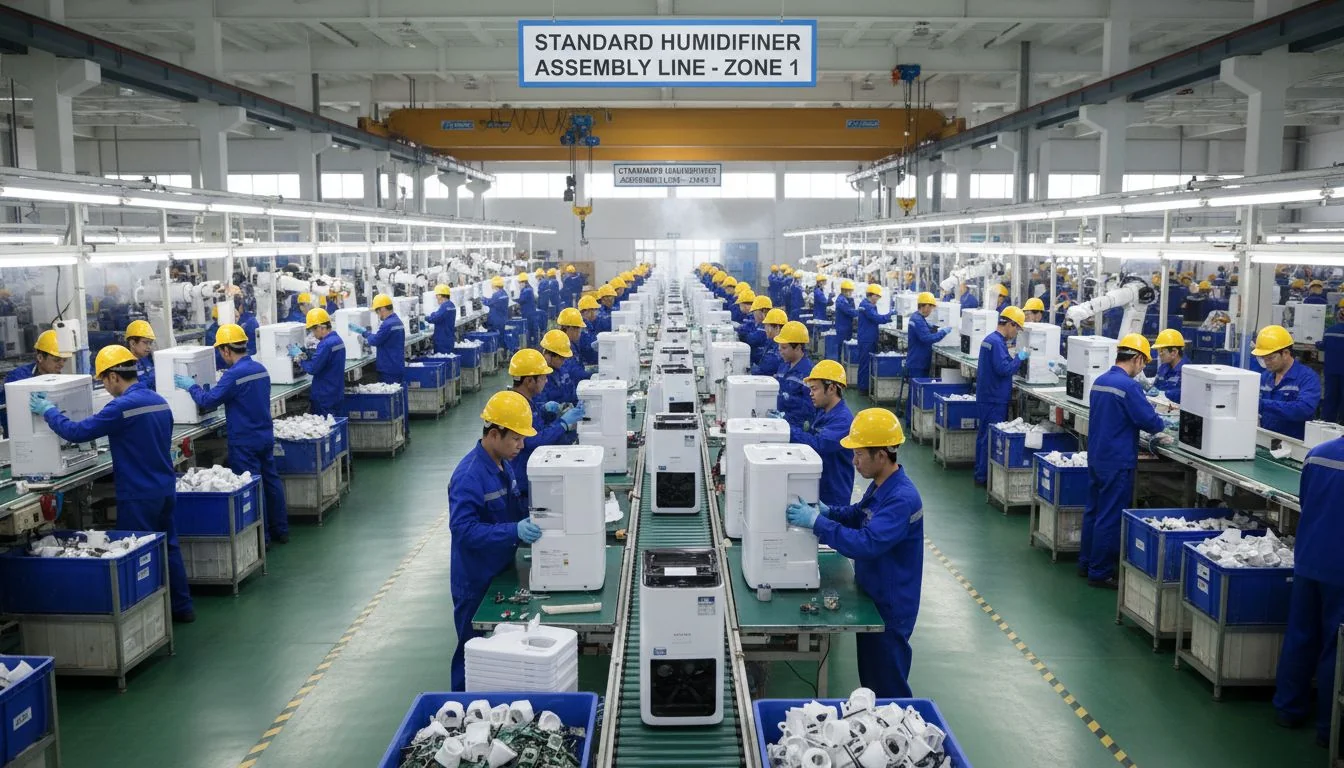
Think about it from their perspective. Their main business is supplying local Korean retailers. They need to produce a "good enough" product at a very specific price point. Their incentive is to reuse existing molds and components to keep costs down. They are not R&D powerhouses built to serve the unique needs of a premium, globally-minded D2C brand like yours. When you approach them asking for a truly innovative feature—something they've never done before—the conversation gets difficult. It requires new tooling, new R&D, and significant investment, which is a risk they are often unwilling to take for a single client. You're looking for a partner in innovation, but they are structured to be partners in efficient, repeatable production of existing designs. This fundamental mismatch is at the heart of the sourcing challenge.
Most Korean ODM factories have large catalogs of innovative, ready-to-brand humidifier designs.False
While they have catalogs, the designs are often conservative and based on proven, cost-effective technologies. Truly 'innovative' or 'breakthrough' designs are rare in off-the-shelf ODM catalogs, as they represent a higher R&D risk for the factory.
Korean ODMs primarily use ABS plastic for their humidifier housings.True
ABS (Acrylonitrile Butadiene Styrene) is the industry standard for mid-range consumer appliances globally, including in Korea, due to its good balance of impact resistance, durability, and cost.
What is the "Access & Innovation" Gap You Won't Easily Find?
You want the premium quality associated with Korea, but the accessible factories lack the cutting-edge innovation you need. You're caught between a brand you can't work with and a product you don't want.
The "Access & Innovation" gap is the frustrating space between the cutting-edge products made by Korean giants (which are inaccessible) and the standard, off-the-shelf models offered by accessible ODMs. Premium D2C brands fall right into this gap, struggling to find a partner.
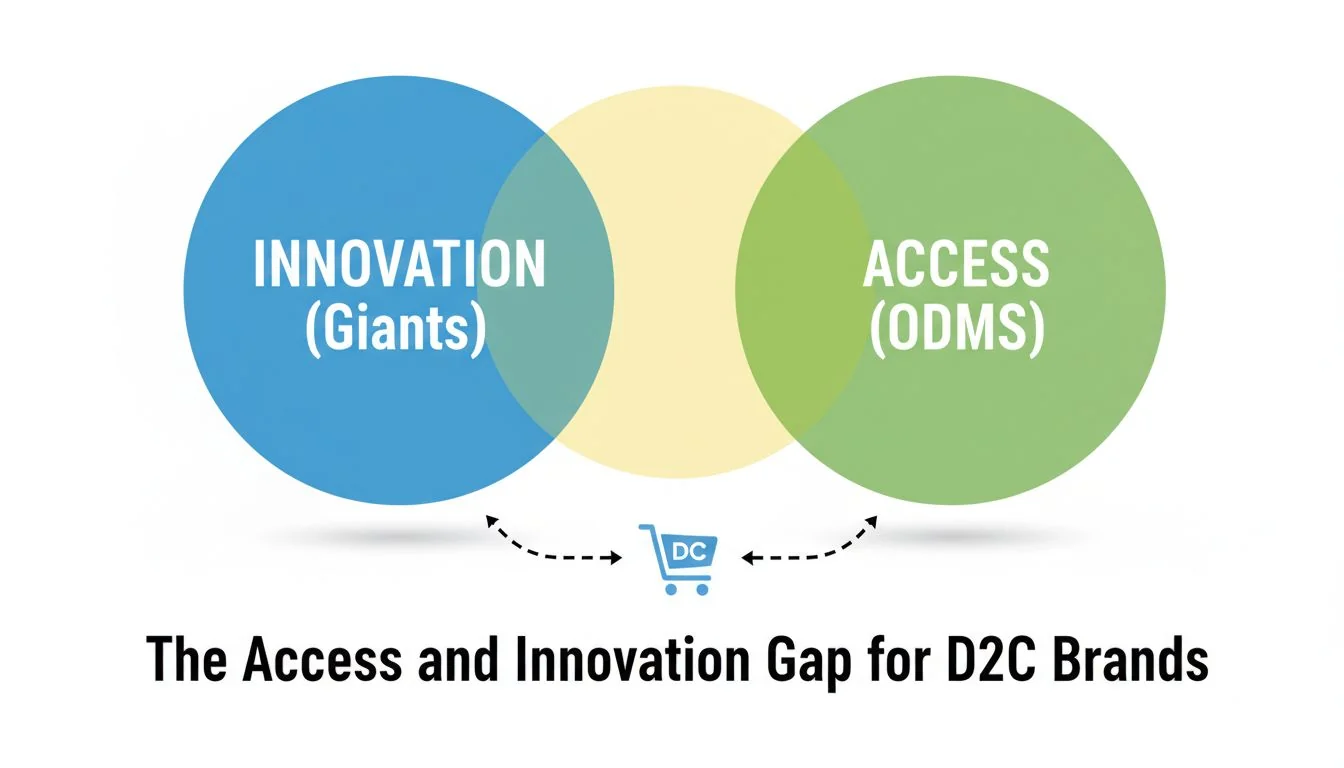
This gap is the single biggest challenge for brands sourcing premium appliances. I've seen it frustrate even the most experienced product designers. You have the vision and the budget for a category-defining product. You want advanced hygiene features, unique materials, and a design that feels truly next-generation. You look at what LG is doing with their UV-C sterilization and beautiful forms, and that's your benchmark. But when you talk to the factories you can work with, they offer you a standard ultrasonic humidifier in a generic white plastic shell. They might offer to change the color or print your logo, but that's not innovation. It's just customization. This is where your project can stall, leaving you to compromise on your vision.
The D2C Brand's Unmet Needs
| What the Giants Offer | What Accessible ODMs Offer | What Your D2C Brand Needs |
|---|---|---|
| Proprietary R&D | Off-the-shelf components | True product differentiation5 |
| Unique, branded designs | Generic, open-mold designs | A unique, ownable design |
| Advanced features (UV, etc.) | Basic ultrasonic function | Meaningful, high-value features |
| NO ACCESS | EASY ACCESS | A partner who offers BOTH |
UV-C sterilization in humidifiers was pioneered and popularized by large brands like LG.True
Major appliance corporations like LG invested heavily in integrating UV-C LED technology into their premium home appliance lines, including humidifiers (like their PuriCare series), marketing it as a key hygiene feature.
Small ODM factories can easily add complex features like UV-C sterilization to any model.False
Integrating features like UV-C requires significant engineering, testing, and certification to ensure effectiveness and safety. It's not a simple 'add-on' and represents a major R&D cost that most smaller ODMs avoid unless a client fully funds the development.
Your search for a "Made in Korea" partner is hitting a wall. The frustration is mounting. What if the problem isn't the partners, but the premise of your search itself?
A smarter strategy is to redefine "premium." Instead of chasing a "Made in Korea" label, you should prioritize tangible innovation, superior materials, and advanced hygienic features6. True premium is in the product itself, not its country of origin.
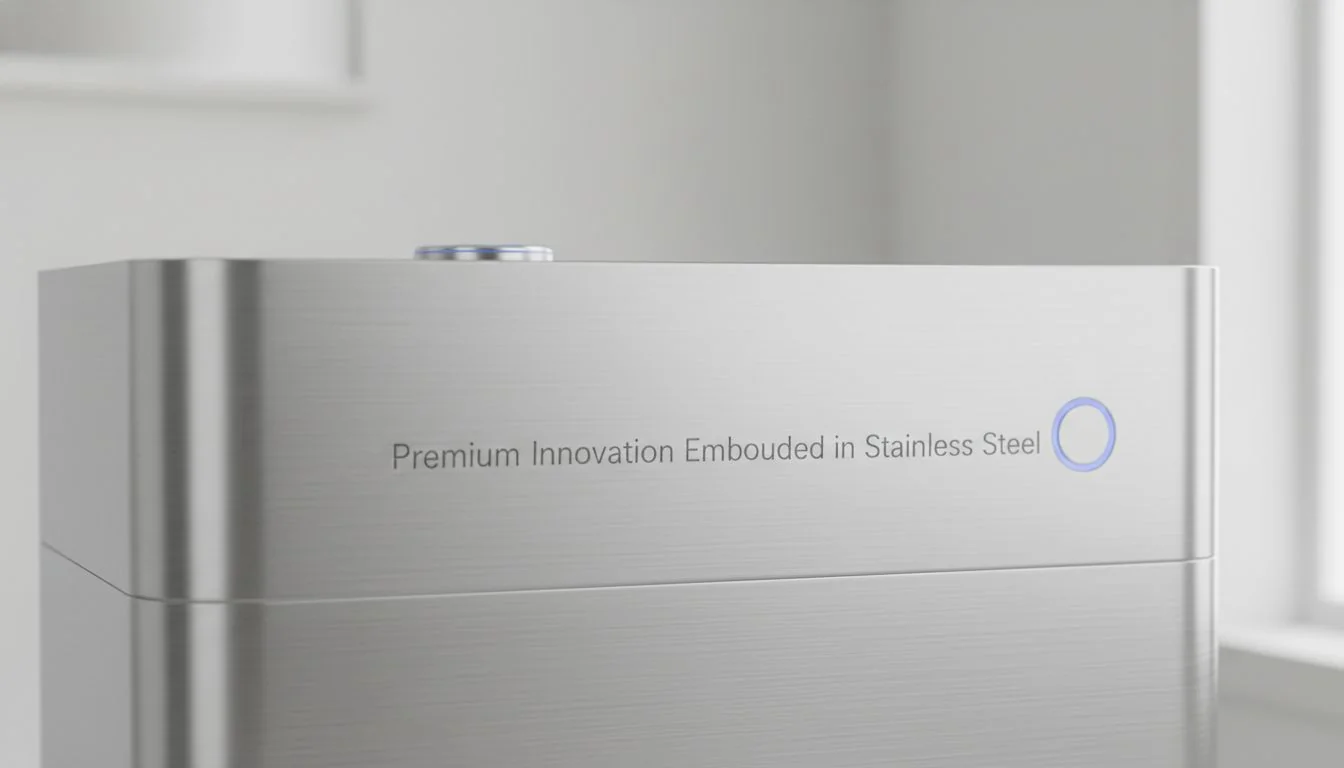
This is the pivot that has unlocked success for so many of my clients. We stop asking, "Who can make our product in Korea?" and start asking, "Who can build the most innovative, hygienic, and premium humidifier in the world?" For a health and wellness product like a humidifier, what matters more to an educated consumer? A sticker that says "Made in Korea" on a standard plastic box, or a product made from boil-safe, hygienic stainless steel that won't leach microplastics into their air? The answer is clear. The premium experience comes from the material choice, the ease of cleaning, the durability, and the peace of mind. This shifts your focus from finding a location to finding an innovation partner, regardless of where their factory is.
Plastic humidifier tanks can be a breeding ground for bacteria and mold if not cleaned meticulously.True
Porous surfaces and complex shapes of plastic tanks can harbor biofilm, a slimy layer of bacteria that is difficult to remove completely. This is a well-documented issue in home appliance hygiene.
A 'Made in Korea' label is the #1 purchasing factor for North American consumers buying humidifiers.False
While country of origin can influence perception, key purchasing factors for humidifiers in North America are typically performance, ease of cleaning, capacity, noise level, and price. Brand reputation and specific features often outweigh the manufacturing location.
You need a truly innovative product, but you also need a partner who understands the fast-paced, flexible needs of the D2C world. Where can you find a partner who delivers both?
Hisoair provides the "Premium Innovation" that D2C brands are searching for. Our fully stainless steel humidifier7 is the perfect example—a product with superior hygiene and materials that you simply won't find as an ODM model in Korea, delivered with D2C speed.
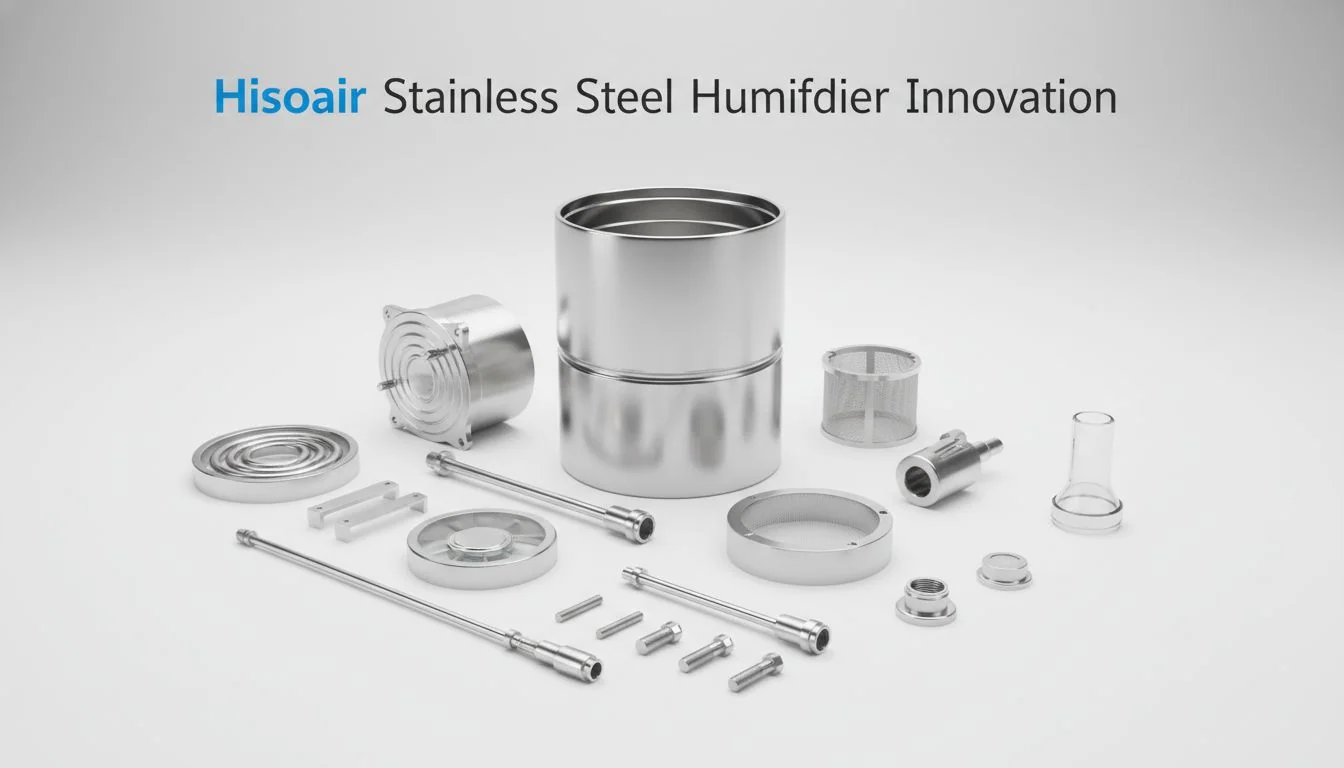
We saw the "Access & Innovation" gap and built our company to fill it. We are not just a manufacturer; we are an R&D partner for ambitious D2C brands. Our proof point is our flagship stainless steel humidifier. Why stainless steel? Because it directly solves the biggest customer complaint about humidifiers: they are difficult to clean and can be unhygienic. You can boil our entire tank for perfect sterilization. It's durable, has a satisfying premium weight, and doesn't risk microplastic contamination like plastic models. This is not an incremental improvement; it's a fundamental re-imagining of what a premium humidifier should be. This is the kind of innovation you were hoping to find in Korea, but it wasn't there. We invested in the R&D and the tooling so you don't have to. We offer you a truly differentiated product, ready to be branded, allowing you to go to market with a story of genuine innovation.
Hisoair is a well-known Korean brand.False
This article positions Hisoair as an innovative manufacturing partner, not a Korean domestic brand. Its value proposition is based on product innovation (stainless steel) rather than country of origin.
Surgical-grade stainless steel is non-porous and highly resistant to bacteria buildup compared to plastic.True
The non-porous nature of stainless steel makes it difficult for bacteria to adhere and form biofilms. It's why it is the standard material for medical instruments, food processing equipment, and other hygiene-critical applications.
Conclusion
Stop chasing a location and start partnering with innovation. Hisoair delivers the premium product and the flexible D2C partnership you actually need to win in the market.
References
-
Explore the leading manufacturers in Korea to understand their offerings and market position. ↩
-
Discover the features that elevate a humidifier to premium status and attract consumers. ↩
-
Find out how cutting-edge technology is integrated into modern humidifiers for better performance. ↩
-
Gain insights into the challenges D2C brands face when sourcing products from Korean manufacturers. ↩
-
Discover strategies for creating unique products that stand out in a competitive market. ↩
-
Explore the most effective hygienic features that enhance the safety and usability of humidifiers. ↩
-
Explore the advantages of stainless steel humidifiers over traditional plastic models. ↩










 English
  Français
  Español
  Italiano
  Deutsch
  Português
  Русский
  العربية
  日本語
日本語  한국어
한국어  Tiếng Việt

