

Sẽ mở trong thẻ mới
Innovative Air Quality Solutions

Why Clean Drinking Water Is Becoming a Core Pillar of the Wellness Lifestyle

clean drinking water glass wellness lifestyle kitchen background

You design sleek appliances, but consumers want more than utility today. Generic filters feel outdated in modern wellness routines. We must rethink water purification1 as a health necessity.

Clean water is shifting from a basic utility to a premium wellness tool. By integrating advanced filtration2 like RO and remineralization into stainless steel hardware, designers can create "anti-inflammatory" devices. This aligns with the demand for holistic health, beauty rituals, and sustainable, plastic-free living.
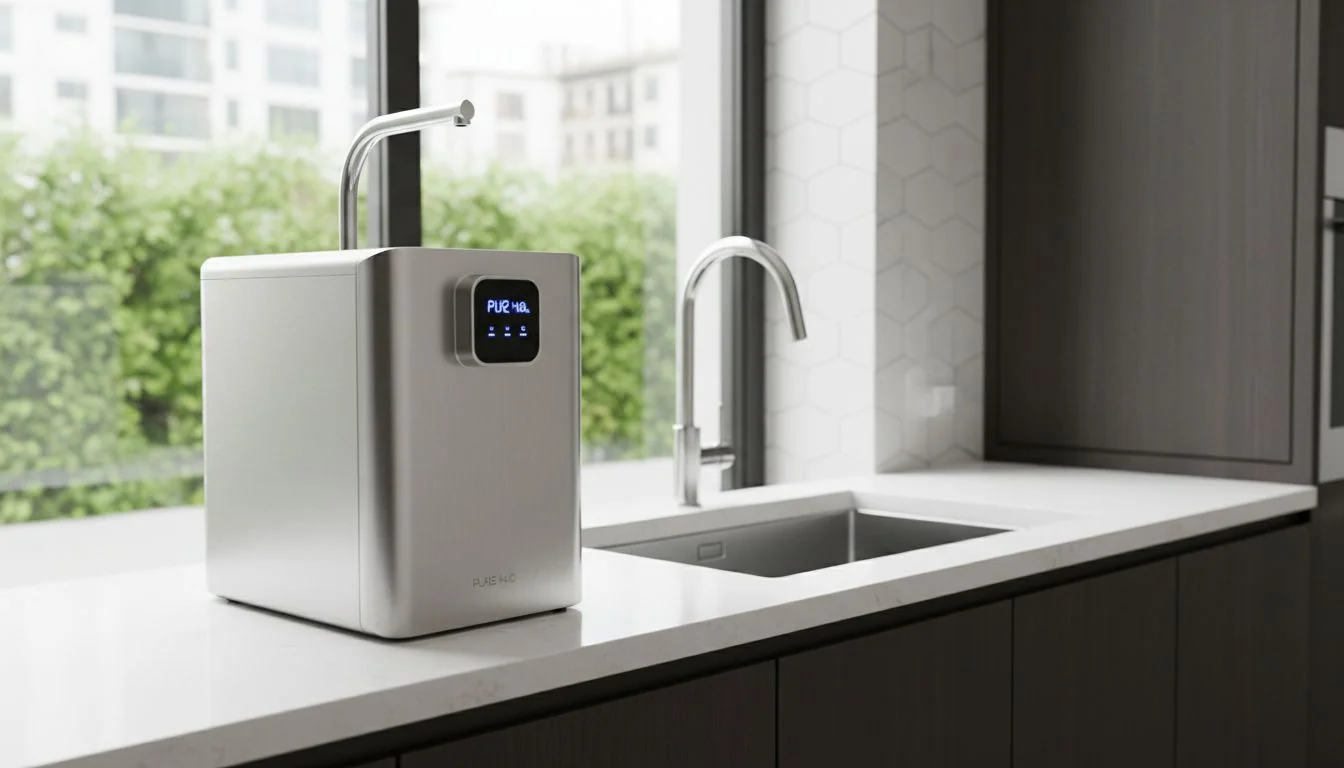
modern kitchen water purifier stainless steel design

Many designers overlook the emotional connection users have with water. Let’s explore how manufacturing choices impact this new market.

Water quality directly impacts skin health and inflammation levels.True

Contaminants like chlorine and heavy metals can strip natural oils from the skin and cause internal inflammation.

Plastic pitchers are the most effective way to filter water for wellness.False

Plastic pitchers often lack advanced filtration capabilities and can introduce microplastics into the water, contradicting wellness goals.

How Has the Wellness Focus Shifted from the Gym to the Home?

Health used to mean lifting weights. Now, it happens in the kitchen. Your product designs must reflect this intimate shift from public gyms to private sanctuaries.

The wellness market has moved beyond fitness centers into daily home rituals. Consumers now view their kitchen environment as a sanctuary for health. This demands appliances that look premium and function as health tools, not just basic household machinery.

woman drinking water in home kitchen wellness routine

In my years working with mold design and manufacturing, I have watched trends shift. We used to focus on durability for gym equipment. Now, the focus is on the home. This is the "Cross-Over" market. We are no longer just selling appliances; we are selling a lifestyle.

For a designer like you, Jacky, this is a massive opportunity. You can pitch water purifiers to new sectors. Think about Beauty Brands, Supplement Brands, and Fitness Brands. They are looking for hardware extensions. If a company sells collagen powder, a branded water purifier is the perfect partner. It increases their share of the customer's wallet. It also keeps the brand in the customer's hand every single day.

When we design molds for these products, we must think about aesthetics. It cannot look like a piece of plumbing. It must look like a high-end beauty device.

Market Segment Traditional Product New "Cross-Over" Opportunity
Beauty Face Creams Water Purifiers for Face Washing
Supplements Vitamin Pills Remineralizing Water Dispensers
Fitness Dumbbells Hydration Stations for Recovery

Home appliances are becoming a central part of the wellness economy.True

Consumers are investing more in home health technologies, such as air and water purifiers, as part of their daily wellness routines.

Water purifiers are only relevant to appliance companies.False

Beauty and supplement brands can utilize branded water purifiers to extend their product lines and increase customer engagement.

Can Water Be More Than Just Hydration?

We treat water as a thirst quencher. But modern buyers want nutrition. We need to engineer systems that add value, not just remove dirt.

Water is now viewed as a supplement delivery system. Advanced filtration systems that remineralize water with Magnesium and Silica transform a simple drink into a nutritional intake. This justifies a higher price point and positions the hardware as essential health equipment.
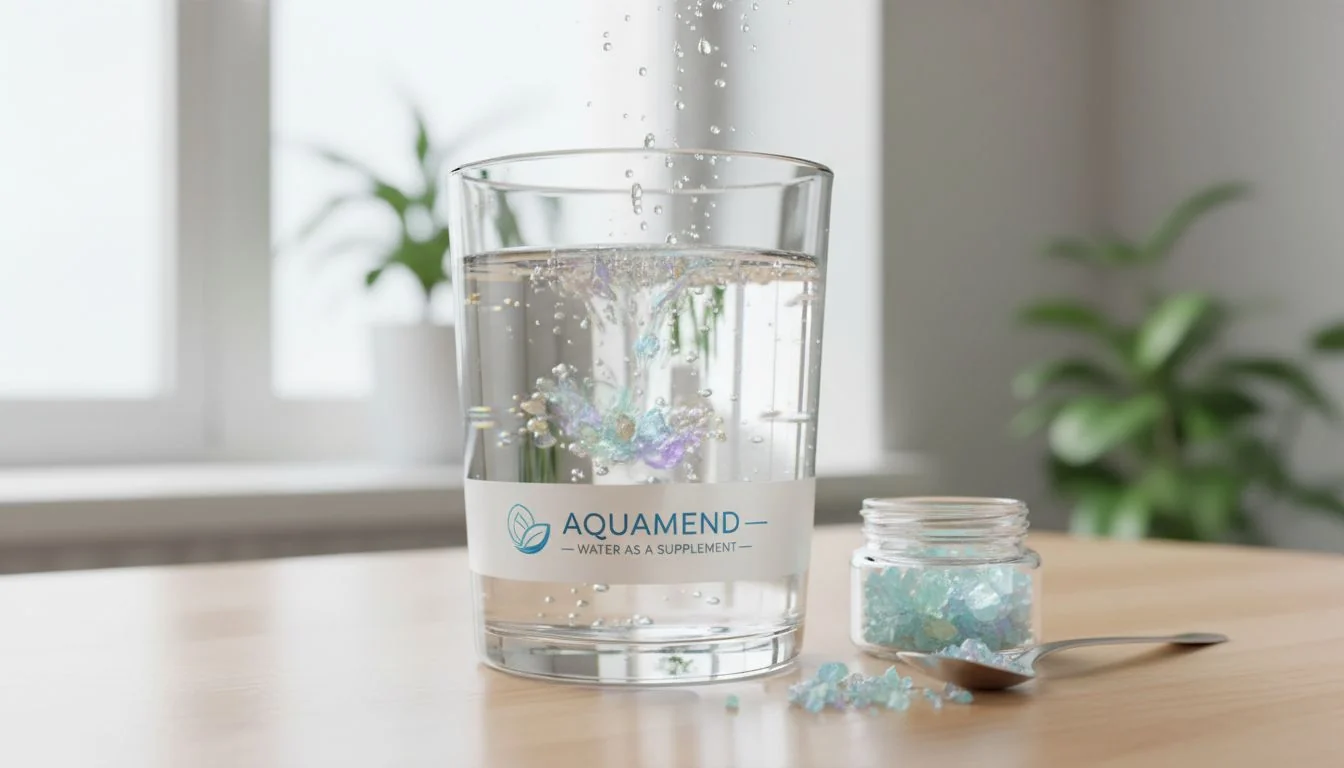
glass of water with minerals supplement concept

I often tell my clients that we need to frame water as a supplement3. This is a powerful insight for product positioning. If we design a system that just filters water, it is a utility. But if we design a system that adds Magnesium and Silica, it is nutrition.

This is where engineering meets biology. In the factory, we look at technologies like Hisoair’s remineralization4 tech. This allows us to claim that the water supports bone health and skin elasticity.

When you are designing the internal components, you need to make space for these mineral stages. It adds complexity to the mold and the assembly, but it adds massive value. You are not selling a filter for $50. You are selling a daily nutrient delivery system for $500.

  • Magnesium: Supports muscle function and relaxation.
  • Silica: Promotes collagen production for skin and hair.
  • Alkalinity: Helps balance body pH levels.

By understanding this, we stop designing for "clean" and start designing for "healthy."

Reverse Osmosis (RO) removes beneficial minerals along with contaminants.True

Standard RO systems strip water of everything, including healthy minerals like calcium and magnesium.

Adding minerals back into water is a marketing gimmick with no health benefit.False

Remineralization provides essential electrolytes and minerals that improve hydration and support bodily functions.

Is Pure Water Actually the Ultimate Skincare Product?

Creams and serums are expensive. But washing with dirty water ruins them. We must design filtration that supports beauty routines5 and protects the skin.

Pure water is the foundation of effective skincare. Contaminants in tap water can cause inflammation and reduce the effectiveness of beauty products. A branded purifier acts as a hardware extension for beauty lines, ensuring the water used is as pure as the products applied.

woman washing face with clean water skincare

Let’s talk about the "Beauty Connection." This is a concept I love because it bridges industrial design with the beauty industry. We know that inflammation is the enemy of good skin.

Tap water often contains chlorine and heavy metals. These are inflammatory agents. If a user spends hundreds of dollars on face creams but washes with chlorinated water, they are fighting a losing battle.

As designers, we can weaponize this knowledge. We can position a high-end Stainless Steel RO System as an "Anti-Inflammatory Device." This is not just marketing fluff. It is science-backed.

When you design the user interface or the nozzle, think about the beauty ritual. Maybe the flow needs to be gentler. Maybe the height needs to accommodate a face bowl. We are designing for a beauty routine, not just filling a pot for pasta.

Contaminant Effect on Skin The Solution
Chlorine Dries out skin, strips oils Carbon Block Filtration
Heavy Metals Causes irritation, inflammation Reverse Osmosis (RO)
microplastics6 Physical irritation, toxin carrier High-grade Filtration

Chlorine in tap water can strip natural oils from the skin.True

Chlorine is a harsh chemical used for disinfection that can disrupt the skin's natural barrier.

Tap water is always safe for sensitive skin types.False

Sensitive skin can react negatively to the chemicals and minerals found in standard municipal tap water.

Why Do Generic Plastic Filters Fail the Modern Wellness Lifestyle?

Health-conscious buyers hate plastic. Yet, most filters are made of it. This contradiction kills brand trust and lowers the perceived value of the product.

Plastic pitchers contradict the anti-inflammatory goals of wellness consumers due to microplastic concerns. To truly serve this market, designers must eliminate plastic contact points. This shift ensures the hardware matches the purity of the water it produces.
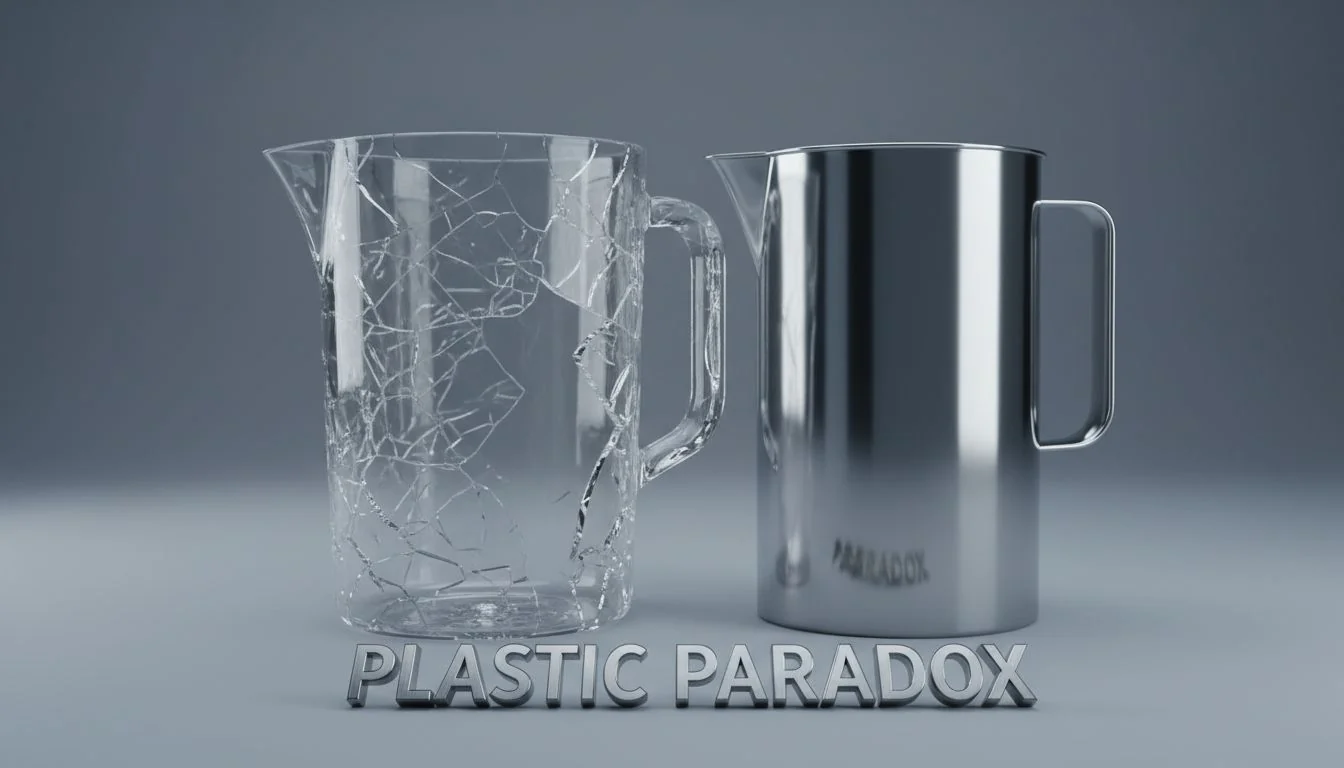
cracked plastic water pitcher vs stainless steel

I call this the "Plastic Paradox." We are trying to sell health, but we are packaging it in plastic. In the mold industry, plastic is king because it is cheap and easy to shape. But for the wellness market, it is a liability.

Consumers are terrified of microplastics. They link them to inflammation and hormonal issues. If your water purifier is made of cheap plastic, you are failing the "wellness" test.

From a manufacturing standpoint, this is hard. Moving away from plastic means new challenges. But we must do it. We need to look at the water path. The water should not touch plastic after it is filtered.

If you design a system where the final storage tank is plastic, you have lost the customer. They want purity. They want to know that the machine is not adding new toxins to the water they just cleaned.

Microplastics are a growing concern for health-conscious consumers.True

Studies suggest microplastics can enter the body and may cause inflammation and other health issues.

Plastic is the best material for long-term water storage.False

Plastic can degrade over time, leach chemicals, and is more prone to bacterial growth compared to stainless steel.

Why Does True Wellness Water Require Stainless Steel Hardware?

Plastic feels cheap and risky. Stainless steel feels clinical and pure. We need to upgrade materials to match the high price tag and consumer expectations.

Stainless steel is the gold standard for preventing bacterial growth and microplastic leaching. An instant-hot stainless steel dispenser elevates the user experience from a chore to a premium ritual. It signals durability, hygiene, and high-end engineering to the consumer.
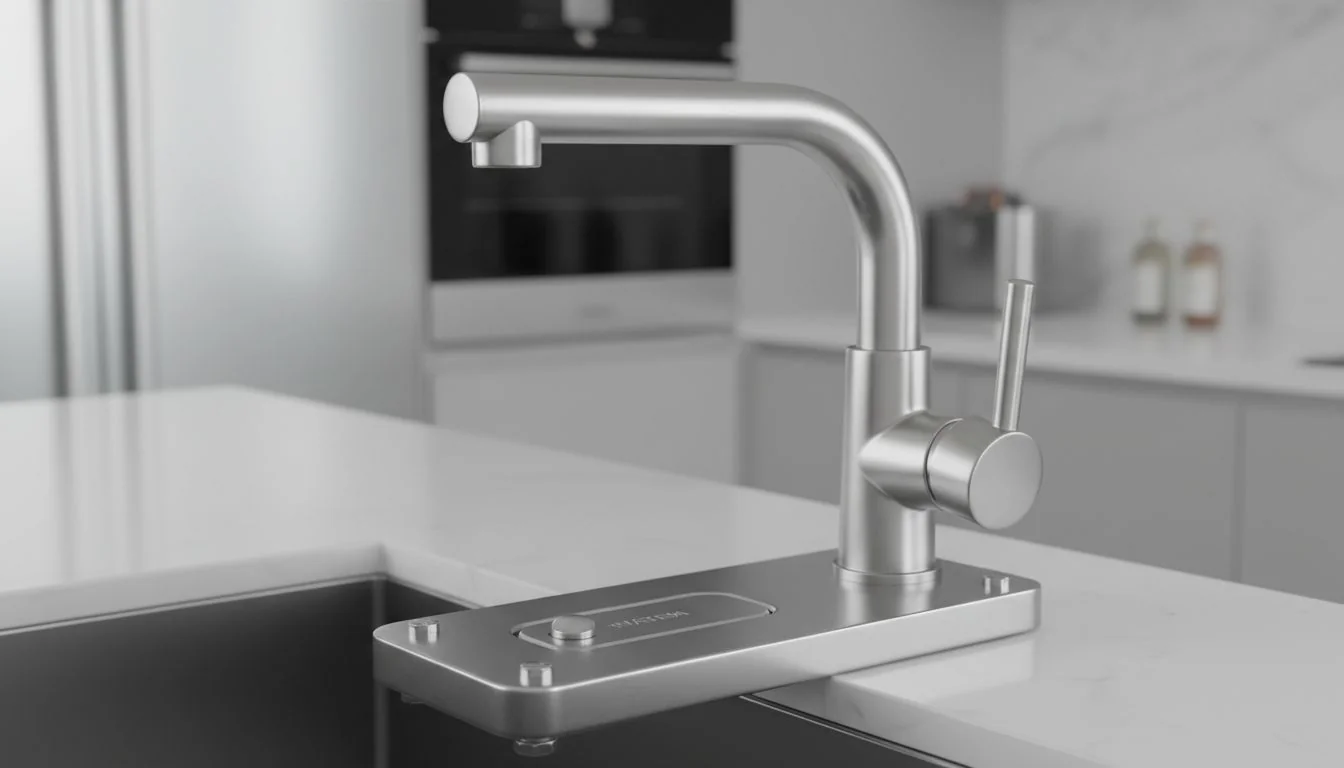
stainless steel water dispenser faucet detail

This brings us to the hardware upgrade. To sell "Wellness Water," we need stainless steel. In my factory experience, working with stainless steel is different from plastic injection molding. It requires different tooling and precision.

But the payoff is huge. Stainless steel positions the brand as a "Wellness Engineer." It shows we understand biology, not just plumbing. Stainless steel prevents bacteria buildup. It does not degrade.

Also, consider the "Ritual of Use." Wellness consumers love rituals. Making matcha or herbal tea is a moment of peace. A plastic pitcher feels like a chore. An Instant-Hot Stainless Steel Dispenser feels like a luxury.

We are designing an experience. The user presses a button, and hot, mineral-rich water flows instantly. It is clean. It is safe. It feels sacred. This is how we elevate water from "safe" to "sacred."

Feature Plastic Pitcher Stainless Steel Dispenser
Material Porous, degrades Non-porous, durable
Hygiene Prone to bacteria Sterile environment
Experience Manual chore Premium ritual

Stainless steel is more resistant to bacterial growth than plastic.True

Stainless steel's non-porous surface makes it difficult for bacteria to adhere and multiply.

Stainless steel molds are cheaper to produce than plastic molds.False

Stainless steel manufacturing typically involves higher material and tooling costs than plastic injection molding.

Conclusion

Water is no longer just a utility; it is a supplement and a beauty tool. We must design stainless steel systems that honor this new, sacred role in wellness.


References


  1. Explore cutting-edge technologies that redefine water purification as a health necessity. ↩

  2. Learn how advanced filtration systems enhance water quality and support wellness. ↩

  3. Discover how water can be engineered to deliver essential nutrients for better health. ↩

  4. Discover how remineralization adds essential minerals to water, boosting health benefits. ↩

  5. Find out how clean water enhances beauty routines and supports skin health. ↩

  6. Learn about the dangers of microplastics and their impact on health and wellness. ↩

Share:
hisoair founder mr lee
Alwen Lee, an air purification expert with over 10 years of experience, is a devoted father of two and a passionate traveler, having explored more than 30 countries. With a love for public speaking and swimming, he has dedicated his life to the indoor air quality industry. His mission is to ensure that people around the world enjoy the freedom to breathe clean air and lead happy, healthy lives.

Send Us A Message

More to Read

Modern living room with a family enjoying a healthy indoor environment monitored by smart devices, natural lighting, and greenery.

After IFA 2026: The Healthy Home Is Moving Beyond Smart Devices

In our previous IFA 2026 column, Air Purification Is Becoming Part of the Healthy-Home Platform, we argued that the next generation of indoor-health products would ...
News
Modern living room and kitchen with smart home air quality devices including an air purifier, humidifier, and water filtration system, connected with visualized blue connectivity lines.

IFA 2026: Air Purification Is Becoming Part of the Healthy-Home Platform

Pre-IFA Industry Perspective | September 4, 2026 This article is based on official announcements and regulatory information available ahead of IFA 2026, which takes place ...
News
Comparison infographic showcasing the differences between carbon block filter and activated carbon fiber. Detailed diagrams illustrate the hierarchical porous structure of the carbon block with long diffusion paths and the open microporous structure of the activated carbon fiber with direct access for PFAS adsorption.

Carbon Block vs. Activated Carbon Fiber (ACF): Matching Media to Target Contaminants

Two carbon media. Same adsorption chemistry. Very different behaviour in a point-of-use cartridge. If you are specifying a water purifier platform for a PFAS-aware market, ...
News
NSF base listing and ANF private-label certification pathway for OEM water filters

What Is an NSF Master Listing? A Guide to Base Listings, ANF Certification and OEM Water Filters

For a brand preparing to launch an OEM water purifier, one of the most common supplier claims is: “We already have an NSF master listing, ...
News, Water Purifiers
Healthy-home brand team reviewing PFAS water filter certification, test data and product engineering

Entering the Water Category Is Easy. Building a Credible PFAS Claim Is Much Harder

For air purification, appliance and healthy-home brands, entering the water category can look surprisingly easy. A company can select an existing undersink system, customize its ...
News
Team in a business meeting discussing a water filtration system with product components and a comparison table displayed on a screen.

5 Leading OEM Water Purifier Manufacturers in China for Private Label Brands

China has thousands of companies selling water filters, reverse osmosis systems and drinking-water appliances. However, only a portion of them are suitable for private-label, OEM ...
News
Contaminant Engineering•3 min read

PFAS Water Filtration Technologies Explained: Carbon, Resin & RO

Key Takeaway:

PFAS reduction depends on the specific compounds present, treatment media, contact time, water chemistry, and system design. Activated carbon, ion exchange, and Reverse Osmosis address PFAS through different mechanisms.

PFAS are a large family of persistent fluorinated compounds that can occur in drinking-water supplies. Their treatment behavior varies significantly by molecular structure, chain length, functional group, concentration, and the chemistry of the source water.

Granular Activated Carbon (GAC) removes PFAS primarily through adsorption. It is generally more effective for many longer-chain PFAS, while shorter-chain compounds tend to break through more quickly. Carbon performance depends on media properties, Empty Bed Contact Time (EBCT), competing organic matter, loading, and replacement frequency.

Ion-exchange resins use charged functional sites to capture many PFAS compounds. Properly selected anion-exchange media can provide high capacity and may perform better than conventional activated carbon for some shorter-chain PFAS, although performance still depends on water chemistry and competing ions.

Reverse Osmosis (RO) uses membrane separation rather than adsorption. Properly designed RO systems can provide broad reduction across many PFAS compounds as well as dissolved salts and other contaminants. Unlike carbon or resin, however, RO also produces a concentrate stream that must be managed.

No single technology should be selected from a PFAS label alone. System design should consider which PFAS compounds are present, their concentrations, required reduction targets, flow rate, media life, and the applicable third-party certification or validation requirements.

HisoAir Water Technical Series
Product Discovery•3 min read

How to Choose an Under-Sink Water Purifier for Modern Kitchens

Key Takeaway:

Match the treatment technology to your water quality first, then evaluate cabinet space, faucet configuration, flow rate, drain and power requirements, and filter replacement needs.

Choosing an under-sink water purifier starts with water chemistry. Carbon filtration is well suited to chlorine, taste, odor, and many organic contaminants, while Reverse Osmosis is more appropriate when dissolved salts, fluoride, nitrates, or broader dissolved contaminants need to be reduced.

For compact kitchens, tankless RO systems eliminate the conventional storage tank and can significantly reduce the space required under the sink. However, membrane capacity stated in GPD does not directly equal faucet flow. When comparing systems, check the actual dispensing flow rate, inlet-pressure requirement, recovery ratio, and whether a booster pump is required.

Installation architecture also matters. Many RO systems require a drain connection, electrical power, and either a dedicated drinking-water faucet or a compatible multi-function faucet. High-flow carbon systems can often connect directly to the existing cold-water line with a simpler installation, but pressure drop and available faucet flow should still be verified.

RO also removes much of the naturally occurring dissolved mineral content. Where taste or mineral balance is a priority, a post-RO remineralization stage can be added. Filter life should be evaluated by both rated capacity and local water quality rather than replacement time alone.

The right system is therefore not simply the smallest or highest-GPD model. It is the configuration that matches the target contaminants, available cabinet space, desired faucet setup, peak dispensing demand, and maintenance expectations.

HisoAir Water Technical Series
Water Quality•2 min read

What Does TDS Mean in Drinking Water? Measurement vs Contaminant Reality

Key Takeaway:

A TDS meter estimates the overall concentration of dissolved ionic substances from electrical conductivity. It cannot identify specific contaminants or determine whether water is chemically safe.

Total Dissolved Solids (TDS) refers to the combined concentration of dissolved substances in water. Most handheld TDS meters do not measure TDS directly. Instead, they measure electrical conductivity (EC) and convert that reading into an estimated parts-per-million (ppm) value.

This means a TDS reading can indicate how much dissolved ionic material is present, but not what that material actually is. Calcium, magnesium, sodium, nitrates, and other dissolved ions can all contribute to conductivity, yet a simple TDS meter cannot distinguish between them.

TDS meters are also not suitable for detecting trace contaminants such as PFAS, many VOCs, pesticides, pharmaceuticals, or disinfection byproducts. These substances may be present at concentrations far below the level needed to noticeably change electrical conductivity.

A low TDS reading therefore does not guarantee safe drinking water, and a higher TDS reading does not automatically indicate contamination. Water-treatment decisions should be based on laboratory testing for specific contaminants of concern rather than TDS alone.

HisoAir Water Technical Series
Technology Selection•2 min read

RO vs UF Water Filtration: Understanding Pore Sizes & Dissolved Minerals

Key Takeaway:

Ultrafiltration can reduce bacteria, turbidity, and suspended particles while retaining most naturally occurring dissolved minerals. Reverse Osmosis provides much broader reduction of dissolved salts and smaller contaminants.

Ultrafiltration (UF) typically uses hollow-fiber membranes with pore sizes in the approximate 0.01–0.1 micron range. These membranes physically retain turbidity, suspended solids, colloids, and many microorganisms while allowing dissolved minerals and salts to remain in the water.

Reverse Osmosis (RO) operates at a much finer separation level. Unlike UF, RO can substantially reduce dissolved ions such as sodium, calcium, fluoride, nitrates, and other contributors to total dissolved solids (TDS). This makes RO more suitable when dissolved-salt reduction is a primary treatment objective.

UF generally requires less system pressure and produces little or no continuous concentrate stream in many point-of-use configurations. RO typically requires greater pressure and produces a reject-water stream, but delivers broader contaminant reduction.

For water with acceptable TDS and mineral content, UF can be a simpler mineral-retaining treatment option. Where dissolved salts, fluoride, nitrates, or broader dissolved contaminants are a concern, RO is generally the more appropriate technology.

HisoAir Water Technical Series
Technology Selection•4 min read

Carbon Block vs Reverse Osmosis: Which Fits Your Need?

Key Takeaway:

Choose RO for dissolved inorganic salts and heavy metals; choose Carbon Block for chemical taste/odor, no wastewater, and high line-pressure flow.

Reverse Osmosis (RO) and Carbon Block filtration represent two fundamentally different treatment methods: membrane separation and adsorption. Understanding these differences helps determine which technology is better suited to a specific water-quality requirement.

Reverse Osmosis uses a semi-permeable membrane with pore sizes of approximately 0.0001 microns. It can significantly reduce dissolved inorganic contaminants such as TDS, fluoride, nitrates, and certain heavy metals. Because water must be forced through the membrane, RO systems require sufficient pressure or a booster pump and generate a concentrated wastewater stream.

Carbon Block filtration relies primarily on adsorption through compressed activated carbon, commonly with nominal pore sizes around 0.5–5 microns. It is highly effective for chlorine, chloramines, VOCs, taste, and odor, while allowing substantially higher direct-flow rates without producing wastewater.

From an operating perspective, Carbon Block systems are generally simpler, require less energy, and avoid the water loss associated with RO. RO involves higher system complexity and operating cost, but provides substantially broader reduction of dissolved contaminants that Carbon Block alone cannot address.

HisoAir Water Technical Series

REQUEST A QUOTE


















