يفتح في علامة تبويب جديدة
حلول مبتكرة لجودة الهواء
شعار هيسو-أير-لوجو
استفسر الآن

أفضل 5 شركات مصنعة لأجهزة تنقية الهواء في الهند

Related Products

إن جودة الهواء في العالم تتدهور كل دقيقة، ويمكن لمنتجات مثل أجهزة تنقية الهواء أن تساعد الناس على تجنب الأمراض الناتجة عن الملوثات الموجودة فيما يتنفسونه. اطلع على أفضل الشركات الهندية المصنعة لأجهزة تنقية الهواء في هذه المدونة!
وقد ذُكر ذات مرة أن تقع 35 من أصل 50 مدينة من أكثر 50 مدينة ملوثة في العالم في الهنداستنادًا إلى تقرير جودة الهواء في العالم لعام 2021. لاحظ أن الهواء الذي يتنفسه الناس الآن قد يزداد سوءًا مع زيادة معدل التلوث. ومن ثم، فإن المنتجات التي تساعد على تنقية الهواء هي من أكثر الحلول المطلوبة لتحسين الجو وصحة المجتمع.
إن بدء مشروع تجاري في مجال أجهزة تنقية الهواء أمر واعد جداً. لضمان حصولك على نتائج مذهلة, العمل مع مصنع موثوق به أو المورد ضروري. وبالطبع، إذا كان لديك مشاريع واسعة النطاق، مثل تركيب أنظمة تنقية الهواء التجارية في المنشآت، فإن نفس الضرورة تنطبق.
في هذه المدونة، قمنا بإدراج بعض من أفضل العلامات التجارية لتنقية الهواء التي يمكنك العثور عليها في الهند. تابع القراءة للتعرف عليها!

قائمة بأفضل 5 شركات مصنعة لأجهزة تنقية الهواء في الهند

يمكنك العثور أدناه على لمحة موجزة عن الشركات والمصنعين الذين وصلوا إلى قائمتنا. إذا كنت ترغب في قراءة ملفهم الشخصي مباشرة، يمكنك النقر على العلامة التجارية التي تريد الاطلاع عليها. لاحظ أننا اخترنا هذه الشركات المصنّعة بناءً على شهاداتها وخبرتها في المجال وأدائها العام.

  1. إلوفيك للصناعات المحدودة
  2. كينت
  3. مفهوم الهواء
  4. دايكن الهند
  5. Creative Oz-Air (I) Pvt. Ltd.

أفضل 5 شركات مصنعة لأجهزة تنقية الهواء في الهند

قمنا بتجميع نبذة مختصرة وشاملة عن كل شركة مصنعة أدرجناها في هذه القائمة. يمكنك التعرف أدناه على شهاداتهم والمعلومات الأخرى ذات الصلة. تابع القراءة للتعرف عليها بالتفصيل.

1. Elofic Industries Ltd.
شعار شركة إلوفيك للصناعات المحدودة

مصدر الصورة: Elofic Industries Ltd.

نوع العمل: تصنيع المعدات الأصلية والمصنعين والمصدرين
المقر الرئيسي: 14/4، طريق ماثورا، فريد آباد - 121003، هاريانا، الهند
الأسواق الرئيسية: الهند، عالمي
سنوات الخبرة: 67 سنة
الشهادات: ISO 9001: 2015, ISO 14001: 2015, IATF 16949: 2016, ISO 14001: 2015, ISO 16949: 2016, OHSAS 18001: 2007

إذا كنت تبحث عن شريك يمكنه تزويدك بمنتجات ذات جودة مضمونة، فقد تكون شركة Elofic Industries Ltd. جديرة بالتواصل معها. فقد حصلت هذه الشركة على شهادات من أكثر أنظمة مراقبة الجودة وإدارة الأثر البيئي المشهود لها دوليًا على مدار ما يقرب من سبعة عقود من العمل.
تتخصص شركة Elofic Industries Ltd. في تصنيع منتجات الترشيح لمجموعة شاملة من التطبيقات مثل الترشيح الهيدروليكي وترشيح الزيت. يبلغ إنتاجها السنوي 85 مليون وحدة من فلاتر الهواء وأجهزة تنقية الهواء، حيث يتم تصدير حوالي 33.331 تيرابايت 3 تيرابايت إلى السوق العالمية إلى جانب خدمات تصنيع المعدات الأصلية.

المنتجات الرئيسية

  • أنظمة تنقية الهواء
  • أجهزة تنقية الهواء

2. كينت

شعار KENT
شعار KENT

مصدر الصورة: كينت

نوع العمل: الشركة المصنعة
المقر الرئيسي: نويدا، الهند
الأسواق الرئيسية: الهند
سنوات الخبرة: 23 سنة
الشهادات: NSF/ANSI 58، وHSI 58، وROHS، وCE، وTUV

KENT هي في الأصل شركة متخصصة في تصنيع أنظمة تنقية المياه بالتناضح العكسي. ومع ذلك، وعلى مدار سنوات تأسيسها، قامت بتوسيع نطاق منتجاتها بمنتجات تنقية الهواء ومنتجات أخرى للاستخدام السكني. وبالطبع، فإنها تنتج أيضاً منتجات للاستخدام التجاري.
على الرغم من عدم حصولها على شهادة الأيزو لمراقبة الجودة، إلا أن شركة KENT لا تزال تصنع منتجات آمنة للاستخدام مع اعتمادات ROHS و CE. وتجدر الإشارة أيضًا إلى أن هذه الشركة معترف بها كأكثر علامة تجارية موثوق بها في الهند من قبل مؤسسة Trust Research Advisory في عام 2015، كما أنها حاصلة على جوائز أخرى.

المنتجات الرئيسية

  • أجهزة تنقية الهواء
  • أجهزة تنقية المياه
  • أجهزة تنقية المياه
  • أجهزة المطبخ
  • المكانس الكهربائية
  • المنتجات المنزلية ومنتجات النظافة الشخصية

3. مفهوم الهواء

شعار المفهوم الجوي
شعار المفهوم الجوي

مصدر الصورة: مفهوم الهواء

نوع العمل: مُصنِّع، مُصدِّر
المقر الرئيسي: 302، آلين، البوابة الرئيسية لواجهة النهر، طريق الأشرم، أحمد آباد - 380014، الهند
الأسواق الرئيسية: الهند
سنوات الخبرة: 4 سنوات
الشهادات: ROHS، CE

Air Concept هي شركة حديثة نسبياً تأسست في عام 2018. وعلى الرغم من أنها ليست ناضجة مثل الشركات المصنعة الأخرى المدرجة في هذه المدونة، إلا أن المدهش في هذه الشركة هو أن لديها قاعدة عملاء واسعة تزيد عن 3500 عميل، بل إنها متعاونة مع شركة TATA وغيرها من الشركات الهندية الشهيرة.
وهي متخصصة في إنتاج منتجات تنقية الهواء المخصصة للسيارات والاستخدام السكني والتجاري. تستخدم الشركة نظام فلترة من 7 مراحل في أجهزة تنقية الهواء التي تنتجها والتي تزيل الكثير من الجسيمات من الهواء بما في ذلك الروائح الكريهة وروائح الحيوانات الأليفة والغبار والأتربة وأشياء مماثلة.

المنتجات الرئيسية

  • جهاز تنقية الهواء
  • جهاز تنقية الهواء التجاري
  • أجهزة تنقية الهواء للسيارات والهواتف المحمولة

4. Daikin India
شعار دايكن الهند
شعار دايكن الهند

مصدر الصورة: دايكن الهند

نوع العمل: الشركة المصنعة
المقر الرئيسي: الطابق 12، المبنى رقم 9، البرج A، DLF Cyber City، DLF Phase-III، جورجاون -122002، هاريانا، الهند
الأسواق الرئيسية: الهند، عالمي
سنوات الخبرة: 22 سنة
الشهادات: أيزو 14001، أيزو 9001: 2015

شركة دايكن الهند، المعروفة رسميًا باسم دايكن لتكييف الهواء في الهند المحدودة، هي شركة تابعة لشركة دايكن للصناعات المحدودة العريقة في اليابان. وهي شركة معتمدة ومتوافقة مع معايير الأيزو لمراقبة الجودة وأنظمة الإدارة البيئية، كما أنها تفتخر بمجموعة متنوعة من المنتجات والخدمات التي تقدمها.
تمتلك هذه الشركة قاعدة تصنيع وأبحاث وتطوير تمتد على مساحة 465 537 مترًا مربعًا. ويمكنها إنتاج أكثر من 5 ملايين منتج سنويًا بما في ذلك مجموعة منتجاتها الشاملة.

المنتجات الرئيسية

  • أجهزة تنقية الهواء
  • أنظمة تكييف الهواء
  • التبريد
  • FCU
  • منتجات تكييف الهواء الأخرى

5. Creative Oz-Air (I) Pvt. Ltd.
شعار شركة Creative Oz-Air (I) Pvt. Ltd.

مصدر الصورة: شركة Creative Oz-Air (I) Pvt. Ltd.

نوع العمل: الشركة المصنعة
المقر الرئيسي: C-228، القطاع-63، نويدا - 201305، أوتار براديش، الهند
الأسواق الرئيسية: الهند
سنوات الخبرة: 25 سنة
الشهادات: ISO 9001: 2015

أحد أنواع أجهزة تنقية الهواء هو مولد الأوزون، وشركة Creative Oz-Air (I) Pvt. Ltd. متخصصة في تصنيع هذا النوع من المنتجات. وبالطبع، تُنتج هذه الشركة أيضاً مجموعة كبيرة من أجهزة تنقية الهواء القابلة للتخصيص (النوع القياسي الذي يستخدم الفلاتر). وقد تأسست الشركة في عام 1997، وهو ما يجعلها تقدم مجموعة متنوعة من المنتجات.
يمكن أن يصل الحد الأقصى لنطاق أجهزة تنقية الهواء الخاصة بها إلى 400 متر مربع، ويمكن أن تحتوي إما على فلاتر HEPA أو الأشعة فوق البنفسجية أو غيرها من الفلاتر. يتم تصنيع جميع منتجاتها وفقًا لمعايير نظام مراقبة الجودة ISO أيضًا.

المنتجات الرئيسية

  • أنظمة الأوزون
  • مولدات الأوزون
  • أجهزة تنقية الهواء
  • أجهزة التعقيم بالأشعة فوق البنفسجية
  • أجهزة ترطيب بالموجات فوق الصوتية

أفضل مصنع لأجهزة تنقية الهواء في الصين

الصين هي قوة التصنيع في العالم، حيث تقوم بتوريد ما يقرب من ثلث المنتجات الموجودة في العالم. إذا كنت مهتمًا بالتواصل مع أفضل مصنع لأجهزة تنقية الهواء في البلد المذكور، فتواصل مع HisoAir اليوم!

هيسو إير

شعار هيسو إير
شعار هيسو إير

مصدر الصورة: هيسو إير

نوع العمل: مُصنِّع المعدات الأصلية/صانع المعدات الأصلية/صانع المعدات المملوكة للغير، المورد
المقر الرئيسي: معلومات الجيل الجديد. تيك. Industrial Park, BaoAn District, Shenzhen, الصين
الأسواق الرئيسية: عالمي
سنوات الخبرة: 19 years
الشهادات: سي، روهز، إن 1822

HisoAir specializes in manufacturing air purifiers that can be used in a medical setting. It was founded in 2003. It had achieved phenomenal success over its short eleven years in the industry with its more than a hundred accomplished projects all over the globe.
وقد حصلت الشركة على براءة اختراع لأكثر من 50 تصميمًا وطوّرت أنظمة تنقية هواء يمكنها إزالة 99.99% من الجسيمات الموجودة في الهواء. وقد تحققت SGS أيضًا من أن منتجاتها قادرة على تصفية 99.8% من عائلة فيروس كورونا، وهو ما سيكون مفيدًا في المجتمع الحالي حيث تستعر جائحة كوفيد-19.

المنتجات الرئيسية

الخاتمة

مع تزايد التلوث في جميع أنحاء العالم، يمكن أن تتعرض صحة الناس للخطر دون اتخاذ التدابير الوقائية المناسبة. يجد الكثيرون أن أجهزة تنقية الهواء مفيدة في إزالة الملوثات الموجودة في الهواء الذي يتنفسونه وكذلك الجسيمات المختلفة التي قد تسبب الأمراض والحساسية. تعد هذه الصناعة المهمة بأعمال تجارية جيدة.

قمنا بإدراج أفضل خمس شركات مصنعة في الهند من حيث إنتاج أجهزة تنقية الهواء في هذه المقالة. إذا كنت مهتمًا بالعمل مع شركة هيسو إير, أفضل شركة صينية مصنعة لأجهزة تنقية الهواء من الدرجة الطبية في الصينفلا تتردد في زيارة موقعها الإلكتروني اليوم و تحدث مع خبراء هيسو إير!

قد تهمك المقالات التالية أيضاً:

شارك:
السيد لي مؤسس شركة هيسواير
Alwen Lee, an air purification expert with over 10 years of experience, is a devoted father of two and a passionate traveler, having explored more than 30 countries. With a love for public speaking and swimming, he has dedicated his life to the indoor air quality industry. His mission is to ensure that people around the world enjoy the freedom to breathe clean air and lead happy, healthy lives.

أرسل لنا رسالة

Related Products

المزيد للقراءة

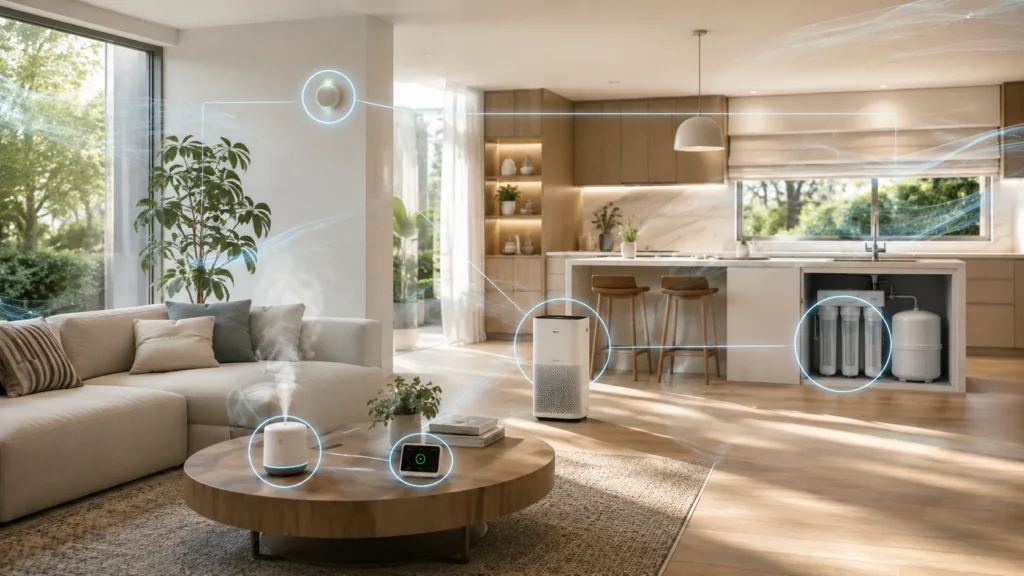
Modern living room with a family enjoying a healthy indoor environment monitored by smart devices, natural lighting, and greenery.

After IFA 2026: The Healthy Home Is Moving Beyond Smart Devices

In our previous IFA 2026 column, Air Purification Is Becoming Part of the Healthy-Home Platform, we argued that the next generation of indoor-health products would ...
الأخبار
Modern living room and kitchen with smart home air quality devices including an air purifier, humidifier, and water filtration system, connected with visualized blue connectivity lines.

IFA 2026: Air Purification Is Becoming Part of the Healthy-Home Platform

Pre-IFA Industry Perspective | September 4, 2026 This article is based on official announcements and regulatory information available ahead of IFA 2026, which takes place ...
الأخبار
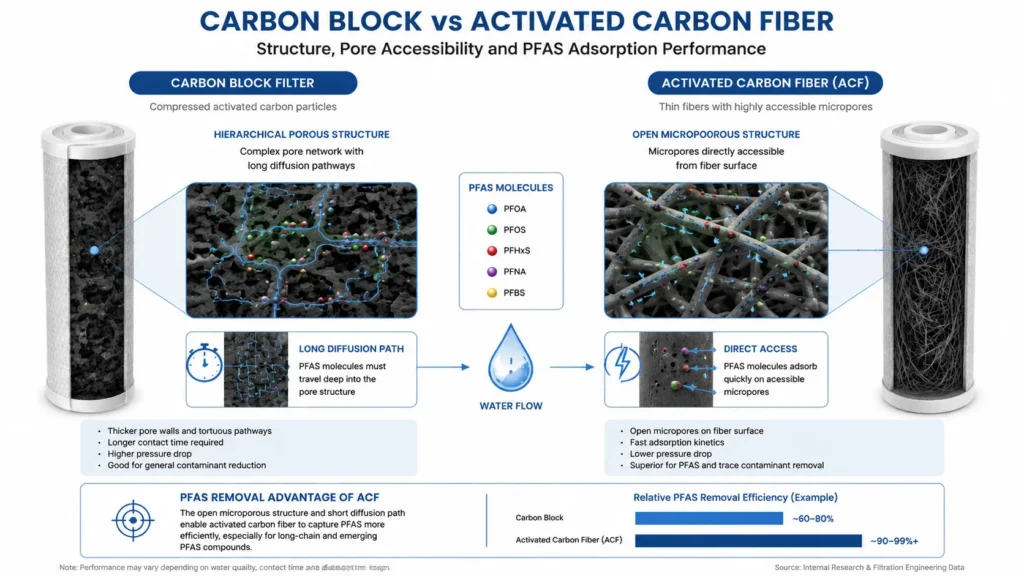
Comparison infographic showcasing the differences between carbon block filter and activated carbon fiber. Detailed diagrams illustrate the hierarchical porous structure of the carbon block with long diffusion paths and the open microporous structure of the activated carbon fiber with direct access for PFAS adsorption.

Carbon Block vs. Activated Carbon Fiber (ACF): Matching Media to Target Contaminants

Two carbon media. Same adsorption chemistry. Very different behaviour in a point-of-use cartridge. If you are specifying a water purifier platform for a PFAS-aware market, ...
الأخبار
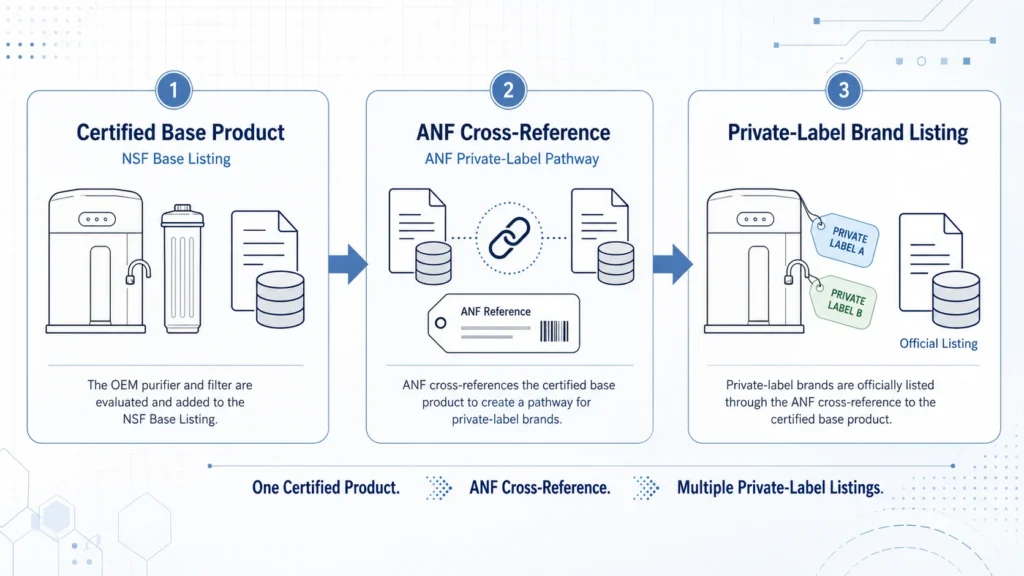
NSF base listing and ANF private-label certification pathway for OEM water filters

What Is an NSF Master Listing? A Guide to Base Listings, ANF Certification and OEM Water Filters

For a brand preparing to launch an OEM water purifier, one of the most common supplier claims is: “We already have an NSF master listing, ...
News, Water Purifiers
Healthy-home brand team reviewing PFAS water filter certification, test data and product engineering

Entering the Water Category Is Easy. Building a Credible PFAS Claim Is Much Harder

For air purification, appliance and healthy-home brands, entering the water category can look surprisingly easy. A company can select an existing undersink system, customize its ...
الأخبار
Team in a business meeting discussing a water filtration system with product components and a comparison table displayed on a screen.

5 Leading OEM Water Purifier Manufacturers in China for Private Label Brands

China has thousands of companies selling water filters, reverse osmosis systems and drinking-water appliances. However, only a portion of them are suitable for private-label, OEM ...
الأخبار
Contaminant Engineering•3 min read

PFAS Water Filtration Technologies Explained: Carbon, Resin & RO

Key Takeaway:

PFAS reduction depends on the specific compounds present, treatment media, contact time, water chemistry, and system design. Activated carbon, ion exchange, and Reverse Osmosis address PFAS through different mechanisms.

PFAS are a large family of persistent fluorinated compounds that can occur in drinking-water supplies. Their treatment behavior varies significantly by molecular structure, chain length, functional group, concentration, and the chemistry of the source water.

Granular Activated Carbon (GAC) removes PFAS primarily through adsorption. It is generally more effective for many longer-chain PFAS, while shorter-chain compounds tend to break through more quickly. Carbon performance depends on media properties, Empty Bed Contact Time (EBCT), competing organic matter, loading, and replacement frequency.

Ion-exchange resins use charged functional sites to capture many PFAS compounds. Properly selected anion-exchange media can provide high capacity and may perform better than conventional activated carbon for some shorter-chain PFAS, although performance still depends on water chemistry and competing ions.

Reverse Osmosis (RO) uses membrane separation rather than adsorption. Properly designed RO systems can provide broad reduction across many PFAS compounds as well as dissolved salts and other contaminants. Unlike carbon or resin, however, RO also produces a concentrate stream that must be managed.

No single technology should be selected from a PFAS label alone. System design should consider which PFAS compounds are present, their concentrations, required reduction targets, flow rate, media life, and the applicable third-party certification or validation requirements.

HisoAir Water Technical Series
Product Discovery•3 min read

How to Choose an Under-Sink Water Purifier for Modern Kitchens

Key Takeaway:

Match the treatment technology to your water quality first, then evaluate cabinet space, faucet configuration, flow rate, drain and power requirements, and filter replacement needs.

Choosing an under-sink water purifier starts with water chemistry. Carbon filtration is well suited to chlorine, taste, odor, and many organic contaminants, while Reverse Osmosis is more appropriate when dissolved salts, fluoride, nitrates, or broader dissolved contaminants need to be reduced.

For compact kitchens, tankless RO systems eliminate the conventional storage tank and can significantly reduce the space required under the sink. However, membrane capacity stated in GPD does not directly equal faucet flow. When comparing systems, check the actual dispensing flow rate, inlet-pressure requirement, recovery ratio, and whether a booster pump is required.

Installation architecture also matters. Many RO systems require a drain connection, electrical power, and either a dedicated drinking-water faucet or a compatible multi-function faucet. High-flow carbon systems can often connect directly to the existing cold-water line with a simpler installation, but pressure drop and available faucet flow should still be verified.

RO also removes much of the naturally occurring dissolved mineral content. Where taste or mineral balance is a priority, a post-RO remineralization stage can be added. Filter life should be evaluated by both rated capacity and local water quality rather than replacement time alone.

The right system is therefore not simply the smallest or highest-GPD model. It is the configuration that matches the target contaminants, available cabinet space, desired faucet setup, peak dispensing demand, and maintenance expectations.

HisoAir Water Technical Series
Water Quality•2 min read

What Does TDS Mean in Drinking Water? Measurement vs Contaminant Reality

Key Takeaway:

A TDS meter estimates the overall concentration of dissolved ionic substances from electrical conductivity. It cannot identify specific contaminants or determine whether water is chemically safe.

Total Dissolved Solids (TDS) refers to the combined concentration of dissolved substances in water. Most handheld TDS meters do not measure TDS directly. Instead, they measure electrical conductivity (EC) and convert that reading into an estimated parts-per-million (ppm) value.

This means a TDS reading can indicate how much dissolved ionic material is present, but not what that material actually is. Calcium, magnesium, sodium, nitrates, and other dissolved ions can all contribute to conductivity, yet a simple TDS meter cannot distinguish between them.

TDS meters are also not suitable for detecting trace contaminants such as PFAS, many VOCs, pesticides, pharmaceuticals, or disinfection byproducts. These substances may be present at concentrations far below the level needed to noticeably change electrical conductivity.

A low TDS reading therefore does not guarantee safe drinking water, and a higher TDS reading does not automatically indicate contamination. Water-treatment decisions should be based on laboratory testing for specific contaminants of concern rather than TDS alone.

HisoAir Water Technical Series
Technology Selection•2 min read

RO vs UF Water Filtration: Understanding Pore Sizes & Dissolved Minerals

Key Takeaway:

Ultrafiltration can reduce bacteria, turbidity, and suspended particles while retaining most naturally occurring dissolved minerals. Reverse Osmosis provides much broader reduction of dissolved salts and smaller contaminants.

Ultrafiltration (UF) typically uses hollow-fiber membranes with pore sizes in the approximate 0.01–0.1 micron range. These membranes physically retain turbidity, suspended solids, colloids, and many microorganisms while allowing dissolved minerals and salts to remain in the water.

Reverse Osmosis (RO) operates at a much finer separation level. Unlike UF, RO can substantially reduce dissolved ions such as sodium, calcium, fluoride, nitrates, and other contributors to total dissolved solids (TDS). This makes RO more suitable when dissolved-salt reduction is a primary treatment objective.

UF generally requires less system pressure and produces little or no continuous concentrate stream in many point-of-use configurations. RO typically requires greater pressure and produces a reject-water stream, but delivers broader contaminant reduction.

For water with acceptable TDS and mineral content, UF can be a simpler mineral-retaining treatment option. Where dissolved salts, fluoride, nitrates, or broader dissolved contaminants are a concern, RO is generally the more appropriate technology.

HisoAir Water Technical Series
Technology Selection•4 min read

Carbon Block vs Reverse Osmosis: Which Fits Your Need?

Key Takeaway:

Choose RO for dissolved inorganic salts and heavy metals; choose Carbon Block for chemical taste/odor, no wastewater, and high line-pressure flow.

Reverse Osmosis (RO) and Carbon Block filtration represent two fundamentally different treatment methods: membrane separation and adsorption. Understanding these differences helps determine which technology is better suited to a specific water-quality requirement.

Reverse Osmosis uses a semi-permeable membrane with pore sizes of approximately 0.0001 microns. It can significantly reduce dissolved inorganic contaminants such as TDS, fluoride, nitrates, and certain heavy metals. Because water must be forced through the membrane, RO systems require sufficient pressure or a booster pump and generate a concentrated wastewater stream.

Carbon Block filtration relies primarily on adsorption through compressed activated carbon, commonly with nominal pore sizes around 0.5–5 microns. It is highly effective for chlorine, chloramines, VOCs, taste, and odor, while allowing substantially higher direct-flow rates without producing wastewater.

From an operating perspective, Carbon Block systems are generally simpler, require less energy, and avoid the water loss associated with RO. RO involves higher system complexity and operating cost, but provides substantially broader reduction of dissolved contaminants that Carbon Block alone cannot address.

HisoAir Water Technical Series

طلب عرض أسعار