يفتح في علامة تبويب جديدة
حلول مبتكرة لجودة الهواء
شعار هيسو-أير-لوجو
استفسر الآن

أفضل 5 شركات مصنعة لأجهزة تنقية الهواء في اليابان

Related Products

يمكن أن يساعد تنظيف الهواء من ملوثات الجسيمات في تقليل خطر الإصابة بالأمراض والأمراض الناتجة عن المواد الكيميائية والفيروسات والبكتيريا وغيرها. قمنا بإدراج أفضل الشركات اليابانية المصنعة لـ أجهزة تنقية هواء عالية الجودة في هذه المدونة

إنها حقيقة أن الغلاف الجوي للأرض في هذا الوقت ملوث للغاية. فالحصول على هواء نقي ونظيف أمر نادر الحدوث، خاصة بالنسبة لأولئك الذين يقيمون في أماكن شديدة التحضر. يمكن أن يحتوي الهواء على فيروسات، وبكتيريا، وجزيئات كيميائية، ومواد مسببة للحساسية، وغيرها من الأشياء التي قد تضر بصحة الكثير من الناس. من ناحية أخرى يمكن لأجهزة تنقية الهواء إزالة المادة المذكورة.

نظرًا لأهمية أجهزة تنقية الهواء في مجال الرعاية الصحية، فمن المنطقي أن نقول أن العمل في هذا الصدد قد يدر عوائد جيدة. قد تحتاج أيضًا إلى اشتر أجهزة تنقية الهواء بكميات كبيرة إذا كنت تخطط لتركيبها داخل منزلك أو مكتبك. في هذه المقالة، يمكنك التعرف على أفضل خمس شركات مصنعة لأجهزة تنقية الهواء التي يمكنك العمل معها في اليابان.

قائمة أفضل 5 شركات مصنعة لأجهزة تنقية الهواء في اليابان

فيما يلي لمحة موجزة عن الشركات التي وصلت إلى قائمتنا. يمكنك النقر على اسم الشركة التي تهتم بها إذا كنت تريد معرفة معلوماتها مباشرةً. وبالطبع، نقترح بشدة أن تطلع على تفاصيل كل شركة للحصول على فهم أكثر شمولاً للشركات التالية.

  1. شركة دايكن للصناعات المحدودة
  2. شركة شارب
  3. شركة باناسونيك
  4. شركة دايوه
  5. مجموعة هيتاشي

أفضل 5 شركات مصنعة لأجهزة تنقية الهواء في اليابان

لقد تم اختيار الشركات التالية بعناية بناءً على تقنياتها من حيث إنتاج أجهزة تنقية الهواء والأداء العام والسمعة الطيبة. لقد قمنا بتجميع ملف تعريف قصير لكل شركة مصنعة قد يكون مفيدًا لك. فيما يلي أفضل خمس شركات مصنعة لأجهزة تنقية الهواء في اليابان.

1. Daikin Industries Ltd.
شعار دايكن سنغافورة
شعار دايكن سنغافورة

مصدر الصورة: شركة دايكن للصناعات المحدودة.

نوع العمل: الشركة المصنعة
المقر الرئيسي: Umeda Center Bldg., 2-4-12, Nakazakakaki-Nishi, Kita-ku, Osaka 530-8323, Japan
الأسواق الرئيسية: عالمي
سنوات الخبرة: 98 سنة
الشهادات: أيزو 14001، أيزو 9001: 2015

بدأت شركة دايكن للصناعات المحدودة عملياتها في أوساكا باليابان منذ ما يقرب من قرن من الزمان، ولا يمكن إنكار أنها أصبحت اليوم قوة عالمية كبيرة. فهي تمتلك أكثر من ثلاثمائة شركة فرعية ولديها رأس مال مذهل يبلغ 699.7 مليون دولار أمريكي.

تشتهر هذه الشركة بمنتجاتها من أجهزة تكييف الهواء وأنظمة التهوية والثلاجات، والتي تشكل جزءاً كبيراً من إيراداتها. وبالطبع، تتمتع شركة دايكن للصناعات المحدودة أيضاً بتكنولوجيا قوية فيما يتعلق بإنتاج أجهزة تنقية الهواء بفضل خبرتها التي تمتد إلى 98 عاماً واستثمارها 300 مليون دولار أمريكي في البحث والتطوير.

المنتجات الرئيسية

  • أجهزة تنقية الهواء
  • أنظمة تكييف الهواء
  • التبريد
  • FCU
  • منتجات تكييف الهواء الأخرى

2. شركة شارب
شعار شركة شارب كوربوريشن

مصدر الصورة: شركة شارب

نوع العمل: الشركة المصنعة
المقر الرئيسي: 1 تاكومي-تشو، ساكاي-كو، مدينة ساكاي، أوساكا 590-8522، اليابان
الأسواق الرئيسية: عالمي
سنوات الخبرة: 110 سنوات
الشهادات: آيزو 9001

شركة Sharp هي شركة أخرى عريقة نشأت في اليابان. تشتهر بإنتاج أجهزة التلفاز والغسالات، ولكنها أيضاً متطورة في تصنيع منتجات أخرى مثل أجهزة تنقية الهواء وشاشات LCD والهواتف المحمولة. اعتبارًا من عام 2021، بلغ رأسمالها أكثر من 41 مليون دولار أمريكي، ولديها إحدى عشرة قاعدة للبحث والتطوير في جميع أنحاء العالم.

المنتجات الرئيسية

  • أجهزة تنقية الهواء
  • تلفزيونات AQUOS
  • الهواتف المحمولة
  • الآلات الحاسبة
  • الطاقة الشمسية
  • بلازما كلاستر

3. شركة باناسونيك

شعار شركة باناسونيك
شعار شركة باناسونيك

مصدر الصورة: شركة باناسونيك

نوع العمل: الشركة المصنعة
المقر الرئيسي: 1006، أوازا كادوما، كادوما-شي، أوساكا 571-8501، اليابان
الأسواق الرئيسية: عالمي
سنوات الخبرة: 104 سنوات
الشهادات: ISO 9001, ISO 14001, ISO 45001, IATF 16949

بدأت شركة باناسونيك في عام 1918، وتنعكس فترة عملياتها الممتدة بشكل جيد في أنظمتها الصارمة من حيث مراقبة الجودة والسلامة المهنية والإدارة البيئية التي تجعلها حاصلة على شهادة الأيزو. يبلغ رأس مال هذه الشركة 5.7 مليار دولار أمريكي ولديها 522 شركة تابعة لها على مستوى العالم.

المنتجات الرئيسية

  • أجهزة تنقية الهواء
  • التكنولوجيا السمعية والبصرية
  • الحواسيب
  • منتجات إلكترونية أخرى

4. Daiohs Corporation

شعار شركة Daiohs Malaysia Sdn. Bhd.

مصدر الصورة: شركة دايوه

نوع العمل: الشركة المصنعة
المقر الرئيسي: برج سابيا 14 فلوريدا 1-7-12 Marunouchi, Chiyoda-ku, Tokyo 100-0005, Japan
الأسواق الرئيسية: عالمي
سنوات الخبرة: 53 سنة

ربما تكون شركة Daiohs هي الأصغر سناً بين الكيانات الأخرى المدرجة في هذه القائمة. ومع ذلك، فقد حققت إنجازات قوية في مجال الصناعة التحويلية. وقد اشتهرت بإنتاج آلات صنع القهوة لمختلف التطبيقات، ولكنها طورت أيضاً أسلوبها الخاص في مجال تنقية الهواء. ويبلغ رأسمال هذه الشركة حالياً 8.65 مليون دولار أمريكي، وقد توسعت في أمريكا الشمالية وآسيا.

المنتجات الرئيسية

  • ماكينات صنع القهوة
  • ماكينات تقديم الشاي
  • أجهزة تنقية الهواء

5. Hitachi Ltd.

شعار شركة هيتاشي المحدودة

مصدر الصورة: Hitachi Ltd.

نوع العمل: الشركة المصنعة
المقر الرئيسي: Nippon Seimei Marunouchi Building, 1-6-6, Marunouchi, Chiyoda-ku, Tokyo, 100-8280, Japan
الأسواق الرئيسية: عالمي
سنوات الخبرة: 112 سنة

شركة هيتاشي المحدودة هي قوة تجارية عالمية أخرى من اليابان بدأت منذ أكثر من قرن من الزمان. وقد اشتهرت بإنتاج معدات الاتصالات ومكونات الستيريو، ولكن مجموعة منتجاتها تضم مجموعة متنوعة حقاً. تعمل شركة هيتاشي المحدودة في العديد من الصناعات، ولا تشكل أجهزة تنقية الهواء سوى جزء صغير من مجموعة منتجاتها. ويبلغ رأسمالها حالياً 3.79 مليار دولار أمريكي، وقد رسخت وجودها في جميع القارات.

المنتجات الرئيسية

  • المعدات الطبية
  • أجهزة تنقية الهواء
  • الأجهزة المنزلية
  • أخرى

أفضل مصنع لأجهزة تنقية الهواء في الصين

الصين هي قوة التصنيع في العالم، حيث تقوم بتوريد ما يقرب من ثلث المنتجات الموجودة في العالم. إذا كنت مهتمًا بالتواصل مع أفضل مصنع لأجهزة تنقية الهواء في البلد المذكور، فتواصل مع HisoAir اليوم!

هيسو إير

شعار هيسو إير
شعار هيسو إير

مصدر الصورة: هيسو إير

نوع العمل: مُصنِّع المعدات الأصلية/صانع المعدات الأصلية/صانع المعدات المملوكة للغير، المورد
المقر الرئيسي: Room 712, Building 1, No. 4, Second Road, Songshan Lake Park, Dongguan City, Guangdong Province, China
الأسواق الرئيسية: عالمي
سنوات الخبرة: 19 years
الشهادات: سي، روهز، إن 1822

HisoAir specializes in manufacturing air purifiers that can be used in a medical setting. It was founded in 2003. It had achieved phenomenal success over its short eleven years in the industry with its more than a hundred accomplished projects all over the globe.

وقد حصلت الشركة على براءة اختراع لأكثر من 50 تصميمًا وطوّرت أنظمة تنقية هواء يمكنها إزالة 99.99% من الجسيمات الموجودة في الهواء. وقد تحققت SGS أيضًا من أن منتجاتها قادرة على تصفية 99.8% من عائلة فيروس كورونا، وهو ما سيكون مفيدًا في المجتمع الحالي حيث تستعر جائحة كوفيد-19.

المنتجات الرئيسية

  • أجهزة تنقية هواء من الدرجة الطبية

الخاتمة

تتدهور جودة الهواء في العالم باستمرار، وإحدى طرق الحصول على هواء نظيف هي استخدام أجهزة تنقية الهواء. أجهزة تنقية الهواء هي منتجات مبتكرة حقًا يمكنها الحفاظ على صحة الناس لأنها تزيل الملوثات الموجودة في الجو. وهي مطلوبة بشدة في عصرنا الحالي، خاصةً لمن يعانون من الأمراض المرتبطة بالهواء.
لقد قمنا بإدراج أفضل خمس شركات مصنعة لأجهزة تنقية الهواء في اليابان في هذه المقالة. من ناحية أخرى، إذا كنت مهتمًا بالعمل مع أفضل مُصنِّع ومُصدِّر لأجهزة تنقية الهواء الطبية في الصين، فسوف تساعدك شركة HisoAir بكل سرور. للتواصل مع هيسو إير اليوم لتحصل على عرض أسعار مجاني!
قد تكون المقالات التالية مفيدة لك أيضاً:
شارك:
السيد لي مؤسس شركة هيسواير
Alwen Lee, an air purification expert with over 10 years of experience, is a devoted father of two and a passionate traveler, having explored more than 30 countries. With a love for public speaking and swimming, he has dedicated his life to the indoor air quality industry. His mission is to ensure that people around the world enjoy the freedom to breathe clean air and lead happy, healthy lives.

أرسل لنا رسالة

Related Products

المزيد للقراءة

Modern living room with a family enjoying a healthy indoor environment monitored by smart devices, natural lighting, and greenery.

After IFA 2026: The Healthy Home Is Moving Beyond Smart Devices

In our previous IFA 2026 column, Air Purification Is Becoming Part of the Healthy-Home Platform, we argued that the next generation of indoor-health products would ...
الأخبار
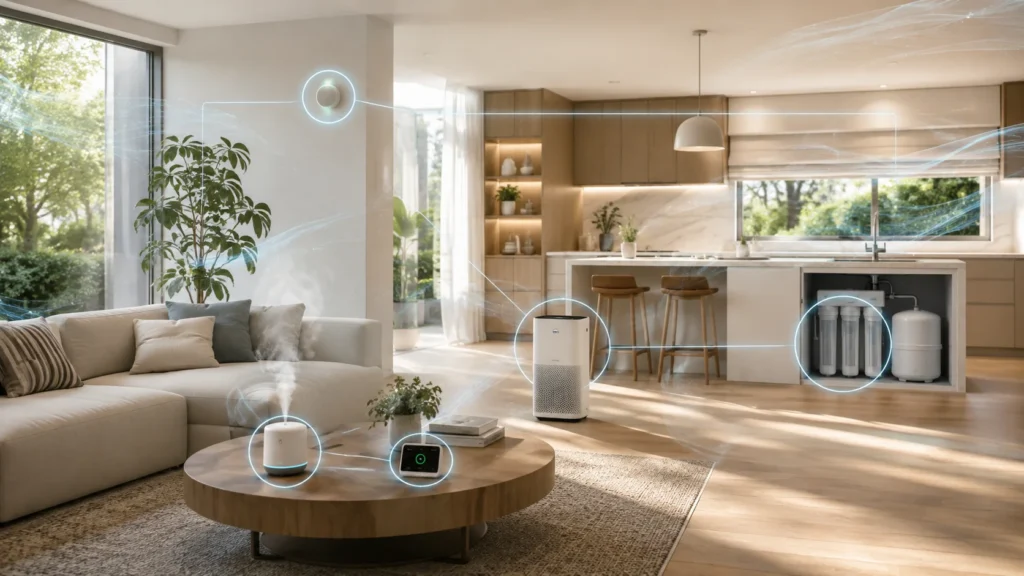
Modern living room and kitchen with smart home air quality devices including an air purifier, humidifier, and water filtration system, connected with visualized blue connectivity lines.

IFA 2026: Air Purification Is Becoming Part of the Healthy-Home Platform

Pre-IFA Industry Perspective | September 4, 2026 This article is based on official announcements and regulatory information available ahead of IFA 2026, which takes place ...
الأخبار
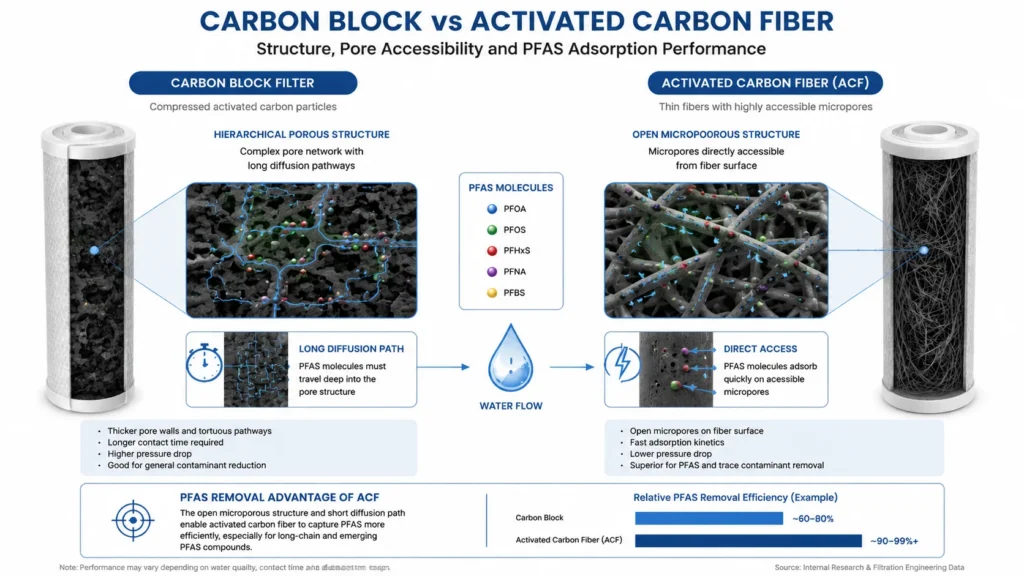
Comparison infographic showcasing the differences between carbon block filter and activated carbon fiber. Detailed diagrams illustrate the hierarchical porous structure of the carbon block with long diffusion paths and the open microporous structure of the activated carbon fiber with direct access for PFAS adsorption.

Carbon Block vs. Activated Carbon Fiber (ACF): Matching Media to Target Contaminants

Two carbon media. Same adsorption chemistry. Very different behaviour in a point-of-use cartridge. If you are specifying a water purifier platform for a PFAS-aware market, ...
الأخبار
NSF base listing and ANF private-label certification pathway for OEM water filters

What Is an NSF Master Listing? A Guide to Base Listings, ANF Certification and OEM Water Filters

For a brand preparing to launch an OEM water purifier, one of the most common supplier claims is: “We already have an NSF master listing, ...
News, Water Purifiers
Healthy-home brand team reviewing PFAS water filter certification, test data and product engineering

Entering the Water Category Is Easy. Building a Credible PFAS Claim Is Much Harder

For air purification, appliance and healthy-home brands, entering the water category can look surprisingly easy. A company can select an existing undersink system, customize its ...
الأخبار
Team in a business meeting discussing a water filtration system with product components and a comparison table displayed on a screen.

5 Leading OEM Water Purifier Manufacturers in China for Private Label Brands

China has thousands of companies selling water filters, reverse osmosis systems and drinking-water appliances. However, only a portion of them are suitable for private-label, OEM ...
الأخبار
Contaminant Engineering•3 min read

PFAS Water Filtration Technologies Explained: Carbon, Resin & RO

Key Takeaway:

PFAS reduction depends on the specific compounds present, treatment media, contact time, water chemistry, and system design. Activated carbon, ion exchange, and Reverse Osmosis address PFAS through different mechanisms.

PFAS are a large family of persistent fluorinated compounds that can occur in drinking-water supplies. Their treatment behavior varies significantly by molecular structure, chain length, functional group, concentration, and the chemistry of the source water.

Granular Activated Carbon (GAC) removes PFAS primarily through adsorption. It is generally more effective for many longer-chain PFAS, while shorter-chain compounds tend to break through more quickly. Carbon performance depends on media properties, Empty Bed Contact Time (EBCT), competing organic matter, loading, and replacement frequency.

Ion-exchange resins use charged functional sites to capture many PFAS compounds. Properly selected anion-exchange media can provide high capacity and may perform better than conventional activated carbon for some shorter-chain PFAS, although performance still depends on water chemistry and competing ions.

Reverse Osmosis (RO) uses membrane separation rather than adsorption. Properly designed RO systems can provide broad reduction across many PFAS compounds as well as dissolved salts and other contaminants. Unlike carbon or resin, however, RO also produces a concentrate stream that must be managed.

No single technology should be selected from a PFAS label alone. System design should consider which PFAS compounds are present, their concentrations, required reduction targets, flow rate, media life, and the applicable third-party certification or validation requirements.

HisoAir Water Technical Series
Product Discovery•3 min read

How to Choose an Under-Sink Water Purifier for Modern Kitchens

Key Takeaway:

Match the treatment technology to your water quality first, then evaluate cabinet space, faucet configuration, flow rate, drain and power requirements, and filter replacement needs.

Choosing an under-sink water purifier starts with water chemistry. Carbon filtration is well suited to chlorine, taste, odor, and many organic contaminants, while Reverse Osmosis is more appropriate when dissolved salts, fluoride, nitrates, or broader dissolved contaminants need to be reduced.

For compact kitchens, tankless RO systems eliminate the conventional storage tank and can significantly reduce the space required under the sink. However, membrane capacity stated in GPD does not directly equal faucet flow. When comparing systems, check the actual dispensing flow rate, inlet-pressure requirement, recovery ratio, and whether a booster pump is required.

Installation architecture also matters. Many RO systems require a drain connection, electrical power, and either a dedicated drinking-water faucet or a compatible multi-function faucet. High-flow carbon systems can often connect directly to the existing cold-water line with a simpler installation, but pressure drop and available faucet flow should still be verified.

RO also removes much of the naturally occurring dissolved mineral content. Where taste or mineral balance is a priority, a post-RO remineralization stage can be added. Filter life should be evaluated by both rated capacity and local water quality rather than replacement time alone.

The right system is therefore not simply the smallest or highest-GPD model. It is the configuration that matches the target contaminants, available cabinet space, desired faucet setup, peak dispensing demand, and maintenance expectations.

HisoAir Water Technical Series
Water Quality•2 min read

What Does TDS Mean in Drinking Water? Measurement vs Contaminant Reality

Key Takeaway:

A TDS meter estimates the overall concentration of dissolved ionic substances from electrical conductivity. It cannot identify specific contaminants or determine whether water is chemically safe.

Total Dissolved Solids (TDS) refers to the combined concentration of dissolved substances in water. Most handheld TDS meters do not measure TDS directly. Instead, they measure electrical conductivity (EC) and convert that reading into an estimated parts-per-million (ppm) value.

This means a TDS reading can indicate how much dissolved ionic material is present, but not what that material actually is. Calcium, magnesium, sodium, nitrates, and other dissolved ions can all contribute to conductivity, yet a simple TDS meter cannot distinguish between them.

TDS meters are also not suitable for detecting trace contaminants such as PFAS, many VOCs, pesticides, pharmaceuticals, or disinfection byproducts. These substances may be present at concentrations far below the level needed to noticeably change electrical conductivity.

A low TDS reading therefore does not guarantee safe drinking water, and a higher TDS reading does not automatically indicate contamination. Water-treatment decisions should be based on laboratory testing for specific contaminants of concern rather than TDS alone.

HisoAir Water Technical Series
Technology Selection•2 min read

RO vs UF Water Filtration: Understanding Pore Sizes & Dissolved Minerals

Key Takeaway:

Ultrafiltration can reduce bacteria, turbidity, and suspended particles while retaining most naturally occurring dissolved minerals. Reverse Osmosis provides much broader reduction of dissolved salts and smaller contaminants.

Ultrafiltration (UF) typically uses hollow-fiber membranes with pore sizes in the approximate 0.01–0.1 micron range. These membranes physically retain turbidity, suspended solids, colloids, and many microorganisms while allowing dissolved minerals and salts to remain in the water.

Reverse Osmosis (RO) operates at a much finer separation level. Unlike UF, RO can substantially reduce dissolved ions such as sodium, calcium, fluoride, nitrates, and other contributors to total dissolved solids (TDS). This makes RO more suitable when dissolved-salt reduction is a primary treatment objective.

UF generally requires less system pressure and produces little or no continuous concentrate stream in many point-of-use configurations. RO typically requires greater pressure and produces a reject-water stream, but delivers broader contaminant reduction.

For water with acceptable TDS and mineral content, UF can be a simpler mineral-retaining treatment option. Where dissolved salts, fluoride, nitrates, or broader dissolved contaminants are a concern, RO is generally the more appropriate technology.

HisoAir Water Technical Series
Technology Selection•4 min read

Carbon Block vs Reverse Osmosis: Which Fits Your Need?

Key Takeaway:

Choose RO for dissolved inorganic salts and heavy metals; choose Carbon Block for chemical taste/odor, no wastewater, and high line-pressure flow.

Reverse Osmosis (RO) and Carbon Block filtration represent two fundamentally different treatment methods: membrane separation and adsorption. Understanding these differences helps determine which technology is better suited to a specific water-quality requirement.

Reverse Osmosis uses a semi-permeable membrane with pore sizes of approximately 0.0001 microns. It can significantly reduce dissolved inorganic contaminants such as TDS, fluoride, nitrates, and certain heavy metals. Because water must be forced through the membrane, RO systems require sufficient pressure or a booster pump and generate a concentrated wastewater stream.

Carbon Block filtration relies primarily on adsorption through compressed activated carbon, commonly with nominal pore sizes around 0.5–5 microns. It is highly effective for chlorine, chloramines, VOCs, taste, and odor, while allowing substantially higher direct-flow rates without producing wastewater.

From an operating perspective, Carbon Block systems are generally simpler, require less energy, and avoid the water loss associated with RO. RO involves higher system complexity and operating cost, but provides substantially broader reduction of dissolved contaminants that Carbon Block alone cannot address.

HisoAir Water Technical Series

طلب عرض أسعار