Открывается в новой вкладке
Инновационные решения в области качества воздуха
HisoAir-Logo
Запрос сейчас

Топ-5 производителей очистителей воздуха в Японии

Related Products

Очистка воздуха от твердых частиц может помочь снизить риск заболеваний, вызываемых химическими веществами, вирусами, бактериями и т.д. Мы перечислили лучших японских производителей качественные воздухоочистители в этом блоге.

Атмосфера Земли в это время очень загрязнена. Свежий и чистый воздух - редкость, особенно для тех, кто проживает в высокоурбанизированных местах. В воздухе могут содержаться вирусы, бактерии, химические частицы, аллергены и другие вещества, способные подорвать здоровье многих людей. С другой стороны, Очистители воздуха могут удалять указанные вещества.

Учитывая, что очистители воздуха играют столь важную роль в здравоохранении, можно с уверенностью сказать, что бизнес в этой области может принести хорошие доходы. Вам также может понадобиться купить воздухоочистители оптом если вы планируете установить их в своем доме или офисе. В этой статье вы узнаете о пяти лучших производителях очистителей воздуха, с которыми можно работать в Японии.

Список 5 ведущих производителей воздухоочистителей в Японии

Ниже представлен краткий обзор компаний, попавших в наш список. Вы можете нажать на название интересующей вас компании, если хотите получить информацию о ней напрямую. Конечно, мы настоятельно рекомендуем вам ознакомиться с информацией о каждой компании, чтобы иметь более полное представление о следующих компаниях.

  1. Daikin Industries Ltd.
  2. Корпорация Sharp
  3. Корпорация Panasonic
  4. Корпорация Daiohs
  5. Hitachi Group

Топ-5 производителей очистителей воздуха в Японии

Следующие компании были тщательно отобраны на основе их технологий в области производства воздухоочистителей, общих характеристик и репутации. Мы составили краткую характеристику каждого производителя, которая может быть вам полезна. Вот пять лучших производителей воздухоочистителей в Японии.

1. Daikin Industries Ltd.
Логотип Daikin Singapore

Источник изображения: Daikin Industries Ltd.

Тип бизнеса: Производитель
Штаб-квартира: Umeda Center Bldg., 2-4-12, Nakazaki-Nishi, Kita-ku, Osaka 530-8323, Япония
Основные рынки: Глобальная
Опыт работы: 98 лет
Сертификаты: ISO 14001, ISO 9001: 2015

Компания Daikin Industries Ltd. начала свою деятельность в Осаке, Япония, почти сто лет назад, и сегодня она уже превратилась в глобальную державу. Компания владеет более чем тремя сотнями дочерних предприятий, а ее капитал составляет 699,7 миллиона долларов США.

Эта компания наиболее известна своими кондиционерами, вентиляционными системами и холодильниками, которые составляют большую часть ее доходов. Конечно, Daikin Industries Ltd. также обладает надежными технологиями в области производства воздухоочистителей благодаря 98-летнему опыту и инвестициям в НИОКР в размере 300 миллионов долларов США.

Ключевые продукты

  • Очистители воздуха
  • Системы кондиционирования воздуха
  • Охлаждение
  • FCU
  • Другие продукты для кондиционирования воздуха

2. Корпорация Sharp
Логотип корпорации Sharp

Источник изображения: Корпорация Sharp

Тип бизнеса: Производитель
Штаб-квартира: 1 Такуми-чо, Сакаи-ку, город Сакаи, Осака 590-8522, Япония
Основные рынки: Глобальная
Годы опыта: 110 лет
Сертификаты: ISO 9001

Sharp Corporation - еще одно давнее предприятие, родом из Японии. Она наиболее известна производством телевизоров и стиральных машин, но также хорошо развита в производстве других продуктов, таких как очистители воздуха, ЖК-мониторы и мобильные телефоны. По состоянию на 2021 год ее капитал составляет более 41 миллиона долларов США, и она располагает одиннадцатью научно-исследовательскими базами по всему миру.

Ключевые продукты

  • Очистители воздуха
  • Телевизоры AQUOS
  • Мобильные телефоны
  • Калькуляторы
  • Solar
  • Плазмакластер

3. Корпорация Panasonic

Логотип Panasonic Corporation

Источник изображения: Panasonic Corporation

Тип бизнеса: Производитель
Штаб-квартира: 1006, Оаза Кадома, Кадома-ши, Осака 571-8501, Япония
Основные рынки: Глобальная
Опыт работы: 104 года
Сертификаты: ISO 9001, ISO 14001, ISO 45001, IATF 16949

Корпорация Panasonic начала свою деятельность в 1918 году, и длительный период ее работы хорошо отражается в строгих системах контроля качества, безопасности труда и экологического менеджмента, благодаря которым она имеет сертификат ISO. Капитал корпорации составляет 5,7 миллиарда долларов США, она имеет 522 дочерних предприятия по всему миру.

Ключевые продукты

  • Очистители воздуха
  • Аудиовизуальные технологии
  • Компьютеры
  • Другие электронные продукты

4. Корпорация Daiohs

Логотип Daiohs Malaysia Sdn. Bhd.

Источник изображения: Корпорация Daiohs

Тип бизнеса: Производитель
Штаб-квартира: Sapia Tower 14th FL. 1-7-12 Marunouchi, Chiyoda-ku, Tokyo 100-0005, Япония
Основные рынки: Global
Опыт работы: 53 года

Корпорация Daiohs, пожалуй, самая молодая среди других компаний, включенных в этот список. Однако у нее есть серьезные достижения в производственной сфере. Она наиболее известна производством кофемашин различного назначения, но также разработала свой собственный подход к очистке воздуха. В настоящее время компания располагает капиталом в размере 8,65 миллиона долларов США и расширяет свою деятельность в Северной Америке и Азии.

Ключевые продукты

  • Кофеварки
  • Машины для подачи чая
  • Очистители воздуха

5. Хитачи Лтд.

Логотип Hitachi Ltd.

Источник изображения: Hitachi Ltd.

Тип бизнеса: Производитель
Штаб-квартира: Nippon Seimei Marunouchi Building, 1-6-6, Marunouchi, Chiyoda-ku, Tokyo, 100-8280, Япония
Основные рынки: Глобальная
Опыт работы: 112 лет

Hitachi Ltd. - это еще одна глобальная бизнес-структура из Японии, которая начала свою деятельность более века назад. Она наиболее известна как производитель телекоммуникационного оборудования и стереокомпонентов, но ее ассортимент может похвастаться поистине диверсифицированной коллекцией. Hitachi Ltd. работает во многих отраслях, и воздухоочистители составляют лишь малую часть ее ассортимента. В настоящее время ее капитал составляет 3,79 миллиарда долларов США, и она представлена на всех континентах.

Ключевые продукты

  • Медицинское оборудование
  • Очистители воздуха
  • Бытовая техника
  • Другие

Лучший производитель очистителей воздуха в Китае

Китай - производственная держава мира, поставляющая почти треть всех товаров, которые можно найти на земном шаре. Если вы заинтересованы в сотрудничестве с ведущим производителем воздухоочистителей в этой стране, сотрудничайте с HisoAir уже сегодня!

HisoAir

Логотип HisoAir
Логотип HisoAir

Источник изображения: HisoAir

Тип бизнеса: Производитель, поставщик, OE/OD/JD
Штаб-квартира: Room 712, Building 1, No. 4, Second Road, Songshan Lake Park, Dongguan City, Guangdong Province, China
Основные рынки: Глобальная
Опыт работы: 19 years
Сертификаты: CE, ROHS, EN1822

HisoAir specializes in manufacturing air purifiers that can be used in a medical setting. It was founded in 2003. It had achieved phenomenal success over its short eleven years in the industry with its more than a hundred accomplished projects all over the globe.

Компания запатентовала более 50 разработок и создала системы очистки воздуха, способные удалять 99,99% частиц, присутствующих в воздухе. SGS также подтвердила, что ее продукция способна отфильтровать 99,8% частиц семейства коронавирусов, что было бы полезно в современном обществе, где бушует пандемия COVID-19.

Ключевые продукты

  • Воздухоочистители медицинского класса

Заключение

Качество воздуха в мире постоянно ухудшается, и один из способов получить доступ к чистому воздуху - использовать воздухоочиститель. Очистители воздуха - это поистине инновационные продукты, способные сохранить здоровье человека, поскольку они удаляют загрязняющие вещества в атмосфере. В наше время они пользуются огромным спросом, особенно у тех, кто страдает от болезней, связанных с воздухом.
В этой статье мы перечислили пять лучших производителей воздухоочистителей в Японии. С другой стороны, если вы заинтересованы в сотрудничестве с лучшим китайским производителем и экспортером воздухоочистителей медицинского класса, HisoAir с радостью поможет вам. Связаться с HisoAir сегодня, чтобы получить бесплатное предложение!
Следующие статьи также могут быть вам полезны:
Поделиться:
Основатель Hisoair мистер Ли
Alwen Lee, an air purification expert with over 10 years of experience, is a devoted father of two and a passionate traveler, having explored more than 30 countries. With a love for public speaking and swimming, he has dedicated his life to the indoor air quality industry. His mission is to ensure that people around the world enjoy the freedom to breathe clean air and lead happy, healthy lives.

Отправить нам сообщение

Related Products

Больше читать

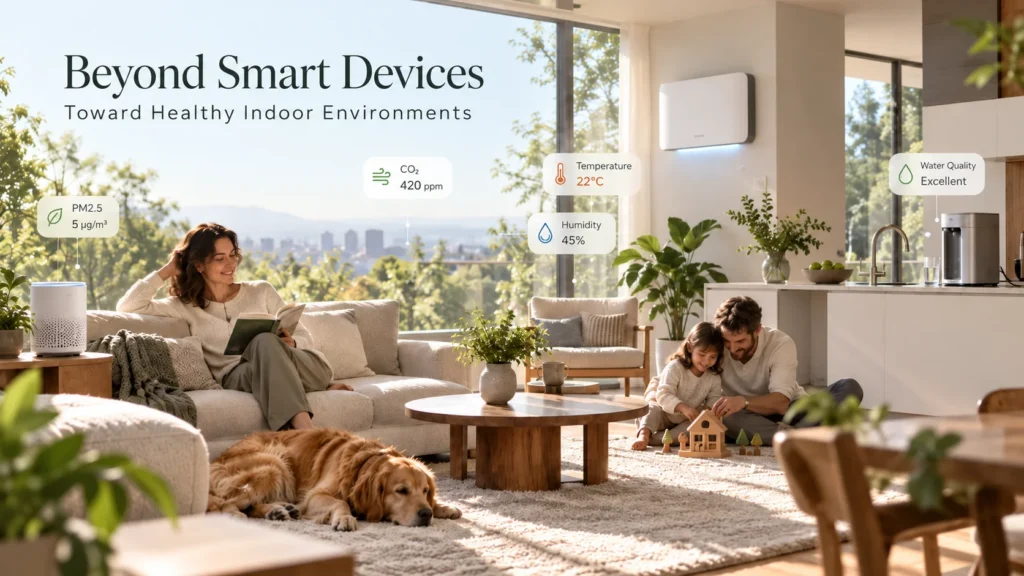
Modern living room with a family enjoying a healthy indoor environment monitored by smart devices, natural lighting, and greenery.

After IFA 2026: The Healthy Home Is Moving Beyond Smart Devices

In our previous IFA 2026 column, Air Purification Is Becoming Part of the Healthy-Home Platform, we argued that the next generation of indoor-health products would ...
Новости
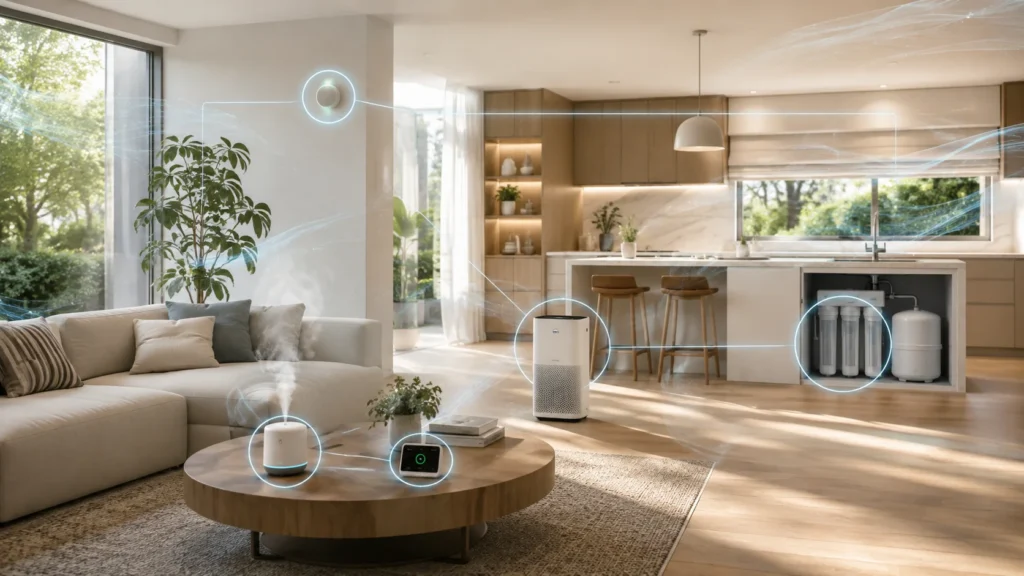
Modern living room and kitchen with smart home air quality devices including an air purifier, humidifier, and water filtration system, connected with visualized blue connectivity lines.

IFA 2026: Air Purification Is Becoming Part of the Healthy-Home Platform

Pre-IFA Industry Perspective | September 4, 2026 This article is based on official announcements and regulatory information available ahead of IFA 2026, which takes place ...
Новости
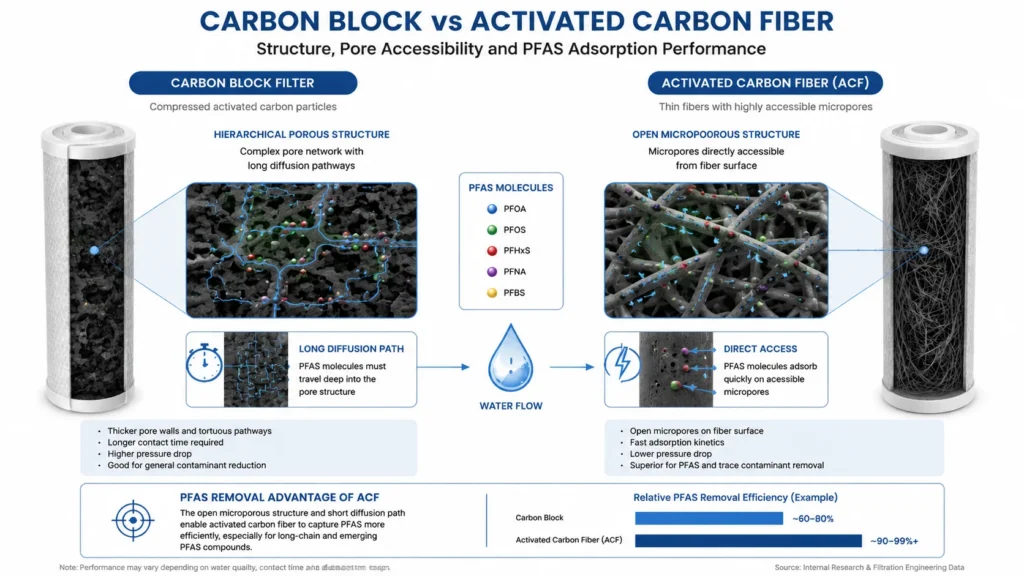
Comparison infographic showcasing the differences between carbon block filter and activated carbon fiber. Detailed diagrams illustrate the hierarchical porous structure of the carbon block with long diffusion paths and the open microporous structure of the activated carbon fiber with direct access for PFAS adsorption.

Carbon Block vs. Activated Carbon Fiber (ACF): Matching Media to Target Contaminants

Two carbon media. Same adsorption chemistry. Very different behaviour in a point-of-use cartridge. If you are specifying a water purifier platform for a PFAS-aware market, ...
Новости
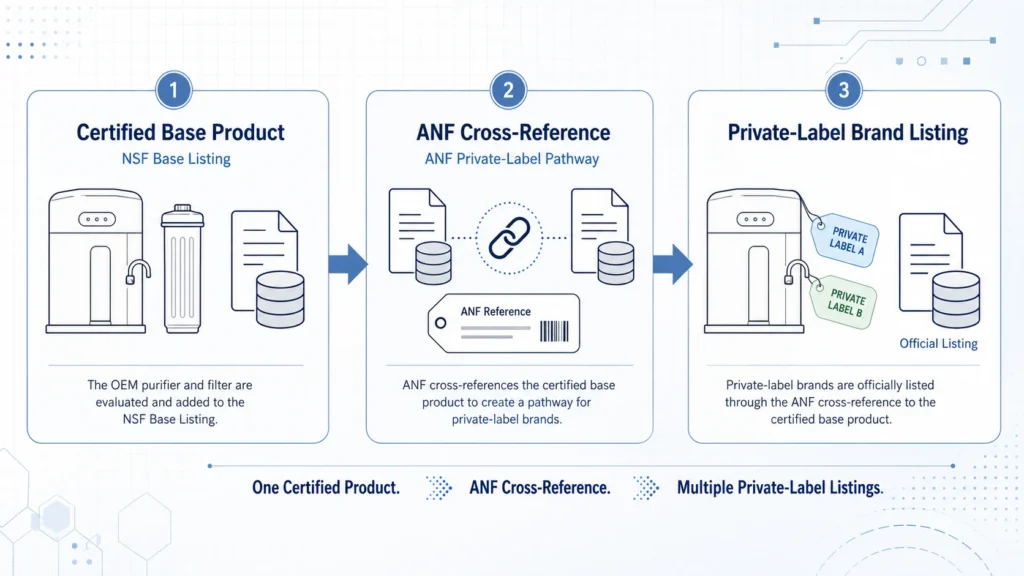
NSF base listing and ANF private-label certification pathway for OEM water filters

What Is an NSF Master Listing? A Guide to Base Listings, ANF Certification and OEM Water Filters

For a brand preparing to launch an OEM water purifier, one of the most common supplier claims is: “We already have an NSF master listing, ...
News, Water Purifiers
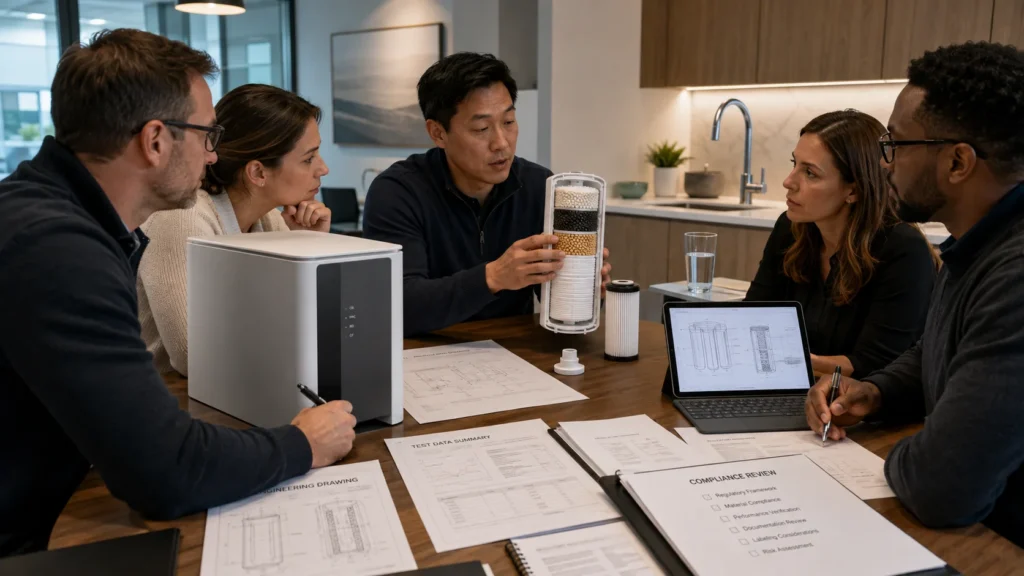
Healthy-home brand team reviewing PFAS water filter certification, test data and product engineering

Entering the Water Category Is Easy. Building a Credible PFAS Claim Is Much Harder

For air purification, appliance and healthy-home brands, entering the water category can look surprisingly easy. A company can select an existing undersink system, customize its ...
Новости
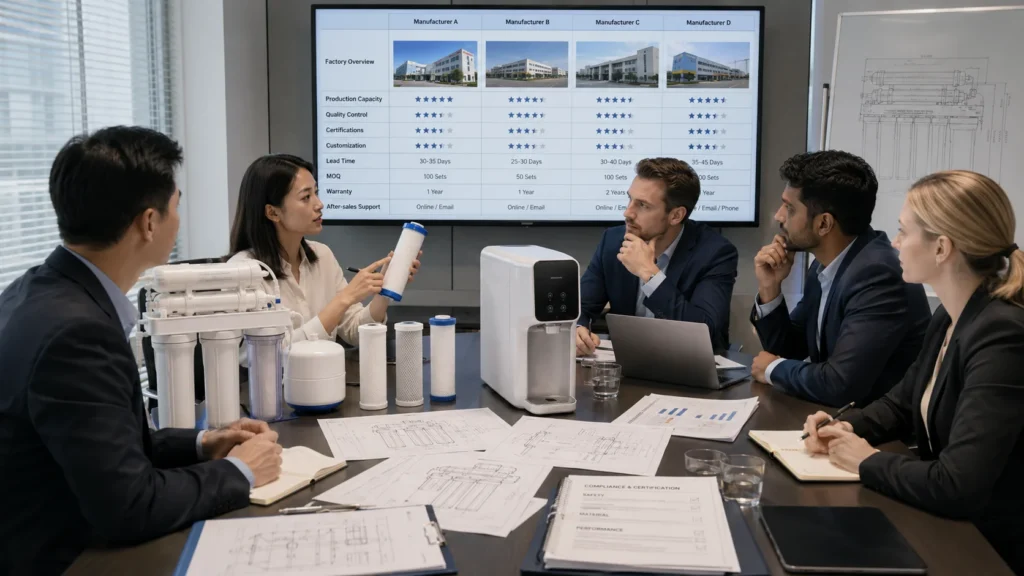
Team in a business meeting discussing a water filtration system with product components and a comparison table displayed on a screen.

5 Leading OEM Water Purifier Manufacturers in China for Private Label Brands

China has thousands of companies selling water filters, reverse osmosis systems and drinking-water appliances. However, only a portion of them are suitable for private-label, OEM ...
Новости
Contaminant Engineering•3 min read

PFAS Water Filtration Technologies Explained: Carbon, Resin & RO

Key Takeaway:

PFAS reduction depends on the specific compounds present, treatment media, contact time, water chemistry, and system design. Activated carbon, ion exchange, and Reverse Osmosis address PFAS through different mechanisms.

PFAS are a large family of persistent fluorinated compounds that can occur in drinking-water supplies. Their treatment behavior varies significantly by molecular structure, chain length, functional group, concentration, and the chemistry of the source water.

Granular Activated Carbon (GAC) removes PFAS primarily through adsorption. It is generally more effective for many longer-chain PFAS, while shorter-chain compounds tend to break through more quickly. Carbon performance depends on media properties, Empty Bed Contact Time (EBCT), competing organic matter, loading, and replacement frequency.

Ion-exchange resins use charged functional sites to capture many PFAS compounds. Properly selected anion-exchange media can provide high capacity and may perform better than conventional activated carbon for some shorter-chain PFAS, although performance still depends on water chemistry and competing ions.

Reverse Osmosis (RO) uses membrane separation rather than adsorption. Properly designed RO systems can provide broad reduction across many PFAS compounds as well as dissolved salts and other contaminants. Unlike carbon or resin, however, RO also produces a concentrate stream that must be managed.

No single technology should be selected from a PFAS label alone. System design should consider which PFAS compounds are present, their concentrations, required reduction targets, flow rate, media life, and the applicable third-party certification or validation requirements.

HisoAir Water Technical Series
Product Discovery•3 min read

How to Choose an Under-Sink Water Purifier for Modern Kitchens

Key Takeaway:

Match the treatment technology to your water quality first, then evaluate cabinet space, faucet configuration, flow rate, drain and power requirements, and filter replacement needs.

Choosing an under-sink water purifier starts with water chemistry. Carbon filtration is well suited to chlorine, taste, odor, and many organic contaminants, while Reverse Osmosis is more appropriate when dissolved salts, fluoride, nitrates, or broader dissolved contaminants need to be reduced.

For compact kitchens, tankless RO systems eliminate the conventional storage tank and can significantly reduce the space required under the sink. However, membrane capacity stated in GPD does not directly equal faucet flow. When comparing systems, check the actual dispensing flow rate, inlet-pressure requirement, recovery ratio, and whether a booster pump is required.

Installation architecture also matters. Many RO systems require a drain connection, electrical power, and either a dedicated drinking-water faucet or a compatible multi-function faucet. High-flow carbon systems can often connect directly to the existing cold-water line with a simpler installation, but pressure drop and available faucet flow should still be verified.

RO also removes much of the naturally occurring dissolved mineral content. Where taste or mineral balance is a priority, a post-RO remineralization stage can be added. Filter life should be evaluated by both rated capacity and local water quality rather than replacement time alone.

The right system is therefore not simply the smallest or highest-GPD model. It is the configuration that matches the target contaminants, available cabinet space, desired faucet setup, peak dispensing demand, and maintenance expectations.

HisoAir Water Technical Series
Water Quality•2 min read

What Does TDS Mean in Drinking Water? Measurement vs Contaminant Reality

Key Takeaway:

A TDS meter estimates the overall concentration of dissolved ionic substances from electrical conductivity. It cannot identify specific contaminants or determine whether water is chemically safe.

Total Dissolved Solids (TDS) refers to the combined concentration of dissolved substances in water. Most handheld TDS meters do not measure TDS directly. Instead, they measure electrical conductivity (EC) and convert that reading into an estimated parts-per-million (ppm) value.

This means a TDS reading can indicate how much dissolved ionic material is present, but not what that material actually is. Calcium, magnesium, sodium, nitrates, and other dissolved ions can all contribute to conductivity, yet a simple TDS meter cannot distinguish between them.

TDS meters are also not suitable for detecting trace contaminants such as PFAS, many VOCs, pesticides, pharmaceuticals, or disinfection byproducts. These substances may be present at concentrations far below the level needed to noticeably change electrical conductivity.

A low TDS reading therefore does not guarantee safe drinking water, and a higher TDS reading does not automatically indicate contamination. Water-treatment decisions should be based on laboratory testing for specific contaminants of concern rather than TDS alone.

HisoAir Water Technical Series
Technology Selection•2 min read

RO vs UF Water Filtration: Understanding Pore Sizes & Dissolved Minerals

Key Takeaway:

Ultrafiltration can reduce bacteria, turbidity, and suspended particles while retaining most naturally occurring dissolved minerals. Reverse Osmosis provides much broader reduction of dissolved salts and smaller contaminants.

Ultrafiltration (UF) typically uses hollow-fiber membranes with pore sizes in the approximate 0.01–0.1 micron range. These membranes physically retain turbidity, suspended solids, colloids, and many microorganisms while allowing dissolved minerals and salts to remain in the water.

Reverse Osmosis (RO) operates at a much finer separation level. Unlike UF, RO can substantially reduce dissolved ions such as sodium, calcium, fluoride, nitrates, and other contributors to total dissolved solids (TDS). This makes RO more suitable when dissolved-salt reduction is a primary treatment objective.

UF generally requires less system pressure and produces little or no continuous concentrate stream in many point-of-use configurations. RO typically requires greater pressure and produces a reject-water stream, but delivers broader contaminant reduction.

For water with acceptable TDS and mineral content, UF can be a simpler mineral-retaining treatment option. Where dissolved salts, fluoride, nitrates, or broader dissolved contaminants are a concern, RO is generally the more appropriate technology.

HisoAir Water Technical Series
Technology Selection•4 min read

Carbon Block vs Reverse Osmosis: Which Fits Your Need?

Key Takeaway:

Choose RO for dissolved inorganic salts and heavy metals; choose Carbon Block for chemical taste/odor, no wastewater, and high line-pressure flow.

Reverse Osmosis (RO) and Carbon Block filtration represent two fundamentally different treatment methods: membrane separation and adsorption. Understanding these differences helps determine which technology is better suited to a specific water-quality requirement.

Reverse Osmosis uses a semi-permeable membrane with pore sizes of approximately 0.0001 microns. It can significantly reduce dissolved inorganic contaminants such as TDS, fluoride, nitrates, and certain heavy metals. Because water must be forced through the membrane, RO systems require sufficient pressure or a booster pump and generate a concentrated wastewater stream.

Carbon Block filtration relies primarily on adsorption through compressed activated carbon, commonly with nominal pore sizes around 0.5–5 microns. It is highly effective for chlorine, chloramines, VOCs, taste, and odor, while allowing substantially higher direct-flow rates without producing wastewater.

From an operating perspective, Carbon Block systems are generally simpler, require less energy, and avoid the water loss associated with RO. RO involves higher system complexity and operating cost, but provides substantially broader reduction of dissolved contaminants that Carbon Block alone cannot address.

HisoAir Water Technical Series

ЗАПРОСИТЬ ЦИТАТУ