Se abre en una pestaña nueva
Soluciones innovadoras para la calidad del aire

Los 5 principales fabricantes de purificadores de aire en Japón

Related Products

Limpiar el aire de partículas contaminantes puede ayudar a reducir el riesgo de enfermedades provocadas por productos químicos, virus, bacterias, etc. Enumeramos los mejores fabricantes japoneses de purificadores de aire de calidad en este blog.

Es un hecho que la atmósfera de la Tierra en esta época está muy contaminada. Conseguir aire fresco y limpio es raro, sobre todo para quienes residen en lugares muy urbanizados. El aire puede contener virus, bacterias, partículas químicas, alérgenos y otras cosas que pueden comprometer la salud de muchas personas. Por otra parte, los purificadores de aire pueden eliminar dicha materia.

Dada la importancia de los purificadores de aire en la atención sanitaria, es razonable afirmar que hacer negocios en este ámbito puede reportar buenos beneficios. También es posible que necesite comprar purificadores de aire al por mayor si piensa instalarlos en el interior de su hogar u oficina. En este artículo, puede conocer los cinco principales fabricantes de purificadores de aire con los que puede trabajar en Japón.

Lista de los 5 principales fabricantes de purificadores de aire de Japón

A continuación encontrará un breve resumen de las empresas que han entrado en nuestra lista. Puede hacer clic en el nombre de la empresa que le interese si desea conocer su información directamente. Por supuesto, le recomendamos encarecidamente que consulte los datos de cada empresa para tener un conocimiento más completo de las mismas.

  1. Daikin Industries Ltd.
  2. Corporación Sharp
  3. Corporación Panasonic
  4. Corporación Daiohs
  5. Grupo Hitachi

Los 5 principales fabricantes de purificadores de aire en Japón

Las siguientes empresas han sido cuidadosamente seleccionadas en función de sus tecnologías en términos de producción de purificadores de aire, rendimiento general y reputación. Hemos recopilado un breve perfil de cada fabricante que puede serle útil. Estos son los cinco mejores fabricantes de purificadores de aire de Japón.

1. Daikin Industries Ltd.
Logotipo de Daikin Singapur

Fuente de la imagen: Daikin Industries Ltd.

Tipo de empresa: Fabricante
Sede central: Umeda Center Bldg., 2-4-12, Nakazaki-Nishi, Kita-ku, Osaka 530-8323, Japón
Mercados principales: Global
Años de experiencia: 98 años
Certificados: ISO 14001, ISO 9001: 2015

Daikin Industries Ltd. inició sus operaciones en Osaka (Japón) hace casi un siglo, y es innegable que hoy se ha convertido en una potencia mundial. Posee más de trescientas filiales y cuenta con un asombroso capital de 699,7 millones de USD.

Esta empresa es más conocida por sus productos de aire acondicionado, sistemas de ventilación y frigoríficos, que constituyen una gran parte de sus ingresos. Por supuesto, Daikin Industries Ltd. también cuenta con una sólida tecnología en términos de producción de purificadores de aire, gracias a sus 98 años de experiencia y a una inversión de 300 millones de dólares en I+D.

Productos clave

  • Purificadores de aire
  • Sistemas de aire acondicionado
  • Refrigeración
  • FCU
  • Otros productos de aire acondicionado

2. Corporación Sharp
Logotipo de Sharp Corporation

Fuente de la imagen: Sharp Corporation

Tipo de negocio: Fabricante
Sede central: 1 Takumi-cho, Sakai-ku, Sakai City, Osaka 590-8522, Japón
Mercados principales: Global
Años de experiencia: 110 años
Certificados: ISO 9001

Sharp Corporation es otra empresa de larga tradición originaria de Japón. Es más conocida por la producción de televisores y lavadoras, pero también está muy desarrollada en la fabricación de otros productos como purificadores de aire, monitores LCD y teléfonos móviles. En 2021, su capital ascendía a más de 41 millones de dólares y contaba con once bases de I+D en todo el mundo.

Productos clave

  • Purificadores de aire
  • TV AQUOS
  • Teléfonos móviles
  • Calculadoras
  • Solar
  • Plasmacluster

3. Panasonic Corporation
Logotipo de Panasonic Corporation

Fuente de la imagen: Panasonic Corporation

Tipo de negocio: Fabricante
Sede central: 1006, Oaza Kadoma, Kadoma-shi, Osaka 571-8501, Japón
Mercados principales: Global
Años de experiencia: 104 años
Certificados: ISO 9001, ISO 14001, ISO 45001, IATF 16949

Panasonic Corporation comenzó su andadura en 1918, y su extenso periodo de operaciones se refleja bien en sus estrictos sistemas en materia de control de calidad, seguridad laboral y gestión medioambiental, que le otorgan la certificación ISO. Esta corporación tiene un capital de 5.700 millones de dólares y cuenta con 522 filiales en todo el mundo.

Productos clave

  • Purificadores de aire
  • Tecnología audiovisual
  • Ordenadores
  • Otros productos electrónicos

4. Corporación Daiohs

Logotipo de Daiohs Malaysia Sdn. Bhd.

Fuente de la imagen: Daiohs Corporation

Tipo de negocio: Fabricante
Sede central: Sapia Tower 14th FL. 1-7-12 Marunouchi, Chiyoda-ku, Tokio 100-0005, Japón
Principales mercados: Global
Años de experiencia: 53 años

Daiohs Corporation es quizá la más joven de las entidades incluidas en esta lista. Sin embargo, también cuenta con sólidos logros en la industria manufacturera. Es más conocida por la producción de máquinas de hacer café para diversas aplicaciones, pero también ha desarrollado su propia visión de la purificación del aire. En la actualidad, esta empresa cuenta con un capital de 8,65 millones de dólares y se ha expandido a Norteamérica y Asia.

Productos clave

  • Máquinas de café
  • Máquinas para servir té
  • Purificadores de aire

5. Hitachi Ltd.

Logotipo de Hitachi Ltd.

Fuente de la imagen: Hitachi Ltd.

Tipo de negocio: Fabricante
Sede central: Edificio Nippon Seimei Marunouchi, 1-6-6, Marunouchi, Chiyoda-ku, Tokio, 100-8280, Japón
Mercados principales: Global
Años de experiencia: 112 años

Hitachi Ltd. es otra de las potencias empresariales mundiales de Japón que comenzó su andadura hace más de un siglo. Se la conoce sobre todo por fabricar equipos de telecomunicaciones y componentes estereofónicos, pero su cartera de productos cuenta con una colección realmente diversificada. Hitachi Ltd. está presente en numerosas industrias, y los purificadores de aire sólo constituyen una pequeña parte de su gama de productos. Actualmente cuenta con un capital de 3.790 millones de dólares y está presente en todos los continentes.

Productos clave

  • Equipamiento médico
  • Purificadores de aire
  • Electrodomésticos
  • Otros

Fabricante líder de purificadores de aire en China

China es la potencia manufacturera del mundo, ya que suministra casi un tercio de los productos que se encuentran en el planeta. Si está interesado en conectar con el principal fabricante de purificadores de aire de dicho país, ¡trabaje con HisoAir hoy mismo!

HisoAir

Logotipo de HisoAir
Logotipo de HisoAir

Fuente de la imagen: HisoAir

Tipo de negocio: OE/OD/JD Fabricante, proveedor
Sede central: Room 712, Building 1, No. 4, Second Road, Songshan Lake Park, Dongguan City, Guangdong Province, China
Mercados principales: Global
Años de experiencia: 19 years
Certificados: CE, ROHS, EN1822

HisoAir specializes in manufacturing air purifiers that can be used in a medical setting. It was founded in 2003. It had achieved phenomenal success over its short eleven years in the industry with its more than a hundred accomplished projects all over the globe.

La empresa ha patentado más de 50 diseños y desarrollado sistemas de purificación del aire capaces de eliminar el 99,99% de las partículas presentes en el aire. La SGS también ha verificado que sus productos pueden filtrar el 99,8% de la familia de los coronavirus, lo que sería beneficioso en la sociedad actual, donde la pandemia de COVID-19 está haciendo estragos.

Productos clave

  • Purificadores de aire de grado médico

Conclusión

La calidad del aire en el mundo se deteriora continuamente, y una forma de acceder a un aire limpio es utilizar un purificador de aire. Los purificadores de aire son productos realmente innovadores que pueden preservar la salud de las personas, ya que eliminan los contaminantes de la atmósfera. Son muy demandados en la época actual, sobre todo por quienes padecen enfermedades relacionadas con el aire.
En este artículo hemos enumerado los cinco principales fabricantes de purificadores de aire de Japón. Por otro lado, si está interesado en trabajar con el mejor fabricante y exportador de purificadores de aire de grado médico de China, HisoAir estará encantado de ayudarle. Contactar con HisoAir hoy mismo para obtener un presupuesto gratuito.
Los siguientes artículos también pueden serle de ayuda:

Comparte:
fundador de hisoair, sr. lee
Alwen Lee, an air purification expert with over 10 years of experience, is a devoted father of two and a passionate traveler, having explored more than 30 countries. With a love for public speaking and swimming, he has dedicated his life to the indoor air quality industry. His mission is to ensure that people around the world enjoy the freedom to breathe clean air and lead happy, healthy lives.

Envíenos un mensaje

Related Products

Más que leer

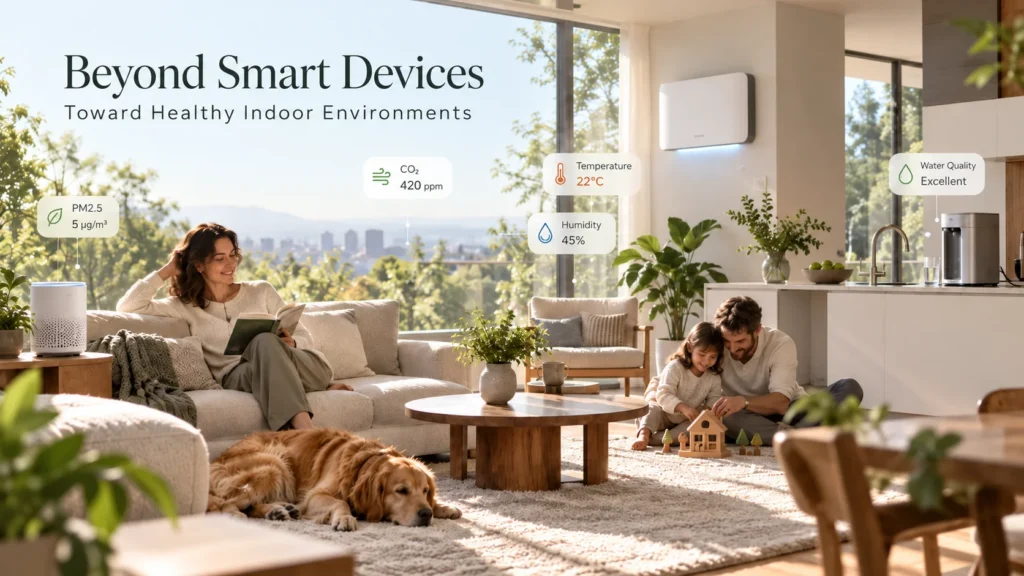
Modern living room with a family enjoying a healthy indoor environment monitored by smart devices, natural lighting, and greenery.

After IFA 2026: The Healthy Home Is Moving Beyond Smart Devices

In our previous IFA 2026 column, Air Purification Is Becoming Part of the Healthy-Home Platform, we argued that the next generation of indoor-health products would ...
Noticias
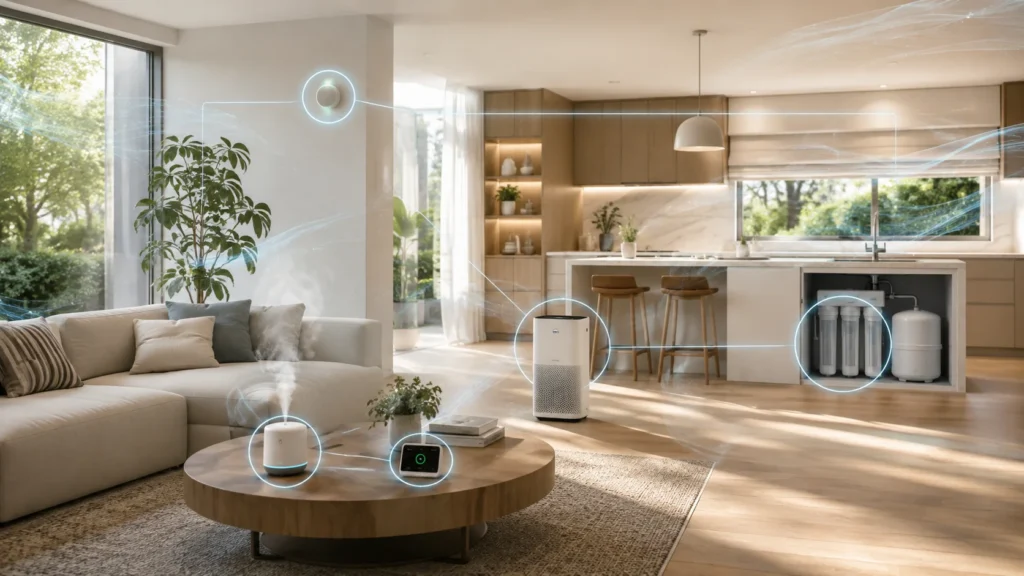
Modern living room and kitchen with smart home air quality devices including an air purifier, humidifier, and water filtration system, connected with visualized blue connectivity lines.

IFA 2026: Air Purification Is Becoming Part of the Healthy-Home Platform

Pre-IFA Industry Perspective | September 4, 2026 This article is based on official announcements and regulatory information available ahead of IFA 2026, which takes place ...
Noticias
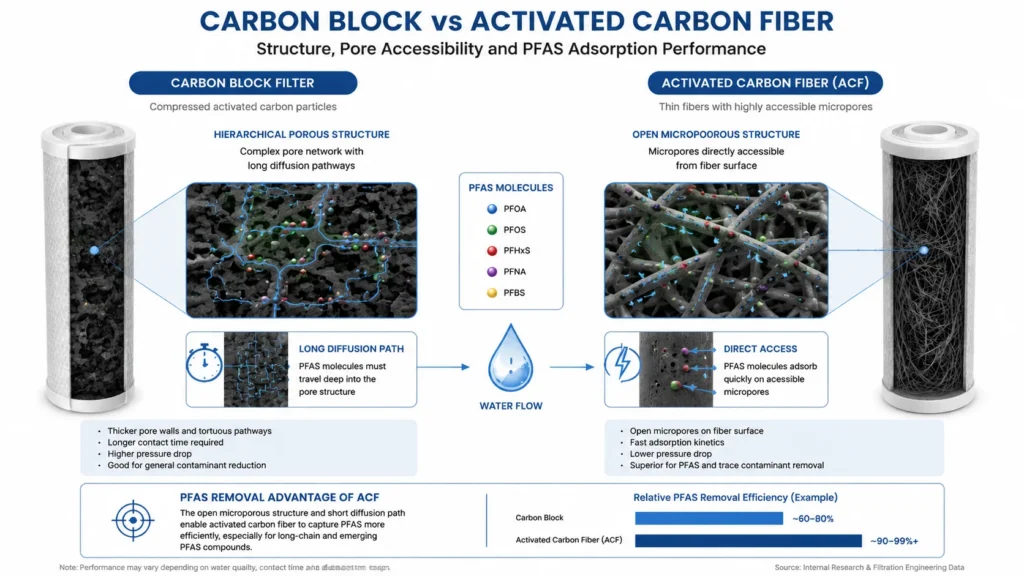
Comparison infographic showcasing the differences between carbon block filter and activated carbon fiber. Detailed diagrams illustrate the hierarchical porous structure of the carbon block with long diffusion paths and the open microporous structure of the activated carbon fiber with direct access for PFAS adsorption.

Carbon Block vs. Activated Carbon Fiber (ACF): Matching Media to Target Contaminants

Two carbon media. Same adsorption chemistry. Very different behaviour in a point-of-use cartridge. If you are specifying a water purifier platform for a PFAS-aware market, ...
Noticias
NSF base listing and ANF private-label certification pathway for OEM water filters

What Is an NSF Master Listing? A Guide to Base Listings, ANF Certification and OEM Water Filters

For a brand preparing to launch an OEM water purifier, one of the most common supplier claims is: “We already have an NSF master listing, ...
News, Water Purifiers
Healthy-home brand team reviewing PFAS water filter certification, test data and product engineering

Entering the Water Category Is Easy. Building a Credible PFAS Claim Is Much Harder

For air purification, appliance and healthy-home brands, entering the water category can look surprisingly easy. A company can select an existing undersink system, customize its ...
Noticias
Team in a business meeting discussing a water filtration system with product components and a comparison table displayed on a screen.

5 Leading OEM Water Purifier Manufacturers in China for Private Label Brands

China has thousands of companies selling water filters, reverse osmosis systems and drinking-water appliances. However, only a portion of them are suitable for private-label, OEM ...
Noticias
Contaminant Engineering•3 min read

PFAS Water Filtration Technologies Explained: Carbon, Resin & RO

Key Takeaway:

PFAS reduction depends on the specific compounds present, treatment media, contact time, water chemistry, and system design. Activated carbon, ion exchange, and Reverse Osmosis address PFAS through different mechanisms.

PFAS are a large family of persistent fluorinated compounds that can occur in drinking-water supplies. Their treatment behavior varies significantly by molecular structure, chain length, functional group, concentration, and the chemistry of the source water.

Granular Activated Carbon (GAC) removes PFAS primarily through adsorption. It is generally more effective for many longer-chain PFAS, while shorter-chain compounds tend to break through more quickly. Carbon performance depends on media properties, Empty Bed Contact Time (EBCT), competing organic matter, loading, and replacement frequency.

Ion-exchange resins use charged functional sites to capture many PFAS compounds. Properly selected anion-exchange media can provide high capacity and may perform better than conventional activated carbon for some shorter-chain PFAS, although performance still depends on water chemistry and competing ions.

Reverse Osmosis (RO) uses membrane separation rather than adsorption. Properly designed RO systems can provide broad reduction across many PFAS compounds as well as dissolved salts and other contaminants. Unlike carbon or resin, however, RO also produces a concentrate stream that must be managed.

No single technology should be selected from a PFAS label alone. System design should consider which PFAS compounds are present, their concentrations, required reduction targets, flow rate, media life, and the applicable third-party certification or validation requirements.

HisoAir Water Technical Series
Product Discovery•3 min read

How to Choose an Under-Sink Water Purifier for Modern Kitchens

Key Takeaway:

Match the treatment technology to your water quality first, then evaluate cabinet space, faucet configuration, flow rate, drain and power requirements, and filter replacement needs.

Choosing an under-sink water purifier starts with water chemistry. Carbon filtration is well suited to chlorine, taste, odor, and many organic contaminants, while Reverse Osmosis is more appropriate when dissolved salts, fluoride, nitrates, or broader dissolved contaminants need to be reduced.

For compact kitchens, tankless RO systems eliminate the conventional storage tank and can significantly reduce the space required under the sink. However, membrane capacity stated in GPD does not directly equal faucet flow. When comparing systems, check the actual dispensing flow rate, inlet-pressure requirement, recovery ratio, and whether a booster pump is required.

Installation architecture also matters. Many RO systems require a drain connection, electrical power, and either a dedicated drinking-water faucet or a compatible multi-function faucet. High-flow carbon systems can often connect directly to the existing cold-water line with a simpler installation, but pressure drop and available faucet flow should still be verified.

RO also removes much of the naturally occurring dissolved mineral content. Where taste or mineral balance is a priority, a post-RO remineralization stage can be added. Filter life should be evaluated by both rated capacity and local water quality rather than replacement time alone.

The right system is therefore not simply the smallest or highest-GPD model. It is the configuration that matches the target contaminants, available cabinet space, desired faucet setup, peak dispensing demand, and maintenance expectations.

HisoAir Water Technical Series
Water Quality•2 min read

What Does TDS Mean in Drinking Water? Measurement vs Contaminant Reality

Key Takeaway:

A TDS meter estimates the overall concentration of dissolved ionic substances from electrical conductivity. It cannot identify specific contaminants or determine whether water is chemically safe.

Total Dissolved Solids (TDS) refers to the combined concentration of dissolved substances in water. Most handheld TDS meters do not measure TDS directly. Instead, they measure electrical conductivity (EC) and convert that reading into an estimated parts-per-million (ppm) value.

This means a TDS reading can indicate how much dissolved ionic material is present, but not what that material actually is. Calcium, magnesium, sodium, nitrates, and other dissolved ions can all contribute to conductivity, yet a simple TDS meter cannot distinguish between them.

TDS meters are also not suitable for detecting trace contaminants such as PFAS, many VOCs, pesticides, pharmaceuticals, or disinfection byproducts. These substances may be present at concentrations far below the level needed to noticeably change electrical conductivity.

A low TDS reading therefore does not guarantee safe drinking water, and a higher TDS reading does not automatically indicate contamination. Water-treatment decisions should be based on laboratory testing for specific contaminants of concern rather than TDS alone.

HisoAir Water Technical Series
Technology Selection•2 min read

RO vs UF Water Filtration: Understanding Pore Sizes & Dissolved Minerals

Key Takeaway:

Ultrafiltration can reduce bacteria, turbidity, and suspended particles while retaining most naturally occurring dissolved minerals. Reverse Osmosis provides much broader reduction of dissolved salts and smaller contaminants.

Ultrafiltration (UF) typically uses hollow-fiber membranes with pore sizes in the approximate 0.01–0.1 micron range. These membranes physically retain turbidity, suspended solids, colloids, and many microorganisms while allowing dissolved minerals and salts to remain in the water.

Reverse Osmosis (RO) operates at a much finer separation level. Unlike UF, RO can substantially reduce dissolved ions such as sodium, calcium, fluoride, nitrates, and other contributors to total dissolved solids (TDS). This makes RO more suitable when dissolved-salt reduction is a primary treatment objective.

UF generally requires less system pressure and produces little or no continuous concentrate stream in many point-of-use configurations. RO typically requires greater pressure and produces a reject-water stream, but delivers broader contaminant reduction.

For water with acceptable TDS and mineral content, UF can be a simpler mineral-retaining treatment option. Where dissolved salts, fluoride, nitrates, or broader dissolved contaminants are a concern, RO is generally the more appropriate technology.

HisoAir Water Technical Series
Technology Selection•4 min read

Carbon Block vs Reverse Osmosis: Which Fits Your Need?

Key Takeaway:

Choose RO for dissolved inorganic salts and heavy metals; choose Carbon Block for chemical taste/odor, no wastewater, and high line-pressure flow.

Reverse Osmosis (RO) and Carbon Block filtration represent two fundamentally different treatment methods: membrane separation and adsorption. Understanding these differences helps determine which technology is better suited to a specific water-quality requirement.

Reverse Osmosis uses a semi-permeable membrane with pore sizes of approximately 0.0001 microns. It can significantly reduce dissolved inorganic contaminants such as TDS, fluoride, nitrates, and certain heavy metals. Because water must be forced through the membrane, RO systems require sufficient pressure or a booster pump and generate a concentrated wastewater stream.

Carbon Block filtration relies primarily on adsorption through compressed activated carbon, commonly with nominal pore sizes around 0.5–5 microns. It is highly effective for chlorine, chloramines, VOCs, taste, and odor, while allowing substantially higher direct-flow rates without producing wastewater.

From an operating perspective, Carbon Block systems are generally simpler, require less energy, and avoid the water loss associated with RO. RO involves higher system complexity and operating cost, but provides substantially broader reduction of dissolved contaminants that Carbon Block alone cannot address.

HisoAir Water Technical Series

SOLICITAR PRESUPUESTO