يفتح في علامة تبويب جديدة
حلول مبتكرة لجودة الهواء
شعار هيسو-أير-لوجو
استفسر الآن

كم من الوقت يجب عليك تشغيل جهاز تنقية الهواء؟

يُعد تشغيل جهاز تنقية الهواء على مدار الساعة طوال أيام الأسبوع أمراً مثالياً . يمكن أن تتلوث الغرفة مرة أخرى في غضون 2-4 ساعات إذا تركته مغلقاً. ولكن كم من الوقت يجب عليك تشغيل جهاز تنقية الهواء إذا كنت خارج المنزل في كثير من الأحيان أو إذا كنت دائماً في المنزل؟

معظم الدراسات و الشركات المصنعة لأجهزة تنقية الهواء الإصرار على تشغيل جهاز تنقية الهواء التجاري طوال اليوم. ولكن

  • هل تشعر بالقلق بشأن التكلفة على فاتورتك إذا قمت بتشغيل جهاز الهواء النقي الخاص بك لفترة طويلة في اليوم؟
  • هل هناك أي مشاكل تتعلق بالسلامة إذا غادرت منزلك أثناء تشغيل جهاز تعقيم الهواء؟

في هذا المنشور، ستتعرف في هذا المنشور على المدة التي يجب أن تشغل فيها جهاز تنقية الهواء والسلامة والتكلفة وجودة الهواء التي تعرفها.
كم من الوقت يجب عليك تشغيل جهاز تنقية الهواء؟

كم من الوقت يستغرق تشغيل جهاز تنقية الهواء - إجابة مختصرة

يجب عليك تشغيل جهاز تنقية الهواء على مدار 24 ساعة يومياً . والسبب في ذلك هو أن الهواء يمكن أن يصبح ملوثًا بالغبار أو المواد المسببة للحساسية أو حبوب اللقاح على الفور تقريبًا.
مدة تشغيل جهاز تنقية الهواء
المصدر: التقويم القديم

أعلم، أعلم أنك لا تريد أن تهدر فواتير الكهرباء أو تتدهور في وقت مبكر من عمرها الإنتاجي. لكن أجهزة تنقية الهواء المحمولة مصممة بذكاء لتعمل باستمرار، حتى أن بعضها حاصل على تصنيف Energy Star للحفاظ على الكهرباء.

سنوضح لك في القسم التالي مدى كفاءة جهاز تنقية الهواء في استهلاك الطاقة.

هل يستخدم جهاز تنقية الهواء الكثير من الكهرباء؟

حقيقة الأمر هي أن أجهزة تنقية الهواء الحفاظ على الجزء الأكبر من الكهرباء . سنخبرك لماذا.

هل يستهلك جهاز تنقية الهواء الكثير من الكهرباء؟

يبلغ الحد الأقصى لاستهلاك آلات تنظيف الهواء من الطاقة 40 واط إلى 200 واط لأعلى إعداد سرعة للمروحة . عندما تختار تشغيله في سرعات أقل ، وهو ما يفعله معظمنا، فإنه سيستهلك فقط 10 وات إلى 30 وات .

لتصور ذلك، فكر في المصباح الكهربائي الذي تستخدمه في المنزل. تستهلك المصابيح الكهربائية 60 وات. يستهلك الكمبيوتر المحمول عادةً 50 واط، بينما تستهلك الثلاجة حوالي 150 واط. وعادةً ما تعمل هذه الأجهزة طوال اليوم. يستهلك تشغيل جهاز تعقيم الهواء التجاري طاقة أقل من هذه الأجهزة.

الأجهزة المنزلية النموذجية

متوسط القوة الكهربائية

ثلاجة

150 واط

المصباح الكهربائي

60 وات

كمبيوتر محمول

50 وات

جهاز تنقية الهواء

40 واتس

وبالتالي، فإن أجهزة تنقية الهواء أكثر كفاءة في استهلاك الطاقة من هذه الأجهزة ولن تؤثر على فاتورتك بشكل كبير.

ما هي تكلفة تشغيل جهاز تنقية الهواء طوال اليوم؟

عادةً ما يتراوح متوسط أجهزة تنقية الهواء بين $4T4 إلى $15 في الشهر على فاتورة الكهرباء

فيما يلي، نوضح أدناه كيفية الحصول على التكلفة الشهرية الحقيقية أو تشغيل جهاز تنقية الهواء طوال اليوم. ولنقارن مع استهلاك أجهزتك الأخرى.

في العادة، ما يمكنك رؤيته في فاتورتك هو استهلاك جهازك الكهربائي بالكيلوواط/ساعة. لذا لنأخذ استهلاك طاقة جهاز تنقية الهواء. كما ذكرنا، عادةً ما يستهلك جهاز تنقية الهواء للمنزل من 10 واط إلى 30 واط على أقل إعداد له ومن 40 واط إلى 200 واط على أعلى إعداد له في الساعة (1).

دعونا نلقي نظرة على جهاز تنقية الهواء HA128 من هيسو إير HA128 باستهلاك طاقة 45 وات أو 0.045 كيلوواط.

تشغيله طوال اليوم يعني تشغيله طوال اليوم يعني تشغيله من أجل 24 ساعة لمدة 30 يوماً في الشهر .

للحصول على استهلاك الطاقة الشهري، نقوم بذلك:

الاستهلاك الشهري للطاقة (كيلوواط/ساعة) = القوة الكهربائية لجهاز تنقية الهواء × 24 ساعة × 30 يومًا

بالنسبة لهذا المثال، نحصل على 0.045 واط × 24 ساعة × 30 يومًا = 32.4 كيلوواط/ساعة

يبلغ متوسط تكاليف الكهرباء حوالي 13.11 سنتاً لكل كيلوواط/ساعة.

للحصول على التكلفة الشهرية لجهاز تنقية الهواء الذي يعمل على مدار الساعة طوال أيام الأسبوع، نقوم بذلك:

التكلفة الشهرية للكهرباء ($) = الاستهلاك الشهري للطاقة × التكلفة لكل كيلوواط/ساعة

بالنسبة للمثال أعلاه، نحصل على 32.4 كيلوواط/ساعة × 13.11 سنتًا لكل كيلوواط/ساعة = $4.2 شهرياً .

ماذا عن ثلاجة تعمل 24 ساعة في اليوم ? بتطبيق نفس المبدأ، تكون التكلفة الكهربائية الشهرية لثلاجتك هي 0.150 واط × 24 ساعة × 30 يومًا × 13.11 سنتًا لكل كيلوواط/ساعة = $14.15 دولار في الشهر!

هل ترى الفرق؟ فلماذا تقلق بشأن جهاز تنظيف الهواء الذي يعمل طوال اليوم بينما يمكنك الحصول على المزيد من الصحة ودفع جزء بسيط من التكلفة؟

طرق الحفاظ على كهرباء جهاز تنقية الهواء (إذا كنت مقتصداً للغاية)

النصيحة #1 جدولة أوضاع سرعة المروحة
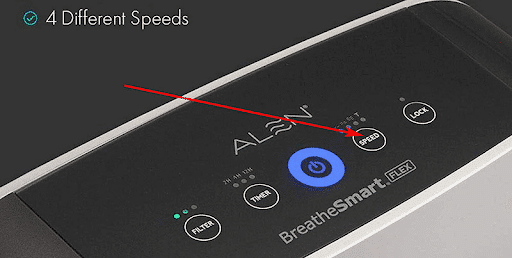
جدولة أوضاع سرعة المروحة 4 سرعات مختلفة لوحدة ألين

تم تصميم آلات تطهير الهواء بأجهزة استشعار ذكية ويمكن تشغيلها على الوضع التلقائي لتقليل طاقة المروحة كلما كانت الغرفة مرتبة. بهذه الطريقة، لن تضغط كثيراً على الفاتورة. يمكنك جدولة تشغيلها على سرعات عالية فقط في ساعات محدودة في اليوم إذا كنت مقتصداً.

ومع ذلك، فإن الأمر يتعلق باختيار علامة تجارية جيدة حتى لا تقلق بشأن تشغيلها طوال اليوم. لذا فإن اختيار آلة تنقية هواء نظيفة ذات نوعية جيدة للمنزل سيكون أفضل على المدى الطويل، حتى مع التكلفة الأولية الأعلى.

لذلك، نوصي باستخدام ماركة هيسو إير متوفرة في وحدات تنقية الهواء الصغيرة إلى الكبيرة. إذا كانت ميزانيتك محدودة ولكنك لا تزال ترغب في الحصول على جهاز تنقية هواء HEPA عالي الأداء فهذا سيغطيك.

النصيحة #2 قم بتشغيله بسرعة منخفضة إذا لم تكن في المنزل

قم بتشغيل جهاز تنظيف الهواء على سرعة منخفضة إذا لم تكن في المنزل

قم بتحويله إلى أدنى إعداد له إذا لم تكن في المنزل أو إذا كان لديك نباتات داخلية.

النصيحة #3 قم بتغيير إعدادات السرعة وفقًا للوقت من السنة

تنويع إعدادات السرعة وفقاً للوقت من السنة

اضبط إعداد السرعة وفقاً للوقت من السنة. على سبيل المثال، خلال فصل الصيف، على سبيل المثال، يكثر الغبار وحبوب اللقاح، لذا يمكنك تشغيل جهاز تنقية الهواء بسرعات أعلى من فصل الشتاء.

كم مرة يتم تشغيل جهاز تنقية الهواء بأقصى سرعة؟
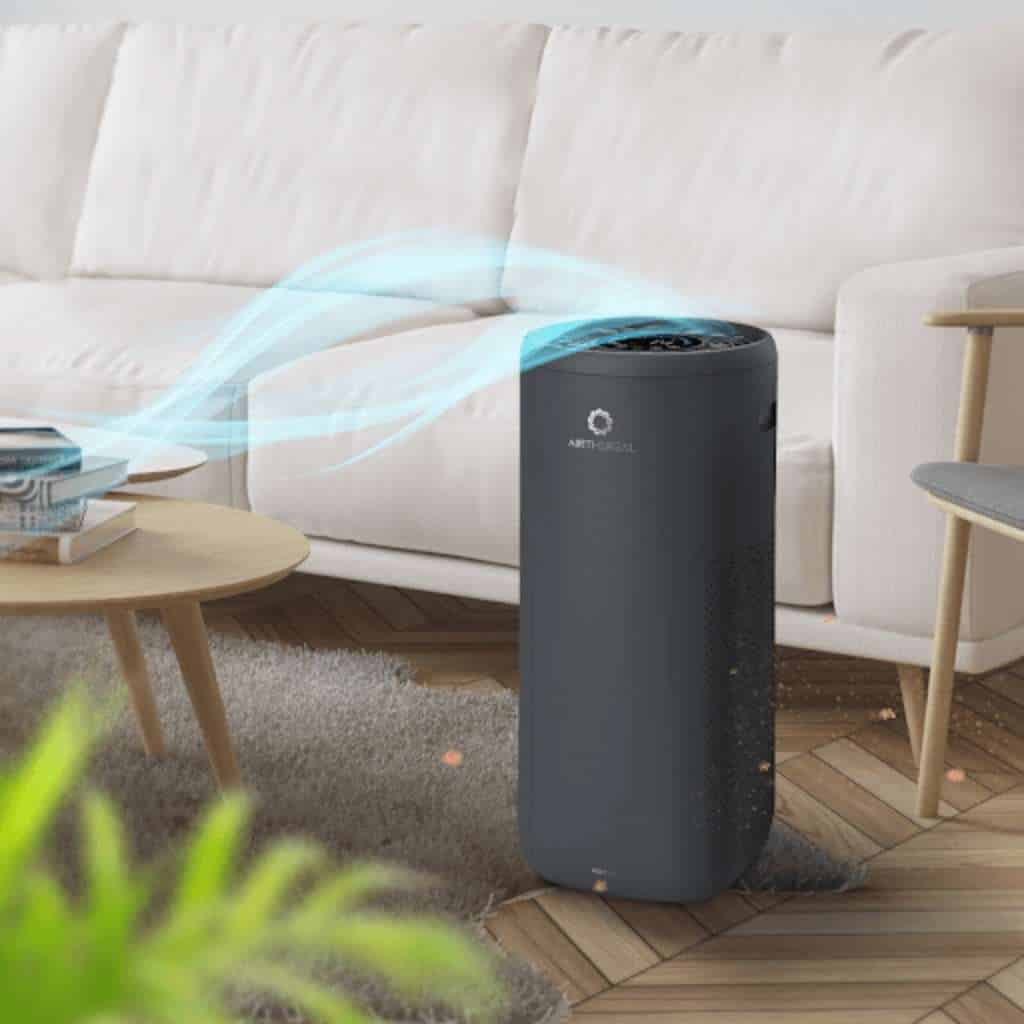
تشغيل جهاز تنقية الهواء بأقصى سرعة

المصدر: بينتيريست

لتحسين أدائه بشكل أفضل، قم بتشغيله بأقصى سرعة فقط عندما تكون في المنزل. ثم يمكنك إعادة ضبطه على السرعة المنخفضة عند الخروج من المنزل.

لا بأس من عدم تشغيل جهاز تنقية الهواء للمنزل بأقصى سرعة طوال اليوم مع تحسين أدائه الكامل. وهذا يقودنا إلى السؤال التالي: كم من الوقت يستغرق جهاز تنقية الهواء لتنظيف الغرفة على أي حال؟

كم من الوقت يستغرق جهاز تنقية الهواء لتنظيف الغرفة؟

باختصار، تأخذ معظم أجهزة تنقية الهواء 30 دقيقة إلى 2 ساعة لتعقيم الهواء في غرفتك. في غضون 20 دقيقة فقط، يجب أن يكون هناك فرق ملحوظ في جودة الهواء في غرفتك.

لتحديد المدة التي يستغرقها جهاز تنقية غبار الهواء لتنقية الغرفة، يجب أن تعرف حجم غرفتك ومعدل توصيل الهواء النظيف (CADR) لجهاز تنقية الهواء. هذا هو معرفة تغيرات الهواء في الساعة (ACH) التي يمكن لجهاز تنقية الهواء القيام بها. ACH هو عدد المرات التي يمكن فيها تنظيف حجم معين من الهواء من الغرفة في الساعة.

على سبيل المثال، يحتوي جهاز تعقيم الهواء المنزلي على معدل CADR يبلغ 400 CFM ولديك غرفة مساحتها 176 قدم مربع. وهذا يعني أن جهاز مؤين الهواء يعمل بسرعة 4 أ.س.س.هـ أو ينظف الهواء 4 مرات في الساعة (15 دقيقة لكل شحنة).

يمكن أن يلعب الطقس والرطوبة والموقع أيضاً دوراً في مدى سرعة عمل جهاز تنقية الهواء التجاري. فهناك المزيد من الغبار خلال فصل الصيف مما يعني أن جهاز تنقية الهواء سيستغرق وقتاً أطول لتنظيف الهواء.

هل من الآمن ترك جهاز تنقية الهواء يعمل طوال اليوم؟

نعم، لا بأس من ترك جهاز تنقية الهواء يعمل 24/7 للحفاظ على بيئة هواء داخلية نظيفة. الجانب السلبي الوحيد لذلك هو أن استهلاك الكهرباء سيكون أعلى قليلاً. ومع ذلك، فإن أجهزة تنقية الهواء لا تستهلك الكثير من الكهرباء مما يعني أنها لا تكلفك الكثير من التكلفة على فاتورتك.

تذكّر أن الغبار يمكن أن يلوّث الهواء بسهولة. لذا، إذا اخترت إيقاف تشغيل جهاز تنقية الغبار لتوفير القليل من تكاليف الكهرباء، فإن ذلك سيترك منزلك متسخاً كما كان قبل تشغيله.

هل يجب أن أنام مع تشغيل جهاز تنقية الهواء؟

هل يجب أن تنام وجهاز تنقية الهواء لا يزال قيد التشغيل

نعم، يجب عليك تشغيل جهاز تنقية الهواء في غرفة نومك، خاصةً إذا كنت تعاني من الربو أو الحساسية أو أمراض الجهاز التنفسي الأخرى.

وذلك لأنك في كل مرة تقوم فيها بإيقاف تشغيل جهاز تنقية الهواء، يمكن أن يصبح الهواء ملوثاً على الفور في غضون 15 دقيقة فقط.

دراسة أجراها مركز فلاتر الهواء الذكية أظهر كيف يمكن أن يصبح الهواء ملوثًا بـ 50% في 15 دقيقة فقط. وفي 80 دقيقة، يمكن أن يصبح الهواء ملوثاً بـ 1001 تيرابايت 3 تيرابايت.

رسم بياني يوضح المدة التي تستغرقها الغرفة لتعود الأتربة إلى الغرفة مرة أخرى بعد إيقاف تشغيل جهاز تنقية الهواء

لذلك عند إيقاف تشغيل جهاز تنقية الهواء أثناء النوم، سينتهي بك الأمر باستنشاق هواء غير نظيف.

الخاتمة

نأمل أن يساعدك هذا المقال في فهم المدة التي يجب أن تشغّل فيها جهاز تنقية الهواء، والمدة التي يمكنك أن تقضيها في تشغيله على مدار الساعة طوال أيام الأسبوع.

إذا كنت تريد معرفة أفضل الشركات المصنعة لأجهزة تنقية الهواء في الصين، فقد كتبنا مقالاً منفصلاً لهذا الغرض. أفضل 5 شركات مصنعة لأجهزة تنقية الهواء في الصين (2021).

شركة HisoAir هي مورد لأجهزة تنقية الهواء في الصين تقدم خدمات ODM / OEM. لدينا مجموعة كبيرة ومتنوعة من أجهزة تنقية الهواء للمنازل والصناعات والمستشفيات والفنادق. تحقق من منتجاتنا الأخرى توصيات لأجهزة تنقية الهواء أو يمكنك اتصل بنا إذا كنت تريد عرض أسعار لأجهزة تنقية الهواء بالجملة.

شارك:
السيد لي مؤسس شركة هيسواير
Alwen Lee, an air purification expert with over 10 years of experience, is a devoted father of two and a passionate traveler, having explored more than 30 countries. With a love for public speaking and swimming, he has dedicated his life to the indoor air quality industry. His mission is to ensure that people around the world enjoy the freedom to breathe clean air and lead happy, healthy lives.

أرسل لنا رسالة

المزيد للقراءة

Modern living room with a family enjoying a healthy indoor environment monitored by smart devices, natural lighting, and greenery.

After IFA 2026: The Healthy Home Is Moving Beyond Smart Devices

In our previous IFA 2026 column, Air Purification Is Becoming Part of the Healthy-Home Platform, we argued that the next generation of indoor-health products would ...
الأخبار
Modern living room and kitchen with smart home air quality devices including an air purifier, humidifier, and water filtration system, connected with visualized blue connectivity lines.

IFA 2026: Air Purification Is Becoming Part of the Healthy-Home Platform

Pre-IFA Industry Perspective | September 4, 2026 This article is based on official announcements and regulatory information available ahead of IFA 2026, which takes place ...
الأخبار
A modern office room with a gray wall-mounted air purifier, large wooden desk, office chairs, indoor plants, and glass windows offering a city view.

Luftreiniger gegen Staub: HEPA-Luftreinigung für Büro, Gewerbe und Industrie

Kurz gesagt: Ein Luftreiniger entfernt Staub aus der Luft – nicht vom Schreibtisch. Er reduziert die Konzentration schwebender Partikel und damit auch die Menge an ...
Air purifier, Filter
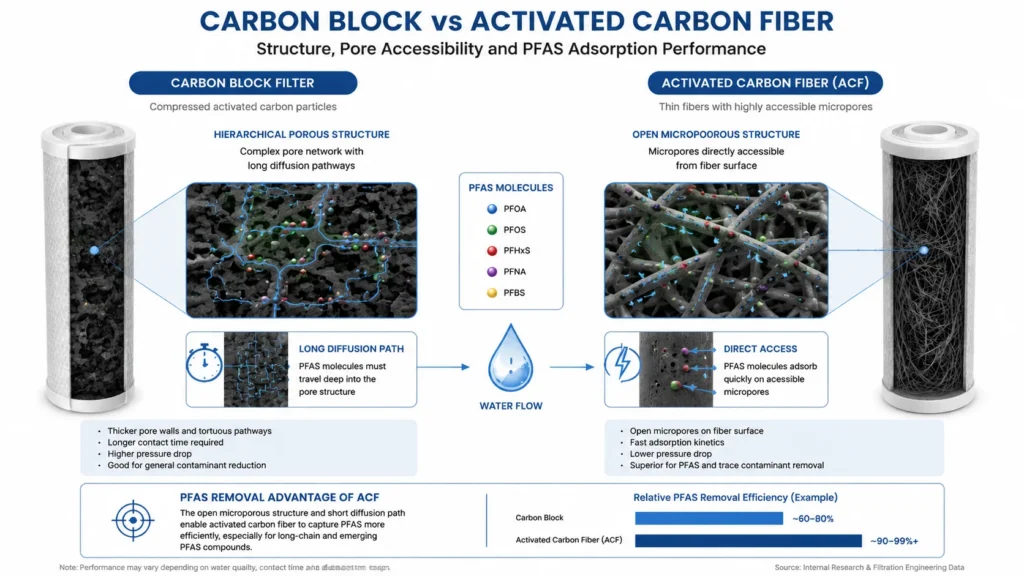
Comparison infographic showcasing the differences between carbon block filter and activated carbon fiber. Detailed diagrams illustrate the hierarchical porous structure of the carbon block with long diffusion paths and the open microporous structure of the activated carbon fiber with direct access for PFAS adsorption.

Carbon Block vs. Activated Carbon Fiber (ACF): Matching Media to Target Contaminants

Two carbon media. Same adsorption chemistry. Very different behaviour in a point-of-use cartridge. If you are specifying a water purifier platform for a PFAS-aware market, ...
الأخبار
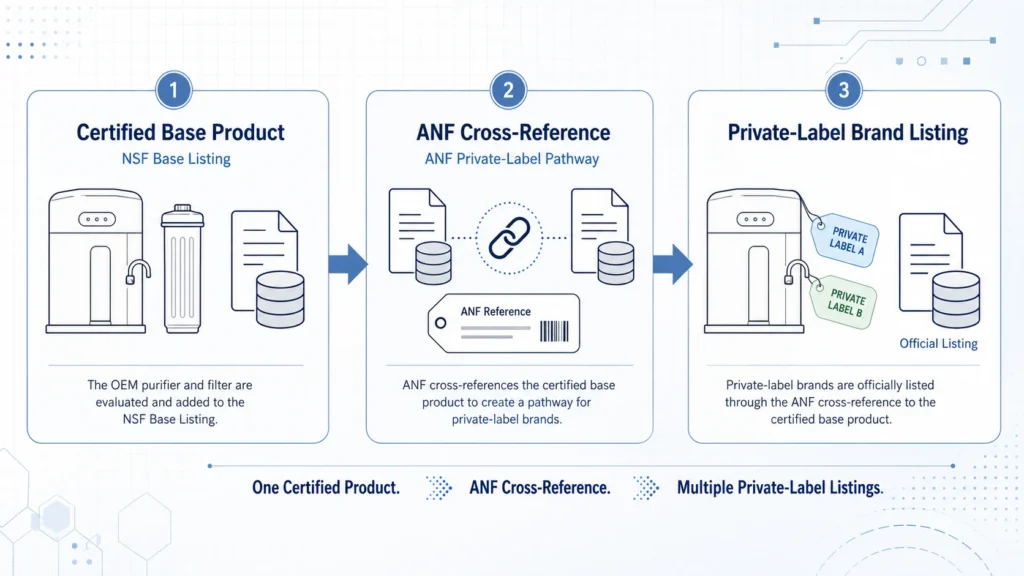
NSF base listing and ANF private-label certification pathway for OEM water filters

What Is an NSF Master Listing? A Guide to Base Listings, ANF Certification and OEM Water Filters

For a brand preparing to launch an OEM water purifier, one of the most common supplier claims is: “We already have an NSF master listing, ...
News, Water Purifiers
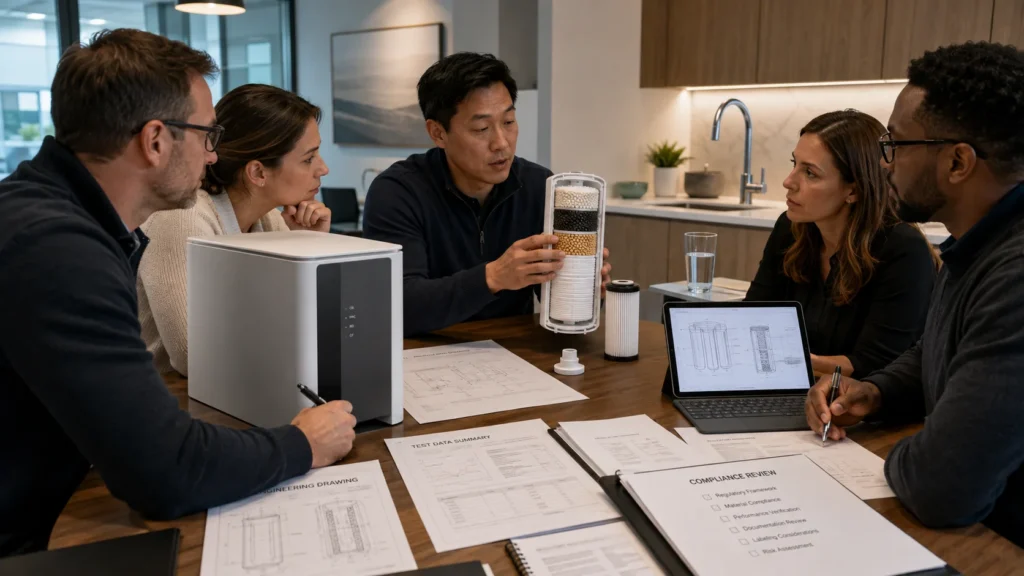
Healthy-home brand team reviewing PFAS water filter certification, test data and product engineering

Entering the Water Category Is Easy. Building a Credible PFAS Claim Is Much Harder

For air purification, appliance and healthy-home brands, entering the water category can look surprisingly easy. A company can select an existing undersink system, customize its ...
الأخبار
Contaminant Engineering•3 min read

PFAS Water Filtration Technologies Explained: Carbon, Resin & RO

Key Takeaway:

PFAS reduction depends on the specific compounds present, treatment media, contact time, water chemistry, and system design. Activated carbon, ion exchange, and Reverse Osmosis address PFAS through different mechanisms.

PFAS are a large family of persistent fluorinated compounds that can occur in drinking-water supplies. Their treatment behavior varies significantly by molecular structure, chain length, functional group, concentration, and the chemistry of the source water.

Granular Activated Carbon (GAC) removes PFAS primarily through adsorption. It is generally more effective for many longer-chain PFAS, while shorter-chain compounds tend to break through more quickly. Carbon performance depends on media properties, Empty Bed Contact Time (EBCT), competing organic matter, loading, and replacement frequency.

Ion-exchange resins use charged functional sites to capture many PFAS compounds. Properly selected anion-exchange media can provide high capacity and may perform better than conventional activated carbon for some shorter-chain PFAS, although performance still depends on water chemistry and competing ions.

Reverse Osmosis (RO) uses membrane separation rather than adsorption. Properly designed RO systems can provide broad reduction across many PFAS compounds as well as dissolved salts and other contaminants. Unlike carbon or resin, however, RO also produces a concentrate stream that must be managed.

No single technology should be selected from a PFAS label alone. System design should consider which PFAS compounds are present, their concentrations, required reduction targets, flow rate, media life, and the applicable third-party certification or validation requirements.

HisoAir Water Technical Series
Product Discovery•3 min read

How to Choose an Under-Sink Water Purifier for Modern Kitchens

Key Takeaway:

Match the treatment technology to your water quality first, then evaluate cabinet space, faucet configuration, flow rate, drain and power requirements, and filter replacement needs.

Choosing an under-sink water purifier starts with water chemistry. Carbon filtration is well suited to chlorine, taste, odor, and many organic contaminants, while Reverse Osmosis is more appropriate when dissolved salts, fluoride, nitrates, or broader dissolved contaminants need to be reduced.

For compact kitchens, tankless RO systems eliminate the conventional storage tank and can significantly reduce the space required under the sink. However, membrane capacity stated in GPD does not directly equal faucet flow. When comparing systems, check the actual dispensing flow rate, inlet-pressure requirement, recovery ratio, and whether a booster pump is required.

Installation architecture also matters. Many RO systems require a drain connection, electrical power, and either a dedicated drinking-water faucet or a compatible multi-function faucet. High-flow carbon systems can often connect directly to the existing cold-water line with a simpler installation, but pressure drop and available faucet flow should still be verified.

RO also removes much of the naturally occurring dissolved mineral content. Where taste or mineral balance is a priority, a post-RO remineralization stage can be added. Filter life should be evaluated by both rated capacity and local water quality rather than replacement time alone.

The right system is therefore not simply the smallest or highest-GPD model. It is the configuration that matches the target contaminants, available cabinet space, desired faucet setup, peak dispensing demand, and maintenance expectations.

HisoAir Water Technical Series
Water Quality•2 min read

What Does TDS Mean in Drinking Water? Measurement vs Contaminant Reality

Key Takeaway:

A TDS meter estimates the overall concentration of dissolved ionic substances from electrical conductivity. It cannot identify specific contaminants or determine whether water is chemically safe.

Total Dissolved Solids (TDS) refers to the combined concentration of dissolved substances in water. Most handheld TDS meters do not measure TDS directly. Instead, they measure electrical conductivity (EC) and convert that reading into an estimated parts-per-million (ppm) value.

This means a TDS reading can indicate how much dissolved ionic material is present, but not what that material actually is. Calcium, magnesium, sodium, nitrates, and other dissolved ions can all contribute to conductivity, yet a simple TDS meter cannot distinguish between them.

TDS meters are also not suitable for detecting trace contaminants such as PFAS, many VOCs, pesticides, pharmaceuticals, or disinfection byproducts. These substances may be present at concentrations far below the level needed to noticeably change electrical conductivity.

A low TDS reading therefore does not guarantee safe drinking water, and a higher TDS reading does not automatically indicate contamination. Water-treatment decisions should be based on laboratory testing for specific contaminants of concern rather than TDS alone.

HisoAir Water Technical Series
Technology Selection•2 min read

RO vs UF Water Filtration: Understanding Pore Sizes & Dissolved Minerals

Key Takeaway:

Ultrafiltration can reduce bacteria, turbidity, and suspended particles while retaining most naturally occurring dissolved minerals. Reverse Osmosis provides much broader reduction of dissolved salts and smaller contaminants.

Ultrafiltration (UF) typically uses hollow-fiber membranes with pore sizes in the approximate 0.01–0.1 micron range. These membranes physically retain turbidity, suspended solids, colloids, and many microorganisms while allowing dissolved minerals and salts to remain in the water.

Reverse Osmosis (RO) operates at a much finer separation level. Unlike UF, RO can substantially reduce dissolved ions such as sodium, calcium, fluoride, nitrates, and other contributors to total dissolved solids (TDS). This makes RO more suitable when dissolved-salt reduction is a primary treatment objective.

UF generally requires less system pressure and produces little or no continuous concentrate stream in many point-of-use configurations. RO typically requires greater pressure and produces a reject-water stream, but delivers broader contaminant reduction.

For water with acceptable TDS and mineral content, UF can be a simpler mineral-retaining treatment option. Where dissolved salts, fluoride, nitrates, or broader dissolved contaminants are a concern, RO is generally the more appropriate technology.

HisoAir Water Technical Series
Technology Selection•4 min read

Carbon Block vs Reverse Osmosis: Which Fits Your Need?

Key Takeaway:

Choose RO for dissolved inorganic salts and heavy metals; choose Carbon Block for chemical taste/odor, no wastewater, and high line-pressure flow.

Reverse Osmosis (RO) and Carbon Block filtration represent two fundamentally different treatment methods: membrane separation and adsorption. Understanding these differences helps determine which technology is better suited to a specific water-quality requirement.

Reverse Osmosis uses a semi-permeable membrane with pore sizes of approximately 0.0001 microns. It can significantly reduce dissolved inorganic contaminants such as TDS, fluoride, nitrates, and certain heavy metals. Because water must be forced through the membrane, RO systems require sufficient pressure or a booster pump and generate a concentrated wastewater stream.

Carbon Block filtration relies primarily on adsorption through compressed activated carbon, commonly with nominal pore sizes around 0.5–5 microns. It is highly effective for chlorine, chloramines, VOCs, taste, and odor, while allowing substantially higher direct-flow rates without producing wastewater.

From an operating perspective, Carbon Block systems are generally simpler, require less energy, and avoid the water loss associated with RO. RO involves higher system complexity and operating cost, but provides substantially broader reduction of dissolved contaminants that Carbon Block alone cannot address.

HisoAir Water Technical Series

طلب عرض أسعار