يفتح في علامة تبويب جديدة
حلول مبتكرة لجودة الهواء
شعار هيسو-أير-لوجو
استفسر الآن

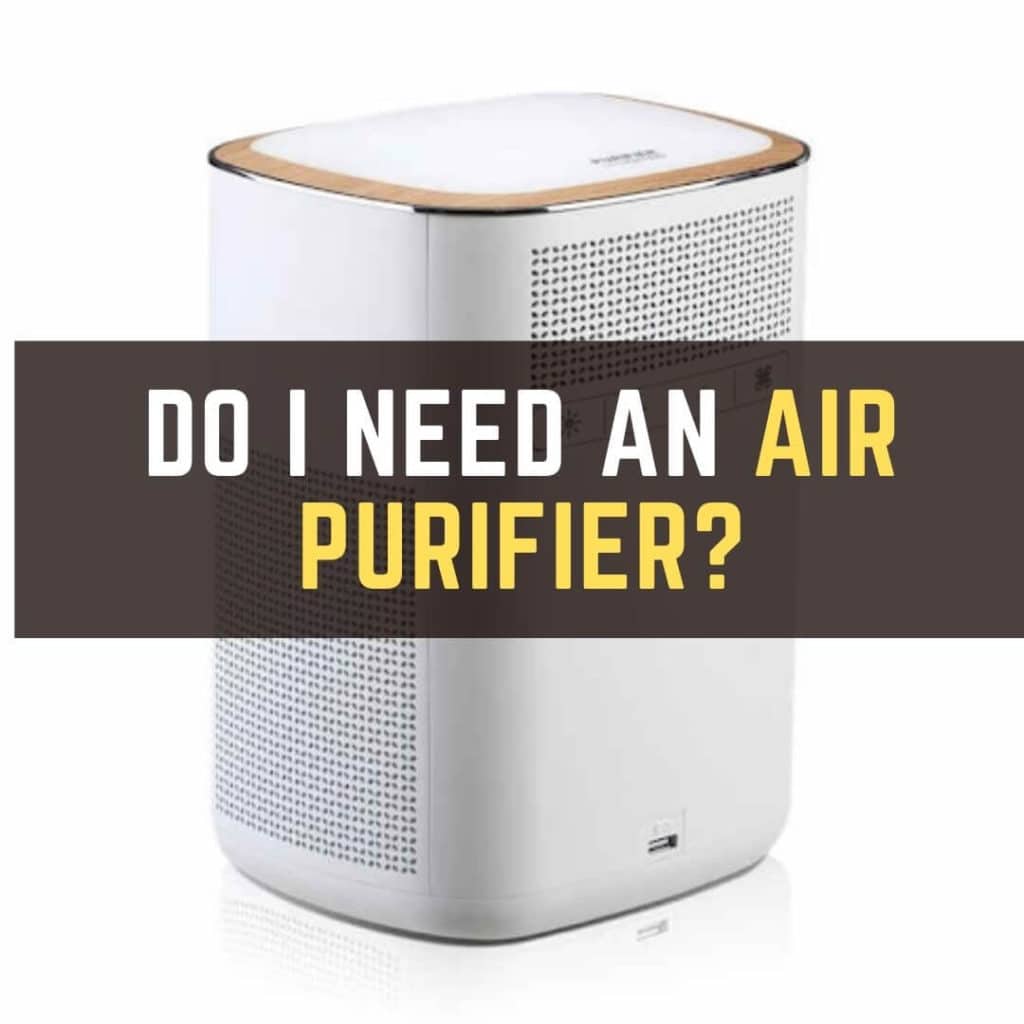
هل أحتاج إلى جهاز لتنقية الهواء؟ هل أجهزة تنقية الهواء مضيعة للمال؟

Related Products

سواء كنت ترغب في الحصول على هواء أنظف وأكثر أماناً وتنفساً أو التخلص من الغبار والجراثيم العالقة والفيروسات، فإن أجهزة تنقية الهواء يمكن أن تساعدك. هل تحتاج حقاً إلى جهاز لتنقية الهواء؟

هل هو أن هل تحتاج إلى إنفاق ما بين $200 إلى $500 دولار أمريكي لشراء آلة لتنظيف الهواء لمنزلك أو مكتبك أو صناعتك؟

الأسئلة الشائعة الأخرى هي:
"هل يجب أن أشتري جهازاً لتنقية الهواء؟"
"هل يستحق كل هذا العناء؟"
"هل يمكن لأجهزة تنقية الهواء أن تقي من فيروس كورونا؟"
"هل تحتاجين إلى جهاز لتنقية الهواء للطفل؟"
هل أحتاج إلى جهاز لتنقية الهواء؟

هناك مقالات تعدد لماذا تعتبر أجهزة تنقية الهواء مضيعة للمال إذا لم تكن بحاجة إلى واحدة، فلماذا تشتري واحدة، أليس كذلك؟ لكن لن يكون هذا هو الحال بالنسبة للجميع، وإذا نظرت إلى الأمر عن كثب، فقد يكون هناك المزيد من الأسباب لماذا يجب عليك الاستثمار في جهاز لتنقية الهواء، خاصة في عام 2021.

لذا دعنا نوضح لك الأوراق.

أسباب احتياجك لجهاز تنقية الهواء

وفقًا لمنظمة الصحة العالمية (WHO), 9 من كل 10 أشخاص يتنفسون هواءً ملوثًا الذي يتجاوز الحد الأقصى لمستويات الملوثات الآمنة. ويتعرض الناس كل يوم لظروف غير صحية بسبب اختلاط التلوث الخارجي بالهواء داخل المنازل.

كما تدعي منظمة الصحة العالمية أن أكثر من سبعة ملايين حالة وفاة مبكرة كل عام، ويرجع ذلك إلى حد كبير إلى زيادة الوفيات الناجمة عن أمراض الجهاز التنفسي الحادة ومرض الانسداد الرئوي المزمن وسرطان الرئة وأمراض القلب.

هناك أسباب محددة تدفعك للحصول على جهاز لتنقية الهواء. وهي:

1. هل تعاني من الحساسية أو الربو؟

إذا كان لديك الحساسية أو تعاني من الربو فكّر في الحصول على جهاز لتنقية الهواء.

2. هل تحتاج إلى منع فيروس كوفيد-19 من الانتشار في مكانك؟

إذا كنت تريد منع انتشار فيروس كورونا المستجد أو مسببات الحساسية أو الملوثات البيولوجية الأخرى، يمكن أن تساعد مرشحات HEPA في حبس هذه الممرضات الضارة

3. هل تريد منع تلوث الهواء والدخان والروائح والأبخرة؟

إذا كان يتعرض الموظفون للتدخين باستمرار والأبخرة الضارة والروائح الكريهة، يقوم جهاز تنقية الهواء المزوّد بفلتر الكربون المنشط بإزالة المكونات العضوية المتطايرة.

4. هل لديك حساسيات كيميائية؟

إذا كنت حساساً للمواد الكيميائية، ففكر في الحصول على جهاز تنقية هواء مزود بمضاد للحساسية من المواد الكيميائية أو حساسيات كيميائية متعددة.

5. هل لديك روث أو شعر أو عث غبار الحيوانات الأليفة في كل مكان؟

إذا كان لديك حيوان أليف، فمن المحتمل أن تصاب بمشاكل في التنفس بسبب روائح الحيوانات الأليفة وروائح الحيوانات الأليفة وتساقط الشعر. يمكن لأجهزة تنقية الهواء الخاصة إزالة روائح وشعر الحيوانات الأليفة من الجو

أسباب عدم حاجتك إلى جهاز لتنقية الهواء

إذا كانت الأسباب المذكورة أعلاه لا تناسبك، فربما لن تحتاج إلى جهاز لتنقية الهواء.

ومع ذلك، إذا كنت لا ترغب في استخدام جهاز لتنقية الهواء، فلا يزال عليك الحفاظ على بيئة هواء نظيفة من خلال ما يلي

  • أبقِ نوافذك مفتوحة حتى يتنقل الهواء في أرجاء منزلك وتمنع المهيجات العالقة.
  • التنظيف والتنظيف بالمكنسة الكهربائية كثيرًا لتقليل الغبار
  • قم بتغيير فلاتر التدفئة والتهوية وتكييف الهواء بانتظام لمنع إعادة تدوير الهواء المتسخ في أرجاء المنزل.
  • تأكد من استخدام مروحة العادم في مناطق المطبخ المغلقة
  • لا تدخن داخل المنزل، ولا تمنع الدخان من الدخول إلى منزلك.

مزايا أجهزة تنقية الهواء وعيوبها

المزايا العيوب
  • يساعدك على استنشاق هواء خالٍ من الروائح، خاصةً إذا كنت تعيش في الدائرة الحضرية
  • تحافظ على صحتك من التدخين غير المباشر والروائح الكريهة
  • يمنع الحساسية
  • ينظف الهواء من روائح الحيوانات الأليفة
  • نفقات الصيانة لاستبدال المرشحات
  • لا يمكن أن تعمل بكفاءة 100%
  • يمكن أن يكون الأوزون ضارًا (إذا كنت تستخدم أجهزة تنقية الهواء المؤينة)

والآن بعد أن أوضحنا الإجابات المختصرة، دعنا نوضح لك إذا كنت مثل الأغلبية الذين ليس لديهم فكرة واضحة عن أجهزة تنقية الهواء.

كيف يعمل جهاز تنقية الهواء؟

إذاً كيف تعمل آلة تنظيف الهواء هذه على تحسين جودة الهواء؟

يعمل جهاز تنقية الهواء عن طريق امتصاص الهواء الملوث المتسخ والملوث وتمريره عبر مراحل متعددة من المرشحات، وتعقيم الهواء وتنظيفه أثناء خروجه. ولتنقية الهواء الملوث بكفاءة في منطقة معينة من الغرفة، يقوم جهاز تنقية الهواء بتنقية كمية الهواء بالكامل عدة مرات خلال ساعة واحدة.

تُعدّ فلاتر HEPA مفضّلة لأنها تقوم بتصفية الكثير من أنواع الملوثات في الهواء. وتشمل هذه الملوثات والجسيمات العالقة والغبار وحبوب اللقاح والجراثيم. وغالباً ما يتم التقاط الروائح والأبخرة والمركبات العضوية المتطايرة (المركبات العضوية المتطايرة) بواسطة مرشحات الكربون المنشط.

لا شك في أن أجهزة تنقية الهواء HEPA فعالة في تحسين جودة الهواء الداخلي، إلا أنك تحتاج إلى استبدال الفلاتر للحصول على الأداء الأمثل بين الحين والآخر (من 3 إلى 4 أشهر بشكل مثالي بحسب إرشادات الشركة المصنعة).

هل يمكن لأجهزة تنقية الهواء أن تمنع فيروس كورونا؟

نعم، يمكن أن تكون أجهزة تنقية الهواء، عند استخدامها بشكل صحيح، استراتيجية فعالة لمكافحة العدوى. ولكن هذا لا يعني أنها طريقة قائمة بذاتها للوقاية من فيروس كورونا.

صُممت أجهزة تنقية الهواء المزوّدة بمرشحات HEPA لاحتجاز 99.971 تيرابايت 3 تيرابايت من الجسيمات المحمولة في الهواء حتى حجم 0.3 ميكرون. وهذا يشمل بالفعل الكثير من البكتيريا والمواد المسببة للحساسية والفيروسات التي تسبب المرض والعدوى.

والأمر الأكثر إثارة للاهتمام هو أن دراسة أجرتها وكالة ناسا تُظهر كيف يمكن لأنظمة الترشيح HEPA عالية الأداء أن ترشح الجسيمات والفيروسات المحمولة في الهواء تقريبًا 100%. وبمجرد احتجازها في ألياف HEPA، ستموت هذه الفيروسات بشكل مثالي خلال 72 ساعة كحد أقصى.

كما تُستخدم أنظمة تنقية الهواء في المباني لمنع إصابة العمال بجراثيم الرشاشيات. كما تستخدم المستشفيات في جميع أنحاء العالم أجهزة تنقية الهواء عالية الأداء مع الأشعة فوق البنفسجية في المستشفيات لتعقيم الهواء ومنع انتشار عدوى كوفيد-19.

تتضمن أفضل أجهزة تنقية الهواء لقتل الجراثيم والفيروسات أو إبطال مفعولها ما يلي:

  • الأشعة فوق البنفسجية
  • فلتر HEPA مشبع بالفضة
  • تقنية التعقيم الحراري

على سبيل المثال, آلات تعقيم الهواء من هيسو إير مجهزة بتقنيات تعقيم وتطهير الهواء عالية الأداء مع تقنية ضوء الأشعة فوق البنفسجية فوق البنفسجية 254 نانومتر، المصممة لحبس فيروس كورونا وأنواع أخرى من الفيروسات وقتلها.

أسئلة ذات صلة:

هل تساعدك أجهزة تنقية الهواء على النوم بشكل أفضل؟

لذا تعمل أجهزة تنقية الهواء على تحسين جودة الهواء الذي تتنفسه، مما يقلل من تهيج الرئة والجلد، بالإضافة إلى تخليص الهواء من الروائح الكريهة. من خلال هذه الفوائد، يمكننا القول أن أجهزة تنقية الهواء يمكن أن تساعدك على النوم بشكل أفضل في الليل أو أثناء القيلولة.

في حين أنه وفقًا لدراسة استقصائية، فإن 50 مليون أمريكي إذا كنت تعاني من الربو أو الحساسية، فإن جهاز تنقية الهواء يمكن أن يكون استثماراً رائعاً إذا كنت ترغب في الحفاظ على صحتك والنوم بشكل أفضل.

هل تحتاجين إلى منقّي هواء للطفل؟

يمكن لأجهزة تنقية الهواء أن تساعد في تقليل الملوثات في الهواء قبل أن يستنشقها طفلك، وبالتالي تقليل خطر الإصابة بالحساسية والربو. لذا، نعم، قد ترغبين في شراء جهاز لتنقية الهواء لحماية طفلك من السموم والفيروسات الضارة غير المرئية بالعين المجردة.

هل يجب عليك شراء جهاز لتنقية الهواء؟

لقد ابتلي العامان 2020 و2021 بالتلوث, حرائق الغابات والمتغيرات المعروفة والجديدة لفيروس كورونا المستجد (كوفيد-19). أضف إلى ذلك أن الناس يقضون المزيد من الوقت في الداخل حيث يقضون العمل والمدرسة والترفيه في مكان واحد.

لا يقتصر الأمر على الأشخاص الذين يعانون من الحساسية والربو الذين يحتاجون إلى هواء نقي طوال الوقت، بل إن العائلات والأسر والمستشفيات والشركات تحتاج إلى الحماية مما جلبه لنا العالم اليوم - الحجر الصحي المنزلي,

مع هذا، هناك بالتأكيد حاجة إلى تهوية جيدة وجودة هواء جيدة لتعزيز بيئة داخلية أكثر أماناً وتعقيماً. ومن ثم، يجب عليك الحصول على جهاز تنقية هواء عالي الجودة.

عندما تقرر أن جهاز تنقية الهواء يستحق ذلك

لمساعدتك في العثور على أفضل جهاز تنقية هواء مناسب لك، يمكنك زيارة هذه المدونات:

شارك:
السيد لي مؤسس شركة هيسواير
Alwen Lee, an air purification expert with over 10 years of experience, is a devoted father of two and a passionate traveler, having explored more than 30 countries. With a love for public speaking and swimming, he has dedicated his life to the indoor air quality industry. His mission is to ensure that people around the world enjoy the freedom to breathe clean air and lead happy, healthy lives.

أرسل لنا رسالة

Related Products

المزيد للقراءة

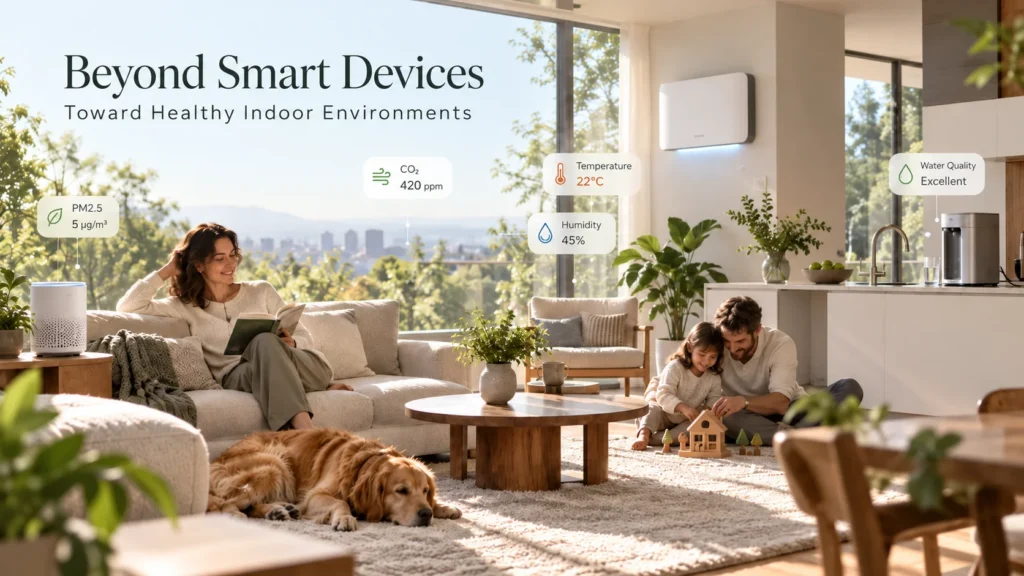
Modern living room with a family enjoying a healthy indoor environment monitored by smart devices, natural lighting, and greenery.

After IFA 2026: The Healthy Home Is Moving Beyond Smart Devices

In our previous IFA 2026 column, Air Purification Is Becoming Part of the Healthy-Home Platform, we argued that the next generation of indoor-health products would ...
الأخبار
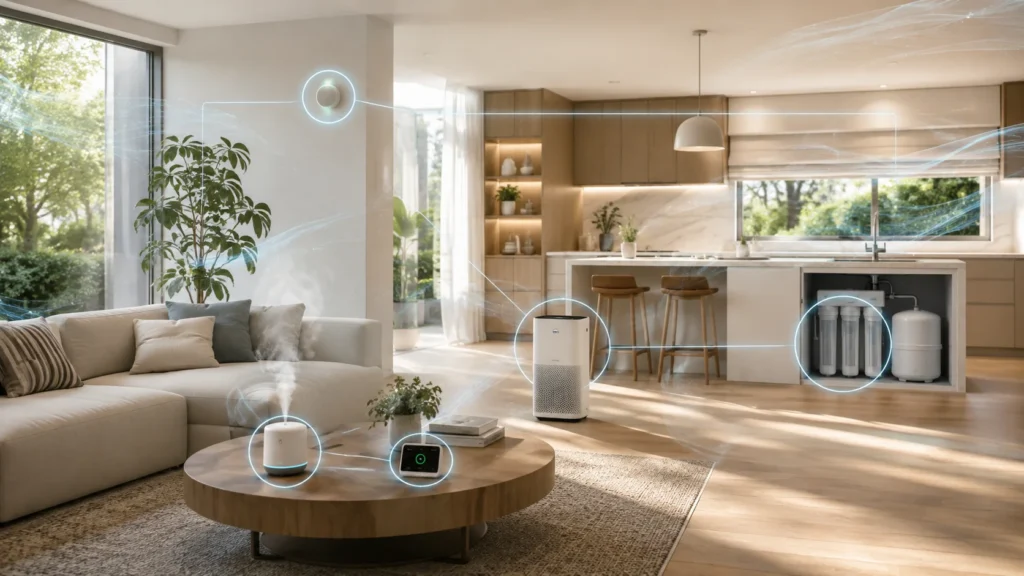
Modern living room and kitchen with smart home air quality devices including an air purifier, humidifier, and water filtration system, connected with visualized blue connectivity lines.

IFA 2026: Air Purification Is Becoming Part of the Healthy-Home Platform

Pre-IFA Industry Perspective | September 4, 2026 This article is based on official announcements and regulatory information available ahead of IFA 2026, which takes place ...
الأخبار
A modern office room with a gray wall-mounted air purifier, large wooden desk, office chairs, indoor plants, and glass windows offering a city view.

Luftreiniger gegen Staub: HEPA-Luftreinigung für Büro, Gewerbe und Industrie

Kurz gesagt: Ein Luftreiniger entfernt Staub aus der Luft – nicht vom Schreibtisch. Er reduziert die Konzentration schwebender Partikel und damit auch die Menge an ...
Air purifier, Filter
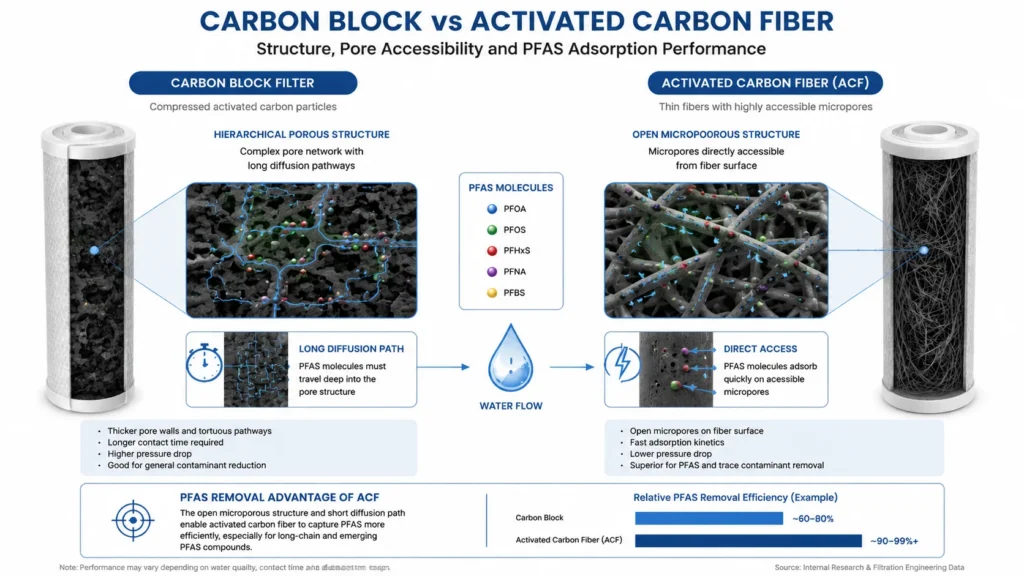
Comparison infographic showcasing the differences between carbon block filter and activated carbon fiber. Detailed diagrams illustrate the hierarchical porous structure of the carbon block with long diffusion paths and the open microporous structure of the activated carbon fiber with direct access for PFAS adsorption.

Carbon Block vs. Activated Carbon Fiber (ACF): Matching Media to Target Contaminants

Two carbon media. Same adsorption chemistry. Very different behaviour in a point-of-use cartridge. If you are specifying a water purifier platform for a PFAS-aware market, ...
الأخبار
NSF base listing and ANF private-label certification pathway for OEM water filters

What Is an NSF Master Listing? A Guide to Base Listings, ANF Certification and OEM Water Filters

For a brand preparing to launch an OEM water purifier, one of the most common supplier claims is: “We already have an NSF master listing, ...
News, Water Purifiers
Healthy-home brand team reviewing PFAS water filter certification, test data and product engineering

Entering the Water Category Is Easy. Building a Credible PFAS Claim Is Much Harder

For air purification, appliance and healthy-home brands, entering the water category can look surprisingly easy. A company can select an existing undersink system, customize its ...
الأخبار
Contaminant Engineering•3 min read

PFAS Water Filtration Technologies Explained: Carbon, Resin & RO

Key Takeaway:

PFAS reduction depends on the specific compounds present, treatment media, contact time, water chemistry, and system design. Activated carbon, ion exchange, and Reverse Osmosis address PFAS through different mechanisms.

PFAS are a large family of persistent fluorinated compounds that can occur in drinking-water supplies. Their treatment behavior varies significantly by molecular structure, chain length, functional group, concentration, and the chemistry of the source water.

Granular Activated Carbon (GAC) removes PFAS primarily through adsorption. It is generally more effective for many longer-chain PFAS, while shorter-chain compounds tend to break through more quickly. Carbon performance depends on media properties, Empty Bed Contact Time (EBCT), competing organic matter, loading, and replacement frequency.

Ion-exchange resins use charged functional sites to capture many PFAS compounds. Properly selected anion-exchange media can provide high capacity and may perform better than conventional activated carbon for some shorter-chain PFAS, although performance still depends on water chemistry and competing ions.

Reverse Osmosis (RO) uses membrane separation rather than adsorption. Properly designed RO systems can provide broad reduction across many PFAS compounds as well as dissolved salts and other contaminants. Unlike carbon or resin, however, RO also produces a concentrate stream that must be managed.

No single technology should be selected from a PFAS label alone. System design should consider which PFAS compounds are present, their concentrations, required reduction targets, flow rate, media life, and the applicable third-party certification or validation requirements.

HisoAir Water Technical Series
Product Discovery•3 min read

How to Choose an Under-Sink Water Purifier for Modern Kitchens

Key Takeaway:

Match the treatment technology to your water quality first, then evaluate cabinet space, faucet configuration, flow rate, drain and power requirements, and filter replacement needs.

Choosing an under-sink water purifier starts with water chemistry. Carbon filtration is well suited to chlorine, taste, odor, and many organic contaminants, while Reverse Osmosis is more appropriate when dissolved salts, fluoride, nitrates, or broader dissolved contaminants need to be reduced.

For compact kitchens, tankless RO systems eliminate the conventional storage tank and can significantly reduce the space required under the sink. However, membrane capacity stated in GPD does not directly equal faucet flow. When comparing systems, check the actual dispensing flow rate, inlet-pressure requirement, recovery ratio, and whether a booster pump is required.

Installation architecture also matters. Many RO systems require a drain connection, electrical power, and either a dedicated drinking-water faucet or a compatible multi-function faucet. High-flow carbon systems can often connect directly to the existing cold-water line with a simpler installation, but pressure drop and available faucet flow should still be verified.

RO also removes much of the naturally occurring dissolved mineral content. Where taste or mineral balance is a priority, a post-RO remineralization stage can be added. Filter life should be evaluated by both rated capacity and local water quality rather than replacement time alone.

The right system is therefore not simply the smallest or highest-GPD model. It is the configuration that matches the target contaminants, available cabinet space, desired faucet setup, peak dispensing demand, and maintenance expectations.

HisoAir Water Technical Series
Water Quality•2 min read

What Does TDS Mean in Drinking Water? Measurement vs Contaminant Reality

Key Takeaway:

A TDS meter estimates the overall concentration of dissolved ionic substances from electrical conductivity. It cannot identify specific contaminants or determine whether water is chemically safe.

Total Dissolved Solids (TDS) refers to the combined concentration of dissolved substances in water. Most handheld TDS meters do not measure TDS directly. Instead, they measure electrical conductivity (EC) and convert that reading into an estimated parts-per-million (ppm) value.

This means a TDS reading can indicate how much dissolved ionic material is present, but not what that material actually is. Calcium, magnesium, sodium, nitrates, and other dissolved ions can all contribute to conductivity, yet a simple TDS meter cannot distinguish between them.

TDS meters are also not suitable for detecting trace contaminants such as PFAS, many VOCs, pesticides, pharmaceuticals, or disinfection byproducts. These substances may be present at concentrations far below the level needed to noticeably change electrical conductivity.

A low TDS reading therefore does not guarantee safe drinking water, and a higher TDS reading does not automatically indicate contamination. Water-treatment decisions should be based on laboratory testing for specific contaminants of concern rather than TDS alone.

HisoAir Water Technical Series
Technology Selection•2 min read

RO vs UF Water Filtration: Understanding Pore Sizes & Dissolved Minerals

Key Takeaway:

Ultrafiltration can reduce bacteria, turbidity, and suspended particles while retaining most naturally occurring dissolved minerals. Reverse Osmosis provides much broader reduction of dissolved salts and smaller contaminants.

Ultrafiltration (UF) typically uses hollow-fiber membranes with pore sizes in the approximate 0.01–0.1 micron range. These membranes physically retain turbidity, suspended solids, colloids, and many microorganisms while allowing dissolved minerals and salts to remain in the water.

Reverse Osmosis (RO) operates at a much finer separation level. Unlike UF, RO can substantially reduce dissolved ions such as sodium, calcium, fluoride, nitrates, and other contributors to total dissolved solids (TDS). This makes RO more suitable when dissolved-salt reduction is a primary treatment objective.

UF generally requires less system pressure and produces little or no continuous concentrate stream in many point-of-use configurations. RO typically requires greater pressure and produces a reject-water stream, but delivers broader contaminant reduction.

For water with acceptable TDS and mineral content, UF can be a simpler mineral-retaining treatment option. Where dissolved salts, fluoride, nitrates, or broader dissolved contaminants are a concern, RO is generally the more appropriate technology.

HisoAir Water Technical Series
Technology Selection•4 min read

Carbon Block vs Reverse Osmosis: Which Fits Your Need?

Key Takeaway:

Choose RO for dissolved inorganic salts and heavy metals; choose Carbon Block for chemical taste/odor, no wastewater, and high line-pressure flow.

Reverse Osmosis (RO) and Carbon Block filtration represent two fundamentally different treatment methods: membrane separation and adsorption. Understanding these differences helps determine which technology is better suited to a specific water-quality requirement.

Reverse Osmosis uses a semi-permeable membrane with pore sizes of approximately 0.0001 microns. It can significantly reduce dissolved inorganic contaminants such as TDS, fluoride, nitrates, and certain heavy metals. Because water must be forced through the membrane, RO systems require sufficient pressure or a booster pump and generate a concentrated wastewater stream.

Carbon Block filtration relies primarily on adsorption through compressed activated carbon, commonly with nominal pore sizes around 0.5–5 microns. It is highly effective for chlorine, chloramines, VOCs, taste, and odor, while allowing substantially higher direct-flow rates without producing wastewater.

From an operating perspective, Carbon Block systems are generally simpler, require less energy, and avoid the water loss associated with RO. RO involves higher system complexity and operating cost, but provides substantially broader reduction of dissolved contaminants that Carbon Block alone cannot address.

HisoAir Water Technical Series

طلب عرض أسعار