يفتح في علامة تبويب جديدة
حلول مبتكرة لجودة الهواء
هيسو إير
استفسر الآن

هل تقتل أجهزة تنقية الهواء الفيروسات؟ حقيقة فيروس كورونا المستجد (COVID)

Related Products

يُقال إن أجهزة تنقية الهواء تلتقط الفيروسات وتقتلها، مثل فيروس كورونا المستجد (COVID-19). هل هذه حقيقة؟ في حين أن الإجابة المختصرة هي بشكل مدهش نعم ، سنزيد هذه الإجابة بالأساس العلمي التالي.
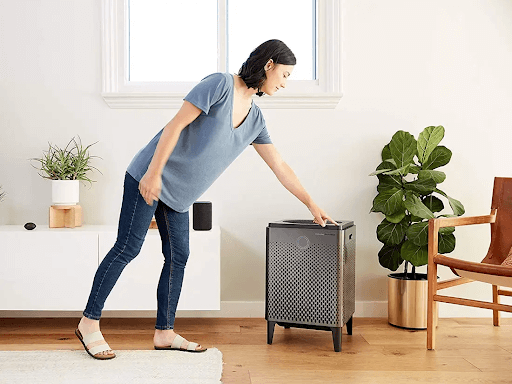
امرأة تشغل جهاز تنقية الهواء في غرفة

هناك أمران يجب أن تعرفهما أولاً:

فيروس كورونا المستجد (كوفيد-19) هو قريبة من حجم 0.125 ميكرون (125 نانومتر). قد لا يمكن تصفية الفيروسات بهذا الحجم الصغير من الهواء بسهولة من خلال مرشح قياسي.

وبالتالي، إذا كنت ترغب في الحفاظ على بيئة داخلية أكثر أمانًا وخالية من الفيروسات العالقة، فاستخدم علامة تجارية موثوق بها لتنقية الهواء بالتقنية المناسبة.

أجهزة تنقية الهواء التي تتميز ب فلاتر HEPA يمكن أن ترشح الملوثات حتى 0.3 ميكرون .

وعلاوة على ذلك، فإن مصباح LED عالي الأداء بالأشعة فوق البنفسجية - C، كما في هيسو إير يعقم ويقضي على الكائنات الحية والفيروسات. في الأساس، تعمل الأشعة فوق البنفسجية على فتح الغلاف البروتيني للفيروس، مما يؤدي إلى تعطيله بشكل فعال.

من هنا، دعونا نوضح أكثر.

كيف تنتقل الأمراض المنقولة جواً؟

في أكتوبر/تشرين الأول 2020، أصدرت مراكز مكافحة الأمراض والوقاية منها (CDC) موقفها من كيف ينتقل فيروس كورونا المستجد (كوفيد-19) .

يقول التقرير: "يمكن أن ينتقل الفيروس في جزيئات وقطرات صغيرة تبقى في الهواء لبضع دقائق وحتى ساعات".

وهذا يعني أن مركز مكافحة الأمراض والوقاية منها يوافق على انتقال الفيروس عن طريق الهواء من خلال الهباء الجوي أو الرذاذ العالق.

أضف إلى ذلك أن العديد من الناس اليوم يميلون إلى العمل من المنزل أو البقاء في المنزل بسبب تزايد عدد حالات كوفيد-19 وحالات الإغلاق وحظر التجول. قد يؤدي ذلك إلى سوء التهوية وجودة الهواء مع تكدس المزيد من الأشخاص في المنازل.

وبالتالي، تزداد احتمالات انتشار الأمراض المعدية داخل المنزل بسبب ضعف حركة الهواء.

3 طرق لانتشار فيروس كورونا المستجد (كوفيد-19) من خلال الانتقال عبر الهواء

هناك 3 طرق يمكن أن يحدث بموجبها انتقال فيروس كورونا المستجد (كوفيد-19) عن طريق الجو وفقًا لمركز السيطرة على الأمراض والوقاية منها

  1. المناطق المغلقة - عندما يتعرض الشخص في مكان مغلق مباشرة بعد مغادرة الشخص المعدي لذلك المكان.
  2. التعرض الطويل للجسيمات الضارة - التعرض للقطرات العالقة في الفضاء.
  3. سوء التهوية أو عدم كفاية وحدات مناولة الهواء خلق جسيمات وقطرات تنفسية عالقة في الجهاز التنفسي.

وهذا يقودنا إلى الاعتقاد بأن أنظمة تنقية الهواء مثل أجهزة تنقية الهواء وآلات التطهير ومنظفات الهواء تلعب دوراً حيوياً في تنظيف ما نتنفسه.


كيف تعمل أجهزة تنقية الهواء؟
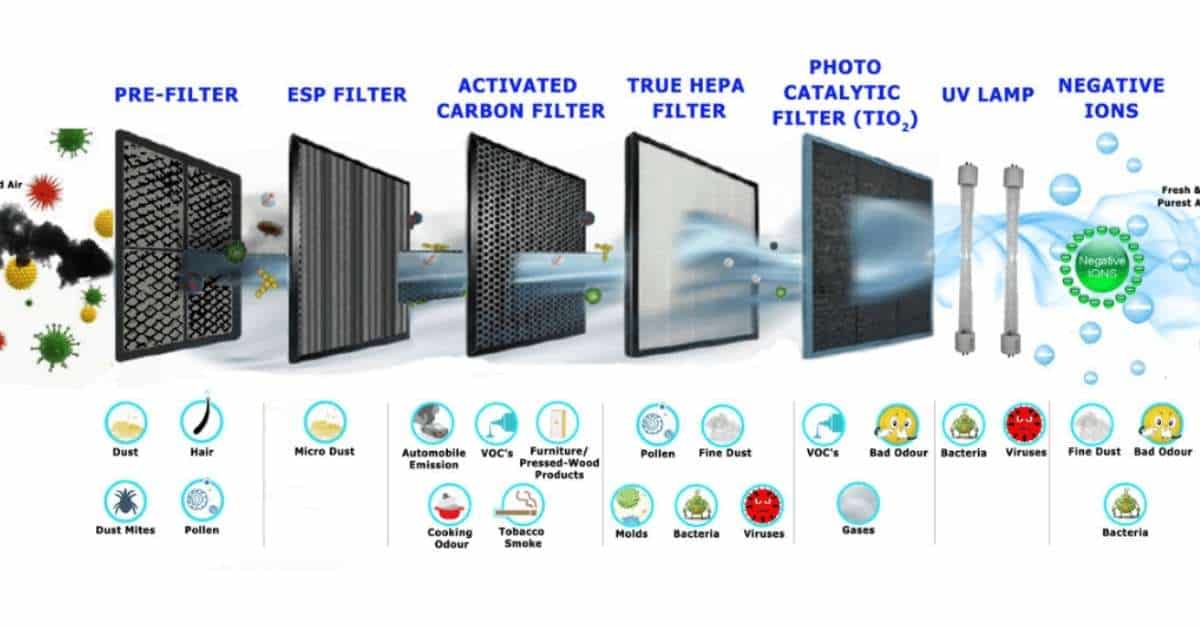
كيف تعمل أجهزة تنقية الهواء

أجهزة تنقية الهواء مزوّدة بالعديد من تقنيات الفلاتر لتعقيم الهواء وتنظيفه من الملوثات والجسيمات العالقة والمواد المسببة للحساسية والفيروسات.

وهذا يعني أنه لا يزيل الجسيمات عن طريق ترشيحها فحسب، بل يقوم أيضًا بتعقيمها وقتل الفيروسات.

قد تحتوي أجهزة تنقية الهواء على فلاتر HEPA أو الكربون المنشط أو المؤينات أو الأشعة فوق البنفسجية أو مزيج من كل ذلك. يحدد مزيج الفلاتر نوع الجسيمات التي يتم التخلص منها بالضبط من الهواء. فبعض أنواع أجهزة تنقية الهواء تحبس ملوثات الهواء فقط، في حين أن البعض الآخر مصمم بفلاتر تقتل البكتيريا والفيروسات والروائح الكريهة وتحيّدها.

فلاتر HEPA وفيروس كورونا المستجد (HEPA)

حسناً، الكثير من الناس يشعرون بالارتباك والتضليل فيما إذا كانت فلاتر HEPA قادرة على التقاط الفيروسات صغيرة الحجم مثل فيروس كورونا.

يمكن لمرشحات HEPA إزالة 99.97% من الجسيمات في الهواء حتى حجم 0.3 ميكرون. يتراوح قطر COVID-19 بين 0.06 ميكرون إلى 0.14 ميكرون.

يحدث هذا من خلال الانتشار. وفقًا لدراسة علمية أجرتها وكالة ناسا ، يمكن لمرشحات HEPA أن تلتقط فعليًا 100% من الجسيمات.

اتضح أن فيروس كورونا صغير جدًا وخفيف لدرجة أنه يرتد عند اصطدامه بجزيئات الغاز.
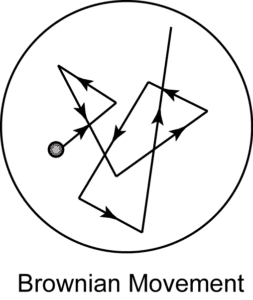
 

كيف يمكن لفيروس كورونا

كيف "يطير" فيروس كورونا في نمط متعرج عشوائي متعرج من خلال الحركة البراونية

وبسبب هذه الحركة المتعرجة، عندما ينتقل الفيروس عبر فلتر HEPA، فإنه يعلق على أليافه.

وهذا يعني أنه يمكن احتجاز الجسيمات في فلاتر HEPA، حتى بحجم يصل إلى 0.1 ميكرون، بما في ذلك فيروس COVID-19. وبمجرد أن يتم احتجازها، يحتجز فلتر HEPA الفيروسات بحيث لا يمكن إعادتها في الهواء.

ولكن هل يتم قتل الفيروسات؟ قد يدوم فيروس كورونا على فلتر HEPA تقريبًا من 48 إلى 72 ساعة قبل أن تموت أو تتعطل.

كيف تعمل الأشعة فوق البنفسجية في قتل الفيروسات مثل كوفيد-19؟

نوع آخر من ميزات تنظيف الهواء هو دمج الأشعة فوق البنفسجية. تعمل الأشعة فوق البنفسجية على قتل البكتيريا والميكروبات الحية والقضاء عليها. ومع ذلك، فهي تعتمد أيضًا على:

  • كيفية استخدام الأشعة فوق البنفسجية و,
  • مدة تعرض الفيروس له.

إذا تم ترتيب مصباح الأشعة فوق البنفسجية على شكل مكون التعقيم الذي يسلط الضوء من خلال البكتيريا المحاصرة، وقد ثبتت فعالية ذلك. ولكن إذا تم تمرير هواء السحب فقط من خلال ضوء الأشعة فوق البنفسجية، فقد لا يكون فعالاً في قتل الفيروس.

أجهزة تنقية الهواء المطهرة للهواء من HisoAir مدمجة بالفعل مع 4 مراحل من التنظيف، والتي تشمل فلاتر HEPA، ومرشحات النايلون المسبقة، والكربون المنشط ومصابيح الأشعة فوق البنفسجية للقضاء على الملوثات بفعالية.

هل تقتل المؤينات الفيروسات؟
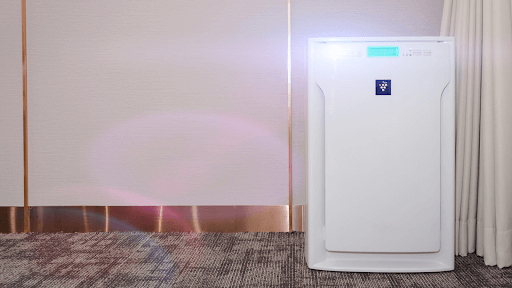
جهاز تنقية الهواء
جهاز تنقية الهواء

تحتوي بعض أجهزة تنقية الهواء على مؤينات كجزء من تقنية تنظيف الهواء. تعمل المؤينات عن طريق حث الشحنات الكهربائية على الجسيمات الموجودة في الهواء.

ثم يتم سحب هذه الجسيمات نحو الأجسام والأسطح ذات الشحنة المعاكسة. ويمكن أن يكون ذلك الأثاث أو السجاد أو الأرضية أو السقف. وهناك أيضاً أجهزة تنقية الهواء التي تبعث أيونات سالبة لجذب الأيونات ذات الشحنات الموجبة. يعمل ذلك على تحييد الملوثات الضارة. ومع ذلك، فإن هذا الحل يحفز انبعاثات الأوزون وهو ضار بالبيئة.

كما ترى، قد تكون الفيروسات هشة، لكن الأمر لا يتطلب شحنات سالبة فقط لتدميرها. وبالتالي، لا يمكن استخدام المؤينات لقتل كوفيد-19 بمفردها. ولكن هناك مشكلة.

نظراً لأن الفيروسات قد تتشبث بالملوثات الموجودة في الهواء، فإن المؤين يمكن أن يمنع الفيروس من الوصول إليك.

على سبيل المثال, هذه الدراسة يخبرنا كيف يستخدم الباحثون مؤينًا لوقاية خنازير غينيا من الإصابة بفيروس الإنفلونزا.

مرشحات التحفيز الضوئي والكربون والكاتشين

هناك مرشحات أخرى تستخدم في ماركات أجهزة تنقية الهواء مثل مرشحات التحفيز الضوئي أو مرشحات الكربون أو مرشحات الكاتشين.

  • أجهزة تنقية الهواء مع مرشحات التحفيز الضوئي أن يحبس الفيروسات والبكتيريا ويقتلها. وعلاوة على ذلك، يمكنها تكسيرها من خلال أكسدة الأيونات.
  • مرشحات الكربون أو مرشحات الكربون المنشط في أجهزة تنقية الهواء في حبس المركبات العضوية المتطايرة والأبخرة والضباب الدخاني والروائح الكريهة.
  • فلاتر كاتشين تحتوي على ميزات مضادة للبكتيريا والفطريات، ولكنها نادراً ما توجد في العديد من العلامات التجارية لأجهزة تنقية الهواء.

 هل هذه الفلاتر والمعقمات آمنة للاستخدام؟

ليس بالضبط. حسنًا، على الأقل إذا كنت لا تتعرض مباشرة للأوزون، فلا بأس بذلك. لا بأس باستخدام أجهزة تنقية الهواء بفلتر HEPA مع الأشعة فوق البنفسجية والمؤينات.

ومع ذلك، فإن استنشاق الأوزون قصة مختلفة. فقد يسبب السعال وتهيج الحلق والحساسية. كما يمكن أن يتسبب في تلف الرئة وتفاقم مشاكل التنفس والربو. وهذا يعني أنه إذا كنت تعاني من مشاكل في الرئة، فلا يجب عليك استخدام أجهزة تنقية الهواء التي تحتوي على الأوزون أو المؤينات.

كما وجدت الأبحاث أن مولدات الأوزون ليست فعالة في منع العفن أو تثبيط البكتيريا. لذلك فهي غير آمنة للاستخدام في غرف المستشفيات ووحدات الرعاية الصحية الأخرى.

الخاتمة

نأمل أن يكون هذا المقال قد ساعدك في فهم كيف يمكن لأنواع معينة من أجهزة تنقية الهواء أن تقتل الفيروسات وتمنع انتشار كوفيد-19 من خلال الانتقال عبر الهواء.

كما أشرنا، يمكن لأجهزة تنقية الهواء المزوّدة بمرشحات HEPA التقاط أصغر مجموعة من الفيروسات، مثل فيروس كورونا. قد تتشبث هذه الفيروسات على مرشحات HEPA لمدة 48 إلى 78 ساعة قبل أن تموت.

ولكن أكثر أنظمة تنقية الهواء فعالية هي تلك المزودة بالأشعة فوق البنفسجية، والتي تعمل على تدمير هذه الملوثات الضارة. بالإضافة إلى ذلك، فإن الأشعة فوق البنفسجية غير ضارة، على عكس مولدات الأوزون وأجهزة تنقية الهواء المؤينة.

إذا كنت ترغب في شراء أجهزة تنقية الهواء H13 HEPA H13 HEPA بالجملة مع ضوء الأشعة فوق البنفسجية ، يمكن لشركة HisoAir مساعدتك. نحن شركة تصنيع المعدات الأصلية / تصنيع حسب الطلب بخبرة 15 عامًا ومصنع حاصل على شهادة ISO.


اتصل بنا للحصول على عرض أسعار

شارك:
Alwen Lee of HisoAir
Alwen Lee, an air purification expert with over 10 years of experience, is a devoted father of two and a passionate traveler, having explored more than 30 countries. With a love for public speaking and swimming, he has dedicated his life to the indoor air quality industry. His mission is to ensure that people around the world enjoy the freedom to breathe clean air and lead happy, healthy lives.

أرسل لنا رسالة

Related Products

المزيد للقراءة

Modern living room with a family enjoying a healthy indoor environment monitored by smart devices, natural lighting, and greenery.

After IFA 2026: The Healthy Home Is Moving Beyond Smart Devices

In our previous IFA 2026 column, Air Purification Is Becoming Part of the Healthy-Home Platform, we argued that the next generation of indoor-health products would ...
الأخبار
Modern living room and kitchen with smart home air quality devices including an air purifier, humidifier, and water filtration system, connected with visualized blue connectivity lines.

IFA 2026: Air Purification Is Becoming Part of the Healthy-Home Platform

Pre-IFA Industry Perspective | September 4, 2026 This article is based on official announcements and regulatory information available ahead of IFA 2026, which takes place ...
الأخبار
A modern office room with a gray wall-mounted air purifier, large wooden desk, office chairs, indoor plants, and glass windows offering a city view.

Luftreiniger gegen Staub: HEPA-Luftreinigung für Büro, Gewerbe und Industrie

Kurz gesagt: Ein Luftreiniger entfernt Staub aus der Luft – nicht vom Schreibtisch. Er reduziert die Konzentration schwebender Partikel und damit auch die Menge an ...
Air purifier, Filter
Comparison infographic showcasing the differences between carbon block filter and activated carbon fiber. Detailed diagrams illustrate the hierarchical porous structure of the carbon block with long diffusion paths and the open microporous structure of the activated carbon fiber with direct access for PFAS adsorption.

Carbon Block vs. Activated Carbon Fiber (ACF): Matching Media to Target Contaminants

Two carbon media. Same adsorption chemistry. Very different behaviour in a point-of-use cartridge. If you are specifying a water purifier platform for a PFAS-aware market, ...
الأخبار
NSF base listing and ANF private-label certification pathway for OEM water filters

What Is an NSF Master Listing? A Guide to Base Listings, ANF Certification and OEM Water Filters

For a brand preparing to launch an OEM water purifier, one of the most common supplier claims is: “We already have an NSF master listing, ...
News, Water Purifiers
Healthy-home brand team reviewing PFAS water filter certification, test data and product engineering

Entering the Water Category Is Easy. Building a Credible PFAS Claim Is Much Harder

For air purification, appliance and healthy-home brands, entering the water category can look surprisingly easy. A company can select an existing undersink system, customize its ...
الأخبار
Contaminant Engineering•3 min read

PFAS Water Filtration Technologies Explained: Carbon, Resin & RO

Key Takeaway:

PFAS reduction depends on the specific compounds present, treatment media, contact time, water chemistry, and system design. Activated carbon, ion exchange, and Reverse Osmosis address PFAS through different mechanisms.

PFAS are a large family of persistent fluorinated compounds that can occur in drinking-water supplies. Their treatment behavior varies significantly by molecular structure, chain length, functional group, concentration, and the chemistry of the source water.

Granular Activated Carbon (GAC) removes PFAS primarily through adsorption. It is generally more effective for many longer-chain PFAS, while shorter-chain compounds tend to break through more quickly. Carbon performance depends on media properties, Empty Bed Contact Time (EBCT), competing organic matter, loading, and replacement frequency.

Ion-exchange resins use charged functional sites to capture many PFAS compounds. Properly selected anion-exchange media can provide high capacity and may perform better than conventional activated carbon for some shorter-chain PFAS, although performance still depends on water chemistry and competing ions.

Reverse Osmosis (RO) uses membrane separation rather than adsorption. Properly designed RO systems can provide broad reduction across many PFAS compounds as well as dissolved salts and other contaminants. Unlike carbon or resin, however, RO also produces a concentrate stream that must be managed.

No single technology should be selected from a PFAS label alone. System design should consider which PFAS compounds are present, their concentrations, required reduction targets, flow rate, media life, and the applicable third-party certification or validation requirements.

HisoAir Water Technical Series
Product Discovery•3 min read

How to Choose an Under-Sink Water Purifier for Modern Kitchens

Key Takeaway:

Match the treatment technology to your water quality first, then evaluate cabinet space, faucet configuration, flow rate, drain and power requirements, and filter replacement needs.

Choosing an under-sink water purifier starts with water chemistry. Carbon filtration is well suited to chlorine, taste, odor, and many organic contaminants, while Reverse Osmosis is more appropriate when dissolved salts, fluoride, nitrates, or broader dissolved contaminants need to be reduced.

For compact kitchens, tankless RO systems eliminate the conventional storage tank and can significantly reduce the space required under the sink. However, membrane capacity stated in GPD does not directly equal faucet flow. When comparing systems, check the actual dispensing flow rate, inlet-pressure requirement, recovery ratio, and whether a booster pump is required.

Installation architecture also matters. Many RO systems require a drain connection, electrical power, and either a dedicated drinking-water faucet or a compatible multi-function faucet. High-flow carbon systems can often connect directly to the existing cold-water line with a simpler installation, but pressure drop and available faucet flow should still be verified.

RO also removes much of the naturally occurring dissolved mineral content. Where taste or mineral balance is a priority, a post-RO remineralization stage can be added. Filter life should be evaluated by both rated capacity and local water quality rather than replacement time alone.

The right system is therefore not simply the smallest or highest-GPD model. It is the configuration that matches the target contaminants, available cabinet space, desired faucet setup, peak dispensing demand, and maintenance expectations.

HisoAir Water Technical Series
Water Quality•2 min read

What Does TDS Mean in Drinking Water? Measurement vs Contaminant Reality

Key Takeaway:

A TDS meter estimates the overall concentration of dissolved ionic substances from electrical conductivity. It cannot identify specific contaminants or determine whether water is chemically safe.

Total Dissolved Solids (TDS) refers to the combined concentration of dissolved substances in water. Most handheld TDS meters do not measure TDS directly. Instead, they measure electrical conductivity (EC) and convert that reading into an estimated parts-per-million (ppm) value.

This means a TDS reading can indicate how much dissolved ionic material is present, but not what that material actually is. Calcium, magnesium, sodium, nitrates, and other dissolved ions can all contribute to conductivity, yet a simple TDS meter cannot distinguish between them.

TDS meters are also not suitable for detecting trace contaminants such as PFAS, many VOCs, pesticides, pharmaceuticals, or disinfection byproducts. These substances may be present at concentrations far below the level needed to noticeably change electrical conductivity.

A low TDS reading therefore does not guarantee safe drinking water, and a higher TDS reading does not automatically indicate contamination. Water-treatment decisions should be based on laboratory testing for specific contaminants of concern rather than TDS alone.

HisoAir Water Technical Series
Technology Selection•2 min read

RO vs UF Water Filtration: Understanding Pore Sizes & Dissolved Minerals

Key Takeaway:

Ultrafiltration can reduce bacteria, turbidity, and suspended particles while retaining most naturally occurring dissolved minerals. Reverse Osmosis provides much broader reduction of dissolved salts and smaller contaminants.

Ultrafiltration (UF) typically uses hollow-fiber membranes with pore sizes in the approximate 0.01–0.1 micron range. These membranes physically retain turbidity, suspended solids, colloids, and many microorganisms while allowing dissolved minerals and salts to remain in the water.

Reverse Osmosis (RO) operates at a much finer separation level. Unlike UF, RO can substantially reduce dissolved ions such as sodium, calcium, fluoride, nitrates, and other contributors to total dissolved solids (TDS). This makes RO more suitable when dissolved-salt reduction is a primary treatment objective.

UF generally requires less system pressure and produces little or no continuous concentrate stream in many point-of-use configurations. RO typically requires greater pressure and produces a reject-water stream, but delivers broader contaminant reduction.

For water with acceptable TDS and mineral content, UF can be a simpler mineral-retaining treatment option. Where dissolved salts, fluoride, nitrates, or broader dissolved contaminants are a concern, RO is generally the more appropriate technology.

HisoAir Water Technical Series
Technology Selection•4 min read

Carbon Block vs Reverse Osmosis: Which Fits Your Need?

Key Takeaway:

Choose RO for dissolved inorganic salts and heavy metals; choose Carbon Block for chemical taste/odor, no wastewater, and high line-pressure flow.

Reverse Osmosis (RO) and Carbon Block filtration represent two fundamentally different treatment methods: membrane separation and adsorption. Understanding these differences helps determine which technology is better suited to a specific water-quality requirement.

Reverse Osmosis uses a semi-permeable membrane with pore sizes of approximately 0.0001 microns. It can significantly reduce dissolved inorganic contaminants such as TDS, fluoride, nitrates, and certain heavy metals. Because water must be forced through the membrane, RO systems require sufficient pressure or a booster pump and generate a concentrated wastewater stream.

Carbon Block filtration relies primarily on adsorption through compressed activated carbon, commonly with nominal pore sizes around 0.5–5 microns. It is highly effective for chlorine, chloramines, VOCs, taste, and odor, while allowing substantially higher direct-flow rates without producing wastewater.

From an operating perspective, Carbon Block systems are generally simpler, require less energy, and avoid the water loss associated with RO. RO involves higher system complexity and operating cost, but provides substantially broader reduction of dissolved contaminants that Carbon Block alone cannot address.

HisoAir Water Technical Series

طلب عرض أسعار