新しいタブで開きます
革新的な空気品質ソリューション

空気清浄機はウイルスを殺すのか?COVIDの真実

Related Products

空気清浄機はCOVID-19のようなウイルスを捕獲して殺すと言われている。これは事実なのだろうか?短い答えは意外にも イエス しかし、その答えには次のような科学的根拠がある。
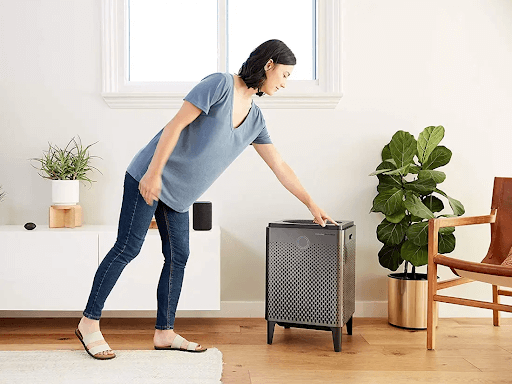
空気清浄機をつける女性
空気清浄機をつける女性

まず知っておいてほしいことがいくつかある:

COVID-19ウイルスは 0.125ミクロンに近い (125ナノメートル)。これほど小さなウイルスは、標準的なフィルターでは空気中から容易にろ過できないかもしれない。

したがって、浮遊ウイルスのない、より安全な室内環境を保ちたいのであれば、以下のものを使用することである。 信頼の空気清浄機ブランド 適切な技術で。

空気清浄機 HEPAフィルター 汚染物質をろ過できる 0.3ミクロンまで .

さらに、高性能のUV-C LEDランプは、次のようなものである。 ヒソエア 生物とウイルスを殺菌・除去する。基本的に、紫外線はウイルスのタンパク質コーティングを解き、効果的に不活性化します。

ここから詳しく説明しよう。

空気感染する病気はどのように伝染するのか?

2020年10月、米疾病対策センター(CDC)は、次のようなスタンスを発表した。 Covid-19ウイルスの感染経路 .

ウイルスは空気中に数分から数時間とどまる粒子や小さな飛沫で感染する可能性がある」と書かれている。

つまりCDCは、浮遊エアロゾルや飛沫による空気感染に同意しているのである。

さらに、COVID事件や戸締まり、外出禁止令の増加により、多くの人々が自宅で仕事をしたり、室内に閉じこもったりする傾向にある。そのため、より多くの人々が家の中で窮屈になり、換気や空気の質が悪くなる可能性がある。

そのため、空気の動きが悪く、室内で伝染病が蔓延する確率が高くなる。

Covid-19が空気感染で広がる3つの方法

がある。 COVID-19が空気感染する3つの可能性 CDCによれば

  1. 密閉されたエリア - 密閉された空間で、感染者がその場を離れた直後に曝露された場合。
  2. 有害な粒子に長時間さらされる - 空間に浮遊する飛沫にさらされる。
  3. 換気不良または不十分なエアハンドリングユニット 呼吸器系の浮遊粒子や飛沫を発生させる。

このことから、空気清浄機、殺菌機、空気清浄機などの空気浄化システムは、私たちが吸い込むものをきれいにするために重要な役割を果たしていると考えられる。


空気清浄機の仕組み
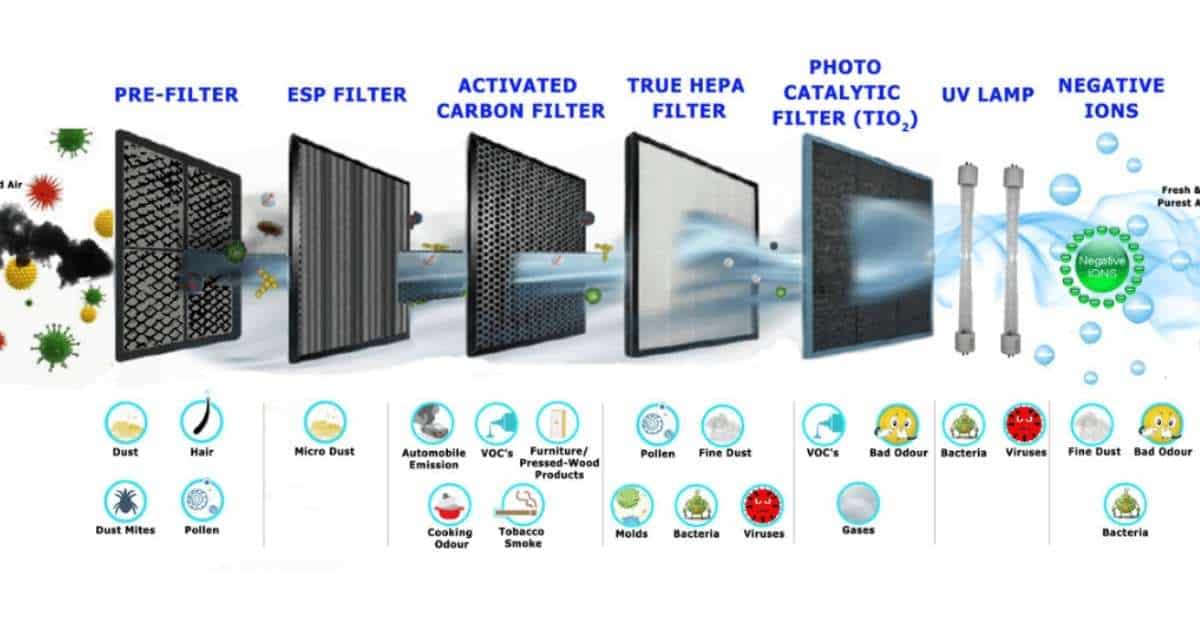
空気清浄機の仕組み
空気清浄機の仕組み

空気清浄機には、汚染物質、浮遊粒子、アレルゲン、ウイルスから空気を除菌・浄化するためのフィルター技術がいくつか搭載されている。

つまり、粒子をろ過して除去するだけでなく、除菌やウイルス除去も行うのだ。

空気清浄機には、HEPAフィルター、活性炭、イオナイザー、UVライト、またはそれらの組み合わせがある。フィルターの組み合わせによって、空気中からどのような種類の粒子を正確に除去できるかが決まる。空気清浄機には、空気汚染物質を捕捉するだけのタイプもあれば、バクテリア、ウイルス、悪臭を殺菌・中和するフィルターを備えたタイプもある。

HEPAフィルターとコロナウイルス

HEPAフィルターがコロナウイルスのような小さな粒子サイズのウイルスを捕獲できるかどうか、多くの人は本当に混乱し、誤解している。

HEPAフィルターは、空気中の粒子を0.3ミクロンの大きさまで99.97%除去することができます。COVID-19は直径0.06ミクロンから0.14ミクロンです。

これは拡散によって起こる。 NASAの科学調査によると HEPAフィルターは事実上100%の微粒子を捕捉することができる。

コロナウイルスは非常に小さく軽いため、気体分子にぶつかると跳ね返されることが判明した。

 

コロナウイルスの感染経路
コロナウイルスの感染経路

コロナウイルスがブラウン運動の中をジグザグのランダムパターンで "飛ぶ "仕組み

このジグザグ運動により、ウイルスはHEPAフィルターを通過するたびに、その繊維に引っかかる。

つまり、COVID-19ウイルスを含む0.1ミクロンのサイズまで、粒子をHEPAフィルターに捕捉することができる。一旦捕捉されると、HEPAフィルターはウイルスを捕らえ、空気中に戻すことができない。

しかし、ウイルスは死滅するのだろうか?HEPAフィルター上のコロナウイルスは事実上死滅する可能性がある。 48時間から72時間 死ぬか不活性化する前に。

COVID-19のようなウイルスを殺すのに紫外線はどのように作用するのか?

空気清浄機能のもう一つのタイプは、UVライトの統合である。紫外線はバクテリアや生きた微生物を殺し、除去するのに有害である。しかし、それはまた依存する:

  • ウルトラヴァイオレット・ライトがどのように使われるのか、
  • ウイルスにさらされる時間

UVランプが 殺菌成分 これは、捕捉されたバクテリアに光を照射するもので、効果的であることが証明されている。しかし、吸気を紫外線に通すだけでは、ウイルスを殺す効果はないかもしれない。

空気殺菌清浄機 HEPAフィルター、ナイロンプレフィルター、活性炭、UVランプを含む4段階のクリーニングが統合されており、汚染物質を効果的に除去します。

イオナイザーはウイルスを殺すか?
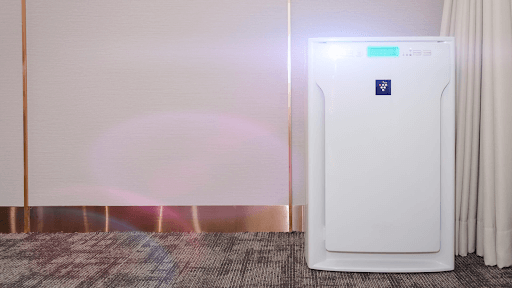
空気清浄機
空気清浄機

空気清浄機の中には、空気清浄技術の一部としてイオナイザーを搭載しているものがある。イオナイザーは、空気中の粒子に電荷を誘導することで機能する。

そしてこれらの粒子は、反対の電荷を持つ物体や表面に引き寄せられる。これは家具やカーペット、床や天井などである。また、プラス電荷を持つイオンを引き寄せるためにマイナスイオンを放出する空気清浄機もある。これは有害な汚染物質を中和する。しかし、この方法は オゾン排出量 これは環境に有害である。

ウイルスは壊れやすいが、マイナス電荷だけでは破壊できない。したがって、イオナイザーを使ってCOVID-19を単独で殺すことはできない。しかし、1つ問題がある。

ウイルスは空気中の汚染物質に付着する可能性があるため、イオナイザーはウイルスがあなたに到達するのを防ぐことができます。

例を挙げよう、 本研究 は、モルモットがインフルエンザ・ウイルスに感染するのを防ぐために、研究者たちがイオナイザーをどのように使用しているかを伝えている。

光触媒、カーボン、カテキンフィルター

他にもさまざまなフィルターがある。 空気清浄機ブランド 光触媒フィルター、カーボンフィルター、カテキンフィルターなど。

  • 空気清浄機 光触媒フィルター は、ウイルスやバクテリアを捕捉して殺すことができる。さらに、イオンの酸化によってそれらを分解することもできる。
  • カーボンフィルターまたは活性炭フィルター 空気清浄機は、揮発性有機化合物、ヒューム、スモッグ、臭気を捕捉するために使用される。
  • カテキンフィルター は抗菌・抗真菌機能を持つが、多くの空気清浄機ブランドではほとんど見られない。

 これらのフィルターや滅菌器は安全に使用できますか?

ちょっと違うね。少なくとも、オゾンに直接さらされないのであれば問題ない。HEPAフィルターの空気清浄機にUVライトやイオナイザーをつけても問題ない。

しかし、オゾンを吸い込むとなると話は別だ。咳や喉の炎症、アレルギーを引き起こす可能性がある。また、肺にダメージを与え、呼吸障害や喘息を悪化させることもある。つまり、肺に問題がある場合は、オゾン付き空気清浄機やイオナイザーを使うべきではありません。

また、オゾン発生器は、カビを防いだり、細菌を抑制したりする効果はそれほど高くないという研究結果もある。そのため、病室やその他の医療施設での使用は危険である。

結論

この記事が、ある種の空気清浄機がいかにウイルスを死滅させ、空気感染によるCOVID-19の蔓延を防ぐことができるかをご理解いただく一助となれば幸いである。

これまで指摘してきたように、HEPAフィルターを搭載した空気清浄機は、コロナウイルスのようなごく小さな範囲のウイルスも捕獲することができる。これらのウイルスは、死滅するまでの48時間から78時間、HEPAに付着する可能性がある。

しかし、最も効果的な空気浄化システムは、これらの有害な汚染物質を破壊することで機能するUVライトを搭載したものである。さらに、UVライトはオゾン発生器やイオナイザー清浄機と違って有害ではない。

買うなら 紫外線が付いている卸し売り H13 HEPA の空気清浄機 HisoAirがお手伝いいたします。私たちは、15年の経験を持つOEM / ODMとISO認定工場です。

お見積もり

シェアする
ヒソエア創設者のリー氏
Alwen Lee, an air purification expert with over 10 years of experience, is a devoted father of two and a passionate traveler, having explored more than 30 countries. With a love for public speaking and swimming, he has dedicated his life to the indoor air quality industry. His mission is to ensure that people around the world enjoy the freedom to breathe clean air and lead happy, healthy lives.

メッセージを送る

Related Products

もっと読む

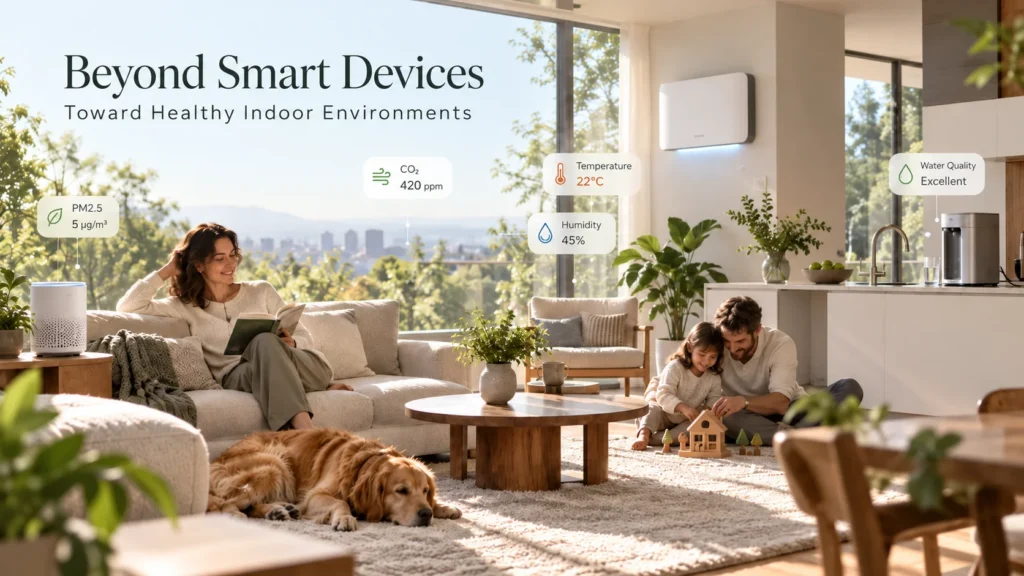
Modern living room with a family enjoying a healthy indoor environment monitored by smart devices, natural lighting, and greenery.

After IFA 2026: The Healthy Home Is Moving Beyond Smart Devices

In our previous IFA 2026 column, Air Purification Is Becoming Part of the Healthy-Home Platform, we argued that the next generation of indoor-health products would ...
ニュース
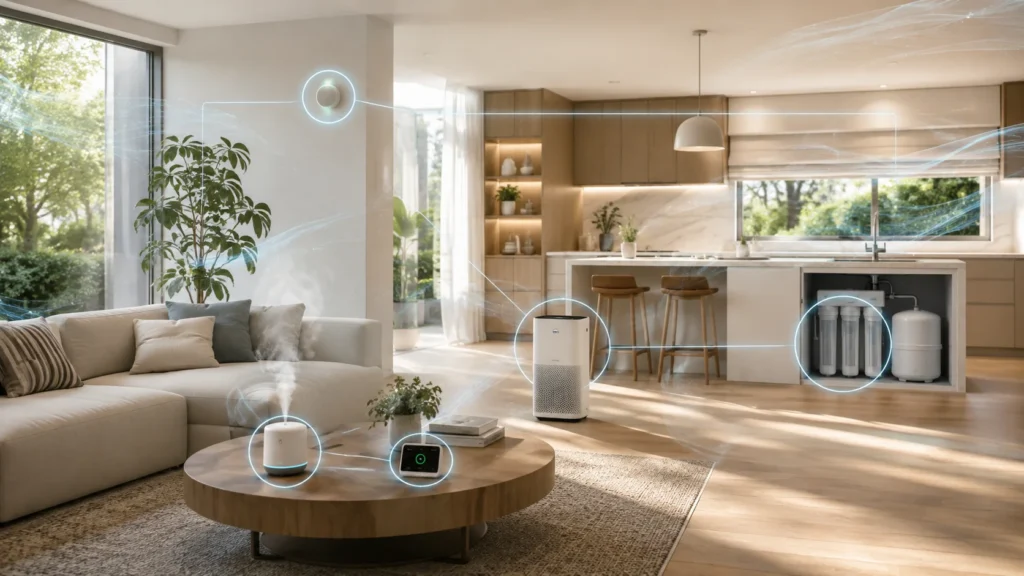
Modern living room and kitchen with smart home air quality devices including an air purifier, humidifier, and water filtration system, connected with visualized blue connectivity lines.

IFA 2026: Air Purification Is Becoming Part of the Healthy-Home Platform

Pre-IFA Industry Perspective | September 4, 2026 This article is based on official announcements and regulatory information available ahead of IFA 2026, which takes place ...
ニュース
A modern office room with a gray wall-mounted air purifier, large wooden desk, office chairs, indoor plants, and glass windows offering a city view.

Luftreiniger gegen Staub: HEPA-Luftreinigung für Büro, Gewerbe und Industrie

Kurz gesagt: Ein Luftreiniger entfernt Staub aus der Luft – nicht vom Schreibtisch. Er reduziert die Konzentration schwebender Partikel und damit auch die Menge an ...
Air purifier, Filter
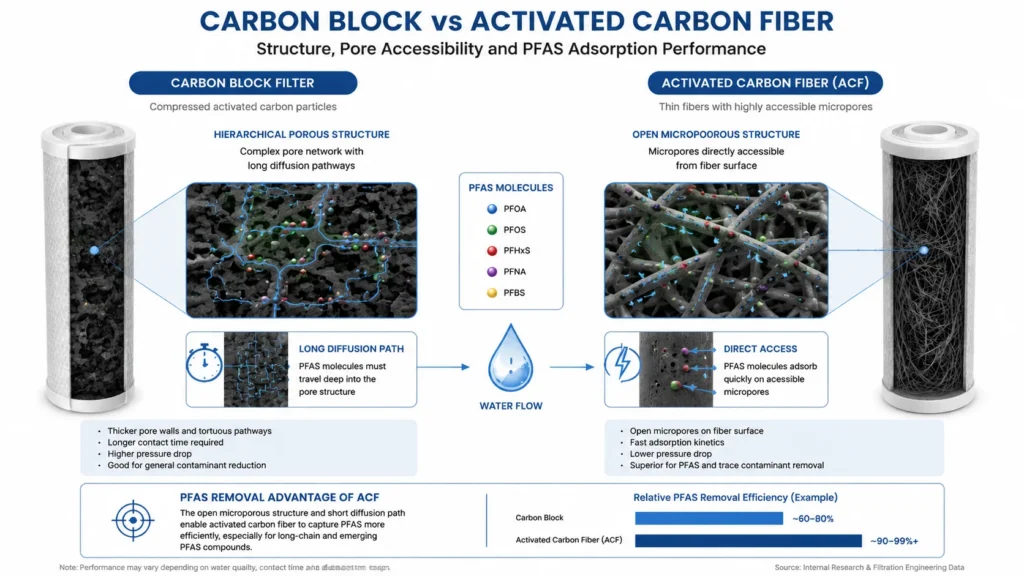
Comparison infographic showcasing the differences between carbon block filter and activated carbon fiber. Detailed diagrams illustrate the hierarchical porous structure of the carbon block with long diffusion paths and the open microporous structure of the activated carbon fiber with direct access for PFAS adsorption.

Carbon Block vs. Activated Carbon Fiber (ACF): Matching Media to Target Contaminants

Two carbon media. Same adsorption chemistry. Very different behaviour in a point-of-use cartridge. If you are specifying a water purifier platform for a PFAS-aware market, ...
ニュース
NSF base listing and ANF private-label certification pathway for OEM water filters

What Is an NSF Master Listing? A Guide to Base Listings, ANF Certification and OEM Water Filters

For a brand preparing to launch an OEM water purifier, one of the most common supplier claims is: “We already have an NSF master listing, ...
News, Water Purifiers
Healthy-home brand team reviewing PFAS water filter certification, test data and product engineering

Entering the Water Category Is Easy. Building a Credible PFAS Claim Is Much Harder

For air purification, appliance and healthy-home brands, entering the water category can look surprisingly easy. A company can select an existing undersink system, customize its ...
ニュース
Contaminant Engineering•3 min read

PFAS Water Filtration Technologies Explained: Carbon, Resin & RO

Key Takeaway:

PFAS reduction depends on the specific compounds present, treatment media, contact time, water chemistry, and system design. Activated carbon, ion exchange, and Reverse Osmosis address PFAS through different mechanisms.

PFAS are a large family of persistent fluorinated compounds that can occur in drinking-water supplies. Their treatment behavior varies significantly by molecular structure, chain length, functional group, concentration, and the chemistry of the source water.

Granular Activated Carbon (GAC) removes PFAS primarily through adsorption. It is generally more effective for many longer-chain PFAS, while shorter-chain compounds tend to break through more quickly. Carbon performance depends on media properties, Empty Bed Contact Time (EBCT), competing organic matter, loading, and replacement frequency.

Ion-exchange resins use charged functional sites to capture many PFAS compounds. Properly selected anion-exchange media can provide high capacity and may perform better than conventional activated carbon for some shorter-chain PFAS, although performance still depends on water chemistry and competing ions.

Reverse Osmosis (RO) uses membrane separation rather than adsorption. Properly designed RO systems can provide broad reduction across many PFAS compounds as well as dissolved salts and other contaminants. Unlike carbon or resin, however, RO also produces a concentrate stream that must be managed.

No single technology should be selected from a PFAS label alone. System design should consider which PFAS compounds are present, their concentrations, required reduction targets, flow rate, media life, and the applicable third-party certification or validation requirements.

HisoAir Water Technical Series
Product Discovery•3 min read

How to Choose an Under-Sink Water Purifier for Modern Kitchens

Key Takeaway:

Match the treatment technology to your water quality first, then evaluate cabinet space, faucet configuration, flow rate, drain and power requirements, and filter replacement needs.

Choosing an under-sink water purifier starts with water chemistry. Carbon filtration is well suited to chlorine, taste, odor, and many organic contaminants, while Reverse Osmosis is more appropriate when dissolved salts, fluoride, nitrates, or broader dissolved contaminants need to be reduced.

For compact kitchens, tankless RO systems eliminate the conventional storage tank and can significantly reduce the space required under the sink. However, membrane capacity stated in GPD does not directly equal faucet flow. When comparing systems, check the actual dispensing flow rate, inlet-pressure requirement, recovery ratio, and whether a booster pump is required.

Installation architecture also matters. Many RO systems require a drain connection, electrical power, and either a dedicated drinking-water faucet or a compatible multi-function faucet. High-flow carbon systems can often connect directly to the existing cold-water line with a simpler installation, but pressure drop and available faucet flow should still be verified.

RO also removes much of the naturally occurring dissolved mineral content. Where taste or mineral balance is a priority, a post-RO remineralization stage can be added. Filter life should be evaluated by both rated capacity and local water quality rather than replacement time alone.

The right system is therefore not simply the smallest or highest-GPD model. It is the configuration that matches the target contaminants, available cabinet space, desired faucet setup, peak dispensing demand, and maintenance expectations.

HisoAir Water Technical Series
Water Quality•2 min read

What Does TDS Mean in Drinking Water? Measurement vs Contaminant Reality

Key Takeaway:

A TDS meter estimates the overall concentration of dissolved ionic substances from electrical conductivity. It cannot identify specific contaminants or determine whether water is chemically safe.

Total Dissolved Solids (TDS) refers to the combined concentration of dissolved substances in water. Most handheld TDS meters do not measure TDS directly. Instead, they measure electrical conductivity (EC) and convert that reading into an estimated parts-per-million (ppm) value.

This means a TDS reading can indicate how much dissolved ionic material is present, but not what that material actually is. Calcium, magnesium, sodium, nitrates, and other dissolved ions can all contribute to conductivity, yet a simple TDS meter cannot distinguish between them.

TDS meters are also not suitable for detecting trace contaminants such as PFAS, many VOCs, pesticides, pharmaceuticals, or disinfection byproducts. These substances may be present at concentrations far below the level needed to noticeably change electrical conductivity.

A low TDS reading therefore does not guarantee safe drinking water, and a higher TDS reading does not automatically indicate contamination. Water-treatment decisions should be based on laboratory testing for specific contaminants of concern rather than TDS alone.

HisoAir Water Technical Series
Technology Selection•2 min read

RO vs UF Water Filtration: Understanding Pore Sizes & Dissolved Minerals

Key Takeaway:

Ultrafiltration can reduce bacteria, turbidity, and suspended particles while retaining most naturally occurring dissolved minerals. Reverse Osmosis provides much broader reduction of dissolved salts and smaller contaminants.

Ultrafiltration (UF) typically uses hollow-fiber membranes with pore sizes in the approximate 0.01–0.1 micron range. These membranes physically retain turbidity, suspended solids, colloids, and many microorganisms while allowing dissolved minerals and salts to remain in the water.

Reverse Osmosis (RO) operates at a much finer separation level. Unlike UF, RO can substantially reduce dissolved ions such as sodium, calcium, fluoride, nitrates, and other contributors to total dissolved solids (TDS). This makes RO more suitable when dissolved-salt reduction is a primary treatment objective.

UF generally requires less system pressure and produces little or no continuous concentrate stream in many point-of-use configurations. RO typically requires greater pressure and produces a reject-water stream, but delivers broader contaminant reduction.

For water with acceptable TDS and mineral content, UF can be a simpler mineral-retaining treatment option. Where dissolved salts, fluoride, nitrates, or broader dissolved contaminants are a concern, RO is generally the more appropriate technology.

HisoAir Water Technical Series
Technology Selection•4 min read

Carbon Block vs Reverse Osmosis: Which Fits Your Need?

Key Takeaway:

Choose RO for dissolved inorganic salts and heavy metals; choose Carbon Block for chemical taste/odor, no wastewater, and high line-pressure flow.

Reverse Osmosis (RO) and Carbon Block filtration represent two fundamentally different treatment methods: membrane separation and adsorption. Understanding these differences helps determine which technology is better suited to a specific water-quality requirement.

Reverse Osmosis uses a semi-permeable membrane with pore sizes of approximately 0.0001 microns. It can significantly reduce dissolved inorganic contaminants such as TDS, fluoride, nitrates, and certain heavy metals. Because water must be forced through the membrane, RO systems require sufficient pressure or a booster pump and generate a concentrated wastewater stream.

Carbon Block filtration relies primarily on adsorption through compressed activated carbon, commonly with nominal pore sizes around 0.5–5 microns. It is highly effective for chlorine, chloramines, VOCs, taste, and odor, while allowing substantially higher direct-flow rates without producing wastewater.

From an operating perspective, Carbon Block systems are generally simpler, require less energy, and avoid the water loss associated with RO. RO involves higher system complexity and operating cost, but provides substantially broader reduction of dissolved contaminants that Carbon Block alone cannot address.

HisoAir Water Technical Series

見積依頼