
The shift to remote work has transformed our homes into offices, placing the responsibility for a healthy workspace squarely on the individual. While convenient, home environments often harbor more pollutants like PM2.5 than commercial buildings, which typically have robust HVAC systems. This makes indoor air quality a critical concern.
This article argues that a desktop air purifier is not a mere accessory, but essential professional equipment. It's vital for safeguarding your health, enhancing cognitive function, and achieving peak performance in your home office. We will explore five compelling reasons why a compact, efficient air filtration system is indispensable for the modern remote professional.
Reason 1: Neutralize the Unique Pollutant Cocktail of Your Personal Workspace
Your home office combines professional and domestic environments, creating a unique mix of pollutants. Professional sources include VOCs and formaldehyde from new furniture, carpets, paint, and electronics like printers. Domestic pollutants encompass allergens (pet dander, dust mites, pollen), mold spores, and VOCs from cleaning products and cooking.
The core issue is inadequate ventilation. Unlike commercial buildings with advanced HVAC systems, homes often lack continuous air exchange, allowing pollutants to concentrate. This creates a "Facility Manager Gap," where remote workers are responsible for their own air quality.
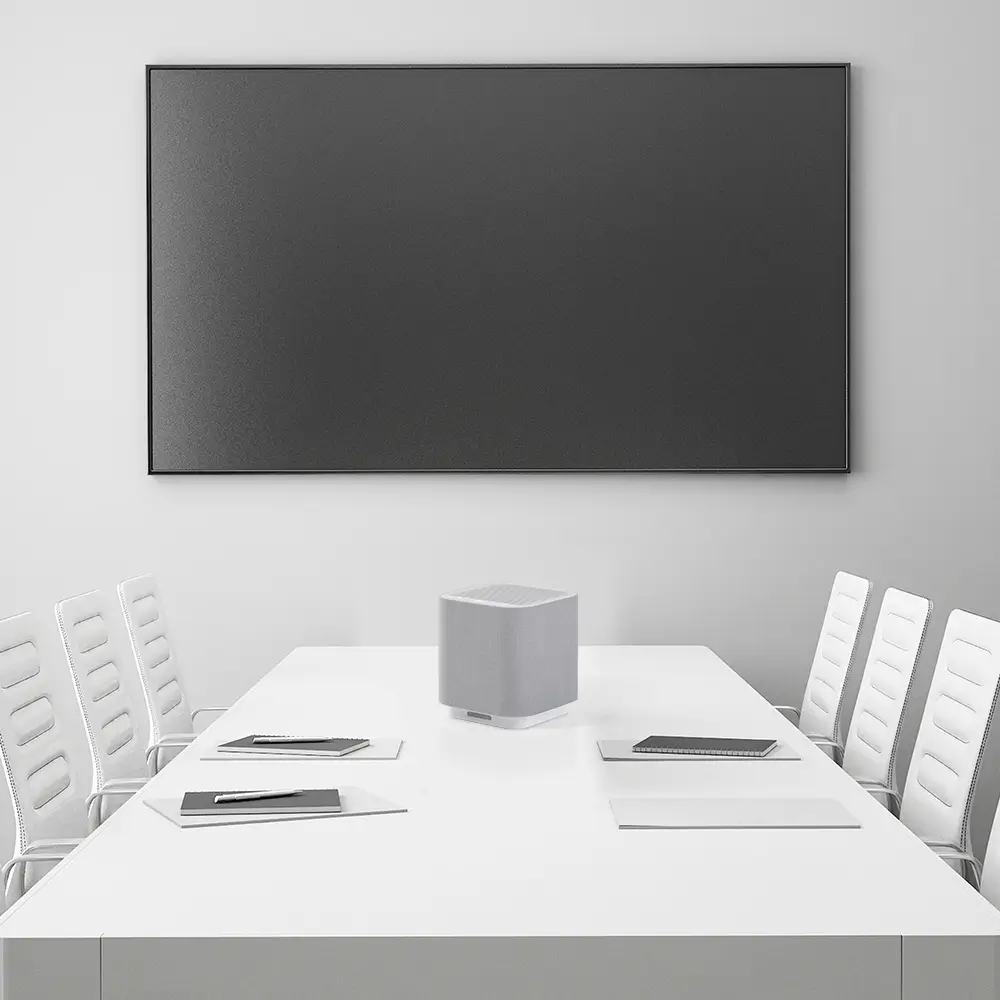
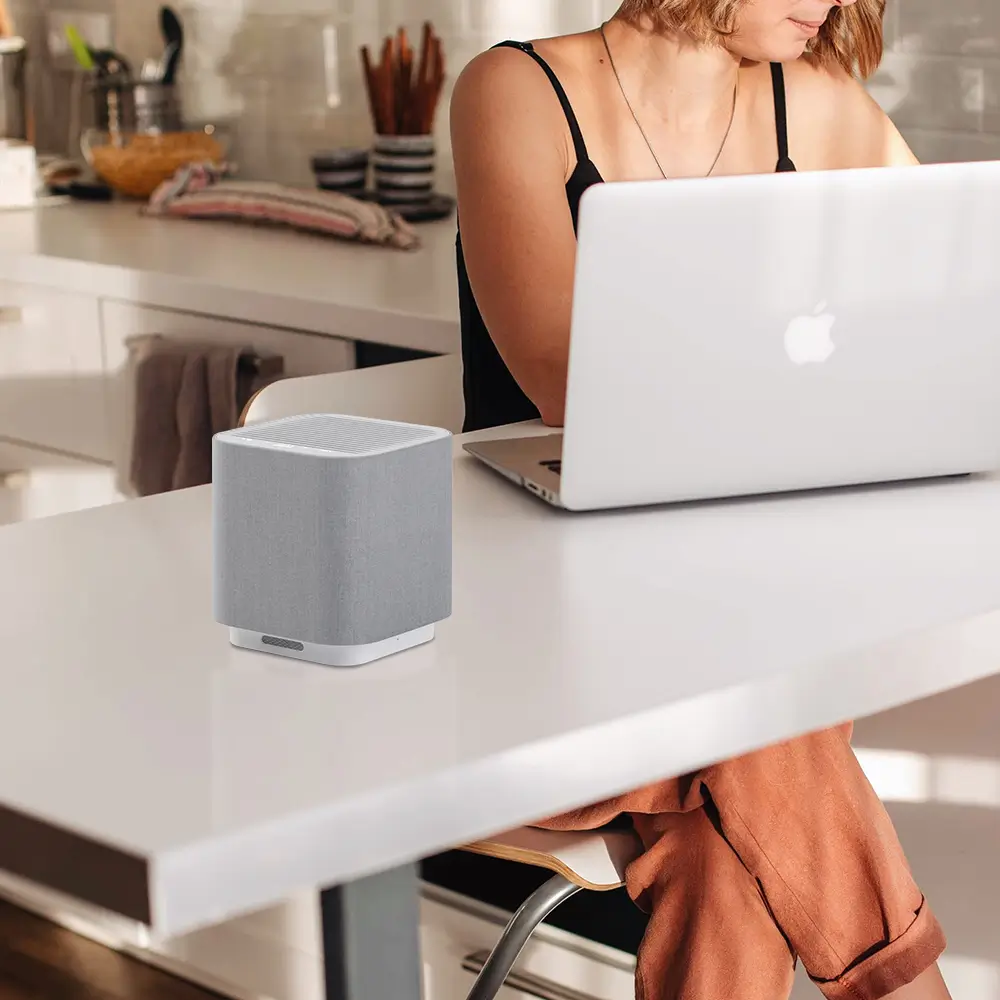
A جهاز تنقية الهواء المكتبي, such as the HisoAir HA100D Pro, addresses this gap. Its compact size and powerful filtration make it an ideal personal air purifier for your immediate breathing zone. Its unique air duct design and exceptional low noise ensure quiet, efficient air cleaning, blending seamlessly into your workspace while providing continuous air filtration.
Reason 2: Maximize Your Cognitive Capital and Productivity
Clean air is a powerful performance enhancer, directly impacting your cognitive capital. The Harvard COGfx Study provides compelling evidence: participants in "green" building environments with improved air quality showed 61% to 101% higher cognitive function scores, particularly in high-value skills like Strategy, Crisis Response, and Information Usage. Subsequent research confirms that elevated PM2.5 and CO2 levels lead to slower response times and reduced accuracy.
Financially, the ROI is significant. The Harvard study estimated productivity improvements from better air quality could translate to a $6,500 annual increase per person. An affordable air purifier is thus an investment in your productivity, not an expense. A high-quality office air cleaner like the HisoAir HA100D Pro, with its powerful CADR and multi-stage filtration, effectively removes pollutants that impair cognitive function, allowing you to maximize focus and decision-making.
Reason 3: Safeguard Health and Find Immediate Allergen Relief
A desktop air purifier is crucial for physical health, offering immediate relief from allergens and mitigating long-term risks. For allergy and asthma sufferers, it provides instant relief by capturing common airborne triggers like dust, pet dander, pollen, and mold spores, reducing symptoms and allowing comfortable work.
It also helps combat "Sick Building Syndrome" at home, alleviating symptoms like headaches and fatigue linked to poor indoor air quality. Furthermore, it reduces long-term health risks by adsorbing harmful VOCs like formaldehyde and benzene, which are common carcinogens. A high-quality air filtration system with an activated carbon filter, such as the HisoAir HA100D Pro, provides vital protection against these invisible threats, investing in your long-term well-being.
Reason 4: Deploy Targeted, Hyper-Efficient Filtration Where It Matters Most
For a home office, targeted, hyper-efficient filtration in your immediate breathing zone is key. A جهاز تنقية الهواء المكتبي excels here. Effective purification relies on a Power Duo of Filtration Technology:
- True HEPA Filters: The gold standard, capturing 99.97% of particles as small as 0.3 microns, including dust, pet dander, pollen, mold spores, bacteria, and viruses.
- فلاتر الكربون المنشط: Essential for adsorbing gaseous pollutants, odors, and VOCs like formaldehyde and benzene, which HEPA filters cannot trap.
This creates a strategic "Clean Air Bubble." Unlike whole-room units, a compact desktop unit focuses its power on your immediate breathing zone, offering superior efficiency, rapidity in clearing pollutants, and personalization for your specific needs. The HisoAir HA100D Pro, with its Fabric Pre-Filter, HEPA H13, and VOC adsorption, exemplifies this. Its 120m³/h CADR and 10-15m² application area are perfectly sized for an optimal "clean air bubble," delivering hyper-efficient purification quietly (32-52 dBA), making it an ideal mini air purifier for any home office.
Reason 5: Cultivate an Optimal Environment for Deep Work and Well-Being
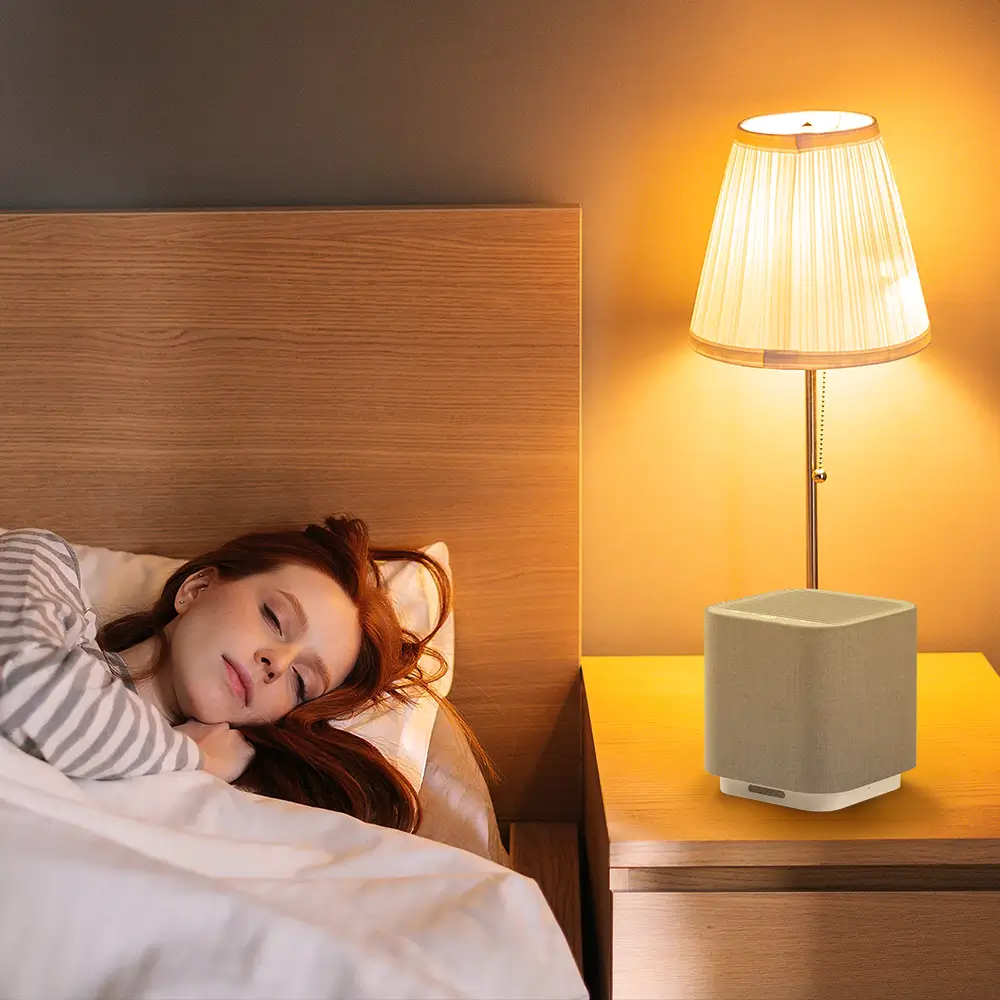
A desktop air purifier significantly contributes to fostering an environment conducive to deep work and overall well-being. It helps eliminate olfactory distractions from cooking, pets, or chemicals, creating a scent-neutral space for better focus. Activated carbon filters in purifiers like the HisoAir HA100D Pro are crucial for this.
The feeling of clean, fresh air provides a psychological lift, linked to reduced stress, a calmer mind, and increased comfort. Conversely, stale air can lead to lethargy and irritability. By continuously purifying the air, a desktop unit promotes a positive mood and increased productivity.
It forms a foundational layer of a productive workspace, similar to ergonomic chairs or noise-canceling headphones. Just as ergonomics prevent physical strain, clean air prevents subtle strain on your body and mind. A portable air filtration device like the HisoAir HA100D Pro becomes integral to your personal productivity ecosystem, ensuring the air you breathe actively supports your success.
Conclusion: Your Action Plan for a Healthier Home Office
The shift to remote work demands individual responsibility for a healthy workspace. Air quality, often overlooked, profoundly impacts health, cognitive function, and productivity.
A. Recap of the 5 Reasons:
- Neutralize Unique Pollutants: Home offices face a mix of professional (VOCs, formaldehyde) and domestic (allergens, mold, cooking odors) pollutants. A desktop purifier offers targeted filtration.
- Maximize Cognitive Capital: Studies like the Harvard COGfx Study prove clean air boosts concentration, memory, and decision-making, leading to significant productivity gains.
- Safeguard Health & Relieve Allergies: Desktop purifiers provide instant relief for allergy/asthma sufferers, combat "Sick Building Syndrome," and reduce long-term health risks from harmful chemicals.
- Targeted, Hyper-Efficient Filtration: Unlike whole-room units, a desktop purifier creates a "clean air bubble" around your breathing zone, using True HEPA and activated carbon filters for rapid, efficient purification.
- Cultivate Optimal Environment: By eliminating odors and promoting fresh air, a desktop unit fosters a calmer, more focused environment, crucial for deep work and overall well-being.
B. The Final Verdict:
إن جهاز تنقية الهواء المكتبي is no longer a luxury but an indispensable tool for the modern professional. It's an investment in your health, cognitive performance, and career longevity, empowering you to control your indoor environment and support your success.
C. Quick Buying Guide: Key Features to Look For
When choosing a personal air purifier for your home office, prioritize these features for an effective and affordable air purifier:
- Multi-Stage Filtration: Essential are True HEPA (H13/H14) for particulates and substantial activated carbon for gases/odors. The HisoAir HA100D Pro offers a Fabric Pre-Filter and HEPA H13 with VOC adsorption.
- Appropriate CADR: Ensure sufficient power for your personal workspace (e.g., 10-15m²). The HisoAir HA100D Pro, with 120m³/h CADR, provides powerful airflow for efficient purification.
- تشغيل هادئ: Crucial for focus. Aim for under 30-40 dB on low. The HisoAir HA100D Pro boasts exceptional low noise (5-10dB lower than competitors).
- Filter Replacement: Consider replacement costs and schedule. HisoAir's long-hour lifespan HEPA filters offer cost-effectiveness.
Invest in a high-quality mini air purifier today to transform your home office into a healthier, more invigorating space, and experience the profound difference clean air can make.

 English
 Français
 Español
 Italiano
 Deutsch
 Português
 Русский
 العربية
 日本語
 한국어
 Tiếng Việt

