
The global manufacturing landscape is undergoing a seismic shift. For decades, the formula for US brands was simple: manufacture in China to minimize costs. But a string of major disruption COVID-19, shipping crises, and escalating geopolitical tensions has exposed the vulnerabilities of long-distance supply chains. As a result, “business as usual” in global sourcing is no longer a viable strategy.
For US air purifier brands, this disruption presents a critical decision point. The choice is no longer just about cost it's a strategic crossroads between the established far-shoring giant, China, and the fast-rising near-shoring contender, Mexico. While China offers scale and a mature electronics ecosystem, Mexico brings geographic proximity, faster lead times, and emerging cost advantages.
This article explores the shifting dynamics behind this decision. Our thesis is clear: although Mexico cannot yet replace China for critical components, a hybrid approach using China for parts and Mexico for final assembly offers the optimal balance of cost, speed, and resilience. We'll examine how this "near-assembly" strategy enables US air purifier brands to future-proof their supply chains for a more volatile, high-stakes global economy.
The New Global Chessboard: Why This Decision Matters Now
The decision of where to manufacture air purifiers is no longer a purely economic one; it's a strategic imperative shaped by a new global chessboard. The post-pandemic reality has laid bare the vulnerabilities of extended supply chains. The disruptions caused by the COVID-19 pandemic, coupled with subsequent shipping crises, highlighted the critical need for supply chain resilience. Companies that once prioritized "just-in-time" inventory models are now shifting towards a "just-in-case" philosophy, emphasizing robustness and redundancy over lean efficiency. This paradigm shift underscores why the choice between far-shoring and near-shoring has become so critical right now.
Adding to this complexity is the escalating geopolitical squeeze, particularly the rising US-China trade tensions. The imposition of steep tariffs, often exceeding 25% on goods from China, has significantly eroded China's long-standing cost advantage. Beyond tariffs, there's a strategic push by the US government and American businesses to "de-risk" supply chains, reducing dependence on single regions and diversifying manufacturing footprints. This de-risking strategy is driven by concerns over geopolitical stability, intellectual property protection, and the desire for greater control over production processes. Consequently, manufacturing in China has become not only more expensive but also increasingly uncertain for many US brands.
To fully grasp this evolving landscape, it's essential to define the key terms at play:
-
Far-shoring (China): This traditional model involves manufacturing goods on a distant continent, typically for the primary benefit of lower labor costs. While historically cost-effective, far-shoring often entails long and complex supply chains, extended lead times, and increased exposure to geopolitical and logistical risks.
-
Near-shoring (Mexico): In contrast, near-shoring involves relocating manufacturing operations to a neighboring country. For US brands, Mexico represents the quintessential near-shoring destination, offering a compelling balance of cost savings, geographical proximity, and significantly reduced logistical complexities. This model aims to combine some of the cost advantages of offshore manufacturing with the speed, flexibility, and reduced risk associated with domestic production.
Understanding these definitions and the forces driving this global manufacturing realignment is crucial for any US air purifier brand looking to optimize its supply chain strategy in 2025 and beyond. The shift is not merely a trend; it's a fundamental recalibration of global production networks in response to a more volatile and interconnected world.
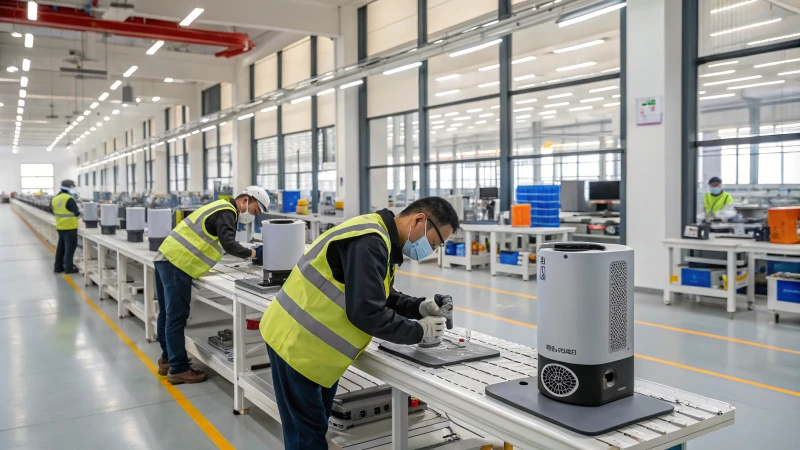
Cost Comparison: Mexico vs China Manufacturing (TLC Showdown)
When evaluating manufacturing locations, focusing solely on the ex-works price—the cost of the product at the factory gate—is a common pitfall. The true measure of cost-effectiveness lies in the Total Landed Cost (TLC). This comprehensive metric accounts for every expense incurred to get a product from the manufacturing facility into a US warehouse, including production costs, transportation, tariffs, duties, insurance, and inventory holding costs. A thorough TLC analysis often reveals that what appears cheaper at first glance can become significantly more expensive once all factors are considered.
One of the most significant shifts in the global manufacturing landscape is the erosion of China's long-standing labor cost advantage. For years, China was synonymous with low-cost labor, but this is no longer the case. Rising wages in China have steadily diminished this competitive edge. Conversely, Mexico now offers highly competitive, productivity-adjusted wages, making its labor force an increasingly attractive option for manufacturers. This shift in labor dynamics directly impacts the overall TLC, making Mexico a more viable alternative.
However, Mexico's most compelling advantage in the TLC showdown is undeniably its superior logistics and speed. Consider the stark contrast in transit times:
-
Transit Time: Products shipped from Mexico to the US can reach their destination by truck in as little as 2-5 days. In contrast, sea freight from China typically takes 30-45 days, not including potential delays at ports or customs. This dramatic difference in transit time has profound financial implications.
-
Financial Impact: Shorter transit times mean less capital is tied up in inventory during transit. This significantly improves a company's cash conversion cycle, freeing up working capital that can be reinvested or used for other strategic initiatives. Reduced lead times also enable greater responsiveness to market demand, minimizing the risk of stockouts or overstocking, both of which incur substantial costs.
The tariff advantage further solidifies Mexico's position. The United States-Mexico-Canada Agreement (USMCA) allows qualifying goods manufactured in Mexico to enter the US duty-free. This is a massive saving compared to the substantial tariffs—often 25% or more—imposed on many goods imported from China. These tariffs directly inflate the TLC of Chinese-made products, making them less competitive in the US market.
In conclusion, while a product's factory floor price might still appear lower in China, a comprehensive Total Landed Cost analysis frequently demonstrates that it is significantly less expensive to bring that product into the US from Mexico. This holistic view of costs, encompassing labor, logistics, and tariffs, is crucial for US air purifier brands seeking to optimize their supply chains and enhance their competitiveness.
Operational Risk & Feasibility: Mexico vs China for Electronics
Beyond the raw numbers of cost and transit time, the operational realities and inherent risks of manufacturing in different regions play a pivotal role in strategic decision-making. When comparing China and Mexico, several on-the-ground factors come into play, influencing everything from production efficiency to long-term stability.
البنية التحتية is a critical consideration. China boasts world-class infrastructure, meticulously built for scale and efficiency. Its vast network of ports, roads, and industrial parks has long supported its status as the "world's factory." This mature infrastructure ensures smooth logistics and reliable utility access for large-scale manufacturing operations. Mexico, while rapidly developing, presents a more nuanced picture. Its infrastructure in key manufacturing hubs, particularly along the US border, is well-developed. However, the recent surge in near-shoring activities has placed considerable strain on these existing systems. Reports indicate growing risks of energy and water shortages in some industrial zones, which could pose operational challenges for manufacturers, especially those with high utility demands like air purifier production.
مراقبة الجودة is another area where proximity offers a distinct advantage. For US brands, overseeing production and addressing quality issues in Mexico is significantly easier and more cost-effective than in China. The shorter travel distances, similar time zones, and often greater cultural alignment facilitate more frequent site visits, quicker problem resolution, and more hands-on management. This direct oversight can lead to higher product quality, fewer defects, and ultimately, a stronger brand reputation. In contrast, managing quality control remotely in China often involves higher travel costs, communication barriers, and extended resolution times, potentially impacting product integrity and market responsiveness.
Perhaps one of the most complex and evolving risks is Intellectual Property (IP) protection. Historically, China has been widely recognized as a high-risk environment for IP theft, with numerous instances of counterfeiting and unauthorized technology transfer. This concern has been a significant driver for companies seeking to diversify their manufacturing away from China. However, a crucial update in 2025 has complicated this narrative: the US government has reportedly downgraded Mexico to the same "Priority Watch List" as China due to persistent concerns over poor IP enforcement. This development means that while the nature of IP risk might differ between the two countries, the overall level of concern for manufacturers seeking to protect their proprietary designs and technologies has become similarly elevated in both regions. This necessitates robust IP strategies regardless of the chosen manufacturing location, including careful contract drafting, vigilant monitoring, and potentially, a distributed approach to sensitive manufacturing processes.
In summary, while Mexico offers clear advantages in terms of proximity and ease of quality oversight, its infrastructure is under increasing pressure, and the landscape of intellectual property risk is becoming more complex. These operational realities demand a thorough assessment by US air purifier brands to ensure that their chosen manufacturing strategy aligns with their long-term operational feasibility and risk tolerance.
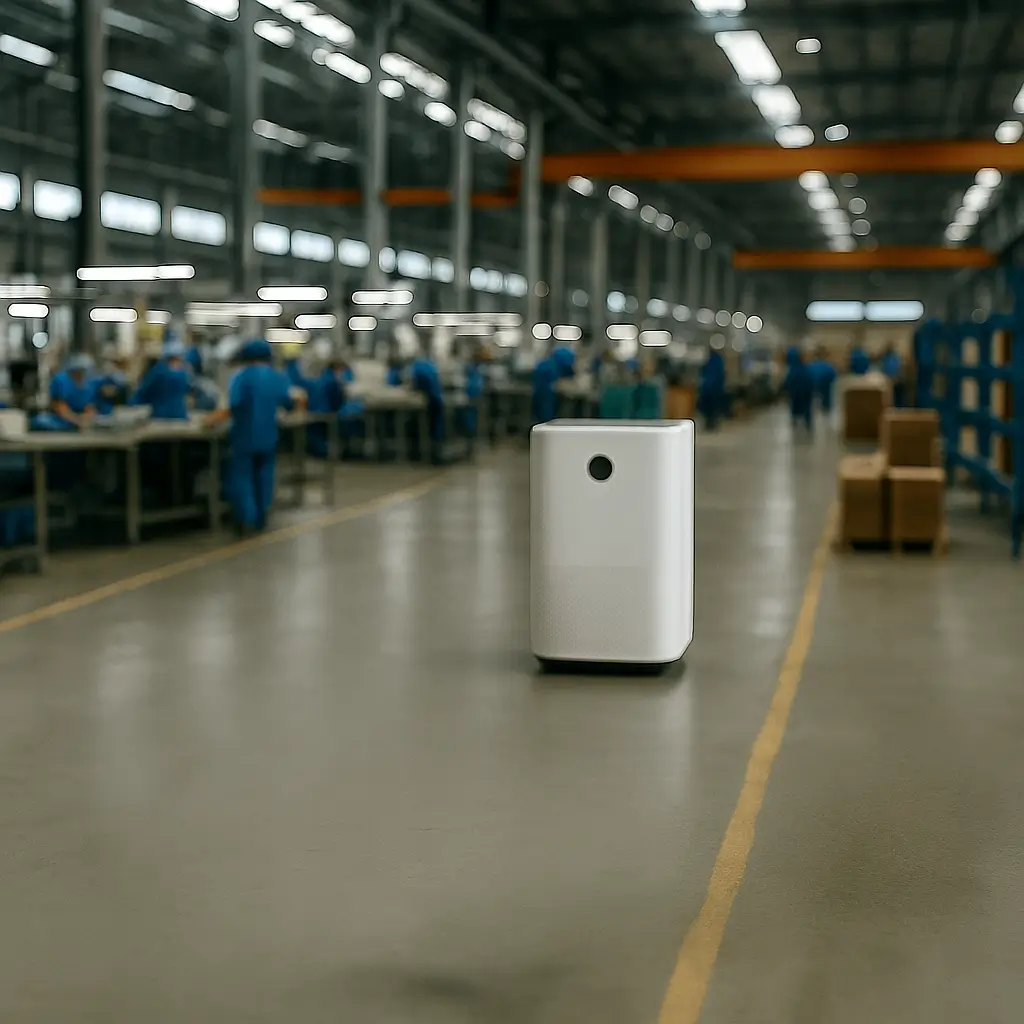
The Air Purifier's Achilles' Heel: The Component Ecosystem
While Mexico presents a compelling case for near-shoring, particularly concerning labor, logistics, and tariffs, the Achilles' heel for air purifier manufacturers lies in the intricate and often globally distributed component ecosystem. An air purifier, at its core, is a sophisticated electronic device, and its critical components are not easily sourced or manufactured in Mexico to the same extent as in China.
Filtration Media (HEPA & Activated Carbon): This is perhaps the most significant challenge. China is the undisputed global leader in the production of air purifier filters. It is estimated that China manufactures approximately 90% of all air purifier filters, including high-efficiency particulate air (HEPA) filters and activated carbon filters. These are specialized materials requiring specific manufacturing processes and supply chains that have been meticulously developed over decades in China. Mexico, despite its growing manufacturing prowess, is a net importer of these critical filtration materials. This means that even if final assembly occurs in Mexico, the core functional components that define an air purifier's effectiveness would still likely originate from China, creating a continued dependency.
Electronics (PCBs, Sensors, Motors): The situation is similar for the sophisticated electronic components that power air purifiers. China's Shenzhen region, often dubbed the "Silicon Valley of Hardware," boasts a self-sufficient and highly integrated ecosystem for printed circuit boards (PCBs), various sensors (e.g., for air quality, dust, VOCs), and specialized motors. This ecosystem includes everything from raw material suppliers to component manufacturers, assembly houses, and testing facilities, all co-located and operating with unparalleled efficiency and scale. While Mexico has world-class electronics assembly plants, home to major players like Foxconn, Samsung, and LG, these facilities primarily focus on the final assembly of electronic products. They largely remain dependent on importing high-value electronic components from Asia, particularly China. Therefore, a full shift of air purifier manufacturing to Mexico would likely transform the supply chain from a direct China -> U.S. for a finished good to a more complex China -> Mexico -> U.S. for components and then final assembly.
This "near-assembly" trap highlights a critical nuance: simply moving the final assembly location does not necessarily eliminate dependence on the original source of critical, high-tech components. For air purifier brands, this means that while Mexico can offer significant advantages in terms of proximity to the US market and reduced landed costs for the assembled product, a complete decoupling from China's component ecosystem is currently not feasible. Any strategic decision must acknowledge and plan for this continued, albeit reconfigured, reliance on Chinese-sourced parts.
US Air Purifier Manufacturing Strategy: Hybrid China-Mexico Model
Given the complex interplay of cost, logistics, operational realities, and the critical component ecosystem, the optimal strategy for US air purifier brands is not a binary choice between China and Mexico. Instead, the most effective approach is a hybrid "near-assembly" model that strategically leverages the unique strengths of both nations.
This model advocates for a clear division of manufacturing processes:
-
Move to Mexico for Final Assembly and Bulky Components: US air purifier brands should prioritize moving the final assembly of their products to Mexico. This allows them to capitalize on Mexico's lower total landed costs, significantly reduced transit times, and the benefits of the USMCA trade agreement. Additionally, the manufacturing of bulky, lower-tech parts, such as plastic housings, external casings, and packaging materials, can be efficiently handled in Mexico. This shift directly addresses the need for supply chain speed and resilience for the finished product entering the North American market.
-
Maintain Diversified Sourcing from China for Critical, High-Tech Components: Simultaneously, it is imperative to maintain a diversified and de-risked supply chain for critical, high-tech components. This includes essential elements like HEPA and activated carbon filters, printed circuit boards (PCBs), advanced sensors, and specialized motors. China's established ecosystem for these components remains indispensable due to its scale, technological maturity, and cost-effectiveness. The strategy here is not to abandon China entirely but to manage the dependency by diversifying suppliers within China where possible, and exploring alternative sources globally to mitigate single-point failure risks.
Why this hybrid approach works: This strategic recommendation is designed to balance the competing demands of cost efficiency, speed to market, and supply chain resilience. By assembling in Mexico, brands can significantly shorten lead times, reduce inventory holding costs, and navigate tariff complexities more effectively. By continuing to source specialized components from China, they can access the necessary technology and scale without incurring prohibitive costs or compromising product performance. This creates a more robust and competitive supply chain for the North American market, allowing US air purifier brands to respond more agilely to market demands and unforeseen disruptions.
This nuanced approach acknowledges the current realities of global manufacturing, where complete self-sufficiency in any single region is often impractical. It is about intelligent integration, rather than outright replacement, ensuring that US air purifier brands can thrive in an increasingly complex and interconnected world.
Conclusion: Rethinking Manufacturing for the Future
The global manufacturing landscape is evolving rapidly, and the choices US air purifier brands make today will shape their competitiveness for years to come. The debate between far-shoring to China and near-shoring to Mexico is no longer theoretical it's a strategic imperative.
China still offers unmatched scale and component expertise, but Mexico’s advantages in speed, logistics, and total landed cost are becoming increasingly hard to ignore. As we approach key turning points like the 2026 USMCA review and the rise of automation the pressure to diversify and localize supply chains will only intensify.
In this shifting environment, a one-size-fits-all solution doesn’t exist. The smartest path forward is a hybrid model: source critical components from China, while moving final assembly and bulky production to Mexico. This approach balances cost, speed, and risk creating a supply chain that’s both resilient and responsive.
Now is the time to rethink your strategy. Let us help you design a future-ready supply chain that keeps your brand competitive in an unpredictable world.




 English
  Français
  Español
  Italiano
  Deutsch
  Português
  Русский
  العربية
  日本語
日本語  한국어
한국어  Tiếng Việt

