Nasal congestion is more than just an annoyance; it disrupts sleep, affects focus, and leaves you feeling drained. One of the most effective, non-pharmacological tools for nasal congestion relief is a quality humidifier. By adding essential moisture back into the air, a humidifier can soothe irritated airways and help you breathe freely again.
However, the market is flooded with options cool mist humidifier, warm mist humidifier, ultrasonic humidifier, evaporative humidifier and choosing the right one can be confusing. For our business partners and entrepreneurs in the home appliance space, understanding these distinctions is critical to offering products that truly meet customer needs. This guide will demystify the technology and break down the top models to help you make an informed decision.
How Does a Humidifier Help a Blocked Nose?
To understand why a humidifier works, it’s helpful to know what’s happening inside your nasal passages. When you’re congested, the tissues are often inflamed, and the mucus has become thick and difficult to clear. Dry air, common in winter or in air-conditioned rooms, makes this problem significantly worse by irritating your airways.
A humidifier counteracts this by releasing water vapor into the air, raising the ambient humidity. This added moisture provides two key benefits for sinus pressure relief:
- It Soothes Irritated Tissues: Moist air is gentler on your nasal passages and throat, which can help reduce the inflammation that causes that "stuffy" feeling.
- It Thins Mucus: The added humidity helps hydrate and loosen thick, stubborn mucus, making it easier to clear from your airways when you cough or blow your nose.
By adding moisture to the air, a humidifier soothes irritated airways and thins mucus, providing effective relief from a blocked nose. For optimal respiratory health, experts recommend maintaining an indoor humidity level between 30% and 50%. This simple environmental change restores your body’s natural ability to clear its passages.
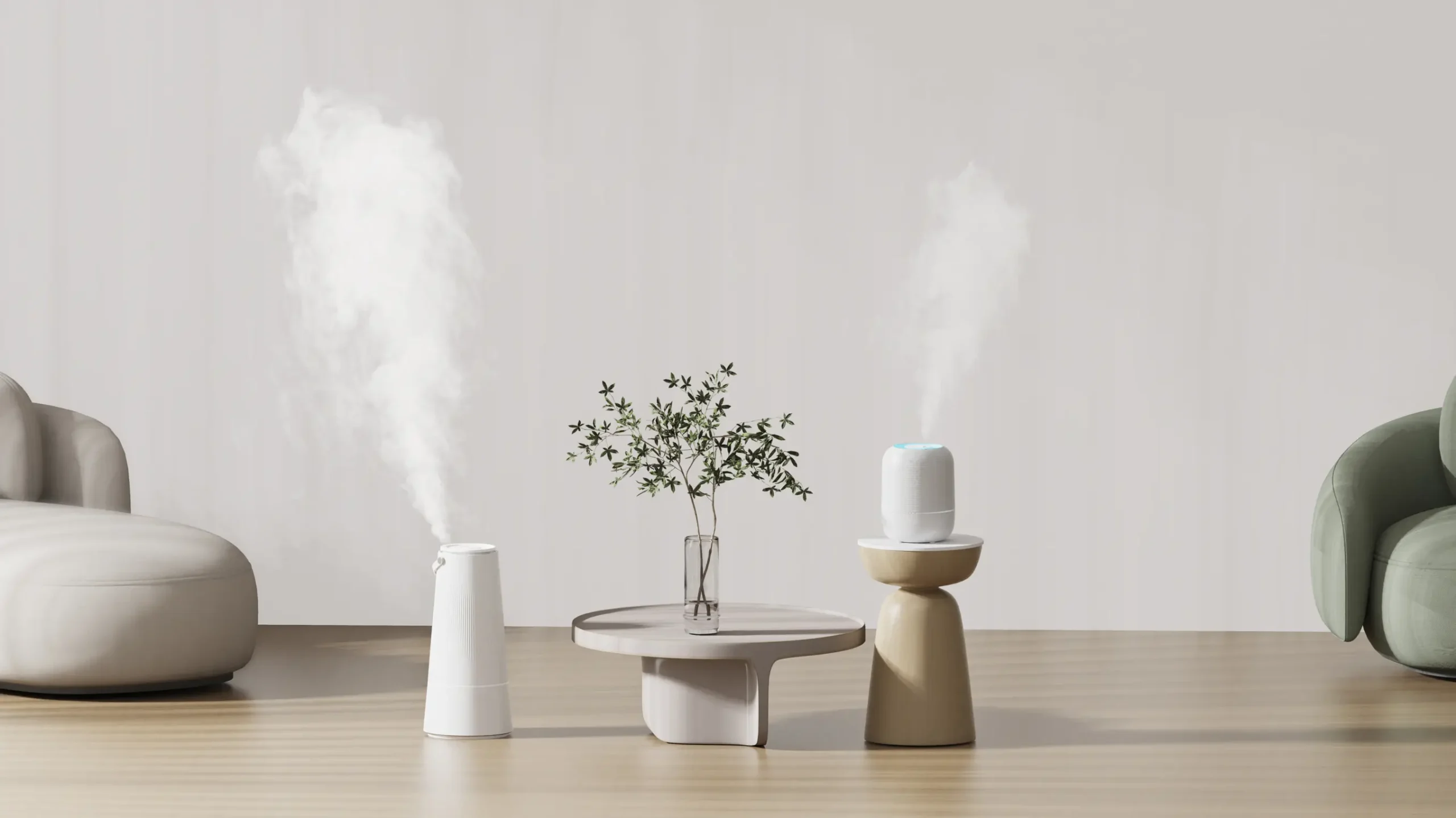
Cool Mist vs Warm Mist Humidifier: Which is Better for Congestion?
One of the first choices you'll face is between a cool mist and a warm mist model. While both are effective at humidifying a room, they operate differently and have distinct safety profiles. The best choice often depends on your specific household and preferences.
| الميزة | Cool Mist Humidifier | Warm Mist Humidifier (Steam Vaporizer) |
|---|---|---|
| الآلية | Releases room-temperature mist via ultrasonic vibrations or an evaporative fan. | Boils water to create and release hot steam. |
| السلامة | Safer for Children & Pets. No hot parts eliminate the risk of burns. | Burn Risk. The hot steam and boiling water pose a significant burn hazard. |
| Congestion Relief | Often preferred for congestion, as the cool air may help shrink swollen nasal passages. | Some adults prefer the soothing sensation of warm steam, which can help loosen mucus. |
| Germs | Requires diligent cleaning, as stagnant water can breed bacteria. | The boiling process kills most waterborne bacteria and mold. |
| Energy Use | Generally more energy-efficient. | Uses more electricity to power the heating element. |
While both types add moisture, cool mist humidifiers are safer for homes with children, whereas warm mist models kill waterborne germs through boiling. For homes with children, pediatricians universally recommend cool-mist models to avoid any risk of burns.
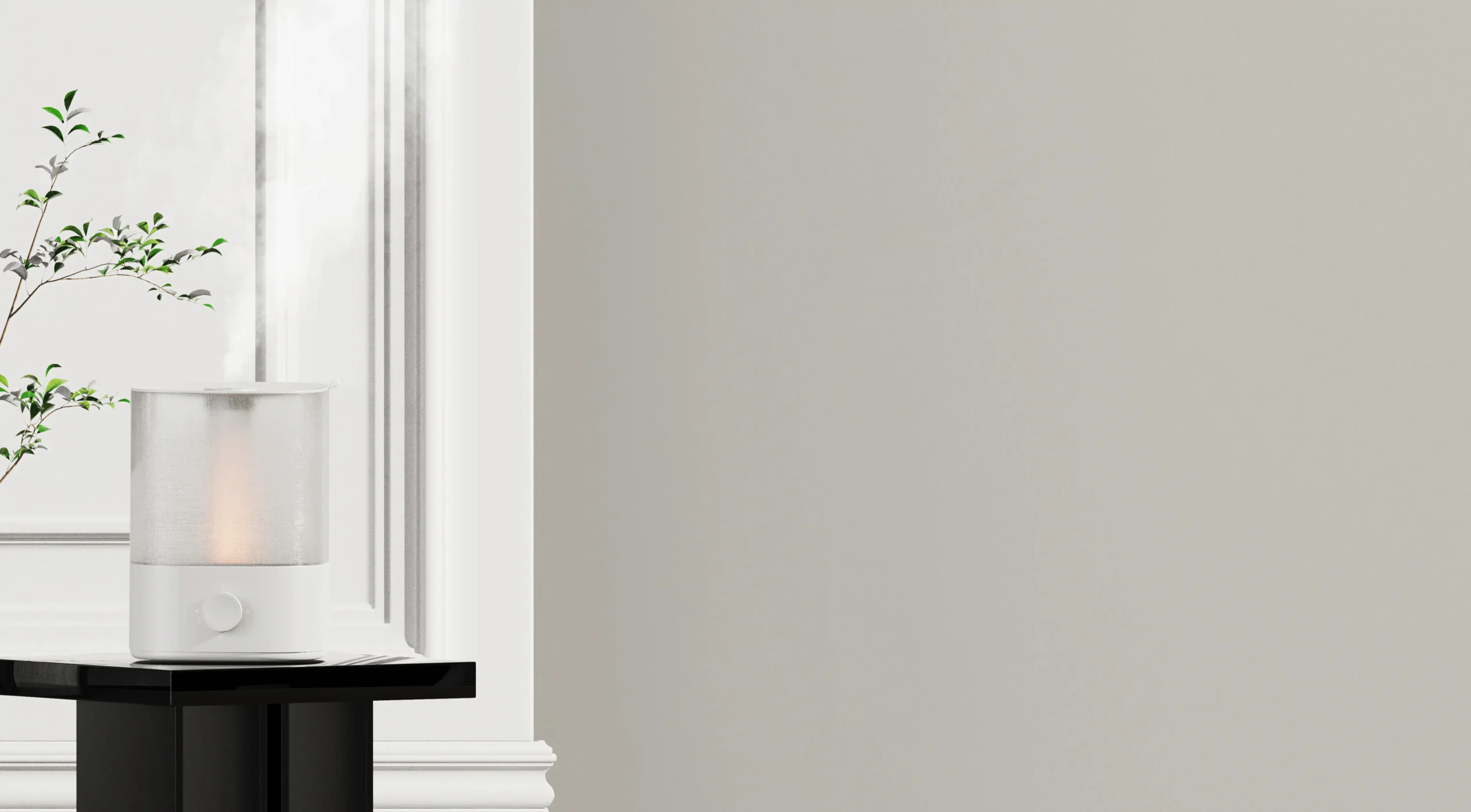
Ultrasonic vs. Evaporative Humidifier: What’s the Difference?
Within the cool-mist category, the next major decision is between ultrasonic and evaporative technology. This choice represents a direct trade-off between noise level and maintenance requirements, and it’s where many users encounter issues with their other home appliances.
Many of our B2B clients ask, "Why does my humidifier make my air purifier go off?" The answer almost always lies in this technological difference. Ultrasonic models can disperse fine mineral dust that air purifiers detect as particulate pollution.
| الميزة | جهاز ترطيب الهواء بالموجات فوق الصوتية | جهاز الترطيب التبخيري |
|---|---|---|
| الآلية | A vibrating diaphragm creates a fine, visible mist. | A fan blows air through a wet wick filter to create invisible moisture. |
| مستوى الضوضاء | Whisper-quiet. Ideal for bedrooms and nurseries. | Audible fan. Creates a "white noise" that some find soothing. |
| Air Quality | Can release "white dust" (minerals from tap water) into the air, which may trigger air purifiers. | The wick filter traps minerals, preventing white dust and delivering cleaner moisture. |
| Water Type | Distilled water is essential to prevent mineral dust and bacterial dispersal. | Tap water is acceptable, as the filter catches impurities. |
| الصيانة | No filters to replace, but the tank requires frequent, thorough cleaning. | Wick filters must be replaced every 1-3 months to prevent mold. |
The choice between ultrasonic and evaporative models is a trade-off: ultrasonic humidifiers are quieter but require distilled water to prevent white dust, while evaporative models can use tap water but have fan noise and require filter changes. For those prioritizing air purity, especially in homes with both a humidifier and an air purifier, an evaporative model is often the superior choice.
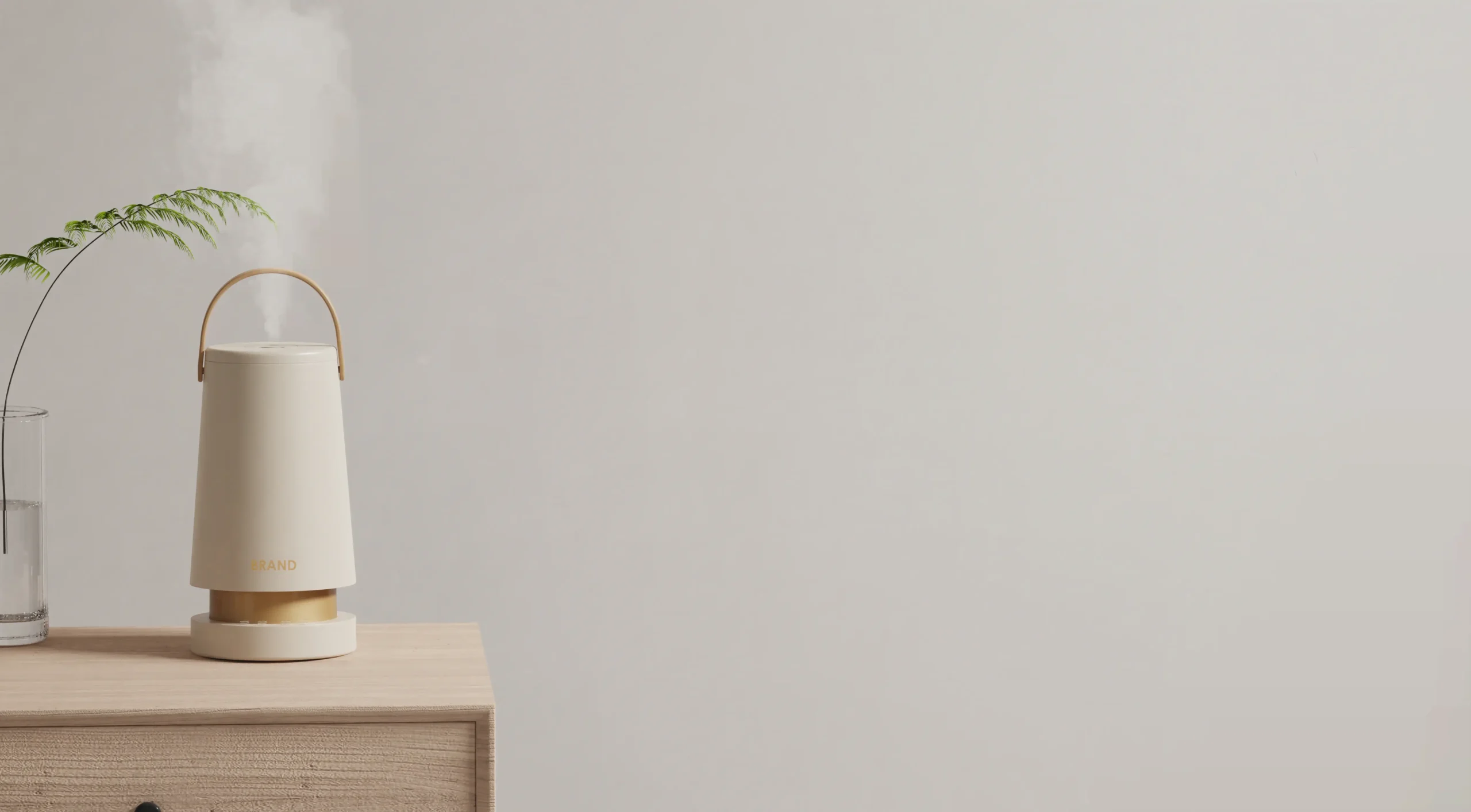
What Are the Top 10 Humidifiers for a Blocked Nose?
After extensive review, my team has identified the top-performing humidifiers that excel in providing relief for a blocked nose. We’ve ranked them based on efficacy, safety, ease of maintenance, and overall value, combining insights from various expert sources and consumer reviews.
| Rank | الطراز | Type/Tech | Coverage (sq ft) | Run Time (hours) | سعة الخزان | الميزة الرئيسية |
|---|---|---|---|---|---|---|
| 1 | Levoit OasisMist 450S | Hybrid Ultrasonic | 430 | 45 | - | Smart control & humidistat |
| 2 | Dreo Smart Humidifier | الموجات فوق الصوتية | - | 60 | 60 liters | Immediate nasal congestion relief, large tank |
| 3 | Levoit Classic 300S Ultrasonic Smart Humidifier | الموجات فوق الصوتية | 505 | 60 | 6L | Best for sinus, Sleep Mode, aromatherapy, quiet operation |
| 4 | Dyson Purifier Humidify + Cool Autoreact | Evaporative/Purifier | - | 36 | 1 gallon | Air purification, congestion relief, HEPA filtration |
| 5 | Honeywell HCM-350 | Cool Mist Evaporative | 500 | - | - | UV sanitizer kills germs, best for allergies |
| 6 | BlueAir Humidifier InvisibleMist | التبخير | 500 | 48 | 3.5L | Mist-free, UV-integrated, helps with stuffy noses |
| 7 | HoMedics TotalComfort Plus Ultrasonic Humidifier | Hybrid Ultrasonic | 547 | 65 | 1.4 Gal | Warm/cool mist, kills bacteria, helps with allergies |
| 8 | HisoAir HM-D2310 | Hybrid Ultrasonic | 753 | 65 | 6L | Ultra-large capacity, warm/cool mist, whisper-quiet |
| 9 | Honeywell Cool Mist Humidifier (HUL565) | Cool Mist | 500 | 40 | - | Compact, ultra-quiet, prevents stuffiness |
| 10 | Levoit LV600HH Hybrid Ultrasonic Humidifier | Hybrid Ultrasonic | 753 | 50 | - | Warm/cool mist, filter-free, suitable for larger rooms |
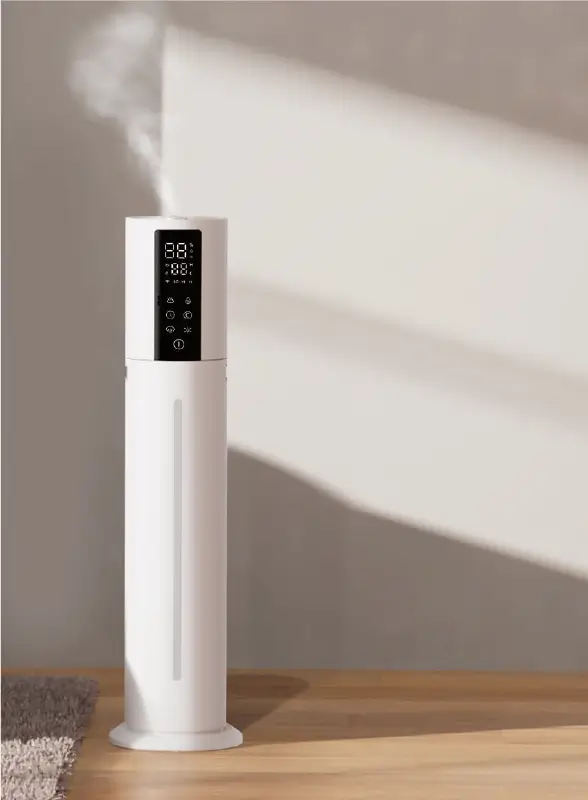
How to Use and Maintain Your Humidifier Safely?
A humidifier is only beneficial if it’s clean. A dirty unit can become a breeding ground for mold and bacteria, dispersing harmful particles into the air you breathe. Following a strict maintenance protocol is non-negotiable.
- Use the Right Water: For ultrasonic models, always use distilled or demineralized water to prevent white dust and protect your lungs. For evaporative models, tap water is fine.
- Clean It Regularly: Empty the tank daily and give it a quick rinse. Every three days, perform a deep clean by soaking the tank in a solution of white vinegar or 3% hydrogen peroxide for 20-30 minutes to remove mineral buildup and disinfect the unit. Rinse thoroughly before the next use.
- Replace Filters: For evaporative models, replace the wick filter every 1-3 months, or whenever it becomes hard, discolored, or emits an odor.
- Monitor Humidity: Use a hygrometer to ensure humidity stays in the 30-50% range. Too much moisture can encourage mold growth on surfaces.
To use a humidifier safely, clean it every few days with vinegar, use distilled water in ultrasonic models, and monitor humidity levels to stay between 30-50%.
الأفكار النهائية
اختيار المناسب humidifier for a blocked nose is a crucial step toward creating a healthier and more comfortable indoor environment. By understanding the core technologies and prioritizing safety and maintenance, you can find a device that provides effective nasal congestion relief for you and your family.
For my fellow entrepreneurs and business leaders in the IAQ sector, these details are what separate a good product from a great one. Your customers are looking for solutions that are not only effective but also safe, reliable, and easy to maintain. At HisoAir, we build our OEM and ODM solutions around these principles, incorporating smart design, whisper-quiet technology, and high-performance components. We believe that everyone deserves to breathe better.
If you’re looking to develop a line of air treatment products that stand for quality and innovation, I invite you to connect with us. Let’s explore how we can elevate air quality together.
اتصل بنا: sales@hisoair.com
قم بزيارة: HisoAir.com


 English
 Français
 Español
 Italiano
 Deutsch
 Português
 Русский
 العربية
 日本語
 한국어
 Tiếng Việt

