
Cleaner Air, Smarter Workspaces, Lower Operational Burden
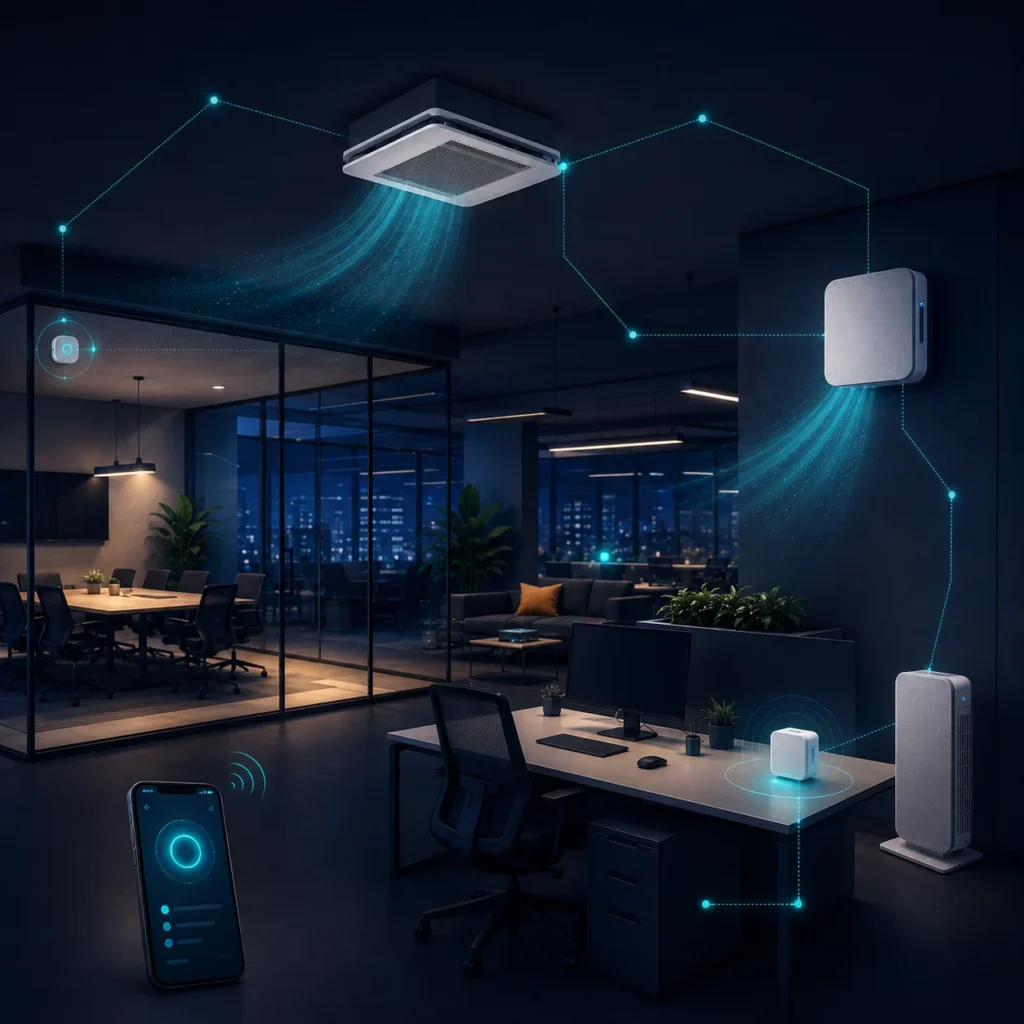
Office IAQ Requires More Than a Residential Air Purifier
Workplaces combine continuous occupancy, variable room density, acoustic requirements, limited installation space, multiple device locations, and ongoing facility maintenance. A commercial IAQ solution therefore needs to consider purification, environmental visibility, deployment, connectivity, and long-term operation as one system.
For commercial IAQ projects, the challenge is not installing one purifier—it is operating an entire system efficiently across rooms, floors, and sites.

Relevant HisoAir Capabilities
The Residential application references HisoAir's centralized engineering capability repository. Each capability provides full laboratory test reports, acoustic testing curves, and OEM customization options.
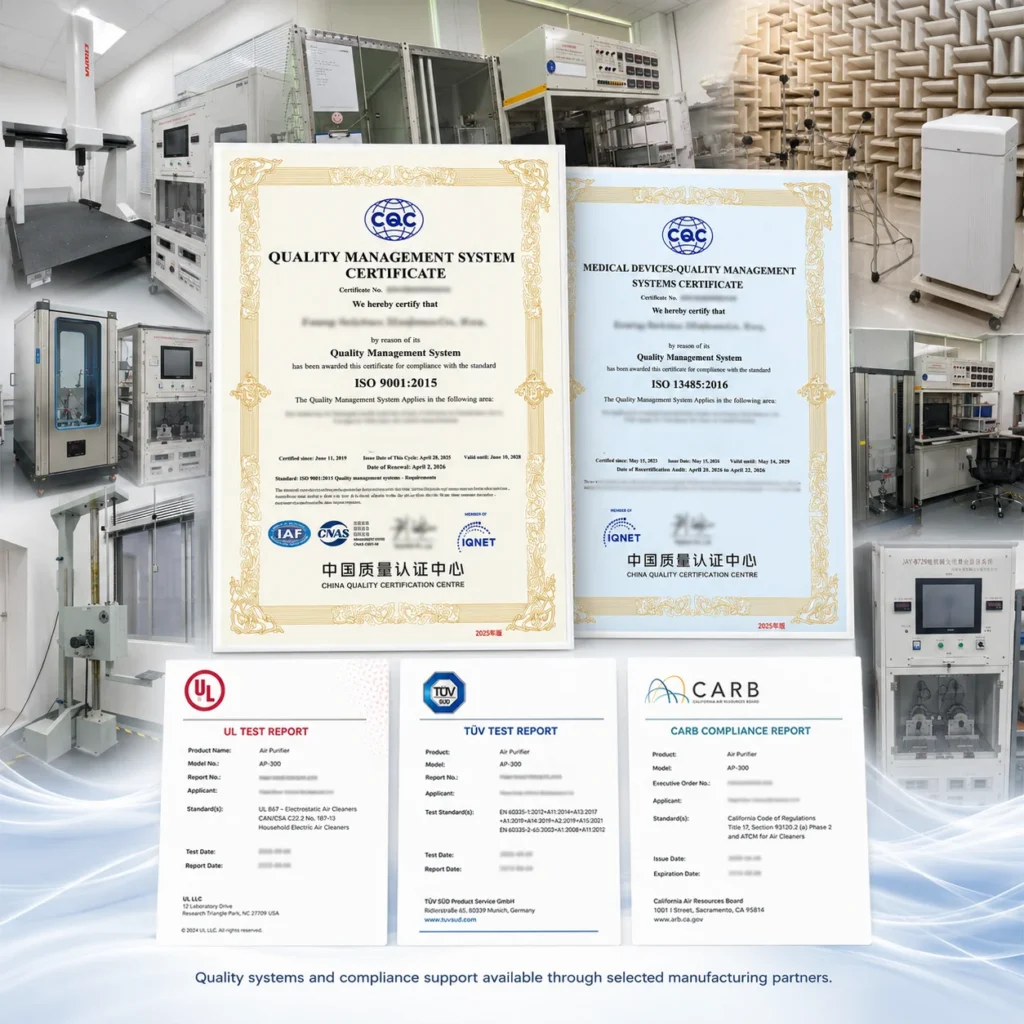
Product Certification & Compliance Support
Integrate safety, EMC, wireless, ozone, performance, materials, labeling, and market-specific compliance requirements into product development before tooling and mass production.
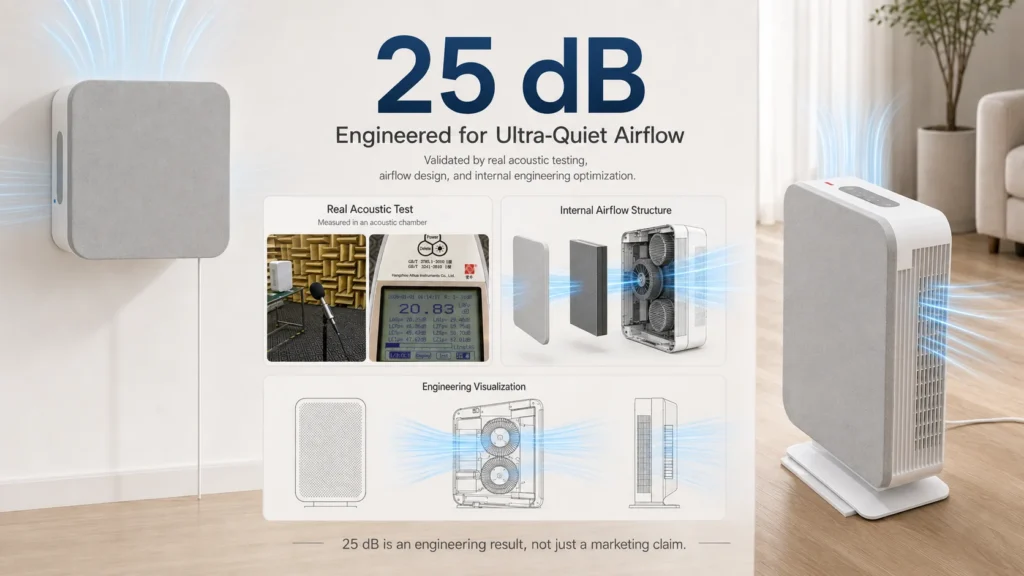
Ultra-Quiet Airflow Design
Engineer quieter air purification systems by balancing airflow, purification performance, fan control, and acoustic comfort across real residential, commercial, and institutional environments.
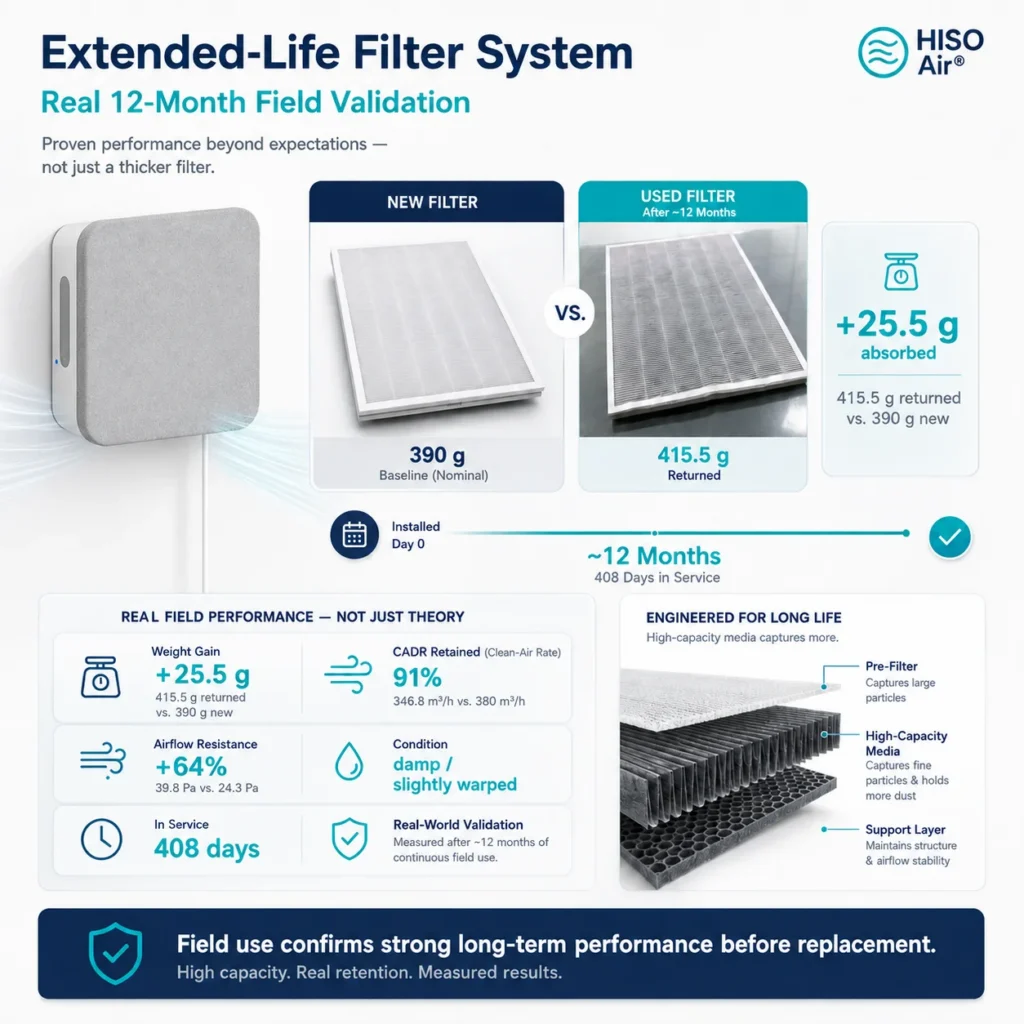
Extended-Life Filter System
Engineer longer-lasting air purifier filtration systems by balancing filter structure, dust-loading capacity, air resistance, airflow, and purification performance to reduce maintenance frequency and long-term operating cost.
Where These Platforms Fit
Targeted residential living zones engineered for optimal airflow distribution, acoustic thresholds, and architectural placement.

Military Housing & Dormitories
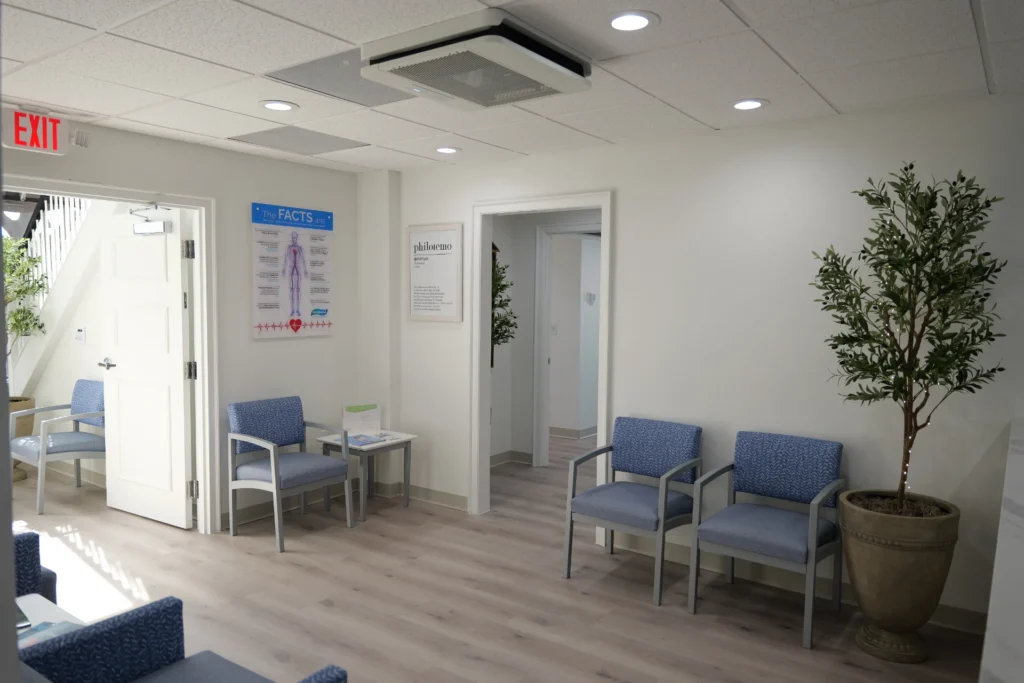
Healthcare & Clinical Spaces
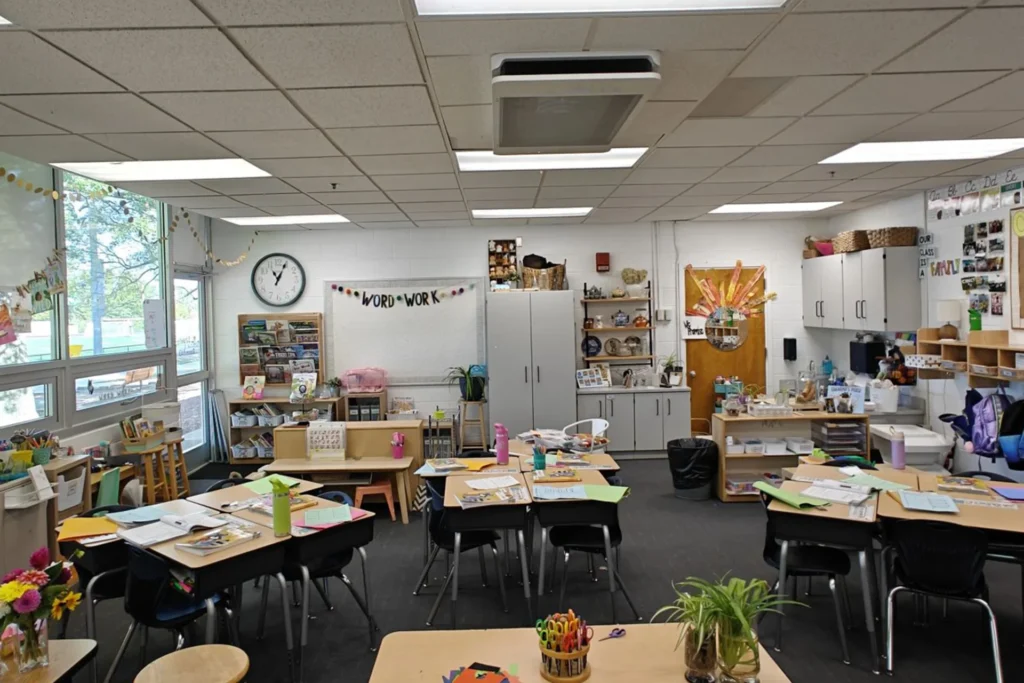
Schools & Kindergartens
Offices & Workspaces
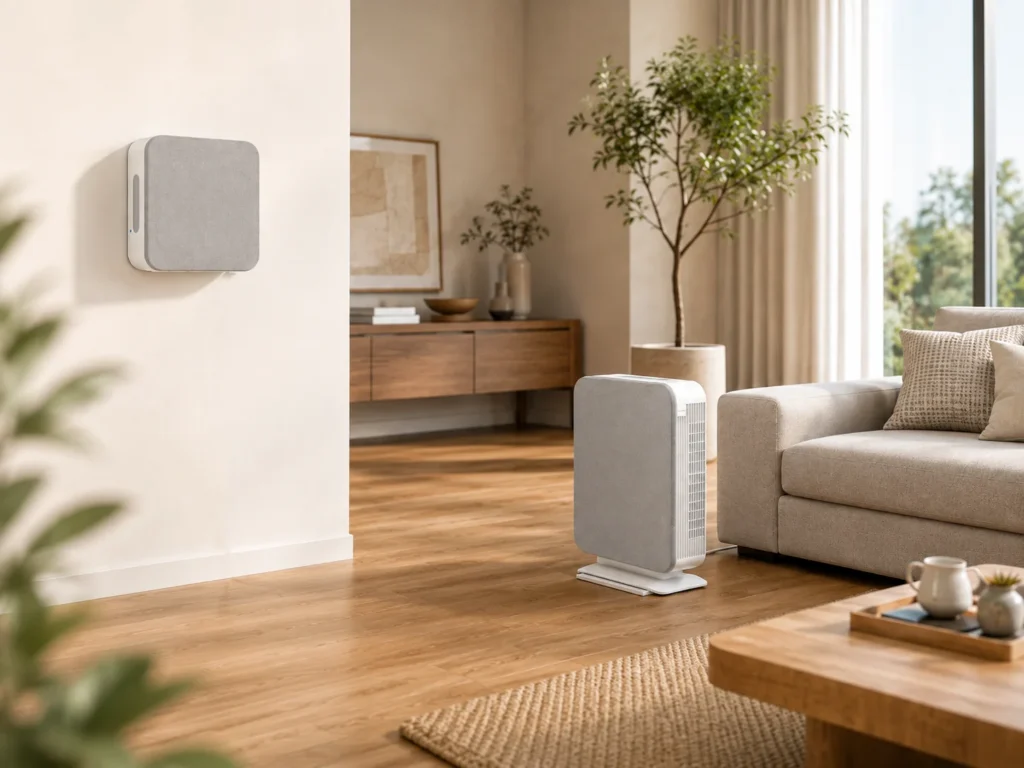
Modern Residential Living
Recommended Residential Platforms
Validated OEM/ODM hardware platforms configured specifically for residential programs. Sourced directly from HisoAir's product catalog.
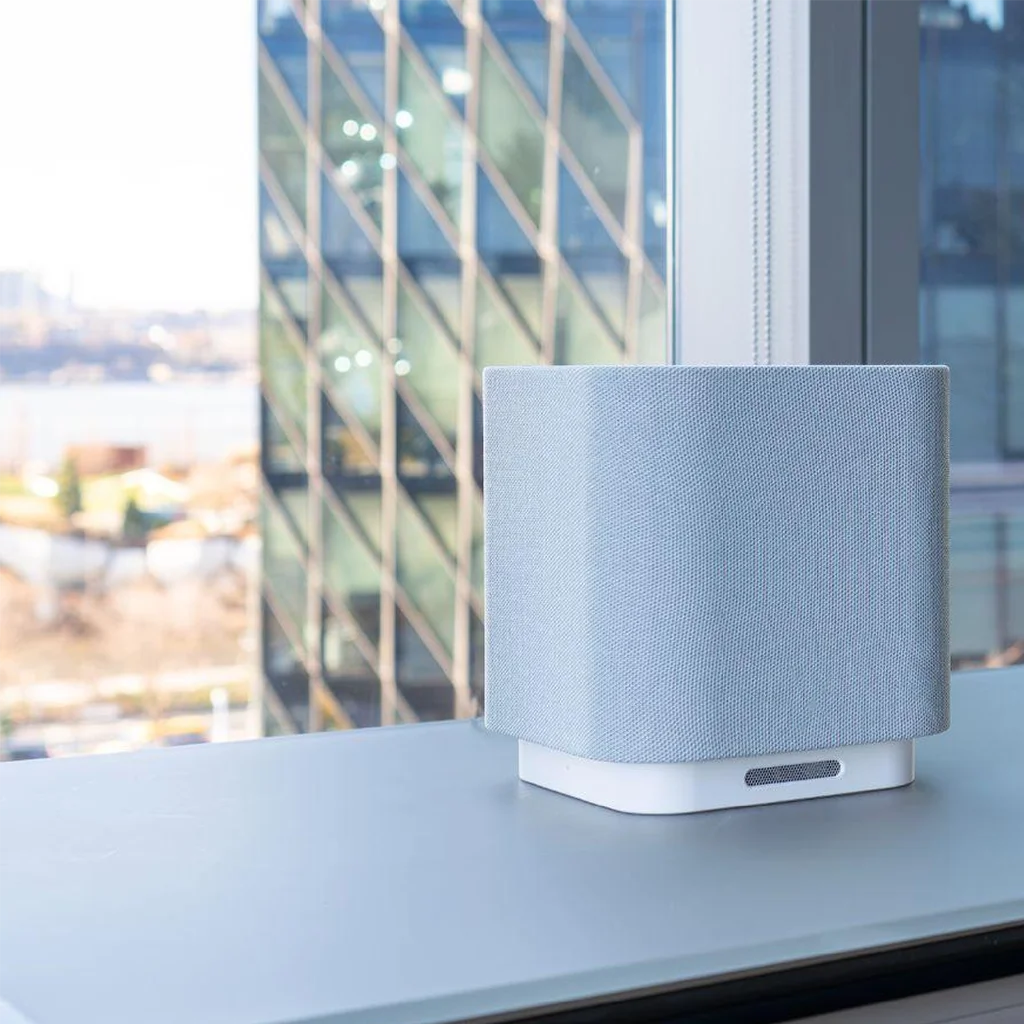
Air Lite – Matter over Thread Smart Desktop Air Purifier
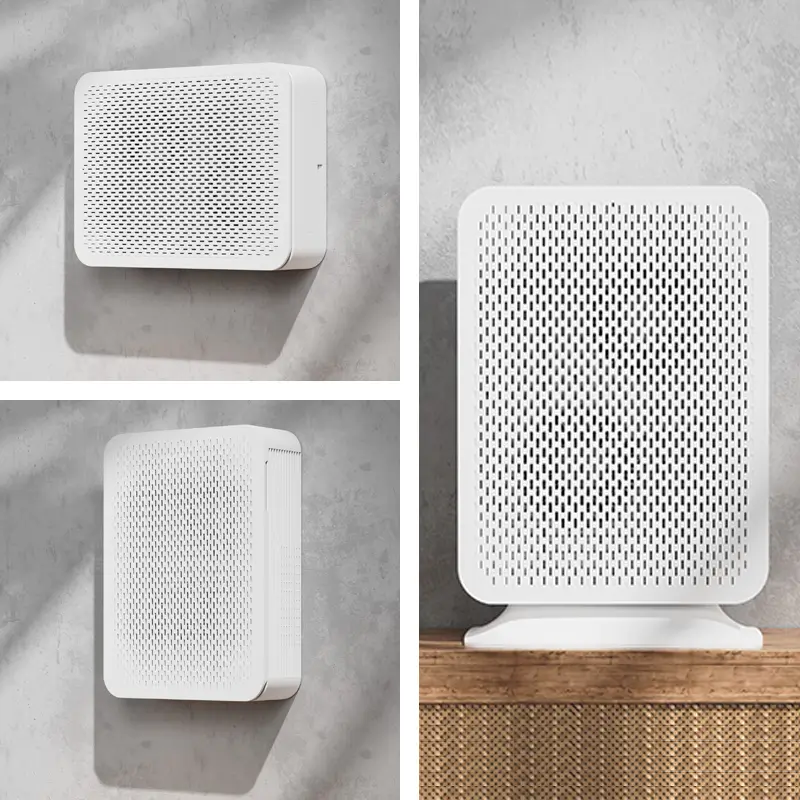
HA200 & HA400 Standing & Wall-Mounted Air Purifier
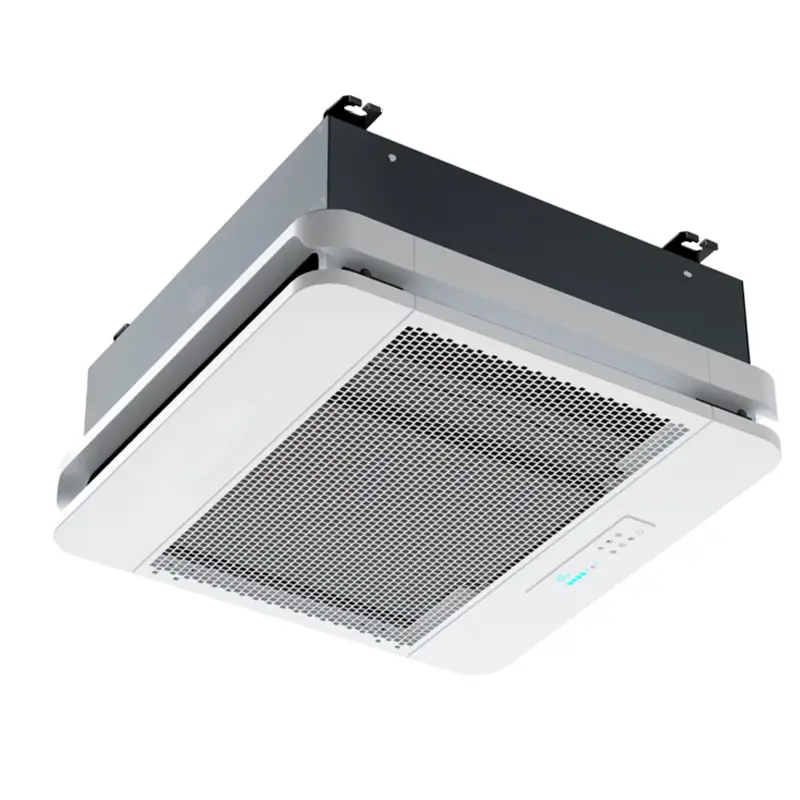
HA800 Ceiling-Mounted Air Purifier
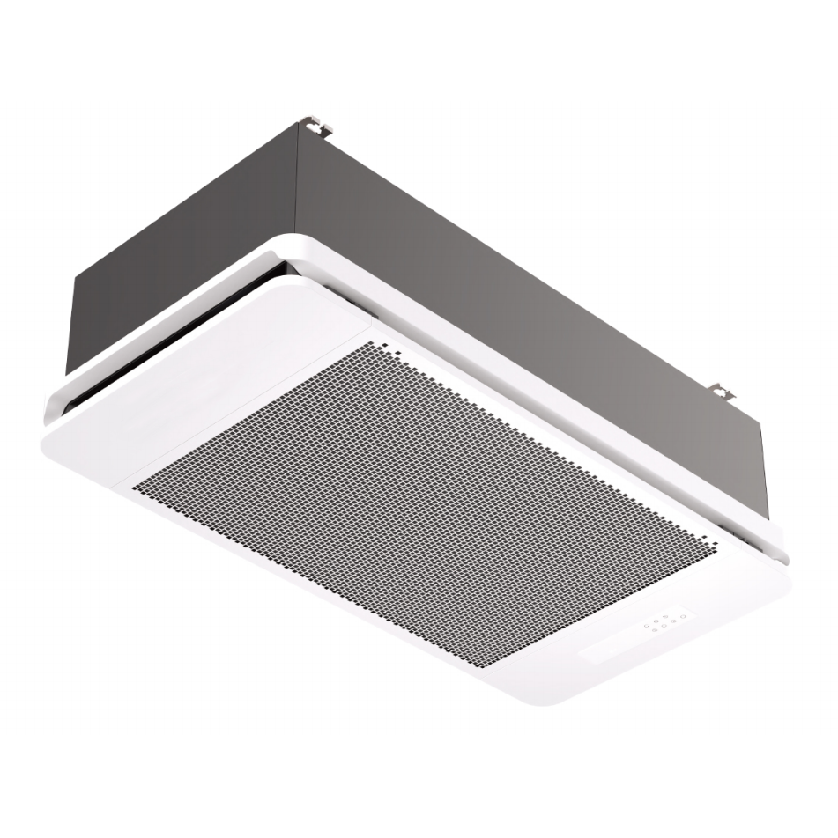
HA2000 High-Capacity Ceiling-Mounted Air Purifier
Häufig gestellte Fragen
Direct factory answers regarding residential testing protocols, private-label customizations, and sample evaluations.
Which air purifier platform is best for different office spaces?
The appropriate platform depends on room size, occupancy, installation constraints, airflow requirements, and acoustic expectations. Wall-mounted systems are typically better suited to private offices, focus rooms, and smaller meeting spaces, while ceiling-mounted platforms can support larger meeting rooms, open offices, reception areas, and shared commercial spaces.
Can HisoAir integrate air quality sensors with office air purification systems?
Yes. Depending on the project, HisoAir can support integration of environmental sensors such as PM, CO₂, VOC, temperature, humidity, occupancy, and other parameters. Sensor configuration should be defined according to the target product and project requirements.
Does an air purifier reduce CO₂ in meeting rooms?
Standard particle and gas filtration air purifiers are not a substitute for ventilation and should not be presented as a solution for reducing indoor CO₂. HisoAir can integrate CO₂ sensing to provide visibility into occupancy-related conditions, while ventilation or HVAC systems should be considered where CO₂ management is required.
Can multiple office air purifiers be monitored or controlled centrally?
Centralized monitoring and control can be supported on a project basis through Wi-Fi, Tuya, customer cloud integration, APIs, gateways, or customized IoT architectures. The final system depends on the required device functions, customer platform, data ownership requirements, and development scope.
How can filter maintenance be reduced across a large office deployment?
Maintenance planning can combine extended-life filter configurations, accessible filter replacement, filter-life monitoring, replacement reminders, standardized product platforms, and deployment-level service planning. Actual replacement intervals depend on operating hours, environmental conditions, fan speed, pollutant loading, and filter configuration.
 English
  Français
  Español
  Italiano
  Deutsch
  Português
  Русский
  العربية
  日本語
日本語  한국어
한국어  Tiếng Việt