

Struggling to remove PFAS from your facility's water? Choosing the wrong system wastes money and space. Let us find the right fit for your institutional project today.
Carbon block and Reverse Osmosis (RO) are the top choices for PFAS reduction1. Carbon blocks offer high flow rates and low maintenance. RO provides broad contaminant removal but creates wastewater. The best choice depends on your project's specific flow, space, and maintenance needs.

When I set up my first mold factory, I ignored water treatment. That mistake cost me time and money. You might think any filter works, but picking the wrong one will ruin your project timeline. Let us look at the facts before you make a choice.
All water filters remove PFAS completely.Falsch
Only specific technologies like certified carbon blocks and RO systems are proven to reduce PFAS levels effectively.
Institutional projects require different water treatment solutions than residential homes.Wahr
Institutional projects deal with higher flow rates, stricter maintenance schedules, and larger space constraints.
What Are the Two Mainstream Technologies for PFAS Reduction?
Are you confused by too many filter options? Picking a random filter leaves your facility at risk. You need to know the two proven methods for PFAS reduction.
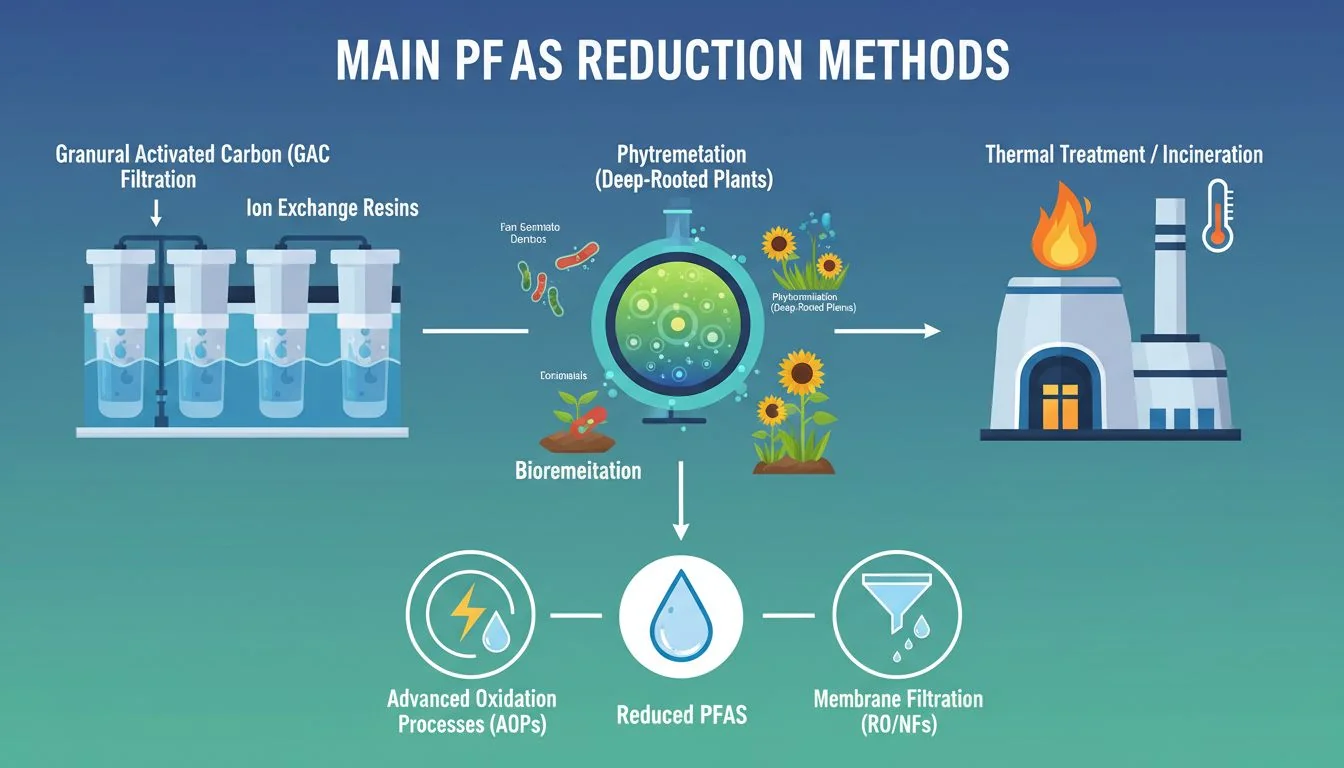
The two mainstream technologies for PFAS reduction are activated Carbon block filters2 and Reverse Osmosis (RO) systems. Both methods effectively trap or separate forever chemicals from water. Engineers specify these two systems most often for large institutional and commercial projects.
Understanding the Core Options
When we design a mold, we choose the right steel for the job. Water treatment is the exact same thing. You have two main tools for PFAS reduction. The first tool is the carbon block. The second tool is Reverse Osmosis3, or RO. Both do a great job, but they work in very different ways. I always tell my clients to look at the real project conditions. Do not just guess based on what sounds good.
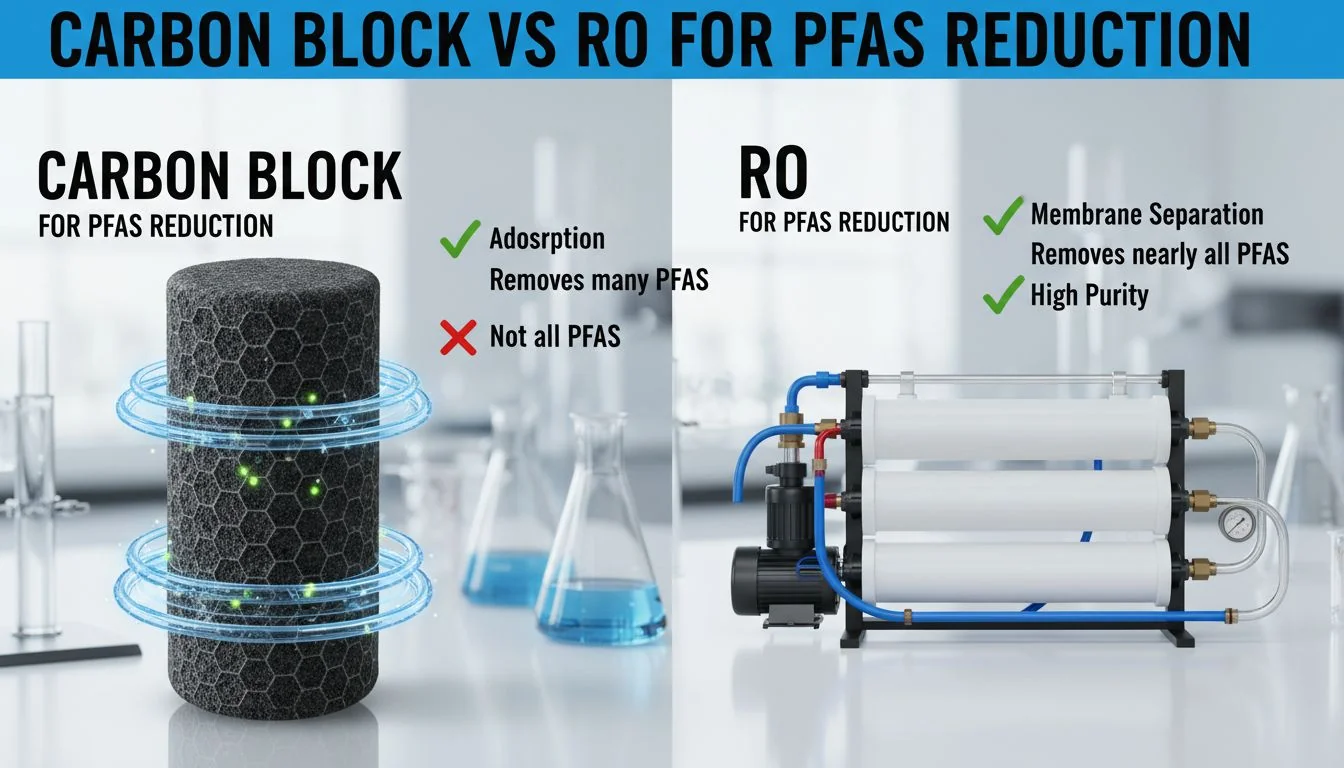
Carbon blocks use a physical and chemical process. They grab the PFAS molecules as water flows through them. RO uses a very tight membrane. It pushes water through and leaves the PFAS behind.
Here is a simple breakdown of the two methods:
| Merkmal | Carbon Block | Reverse Osmosis (RO) |
|---|---|---|
| Primary Method | Adsorption (grabbing molecules) | Membrane separation (blocking molecules) |
| Target Contaminant | PFAS, chlorine, bad taste | PFAS, heavy metals, dissolved solids |
| System Complexity | Very simple | Complex |
You must understand these basics first. If you do not, you might specify a system that fails in the real world. Just like a bad mold design, a bad water system causes endless headaches on the factory floor.
Carbon blocks and RO systems use the exact same method to clean water.Falsch
Carbon blocks use adsorption, while RO uses a semi-permeable membrane to separate contaminants.
Both carbon block and RO are widely used in commercial projects.Wahr
Engineers rely on both technologies depending on the specific needs of the facility.
How Does Carbon Block Work for PFAS Reduction?
Worried about slow water flow in your building? A slow system frustrates everyone. Carbon block filters might be the fast, simple answer you need for your project.
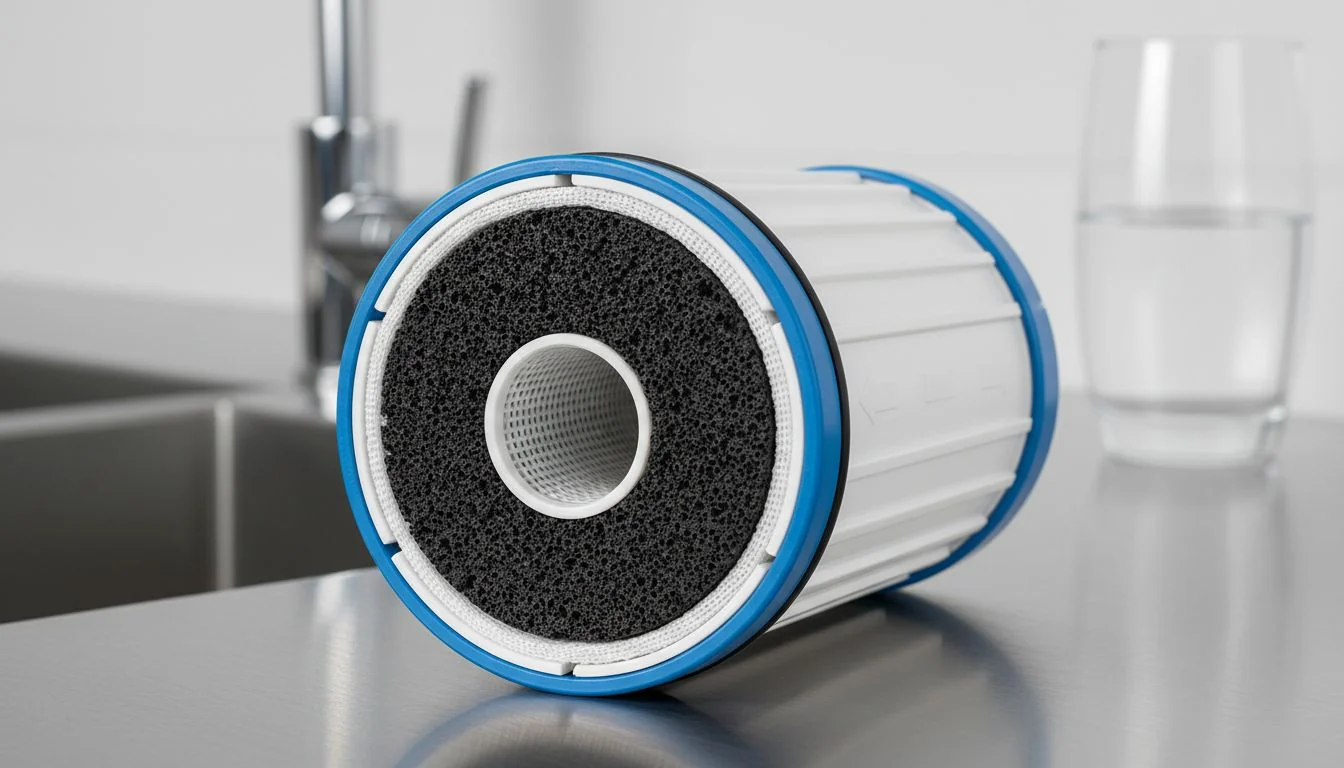
Carbon block filters work by using activated carbon to adsorb PFAS molecules. Their main strengths are high flow rates, zero wastewater, and low maintenance. However, their limits include a shorter lifespan in very dirty water and the inability to remove dissolved heavy metals.
The Power of Adsorption
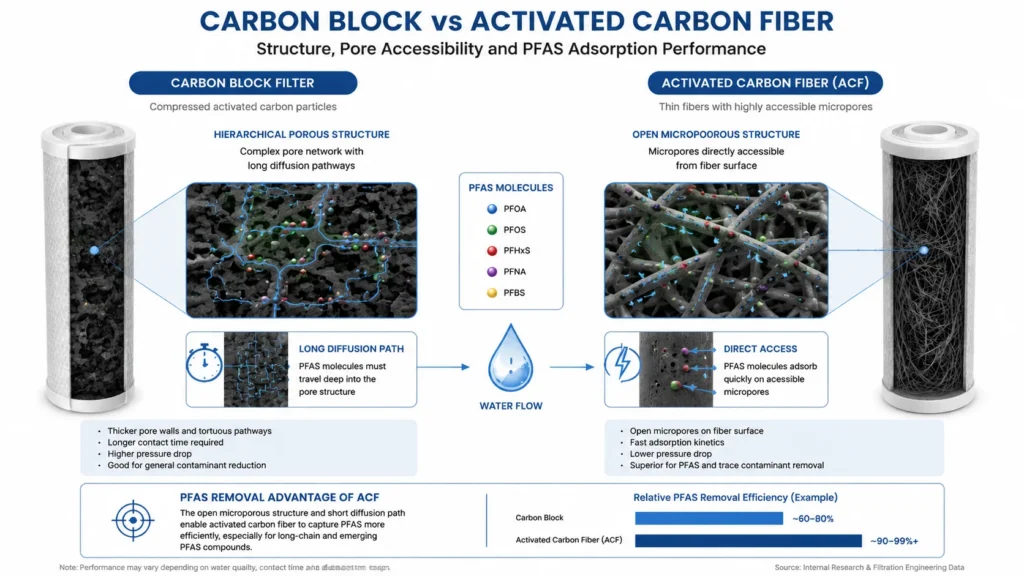
I like simple solutions. In my CNC trading company, the simplest machine often runs the longest. Carbon blocks are the simple machines of water treatment. They are made of crushed carbon. This carbon is heated and pressed into a solid block. When water passes through, the PFAS sticks to the carbon. We call this process adsorption.
The best part about carbon blocks is the flow rate. Water moves through them very quickly. This is great for large buildings. They also do not waste any water. Every drop that goes in comes out clean.
But they have limits. They fill up over time. Once the carbon is full of PFAS, it stops working. You must change the filter on time.
| Strength | Limit |
|---|---|
| High water flow rate | Muss regelmäßig ersetzt werden |
| No wastewater produced | Cannot remove dissolved minerals |
| Small physical footprint | Can clog if water has high sediment |
| Easy to maintain | Only targets specific chemicals |
If your project needs fast water and easy maintenance, carbon blocks are a very strong choice.
Carbon block filters waste a lot of water during the filtration process.Falsch
Carbon block filters do not produce any wastewater; all water that enters the filter passes through it.
Carbon blocks capture PFAS through a process called adsorption.Wahr
The activated carbon surface attracts and holds the PFAS molecules as water flows through.
How Does Reverse Osmosis Work for PFAS Reduction?
Dealing with highly contaminated water sources? Standard filters might fail you. Reverse Osmosis offers a heavy-duty shield against a wide range of bad chemicals.
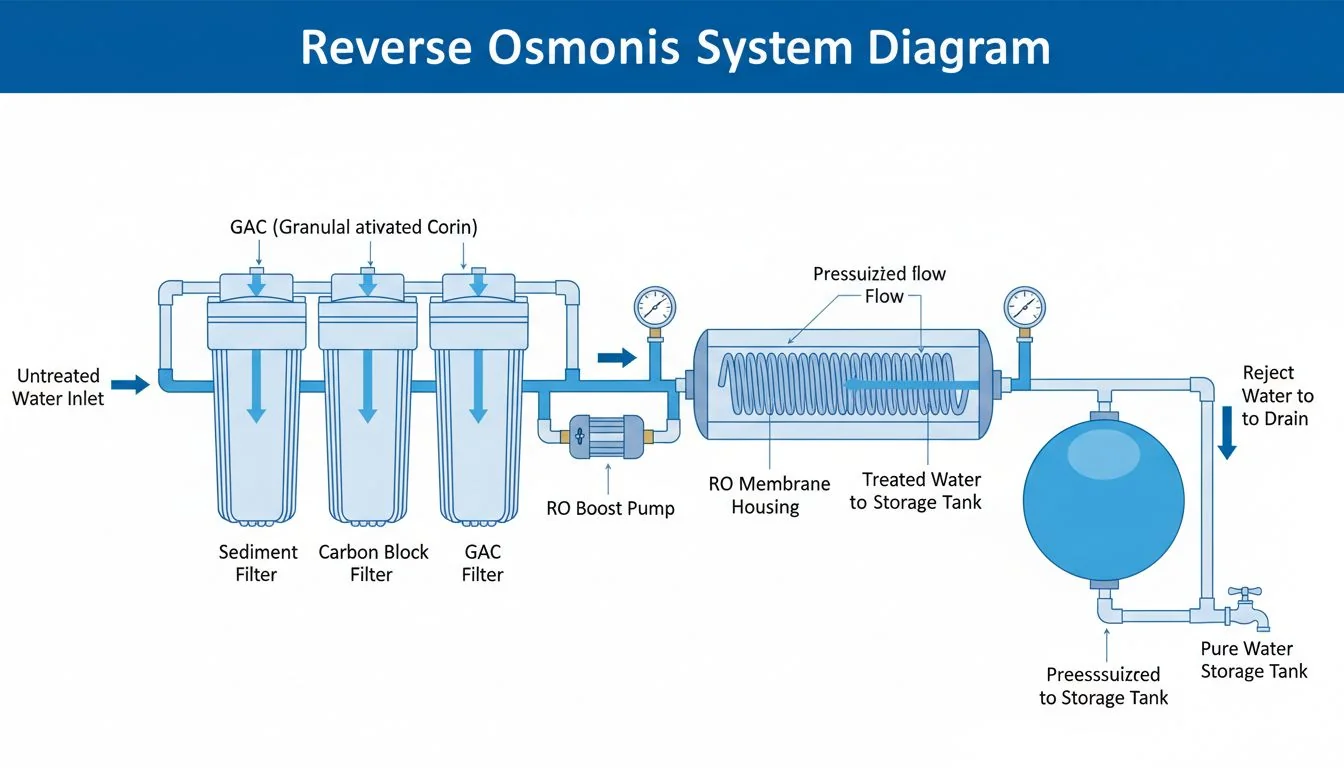
Reverse Osmosis pushes water through a tiny membrane to block PFAS and other toxins. Its strength is broad, highly effective contaminant removal. Its limits include slow water production, the creation of wastewater, and the need for a larger space and more complex maintenance.
The Membrane Barrier
Sometimes, you need maximum protection. When we design molds for medical parts, we have zero room for error. RO systems are exactly like that. They are very strict. An RO system uses pressure to force water through a semi-permeable membrane. The holes in this membrane are tiny. Water gets through, but PFAS and other bad things get left behind.
This gives you very pure water. RO removes almost everything. But this high purity comes with a cost. The process is very slow. It also creates wastewater. For every gallon of clean water, you might send a gallon or more down the drain.
| Strength | Limit |
|---|---|
| Removes a huge range of toxins | Produces wastewater |
| Very high purity output | Slow flow rate |
| Long membrane life | Takes up a lot of space |
| Great for very bad water | Needs a storage tank |
RO is powerful. But you must plan for the wastewater and the extra space it needs in your facility.
Reverse Osmosis systems can produce clean water instantly at very high speeds.Falsch
RO is a slow process that usually requires a storage tank to hold the clean water for when it is needed.
RO membranes are effective at blocking PFAS molecules.Wahr
The pores in an RO membrane are small enough to reject PFAS and many other dissolved solids.
How Do Cost, Wastewater, Footprint, and Maintenance Compare?
Are you worried about hidden costs in your project? Ignoring maintenance and space requirements will ruin your budget. You must compare these four key factors carefully.
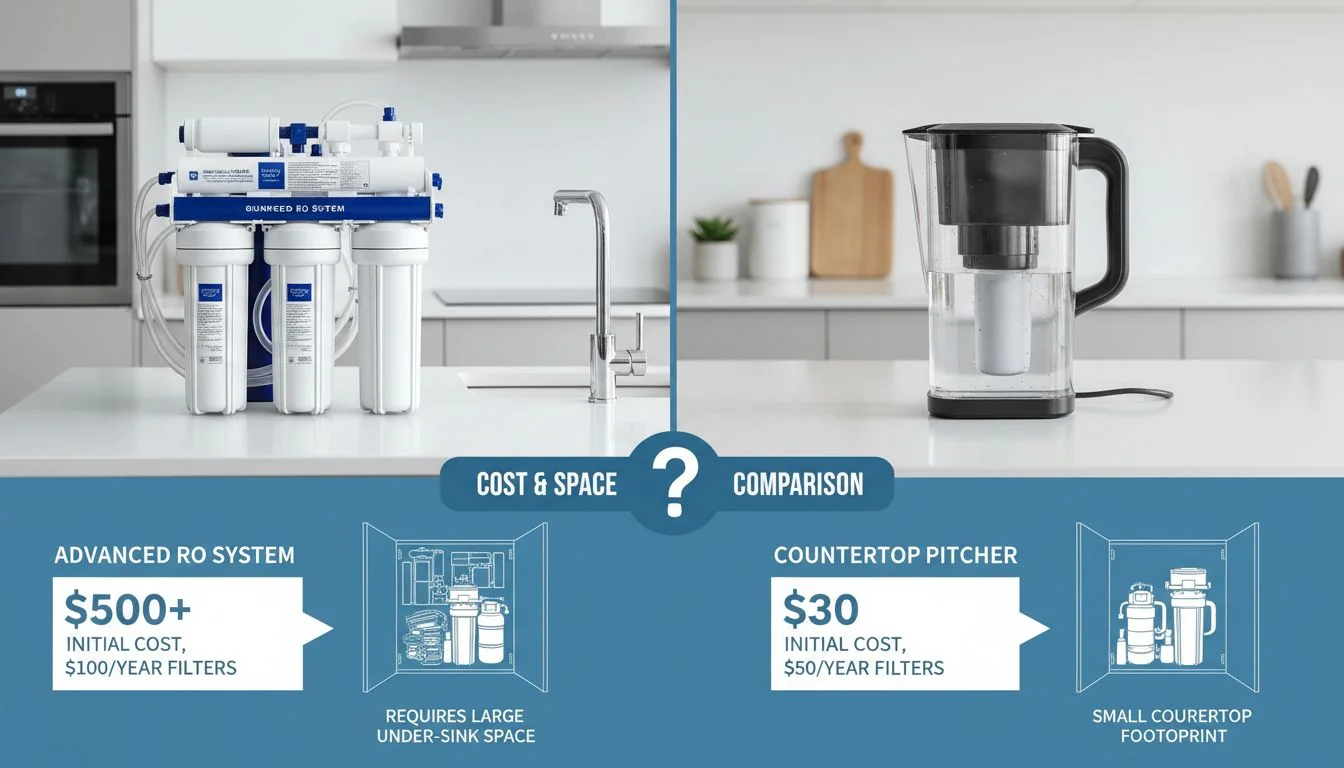
Carbon blocks cost less upfront, take up less space, and create zero wastewater. However, they need frequent filter changes. RO systems cost more, require larger footprints, and produce wastewater, but they offer longer membrane life. Your choice depends on your facility's budget and space limits.
Breaking Down the Project Factors
In mold manufacturing, we always balance cost, speed, and quality. You must do the same when you specify a water system. Let us look at the real project conditions. Do not just guess based on the name of the technology.
First, look at the footprint. Space is money in any factory or institution. Carbon blocks are small. RO systems are big because they need tanks and extra pumps. Next, think about wastewater. RO sends water to the drain. Carbon blocks do not. If your local water costs are high, RO will cost you more every month.
| Faktor | Carbon Block | Reverse Osmosis |
|---|---|---|
| Upfront Cost | Unter | Höher |
| Wartung | Frequent filter changes | Less frequent, but more complex |
| Footprint | Klein | Groß |
| Wastewater | Keine | Hoch |
Maintenance is also key. Changing a carbon block is fast. Servicing an RO system takes more time and skill. You must match the system to your maintenance team's ability.
RO systems are always cheaper to install than carbon block systems.Falsch
RO systems generally have a higher upfront cost due to their complexity, membranes, and storage tanks.
Carbon block systems have a smaller physical footprint than RO systems.Wahr
Carbon blocks do not require storage tanks or complex plumbing, making them much more compact.
Which Technology Fits Your Institutional Scenario?
Not sure which system fits your building? A bad match causes daily operational failures. You need to align the technology with your specific daily water demands.
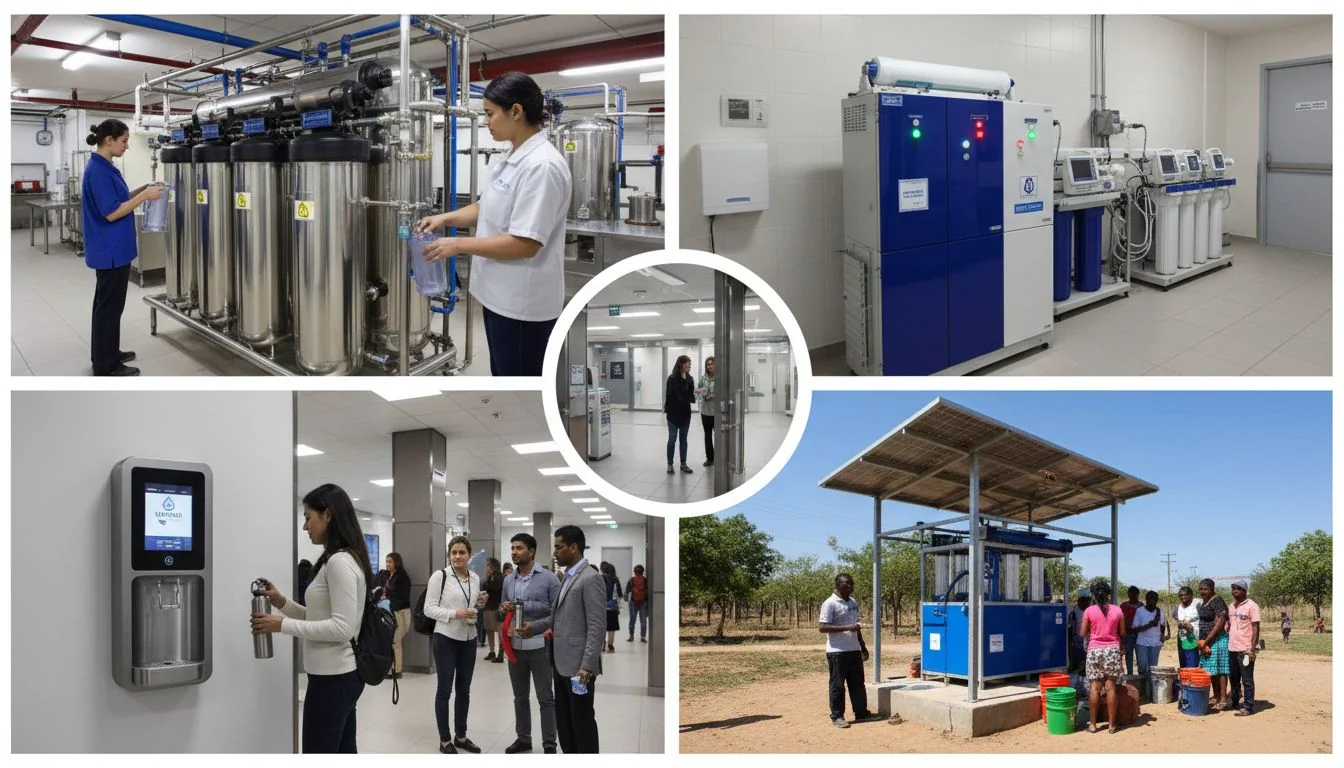
Choose carbon block systems for high-traffic areas like schools or large offices where high flow rates and low maintenance are critical. Choose RO systems for laboratories, medical facilities, or places with severe water contamination where absolute water purity is the top priority.
Matching Tech to the Job
I have helped many clients set up their production lines. The secret is always matching the tool to the task. We can position carbon block as the best option for high-flow needs. We can position RO as the best option for strict treatment rules.
If you are designing a system for a large school or a busy factory floor, people need water fast. You do not want a complex system breaking down. Carbon block is perfect here. It gives you fast water and easy maintenance.
But what if you are setting up a testing lab? Or what if the local water has heavy metals along with PFAS? Then you need RO.
| Scenario | Best Choice | Reason |
|---|---|---|
| Busy office building | Carbon Block | Fast flow, small space |
| Manufacturing cooling line | Carbon Block | No wastewater, easy to swap |
| Medical testing lab | Reverse Osmosis | High purity needed |
| Area with heavy metals | Reverse Osmosis | Broad contaminant removal |
Always look at what the building actually does every day before you choose.
Carbon block is the best choice for a laboratory that requires 100% pure water.Falsch
Laboratories usually require RO or deionization because carbon blocks do not remove dissolved minerals and salts.
High-traffic areas benefit from carbon blocks because of their fast flow rates.Wahr
Carbon blocks do not restrict water flow as much as RO membranes, making them ideal for busy water stations.
How Do You Specify the Right Technology in Project Documents?
Are your project specs too vague? Vague documents lead to contractors installing cheap, wrong parts. You must write clear, certified claims into your project documents.
To specify the right technology, write clear requirements for flow rates, footprint limits, and wastewater rules. Most importantly, demand certified claims. Require NSF/ANSI 53 or 58 certifications for PFAS reduction. This ensures the contractor installs a system that actually works for your specific institutional needs.

Writing Clear Specifications
When Jacky and I discuss mold designs, we use exact numbers. We calculate shrinkage down to the millimeter. You must do the same in your project documents. Do not just write "water filter." You must guide buyers to compare real project conditions.
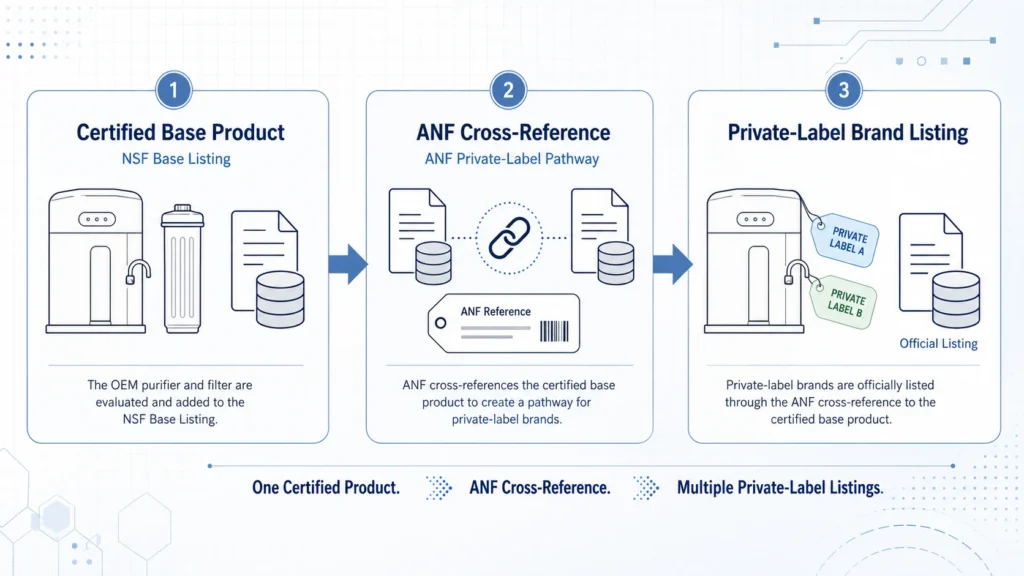
You need to list the exact flow rate you need. You need to state the maximum space the system can take up. And you must ask for proof. Always ask for certified claims. If a maker says their filter removes PFAS, they need a certificate to prove it.
| Specification Detail | Why It Matters |
|---|---|
| Required Flow Rate (GPM) | Ensures the system can keep up with demand |
| Maximum Footprint | Prevents contractors from buying oversized units |
| Wastewater Limits | Controls long-term utility costs |
| NSF/ANSI certification4 | Proves the system actually reduces PFAS |
By writing strict rules, you protect your project. You make sure the final building gets a system that is easy to maintain and actually keeps the water safe.
You should let the contractor choose any filter as long as it says 'PFAS removal' on the box.Falsch
You must specify third-party certifications like NSF/ANSI to ensure the filter actually performs as claimed.
Including flow rate and footprint in your specs helps prevent installation issues.Wahr
Clear physical and performance limits ensure the chosen system fits the space and meets daily demand.
Schlussfolgerung
Choosing between carbon block and RO depends on your project's flow, space, and maintenance needs. Always compare real conditions and demand certified claims to ensure safe, efficient water treatment.
References
-
Explore effective strategies for PFAS reduction to ensure safe water treatment in your facility. ↩
-
Learn about the efficiency and benefits of carbon block filters in removing contaminants. ↩
-
Discover the principles of Reverse Osmosis and its effectiveness in water purification. ↩
-
Explore the significance of NSF/ANSI certification in ensuring the effectiveness of water treatment technologies. ↩





 English
  Français
  Español
  Italiano
  Deutsch
  Português
  Русский
  العربية
  日本語
日本語  한국어
한국어  Tiếng Việt

