
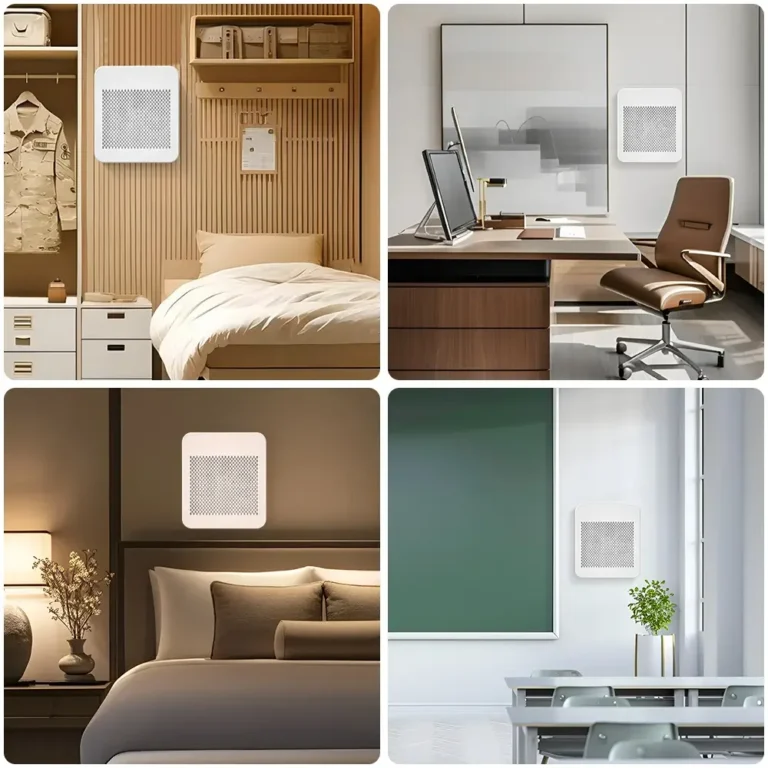
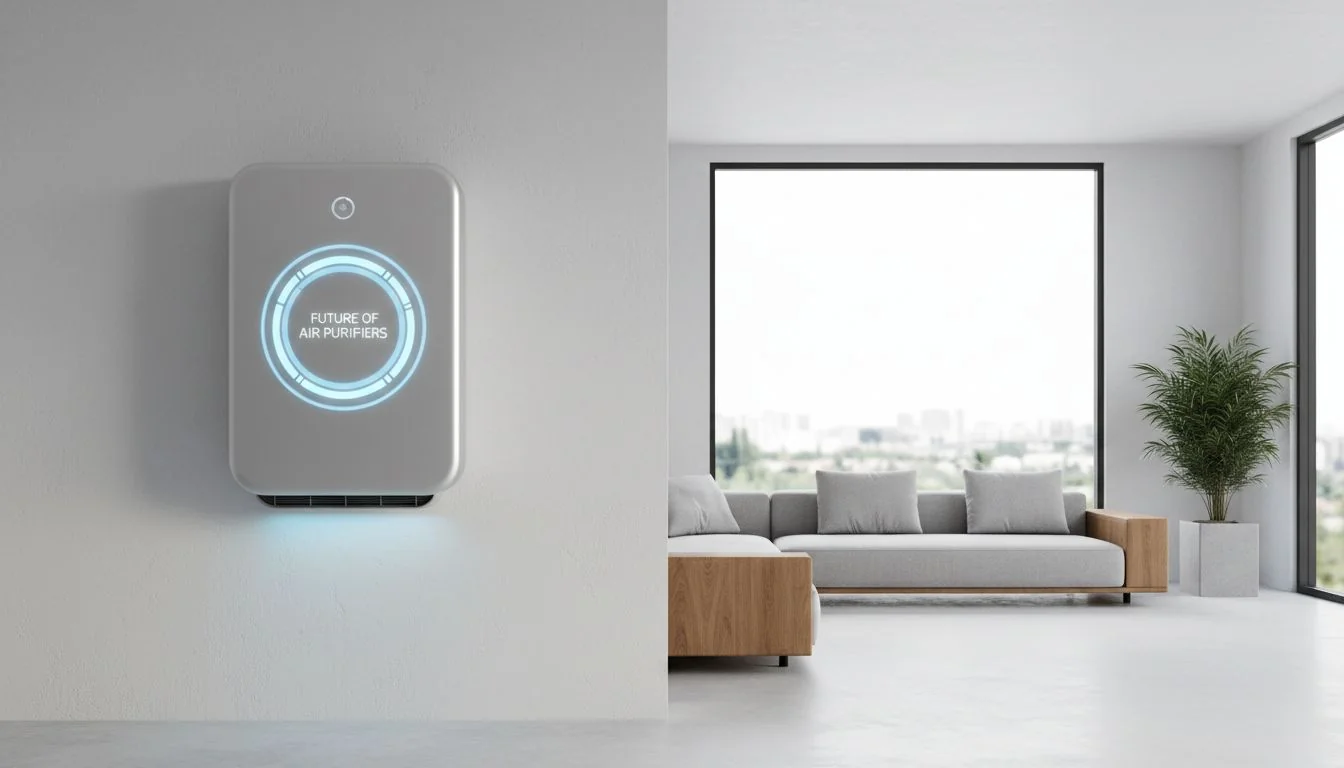
Floor space is expensive, and bulky appliances ruin the look of a room. Your clients want clean air, but they hate the clutter that comes with traditional machines. How do we solve this design conflict?
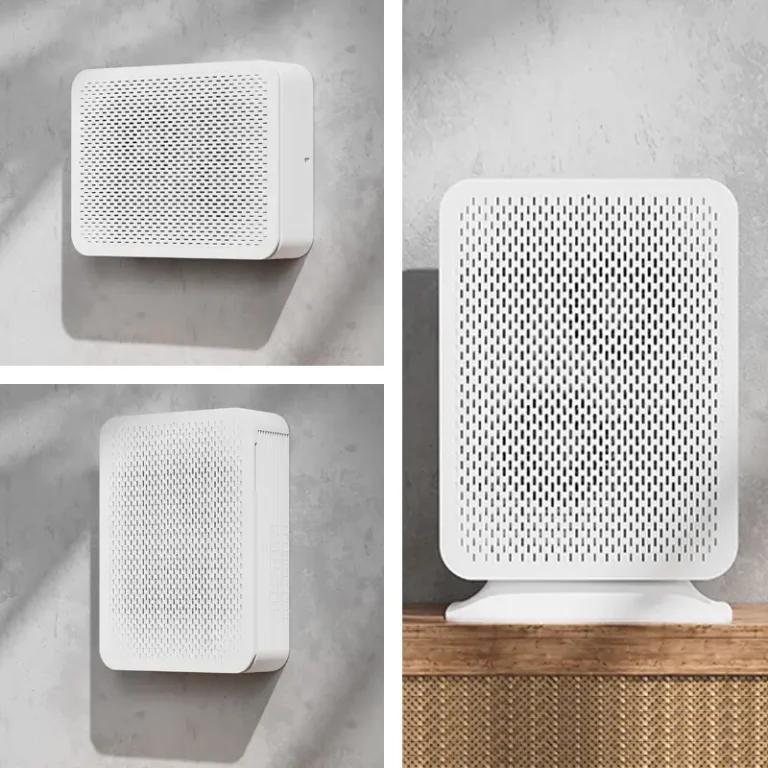
The answer lies in "Invisible Wellness1," a shift from floor-standing units to wall-mounted, "zero-footprint" architectures. This evolution merges high-performance filtration with decor-integrated aesthetics, allowing designers to create systems that purify air without occupying valuable floor space or disrupting visual harmony.
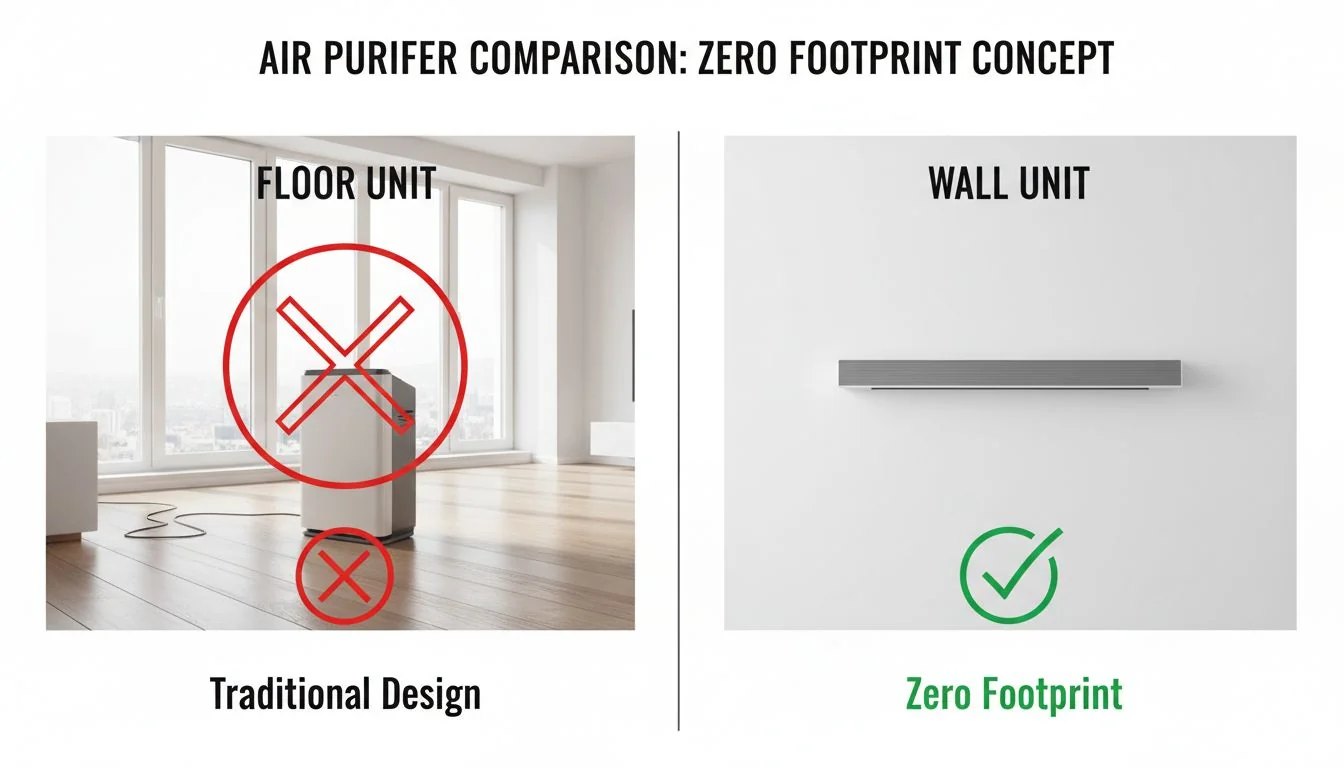
We are seeing a massive change in how we think about home appliances. In the past, a machine just needed to work. Now, it needs to disappear. As a mold designer, I see this shift firsthand. We are moving away from designing heavy, standalone boxes. We are moving toward integrated systems that fit into the home like furniture. This is not just about making things smaller. It is about rethinking the entire structure of the product.
Wall-mounted air purifiers save 100% of floor space compared to traditional tower units.Wahr
By utilizing vertical wall space, the unit removes the footprint from the floor entirely.
Interior designers prefer floor units over wall units.Falsch
Designers and architects prefer wall units because they can be integrated into the design plan without ruining the room layout.
Why Is the Industry Shifting to "Zero-Footprint" Architecture?
Traditional purifiers are often tripping hazards that architects and interior designers hate. They take up room and block flow. Why are we still putting these boxes on the floor?
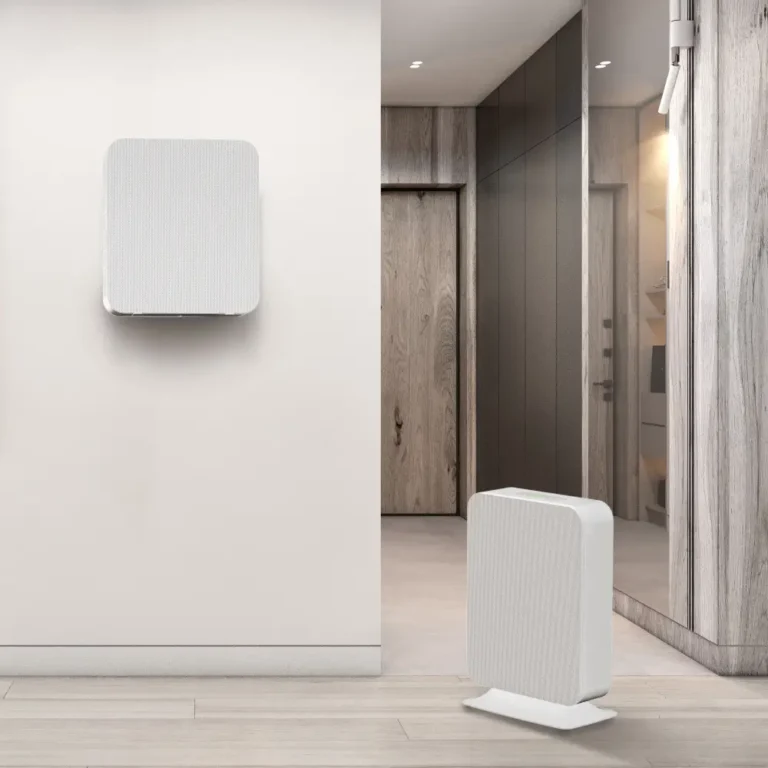
The "Zero-Footprint2" trend moves air purification to the wall, utilizing vertical space. This requires re-engineering internal components, specifically using slim motors and compact centrifugal fans, to create a flat profile that acts as a retrofit solution between portable units and full HVAC systems.
When we look at the "Zero-Footprint" trend, we are really looking at a "Retrofit3" opportunity. Full HVAC installation is too expensive for most people. Portable units are too messy. The wall-mounted unit is the perfect middle ground. It offers premium integration without the need for a construction crew.
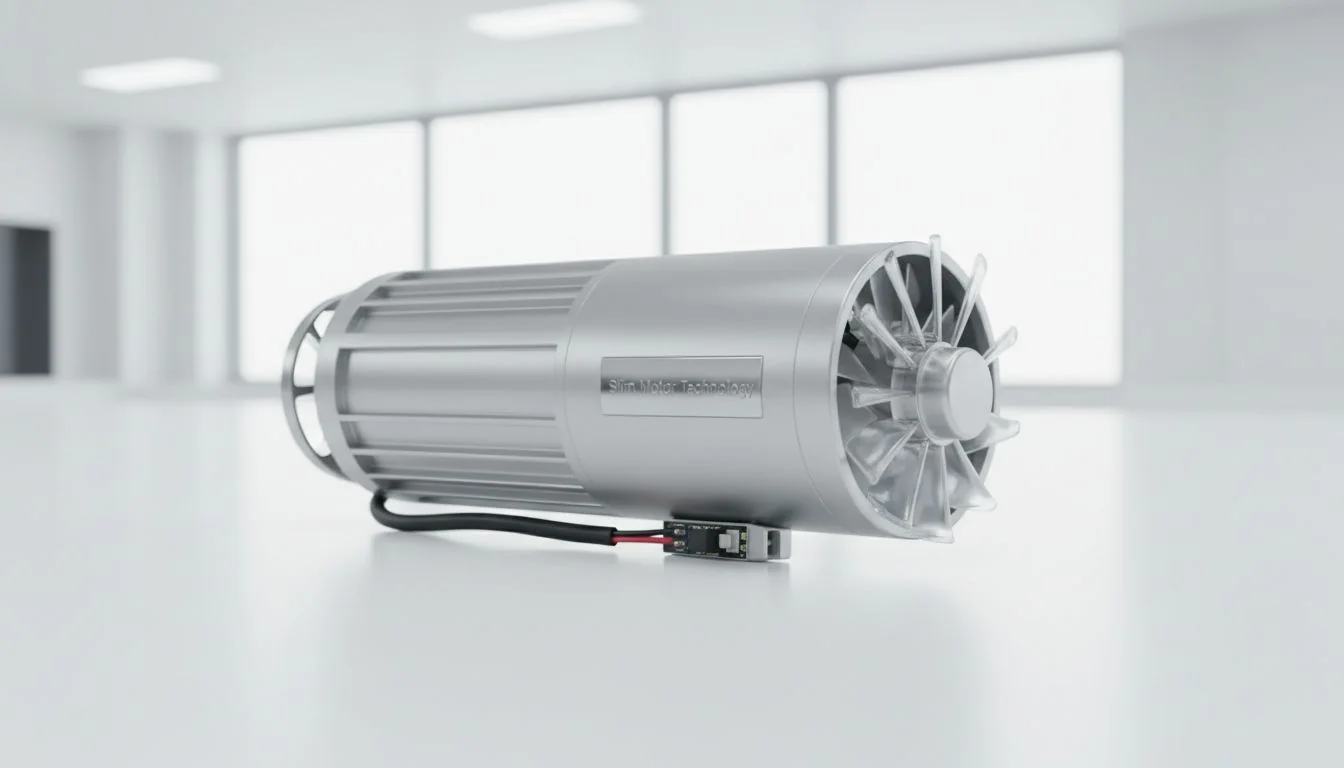
To make this work, we have to change how we design the mold and the internal layout. You cannot just take a tower purifier and hang it on the wall. It sticks out too much. We need to use "Slim Motor4" platforms. This allows us to reduce the depth of the device significantly.
Key Design Considerations for Vertical Shift
| Merkmal | Traditional Design | Zero-Footprint Design |
|---|---|---|
| Fan Type | Axial Fan (Thick) | Centrifugal/Slim Fan (Thin) |
| Luftstrom | Bottom to Top | Front/Side to Top |
| Mounting | Gravity Base | Reinforced Backplate |
As a designer, you must focus on the backplate mold. It needs to be rigid enough to hold the motor and filters without warping, but light enough to hang easily. This establishes the manufacturer not just as a factory, but as a "Futurist." We are engineering the platforms that make this new form factor possible.
Slim motors reduce the depth of air purifiers by up to 50%.Wahr
Specialized flat motor designs allow for significantly thinner housing profiles suitable for wall mounting.
Wall mounting requires complex construction crews.Falsch
Wall-mounted units are designed as easy retrofit solutions, installing similarly to a TV or shelf.
Can an Air Purifier Become a Piece of Art?
Plastic boxes look cheap and lower the perceived value of a room. High-end consumers reject "appliance" aesthetics that clash with their carefully curated homes. How do we fix this?
By integrating "Art Panels5" and magnetic covers, designers transform purifiers into decor elements. This increases perceived value significantly, moving the product from a $150 utility item to a $400 design feature, opening channels with interior designers who value visual integration.
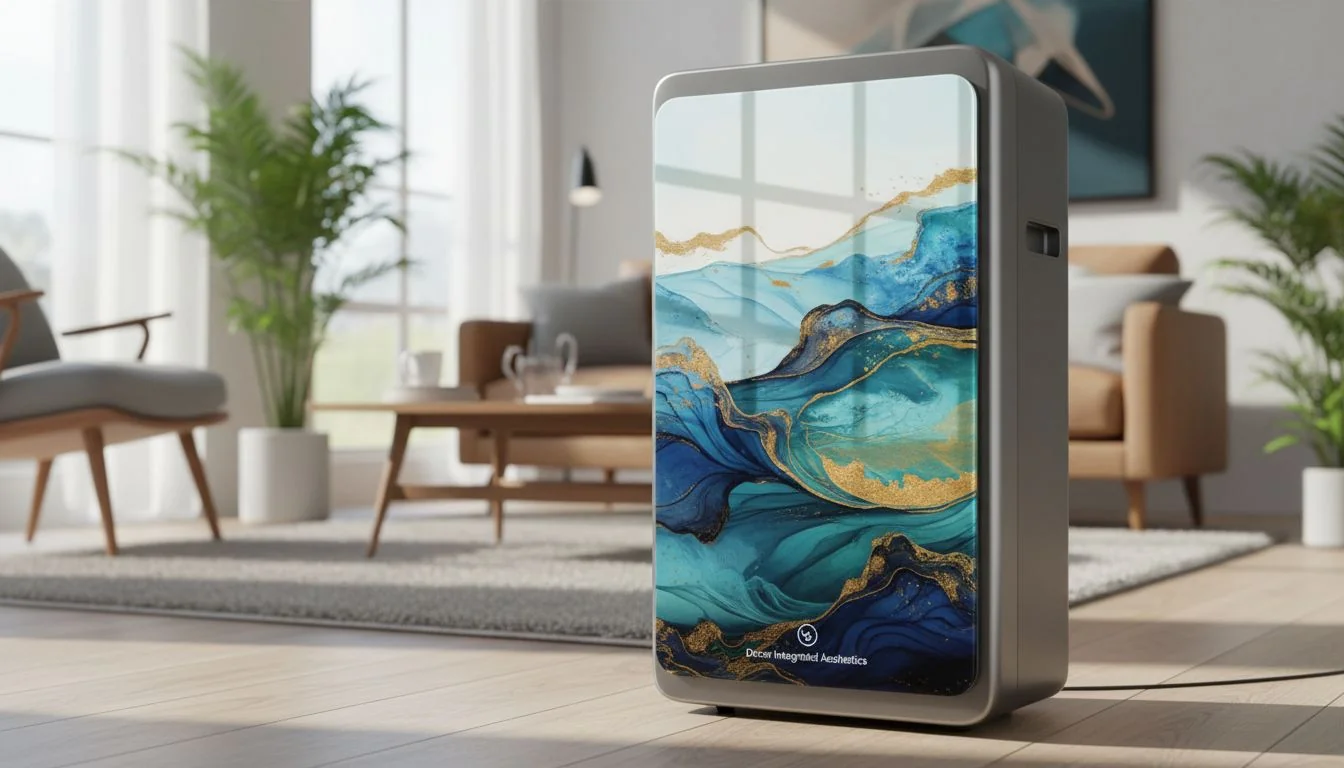
This is where "Invisible Wellness" truly comes to life. We are not just hiding the machine; we are turning it into something beautiful. This trend opens up a new B2B channel for us: Interior Designers and Architects. They love products that serve a purpose but look like art.
From a mold design perspective, this is about the "Art Panel." We need to design magnetic front panels that can be swapped out easily. This allows the user to change the look of the purifier to match their room.
The Value of Aesthetics in Molding
- Surface Finish: We need to use high-quality textures. We might use In-Mold Decoration (IMD) to create wood grain or fabric textures directly on the plastic.
- Magnetic Integration6: The mold must have precise pockets for magnets. If the fit is too tight, the magnet cracks. If it is too loose, it falls out.
- Gap Control: The gap between the art panel and the main body must be consistent. This requires high-precision tooling to manage shrinkage.
By adding this "Art" element, we help our clients escape price wars. A commodity brand sells a purifier. We help them sell a piece of art that cleans the air. The perceived value jumps instantly.
Adding an art panel can double the retail price of a purifier.Wahr
The product shifts from a commodity appliance category to the home decor category, commanding higher margins.
Magnetic panels are difficult for users to swap.Falsch
Magnetic designs are engineered specifically for easy, tool-free customization by the end user.
How Does AI-Driven "Bio-Sensing" Change Automation?
Manual adjustments are annoying, and users often forget to turn purifiers up when air quality drops. How do we ensure the air is always clean without constant checking?
AI-driven Bio-Sensing7 uses advanced particulate and gas sensors to automate fan speeds based on real-time data. This creates a "set and forget" experience where the device reacts instantly to pollutants, ensuring optimal air quality without user intervention.
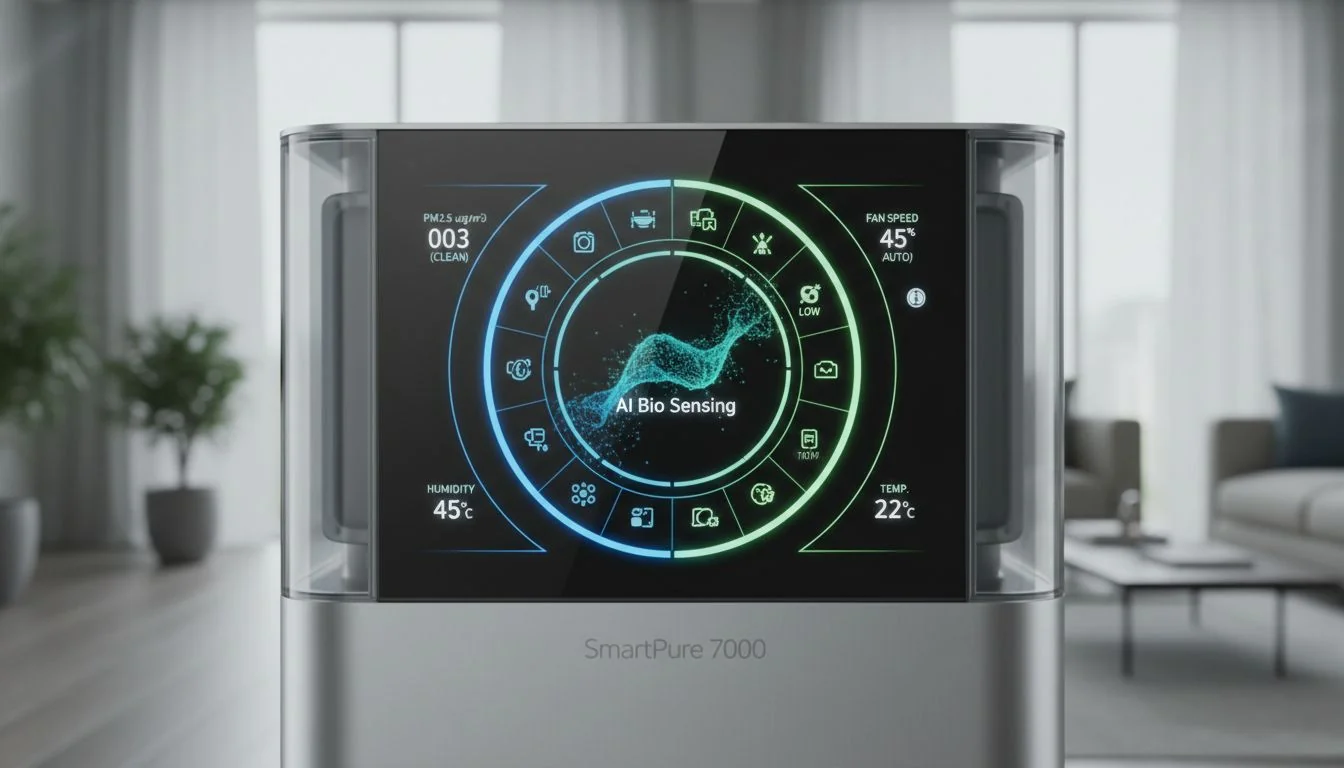
Automation is the brain behind "Invisible Wellness." If the user has to touch the machine constantly, it is not invisible. It is a nuisance. We want the device to think for itself.
This trend relies on "Bio-Sensing." The device detects changes in the environment, like cooking smoke or pollen, and adjusts immediately. For us as designers, this means we have to integrate sensors seamlessly into the housing.
Integrating Sensors into the Mold
- Air Intake for Sensors: The sensor needs a clear path to the room air. We must design small, discreet vents in the mold that allow air to reach the sensor but do not ruin the aesthetic.
- Isolation: The sensor must be isolated from the clean air coming out of the machine. If the sensor reads the clean air, it will think the room is clean when it is not. We need internal ribbing in the mold to seal the sensor area.
- Thermal Management: Sensors and AI chips generate heat. The mold design must include heat dissipation features to prevent the electronics from overheating.
This makes the machine feel "alive." It reacts to the user's life. It does the work without demanding attention.
AI sensors require manual calibration every week.Falsch
Modern AI bio-sensors are self-calibrating and designed for automated operation.
Sensor placement affects the accuracy of the purifier.Wahr
Sensors must be placed to sample room air, not the purified air exhaust, to provide accurate readings.
Is Active Sterilization the New Standard for Health Security?
Filters trap dust, but they do not always kill viruses or bacteria. Post-pandemic consumers demand more than just trapping dirt; they want total protection. Is filtration enough?
Active Sterilization8 adds a "Health Security" layer using technologies like UV-C light or plasma. This moves beyond passive filtration to actively neutralize pathogens, requiring mold designs that accommodate safety shielding and UV-resistant materials to prevent degradation.
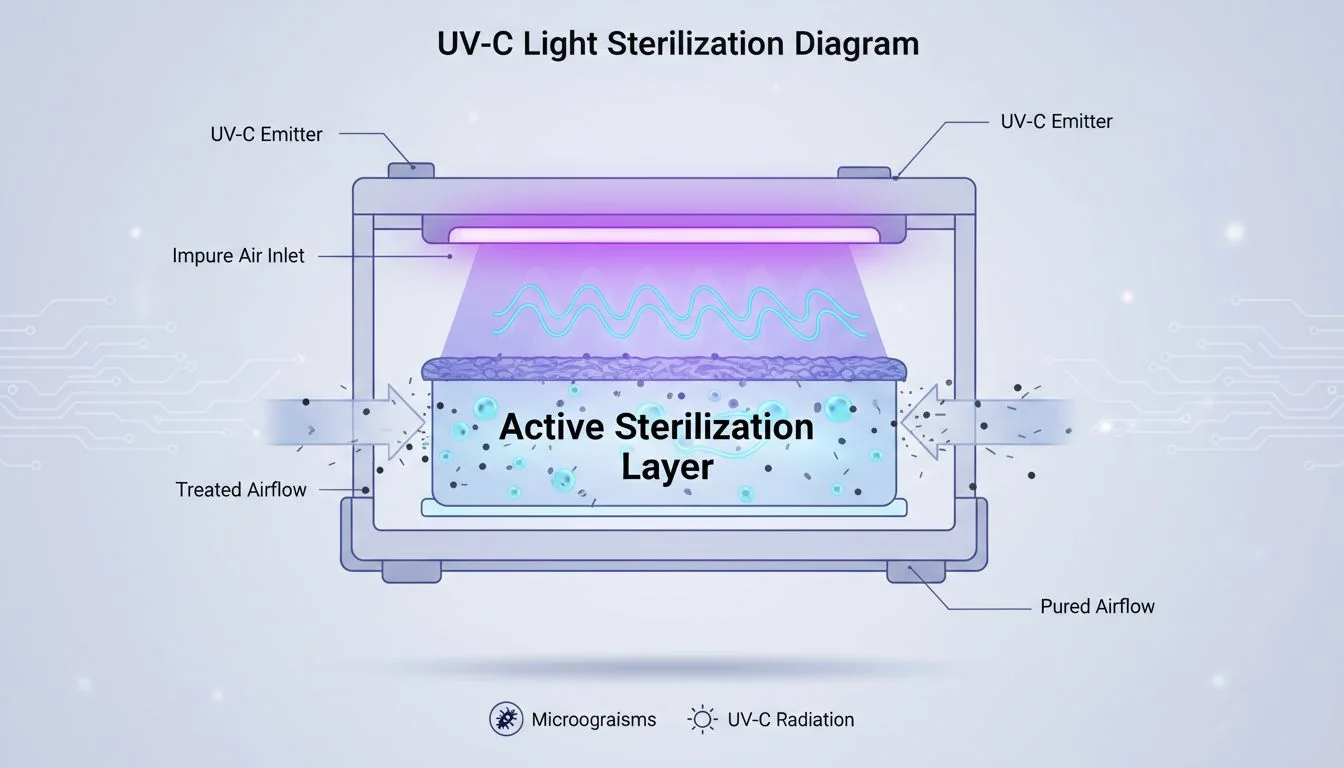
The final trend is the shift from passive to active. Passive filtration just catches things. Active sterilization kills them. This is the "Health Security9" layer that modern consumers are looking for.
However, adding things like UV-C-Licht10 inside a plastic box presents a major challenge for mold designers. UV light destroys plastic. It makes it brittle and yellow over time.
Material and Safety Challenges
| Herausforderung | Lösung |
|---|---|
| UV Degradation | Use UV-resistant additives (like ASA) instead of standard ABS. |
| Light Leakage | Design "light traps" in the air vents so air flows but light cannot escape. |
| Safety Interlocks | Mold features that trigger a switch to turn off UV if the case is opened. |
We have to be very careful here. We are dealing with health. The mold design must ensure that no UV light escapes into the room. We use complex geometry in the vents—like chevron shapes—to block the line of sight for the light while letting air pass through. This is where expert molding knowledge becomes a safety feature.
Standard ABS plastic is immune to UV light damage.Falsch
Standard ABS degrades, yellows, and becomes brittle under prolonged UV exposure; UV-stabilized materials are required.
Active sterilization neutralizes pathogens that filters might miss.Wahr
Technologies like UV-C and plasma can deactivate viruses and bacteria that are small enough to pass through some filters.
Schlussfolgerung
The future of air purification is on the wall. By embracing "Invisible Wellness," we create products that are zero-footprint, decor-integrated, smart, and secure.
References
-
Explore how 'Invisible Wellness' is transforming air purifiers into stylish, space-saving solutions. ↩
-
Learn about the Zero-Footprint trend and its impact on modern air purifier aesthetics and functionality. ↩
-
Discover how Retrofit solutions bridge the gap between portable units and full HVAC systems. ↩
-
Discover the advantages of Slim Motors in creating compact and efficient air purifiers. ↩
-
Find out how Art Panels can turn air purifiers into decorative elements, increasing their value. ↩
-
Explore the benefits of Magnetic Integration for customizable and user-friendly air purifiers. ↩
-
Understand how AI-driven Bio-Sensing technology automates air quality management in purifiers. ↩
-
Explore the importance of Active Sterilization in enhancing health security through air purification. ↩
-
Learn about the growing demand for Health Security features in air purifiers post-pandemic. ↩
-
Understand how UV-C light technology enhances air purifiers by actively neutralizing pathogens. ↩


 Deutsch
  English
  Français
  Español
  Italiano
  Português
  Русский
  العربية
  日本語
日本語  한국어
한국어  Tiếng Việt

