Se abre en una pestaña nueva
Soluciones innovadoras para la calidad del aire

Beyond the Bowl: Why Your Pet’s Water Quality is the Most Overlooked Aspect of Their Health

As pet owners, we go to great lengths to ensure the well-being of our furry family members. We research the most nutritious foods, buy the most engaging toys, and never miss a veterinary check-up. Yet, one of the most fundamental components of their health is often taken for granted: the water in their bowl. Water is the most essential nutrient, critical for everything from digestion and temperature regulation to organ function. But is the water you're providing truly as safe and healthy as it could be?

The simple truth is that if your tap water isn't considered safe for you to drink, it is definitely not safe for your pet. However, the conversation goes deeper than that. Municipal water systems are designed and regulated with a single species in mind: humans. What might be a legally acceptable level of a contaminant for a 150-pound person can represent a significant, chronic toxicological burden for a 15-pound cat or a 40-pound dog. Over a lifetime, this daily, low-level exposure can contribute to severe health issues, including gastrointestinal distress, organ damage, and even cancer.

This article will explore the hidden dangers lurking in common water sources and reveal why providing purified water is one of the most profound acts of preventative care you can offer your pet. For both discerning households (D2C) and the businesses that serve them (B2B), understanding water quality is the first step toward ensuring a longer, healthier life for our beloved companions.

The Unseen Dangers in Tap Water

For most, the kitchen tap is the default water source for pets. While public water systems in many countries are among the safest in the world, "safe" does not mean "pure." Tap water is often a chemical cocktail that can pose long-term risks to our pets.

cat drink water

  • Disinfection Byproducts (DBPs): To kill harmful pathogens, water treatment facilities use disinfectants like chlorine. While necessary, this process creates chemical byproducts, such as Trihalomethanes (TTHMs), when chlorine reacts with organic matter in the water. The risk here is not hypothetical. A 2022 veterinary study established a direct link between higher concentrations of TTHMs in tap water and an increased risk of bladder cancer in dogs. The very process that makes water safe from bacteria can introduce carcinogens into your pet's bowl.
  • Heavy Metals: Aging infrastructure can leach heavy metals like lead from old pipes and plumbing fixtures. Lead is a potent neurotoxin that can cause irreversible neurological damage, anemia, and kidney damage in pets, even at low levels of exposure. Other metals like arsenic, a known carcinogen, can also find their way into water supplies.
  • Fluoride: Many municipalities add fluoride to water for human dental health, but our pets don't share this benefit. In fact, high levels of fluoride can be toxic to dogs and cats, potentially causing kidney damage, seizures, and bone problems.
  • Hard Water Minerals: "Hard water" is high in dissolved minerals like calcium and magnesium. While not toxic, this high mineral content is a known contributor to the formation of painful urinary crystals and bladder stones in both cats and dogs, which can lead to recurrent infections and life-threatening blockages.
  • Other Contaminants: The list goes on, including pesticides, herbicides, industrial chemicals (VOCs), and "forever chemicals" (PFAS), all of which carry their own health risks.

Are Common Alternatives Any Better?

Aware of these risks, many pet owners turn to alternatives, but these often come with their own hidden drawbacks.

  • Bottled Water: Often perceived as a pure alternative, bottled water is not always the answer. Its quality can be less regulated than tap water, and some brands are simply bottled tap water. More alarmingly, plastic bottles can leach chemicals and microplastics into the water, especially when exposed to heat. Some brands also add minerals to improve taste, which can be actively harmful to pets prone to urinary issues.
  • Distilled Water: This is water in its purest form, stripped of all minerals and contaminants. While this sounds ideal, many veterinarians and the World Health Organization warn against its long-term use for healthy animals. The concern is that consuming demineralized water can leach essential minerals from the body over time, potentially leading to electrolyte imbalances and other health issues.

The Gold Standard: The Unmistakable Case for Filtered Water

Given the risks of both tap and alternative water sources, filtered water emerges as the safest, most reliable, and healthiest choice for our pets. A high-quality filtration system addresses the core problem by removing the dangerous contaminants while leaving behind a healthier, better-tasting water that can encourage pets to drink more.

Among filtration technologies, Reverse Osmosis (RO) is widely recognized as the most comprehensive solution. An RO system forces water through a semipermeable membrane, effectively removing an enormous range of impurities that other filters miss, including heavy metals, fluoride, nitrates, and the carcinogenic disinfection byproducts. It provides purified water on demand, eliminating the environmental waste and potential contamination of bottled water and avoiding the mineral-stripping issues of distillation. For any pet, and especially for those with compromised immune systems or kidney disease, providing filtered water is a critical step in reducing the burden on their bodies.

hw hc01 kitchen 2

The Hisoair Difference: Engineered Purity for Every Home and Business

Recognizing the critical need for truly pure water, Hisoair has dedicated over 20 years to perfecting the science of water purification. We engineer reliability, safety, and peak performance into every product, providing a definitive solution for both health-conscious pet owners and the B2B partners who serve them.

For the Modern Home (D2C): Pure Water, Simple Living

For pet parents, Hisoair offers peace of mind in every drop. Our advanced water purifiers are designed to seamlessly integrate into your life while providing the highest standard of water for your entire family—two-legged and four-legged alike.

  • Uncompromising Filtration: Our systems utilize multi-stage Reverse Osmosis (RO) technology, some enhanced with Hydrogen Nano Bubble Technology and UV sterilization, to ensure the removal of the widest possible spectrum of contaminants.
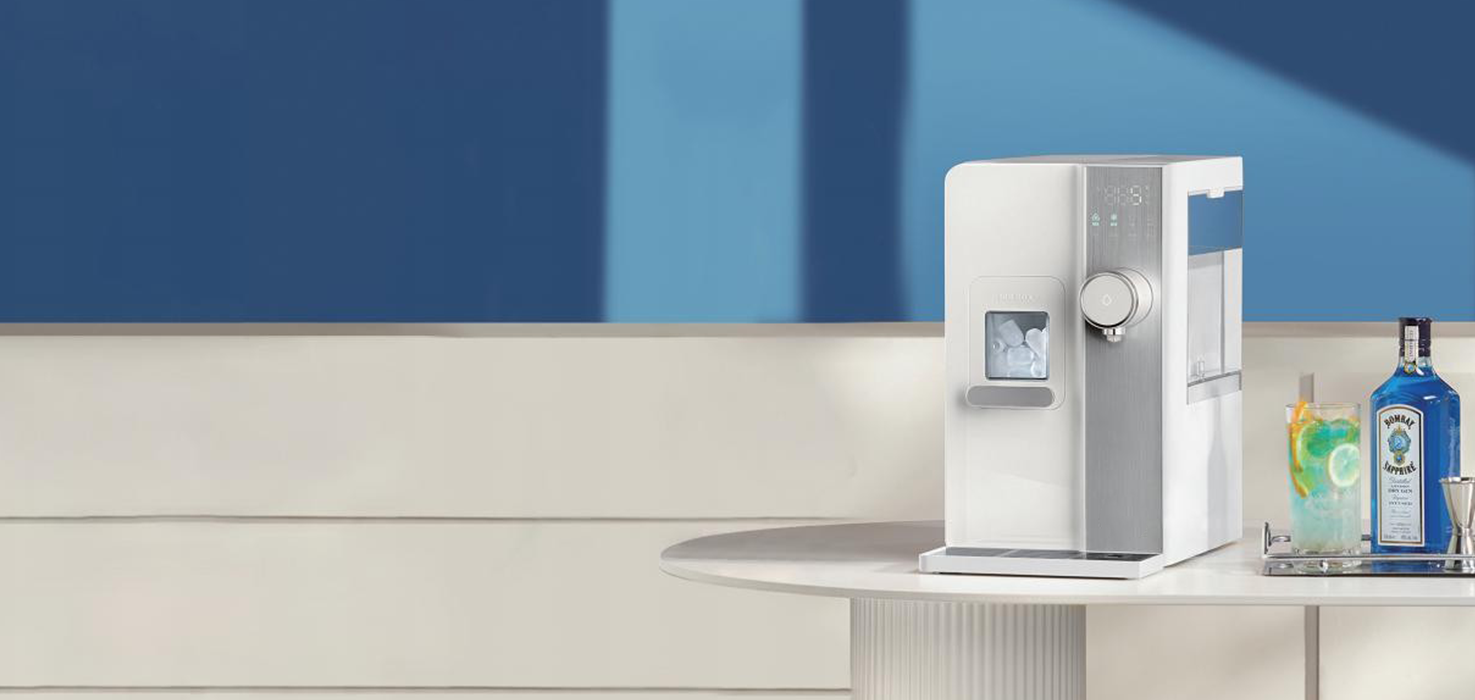
  • Convenience and Innovation: We believe pure water should be effortless. Our product line includes ultra-fast, high-capacity under-sink models that fill a cup in seconds, as well as innovative countertop units that provide instant hot, cold, and even ice water from a single device.
  • Designed for Your Pet's Health: By removing the harsh taste and smell of chlorine and other chemicals, our purifiers produce water that is more appealing to pets, naturally encouraging them to stay better hydrated. This is especially crucial for cats, who are notoriously reluctant drinkers.

For Our Business Partners (B2B): A Partnership in Quality and Trust

For distributors, traders, and ODM clients, partnering with Hisoair means offering a product line built on a foundation of excellence and global trust. We provide the technology and support you need to deliver superior water solutions to your market.

  • Proven Performance & Premium Quality: Our filters are engineered for excellence. We use 100% coconut shell activated carbon with an industry-benchmark iodine value for superior adsorption, and our extruded carbon blocks ensure stable flow and a long service life.
  • OEM/ODM Flexibility and Support: We are more than a supplier; we are a partner. We offer fully customized solutions, from initial design and material suggestions to CAD support, prototyping, and mass production. Our filters can be customized to be compatible with major brands.
  • Global Manufacturing & Certification: With production facilities across Asia (China, Vietnam, Thailand, Malaysia), we ensure a stable and resilient supply chain. Our products hold global certifications including NSF, CE, ISO, and RoHS, making them ready for any market.
  • Competitive Value: Our factory-direct model and stable raw material supply allow us to offer competitive pricing without ever compromising on the quality and safety that your customers demand.
hw hci01

The Ultimate Act of Care

The water we provide our pets is a foundational pillar of their health. Choosing to filter their water moves beyond basic care and becomes a proactive, preventative measure against chronic illness. It reduces the daily assault of toxins on their small bodies, supports vital organ function, and can contribute to a longer, more vibrant life.

Whether you are a pet owner seeking the best for your companion or a business looking to provide best-in-class products to your customers, the solution is clear. Pure, filtered water is not a luxury—it is a necessity.

Give your pet the gift of health and hydration. Explore Hisoair’s advanced water purification solutions today.

Interested in becoming a partner? Contact us to learn about our comprehensive B2B programs and lead the market with superior water purification technology.

Comparte:
fundador de hisoair, sr. lee
Alwen Lee, an air purification expert with over 10 years of experience, is a devoted father of two and a passionate traveler, having explored more than 30 countries. With a love for public speaking and swimming, he has dedicated his life to the indoor air quality industry. His mission is to ensure that people around the world enjoy the freedom to breathe clean air and lead happy, healthy lives.

Envíenos un mensaje

Más que leer

Comparison between PFAS-ready and PFAS-certified water filters, showing internal filter components and certification steps.

PFAS-Ready vs. PFAS-Certified Water Filters: Engineering Differences for OEM Brands

For an appliance, wellness or healthy-home brand preparing to launch a water purifier, the phrase “PFAS-ready” can sound reassuring. The proposed system may use activated ...
Water Purifiers
NSF base listing and ANF private-label certification pathway for OEM water filters

What Is an NSF Master Listing? A Guide to Base Listings, ANF Certification and OEM Water Filters

For a brand preparing to launch an OEM water purifier, one of the most common supplier claims is: “We already have an NSF master listing, ...
News, Water Purifiers
Two professionals discussing a supplier evaluation checklist at a table with water purifier parts, documents, and technical drawings in a factory setting.

Water Purifier Manufacturer in China: 12 Questions B2B Buyers Should Ask

Finding a water purifier manufacturer in China is easy. Finding a factory that can support your target contaminants, certification pathway, product positioning and long-term replacement-filter ...
News, Water Purifiers
Featured image for Why Stainless Steel Water Purifiers Are Becoming the Premium Choice for Wellness Brands

Why Stainless Steel Water Purifiers Are Becoming the Premium Choice for Wellness Brands

Choose stainless steel purifiers for purity, aesthetics, and sustainability. Elevate your wellness brand with premium quality today!
News, Water Purifiers
Featured image for What Biohacking & Longevity Consumers Want in a Water Purification System

What Biohacking & Longevity Consumers Want in a Water Purification System

Discover pure, re-mineralized water systems. No plastics, complete RO, perfect for biohacking longevity. Upgrade your hydration now!
News, Water Purifiers
Featured image for How Premium Water Appliances Improve Sleep, Skin, and Daily Energy

How Premium Water Appliances Improve Sleep, Skin, and Daily Energy

Unlock better sleep, radiant skin, and energy with mineral-rich water. Discover the power of premium appliances for your ultimate wellness boost.
News, Water Purifiers
Contaminant Engineering•3 min read

PFAS Water Filtration Technologies Explained: Carbon, Resin & RO

Key Takeaway:

PFAS reduction depends on the specific compounds present, treatment media, contact time, water chemistry, and system design. Activated carbon, ion exchange, and Reverse Osmosis address PFAS through different mechanisms.

PFAS are a large family of persistent fluorinated compounds that can occur in drinking-water supplies. Their treatment behavior varies significantly by molecular structure, chain length, functional group, concentration, and the chemistry of the source water.

Granular Activated Carbon (GAC) removes PFAS primarily through adsorption. It is generally more effective for many longer-chain PFAS, while shorter-chain compounds tend to break through more quickly. Carbon performance depends on media properties, Empty Bed Contact Time (EBCT), competing organic matter, loading, and replacement frequency.

Ion-exchange resins use charged functional sites to capture many PFAS compounds. Properly selected anion-exchange media can provide high capacity and may perform better than conventional activated carbon for some shorter-chain PFAS, although performance still depends on water chemistry and competing ions.

Reverse Osmosis (RO) uses membrane separation rather than adsorption. Properly designed RO systems can provide broad reduction across many PFAS compounds as well as dissolved salts and other contaminants. Unlike carbon or resin, however, RO also produces a concentrate stream that must be managed.

No single technology should be selected from a PFAS label alone. System design should consider which PFAS compounds are present, their concentrations, required reduction targets, flow rate, media life, and the applicable third-party certification or validation requirements.

HisoAir Water Technical Series
Product Discovery•3 min read

How to Choose an Under-Sink Water Purifier for Modern Kitchens

Key Takeaway:

Match the treatment technology to your water quality first, then evaluate cabinet space, faucet configuration, flow rate, drain and power requirements, and filter replacement needs.

Choosing an under-sink water purifier starts with water chemistry. Carbon filtration is well suited to chlorine, taste, odor, and many organic contaminants, while Reverse Osmosis is more appropriate when dissolved salts, fluoride, nitrates, or broader dissolved contaminants need to be reduced.

For compact kitchens, tankless RO systems eliminate the conventional storage tank and can significantly reduce the space required under the sink. However, membrane capacity stated in GPD does not directly equal faucet flow. When comparing systems, check the actual dispensing flow rate, inlet-pressure requirement, recovery ratio, and whether a booster pump is required.

Installation architecture also matters. Many RO systems require a drain connection, electrical power, and either a dedicated drinking-water faucet or a compatible multi-function faucet. High-flow carbon systems can often connect directly to the existing cold-water line with a simpler installation, but pressure drop and available faucet flow should still be verified.

RO also removes much of the naturally occurring dissolved mineral content. Where taste or mineral balance is a priority, a post-RO remineralization stage can be added. Filter life should be evaluated by both rated capacity and local water quality rather than replacement time alone.

The right system is therefore not simply the smallest or highest-GPD model. It is the configuration that matches the target contaminants, available cabinet space, desired faucet setup, peak dispensing demand, and maintenance expectations.

HisoAir Water Technical Series
Water Quality•2 min read

What Does TDS Mean in Drinking Water? Measurement vs Contaminant Reality

Key Takeaway:

A TDS meter estimates the overall concentration of dissolved ionic substances from electrical conductivity. It cannot identify specific contaminants or determine whether water is chemically safe.

Total Dissolved Solids (TDS) refers to the combined concentration of dissolved substances in water. Most handheld TDS meters do not measure TDS directly. Instead, they measure electrical conductivity (EC) and convert that reading into an estimated parts-per-million (ppm) value.

This means a TDS reading can indicate how much dissolved ionic material is present, but not what that material actually is. Calcium, magnesium, sodium, nitrates, and other dissolved ions can all contribute to conductivity, yet a simple TDS meter cannot distinguish between them.

TDS meters are also not suitable for detecting trace contaminants such as PFAS, many VOCs, pesticides, pharmaceuticals, or disinfection byproducts. These substances may be present at concentrations far below the level needed to noticeably change electrical conductivity.

A low TDS reading therefore does not guarantee safe drinking water, and a higher TDS reading does not automatically indicate contamination. Water-treatment decisions should be based on laboratory testing for specific contaminants of concern rather than TDS alone.

HisoAir Water Technical Series
Technology Selection•2 min read

RO vs UF Water Filtration: Understanding Pore Sizes & Dissolved Minerals

Key Takeaway:

Ultrafiltration can reduce bacteria, turbidity, and suspended particles while retaining most naturally occurring dissolved minerals. Reverse Osmosis provides much broader reduction of dissolved salts and smaller contaminants.

Ultrafiltration (UF) typically uses hollow-fiber membranes with pore sizes in the approximate 0.01–0.1 micron range. These membranes physically retain turbidity, suspended solids, colloids, and many microorganisms while allowing dissolved minerals and salts to remain in the water.

Reverse Osmosis (RO) operates at a much finer separation level. Unlike UF, RO can substantially reduce dissolved ions such as sodium, calcium, fluoride, nitrates, and other contributors to total dissolved solids (TDS). This makes RO more suitable when dissolved-salt reduction is a primary treatment objective.

UF generally requires less system pressure and produces little or no continuous concentrate stream in many point-of-use configurations. RO typically requires greater pressure and produces a reject-water stream, but delivers broader contaminant reduction.

For water with acceptable TDS and mineral content, UF can be a simpler mineral-retaining treatment option. Where dissolved salts, fluoride, nitrates, or broader dissolved contaminants are a concern, RO is generally the more appropriate technology.

HisoAir Water Technical Series
Technology Selection•4 min read

Carbon Block vs Reverse Osmosis: Which Fits Your Need?

Key Takeaway:

Choose RO for dissolved inorganic salts and heavy metals; choose Carbon Block for chemical taste/odor, no wastewater, and high line-pressure flow.

Reverse Osmosis (RO) and Carbon Block filtration represent two fundamentally different treatment methods: membrane separation and adsorption. Understanding these differences helps determine which technology is better suited to a specific water-quality requirement.

Reverse Osmosis uses a semi-permeable membrane with pore sizes of approximately 0.0001 microns. It can significantly reduce dissolved inorganic contaminants such as TDS, fluoride, nitrates, and certain heavy metals. Because water must be forced through the membrane, RO systems require sufficient pressure or a booster pump and generate a concentrated wastewater stream.

Carbon Block filtration relies primarily on adsorption through compressed activated carbon, commonly with nominal pore sizes around 0.5–5 microns. It is highly effective for chlorine, chloramines, VOCs, taste, and odor, while allowing substantially higher direct-flow rates without producing wastewater.

From an operating perspective, Carbon Block systems are generally simpler, require less energy, and avoid the water loss associated with RO. RO involves higher system complexity and operating cost, but provides substantially broader reduction of dissolved contaminants that Carbon Block alone cannot address.

HisoAir Water Technical Series

SOLICITAR PRESUPUESTO