
Se abre en una pestaña nueva
Soluciones innovadoras para la calidad del aire

¿Dónde se fabrican los purificadores de aire Honeywell?

Honeywell es una de las marcas más notables de purificadores de aire en la actualidad. Establece el estándar de los purificadores de aire HEPA; de hecho, incluso los purificadores de aire HisoAir están diseñados para competir con esta marca. Por supuesto, la calidad de Honeywell se debe a sus instalaciones y técnicas de producción de vanguardia.

HoneywellHoneywell Inc. es un conglomerado estadounidense con un amplio alcance en el mercado mundial. Esta empresa, con sede en Carolina del Norte, se ha establecido en las tecnologías de la construcción para aplicaciones residenciales, comerciales e industriales. En concreto, cuenta con cuatro áreas de especialización: aeroespacial, materiales de alto rendimiento, soluciones de productividad y construcción de tecnología.

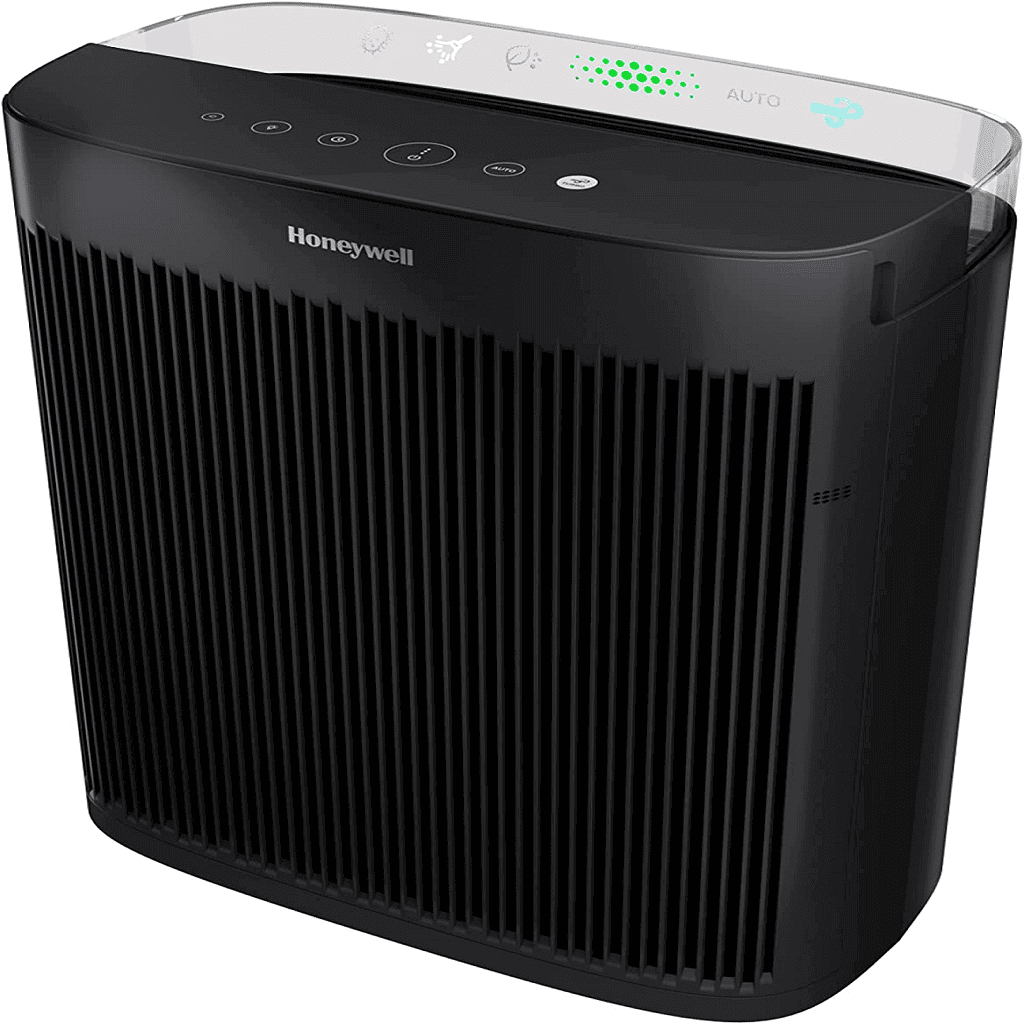
Mientras tanto, Purificadores de aire Honeywell son conocidos por su impecable rendimiento, especialmente en la filtración de contaminantes microscópicos. Tienen capacidades probadas y comprobadas, especialmente en aplicaciones residenciales. Además, muchas personas alérgicas utilizan los purificadores de aire Honeywell por su eficacia a la hora de atrapar los contaminantes.

Una vez más, la funcionalidad de los purificadores de aire Honeywell se debe al estricto control de calidad que realiza la empresa en sus plantas de montaje. Pero, ¿sabe usted dónde se purificadores de aire de alta calidad se fabrican?

¿Dónde se fabrican los purificadores de aire Honeywell?
Una planta de montaje de Honeywell

Fuente de la imagen: Honeywell

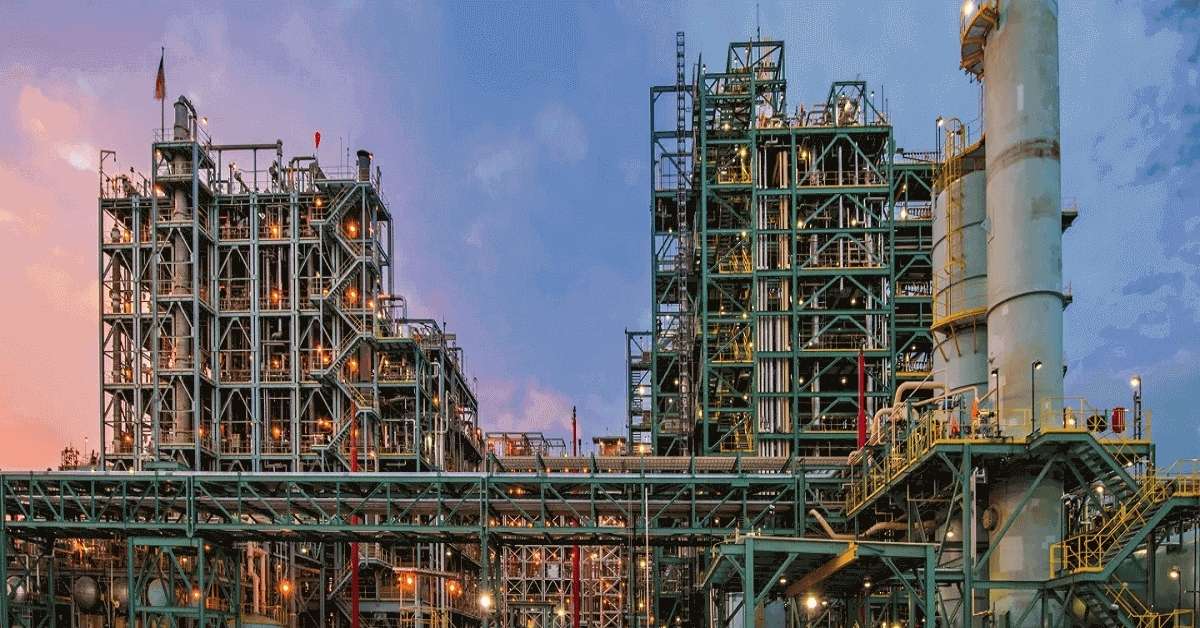
A pesar de ser una empresa estadounidense, Honeywell no centralizó la producción de sus productos. Por supuesto, esto tiene mucho que ver con la decisión global de sus máximos responsables. Los costes de mano de obra, la accesibilidad a los materiales y la disponibilidad de mano de obra son algunas de las razones por las que Honeywell extendió sus operaciones fuera de suelo estadounidense.

Concretamente, los purificadores de aire Honeywell se fabrican en diferentes países, como por ejemplo China, Coreay Portugal. Honeywell tiene que externalizar sus productos para garantizar que puede satisfacer las crecientes demandas de sus clientes. Al mismo tiempo, la empresa quiere garantizar su capacidad de generar beneficios racionalizando los costes de su producción.

¿Significa esto que los purificadores de aire Honeywell son de calidad inferior? No necesariamente. Después de todo, hemos mencionado que esta marca es una de las principales fabricantes de purificadores de aire del mundo. Sus purificadores de aire se someten a pruebas independientes en laboratorios de terceros. Los purificadores de aire Honeywell cuentan con la certificación Energy Star y AHAM verificadodemostrando que su calidad no es nada despreciable.

Además, estos purificadores de aire han cumplido las normas de la Asociación Americana del Pulmón, gracias al uso de filtros HEPA de alta calidad. El lugar de fabricación de los purificadores de aire Honeywell ya no es tan importante en este contexto. Lo que importa es que son sistemas de filtración de aire eficaces.

Preguntas frecuentes sobre los purificadores de aire Honeywell
Una planta de montaje de Honeywell

Fuente de la imagen: Honeywell

Éstas son algunas de las preguntas más frecuentes de los clientes primerizos de Honeywell, en concreto cuando se trata de sus purificadores de aire:

¿Cómo utilizar los purificadores de aire Honeywell?

Es interesante indicar que los purificadores de aire Honeywell no son demasiado complicados de usar. Estos purificadores de aire están diseñados para ser lo más sencillos posible, garantizando que los nuevos usuarios nunca tengan dificultades para utilizarlos.

La mayoría de los nuevos purificadores de aire Honeywell ya son digitales. Esto significa que tienen una interfaz de pantalla táctil con botones de un solo toque integrados en sus paneles. La mayoría de las veces, los paneles están situados en la parte superior. De esta manera, usted será capaz de acceder a ellos convenientemente. No tendrá que agacharse para configurar los purificadores de aire.

Basically, these air purifiers are "press and play." You don't need to do anything before the devices do their thing. Once the air purifiers are plugged in, you can already press the power button so that they start running.

También puede ajustar la velocidad del ventilador de estos purificadores de aire Honeywell. Fundamentalmente, tienen ajustes alto, medio y bajo, lo que garantiza que pueda configurarlos en función de sus necesidades actuales. Por ejemplo, si desea que el purificador de aire funcione de forma continua, es esencial configurarlo en su ajuste más bajo. De este modo, ahorrará electricidad y se asegurará de que el aire esté limpio.

Algunos purificadores de aire Honeywell disponen de sensores de calidad del aire. Automatizan el funcionamiento del purificador de aire controlando la presencia de contaminantes atmosféricos. En función de las lecturas, el sensor puede aumentar o disminuir la velocidad del ventilador del purificador de aire.

¿Con qué frecuencia cambiar los filtros del purificador de aire Honeywell?

Los filtros originales integrados en los purificadores de aire Honeywell son duraderos. Esto significa que pueden durar períodos prolongados, especialmente cuando los purificadores de aire se utilizan correctamente. La funcionalidad de estos filtros es fiable, pero eso no significa que duren mucho tiempo.

Estos filtros tampoco son lavables. Así que hay una necesidad de reemplazarlos de vez en cuando. Eso aumenta el coste de funcionamiento de estos purificadores de aire. Pero, por supuesto, otras marcas de purificadores de aire también tienen el mismo mecanismo.

La vida útil de estos filtros de aire es de tres meses por término medio. Si la calidad del aire en su casa no es tan mala, puede durar uno o dos meses más. En entornos donde la contaminación del aire interior es mala, estos filtros pueden desgastarse tan rápido como un mes.

Algunos purificadores de aire Honeywell tienen indicadores de comprobación del filtro. Eliminan eficazmente el juego de adivinanzas a la hora de sustituir los filtros.

Mejor fabricante de purificadores de aire en China

Honeywell es sin duda una gran marca de purificadores de aire. Pero si usted está mirando el explorar de otras opciones, usted puede ser que desee comprobar otras marcas internacionales. Una de estas alternativas es HisoAir. 

HisoAir

Logotipo de HisoAir
Logotipo de HisoAir

Fuente de la imagen: HisoAir

  • Tipo de negocio: OE/OD/JD Fabricante, proveedor
  • Sede central: Nueva Generación Info. Tech. Industrial Park, BaoAn District, Shenzhen, China
  • Mercados principales: Global
  • Años de experiencia: 11 años
  • Certificados: CE, ROHS, EN1822

La calidad de los purificadores de aire HisoAir está diseñada para competir con los populares marcas de purificadores de airecomo Honeywell, Levoit y Blueair. Con más de diez años de experiencia en el sector, esta empresa ya ha producido una plétora de purificadores de aire de calidad médica. Sus productos se utilizan en hospitales, edificios gubernamentales, instalaciones privadas y residencias.

HisoAir también puede fabricar estos purificadores de aire a granel. Puede atender pedidos en grandes cantidades. También acepta pedidos internacionales, ofreciendo tarifas competitivas a sus ofertas. Por supuesto, los purificadores de aire HisoAir son eficientes. Están equipados con filtros HEPA de calidad profesional capaces de capturar el 99,97% de los contaminantes microscópicos.


Productos clave

Conclusión

Aquí podemos ver que los purificadores de aire Honeywell son excelentes herramientas de purificación del aire. Además, tienen una ergonomía excepcional, lo que permite a los usuarios utilizarlos correctamente. Además, son duraderos y seguros de usar.

Mientras tanto, también puede probar otras marcas de purificadores de aire como HisoAir. Esta última, por ejemplo, ofrece purificadores de aire eficaces que funcionan tanto en aplicaciones comerciales como residenciales. También tienen un precio razonable, lo que garantiza que pueda adquirirlos sin problemas. Visite HisoAir y obtenga más información sobre sus productos.

Consulte también los siguientes artículos

Comparte:
fundador de hisoair, sr. lee
Alwen Lee, an air purification expert with over 10 years of experience, is a devoted father of two and a passionate traveler, having explored more than 30 countries. With a love for public speaking and swimming, he has dedicated his life to the indoor air quality industry. His mission is to ensure that people around the world enjoy the freedom to breathe clean air and lead happy, healthy lives.

Envíenos un mensaje

Más que leer

Modern living room with a family enjoying a healthy indoor environment monitored by smart devices, natural lighting, and greenery.

After IFA 2026: The Healthy Home Is Moving Beyond Smart Devices

In our previous IFA 2026 column, Air Purification Is Becoming Part of the Healthy-Home Platform, we argued that the next generation of indoor-health products would ...
Noticias
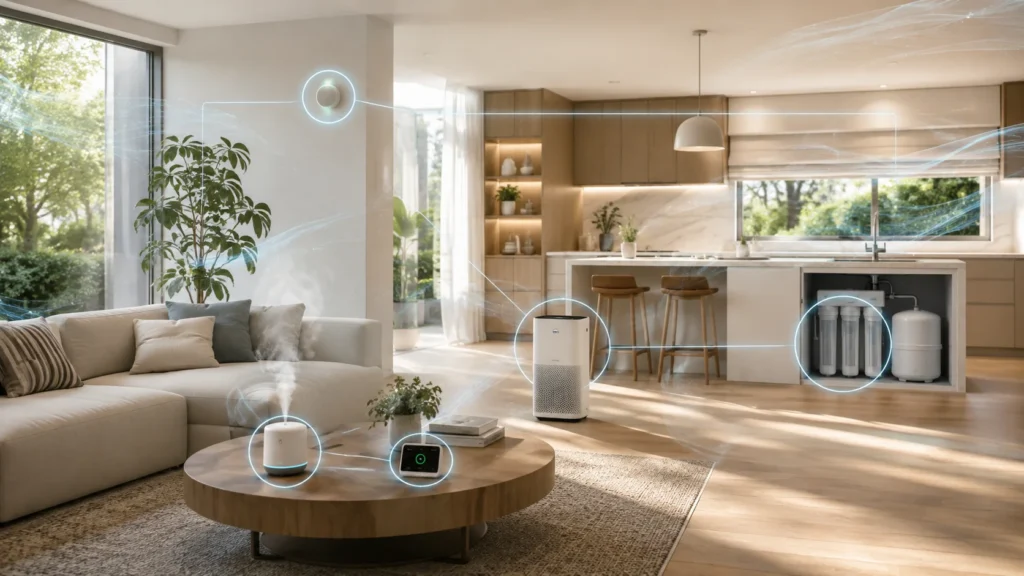
Modern living room and kitchen with smart home air quality devices including an air purifier, humidifier, and water filtration system, connected with visualized blue connectivity lines.

IFA 2026: Air Purification Is Becoming Part of the Healthy-Home Platform

Pre-IFA Industry Perspective | September 4, 2026 This article is based on official announcements and regulatory information available ahead of IFA 2026, which takes place ...
Noticias
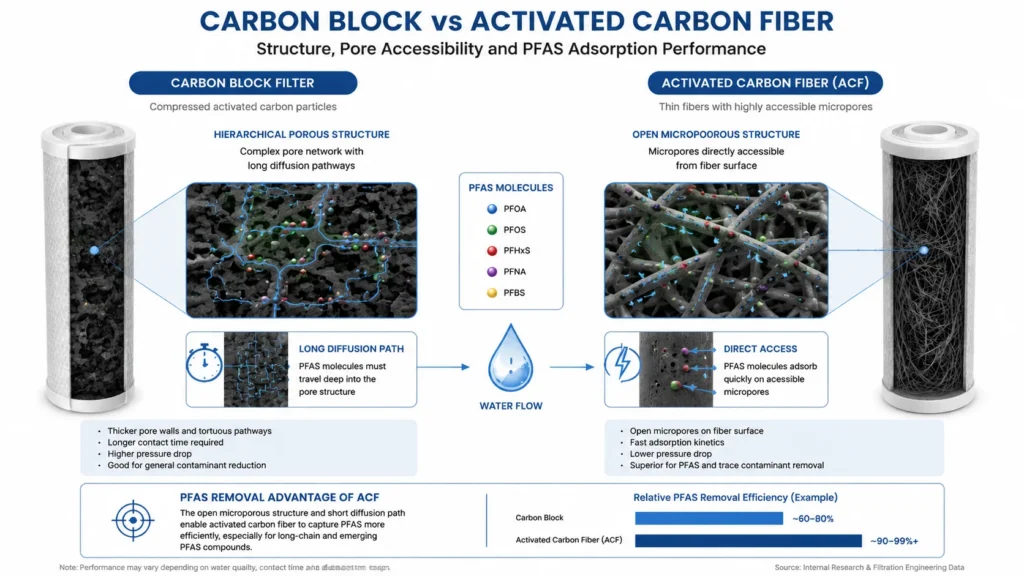
Comparison infographic showcasing the differences between carbon block filter and activated carbon fiber. Detailed diagrams illustrate the hierarchical porous structure of the carbon block with long diffusion paths and the open microporous structure of the activated carbon fiber with direct access for PFAS adsorption.

Carbon Block vs. Activated Carbon Fiber (ACF): Matching Media to Target Contaminants

Two carbon media. Same adsorption chemistry. Very different behaviour in a point-of-use cartridge. If you are specifying a water purifier platform for a PFAS-aware market, ...
Noticias
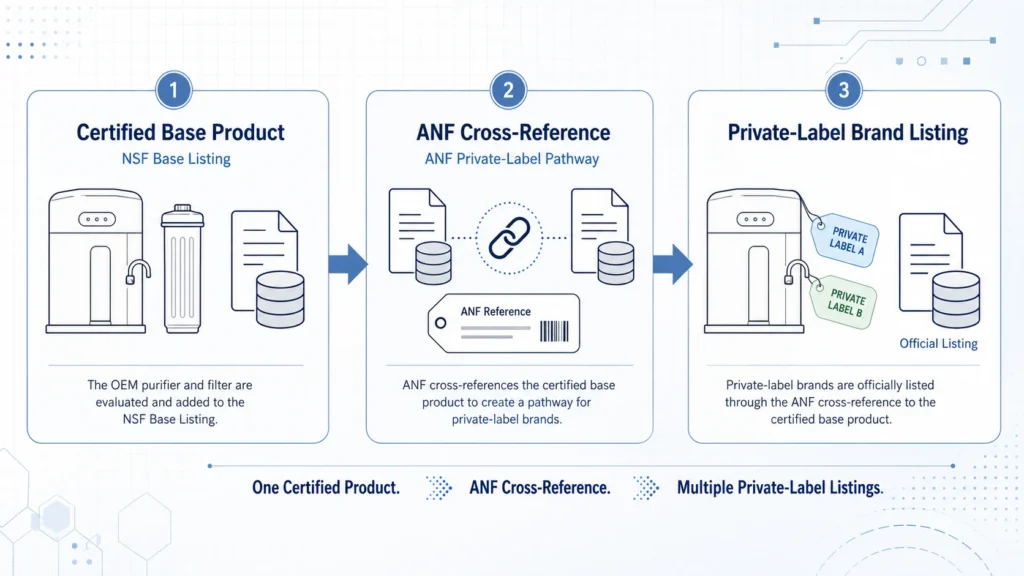
NSF base listing and ANF private-label certification pathway for OEM water filters

What Is an NSF Master Listing? A Guide to Base Listings, ANF Certification and OEM Water Filters

For a brand preparing to launch an OEM water purifier, one of the most common supplier claims is: “We already have an NSF master listing, ...
News, Water Purifiers
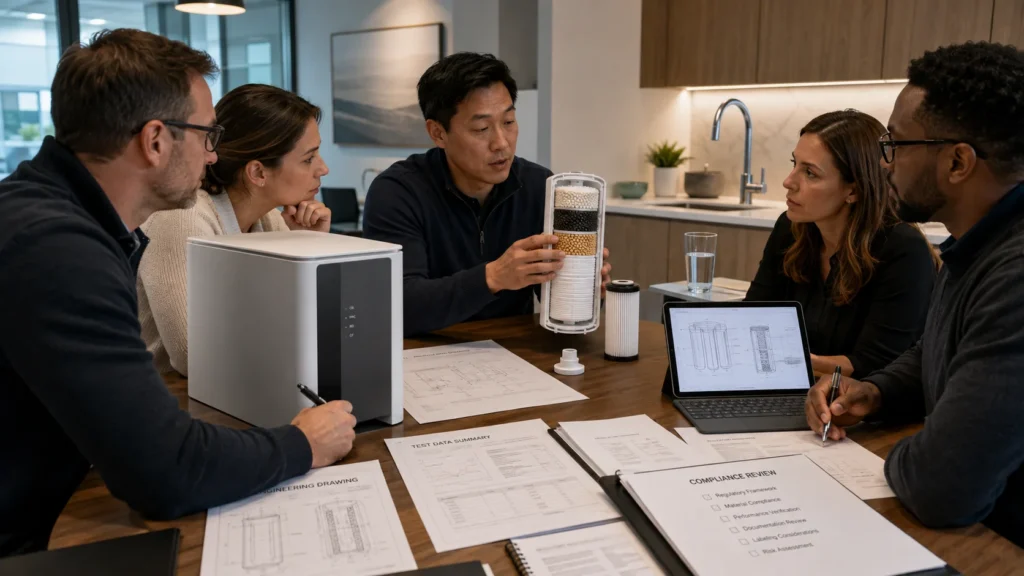
Healthy-home brand team reviewing PFAS water filter certification, test data and product engineering

Entering the Water Category Is Easy. Building a Credible PFAS Claim Is Much Harder

For air purification, appliance and healthy-home brands, entering the water category can look surprisingly easy. A company can select an existing undersink system, customize its ...
Noticias
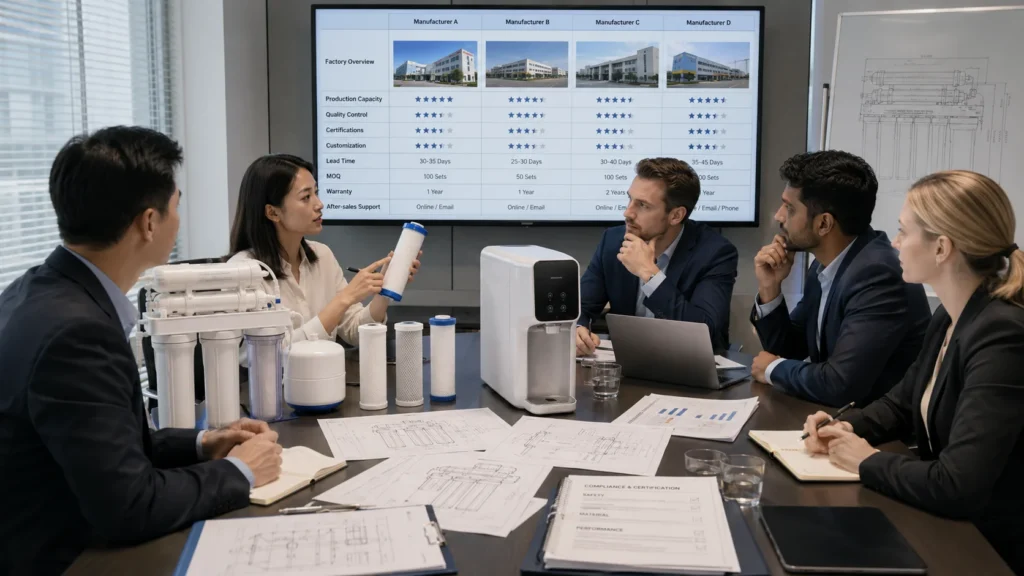
Team in a business meeting discussing a water filtration system with product components and a comparison table displayed on a screen.

5 Leading OEM Water Purifier Manufacturers in China for Private Label Brands

China has thousands of companies selling water filters, reverse osmosis systems and drinking-water appliances. However, only a portion of them are suitable for private-label, OEM ...
Noticias
Contaminant Engineering•3 min read

PFAS Water Filtration Technologies Explained: Carbon, Resin & RO

Key Takeaway:

PFAS reduction depends on the specific compounds present, treatment media, contact time, water chemistry, and system design. Activated carbon, ion exchange, and Reverse Osmosis address PFAS through different mechanisms.

PFAS are a large family of persistent fluorinated compounds that can occur in drinking-water supplies. Their treatment behavior varies significantly by molecular structure, chain length, functional group, concentration, and the chemistry of the source water.

Granular Activated Carbon (GAC) removes PFAS primarily through adsorption. It is generally more effective for many longer-chain PFAS, while shorter-chain compounds tend to break through more quickly. Carbon performance depends on media properties, Empty Bed Contact Time (EBCT), competing organic matter, loading, and replacement frequency.

Ion-exchange resins use charged functional sites to capture many PFAS compounds. Properly selected anion-exchange media can provide high capacity and may perform better than conventional activated carbon for some shorter-chain PFAS, although performance still depends on water chemistry and competing ions.

Reverse Osmosis (RO) uses membrane separation rather than adsorption. Properly designed RO systems can provide broad reduction across many PFAS compounds as well as dissolved salts and other contaminants. Unlike carbon or resin, however, RO also produces a concentrate stream that must be managed.

No single technology should be selected from a PFAS label alone. System design should consider which PFAS compounds are present, their concentrations, required reduction targets, flow rate, media life, and the applicable third-party certification or validation requirements.

HisoAir Water Technical Series
Product Discovery•3 min read

How to Choose an Under-Sink Water Purifier for Modern Kitchens

Key Takeaway:

Match the treatment technology to your water quality first, then evaluate cabinet space, faucet configuration, flow rate, drain and power requirements, and filter replacement needs.

Choosing an under-sink water purifier starts with water chemistry. Carbon filtration is well suited to chlorine, taste, odor, and many organic contaminants, while Reverse Osmosis is more appropriate when dissolved salts, fluoride, nitrates, or broader dissolved contaminants need to be reduced.

For compact kitchens, tankless RO systems eliminate the conventional storage tank and can significantly reduce the space required under the sink. However, membrane capacity stated in GPD does not directly equal faucet flow. When comparing systems, check the actual dispensing flow rate, inlet-pressure requirement, recovery ratio, and whether a booster pump is required.

Installation architecture also matters. Many RO systems require a drain connection, electrical power, and either a dedicated drinking-water faucet or a compatible multi-function faucet. High-flow carbon systems can often connect directly to the existing cold-water line with a simpler installation, but pressure drop and available faucet flow should still be verified.

RO also removes much of the naturally occurring dissolved mineral content. Where taste or mineral balance is a priority, a post-RO remineralization stage can be added. Filter life should be evaluated by both rated capacity and local water quality rather than replacement time alone.

The right system is therefore not simply the smallest or highest-GPD model. It is the configuration that matches the target contaminants, available cabinet space, desired faucet setup, peak dispensing demand, and maintenance expectations.

HisoAir Water Technical Series
Water Quality•2 min read

What Does TDS Mean in Drinking Water? Measurement vs Contaminant Reality

Key Takeaway:

A TDS meter estimates the overall concentration of dissolved ionic substances from electrical conductivity. It cannot identify specific contaminants or determine whether water is chemically safe.

Total Dissolved Solids (TDS) refers to the combined concentration of dissolved substances in water. Most handheld TDS meters do not measure TDS directly. Instead, they measure electrical conductivity (EC) and convert that reading into an estimated parts-per-million (ppm) value.

This means a TDS reading can indicate how much dissolved ionic material is present, but not what that material actually is. Calcium, magnesium, sodium, nitrates, and other dissolved ions can all contribute to conductivity, yet a simple TDS meter cannot distinguish between them.

TDS meters are also not suitable for detecting trace contaminants such as PFAS, many VOCs, pesticides, pharmaceuticals, or disinfection byproducts. These substances may be present at concentrations far below the level needed to noticeably change electrical conductivity.

A low TDS reading therefore does not guarantee safe drinking water, and a higher TDS reading does not automatically indicate contamination. Water-treatment decisions should be based on laboratory testing for specific contaminants of concern rather than TDS alone.

HisoAir Water Technical Series
Technology Selection•2 min read

RO vs UF Water Filtration: Understanding Pore Sizes & Dissolved Minerals

Key Takeaway:

Ultrafiltration can reduce bacteria, turbidity, and suspended particles while retaining most naturally occurring dissolved minerals. Reverse Osmosis provides much broader reduction of dissolved salts and smaller contaminants.

Ultrafiltration (UF) typically uses hollow-fiber membranes with pore sizes in the approximate 0.01–0.1 micron range. These membranes physically retain turbidity, suspended solids, colloids, and many microorganisms while allowing dissolved minerals and salts to remain in the water.

Reverse Osmosis (RO) operates at a much finer separation level. Unlike UF, RO can substantially reduce dissolved ions such as sodium, calcium, fluoride, nitrates, and other contributors to total dissolved solids (TDS). This makes RO more suitable when dissolved-salt reduction is a primary treatment objective.

UF generally requires less system pressure and produces little or no continuous concentrate stream in many point-of-use configurations. RO typically requires greater pressure and produces a reject-water stream, but delivers broader contaminant reduction.

For water with acceptable TDS and mineral content, UF can be a simpler mineral-retaining treatment option. Where dissolved salts, fluoride, nitrates, or broader dissolved contaminants are a concern, RO is generally the more appropriate technology.

HisoAir Water Technical Series
Technology Selection•4 min read

Carbon Block vs Reverse Osmosis: Which Fits Your Need?

Key Takeaway:

Choose RO for dissolved inorganic salts and heavy metals; choose Carbon Block for chemical taste/odor, no wastewater, and high line-pressure flow.

Reverse Osmosis (RO) and Carbon Block filtration represent two fundamentally different treatment methods: membrane separation and adsorption. Understanding these differences helps determine which technology is better suited to a specific water-quality requirement.

Reverse Osmosis uses a semi-permeable membrane with pore sizes of approximately 0.0001 microns. It can significantly reduce dissolved inorganic contaminants such as TDS, fluoride, nitrates, and certain heavy metals. Because water must be forced through the membrane, RO systems require sufficient pressure or a booster pump and generate a concentrated wastewater stream.

Carbon Block filtration relies primarily on adsorption through compressed activated carbon, commonly with nominal pore sizes around 0.5–5 microns. It is highly effective for chlorine, chloramines, VOCs, taste, and odor, while allowing substantially higher direct-flow rates without producing wastewater.

From an operating perspective, Carbon Block systems are generally simpler, require less energy, and avoid the water loss associated with RO. RO involves higher system complexity and operating cost, but provides substantially broader reduction of dissolved contaminants that Carbon Block alone cannot address.

HisoAir Water Technical Series

SOLICITAR PRESUPUESTO