새 탭에서 열립니다
혁신적인 공기질 솔루션

Capitalizing on Air Quality Awareness: Niche Purifier Products on the Rise

niche air purifier market segmentation

Are you tired of fighting price wars with generic air purifiers? Competing against giants like Xiaomi on cost alone is a losing battle that kills your profit margins.

niche air purifiers1 allow brands to escape price competition by solving specific emotional pain points. By targeting distinct groups like pet owners or gamers, you can charge premium prices for specialized solutions rather than selling a commodity, significantly increasing your profitability and lowering customer acquisition costs.

chart showing profit margin comparison between generic and niche products

The era of "one size fits all" is over. In my years running a mold and CNC trading company, I have seen many clients fail because they tried to please everyone. Instead, let me show you how targeting specific users can transform your business model.

Generic air purifiers offer the highest profit margins due to mass production.False

Generic products compete on price, often leading to razor-thin margins compared to specialized solutions.

Targeting specific niches lowers Customer Acquisition Costs (CAC).True

Specific keywords like 'pet dander purifier' are cheaper and convert better than broad terms like 'air purifier'.

Why Is the "One Size Fits All" Approach Failing?

You cannot design a single product that satisfies every customer perfectly. Trying to do so results in a mediocre product that no one feels strongly about.

Mass-market products force you to compete on price, often leading to razor-thin margins. Specialization allows you to compete on value and solutions, giving you pricing power. A specialized product solves a specific problem, making the price secondary to the solution.

comparison of generic air purifier vs specialized niche purifier

I always tell my clients that "Niche equals Margin." This is the fundamental economic argument for any product designer. If you design a standard "Room Air Purifier," you are entering a red ocean. You are competing directly with massive brands like Xiaomi that sell units for $100. They have the volume to crush you on component costs. However, if you design a "Pet Dander Defense System," you are no longer selling a box with a fan. You are selling a solution to a problem. You can price this at $300 because the customer is buying relief from allergies, not just a machine.

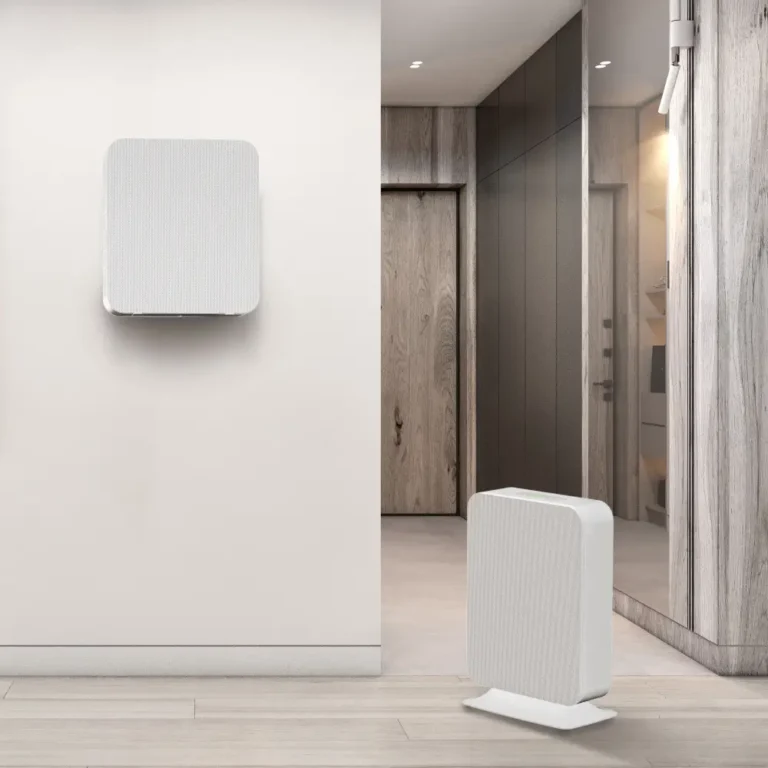
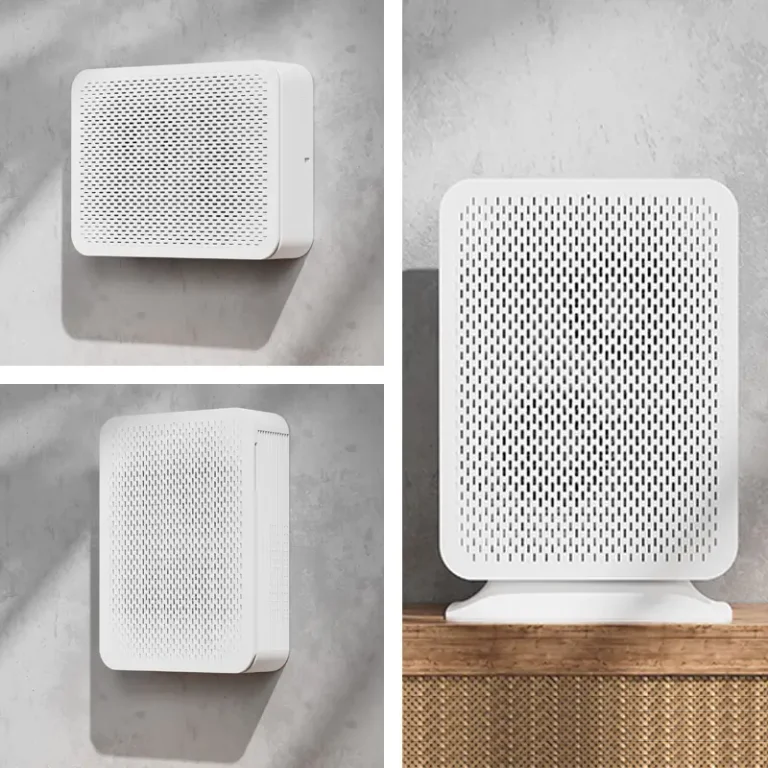
From a manufacturing perspective, which is my background, this does not mean you need five different expensive molds. You can use a strategy I call the "Platform Customizer." You use one core technology—like the Hisoair wall-mounted engine—and create five different products just by changing the Front Panel (CMF) and the Filter Composition. This is smart design. You keep your tooling costs low by sharing the main chassis, but you create multiple revenue streams by targeting different customer bases. This approach allows you to regain pricing power without exploding your manufacturing budget.

You need completely different internal engines for every niche product.False

You can use one core platform and customize the front panel and filters to serve different niches.

Solving an emotional pain point allows for higher pricing.True

Customers pay more for a specific solution to a problem, such as allergies or safety, than for a generic appliance.

How Does the "Pet Parent" Niche Drive Value?

Pet owners struggle with fur, dander, and litter box smells daily. They are willing to spend significantly to keep their homes clean and fresh.

Pet owners prioritize safety and odor control. A wall-mounted purifier eliminates the tipping hazard caused by active pets, while specialized carbon filters2 target ammonia smells, creating a unique selling proposition that floor units cannot match.

wall mounted air purifier in a room with cats

When we look at the "Pet Parent" niche, we have to look beyond just filtration. We must look at the physical design and safety. In my experience with product design, the form factor is a huge part of the solution. Floor units are a problem for pet owners. Cats jump on them, and dogs knock them over. This is a "Tipping Hazard." It creates fear. If a heavy unit falls on a pet, it causes injury.

This is where the wall-mounted design becomes a massive Unique Selling Proposition (USP). It is not just about saving space; it is about safety. By mounting the unit, you remove the danger completely. Floor units cannot copy this feature. Furthermore, you can customize the filter. Standard filters handle dust. But for this niche, you need a heavy activated carbon layer to handle ammonia from litter boxes. Marketing this is also highly efficient. If you bid on the keyword "Best air purifier," you will go broke. But if you target "Best air purifier for cat litter smell," the clicks are cheaper, and the people searching are ready to buy. You solve their specific headache.

Wall-mounted units are primarily for saving floor space.False

For pet owners, the primary benefit is safety and eliminating tipping hazards.

Specific keywords for pet odors have higher conversion rates.True

Users searching for specific solutions have high intent to purchase, lowering CAC.

What Makes the "Nursery Guardian" Essential for Parents?

New parents are terrified of invisible threats harming their baby's health. They lose sleep worrying about air quality and safety in the nursery.

The nursery niche demands absolute safety and silence. Wall-mounted units prevent toddlers from knocking the device over, while HEPA filters ensure clean air without creating dangerous drafts near the crib.

wall mounted air purifier in a baby nursery

The "Nursery Guardian" niche is very similar to the pet niche regarding safety, but the emotional stakes are even higher. I have helped clients design products for the baby market, and the number one rule is "Safety First." A toddler learning to walk will grab anything to pull themselves up. A standard air purifier on the floor is a tipping accident waiting to happen. Again, the wall-mounted form factor is the "Safety Ace." It keeps the electrical appliance out of reach of small hands.

Beyond the physical design, the function needs to be specific. Parents worry about noise. The unit must be whisper-quiet so it does not wake the baby. They also worry about "cold drafts." A floor unit often blows air horizontally, which might hit the baby on the floor. A wall unit can direct airflow differently. By branding this specifically for nurseries and using a softer, warmer color palette on the front panel, you appeal directly to the "nesting" instinct of new parents. You are selling peace of mind, which is the most valuable commodity for a parent.

Noise level is a critical factor for nursery air purifiers.True

Loud units can disturb a sleeping baby, making silence a key selling point.

Floor units are safer for toddlers than wall-mounted units.False

Floor units present a tipping hazard for toddlers pulling themselves up; wall units remove this risk.

Can a Purifier Handle the "Kitchen Companion" Role?

Open kitchens look great but spread grease and smoke everywhere. Standard purifiers fail quickly because they get clogged by sticky cooking oils.

Kitchen purifiers must handle heavy grease and strong cooking odors. Standard filters clog quickly, so this niche requires washable pre-filters and specialized oil-resistant designs to maintain performance.

air purifier in a modern kitchen setting

The kitchen is a challenging environment for electronics. I know from my manufacturing days that oil and grease are enemies of plastic and filters. If you put a standard HEPA filter in a kitchen, the grease will coat the fibers within a week. The machine will stop working, and the customer will be angry. This is why the "Kitchen Companion" is a distinct niche that needs a distinct technical solution.

For this product, you need to modify the filter composition. You cannot just use a paper HEPA filter. You need a robust, washable pre-filter, perhaps a metal mesh similar to a range hood, to catch the heavy grease droplets before they hit the main filter. You also need a very strong carbon filter for the smoke and food smells. From a design standpoint, the plastic casing needs to be easy to wipe down. Textured plastics trap grease, so a smooth, high-gloss finish is better here. By addressing the specific problem of "grease clogging," you create a product that serious home cooks will love.

Standard HEPA filters work perfectly in kitchens.False

Grease quickly coats standard filters, reducing their lifespan and effectiveness.

Washable pre-filters are essential for kitchen air purifiers.True

They trap heavy grease particles, protecting the main filter and extending the unit's life.

Why Do Gamers Need a Specialized Air Purifier?

Gamers spend hours in closed rooms with expensive, heat-generating electronics. They care deeply about their setup's performance and visual aesthetic.

Gamers value aesthetics and smart integration. A purifier that supports the Matter Protocol3 can sync with RGB lighting systems or react to in-game events, becoming part of the entertainment setup rather than just an appliance.

gaming room with RGB lights and air purifier

This is one of the most exciting niches right now. The "Gamer/Streamer" demographic does not want a boring white appliance. They want "Tech Aesthetics." They spend thousands on their PC setups, and they want accessories that match. This is where the Matter Protocol comes in. I have written before about how important Matter is for smart homes. For a gamer, this is crucial.

Imagine an air purifier that connects to the gamer's network. Using Hisoair's smart integration, the purifier can do more than clean air. It can sync with their Philips Hue lights. If the air quality drops, the whole room could pulse red. Or, it could link to the game itself—turning red when their in-game health is low. This turns the purifier into an interactive part of the gaming experience. Visually, you would change the front panel to black or carbon fiber texture and add RGB lighting strips. The core engine is the same, but the user experience is completely different.

Gamers prefer standard white appliances.False

Gamers typically prefer tech-focused aesthetics with dark colors and RGB lighting.

Matter Protocol allows purifiers to sync with other smart devices.True

Matter enables cross-brand compatibility, allowing the purifier to interact with lights and other smart home tech.

결론

The riches are in the niches. Do not build a generic box. Use a flexible platform to target specific needs, ensuring safety and smart features to maximize your profit margins.

References


  1. Explore how niche air purifiers can solve specific problems and enhance profitability. ↩

  2. Learn how specialized filters improve air quality and cater to specific needs. ↩

  3. Discover how the Matter Protocol enables smart devices to work together seamlessly. ↩

공유:
히로에어 설립자 미스터 리
Alwen Lee, an air purification expert with over 10 years of experience, is a devoted father of two and a passionate traveler, having explored more than 30 countries. With a love for public speaking and swimming, he has dedicated his life to the indoor air quality industry. His mission is to ensure that people around the world enjoy the freedom to breathe clean air and lead happy, healthy lives.

메시지 보내기

자세히 보기

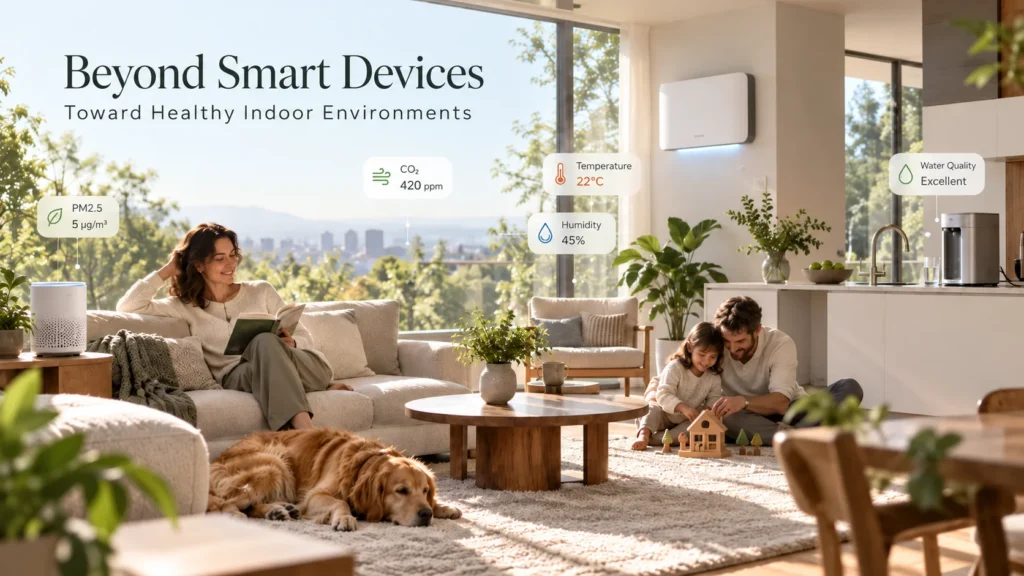
Modern living room with a family enjoying a healthy indoor environment monitored by smart devices, natural lighting, and greenery.

After IFA 2026: The Healthy Home Is Moving Beyond Smart Devices

In our previous IFA 2026 column, Air Purification Is Becoming Part of the Healthy-Home Platform, we argued that the next generation of indoor-health products would ...
뉴스
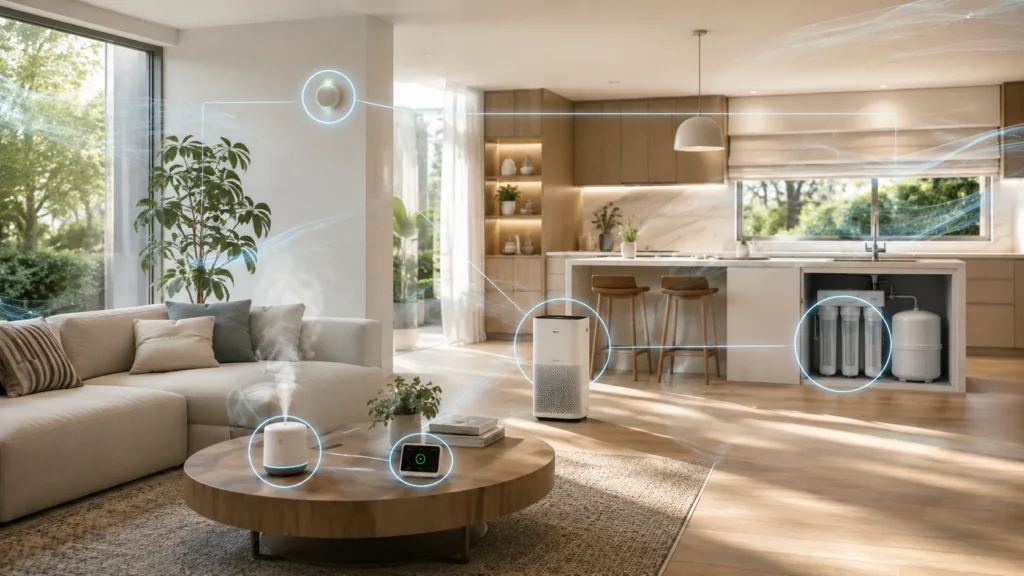
Modern living room and kitchen with smart home air quality devices including an air purifier, humidifier, and water filtration system, connected with visualized blue connectivity lines.

IFA 2026: Air Purification Is Becoming Part of the Healthy-Home Platform

Pre-IFA Industry Perspective | September 4, 2026 This article is based on official announcements and regulatory information available ahead of IFA 2026, which takes place ...
뉴스
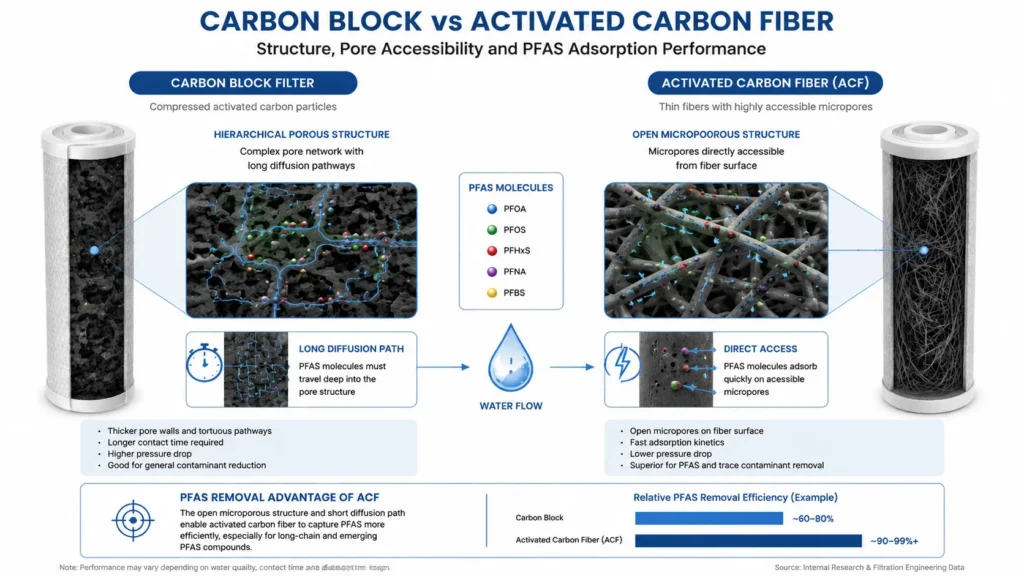
Comparison infographic showcasing the differences between carbon block filter and activated carbon fiber. Detailed diagrams illustrate the hierarchical porous structure of the carbon block with long diffusion paths and the open microporous structure of the activated carbon fiber with direct access for PFAS adsorption.

Carbon Block vs. Activated Carbon Fiber (ACF): Matching Media to Target Contaminants

Two carbon media. Same adsorption chemistry. Very different behaviour in a point-of-use cartridge. If you are specifying a water purifier platform for a PFAS-aware market, ...
뉴스
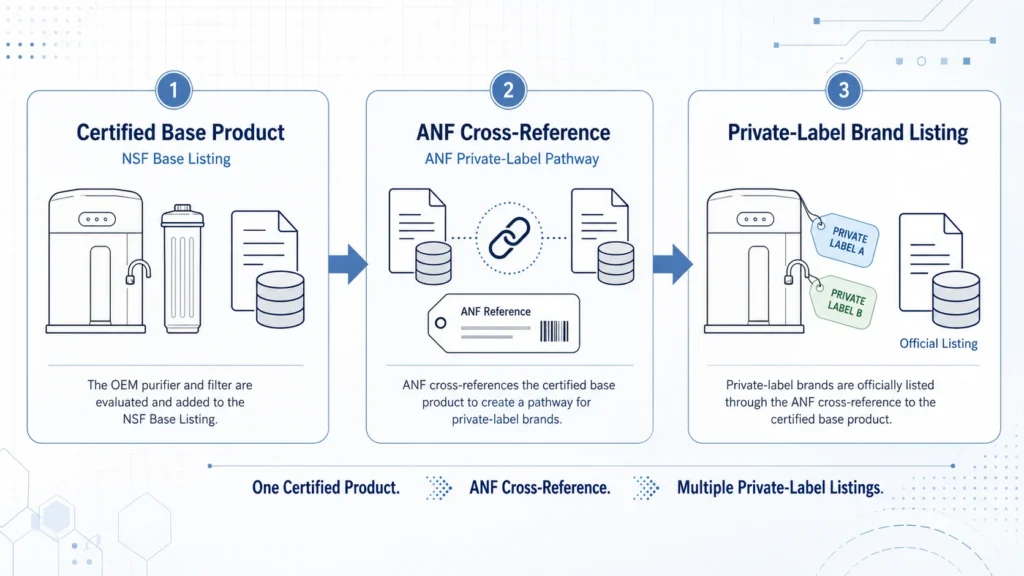
NSF base listing and ANF private-label certification pathway for OEM water filters

What Is an NSF Master Listing? A Guide to Base Listings, ANF Certification and OEM Water Filters

For a brand preparing to launch an OEM water purifier, one of the most common supplier claims is: “We already have an NSF master listing, ...
News, Water Purifiers
Healthy-home brand team reviewing PFAS water filter certification, test data and product engineering

Entering the Water Category Is Easy. Building a Credible PFAS Claim Is Much Harder

For air purification, appliance and healthy-home brands, entering the water category can look surprisingly easy. A company can select an existing undersink system, customize its ...
뉴스
Team in a business meeting discussing a water filtration system with product components and a comparison table displayed on a screen.

5 Leading OEM Water Purifier Manufacturers in China for Private Label Brands

China has thousands of companies selling water filters, reverse osmosis systems and drinking-water appliances. However, only a portion of them are suitable for private-label, OEM ...
뉴스
Contaminant Engineering•3 min read

PFAS Water Filtration Technologies Explained: Carbon, Resin & RO

Key Takeaway:

PFAS reduction depends on the specific compounds present, treatment media, contact time, water chemistry, and system design. Activated carbon, ion exchange, and Reverse Osmosis address PFAS through different mechanisms.

PFAS are a large family of persistent fluorinated compounds that can occur in drinking-water supplies. Their treatment behavior varies significantly by molecular structure, chain length, functional group, concentration, and the chemistry of the source water.

Granular Activated Carbon (GAC) removes PFAS primarily through adsorption. It is generally more effective for many longer-chain PFAS, while shorter-chain compounds tend to break through more quickly. Carbon performance depends on media properties, Empty Bed Contact Time (EBCT), competing organic matter, loading, and replacement frequency.

Ion-exchange resins use charged functional sites to capture many PFAS compounds. Properly selected anion-exchange media can provide high capacity and may perform better than conventional activated carbon for some shorter-chain PFAS, although performance still depends on water chemistry and competing ions.

Reverse Osmosis (RO) uses membrane separation rather than adsorption. Properly designed RO systems can provide broad reduction across many PFAS compounds as well as dissolved salts and other contaminants. Unlike carbon or resin, however, RO also produces a concentrate stream that must be managed.

No single technology should be selected from a PFAS label alone. System design should consider which PFAS compounds are present, their concentrations, required reduction targets, flow rate, media life, and the applicable third-party certification or validation requirements.

HisoAir Water Technical Series
Product Discovery•3 min read

How to Choose an Under-Sink Water Purifier for Modern Kitchens

Key Takeaway:

Match the treatment technology to your water quality first, then evaluate cabinet space, faucet configuration, flow rate, drain and power requirements, and filter replacement needs.

Choosing an under-sink water purifier starts with water chemistry. Carbon filtration is well suited to chlorine, taste, odor, and many organic contaminants, while Reverse Osmosis is more appropriate when dissolved salts, fluoride, nitrates, or broader dissolved contaminants need to be reduced.

For compact kitchens, tankless RO systems eliminate the conventional storage tank and can significantly reduce the space required under the sink. However, membrane capacity stated in GPD does not directly equal faucet flow. When comparing systems, check the actual dispensing flow rate, inlet-pressure requirement, recovery ratio, and whether a booster pump is required.

Installation architecture also matters. Many RO systems require a drain connection, electrical power, and either a dedicated drinking-water faucet or a compatible multi-function faucet. High-flow carbon systems can often connect directly to the existing cold-water line with a simpler installation, but pressure drop and available faucet flow should still be verified.

RO also removes much of the naturally occurring dissolved mineral content. Where taste or mineral balance is a priority, a post-RO remineralization stage can be added. Filter life should be evaluated by both rated capacity and local water quality rather than replacement time alone.

The right system is therefore not simply the smallest or highest-GPD model. It is the configuration that matches the target contaminants, available cabinet space, desired faucet setup, peak dispensing demand, and maintenance expectations.

HisoAir Water Technical Series
Water Quality•2 min read

What Does TDS Mean in Drinking Water? Measurement vs Contaminant Reality

Key Takeaway:

A TDS meter estimates the overall concentration of dissolved ionic substances from electrical conductivity. It cannot identify specific contaminants or determine whether water is chemically safe.

Total Dissolved Solids (TDS) refers to the combined concentration of dissolved substances in water. Most handheld TDS meters do not measure TDS directly. Instead, they measure electrical conductivity (EC) and convert that reading into an estimated parts-per-million (ppm) value.

This means a TDS reading can indicate how much dissolved ionic material is present, but not what that material actually is. Calcium, magnesium, sodium, nitrates, and other dissolved ions can all contribute to conductivity, yet a simple TDS meter cannot distinguish between them.

TDS meters are also not suitable for detecting trace contaminants such as PFAS, many VOCs, pesticides, pharmaceuticals, or disinfection byproducts. These substances may be present at concentrations far below the level needed to noticeably change electrical conductivity.

A low TDS reading therefore does not guarantee safe drinking water, and a higher TDS reading does not automatically indicate contamination. Water-treatment decisions should be based on laboratory testing for specific contaminants of concern rather than TDS alone.

HisoAir Water Technical Series
Technology Selection•2 min read

RO vs UF Water Filtration: Understanding Pore Sizes & Dissolved Minerals

Key Takeaway:

Ultrafiltration can reduce bacteria, turbidity, and suspended particles while retaining most naturally occurring dissolved minerals. Reverse Osmosis provides much broader reduction of dissolved salts and smaller contaminants.

Ultrafiltration (UF) typically uses hollow-fiber membranes with pore sizes in the approximate 0.01–0.1 micron range. These membranes physically retain turbidity, suspended solids, colloids, and many microorganisms while allowing dissolved minerals and salts to remain in the water.

Reverse Osmosis (RO) operates at a much finer separation level. Unlike UF, RO can substantially reduce dissolved ions such as sodium, calcium, fluoride, nitrates, and other contributors to total dissolved solids (TDS). This makes RO more suitable when dissolved-salt reduction is a primary treatment objective.

UF generally requires less system pressure and produces little or no continuous concentrate stream in many point-of-use configurations. RO typically requires greater pressure and produces a reject-water stream, but delivers broader contaminant reduction.

For water with acceptable TDS and mineral content, UF can be a simpler mineral-retaining treatment option. Where dissolved salts, fluoride, nitrates, or broader dissolved contaminants are a concern, RO is generally the more appropriate technology.

HisoAir Water Technical Series
Technology Selection•4 min read

Carbon Block vs Reverse Osmosis: Which Fits Your Need?

Key Takeaway:

Choose RO for dissolved inorganic salts and heavy metals; choose Carbon Block for chemical taste/odor, no wastewater, and high line-pressure flow.

Reverse Osmosis (RO) and Carbon Block filtration represent two fundamentally different treatment methods: membrane separation and adsorption. Understanding these differences helps determine which technology is better suited to a specific water-quality requirement.

Reverse Osmosis uses a semi-permeable membrane with pore sizes of approximately 0.0001 microns. It can significantly reduce dissolved inorganic contaminants such as TDS, fluoride, nitrates, and certain heavy metals. Because water must be forced through the membrane, RO systems require sufficient pressure or a booster pump and generate a concentrated wastewater stream.

Carbon Block filtration relies primarily on adsorption through compressed activated carbon, commonly with nominal pore sizes around 0.5–5 microns. It is highly effective for chlorine, chloramines, VOCs, taste, and odor, while allowing substantially higher direct-flow rates without producing wastewater.

From an operating perspective, Carbon Block systems are generally simpler, require less energy, and avoid the water loss associated with RO. RO involves higher system complexity and operating cost, but provides substantially broader reduction of dissolved contaminants that Carbon Block alone cannot address.

HisoAir Water Technical Series

견적 요청하기