

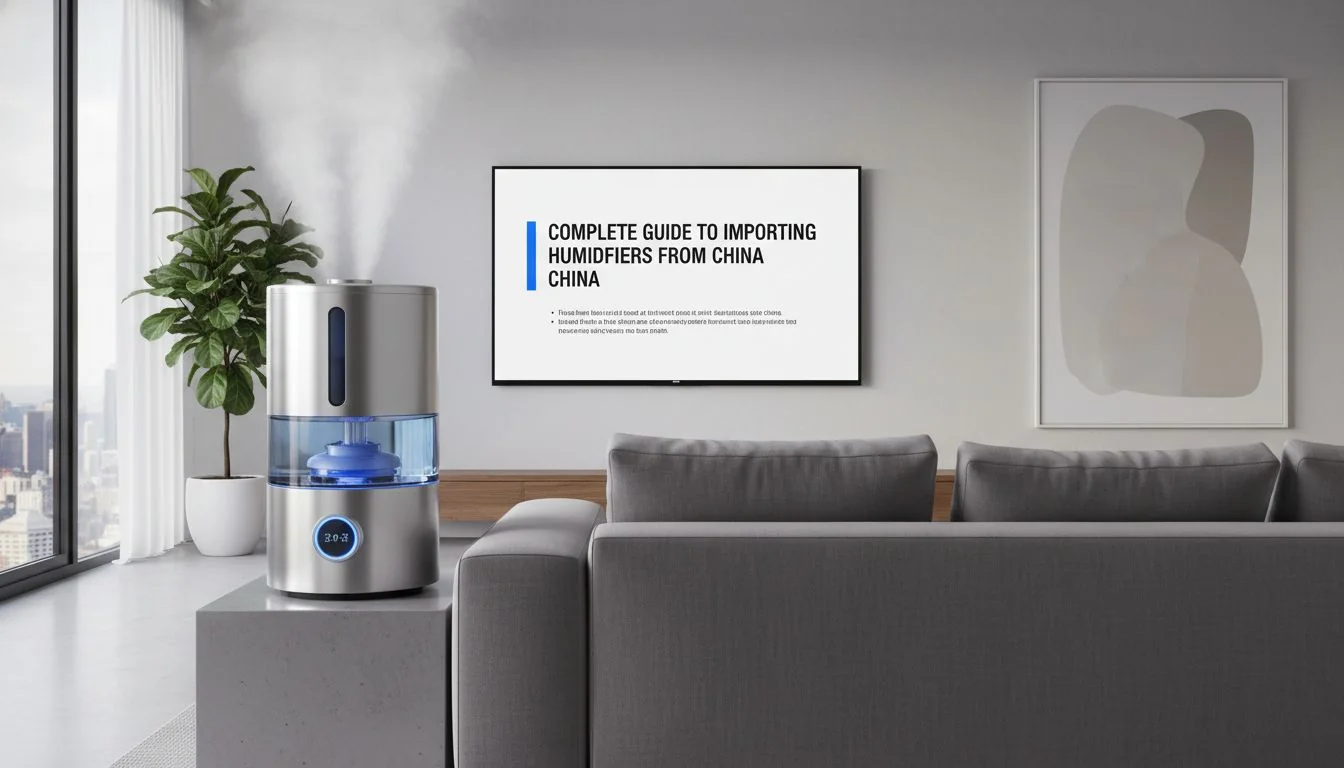
Worried about scams, quality issues, or compliance nightmares when importing from China? You're not alone. The risks are real, but a smart strategy can eliminate them completely.
To safely import humidifiers, you must shift your focus from finding the cheapest factory to finding an innovative partner. Prioritize suppliers with existing US/EU compliance, understand your total landed cost upfront, and choose a partner who understands the D2C market1. This de-risks the entire process.
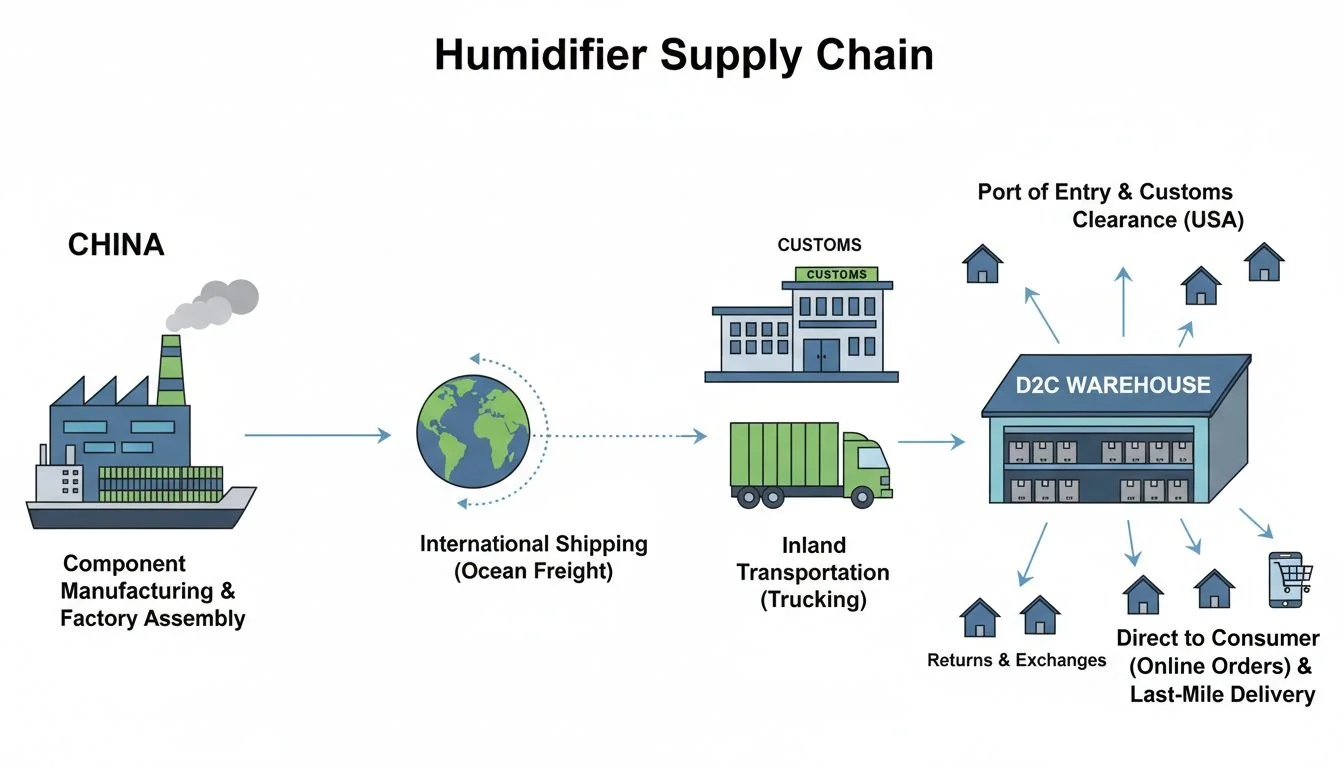
I've seen many brands get burned by focusing only on the price tag. They end up with a container of products they can't sell or, worse, a notice from customs. But I've also helped clients build seven-figure businesses by following a simple, de-risking playbook. It all starts with changing how you think about sourcing. Let's walk through the exact steps to protect your investment and find a true partner in China.
China produces over 70% of the world's small home appliances, including humidifiers.True
China's dominance in small appliance manufacturing is well-documented, driven by its established supply chains and manufacturing infrastructure.
Sourcing from China is now more expensive than manufacturing in the US.False
While labor costs have risen, the overall cost of manufacturing, especially for electronics-heavy products, remains significantly lower in China due to the scale and efficiency of its supply chain ecosystem.
1. Introduction: Why is China Still the "World's Factory" for Humidifiers?
Think China's manufacturing edge is gone? Rising costs and trade tensions create uncertainty. But for humidifiers, the ecosystem of suppliers, engineers, and logistics is still unmatched globally.
China remains the leader for humidifiers because of its deeply integrated supply chain. You get access to specialized component suppliers, experienced mold makers, and efficient assembly lines all in one place. This ecosystem drives both innovation and cost-effectiveness, which is hard to replicate elsewhere.
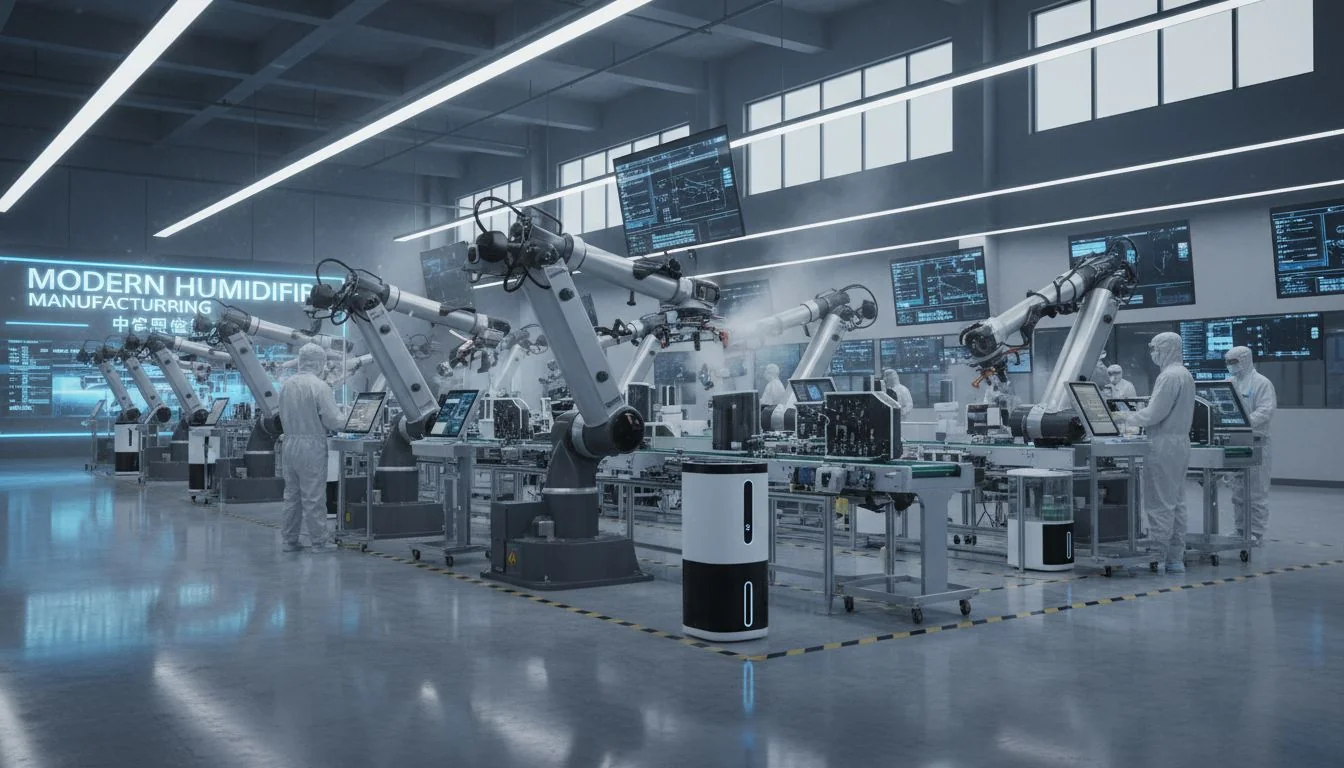
I remember when "Made in China" just meant cheap. Now, it's much more complex. For a product like a humidifier, you need more than just a plastic shell. You need ultrasonic atomizers, specific PCBs, and water-safe materials. China's advantage isn't just cheap labor anymore; it's the concentration of all these specific sub-suppliers in regions like Guangdong. This means faster development times and access to the latest tech. While other countries are building their capabilities, China has a 20-year head start. The question isn't if you should source from China, but how you should do it smartly in 2025. It's about navigating this massive ecosystem to find the gems, not the rocks.
Products with unique designs can command a 20-40% price premium.True
Market studies consistently show that consumers are willing to pay more for products with superior design, materials, and unique features that solve specific problems.
All Chinese factories steal your design if it's good.False
While IP theft is a risk, reputable and innovative factories value long-term partnerships and have systems to protect client IP. Choosing the right partner is key.
2. Step 1: Why Must You Find an Innovator, Not a "Commodity Factory"?
Tired of seeing the same white plastic humidifiers everywhere? Competing on price with a generic product is a race to the bottom. An innovative product gives you a real story to tell.
You must find an innovator to create a defensible brand. A commodity factory sells the same product to everyone, forcing you to compete on price. An innovator offers unique materials, features, or designs, allowing you to build a unique value proposition and command higher margins.
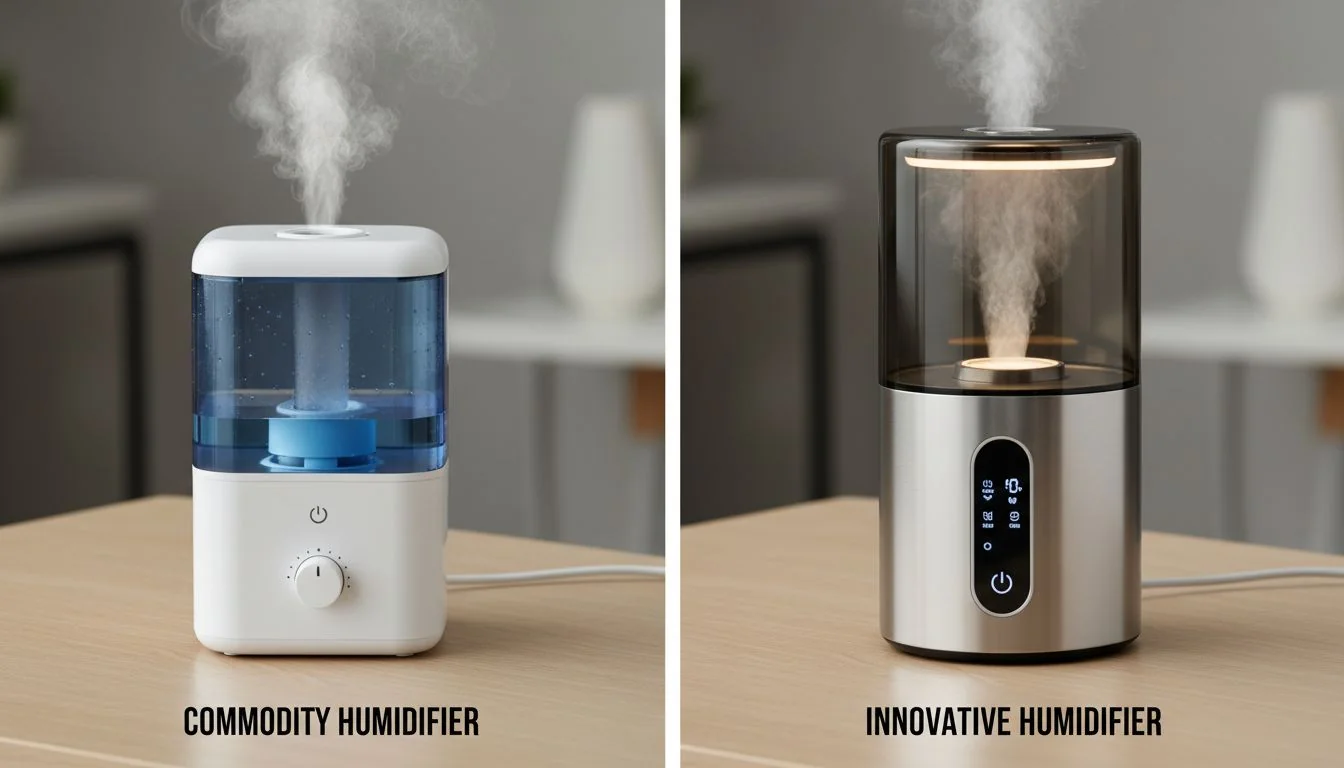
The first mistake I see brands make is sending a request for quotation (RFQ) for a "standard humidifier." They get 50 replies that are all basically the same. The game is already lost. Instead, your first filter should be "What makes you different?" Don't ask for their catalog. Ask what new materials they are developing or what unique problems they are solving. For example, most humidifiers are plastic, which can get slimy and is hard to clean. A factory working with stainless steel is not a commodity factory; they are an innovator. They are solving a real customer pain point. This is your first, most powerful de-risking move. It filters out 99% of the low-end suppliers and gives you a product you can actually build a brand around.
Differentiating Factors to Look For
| 기능 | Commodity Factory | innovative partner2 |
|---|---|---|
| 자료 | Standard ABS/PP Plastic | Stainless Steel, Glass, Anti-bacterial polymers |
| 디자인 | OEM catalog designs | In-house R&D, unique patented designs |
| 기능 | Basic misting | Smart features, easy-to-clean, quiet operation |
Getting a new product ETL certified can cost over $15,000 and take 3-6 months.True
The process involves lab testing, documentation review, and factory inspections, which is a significant upfront investment in both time and money.
A 'CE' mark from the factory is always legitimate.False
Some factories self-declare CE without proper testing. Always ask for the third-party lab report and test documents to verify the claim.
3. Step 2: Why is Verifying Existing US/EU Compliance a Non-Negotiable Step?
Imagine your shipment is seized by customs for failing compliance. This is a brand-killing scenario. Don't let a factory's promises put your entire business at risk.
Verifying existing compliance (like ETL for safety, CARB for emissions, EPA for antibacterial claims) is non-negotiable because it proves the factory is professional and experienced. A factory without these certifications is high-risk, and getting products certified yourself is expensive and time-consuming.
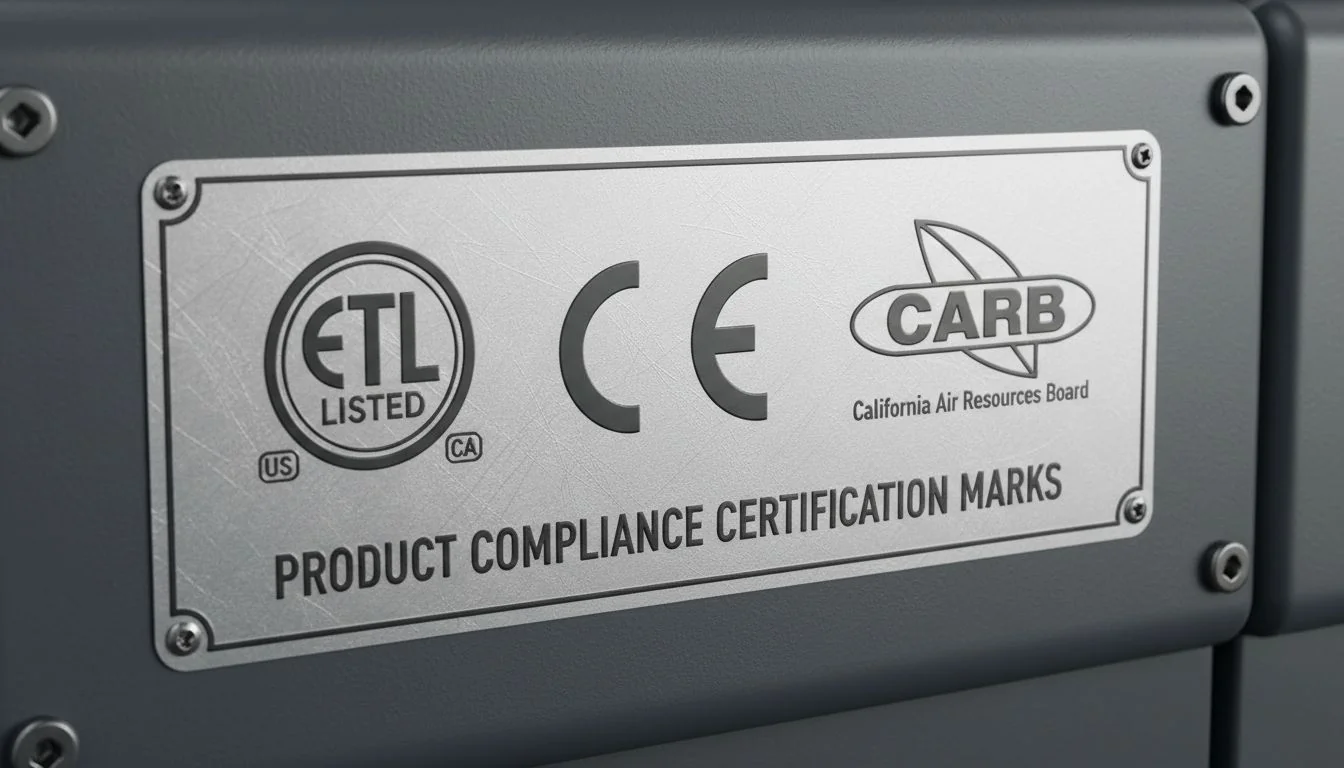
This is the step that separates the professionals from the amateurs. Many factories will tell you, "Yes, our product can pass the test." This is a huge red flag. What you need to hear is, "Yes, we have an existing ETL certificate for this model, and here is the certificate number you can verify." The difference is massive. A factory that has already invested in certifications for the US and EU markets is serious. They understand the rules and have built their products to meet them. This is your ultimate safety net. It protects you from legal issues, customs seizures, and platform bans (like on Amazon). Don't even start a conversation about price until you have verified their compliance.
Key Compliance Marks for Humidifiers
- ETL/UL: Electrical safety certification for the US & Canada.
- CE: Mandatory for products sold in the European Economic Area.
- CARB: California Air Resources Board, often required for electronics sold in California.
- EPA: Required if you make any anti-bacterial or anti-mold claims.
US Tariffs on some Chinese electronics can be as high as 25%.True
Section 301 tariffs have added significant costs to many goods imported from China, and these rates can change, making it crucial to verify the current tariff for your specific product's HS code.
The FOB price includes shipping to your warehouse.False
FOB (Free On Board) only covers the cost of the product and its delivery to the designated port in the origin country. The buyer is responsible for all subsequent shipping and import costs.
4. Step 3: How Do You Understand Your Total Landed Cost Beyond the "FOB Price"?
That low "FOB price" from a factory looks great, right? But hidden costs can destroy your profit margins. You need to know your true cost before you place an order.
To understand your total landed cost3, you must add shipping, customs duties, tariffs, insurance, and local delivery fees to the factory's FOB (Free On Board) price. This final number is the true cost per unit to get the product into your warehouse.
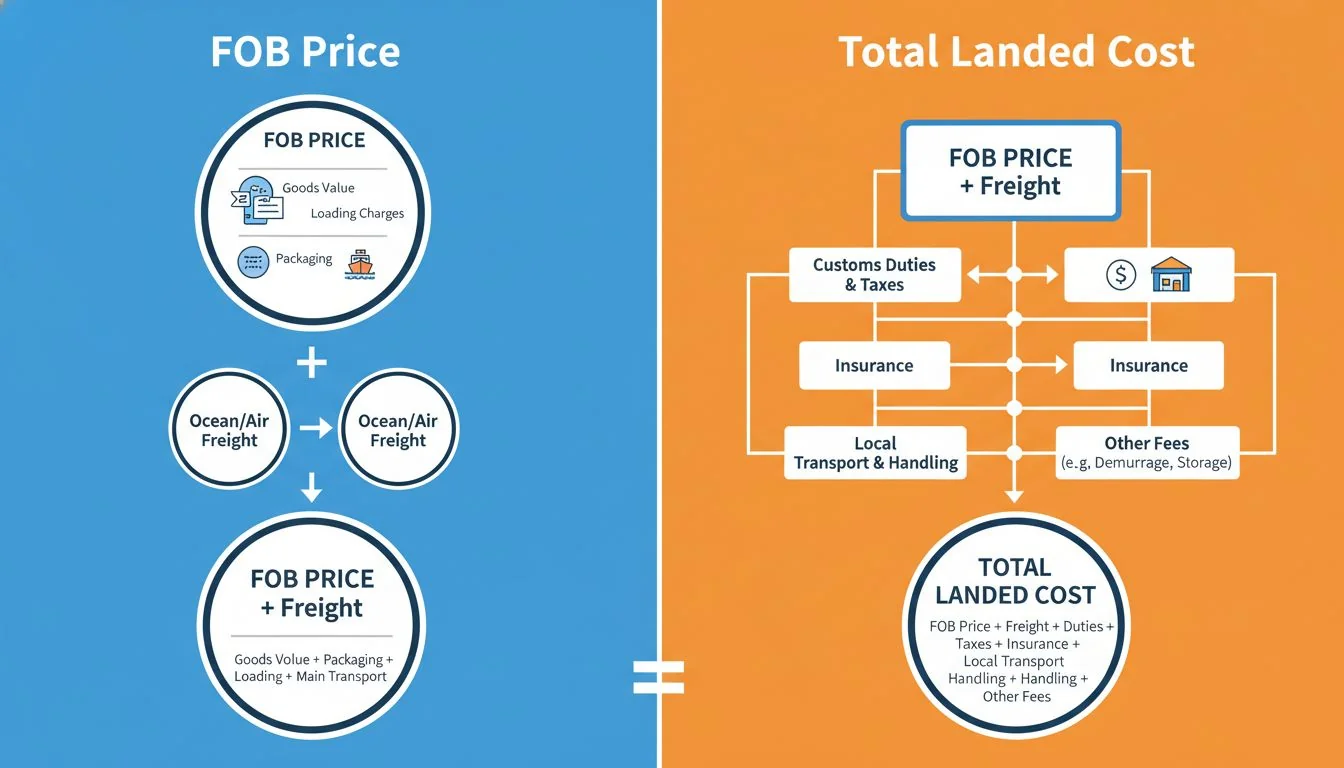
I've seen so many entrepreneurs get excited by a $10 FOB price, only to find out their final cost is $18 per unit. The factory's price is just the beginning. "FOB" means the factory is only responsible for getting the goods to the port in China. After that, it's all on you. A transparent partner will help you estimate these costs. They won't hide them. Ask potential suppliers for the product's packaging dimensions, weight, and HS code. With this information, you can get a freight quote and calculate duties. This simple step builds immense trust. It shows you are a serious buyer, and it tests whether the factory is a transparent partner or just an order-taker trying to hook you with a low price.
Calculating Your Total Landed Cost
| 비용 구성 요소 | 설명 | 예 |
|---|---|---|
| FOB Price | Cost of the product from the factory | $10.00/unit |
| Ocean Freight | Cost to ship from China to your country's port | $2.00/unit |
| Duties & Tariffs | Taxes based on the product's HS Code | $1.50/unit |
| Local Logistics | Port fees, customs clearance, trucking to warehouse | $1.00/unit |
| Total Landed Cost | Your true cost per unit | $14.50/unit |
Many top-tier Chinese suppliers now have dedicated teams to support D2C and Amazon sellers.True
As the D2C model has grown, savvy Chinese manufacturers have adapted by creating teams and services specifically to cater to the needs of online brands, seeing it as a major growth channel.
All Chinese factories require a minimum order of 5,000 units.False
While traditional factories often have high MOQs, many modern, D2C-focused partners are flexible and willing to accept smaller trial orders (e.g., 500-1000 units) to build a long-term relationship.
5. Step 4: Why Should You Choose a "D2C Partner," Not Just an "Order Taker"?
Your factory just delivered the goods. Now what? An order-taker disappears. A true partner helps you sell the product, supporting your growth long after the shipment has arrived.
A "D2C Partner" understands the needs of a modern online brand, offering support like low MOQs, marketing assets, and fast communication. An "order taker" simply manufactures a product to spec and has no investment in your success after the goods are shipped.
In my early days, I worked with factories that were just order-takers. They had high minimum order quantities4 (MOQs), slow communication, and zero interest in my business once I paid them. It was a transactional, and frankly, lonely experience. A true D2C partner operates differently. They understand that your success is their success. They are willing to start with a lower MOQ for a test run. They provide professional photos and videos you can use for marketing. They have English-speaking sales staff who respond quickly. They act like an extension of your team. When you're interviewing suppliers, ask them about their other D2C clients. Ask how they support them. Their answers will tell you everything you need to know about whether they are just selling you a product or investing in a partnership.
Brands that focus on a unique value proposition are more likely to succeed than those competing on price.True
Basic business strategy dictates that differentiation (through product, brand, or service) leads to more sustainable competitive advantage and higher profitability than price-based competition.
You can build a successful brand by just finding the cheapest factory on Alibaba.False
While Alibaba is a starting point, success requires a deep vetting process focusing on quality, compliance, and partnership, not just the initial quoted price.
6. Conclusion: What is Your "China Strategy" Checklist for Success?
Feeling overwhelmed by all the steps? It's easy to get lost. A simple checklist can keep you focused on the three things that truly matter for de-risking your import business.
Your checklist has three core items. First, find an innovative product that solves a real problem, not a commodity. Second, confirm the factory has existing US/EU compliance5 certificates. Third, ensure they act as a true D2C partner, not just an order-taker.
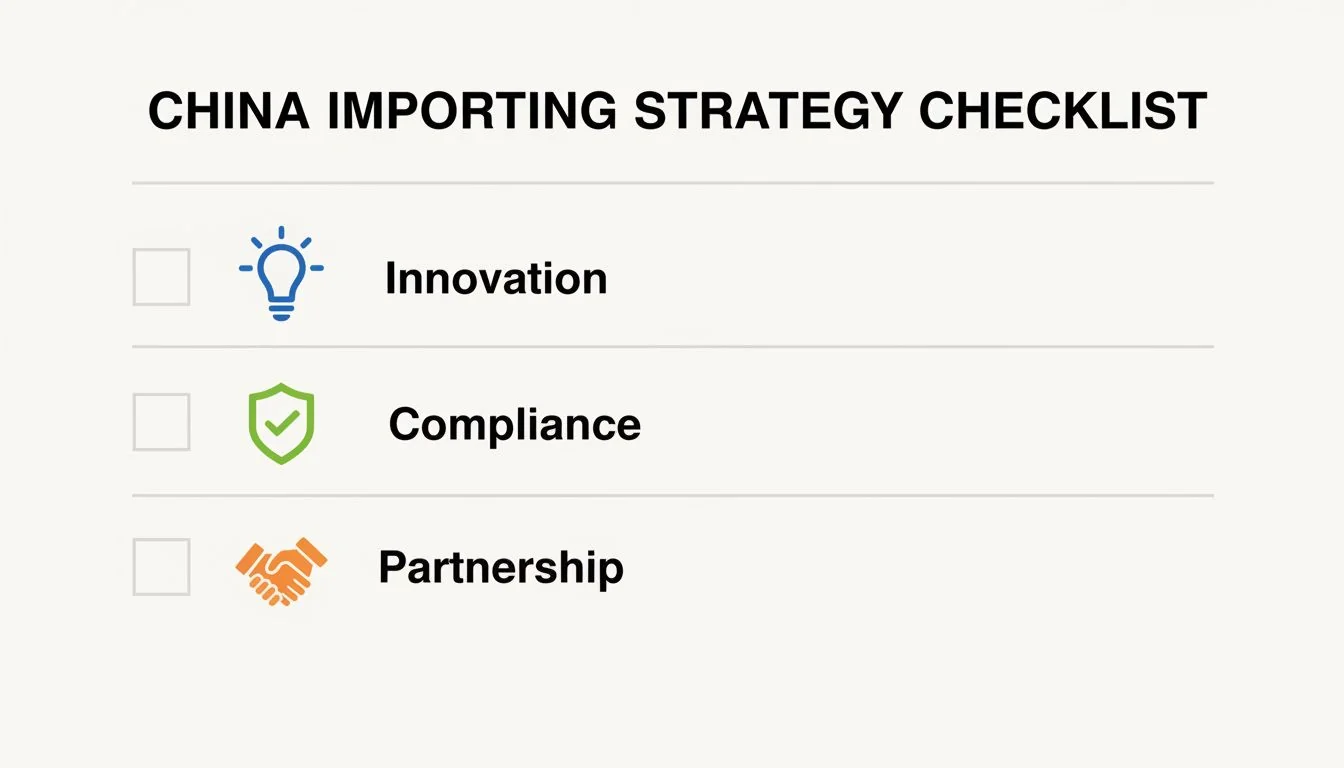
Let's boil it all down. sourcing from China6 in 2025 isn't about finding the cheapest supplier. It's about finding the safest and most strategic partner. By following this playbook, you systematically remove the biggest risks. You avoid the sea of low-quality commodity products. You eliminate the brand-killing danger of compliance failures. And you build a relationship that supports your growth instead of just fulfilling an order. When you find a supplier that hits this trifecta—Product Innovation, Certified Compliance, and a D2C Partnership mindset—you've found your winner. This is the modern way to build a successful physical products brand with a China supply chain. It's not about luck; it's about having the right strategy.
Your De-Risking Checklist
- Product: Does the supplier offer an innovative product (e.g., unique material like stainless steel) that stands out?
- 규정 준수: Can they provide existing and verifiable ETL, CARB, or CE certificates for the exact model?
- Partnership: Do they understand the D2C model? Do they offer support like low MOQs and marketing assets?
결론
By focusing on innovation, compliance, and partnership, you can turn importing from China from a risky gamble into your brand's greatest strategic advantage.
References
-
Understanding the D2C market is crucial for brands looking to thrive in today's competitive landscape. ↩
-
Finding an innovative partner can lead to unique products and a competitive edge in the market. ↩
-
Calculating total landed cost helps avoid hidden fees and ensures accurate pricing for imported goods. ↩
-
Knowing MOQs helps in planning inventory and managing cash flow effectively. ↩
-
Compliance ensures safety and legality, protecting your business from costly customs issues. ↩
-
Sourcing from China requires strategic planning to mitigate risks and maximize quality. ↩










 English
  Français
  Español
  Italiano
  Deutsch
  Português
  Русский
  العربية
  日本語
日本語  한국어
한국어  Tiếng Việt

