
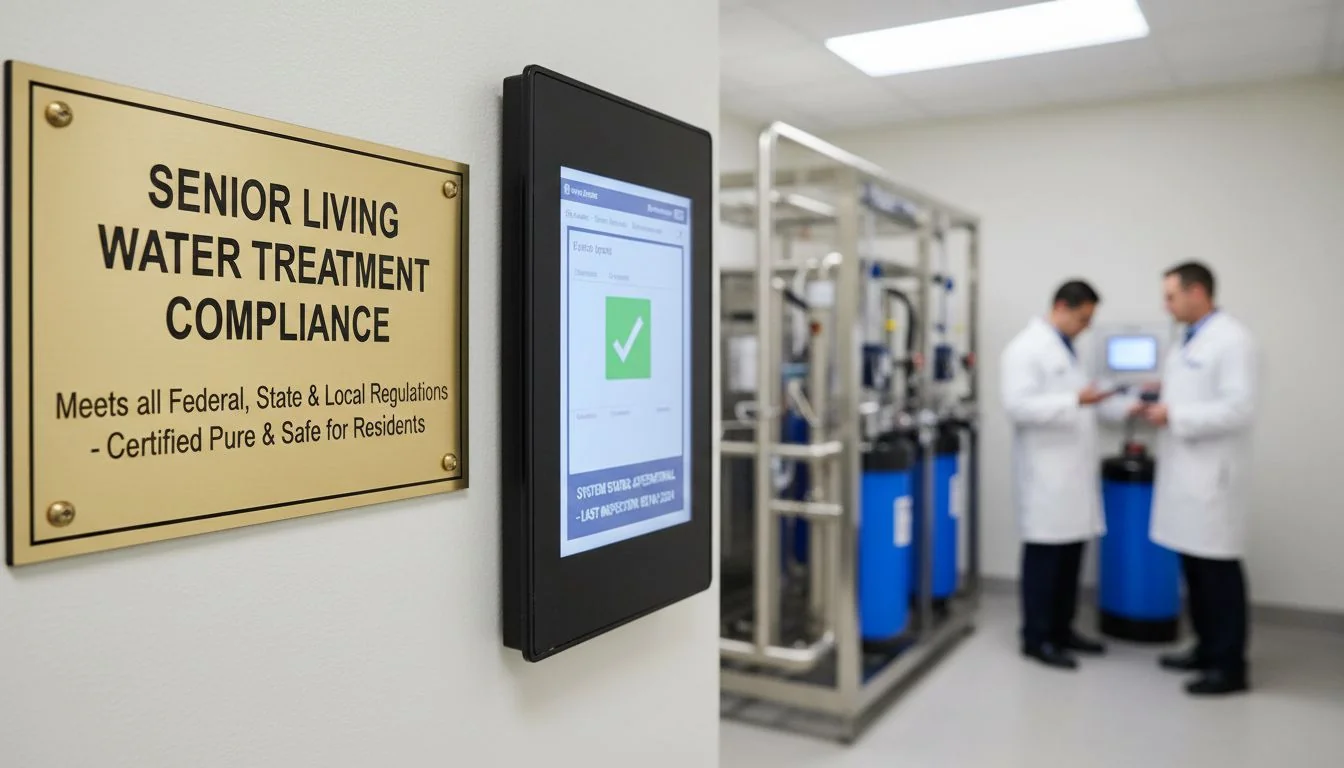
Are you worried about fatal waterborne outbreaks in your facilities? Ignoring water safety risks invites lawsuits and lost funding. I will show you how to build a compliant water program.
Senior living water treatment is a critical patient-safety compliance program, not just a building utility. Operators must manage Legionella1, scalding, and lead risks by following ASHRAE 188 and CMS QSO-17-30 standards. A proper system uses advanced engineering and strict vendor documentation to protect vulnerable residents and ensure regulatory compliance.
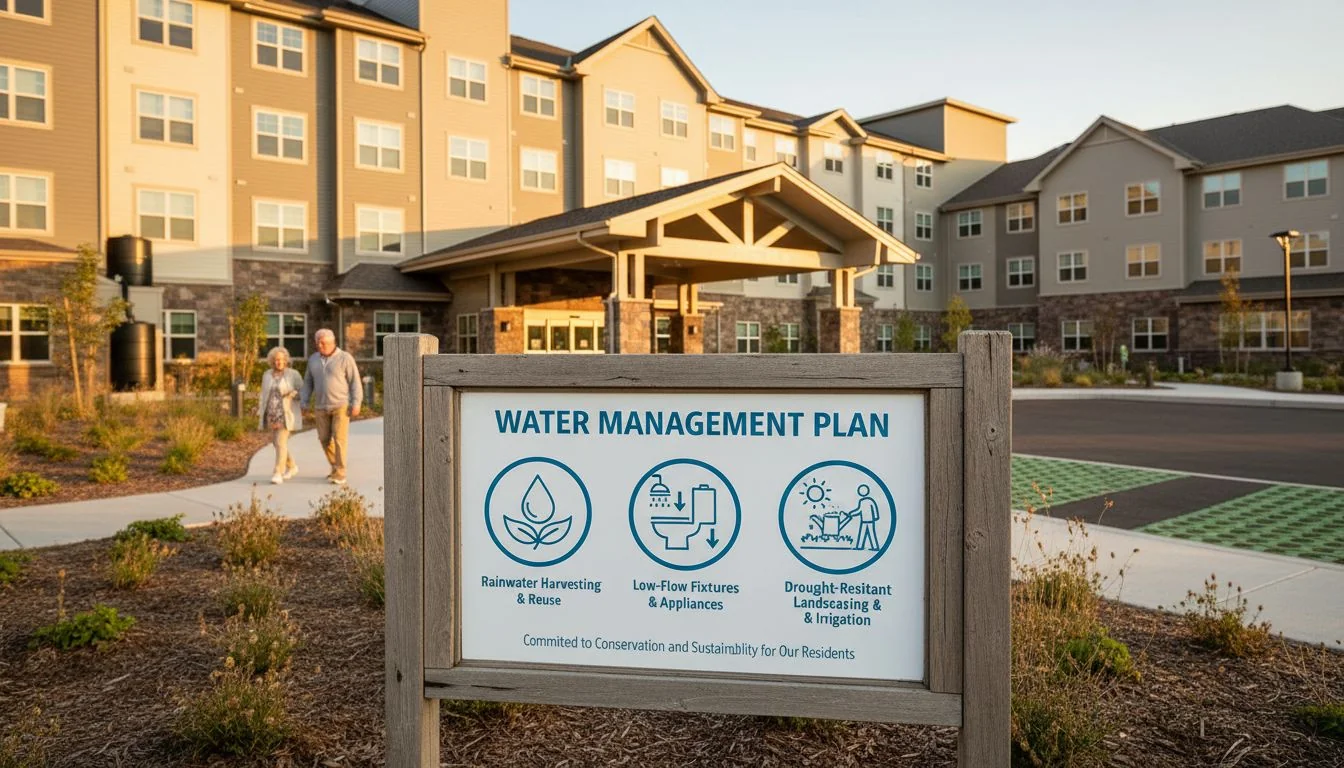
When I first looked at facility water systems, I thought it was just about pipes and pumps. But the stakes are much higher. If you want to protect your residents and your business, you need to understand the real risks. Let us look at the facts before we dive into the details.
Senior living water treatment is primarily a building utility decision focused on convenience.False
It is a patient-safety compliance program with direct legal, regulatory, and insurance exposure.
Nursing home Legionella outbreaks can have case fatality rates of 25 to 40 percent.True
Documented CDC investigations show that senior populations are the highest-risk demographic for fatal Legionella infections.
Why Is Senior Living Water a Patient-Safety Compliance Category Rather Than a Building Utility?
Struggling with complex facility liabilities? A single waterborne infection can ruin your operation. You must treat water systems as strict safety compliance tools to avoid massive legal exposure.
Senior living water systems carry severe clinical and financial risks. Legionella thrives in stagnant, warm water, and infections in seniors are often fatal. Operators also face scalding and lead exposure2 risks. CMS requires strict water management plans, making water treatment a mandatory risk management category.
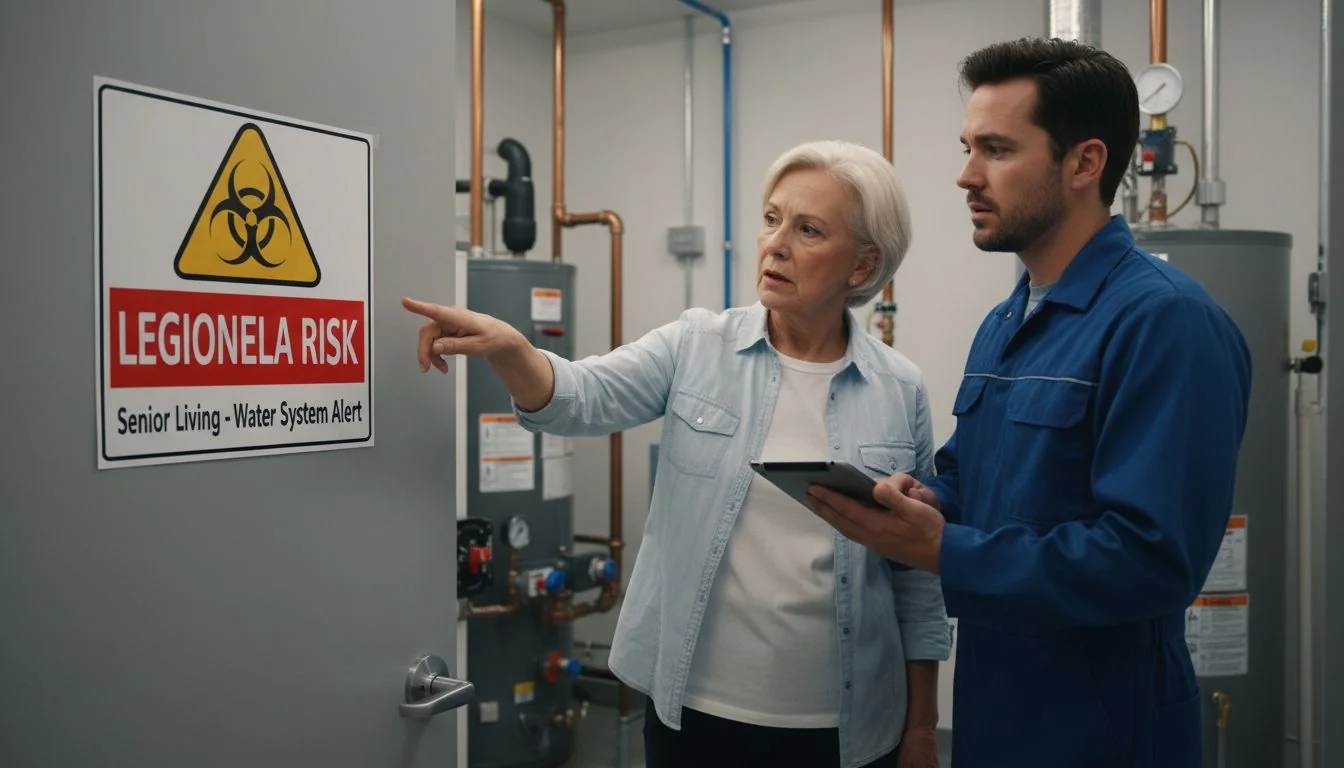
The Hidden Dangers in Facility Plumbing
I have seen many designers and engineers overlook the biological risks in building systems. In senior living, the risk stack is unlike any other commercial space. Legionella pneumophila grows when water temperature, stagnation, and low disinfectant levels align. Seniors are highly vulnerable. Pseudomonas aeruginosa3 also threatens immunocompromised residents.
Beyond Biological Risks
We must also look at physical and chemical dangers. scalding injuries4 are a major compliance issue. We must follow ASSE 1070 and ASSE 1016 standards. Lead exposure is still a real threat in older buildings with pre-1986 plumbing. Disinfection byproducts can build up in unused wings where water sits still. I always tell my clients to look at the whole picture. You cannot ignore the state-specific maximum temperature rules for resident fixtures. Testing for lead is now extending into long-term care in many states. You must prepare for these strict rules today.
The Cost of Failure
The financial and regulatory exposure is huge. If a facility lacks a compliant water management plan5, a single Legionella case can lead to multimillion-dollar lawsuits.
| Risk Category | Primary Threat | Regulatory Standard |
|---|---|---|
| Biological | Legionella, Pseudomonas | CMS QSO-17-30, ASHRAE 1886 |
| Physical | Scalding injuries | ASSE 1070, ASSE 1016 |
| Chemical | Lead, Disinfection byproducts | LCRI, EPA guidelines |
You are buying compliance and risk management, not just a water filter.
Scalding prevention in senior living is not regulated by any specific standards.False
Scalding prevention is strictly governed by ASSE 1070, ASSE 1016, and state-specific maximum temperature regulations.
CMS issued a mandate in 2017 requiring certified healthcare facilities to maintain a water management plan.True
CMS Survey & Certification Memorandum QSO-17-30 requires facilities to have a plan based on ASHRAE Standard 188.
How Do We Decode the ASHRAE 188 and CMS QSO-17-30 Water Management Plan Requirements?
Are confusing regulations slowing down your facility upgrades? Failing a CMS survey costs time and money. You need a clear grasp of ASHRAE 188 to pass inspections easily.
ASHRAE 188 provides the framework for building water management, requiring risk analysis, control measures, and monitoring. CMS QSO-17-307 makes this mandatory for certified facilities. Surveyors expect written plans, monitoring records, and corrective actions. Vendors must provide the documentation infrastructure to prove active compliance during audits.
The Framework of ASHRAE 188
When I design a system, I rely on clear frameworks. ASHRAE 188 is the anchor for water management. It requires you to identify all building water systems. This includes potable water, cooling towers, and ice machines. You must form a team to run the program. You need a risk analysis to find control points where Legionella can grow. You must set control measures, monitor them, and take corrective action if limits are crossed.
The CMS Mandate
CMS QSO-17-30 turned this framework into a strict rule. Survey teams will check your written plan. They want to see current monitoring records and staff training logs. Many states add even more rules. For example, New York requires building registration and testing. California includes specific water rules for healthcare.
The Execution Layer
The water treatment system executes your plan. It proves you have control.
| Requirement | 설명 | 목적 |
|---|---|---|
| Risk Analysis | Identify Legionella growth points | Prevent outbreaks |
| Monitoring | Regular testing and logging | Prove system control |
| Documentation | Keep audit-ready records | Pass CMS surveys |
A vendor must sell compliance, not just equipment. They must provide cert documents and audit-ready records. This paperwork survives state health inspections.
ASHRAE 188 only applies to cooling towers and decorative fountains.False
It applies to all building water systems, including potable water, ice machines, and non-potable systems.
A water treatment vendor must provide documentation infrastructure to help operators pass CMS surveys.True
Vendors must supply cert documents, monitoring records, and corrective action templates to prove compliance.
What Is the Correct Engineering Stack for Senior Living Water Systems?
Is your current water system failing to protect residents? Poor design leads to pathogen growth and scalding. You need a three-layer engineering architecture to ensure total water safety.
The senior living water engineering stack8 requires three layers. Point-of-entry pretreatment handles sediment and chloramine. Building loop management controls flow, eliminates dead-legs, and manages temperatures. Point-of-use polishing uses certified UV and filtration for specific high-risk fixtures. This integrated design ensures pathogen control and scalding prevention.
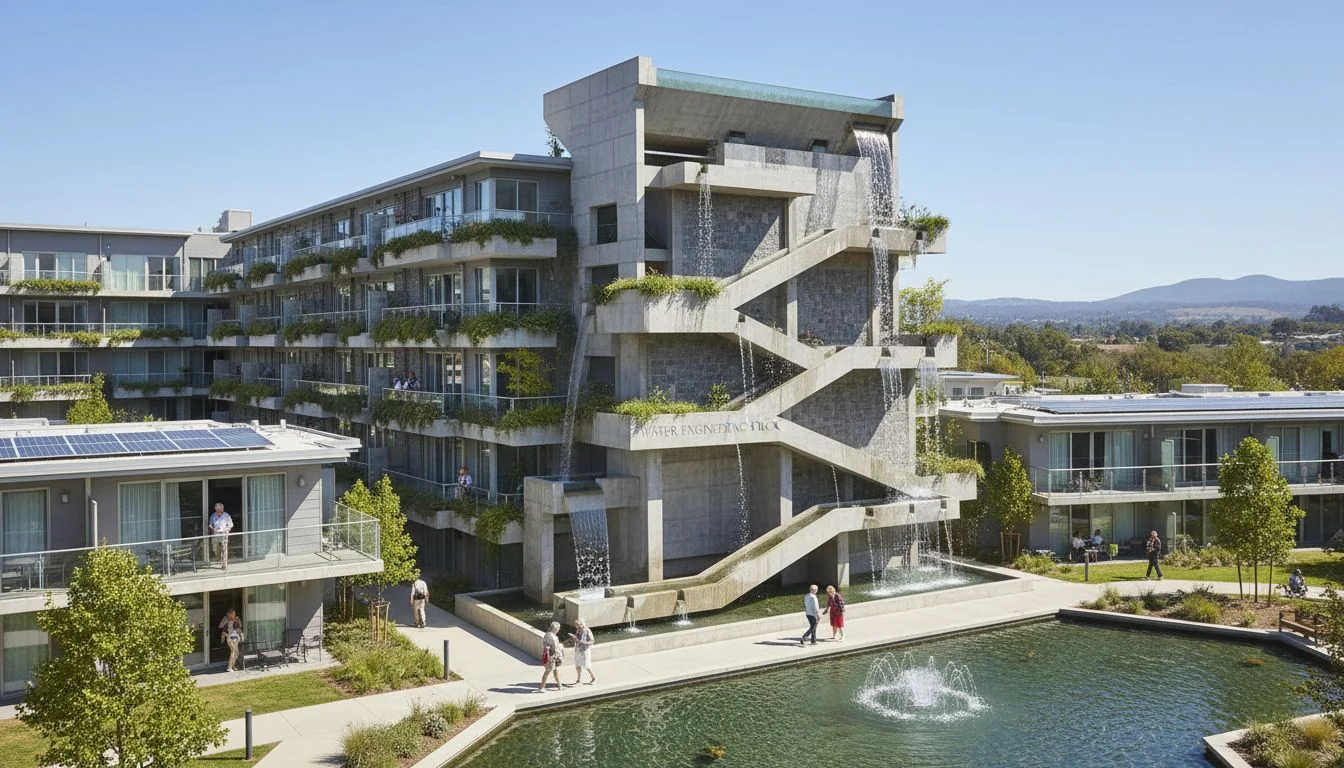
Point-of-Entry Pretreatment
In my experience with manufacturing, getting the raw material right is key. The same goes for water. Point-of-entry pretreatment sits at the building water main. It uses sediment filtration and catalytic carbon to reduce chloramine. Most city water uses chloramine. Chloramine messes with downstream UV systems. You might also need extra disinfection like copper-silver ionization here.
Building Loop Management
Senior living buildings have long pipes and empty wings. This creates dead-legs where water sits still. We must eliminate dead-legs. We need properly sized recirculation pumps. Temperature management is tricky. We must keep hot water above 140°F to kill Legionella. But we must cool it to 105–110°F at the tap using ASSE 1070 mixing valves to prevent burns.
Point-of-Use Polishing
We must treat specific high-risk spots. Nursing stations need NSF/55 Class A UV filters. Ice machines need NSF/372 lead-free filters. Dining areas need post-mix beverage treatment.
| System Layer | 주요 구성 요소 | Primary Goal |
|---|---|---|
| Point-of-Entry | Carbon filters, Ionization | Treat incoming city water |
| Building Loop | Pumps, Mixing valves | Manage flow and temperature |
| Point-of-Use | UV filters, NSF 53/55 | Protect specific fixtures |
Your vendor must understand these specific engineering needs. They must talk easily with your plumbing engineer and infection control officer.
Hot water in senior living building loops should be kept below 100°F to save energy.False
Hot water must be held at 140°F or higher in the loop for Legionella control, then tempered at the fixture.
NSF/ANSI 55 Class A certification is required where UV is part of the pathogen control strategy.True
Class A UV systems are designed to disinfect and control pathogens, unlike Class B systems.
How Do Procurement Patterns Differ Across Senior Living Operators?
Are you wasting time pitching the wrong solutions to buyers? Misunderstanding the procurement process9 kills deals. You must adapt your approach based on the operator's size and structure.
Procurement varies by operator scale. Single facilities rely on contractors for quick decisions. Regional chains focus on pricing and local service networks. National portfolios use long RFP processes to find standardized, compliant solutions with low total costs. CCRCs require complex, campus-wide architectures rather than simple point solutions.
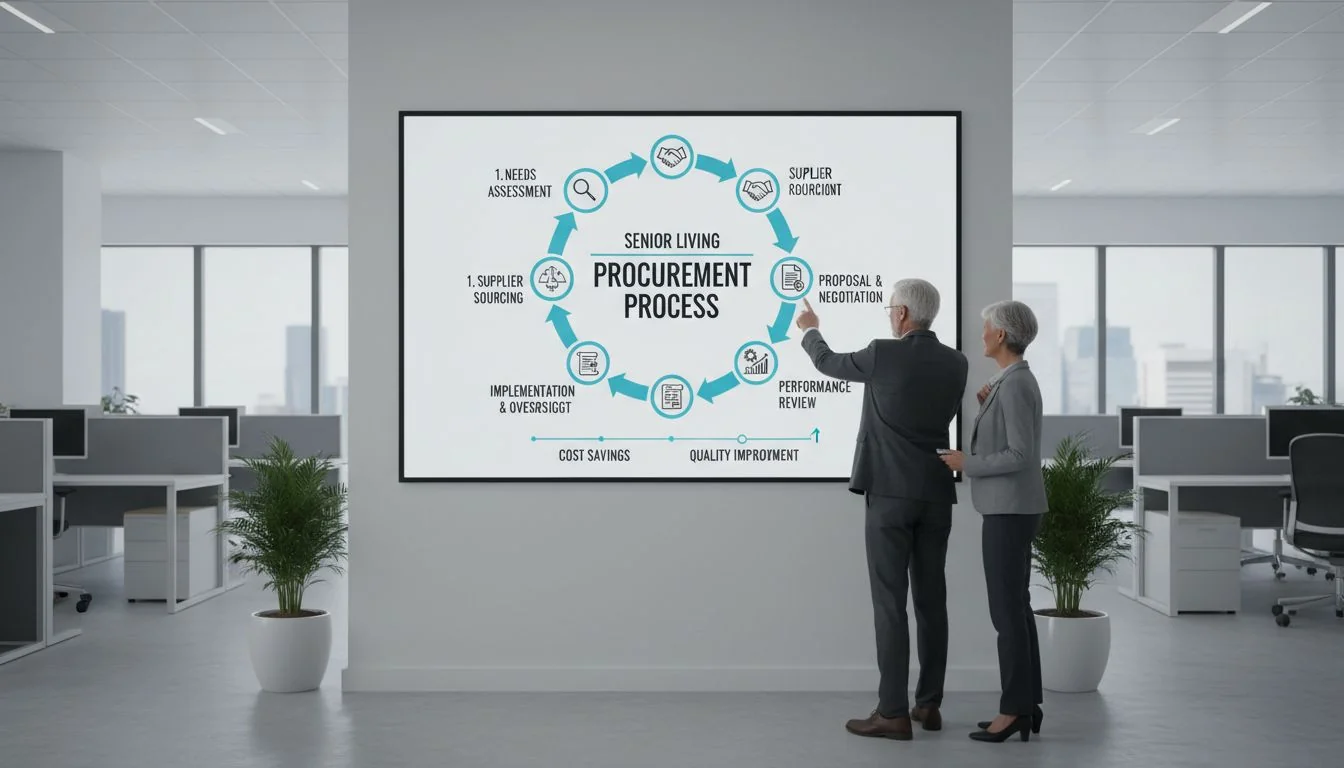
Single Facilities and Regional Chains
Just like in the mold business, different clients buy differently. Single independent facilities have short sales cycles. The administrator and director of nursing make the call. They often base this on a contractor's advice. Regional chains operate 10 to 50 facilities. The regional director of operations makes the choice. They care about pricing and service network coverage in their specific states.
National Operators and CCRCs
National operators have hundreds of locations. They use a central procurement team. The sales cycle takes 9 to 18 months. They want documented compliance, multi-region service, and a low total cost over 5 to 7 years. Continuing Care Retirement Communities are very complex. They combine independent living, skilled nursing, and dining. They need a campus-wide system design.
Nonprofit Organizations
Nonprofit and religious operators use facility boards. They value mission alignment and long-term trust.
| Operator Type | Decision Maker | Key Buying Factor |
|---|---|---|
| Single Facility | Administrator | Contractor recommendation |
| Regional Chain | VP of Facilities | Local service coverage |
| National Portfolio | Central Procurement | Total cost and compliance |
Buyers always evaluate your ability to support compliance over a long horizon. Your track record in senior living is your best tool to win trust.
National senior living operators typically make water treatment purchasing decisions in under 30 days.False
National operators run centralized RFP processes with sales cycles lasting 9 to 18 months.
Continuing Care Retirement Communities require campus-wide water architectures due to their diverse facility types.True
CCRCs combine independent living, dining, and skilled nursing, requiring integrated, multi-level water systems.
How Should Operators Evaluate Vendors for Senior Living Water Programs?
Are you stuck with a vendor who only sells filters? Equipment alone will not pass a health inspection. You must evaluate vendors on their ability to deliver long-term compliance.
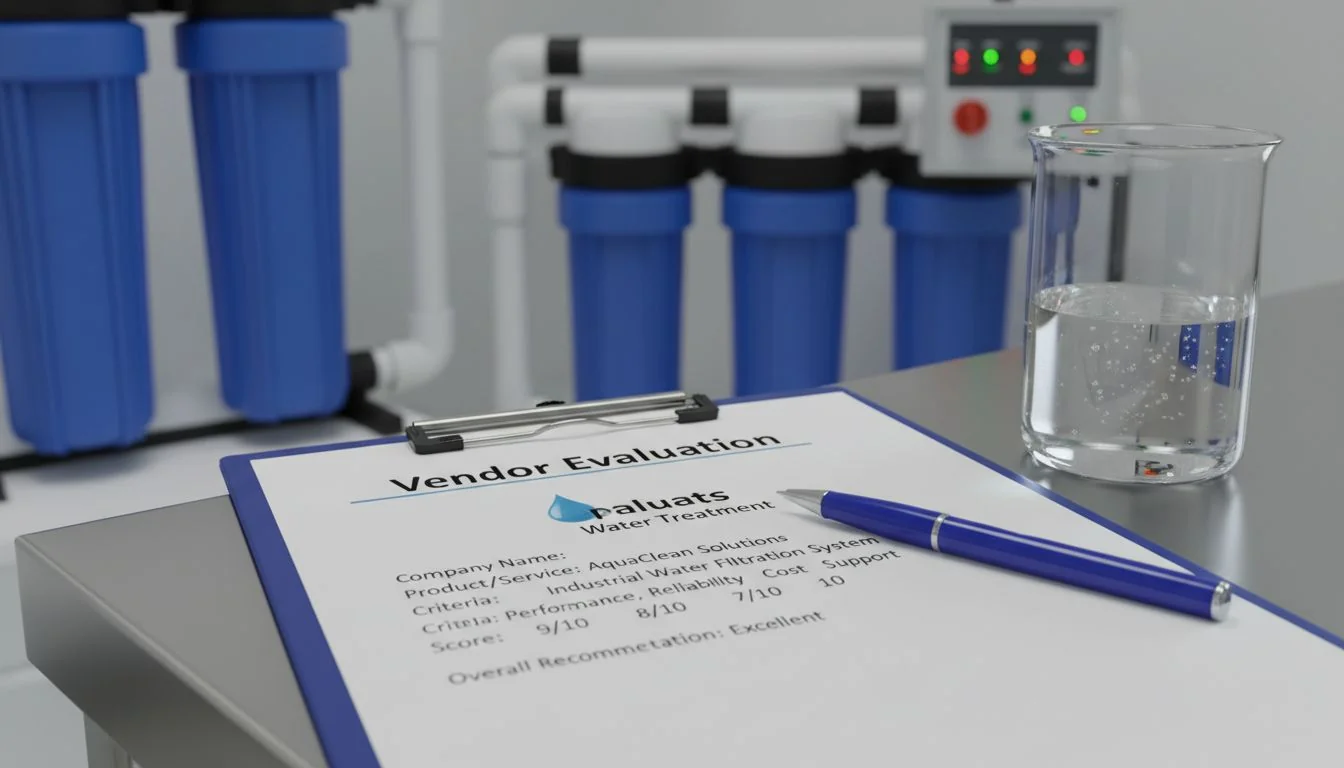
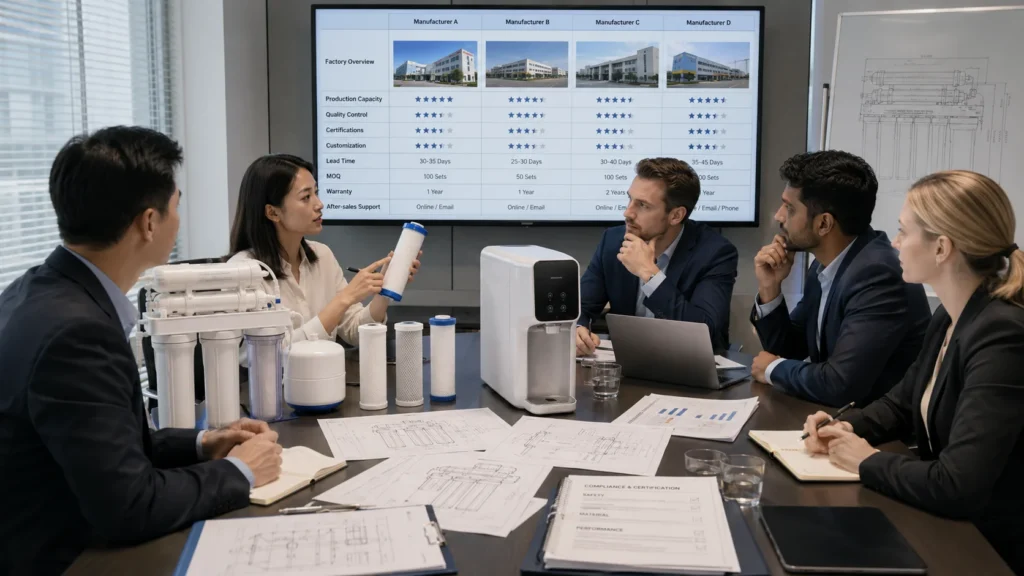
Operators must evaluate vendors across five dimensions: documentation infrastructure for compliance, long-term cartridge supply stability, rapid service network response, engineering customization for specific buildings, and OEM capabilities. The best vendors sell a complete risk management program with audit-ready records, not just basic commercial water filters.
Documentation and Supply Stability
When I evaluate a supplier, I look at the long game. Documentation infrastructure is the most important factor. The vendor must provide water management plan templates, monitoring records, and training materials. These must survive a CMS survey. Filter cartridge supply is also critical. A large operator uses hundreds of cartridges a year. Pricing stability and supply continuity over 5 years are vital.
Service and Engineering
Service network coverage is non-negotiable. A broken water system in a nursing home is a clinical emergency. Vendors must offer 4 to 24-hour emergency response times. Engineering customization is also key. Every building has different source water and pipe layouts. An OEM-capable partner can adjust the media stack for each building.
The Final Decision
OEM and private-label options help build long-term strategic relationships. This is great for national operators who want standard systems.
| Evaluation Dimension | Why It Matters |
|---|---|
| Documentation | Ensures CMS and ASHRAE 188 compliance |
| Cartridge Supply | Controls recurring operational costs |
| Service Network | Resolves clinical emergencies quickly |
| 엔지니어링 | Adapts to unique building water profiles |
Vendors who only offer equipment specs will lose. Vendors who offer a full compliance program will win.
Filter cartridge pricing stability is unimportant because cartridges are rarely replaced.False
Cartridge replacement is a major recurring cost, and large operators replace hundreds annually.
Vendors must commit to 4 to 24-hour emergency service response times.True
A compromised water system is a regulatory and clinical risk that requires immediate action.
결론
Senior living water treatment is a critical compliance program. By following ASHRAE 188, using proper engineering, and choosing the right vendor, you protect residents and secure your facility's future.
References
-
Understanding Legionella risks is crucial for ensuring resident safety and compliance. ↩
-
Addressing lead exposure is essential for protecting residents in older buildings. ↩
-
Understanding Pseudomonas risks helps in safeguarding immunocompromised residents. ↩
-
Preventing scalding injuries is vital for resident safety and compliance with regulations. ↩
-
A solid water management plan is essential for compliance and protecting vulnerable residents. ↩
-
ASHRAE 188 outlines critical standards for managing water safety in facilities. ↩
-
CMS QSO-17-30 sets mandatory standards for water management in healthcare facilities. ↩
-
A proper engineering stack is crucial for effective water safety and management. ↩
-
Understanding procurement patterns helps in effectively pitching solutions to buyers. ↩

 English
  Français
  Español
  Italiano
  Deutsch
  Português
  Русский
  العربية
  日本語
日本語  한국어
한국어  Tiếng Việt

