
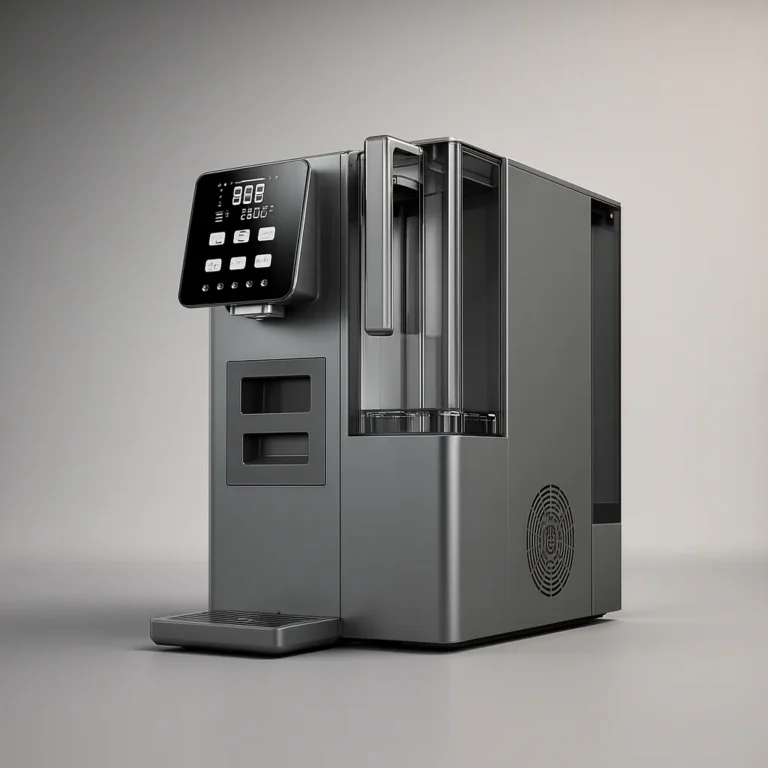
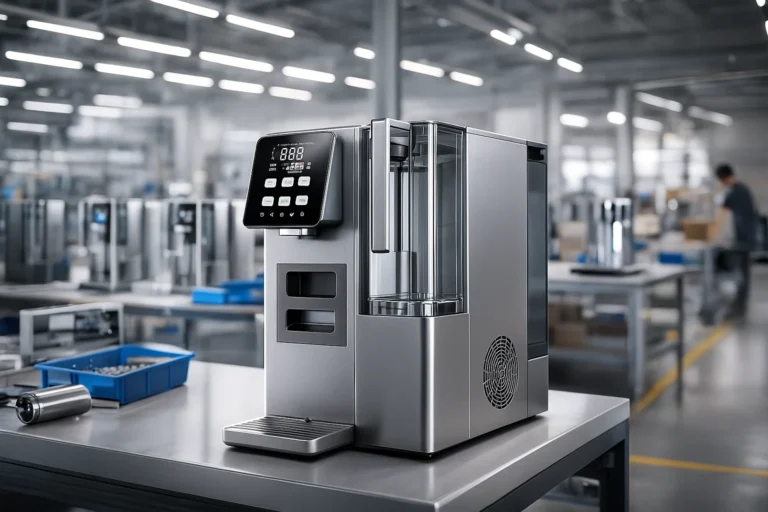

We often design products based on hard numbers like flow rate and pressure. But when I talk to end-users, they do not care about the specs on the data sheet. They only care about one thing: does this water taste good?
Good drinking water is not defined by a lack of particles, but by a balance of minerals. It should have a neutral pH and a moderate Total Dissolved Solids (TDS) level. True quality means the water is free from "tank taint" caused by plastic storage and retains a crisp, round Mouthfeel1.

Many designers and engineers ignore the sensory experience. We focus on the mold, the housing, and the filter efficiency. However, if the water tastes flat or smells like plastic, the product fails. In this article, I will explain why we need to stop chasing "Zero TDS" and start designing for flavor.
Zero TDS water is the healthiest option for human consumption.False
Zero TDS water lacks essential minerals and can be acidic, leading to a flat taste and poor extraction for beverages like coffee.
Stainless steel tanks prevent flavor contamination better than plastic tanks.True
Stainless steel is non-reactive, whereas plastic can leach chemicals into aggressive RO water, causing unpleasant odors and tastes.
1. Introduction: The "Invisible" Flavor Profile?
We usually design for eyes and hands. We want the device to look sleek and feel sturdy. But for water purification, the real product is the liquid itself. I have seen many expensive machines fail because the water simply did not taste right.
The flavor profile of water is invisible, but it is the most important feature. When we design water systems, we are not just plumbers. We are flavor engineers. We need to move beyond basic filtration mechanics. We must consider how our material choices affect the sensory experience. Words like "crisp," "round," and "smooth" should be in our design vocabulary just as much as "tolerance" and "shrinkage."

The Sensory Gap in Engineering
In my years working with mold design and manufacturing, I have noticed a gap. Engineers look at charts. Users use their tongues. There is a disconnect here. We often treat water as a simple chemical formula, H2O. But drinking water is a complex solution. It interacts with the materials it touches.
When you design a plastic manifold or a storage tank, you are influencing the flavor. If you strip all minerals out, you change the "mouthfeel." Mouthfeel is how the water physically feels in the mouth. Is it thin and sharp? Or is it round and smooth?
High-end wellness brands understand this. They do not sell filtration; they sell a lifestyle. They sell hydration that feels premium. As designers, if we want to compete in the high-end market, we must understand that we are tuning the water, not just cleaning it. We need to test for taste just as rigorously as we test for leaks.
Mouthfeel is a recognized attribute in water sensory analysis.True
Water sommeliers and sensory experts evaluate water based on weight, texture, and finish, known collectively as mouthfeel.
Removing all minerals improves the hydration capability of water.False
Electrolytes and minerals aid in cellular absorption; completely demineralized water is less efficient for hydration.
2. Decoding TDS: The Most Misunderstood Number?
Many competitors market "Zero Water" or 0 TDS as the ultimate goal. This is a marketing trick, not a health standard. They convince clients that any number above zero is contamination. This is false.
TDS stands for Total Dissolved Solids. It measures everything in the water that is not H2O molecules. While high TDS can indicate pollution, a TDS of zero means the water is "dead." It has no character, no minerals, and often tastes acidic and flat.

Why Zero TDS is a Design Flaw
I have argued with many clients about this. They want the meter to read 000. I tell them that Zero TDS water is aggressive. Because it is empty, it is "hungry." It wants to bond with something. It will pull minerals from your body, or worse, it will pull chemicals from the plastic tank it sits in.
From a taste perspective, minerals are the flavor. Magnesium makes water taste sweet. Calcium makes it feel smooth and creamy. Sodium adds a round finish. When you remove these, you are left with water that tastes like a laboratory experiment.
For our B2B clients, especially those selling to offices or luxury homes, we must position our hardware as "Mineral-Balanced." We are not selling dead water. We are selling living water. This makes the product look more sophisticated. It separates us from the cheap, mass-market filters that just strip everything away.
| TDS Level (ppm) | Taste Profile | 애플리케이션 |
|---|---|---|
| 0 - 50 | Flat, Thin, Aggressive | Industrial use, not ideal for drinking |
| 50 - 150 | Crisp, Clean, Neutral | Excellent drinking water |
| 150 - 250 | Round, Smooth, Heavy | Good for Coffee Extraction2 |
| 300+ | Salty, Bitter, Hard | Can cause scale buildup |
Magnesium contributes a sweet flavor profile to water.True
Magnesium is a key mineral that softens the bitterness and adds a subtle sweetness to drinking water.
Aggressive water (low TDS) protects pipes from corrosion.False
Aggressive water is corrosive and can leach metals from pipes and plumbing fixtures.
3. The "Odor" Factor: Why Pure Water Sometimes Smells?
Have you ever tasted water from a plastic bottle left in the sun? That distinct, rubbery taste is what we call "Tank Taint3." It is a visceral term, but it describes a real problem in hardware design.
"Tank Taint" occurs when water sits in low-quality plastic storage tanks. Reverse Osmosis (RO) water is very pure and acts as a solvent. It pulls flavors and chemical compounds out of the plastic, ruining the drinking experience.

The Material Science of Storage
This is where my background in mold and materials becomes critical. In the factory, we know that not all plastics are the same. Even food-grade plastics can off-gas or leach when exposed to temperature changes or aggressive fluids like RO water.
When we design high-end water units, we must advocate for Stainless Steel. Stainless steel is the only material that truly respects the water's flavor profile. It is inert. It does not react. It does not add "taint."
Yes, steel costs more than plastic. But this validates the premium cost of the unit. When you explain to a client that plastic tanks ruin the flavor they just paid to filter, they understand the value. We are solving a sensory defect. We are ensuring that the water coming out of the tap tastes exactly as it should—clean and odorless. This is a design choice that directly impacts the user's perception of quality. If the water smells like a rubber hose, the user thinks the machine is broken.
Reverse Osmosis water is neutral and does not interact with storage materials.False
RO water is slightly acidic and mineral-deficient, making it a solvent that can leach compounds from container walls.
Stainless steel storage prevents bacterial biofilm better than porous plastic.True
The smooth, non-porous surface of stainless steel makes it difficult for bacteria to adhere and form biofilms compared to plastic.
4. The "Taste" Factor: The Role of Minerals?
We have established that dead water is bad. Now we must look at how to make it good. We do this by adding minerals back in. This is not just about health; it is about engineering the taste.
Taste is determined by the specific blend of minerals present in the water. By re-introducing Calcium, Magnesium, and Potassium, we can "tune" the water to have a specific flavor profile that appeals to the human palate.

Tuning the Water Like an Instrument
I like to think of this phase as "tuning." Just as you tune a guitar to get the right pitch, we tune water to get the right pH and taste. In our R&D process, we test different mineral compositions.
If the water is too acidic (low pH), it tastes sour. If it is too alkaline (high pH), it can taste bitter or soapy. The sweet spot is a neutral to slightly alkaline pH with a balanced mineral load.
This approach appeals to wellness founders. They care about the "experience" of the product. When we market our design services or our hardware, we highlight that we test for taste. We don't just assemble filters. We create a recipe. We use specific Remineralization4 cartridges that slowly release minerals. This transforms the water from a chemical commodity into a premium beverage. It creates that "Round" and "Sweet" sensation that makes people want to drink more.
Calcium is primarily responsible for the 'smooth' texture in water.True
Calcium ions interact with taste receptors to reduce acidity and provide a creamy or smooth mouthfeel.
pH level has no effect on the perceived taste of water.False
pH levels significantly alter taste; acidic water tastes sour/metallic, while highly alkaline water tastes bitter/slippery.
5. How to Engineer the Perfect Cup?
The ultimate test of water quality is not drinking it straight. It is making coffee. Coffee is 98% water. If the water is bad, the coffee is bad. This is the "Coffee Shop" standard we should use.
Baristas hate standard RO water because it kills the flavor of the coffee beans. They prefer remineralized water because the minerals bind with the coffee oils to extract the full aroma and taste.

The Barista-Approved Hardware
When pitching units to Office Coffee Services (OCS) or high-end home brands, use "Coffee Logic." Pure RO water is too empty. It passes right through the coffee grounds without grabbing the flavor compounds. The result is sour, under-extracted coffee.
On the other hand, water that is too hard (too many minerals) will ruin the machine with scale and make the coffee taste chalky. We need the "Goldilocks" zone. We need water that is clean enough to protect the machine but mineral-rich enough to support the bean.
By positioning our hardware as "Barista-Approved," we gain credibility. We show that we understand the application of the water. We are not just selling a plumbing box; we are a partner in the coffee experience. This is a powerful narrative for B2B sales. It shifts the conversation from "how much does it cost?" to "how good will my coffee taste?"
Magnesium in water helps extract fruity and acidic notes from coffee.True
Magnesium ions are highly efficient at binding to flavor compounds in coffee, enhancing sweetness and fruitiness.
Distilled water makes the strongest and most flavorful coffee.False
Distilled water leads to flat, sour coffee because it lacks the minerals necessary to extract flavor oils effectively.
결론
We must stop designing for numbers and start designing for people. "Zero TDS" is a myth that leads to dead, flat water. Plastic tanks lead to "Tank Taint" and bad odors. To create a truly premium product, we must use stainless steel and engineer the mineral balance. Don't just drink numbers. Drink quality.
References
-
Mouthfeel significantly affects the drinking experience, making it essential to explore its role in water quality. ↩
-
Water quality is critical for coffee flavor; understanding this can enhance your coffee brewing experience. ↩
-
Tank Taint can ruin the flavor of water; learning about it helps in choosing better storage solutions. ↩
-
Remineralization is vital for improving water taste and health; understanding it can enhance your hydration choices. ↩


 한국어
한국어  English
  Français
  Español
  Italiano
  Deutsch
  Português
  Русский
  العربية
  日本語
日本語  Tiếng Việt

