
The smart home market has long promised a future of seamless connectivity and effortless living. Yet, for years, this promise has been hampered by a frustrating reality: fragmentation. A myriad of competing standards and proprietary ecosystems has created a complex labyrinth for both consumers and manufacturers. As an OEM, you've likely navigated the challenges of developing products compatible with Apple HomeKit, Google Home, Amazon Alexa, and Samsung SmartThings, each demanding separate integrations and certifications. This fragmented landscape has been a significant headache, limiting market reach and inflating development costs.
But a breath of fresh air is here. Enter Matter, the new, open-source connectivity standard poised to unify the smart home ecosystem. For smart air purifier OEMs, Matter isn't just another technology to consider; it's a fundamental shift that offers a significant competitive advantage by simplifying development, expanding market reach, and enhancing the user experience. This blog will explore what the Matter protocol means for your next smart air purifier project.
What is Matter? The Universal Language for Smart Devices
At its core, Matter is a royalty-free connectivity standard that allows smart home devices to communicate with each other, regardless of the manufacturer or ecosystem. Imagine a universal language that all smart devices can speak, breaking down the "walled gardens" that have long constrained the industry.
Matter is built on four core principles:
- Interoperability: Devices from different brands work together seamlessly. A Matter-enabled air purifier will work with any Matter-certified platform, be it Apple Home, Google Home, or Amazon Alexa.
- Reliability: Matter prioritizes local network control, meaning devices can communicate directly with each other within the home, even if the internet goes down. This ensures consistent and responsive operation.
- Security: Recognizing the importance of privacy and data protection, Matter was designed with robust, layered security from the ground up. It employs modern cryptographic standards to protect against unauthorized access and data breaches.
- Simplicity: Matter aims to simplify the entire user experience, from easy setup (often via a QR code scan) to consistent control across platforms.
This ambitious standard is backed by the Connectivity Standards Alliance (CSA), an organization that includes major tech giants like Amazon, Apple, Google, and hundreds of other companies. This broad industry support gives Matter unprecedented momentum and stability, making it a foundational shift rather than a fleeting trend.

Matter and Air Purifiers: A Perfect Match for a Healthier Home
The relevance of Matter for air purifiers became even more pronounced with the release of Matter 1.2 in October 2023. This update officially introduced a standardized device type for Air Purifiers (Device Type ID: 0x002D) into the Matter Device Library. This was a pivotal moment, providing a clear, certifiable, and interoperable path to market for smart air purifiers.
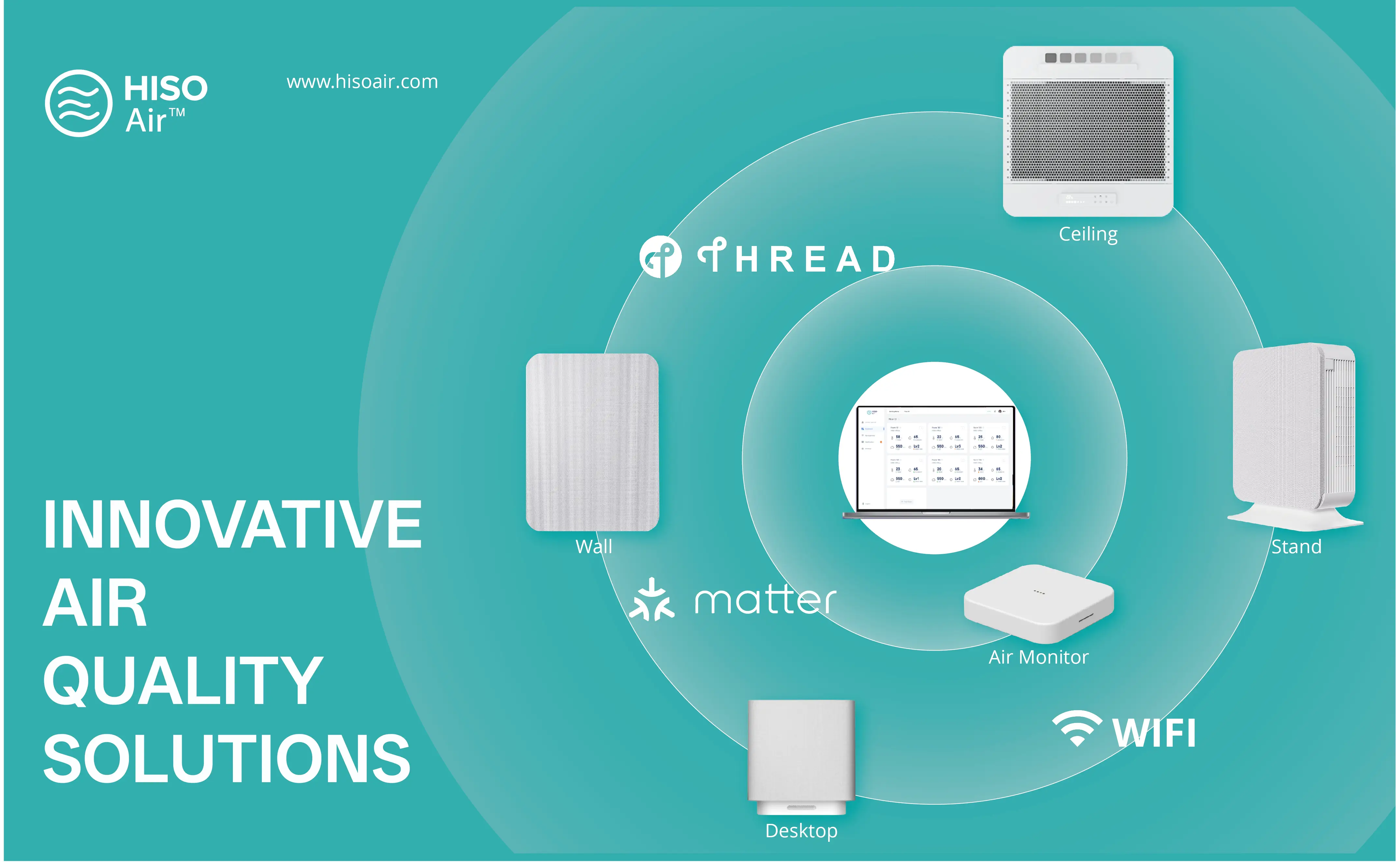
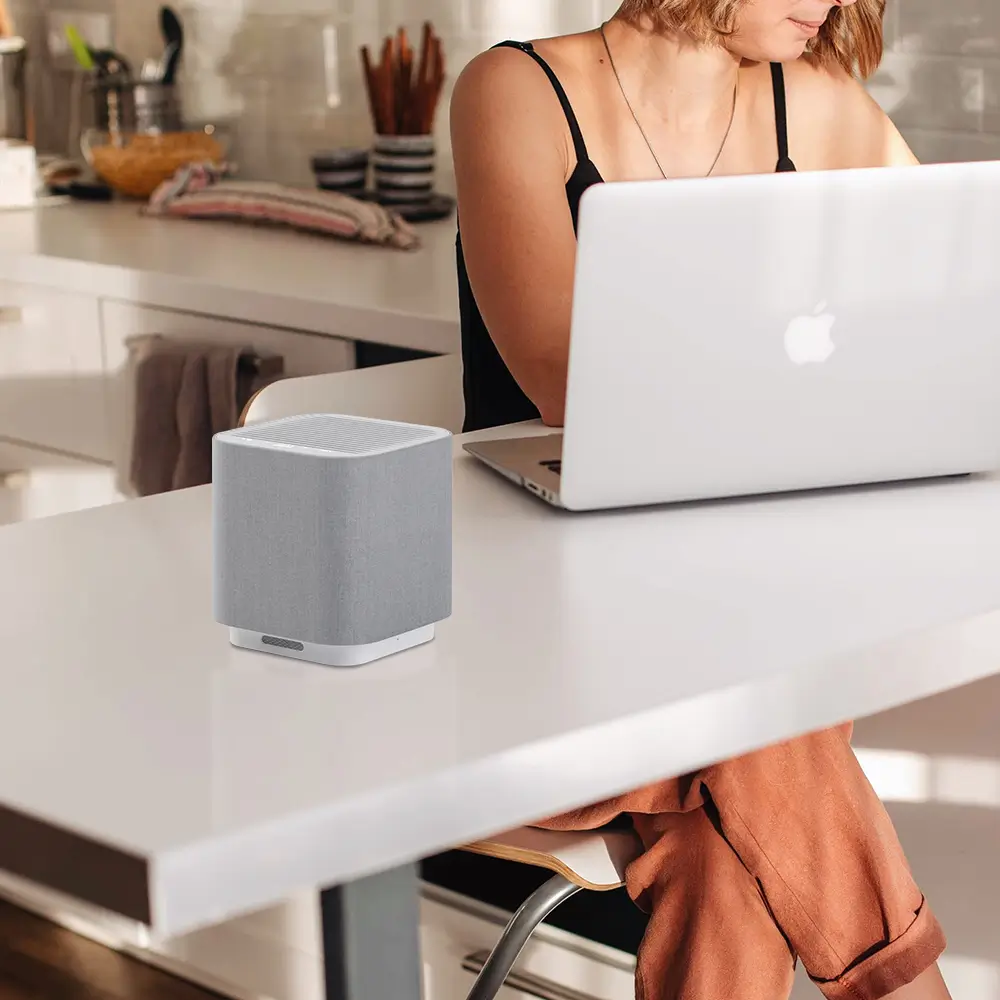
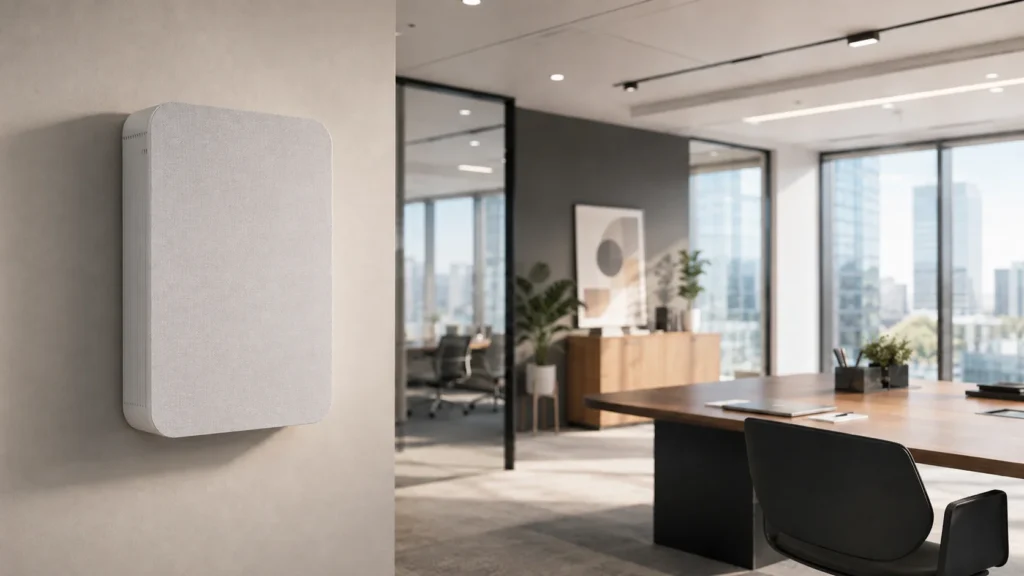
One standout product embracing this shift is the HA100D Pro Desktop Air Purifier from HisoAir. Compact yet powerful, the HA100D Pro is designed for modern homes and workspaces that value both clean air and smart connectivity. With support for Matter’s standardized features, this purifier ensures effortless integration with a wide range of Matter-compatible platforms.
Matter 1.2 also includes formalized support for essential components such as:
팬
공기질 센서
These additions allow smart air purifiers like the HA100D series to deliver key capabilities:
On/Off and fan speed control
Intelligent mode selection (e.g., Auto, Sleep)
Detailed air quality monitoring, including PM2.5, PM10, VOCs, CO, and CO₂ readings
With Matter certification becoming the gold standard, the HisoAir HA100D Pro stands at the forefront of the next generation of smart air purifiers delivering clean air, better health, and true smart home interoperability.

Key Advantages for Smart Air Purifier OEMs
For OEMs, the adoption of Matter translates into tangible strategic advantages:
1. Drastically Reduced Development Costs & Faster Time-to-Market:
In the past, achieving broad compatibility meant developing and certifying products for each smart home ecosystem separately. This was a costly and time-consuming endeavor. Matter eliminates this redundancy. With one standard and one certification process, you can streamline your engineering efforts, focusing R&D on core air purification technology rather than maintaining multiple software versions.
2. Massive Expansion of Market Reach:
Imagine a product that "Works with Everything." A single, Matter-certified air purifier can be sold to any customer, regardless of their preferred smart home ecosystem. This means a single product SKU can address the entire smart home market, simplifying inventory management, marketing, and supply chain logistics. This "Multi-Admin" capability is a game-changer, allowing a single device to be controlled by multiple platforms simultaneously.
3. Enhanced Customer Experience & Brand Loyalty:
Matter promises an effortless setup process, often involving a simple QR code scan. This standardized and straightforward experience leads to happier customers from the moment they unbox the product. Fewer compatibility issues and simpler setup mean fewer customer support calls and returns, ultimately enhancing brand loyalty.
4. Future-Proofing Your Product Line:
The smart home industry is decisively coalescing around Matter. By aligning with Matter, you ensure your products remain compatible as the smart home landscape evolves. It also provides a robust foundation for future innovation, allowing you to leverage rich data from Matter's air quality sensors to create more advanced and automated user experiences.

Development & Implementation: Getting Started with Matter
Embarking on a Matter product development project requires a structured approach.
Hardware Considerations:
For air purifiers, which are typically line-powered devices, both Wi-Fi1 그리고 스레드2 are viable connectivity options. Wi-Fi leverages existing home networks, while Thread, a low-power mesh protocol, can turn your air purifier into a Thread Router, strengthening the user's home network. The optimal strategy is often to select a tri-radio System-on-Chip (SoC) that supports Wi-Fi, Thread, and Bluetooth Low Energy (for commissioning), offering maximum flexibility for current and future features. Leading silicon vendors like NXP, Silicon Labs, Espressif, and STMicroelectronics offer Matter-ready chipsets with the necessary processing power, memory, and security features.
Software & SDKs:
The Matter standard is open-source, and the CSA maintains an official open-source Matter Software Development Kit (SDK). Silicon vendors also provide their own SDKs, bundling the Matter SDK with hardware abstraction layers and example applications, simplifying the development process.
The Certification Process:
Before a product can bear the Matter logo, it must undergo a rigorous certification process managed by the CSA. This involves testing at an Authorized Test Lab (ATL) to ensure compliance with the specification and interoperability with other certified products. While there are costs involved—including annual CSA membership fees (around $7,000 for an Adopter membership) and ATL testing fees (ranging from $7,000 to $13,000 per product)—this single certification grants access to all Matter-compliant ecosystems, making it a more efficient investment compared to multiple proprietary certifications. Every Matter device also requires a unique Device Attestation Certificate (DAC) for security, which adds a per-unit cost.
The Future is Clear: Matter and the Evolution of Smart Air Purification
Matter is not a static standard; it's a dynamic platform with a bi-annual release cadence, continually expanding its capabilities. This ongoing evolution opens up exciting possibilities for smart air purifiers.
Advanced Automation:
With standardized air quality data, the potential for sophisticated routines is immense. Imagine your air purifier automatically adjusting its fan speed when outdoor pollen counts are high (integrating with weather data) or when an indoor VOC event is detected (e.g., during cooking).
Energy Management:
Matter 1.3 and 1.4 introduced advanced energy management clusters, signaling a future where appliances actively participate in a home's overall energy ecosystem. This means future air purifiers could report detailed energy consumption and even respond to signals from smart grids, optimizing their operation during off-peak hours or when renewable energy is abundant. This transforms the air purifier from a simple appliance into a tool for saving money and contributing to a more sustainable home.
Meeting Consumer Demand:
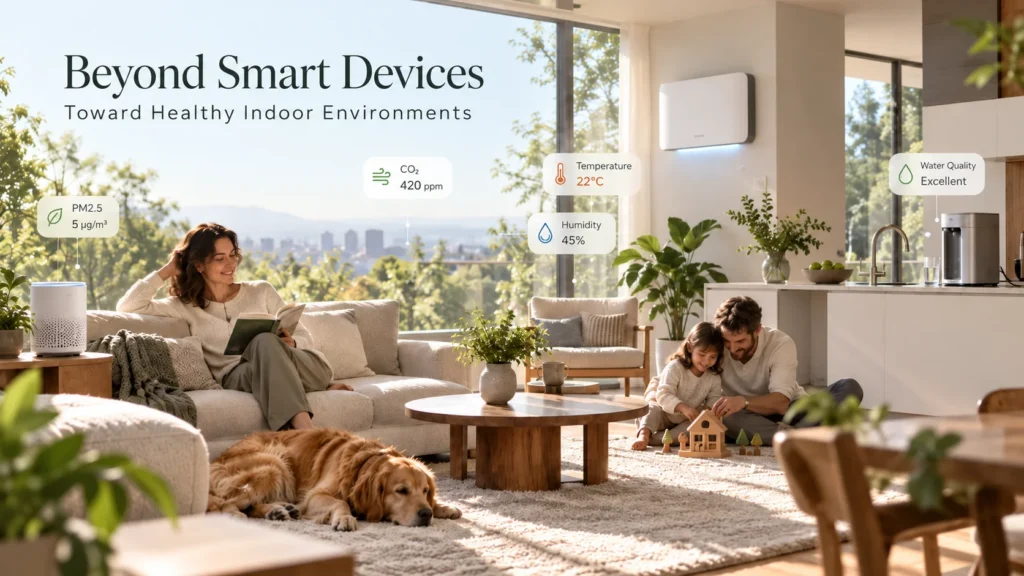
The growing consumer trend towards healthier living and environmental awareness makes smart, interoperable air purifiers more relevant than ever. Matter enables these devices to seamlessly integrate into a holistic healthy home environment.
Conclusion: Why Matter is a Non-Negotiable for Air Purifier OEMs
The emergence of the Matter protocol represents the most significant strategic inflection point for the smart home industry in a decade. For smart air purifier OEMs, it is both a disruptive challenge and an unprecedented opportunity. It dismantles the old "walled garden" approach to connectivity, forcing a re-evaluation of product strategy, but in its place, it offers a unified, global market and a clear path for innovation.
The key takeaways are clear:
- Matter is a Foundational Market Shift: It's the new baseline for smart home connectivity, essential for future market relevance.
- The ROI is in Scale and Risk Reduction: While there's an upfront investment, Matter enables a single product SKU to address the entire global smart home market, de-risking product development and providing a more capital-efficient path to scale.
- Differentiation Moves Beyond Connectivity: With interoperability becoming a given, competitive advantage will be built on superior hardware performance (filtration, acoustics), on-device AI/ML for autonomous operation, and, crucially, a compelling proprietary app that delivers value-added services and fosters a direct relationship with the customer.
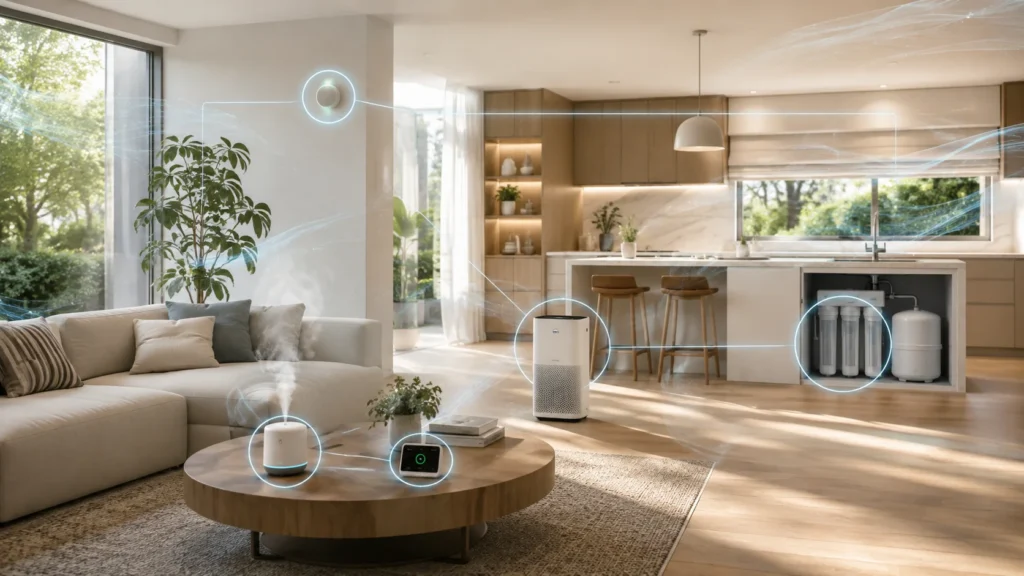
- The Future is the "Home as a System": Next-generation air purifiers must be designed as intelligent nodes within a larger, interconnected system, contributing to the home's overall health, comfort, and energy efficiency.
Matter is no longer a future-looking technology; it's here now. The time for smart air purifier OEMs to integrate Matter into their product roadmaps is now. Don't get left behind in the new era of the unified smart home. The future of clean air and smart living is interoperable, and it's powered by Matter.
References:
-
HisoAir. What Wi-Fi Protocol Means for Smart Air Purifier OEM Projects. Retrieved from https://hisoair.com/what-wi-fi-protocol-means-for-smart-air-purifier-oem-projects/ ↩
-
HisoAir. What Thread Protocol Means for Smart Air Purifier OEM Projects. Retrieved fromhttps://hisoair.com/what-thread-protocol-means-for-smart-air-purifier-oem-projects/ ↩


 English
  Français
  Español
  Italiano
  Deutsch
  Português
  Русский
  العربية
  日本語
日本語  한국어
한국어  Tiếng Việt

