

새 탭에서 열립니다
혁신적인 공기질 솔루션

What’s the minimum order quantity for private label wellness products?

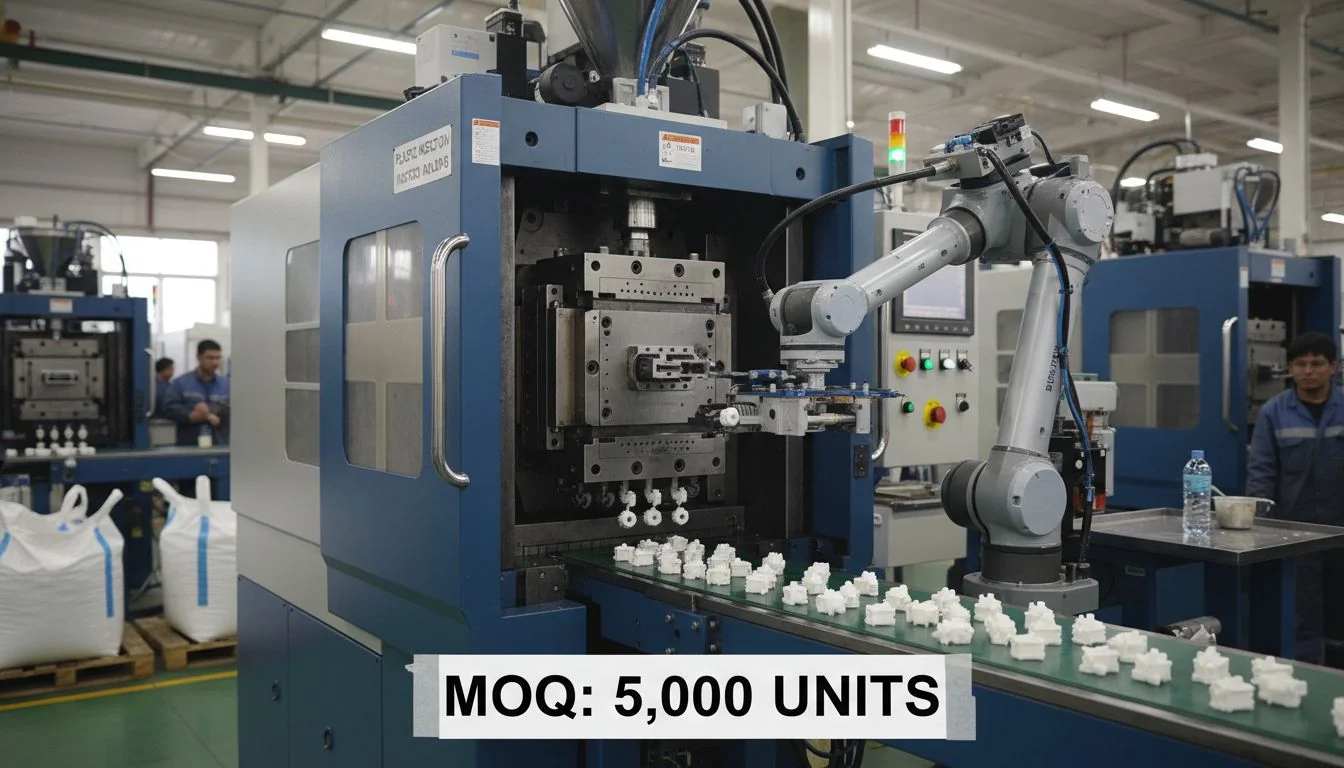
A plastic injection molding machine in operation, producing small parts.

You have a brilliant product design, but the minimum order quantity1 from manufacturers feels like an impossible hurdle. This initial barrier can stop a great idea in its tracks.

The minimum order quantity (MOQ) for custom plastic parts2 typically starts between 1,000 to 5,000 units but can go much higher. This number is not fixed; it depends heavily on your part's complexity, the raw material you choose, and your manufacturing partner's operational costs.
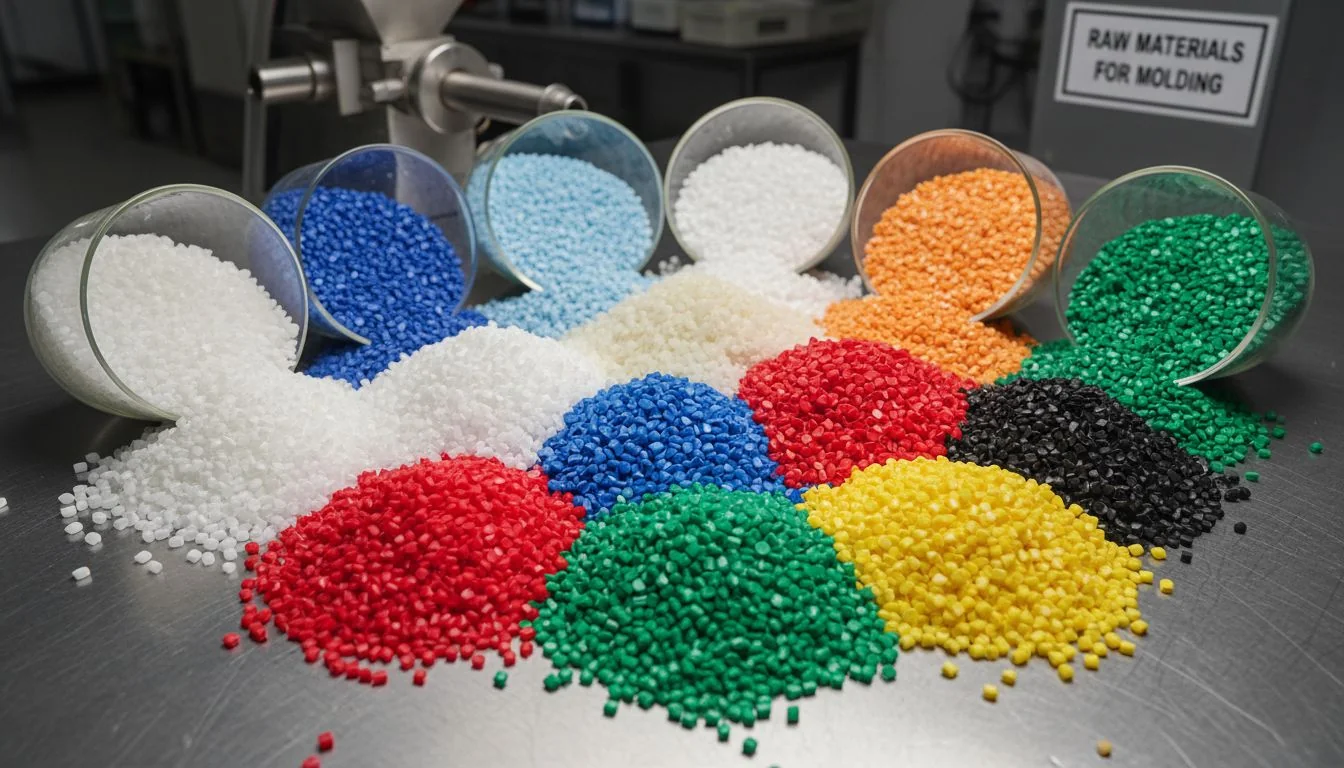
A close-up shot of various plastic resins in different colors.

That high number on a quote sheet can be intimidating. I've seen it discourage many aspiring product creators. But I'm here to tell you that the MOQ is not a final verdict. It's the start of a conversation. When I first started my own company, I had to learn how to navigate these discussions. It’s a skill, and like any skill, you can learn it. Understanding what actually goes into that number is the first step to taking control of your production costs and turning your design into a reality. Let's break it down together.

Every injection molding factory has a standard MOQ of 5,000 units.False

There is no industry-wide standard MOQ. It varies greatly depending on the factory's size, machinery, and the specifics of the project.

The cost of the injection mold itself is separate from the MOQ part price.True

The MOQ quote covers the cost of producing the parts. The mold (tooling) is a significant, one-time capital expense that you pay for upfront.

Your Product Dream & The MOQ Hurdle?

You’ve spent months perfecting your design in CAD. But when the quotes come back, the huge minimum order feels like a wall. It can seem like your project is over before it even begins.

The MOQ exists because manufacturing has significant setup costs. It represents the smallest batch a factory can produce to cover the expense of machine setup, labor, and material handling while still making a profit. It’s a number that makes the production run viable for them.
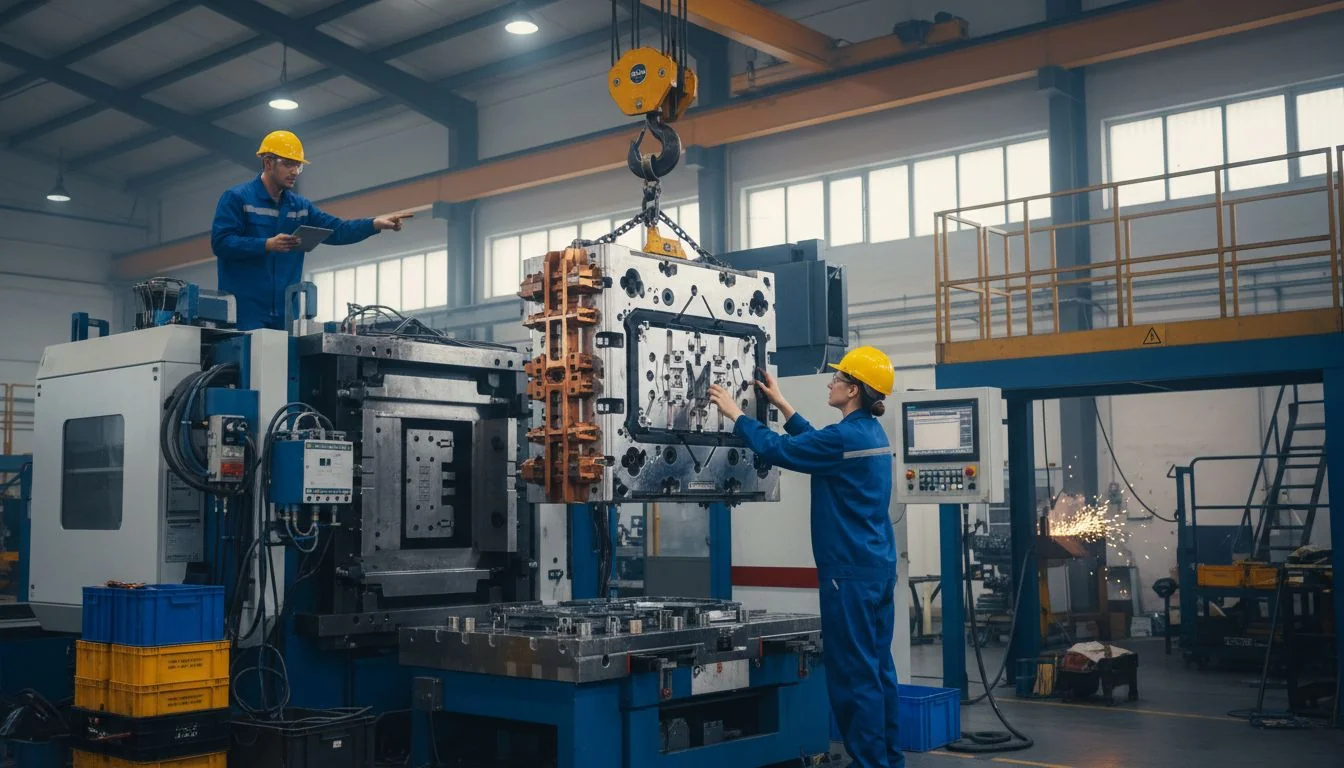
An engineer setting up a large injection mold in a factory.

Let's dive deeper into why this number is so important to the manufacturer. Think about what it takes to start a production run. First, a technician has to retrieve your heavy steel mold from storage and carefully install it into an injection molding machine. This can take hours. Then, they have to heat the machine to the correct temperature for your specific plastic, which uses a lot of energy. They purge any old material from the barrel and load your new resin. Only after all this setup, which costs them time and labor where no parts are being made, can they start your run. If they only make 100 parts, the cost of that setup time spread across those few parts would be enormous. The MOQ ensures the run is long enough to make this entire process efficient and financially sensible for the factory.

Setup for an injection molding run takes only a few minutes.False

A proper mold setup, including installation, heating, and material purging, can take several hours, representing a significant labor and machine-time cost.

A manufacturer loses money during machine setup time.True

During setup, the machine is not producing parts, so the factory is incurring labor and energy costs without generating revenue, making short runs inefficient.

What Key Factors Influence Your MOQ?

Are you confused why one manufacturer quotes 2,000 units while another demands 10,000 for the same part? The factors driving your MOQ are often hidden in the details of your design and material choices.

The most significant factors that dictate your MOQ are your choice of raw material3, the complexity of your part's design, and any required secondary operations like printing or assembly. Choosing a standard, widely available material for a simple part will always give you the lowest possible MOQ.
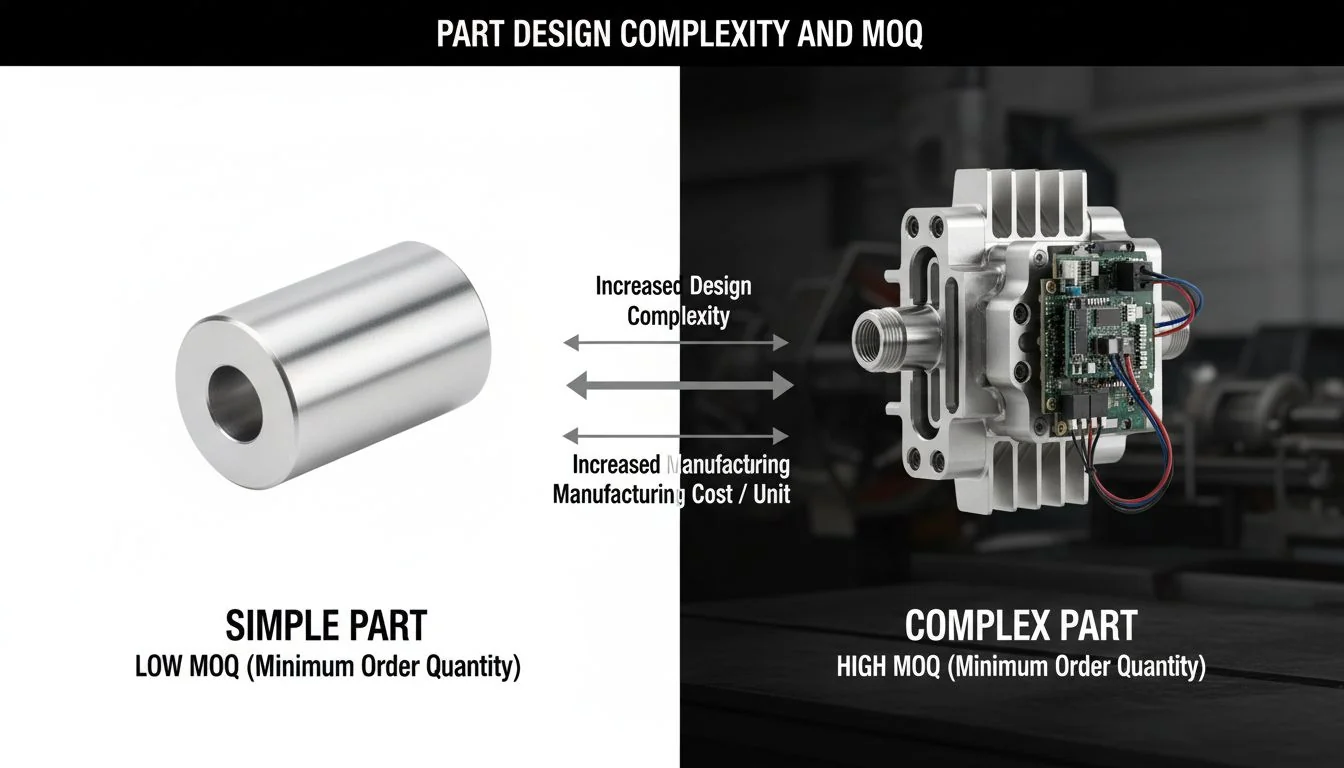
A split view showing a simple part on one side and a complex part with many features on the other.

Let's break down these key factors. I always tell my clients to think about these three areas before they even ask for a quote. It’s the best way to manage expectations and start the conversation on the right foot. A little planning here goes a long way in controlling your startup costs.

The Big Three MOQ Drivers

요인 Low MOQ Scenario High MOQ Scenario
Raw Material Using a standard "house" resin like natural PP or black ABS that the factory buys in bulk. Requiring a custom Pantone-matched color, a special-grade polymer (e.g., medical-grade), or a resin with specific additives (e.g., glass-filled). The material supplier has their own MOQ.
part complexity4 A simple, open-and-close mold design with no undercuts or complex features. A complex part requiring side-actions, lifters, or unscrewing mechanisms in the mold. More complex tooling means longer, more costly setups.
Secondary Ops The part comes out of the mold and is finished. No extra steps needed. The part requires pad printing, ultrasonic welding, assembly with other components, or special custom packaging. Each additional step can have its own setup costs and MOQs.

Using a custom color for your plastic part does not affect the MOQ.False

Custom color matching requires the factory to order a specific resin compound, which comes with its own MOQ from the material supplier. This cost is passed on to you.

A simple part design will generally have a lower MOQ than a complex one.True

Simple parts require simpler molds and faster setups, reducing the manufacturer's costs and allowing them to offer a lower minimum order quantity.

How Can You Launch Your Product with a Manageable MOQ?

Receiving a high MOQ quote can feel like a rejection, making it seem impossible to launch without huge funding. But there are smart strategies you can use to get your foot in the door.

To secure a manageable MOQ, start by simplifying your design and choosing a standard "house" resin from your manufacturer. More importantly, find a manufacturing partner5, not just a producer, who is open to negotiation and views your initial small order as the start of a long-term relationship.

Two people shaking hands in a factory setting, with machinery in the background.

I remember working with a startup that designed a clever new kitchen gadget. Their first quotes came back with 20,000-unit MOQs, which was impossible for them. I sat down with them and we made two changes. First, we switched their custom light-blue color to a standard white ABS the factory had in stock. Second, we found a partner factory that specialized in lower-volume runs. They agreed to a 2,000-unit run because we showed them a plan for a 10,000-unit order within six months if the launch was successful. Instead of just asking for a discount, we offered them future value. This is how you turn a negotiation into a partnership. You can do the same by asking, "Can we do a smaller 1,000-unit run if I pay a higher per-part price or a separate setup fee?" This shows you understand their business and respect their costs.

Manufacturers will never lower their quoted MOQ.False

Many manufacturers, especially those who value long-term relationships, are willing to negotiate the initial MOQ if you can offer value, such as committing to future orders or paying a higher per-unit price.

Choosing a manufacturer's standard material is a key strategy for a lower MOQ.True

Factories buy their standard 'house' resins in huge quantities at a lower cost, and they don't have to place a special order with a material supplier, eliminating a major cause of high MOQs.

Is the Quoted MOQ Your Total Launch Cost?

You've done it. You negotiated a great MOQ and a fair per-part price. But beware, hidden costs can quickly inflate your budget and jeopardize your project if you're not prepared for them.

No, the MOQ quote is almost never your total cost. It only covers the production of the parts. Your total investment must include the massive one-time mold tooling cost6, shipping, quality control, warehousing, and any secondary processing. Always create a complete budget.
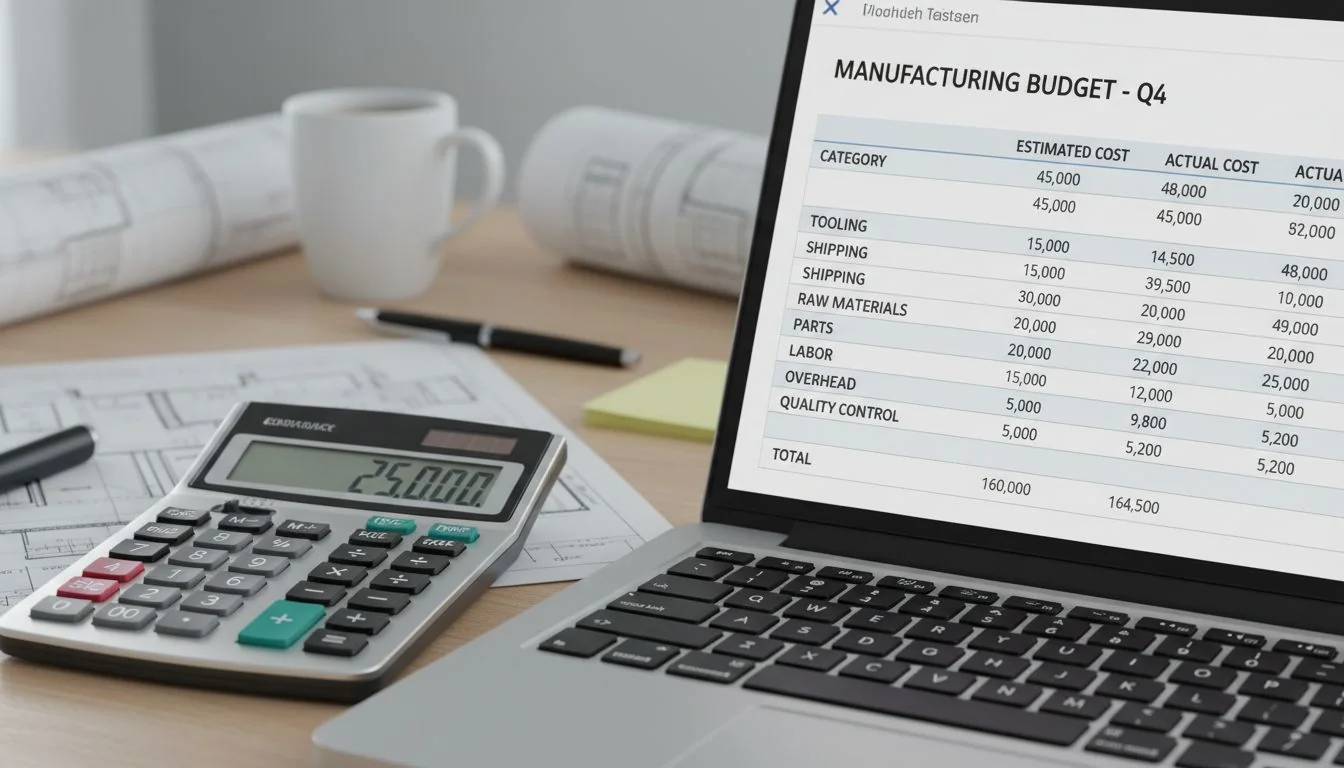
A calculator and a spreadsheet showing a budget with line items like 'Tooling', 'Shipping', 'Parts'.

This is the mistake I see most often. A new entrepreneur gets excited about a $1 per-part price for a 5,000-unit MOQ. They budget $5,000. They completely forget that the steel injection mold itself can cost anywhere from $5,000 to $50,000 or more. This is your single biggest upfront expense. On top of that, you have to ship the parts from the factory, which can be thousands of dollars. You should also budget for a third-party quality inspection before the goods are shipped. Don't let these "other" costs be a surprise. Plan for them from day one. A low MOQ is great, but it's only one piece of a much larger financial puzzle you need to solve to bring your product to market successfully.

The price per part is the only cost you need to budget for when manufacturing a product.False

The total cost includes the one-time mold tooling cost, part cost (MOQ x price), shipping, taxes, quality control, and warehousing, which can far exceed the cost of the parts alone.

Mold tooling is a one-time investment that you own.True

You pay for the creation of the injection mold. It is your asset, and the manufacturer uses it to produce your parts for every production run.

결론

An MOQ isn't a wall; it's a number you can influence. By understanding the drivers—design, material, and partnership—you can turn the MOQ negotiation into a strategic first step toward a successful launch.


References


  1. Understanding MOQ is crucial for managing production costs and planning your product launch. ↩

  2. Explore resources on designing and producing custom plastic parts effectively. ↩

  3. Learn about different raw materials and their impact on production and costs. ↩

  4. Understanding complexity can help you design more cost-effective products. ↩

  5. Finding the right partner can significantly impact your production success and costs. ↩

  6. Mold tooling is a significant investment; understanding its costs is essential for budgeting. ↩

공유:
히로에어 설립자 미스터 리
Alwen Lee, an air purification expert with over 10 years of experience, is a devoted father of two and a passionate traveler, having explored more than 30 countries. With a love for public speaking and swimming, he has dedicated his life to the indoor air quality industry. His mission is to ensure that people around the world enjoy the freedom to breathe clean air and lead happy, healthy lives.

메시지 보내기

자세히 보기

Modern living room with a family enjoying a healthy indoor environment monitored by smart devices, natural lighting, and greenery.

After IFA 2026: The Healthy Home Is Moving Beyond Smart Devices

In our previous IFA 2026 column, Air Purification Is Becoming Part of the Healthy-Home Platform, we argued that the next generation of indoor-health products would ...
뉴스
Modern living room and kitchen with smart home air quality devices including an air purifier, humidifier, and water filtration system, connected with visualized blue connectivity lines.

IFA 2026: Air Purification Is Becoming Part of the Healthy-Home Platform

Pre-IFA Industry Perspective | September 4, 2026 This article is based on official announcements and regulatory information available ahead of IFA 2026, which takes place ...
뉴스
Comparison infographic showcasing the differences between carbon block filter and activated carbon fiber. Detailed diagrams illustrate the hierarchical porous structure of the carbon block with long diffusion paths and the open microporous structure of the activated carbon fiber with direct access for PFAS adsorption.

Carbon Block vs. Activated Carbon Fiber (ACF): Matching Media to Target Contaminants

Two carbon media. Same adsorption chemistry. Very different behaviour in a point-of-use cartridge. If you are specifying a water purifier platform for a PFAS-aware market, ...
뉴스
NSF base listing and ANF private-label certification pathway for OEM water filters

What Is an NSF Master Listing? A Guide to Base Listings, ANF Certification and OEM Water Filters

For a brand preparing to launch an OEM water purifier, one of the most common supplier claims is: “We already have an NSF master listing, ...
News, Water Purifiers
Healthy-home brand team reviewing PFAS water filter certification, test data and product engineering

Entering the Water Category Is Easy. Building a Credible PFAS Claim Is Much Harder

For air purification, appliance and healthy-home brands, entering the water category can look surprisingly easy. A company can select an existing undersink system, customize its ...
뉴스
Team in a business meeting discussing a water filtration system with product components and a comparison table displayed on a screen.

5 Leading OEM Water Purifier Manufacturers in China for Private Label Brands

China has thousands of companies selling water filters, reverse osmosis systems and drinking-water appliances. However, only a portion of them are suitable for private-label, OEM ...
뉴스
Contaminant Engineering•3 min read

PFAS Water Filtration Technologies Explained: Carbon, Resin & RO

Key Takeaway:

PFAS reduction depends on the specific compounds present, treatment media, contact time, water chemistry, and system design. Activated carbon, ion exchange, and Reverse Osmosis address PFAS through different mechanisms.

PFAS are a large family of persistent fluorinated compounds that can occur in drinking-water supplies. Their treatment behavior varies significantly by molecular structure, chain length, functional group, concentration, and the chemistry of the source water.

Granular Activated Carbon (GAC) removes PFAS primarily through adsorption. It is generally more effective for many longer-chain PFAS, while shorter-chain compounds tend to break through more quickly. Carbon performance depends on media properties, Empty Bed Contact Time (EBCT), competing organic matter, loading, and replacement frequency.

Ion-exchange resins use charged functional sites to capture many PFAS compounds. Properly selected anion-exchange media can provide high capacity and may perform better than conventional activated carbon for some shorter-chain PFAS, although performance still depends on water chemistry and competing ions.

Reverse Osmosis (RO) uses membrane separation rather than adsorption. Properly designed RO systems can provide broad reduction across many PFAS compounds as well as dissolved salts and other contaminants. Unlike carbon or resin, however, RO also produces a concentrate stream that must be managed.

No single technology should be selected from a PFAS label alone. System design should consider which PFAS compounds are present, their concentrations, required reduction targets, flow rate, media life, and the applicable third-party certification or validation requirements.

HisoAir Water Technical Series
Product Discovery•3 min read

How to Choose an Under-Sink Water Purifier for Modern Kitchens

Key Takeaway:

Match the treatment technology to your water quality first, then evaluate cabinet space, faucet configuration, flow rate, drain and power requirements, and filter replacement needs.

Choosing an under-sink water purifier starts with water chemistry. Carbon filtration is well suited to chlorine, taste, odor, and many organic contaminants, while Reverse Osmosis is more appropriate when dissolved salts, fluoride, nitrates, or broader dissolved contaminants need to be reduced.

For compact kitchens, tankless RO systems eliminate the conventional storage tank and can significantly reduce the space required under the sink. However, membrane capacity stated in GPD does not directly equal faucet flow. When comparing systems, check the actual dispensing flow rate, inlet-pressure requirement, recovery ratio, and whether a booster pump is required.

Installation architecture also matters. Many RO systems require a drain connection, electrical power, and either a dedicated drinking-water faucet or a compatible multi-function faucet. High-flow carbon systems can often connect directly to the existing cold-water line with a simpler installation, but pressure drop and available faucet flow should still be verified.

RO also removes much of the naturally occurring dissolved mineral content. Where taste or mineral balance is a priority, a post-RO remineralization stage can be added. Filter life should be evaluated by both rated capacity and local water quality rather than replacement time alone.

The right system is therefore not simply the smallest or highest-GPD model. It is the configuration that matches the target contaminants, available cabinet space, desired faucet setup, peak dispensing demand, and maintenance expectations.

HisoAir Water Technical Series
Water Quality•2 min read

What Does TDS Mean in Drinking Water? Measurement vs Contaminant Reality

Key Takeaway:

A TDS meter estimates the overall concentration of dissolved ionic substances from electrical conductivity. It cannot identify specific contaminants or determine whether water is chemically safe.

Total Dissolved Solids (TDS) refers to the combined concentration of dissolved substances in water. Most handheld TDS meters do not measure TDS directly. Instead, they measure electrical conductivity (EC) and convert that reading into an estimated parts-per-million (ppm) value.

This means a TDS reading can indicate how much dissolved ionic material is present, but not what that material actually is. Calcium, magnesium, sodium, nitrates, and other dissolved ions can all contribute to conductivity, yet a simple TDS meter cannot distinguish between them.

TDS meters are also not suitable for detecting trace contaminants such as PFAS, many VOCs, pesticides, pharmaceuticals, or disinfection byproducts. These substances may be present at concentrations far below the level needed to noticeably change electrical conductivity.

A low TDS reading therefore does not guarantee safe drinking water, and a higher TDS reading does not automatically indicate contamination. Water-treatment decisions should be based on laboratory testing for specific contaminants of concern rather than TDS alone.

HisoAir Water Technical Series
Technology Selection•2 min read

RO vs UF Water Filtration: Understanding Pore Sizes & Dissolved Minerals

Key Takeaway:

Ultrafiltration can reduce bacteria, turbidity, and suspended particles while retaining most naturally occurring dissolved minerals. Reverse Osmosis provides much broader reduction of dissolved salts and smaller contaminants.

Ultrafiltration (UF) typically uses hollow-fiber membranes with pore sizes in the approximate 0.01–0.1 micron range. These membranes physically retain turbidity, suspended solids, colloids, and many microorganisms while allowing dissolved minerals and salts to remain in the water.

Reverse Osmosis (RO) operates at a much finer separation level. Unlike UF, RO can substantially reduce dissolved ions such as sodium, calcium, fluoride, nitrates, and other contributors to total dissolved solids (TDS). This makes RO more suitable when dissolved-salt reduction is a primary treatment objective.

UF generally requires less system pressure and produces little or no continuous concentrate stream in many point-of-use configurations. RO typically requires greater pressure and produces a reject-water stream, but delivers broader contaminant reduction.

For water with acceptable TDS and mineral content, UF can be a simpler mineral-retaining treatment option. Where dissolved salts, fluoride, nitrates, or broader dissolved contaminants are a concern, RO is generally the more appropriate technology.

HisoAir Water Technical Series
Technology Selection•4 min read

Carbon Block vs Reverse Osmosis: Which Fits Your Need?

Key Takeaway:

Choose RO for dissolved inorganic salts and heavy metals; choose Carbon Block for chemical taste/odor, no wastewater, and high line-pressure flow.

Reverse Osmosis (RO) and Carbon Block filtration represent two fundamentally different treatment methods: membrane separation and adsorption. Understanding these differences helps determine which technology is better suited to a specific water-quality requirement.

Reverse Osmosis uses a semi-permeable membrane with pore sizes of approximately 0.0001 microns. It can significantly reduce dissolved inorganic contaminants such as TDS, fluoride, nitrates, and certain heavy metals. Because water must be forced through the membrane, RO systems require sufficient pressure or a booster pump and generate a concentrated wastewater stream.

Carbon Block filtration relies primarily on adsorption through compressed activated carbon, commonly with nominal pore sizes around 0.5–5 microns. It is highly effective for chlorine, chloramines, VOCs, taste, and odor, while allowing substantially higher direct-flow rates without producing wastewater.

From an operating perspective, Carbon Block systems are generally simpler, require less energy, and avoid the water loss associated with RO. RO involves higher system complexity and operating cost, but provides substantially broader reduction of dissolved contaminants that Carbon Block alone cannot address.

HisoAir Water Technical Series

견적 요청하기



















