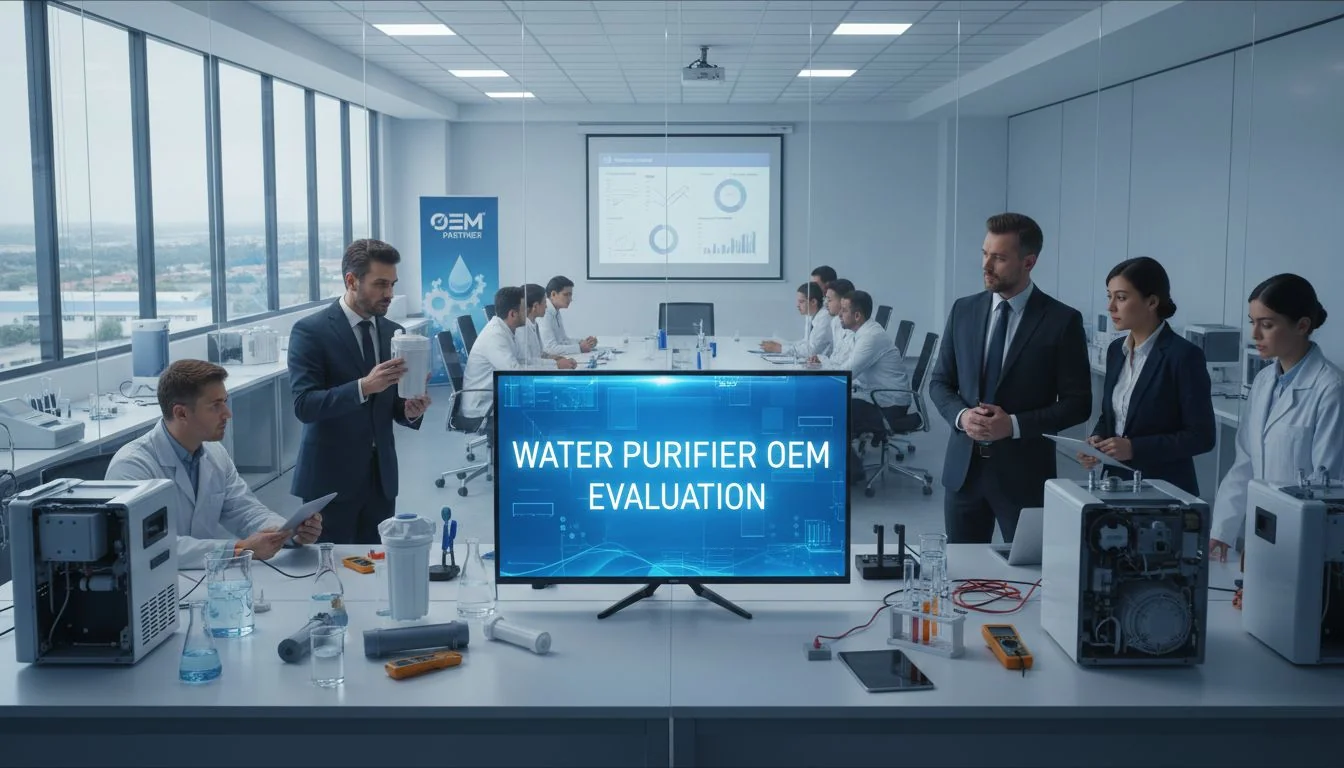
Are you struggling with delayed product launches? Choosing the wrong OEM partner can ruin your water purifier brand. Let me show you how to pick the right supplier.
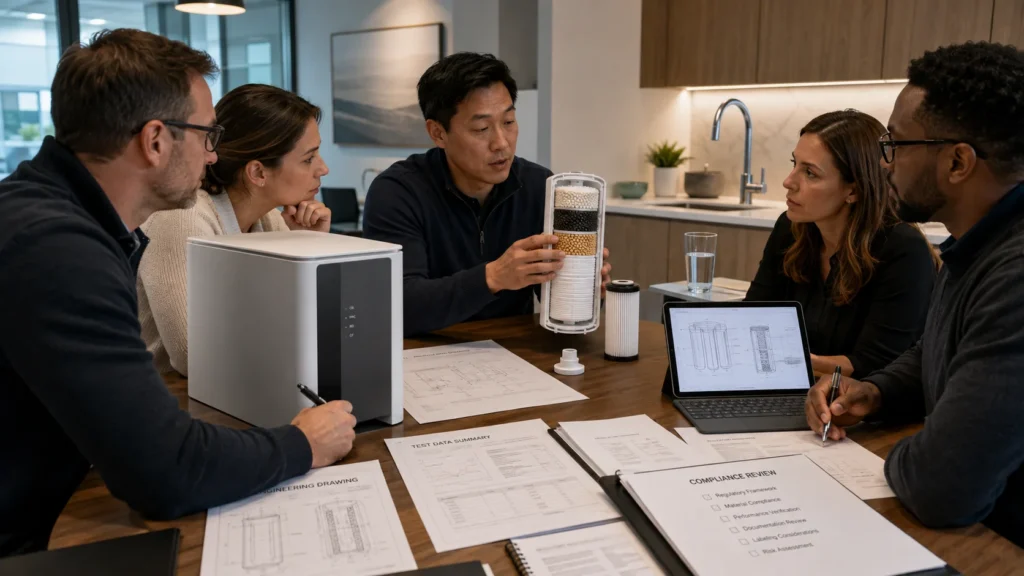
Evaluating a water purifier OEM partner requires a strict audit of their in-house lab capabilities, existing certification library, engineering skills1, and commercial terms. A proper 60-90 day due diligence process prevents repeated certification failures, saves up to $150K, and ensures your product launches on time.
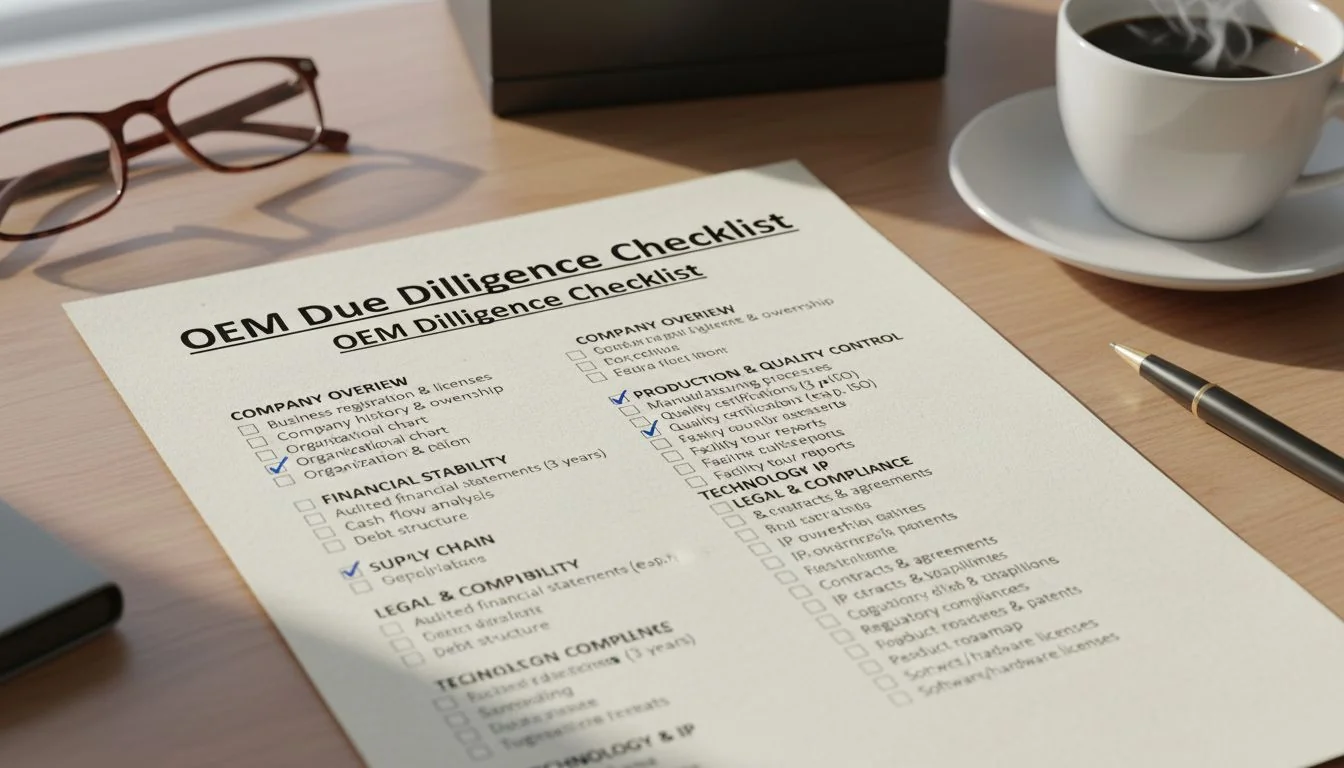
I learned this the hard way during my early days in the mold industry. If you want to master molding right and build a durable brand, you must look past unit prices. Let us dive into the exact checklist you need.
Evaluating an OEM partner based only on unit price is the best strategy.Falso
Unit price is weakly predictive of long-term success. You must evaluate lab depth, cert libraries, and engineering skills.
A proper due diligence process for a water purifier OEM takes 60 to 90 days.Verdadeiro
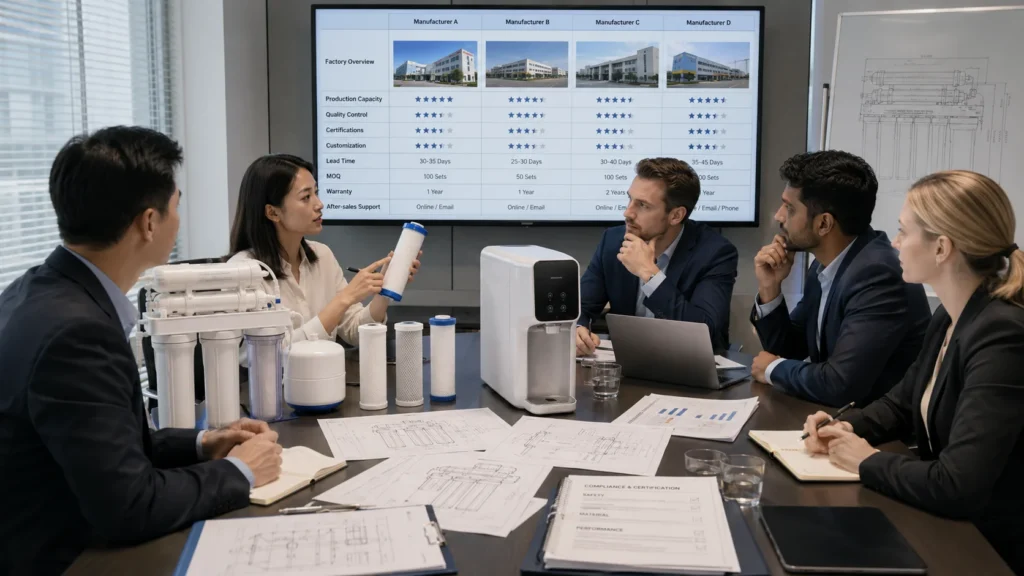
Successful founders spend 60-90 days auditing 4-8 prospective partners against a structured capability framework.
Why is OEM Partner Selection the Most Consequential Decision a US Water Purifier Brand Makes?
Are your product launches stalling? Relying on a partner without proper lab testing leads to endless delays. You need a partner who understands strict US water certifications.
The US water purifier market is uniquely bound by lab tests and certifications like NSF/ANSI. Your OEM partner must have strong testing infrastructure. If they do not, you risk repeated failures. Each failure adds months of delay and up to $80K in fresh test fees.
The Certification Trap
Most consumer hardware passes a one-time test at launch. Water purifiers are different. Standards like NSF/ANSI 42, 53, 58, and 61 require strict lab tests. These tests take 8 to 24 weeks. They cost $30K to $100K per product. You must also pass annual audits. Any material change requires a re-test. As a mold designer, you know how tight project deadlines are. A failed test ruins your timeline.
Common Failure Modes
Founders often learn this too late. They evaluate partners based on unit price and visual samples. This is a big mistake. You will face three main failure modes if you choose poorly. First, the certification path stalls. Second, the cost structure breaks when you scale. Third, the engineering relationship fails. You need a true co-development partner, not just a basic manufacturer.
| Failure Mode | Cause | Impacto |
|---|---|---|
| Certification Stalls | Weak lab testing | 8-16 weeks delay, $30K-$80K extra cost |
| Cost Breaks | Fake MOQ pricing | Year 2 scaling becomes too expensive |
| Engineering Fails | Lack of custom skills | Cannot translate design brief into product |
Water purifiers only need a one-time certification at launch.Falso
Water purifiers require ongoing annual surveillance audits and re-testing for any material changes.
NSF/ANSI certifications can cost up to $100K per product configuration.Verdadeiro
Lab-based testing protocols for water purifiers cost between $30K and $100K per certification track.
Why Do In-House Lab Capabilities and Cert Body Relationships Decide If Your Product Launches On Time?
Worried about failing official certification? A blind submission is a costly gamble. You need an OEM with an accredited in-house lab to pre-test everything.
An OEM with an ISO/IEC 17025 or CNAS accredited lab can pre-validate NSF claims. Products pre-tested in-house have an 85-95% chance of passing official certification on the first try. Strong relationships with NSF, WQA, and IAPMO also speed up the process.
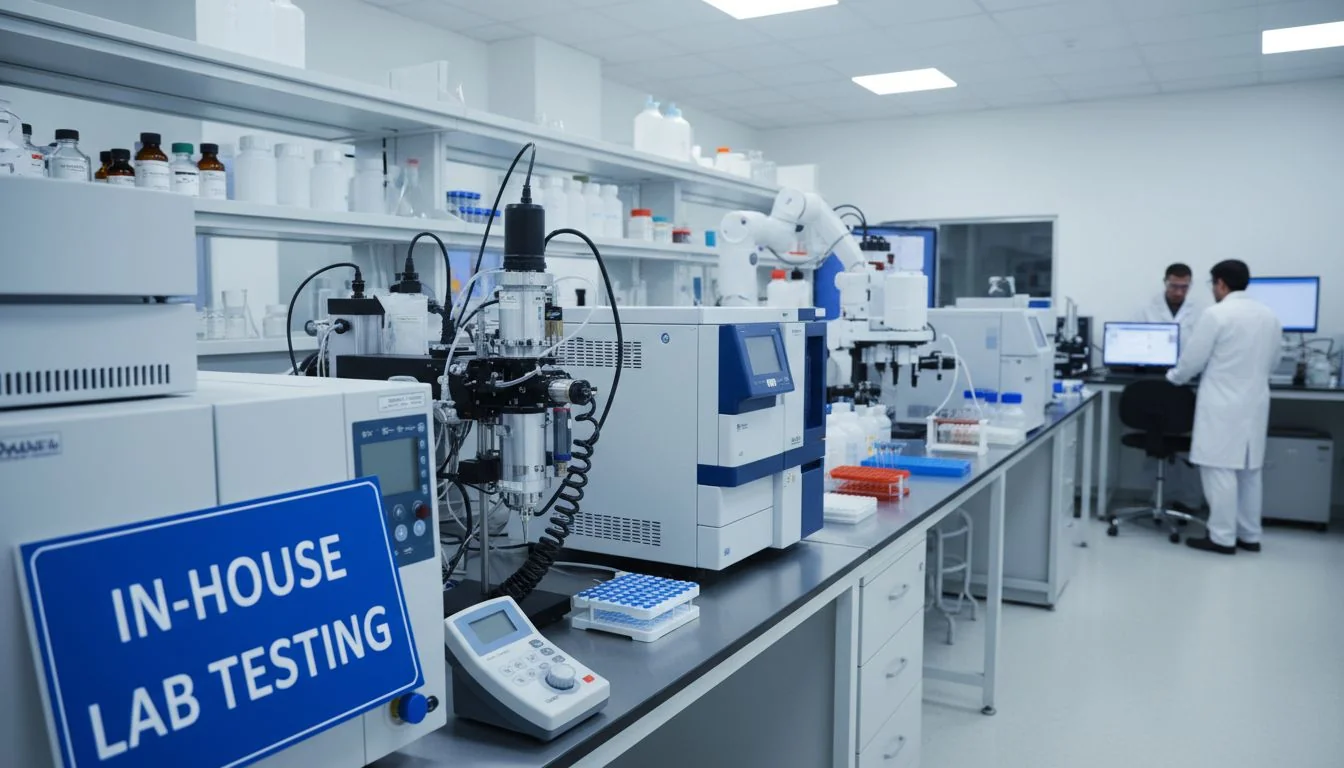
The Power of Pre-Testing
The in-house lab is the most important capability for a US water brand. It decides if your product passes on the first try. You must audit their lab equipment. Do they have chromatography tools for organics? Do they have ICP-MS for heavy metals? Do they have particle counters and pressure cycling rigs? A partner with this gear can pre-validate every claim. A product without a pre-test only has a 50-65% chance of passing.
Relationships Matter
Direct relationships with certification bodies matter a lot. NSF International, WQA, and IAPMO R&T are the main labs. A partner with hundreds of past submissions gets shorter queue times. They get better access to lab analysts. They resolve test questions faster. You should ask for their first-pass success rate. Look for a rate above 80%.
| Lab Equipment | Objetivo |
|---|---|
| Chromatography (HPLC) | Tests for organics and emerging contaminants |
| ICP-MS / ICP-OES | Tests for heavy metals and lead |
| Particle Counters | Measures filtration efficiency |
| Pressure Cycling Rigs | Tests system durability and leaks |
Products pre-tested in an accredited in-house lab have a 50% chance of passing official certification.Falso
Products pre-tested in-house have an 85-95% chance of passing on the first submission.
CNAS accreditation is recognized by NSF and WQA for partner-lab pre-testing.Verdadeiro
CNAS is the Chinese equivalent to ISO/IEC 17025 and is recognized by major US certification bodies.
How Does a Pre-Existing Certification Library Save You Months and Thousands of Dollars?
Is your R&D budget running dry? Testing every new component from scratch drains your funds. A partner with a deep certification library2 changes everything.
A partner with hundreds of NSF/61-documented components and pre-certified cartridge bases can cut your development cycle from 18 months to 6 months. This pre-existing library saves you $50K to $150K per product launch by avoiding first-time testing fees.
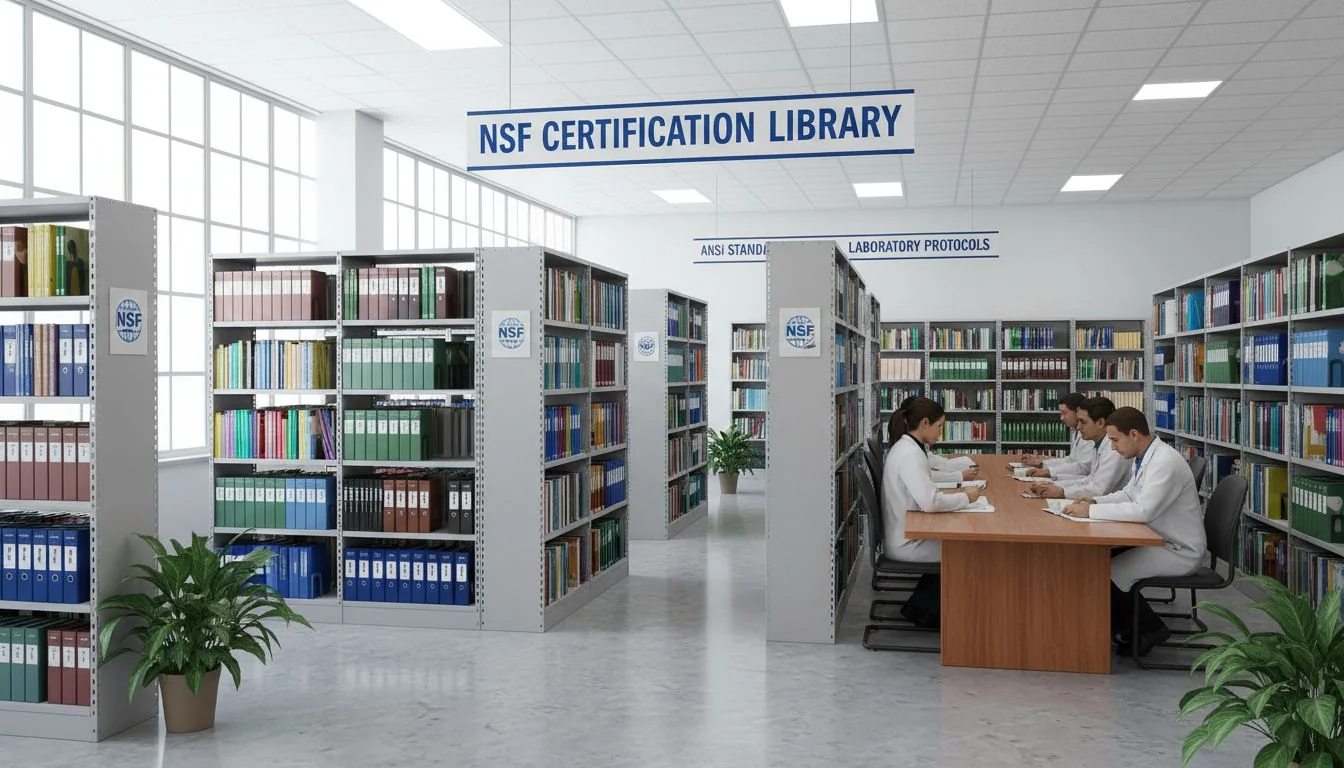
Component and Platform Certifications
This capability can compress your new product timeline. It reduces your investment massively. But the partner must actually have the library. A complete water purifier has 40 to 80 wetted parts. This includes housing plastics, O-rings, and internal tubing. Each part must have NSF/61 documentation. If a partner has 200+ certified parts, you save 8 to 16 weeks of testing.
Leveraging Existing Tooling
As a mold designer, you know tooling costs money. If the partner has existing cartridge housing tooling, you win. Standard 10-inch housings or RO frames may already carry NSF certifications. Using an existing platform saves 6 to 10 weeks. It also saves $40K to $80K in fresh tooling costs. You must ask for a written inventory of their library.
| Library Layer | Benefit to Brand | Time Saved |
|---|---|---|
| NSF/61 Components | Avoids first-time component testing | 8-16 weeks |
| Cartridge Platforms | Avoids new system cert work and tooling | 6-10 weeks |
| System Templates | Provides pre-validated performance data | Varia |
A complete water purifier typically contains 5 to 10 wetted components.Falso
A complete water purifier has 40 to 80 wetted components, each requiring NSF/61 documentation.
Using a partner's pre-certified cartridge housing can save up to $80K in tooling costs.Verdadeiro
Building on an existing cert-pre-existing platform saves $40K-$80K in fresh tooling costs and 6-10 weeks of time.
Can Your Partner Translate Your Brief and Maintain Clear Team Communication?
Frustrated by misunderstood design briefs? Poor communication ruins good engineering. You need a team that speaks your language and understands your technical needs.
Your OEM must engineer custom media stacks and tool custom housings that fit your design. More importantly, they need fluent English-speaking engineers, dedicated project managers, and strict documentation discipline to prevent costly iteration delays.

Engineering Customization
Your partner must translate your marketing brief into a real product. They need to engineer custom media stacks for specific regional water profiles. They must tool custom cartridge housings that fit your industrial design. They must also handle custom colors, materials, and finishes without using third-party vendors. This keeps your mold shrinkage calculations and design intent intact.
The Communication Gap
Founders often ignore team communication. This is a huge mistake. The sales guy might speak great English. But the project engineer might not. Translation delays add massive cycle time. You need a dedicated project manager. You need written specifications with version control. A partner who delivers a sample revision in 2 to 3 weeks is great. A partner who takes 8 weeks will kill your project.
| Communication Metric | Good Partner | Bad Partner |
|---|---|---|
| English Proficiency | Fluent at engineering level | Fluent only at sales level |
| Project Management | Dedicated named PM | Rotating account team |
| Sample Iteration | 2-3 weeks | 6-8 weeks |
Translation latency at the engineering level has no impact on project cycle time.Falso
Translation latency at the engineering level adds 2-5x cycle time to every requirement clarification.
A dedicated project manager correlates strongly with on-time product delivery.Verdadeiro
Having a named PM who owns the project end-to-end ensures better operational discipline and on-spec delivery.
What Commercial Structures and Tooling Ownership Terms Protect Your Supply Chain?
Afraid of losing your molds? Vague contracts trap you with bad suppliers. You must secure your tooling ownership3 and pricing terms upfront.
A safe commercial structure includes clear tooling ownership transfer, honest MOQ pricing across volume tiers, and defined exit terms. Negotiate these details during the courtship phase to ensure pricing stability and protect your intellectual property.
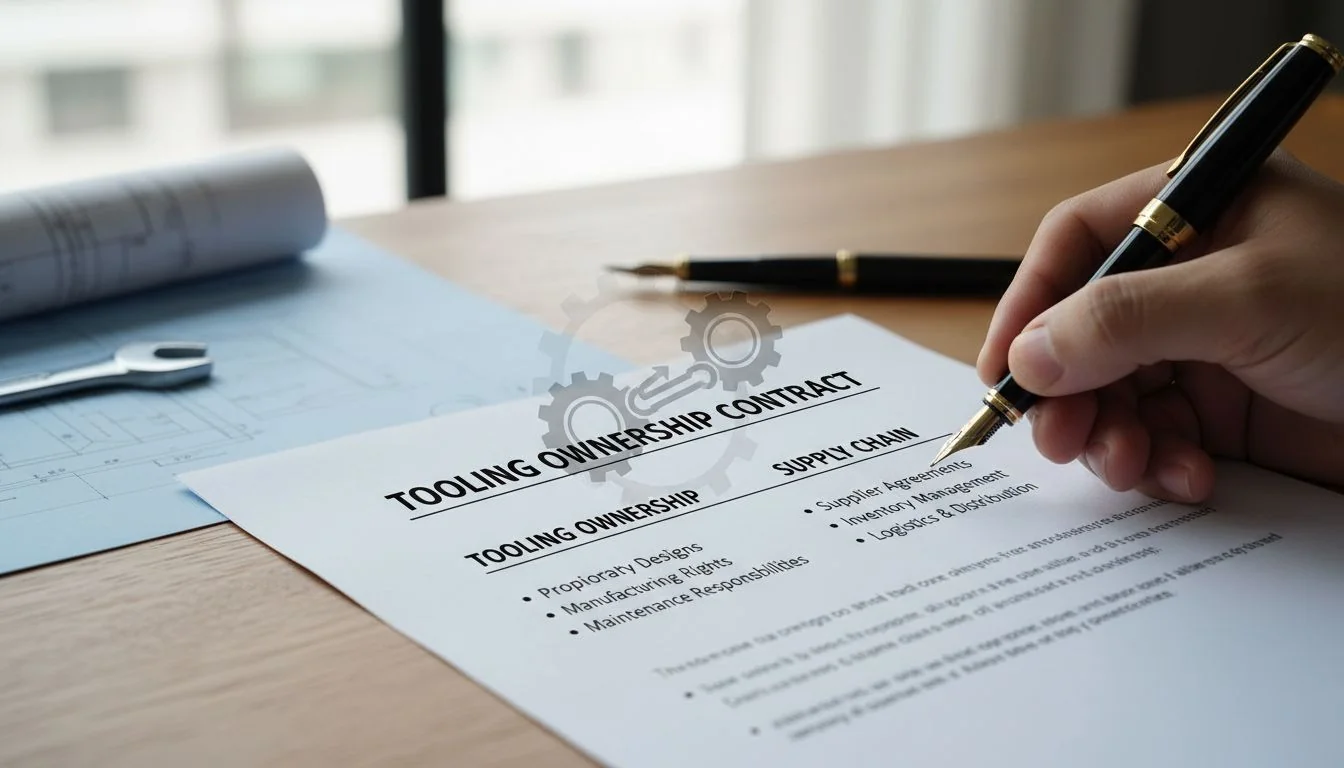
Tooling Ownership and Transfer
This is where friendly relationships turn into hard business. You must audit tooling ownership. Who legally owns the mold? You need physical mold tags and serial requirements. You need written mold-transfer rules for termination. Tooling clauses without clear transfer language will trap you. As someone who built a CNC trading company, I know how bad this can get.
Pricing and Supply Chain Reality
Year 1 quoted price is rarely the Year 3 actual price. You must define what triggers a price change. Ask for MOQ pricing at three different volume tiers. A low MOQ of 500 units might have a huge cost penalty later. You also need to check their China+1 operating capability. Can they split operations with Vietnam or Malaysia? You must negotiate exit terms and IP rights before you sign anything.
| Contract Term | What to Negotiate |
|---|---|
| Tooling Ownership | Clear transfer language and physical mold tags |
| Pricing Stability | Defined triggers for price renegotiation |
| MOQ Honesty | Cost curves across first run, scaling, and mature volumes |
| Exit Terms | Cooperation requirements and IP assignment |
The best time to negotiate exit terms and IP rights is after the first production run.Falso
The time to negotiate exit, pricing stability, and IP terms is during the courtship phase, before signing agreements.
Proprietary cartridge fittings give the brand recurring revenue control.Verdadeiro
Proprietary fittings lock in recurring revenue, though they also lock the brand to the partner for supply.
Conclusão
Evaluating a water purifier OEM requires deep audits of lab capabilities, certification libraries, engineering skills, and commercial terms. Do your due diligence early to build a durable, profitable brand.
References
-
Identifying necessary engineering skills can help you find a partner capable of meeting your design needs. ↩
-
A robust certification library can significantly reduce development time and costs. ↩
-
Securing tooling ownership is vital for protecting your intellectual property and production capabilities. ↩

 English
  Français
  Español
  Italiano
  Deutsch
  Português
  Русский
  العربية
  日本語
日本語  한국어
한국어  Tiếng Việt

