Read on and see all of the top-selling Mooka air purifiers in the market today. In this way, you will be able to assess and compare their respective capabilities.

Image Source: Mooka
Mooka is a home appliance brand that specializes in the production of air purifiers, humidifiers, and other consumer electronics. While it presents itself as a U.S. company, its production takes place in Shenzhen, China.
In this Mooka Air Purifier review, we have checked the technical specifications and features of some of the brand's most popular air purifiers. See them now.
Table of Contents
- Things to Consider Before Buying Mooka Air Purifiers
- Product Rating
- Filter Type
- CADR
- Room Coverage
- Noise Level
- A Quick Overview of the Best Mooka Air Purifiers
- Best Mooka Air Purifier Reviews
- Mooka E-300L Air Purifier - Best Mooka True HEPA Air Purifier
- Mooka Allo Air Purifier - Best Mooka Desktop Air Purifier
- Mooka C10 Air Purifier - Best Mooka Air Purifier for Homes With Small Rooms
- Mooka B08RZ3GSKH 4-in-1 Air Purifier - Best Mooka Air Purifier for Homes With Large Rooms
- Mooka GL-FS32 Air Purifier - Best Mooka Air Purifier for Advanced Filtration
- Where to Buy Mooka Air Purifiers
- Should You Buy Mooka Air Purifiers
- Where Are Mooka Air Purifiers Manufactured
- HisoAir Air Purifiers
- Private Label Air Purifiers
- Why Should You Trust This Mooka Air Purifier Reviews
- Conclusion
Things To Consider Before Buying Mooka Air Purifiers
Product Rating
Interestingly, Mooka air purifiers enjoy positive feedback from their users. In online retail platforms such as Amazon, Mooka products have an average rating of 4.5 out of 5. This score indicates that these air purifiers have beyond-satisfactory performance. They aren't perfect, but they can do their job right.
Filter Type
Similar to other air purifier brands, Mooka's air cleaners use the standard filtration system. They use pre-filters for trapping large debris, H13 HEPA filters for capturing microscopic contaminants (as small as 0.3 microns), and carbon filters for odor neutralization. Notably, Mooka's filters aren't just compatible with Mooka air purifiers; they can also fit on KOIOS air purifiers.
CADR
The CADR rating serves as an accurate representation of the overall performance of air purifiers. One could say that air purifiers with CADR scores displayed are more reliable than those that don't. Mooka keeps claiming that its air purifiers have high CADR scores. However, we can't see these figures on their product specifications or user manuals.
Room Coverage
Each Mooka air purifier has varying room coverage. Some of them are designed for medium rooms, while others are suitable for open-floor concepts and large spaces. For instance, the Mooka B-D02L is designed for 430 square feet, while the Mooka 4-in-1 Air Purifier works for spaces up to 1,000 square feet. At this point, it is essential that you know your room size before you choose an air purifier.
Noise Level
Mooka air purifiers have tolerable noise levels. Based on our tests, these quiest air purifiers don't generate excessive noise and vibrations, even if set on their highest settings. Of course, they produce "white noise," but they can actually make you feel relaxed and comfortable. Overall, these air purifiers are worthy additions to your bedrooms and noise-sensitive spaces.
A Quick Overview of The Best Mooka Air Purifier Reviews
The table below shows the respective specifications of select Mooka air purifiers. Information such as product rating, room coverage, and noise level are listed there.
Best Mooka Air Purifier Reviews
We have highlighted all the technical specifications and special features of the Mooka air purifiers we listed above. We recommend that you check each of them so that you decide which air purifier will meet your requirements.
1. Mooka E-300L Air Purifier
Amazon Rating: Best Mooka True HEPA Air Purifier

Image Source: Amazon
Air purifiers like the Mooka E-300L Air Purifier are among the highly-rated air cleaners on Amazon. This air purifier is designed for large spaces; it can potentially help in whole-house air purification. It is equipped with the H13 True HEPA filter that traps microscopic contaminants as small as 0.3 microns. Furthermore, it has a high-efficiency carbon filter and pre-filter for comprehensive filtration.
Product Specifications:
- Dimensions: 11.61 in x 6.49 in x 16.14 in
- Weight: 8.26 lbs.
- Coverage: 969 square feet
- Filtration: 3-Stage
- Fan speed: 4 speeds
- Noise level: 20 - 50 dB
- Filter change indicator: Available
- Timer function: Available
- Power source: Corded
Mooka E-300L Air Purifier |
|
| PROS |
CONS |
| · Energy-efficient; only uses 0.053kW· Whisper-quiet when in low speed
· Filter replacements are easy to find |
· Can be loud on its highest setting |
Amazon User Review on Mooka E-300L Air Purifier
Alt-text: A user review for the Mooka E-300L Air Purifier on Amazon
According to various user reviews, the Mooka E-300L Air Purifier delivers what it promised. They mentioned that this device effectively removes airborne contaminants. Aside from that, they also enjoy using this air purifier on its lowest setting since it is virtually noiseless.
2. Mooka Allo Air Purifier
Amazon Rating: Best Mooka Desktop Air Purifier

Image Source: Amazon
The compact size of the Mooka Allo Air Purifier makes it an excellent desktop air purifier. It fits in small spaces conveniently. At the same time, it is also light, as it only weighs 4.62 pounds. Despite its dimensions, this air purifier is surprisingly robust. It is capable of cleaning the indoor air of spaces up to 880 square feet.
Product Specifications:
- Dimensions: 7.68 in x 7.68 in x 2.62 in
- Weight: 4.62 lbs.
- Coverage: 800 square feet
- Filtration: 3-Stage
- Fan speed: 3 speeds
- Noise level: 20 dB
- Filter change indicator: Available
- Timer function: Available
- Power source: Corded
Mooka Allo Air Purifier |
|
| PROS |
CONS |
| · Features a 360-degree air intake· Impressive space-saving design
· Easy to operate |
· The buttons of its control panel are quite loose |
Amazon User Review on Mooka Allo Air Purifier
Alt-text: A user review for the Mooka Allo Air Purifier on Amazon
As mentioned by its users, the Mooka Allo is a convenient air cleaning machine for residential spaces. It is sleek, light, and ergonomic. Many also testified that the air purifier is effective in removing molds and other forms of allergens. Some even bought this air purifier to deal with the wildfire seasons.
3. Mooka C10 Air Purifier
Amazon Rating: Best Mooka Air Purifier for Homes With Small Rooms

Image Source: Amazon
The Mooka C10 Air Purifier is an ideal air cleaner for small spaces. It is rated to do four air changes per hour on areas up to 270 square feet. Meanwhile, it can do two air changes per hour when the room size is doubled. Hence, this device is suitable for bedrooms, kitchens, and personal rooms. And since it has a sleek design, you'll not hesitate to put it on display.
Product Specifications:
- Dimensions: 15 in x 15 in x 10 in
- Weight: 4.8 lbs.
- Coverage: 540 square feet
- Filtration: 3-Stage
- Fan speed: 3 speeds
- Noise level: 25 dB
- Filter change indicator: Available
- Timer function: Available
- Power source: Corded
Mooka C10 Air Purifier |
|
| PROS |
CONS |
| · Features a robust airflow· Equipped with long-lasting filters
· Offers convenient touch operation |
· The blue light it emits can be distracting |
Amazon User Review on Mooka C10 Air Purifier
Alt-text: A user review for the Mooka C10 Air Purifier on Amazon
Overall, users of this air purifier are pleased by its performance. Specifically, they appreciate its low-noise operation while it is running. Moreover, first-timer air purifier owners didn't have difficulties using this device. Many also reported that this air purifier is good for allergies.
4. Mooka B08RZ3GSKH 4-in-1 Air Purifier
Amazon Rating: Best Mooka Air Purifier for Homes With Large Rooms

Image Source: Amazon
This 4-in-1 air purifier from Mooka is deliberately the ideal choice for large rooms. Its effective coverage is 1,000 square feet, so it is possible for this air purifier to do whole-house air purification. The device features a robust airflow, enabling it to purify rooms in under an hour. But at the same time, the device is uniquely quiet.
Product Specifications:
- Dimensions: 13 in x 6.7 in x 20.1 in
- Weight: 8.1 lbs.
- Coverage: 1076 square feet
- Filtration: 4-Stage
- Fan speed: 3 speeds
- Noise level: 23 dB
- Filter change indicator: Available
- Timer function: Available
- Power source: Corded
Mooka B08RZ3GSKH 4-in-1 Air Purifier |
|
| PROS |
CONS |
| · Equipped with a cold catalyst filter for eliminating harmful gasses· Child lock function is present
· Brushless motor makes it extremely quiet |
· No major drawbacks |
Amazon User Review on Mooka B08RZ3GSKH 4-in-1 Air Purifier
This air purifier attained a positive standing on various retail platforms. For instance, some people found this device so good that they had to purchase multiple units. Users said that the air purifier enabled them to breathe better. It helped them remove bad air symptoms such as stuffy noses, allergies, and asthma. Accordingly, this air purifier also excels in neutralizing odors.
5. Mooka GL-FS32 Air Purifier
Amazon Rating: Best Mooka Air Purifier for Advanced Filtration

Image Source: Amazon
By all means, the Mooka GL-FS32 is the brand's most advanced air purifier. It features a versatile set of air purification tools aside from the standard 3-stage filtration. It also comes with a VOC absorption filter, a UV light, and a negative ion generator. These features ensure that your indoor air remains fresh and free from potential threats. It is also a large room air purifier, as its effective coverage is 1,350 square feet.
Product Specifications:
- Dimensions: 7.1 in x 13.8 in x 18.3 in
- Weight: 12.3 lbs.
- Coverage: 1350 square feet
- Filtration: 6-Stage
- Fan speed: 3 speeds
- Noise level: 28 dB
- Filter change indicator: Available
- Timer function: Available
- Power source: Corded
Mooka GL-FS32 Air Purifier |
|
| PROS |
CONS |
| · Distributes clean air in multiple directions· Comes with a remote control
· Features an Auto Mode, thanks to its built-in air quality sensor |
· Can be loud on its highest setting |
Amazon User Review on Mooka GL-FS32 Air Purifier
Alt-text: A user review for the Mooka GL-FS32 Air Purifier on Amazon
The Mooka GL-FS32 receives staggering positive feedback on retail sites like Amazon. Some said that this air purifier is the answer to their long-time request of Mooka creating an air purifier with remote control. At the same time, it is intuitive enough to feature air quality sensors.
Where to Buy Mooka Air Purifiers
You can purchase Mooka air purifiers directly from its website if you want to get a genuine one. Alternatively, you can also buy these air purifiers on Amazon and Walmart.
Where Are Mooka Air Purifiers Manufactured
As mentioned, Mooka presents itself as a U.S. company. However, its air purifiers are all manufactured in China. But this shouldn't discourage you. Many top air purifier brands, such as Blueair and Alen, have outsourced the manufacturing of their units in China, specifically in HisoAir.
HisoAir Air Purifiers
HisoAir is one of the leading air purifier manufacturers in the world today. Established by Alwen Lee in 2001, this China air purifier company has over 20 years of experience in engineering medical-grade air purifiers for residential and commercial applications.
All of its air cleaning systems feature seamless and robust performance. At the same time, HisoAir also offers OEM air purifiers and private-label air purifier services. Brands like BlueAir air purifiers and Alen air purifiers entrusted the production of their air purifiers to HisoAir.
|
Product Name |
Product Image | Product Rating | FilterType | CADR | Room Coverage |
Noise Level |
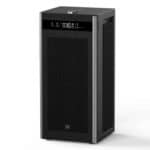 |
5 | Pre-filter, HEPA filter,Carbon filter | 1500 m³/h | 1937 sq. ft. |
38 - 66 dB |
|
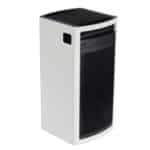 |
5 | Pre-filter, HEPA filter,Carbon filter | 800 m³/h | 1011 sq. ft. |
26 - 56 dB |
|
 |
5 | Pre-filter, HEPA filter,Carbon filter | 707 m³/h | 904 sq. ft. |
38 - 58 dB |
The HisoAir air purifiers above are excellent alternatives to the Mooka air purifiers we reviewed. They are designed to have extensive coverage and foolproof performance, thanks to their innovative filtration system. They are effective in removing airborne contaminants, even microscopic ones.
Private Label Air Purifiers
Overall, nobody can downplay the importance of air purifiers. Indoor air pollution is a major problem these days. Your home, office, or building are easily perpetrated by different airborne contaminants, such as allergens, dust, and VOCs. If left unattended, these things can cause respiratory illnesses such as allergies and asthma. Get an air purifier to deal with these threats right away.
Why Should You Trust This Mooka Air Purifier Review
Alwen Lee established HisoAir in 2011. He is an air purifier engineer and currently oversees the production and development of HisoAir air cleaning systems. Lee has been actively involved in the extensive testing of different air purifier brands. With his substantial and profound knowledge in manufacturing air purifiers, he provides accurate ratings for the performance and quality of any given air cleaners.
Conclusion
Here, we deem that the Mooka air purifiers are suitable options for residential air purification. They utilize high-grade filtration systems that enable them to capture numerous airborne contaminants such as dust, allergens, and pathogens. They aren't the best air purifiers out there, but they certainly work.
Check our other air purifier reviews:

 English
 Français
 Español
 Italiano
 Deutsch
 Português
 Русский
 العربية
 日本語
 한국어
 Tiếng Việt

