
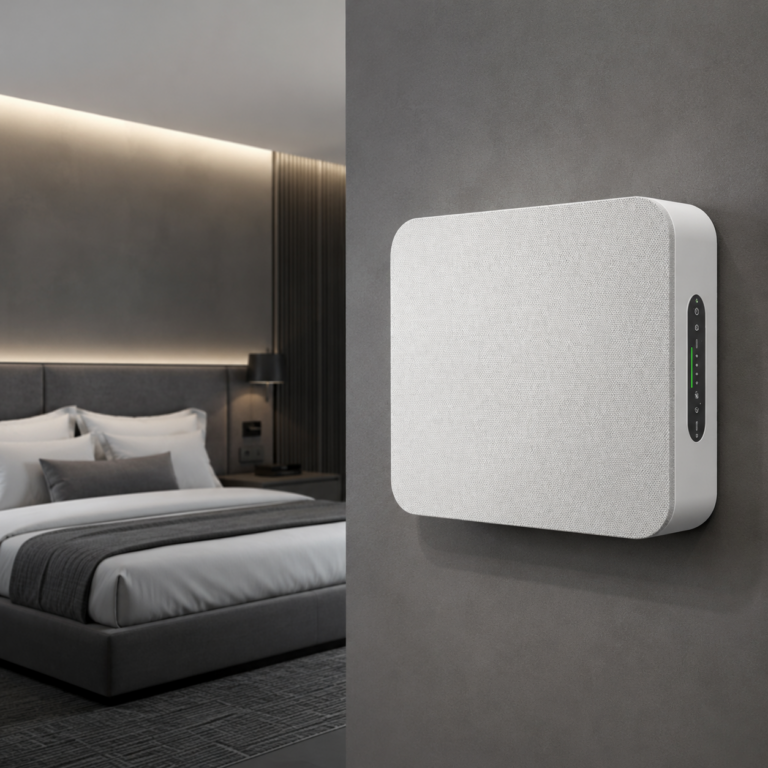
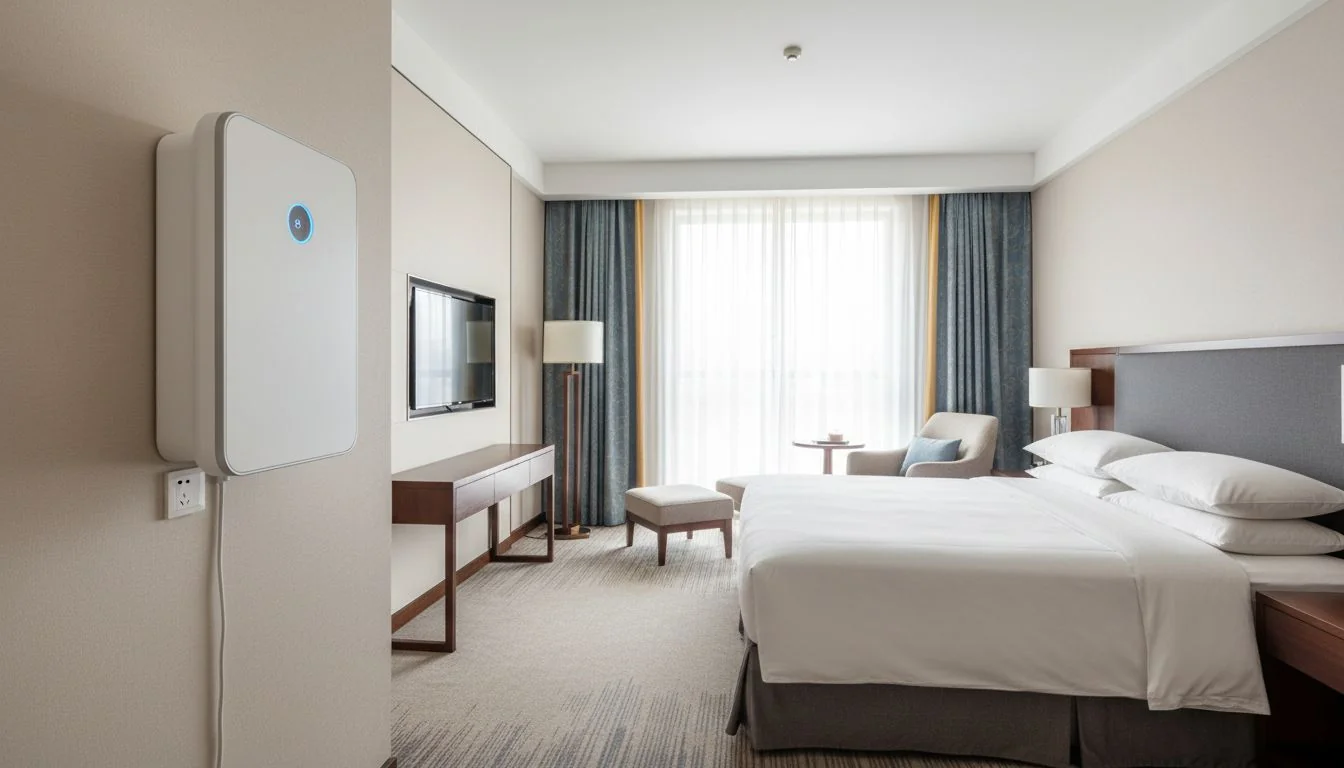
Floor-standing air purifiers get kicked, unplugged, and broken in hotel rooms. This causes huge headaches for hotel owners. Wall-mounted units solve this problem and create a permanent room standard.
Hotels should choose wall-mounted air purifiers1 because they act as built-in room infrastructure rather than loose appliances. This design allows hotels to standardize air quality, save floor space, simplify maintenance, and replicate the setup across hundreds of rooms just like lighting or HVAC systems.
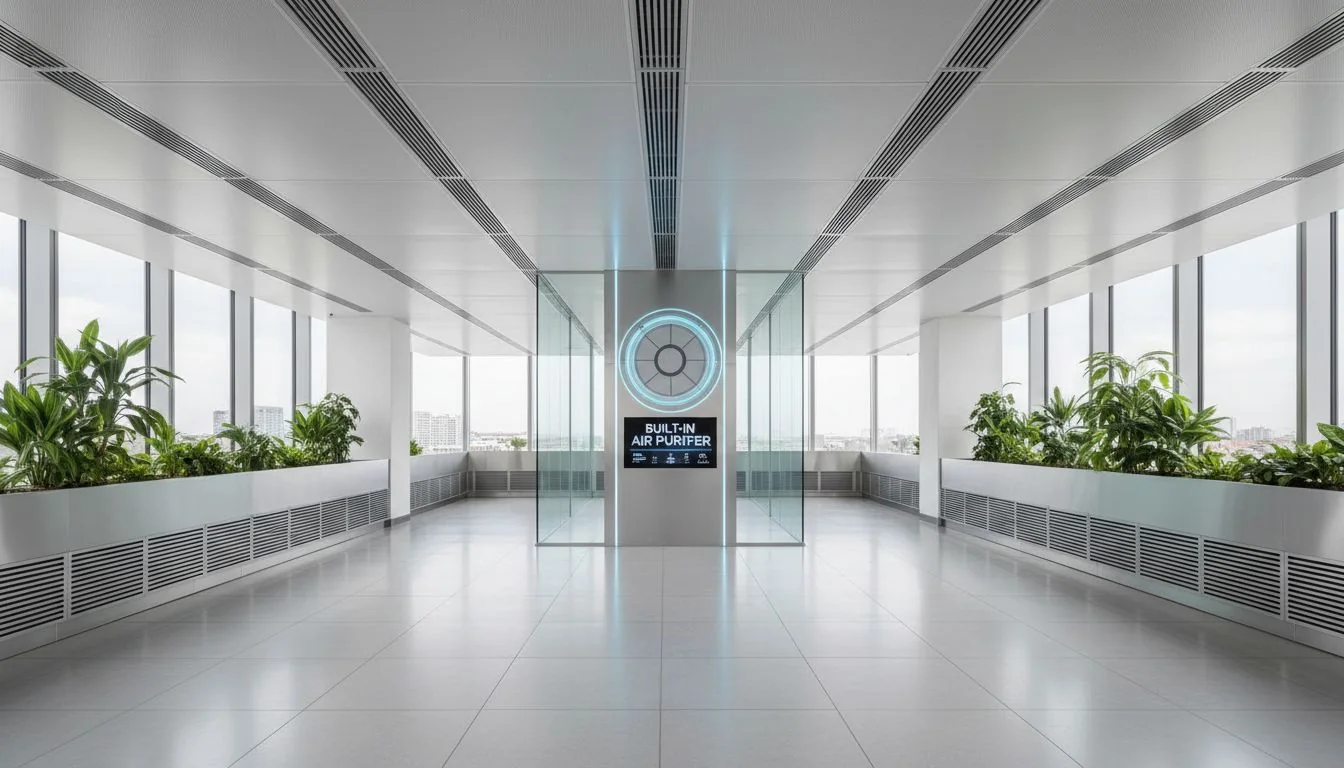
You might think a portable air purifier is cheaper and easier to deploy. But when you look at the reality of managing hundreds of hotel rooms, portable units quickly become a nightmare. Let us look at why the design and manufacturing of wall-mounted units make much more sense for the hospitality industry.
Hotels prefer loose appliances because they are easier to replace.False
Hotels prefer built-in infrastructure because it creates a repeatable, scalable room standard.
Wall-mounted air purifiers function similarly to HVAC systems in terms of room integration.True
Once mounted, they become part of the room's permanent fixtures, managed by the engineering team rather than the guest.
What Are the Limitations of Loose Appliances in Guest Rooms?
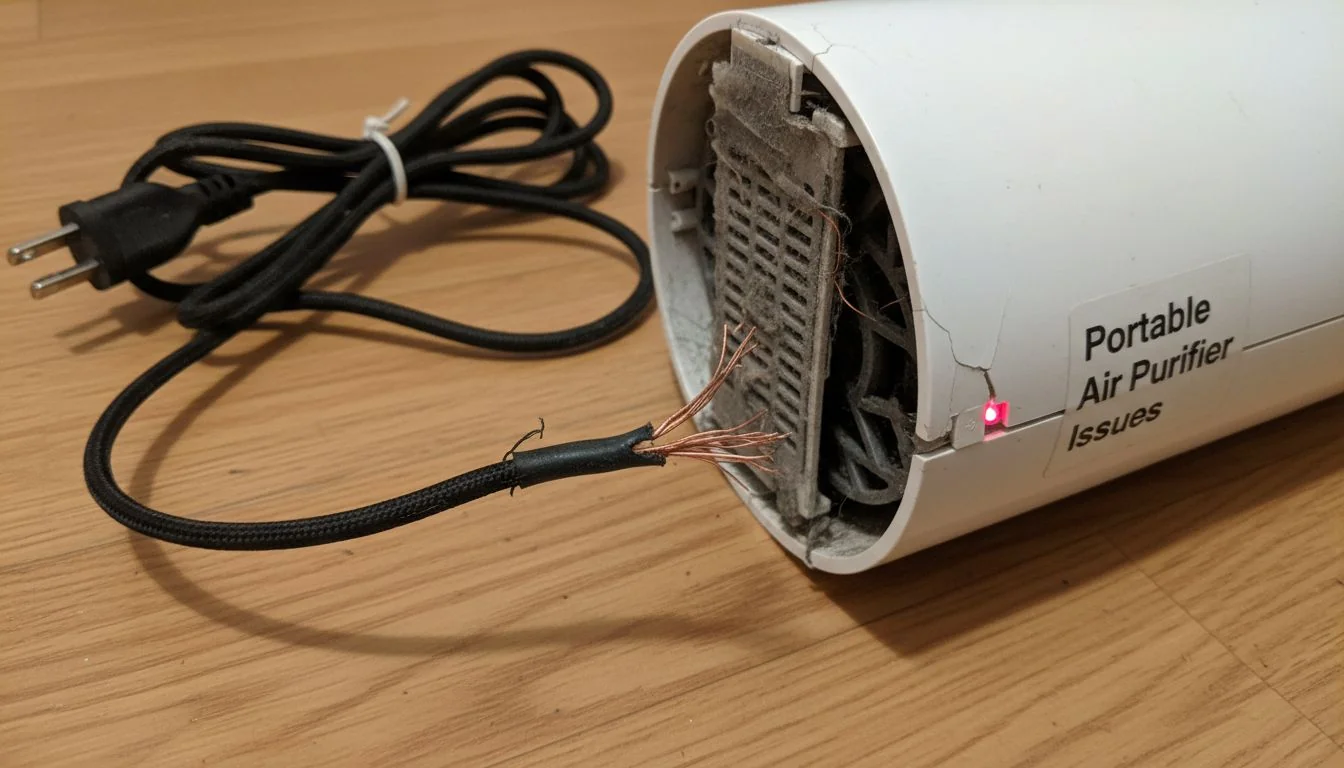
Portable purifiers take up floor space. Guests trip over cords and unplug them to charge phones. This ruins the air quality standard2 you want to provide.
Loose appliances fail in hotels because they rely on guest behavior. Guests move them, unplug them, or damage them. A loose device is a guest's responsibility. The hotel cannot guarantee consistent air quality or protect the physical product from daily wear and tear.
Designing for Unpredictable Environments
When I started my CNC trading company, I learned quickly that consumer products fail if you do not design for the worst-case scenario. Portable air purifiers in hotels face a brutal environment. Guests treat them poorly. As a product designer, you must think about how the plastic housing will survive a vacuum cleaner hitting it every day.
The Cost of Portability
Portable units require thicker, heavier plastic bases to prevent tipping. This means longer cooling times in the mold and higher material costs. Let us compare the design needs of portable versus wall-mounted units.
| Design Factor | Portable Unit | Wall-Mounted Unit |
|---|---|---|
| Impact Resistance | High (kicked, dropped) | Low (out of reach) |
| Power Cord | Exposed, trip hazard | Hidden, hardwired |
| Mold Complexity | High (heavy base needed) | Medium (flat back needed) |
Wall-mounted units remove the unpredictable human element. You design a secure mounting bracket. The device stays safe on the wall.
Portable air purifiers require less durable plastic housings than wall-mounted units.False
Portable units need higher impact resistance because they sit on the floor and get kicked or bumped by vacuums.
Loose appliances in hotels often lose power because guests unplug them.True
Guests frequently unplug floor appliances to use the outlets for their personal devices.
How Does Air Purification Become Built-In Room Infrastructure?
Hotels struggle to manage hundreds of standalone gadgets. Gadgets break and get lost. built-in infrastructure3 turns a fragile gadget into a permanent, reliable part of the building.
Wall-mounted air purifiers become built-in infrastructure just like lighting or HVAC systems. Hotels do not buy appliances. They buy a room standard they can repeat hundreds of times. A mounted unit is specified, maintained, and replicated easily across the entire property.

Shifting from Gadget to Fixture
I always tell my clients that a good mold design starts with understanding the final installation. When an air purifier becomes infrastructure, the design requirements change completely. You no longer design a consumer gadget. You design a commercial fixture4.
Manufacturing for Infrastructure
For product designers, this means focusing on secure wall brackets and hardwired electrical connections. The plastic enclosure must fit flush against a wall. This requires precise control over mold shrinkage to ensure the back plate remains perfectly flat. If the plastic warps, the unit will wobble on the wall.
| Feature | Consumer Gadget | Built-In Infrastructure |
|---|---|---|
| Power Source | Plug-in cord | Hardwired to wall |
| Installation | Placed on floor | Screwed to studs |
| Design Focus | 360-degree aesthetics | Front and side aesthetics |
By designing for infrastructure, you help the hotel scale their air quality standard. The property takes responsibility for the device. The guest simply enjoys the clean air.
Hotels buy appliances to give guests more responsibilities.False
Hotels buy room standards to take responsibility away from the guest and ensure a consistent experience.
Wall-mounted units require flat back plates to sit flush against the wall.True
A flat back plate ensures the unit mounts securely without wobbling, which requires precise mold design.
Can Wall-Mounted Units Save Floor Space Without Compromising Air Quality?
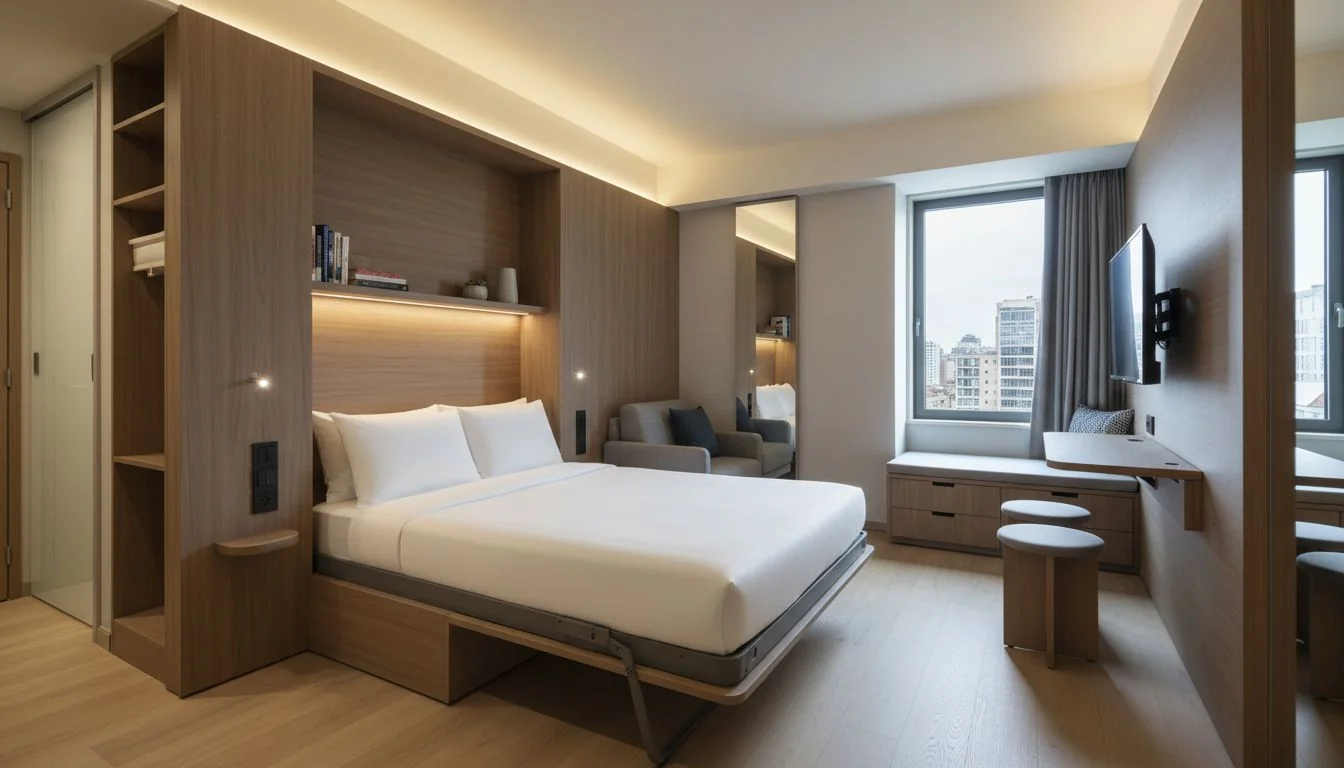
Hotel rooms are getting smaller. Floor space is very expensive. A bulky air purifier makes the room feel cramped and frustrates guests who need space for luggage.
Wall-mounted units save valuable floor space while maintaining high air purification standards. By moving the device to the wall, hotels free up room for luggage and movement. The elevated position also allows for better air circulation above the furniture.
Optimizing Room Layouts
Space is money in the hotel industry. I remember visiting a client who designed furniture for micro-hotels. Every millimeter mattered. When you design a wall-mounted air purifier, you solve a major spatial problem for the hotel.
Airflow and Mold Design
Moving the unit to the wall changes how air flows through the device. You cannot use a 360-degree air intake anymore. You must design front or side intakes. This requires complex side-action molds to create the intake vents without compromising the strength of the front panel.
| Intake Design | Floor Unit | Wall-Mounted Unit |
|---|---|---|
| Intake Location | Bottom or 360-degree | Front, top, or sides |
| Mold Complexity | Standard core/cavity | Requires side-action sliders |
| Airflow Efficiency | Often blocked by beds | Clear path above furniture |
An elevated unit actually improves air quality. It catches dust and allergens before they settle on the floor.
Wall-mounted air purifiers use 360-degree air intakes.False
Wall-mounted units sit flat against a wall, so they must use front, top, or side intakes instead.
Elevating an air purifier can improve its ability to catch airborne particles.True
Placing the unit higher up prevents furniture from blocking the airflow and catches particles before they settle.
Why Is Consistency Across Every Room in the Property Important?
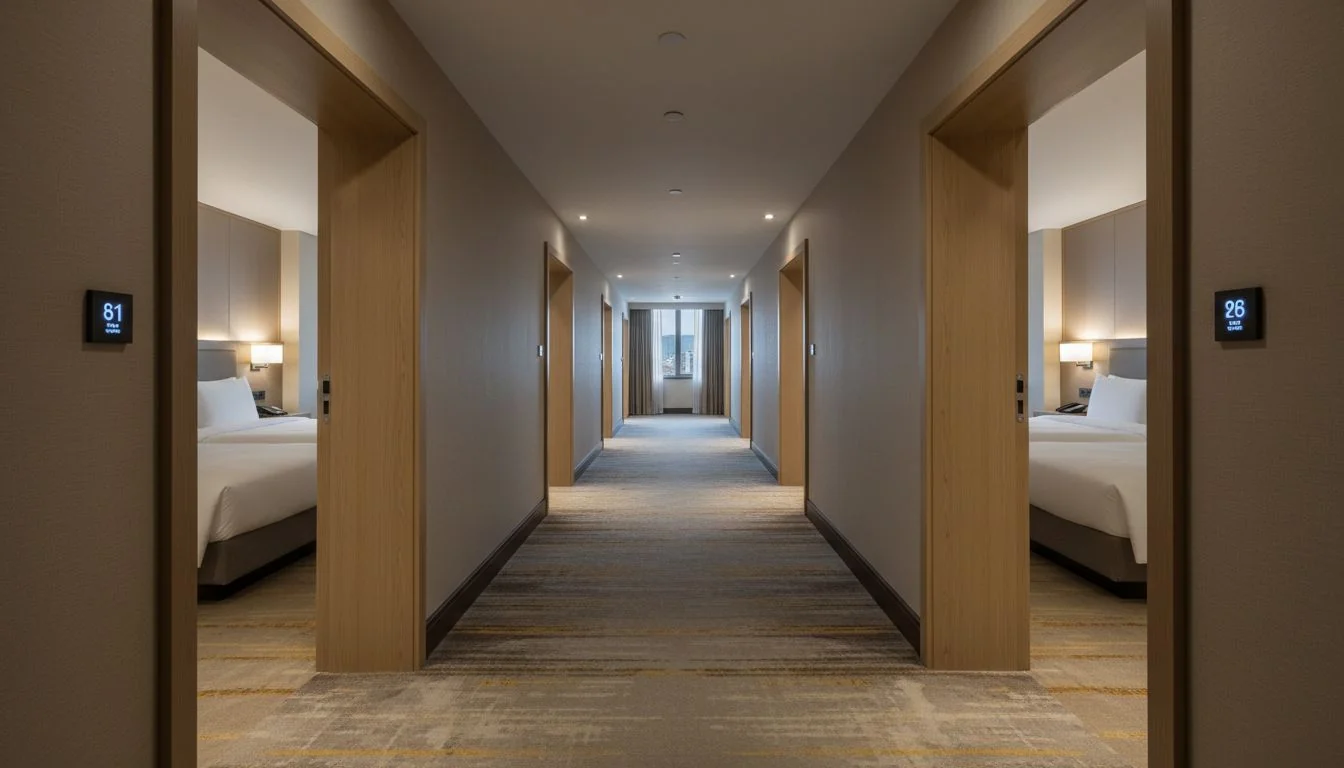
Guests expect the exact same experience in room 101 as in room 501. When portable purifiers get moved or broken, that consistency disappears. This leads to bad reviews.
Consistency is crucial for hotel branding. Wall-mounted air purifiers guarantee that every room has the exact same air quality setup. Guests cannot move them to the bathroom or hide them in the closet. The hotel maintains total control over the room standard.
The Power of Repeatability
Hotels survive on repeatability. They reorder the same parts for years. As a product designer, this is your dream scenario. If you design a great wall-mounted unit, the hotel will buy it hundreds of times.
Designing for Mass Production
To achieve this consistency, your mold design must be perfect. You need a robust mold that can run thousands of cycles without degrading. If the plastic parts vary in size, the installation team will struggle to mount them on the standard wall brackets.
| Production Goal | Challenge | Solution |
|---|---|---|
| Part Consistency | Mold wear over time | Use high-grade steel (e.g., H13) |
| Easy Assembly | Parts not fitting | Tight tolerance control |
| Long-term Supply | Broken molds | Regular mold maintenance |
When you master the molding process, you give the hotel the exact same product every single time. This builds immense trust with your commercial clients.
Guests frequently move wall-mounted air purifiers into the bathroom.False
Wall-mounted units are fixed to the wall, preventing guests from moving them around the room.
Consistent part dimensions are critical for standardizing installation across hundreds of rooms.True
If parts vary in size, the units will not fit the standard wall brackets, slowing down the installation process.
How Do Wall-Mounted Units Provide Easier Maintenance for Engineering Teams?
Changing filters in 500 portable air purifiers is a nightmare. Staff have to hunt for the devices under beds and behind chairs. This wastes hours of expensive labor.
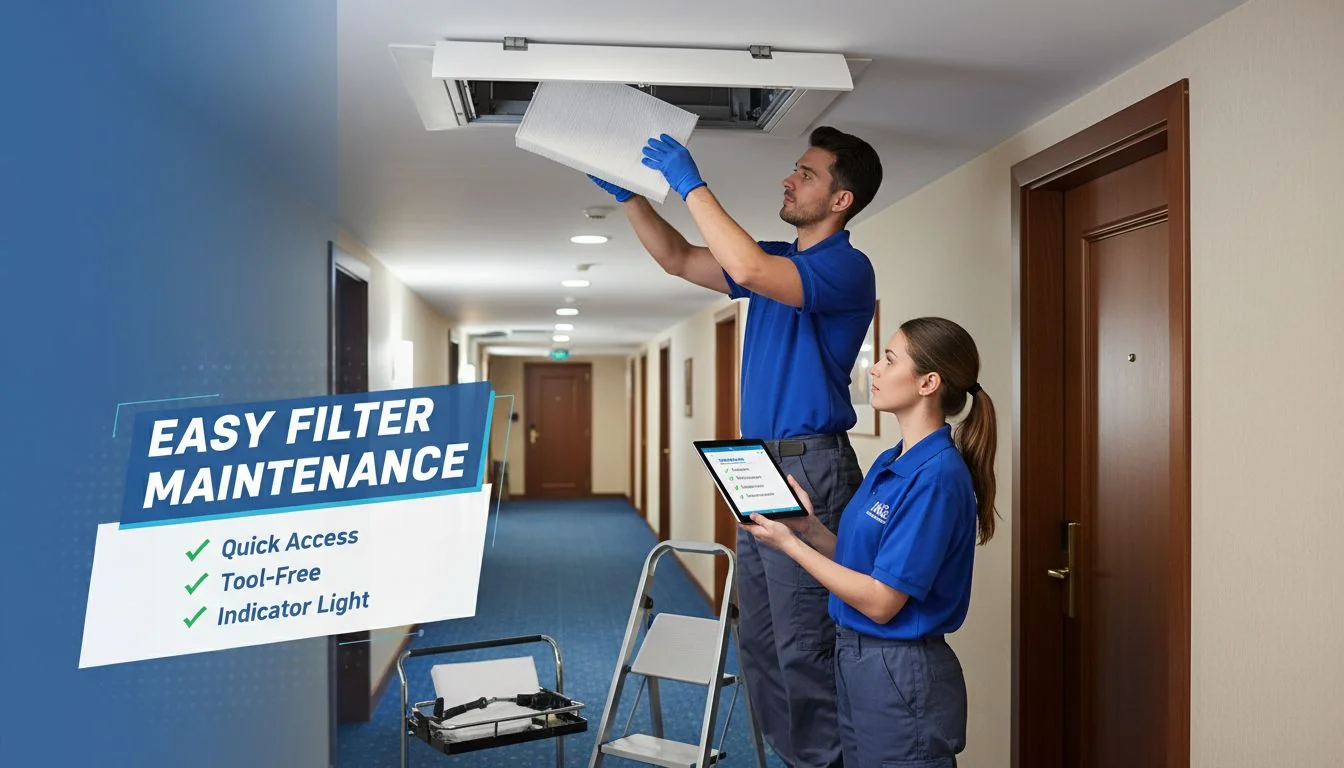
Wall-mounted units simplify maintenance for hotel engineering teams. The devices are always in the exact same location in every room. Designers can create front-facing access panels. Staff can swap filters in seconds without moving the machine or unplugging any cords.
Designing for the Maintenance Worker
When I worked at the mold factory, we often forgot about the person who has to fix the product. For hotel infrastructure, the engineering team is your real end-user. You must design the product to make their job fast and easy.
The Front-Access Panel
A wall-mounted unit cannot be taken off the wall just to change a filter. You must design a front-access door. This requires careful hinge design and snap-fit joints in your CAD model. The snap-fits must be strong enough to hold the door tight. They must also be easy enough to open without tools.
| Maintenance Task | Portable Unit | Wall-Mounted Unit |
|---|---|---|
| Locating the Unit | Hard (moved by guests) | Easy (fixed location) |
| Changing Filter | Turn upside down, unscrew | Pop open front panel |
| Power Management | Unplug from wall | Turn off via switch |
If you calculate your mold shrinkage correctly, the front panel will snap perfectly into place every time. This saves the maintenance team endless frustration.
Wall-mounted units must be removed from the wall to change the air filter.False
Good designs feature front-access panels so filters can be changed while the unit stays on the wall.
Snap-fit joints require precise mold shrinkage calculations to function properly.True
If the plastic shrinks too much or too little, the snap-fit will either be too loose or impossible to open.
Can Wall-Mounted Purifiers Blend Into Interior Design Instead of Standing Out?
Ugly plastic boxes ruin expensive hotel room designs. Interior designers hate floor appliances because they look cheap and clutter the space. You need a solution that looks intentional.
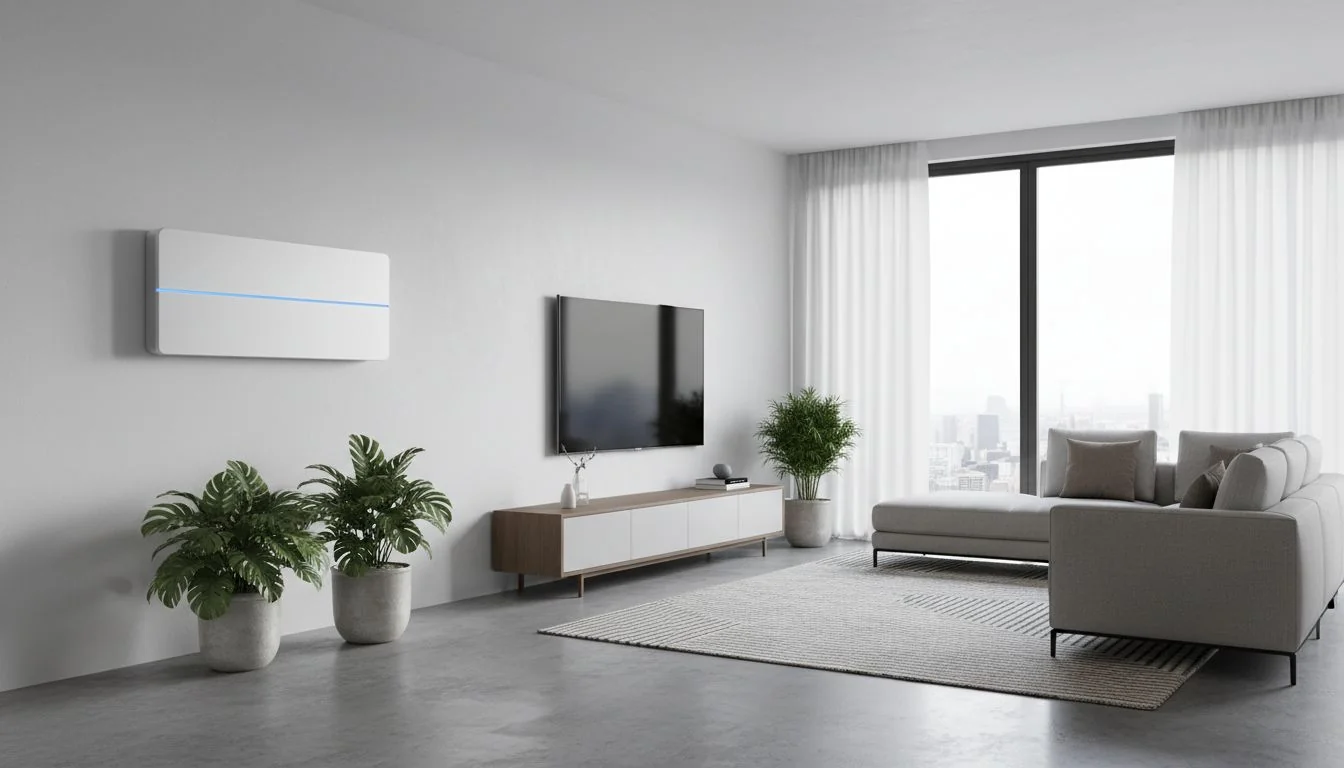
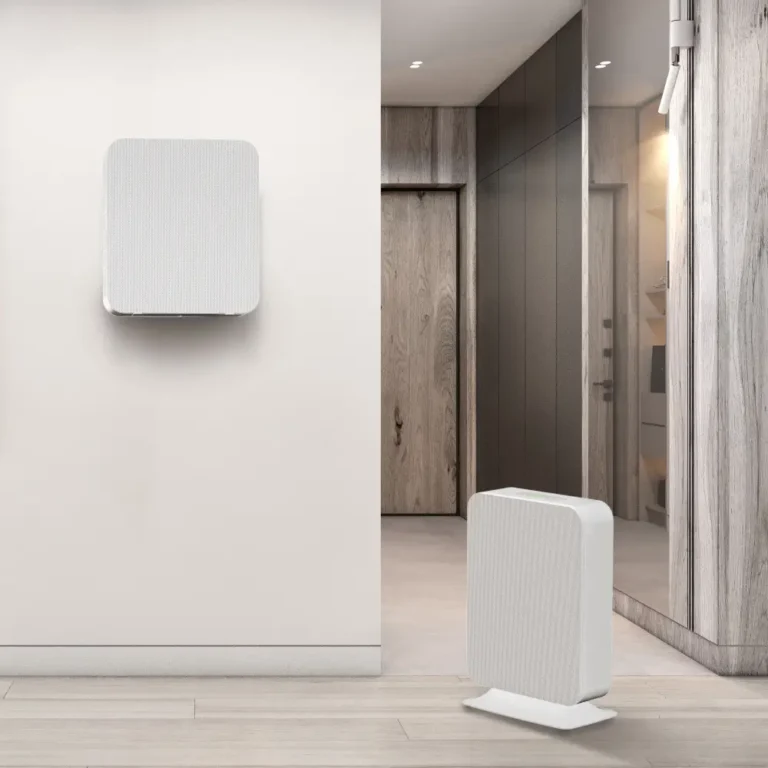
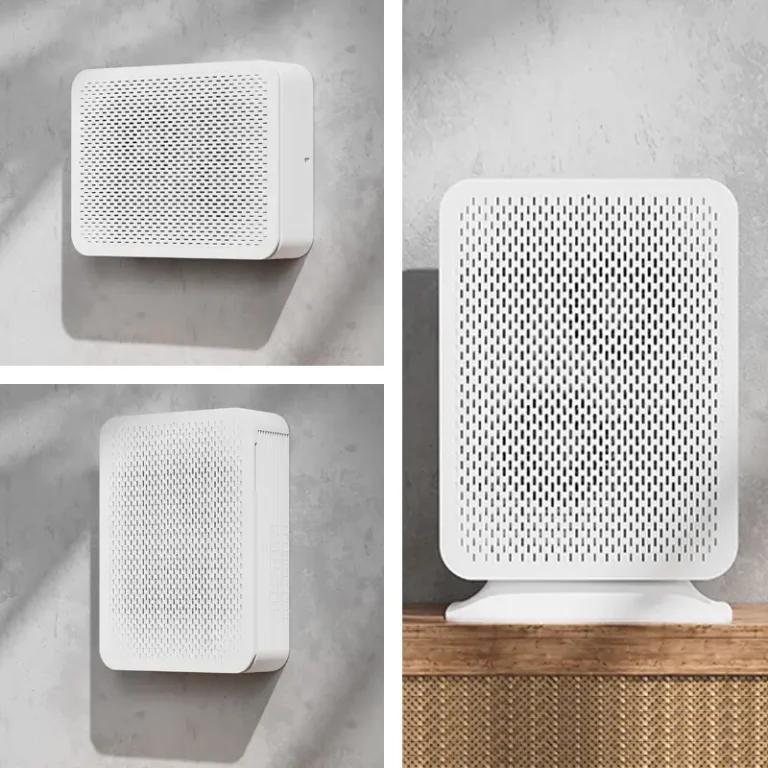
Wall-mounted air purifiers blend seamlessly into a hotel's interior design. They mount flat against the wall. They look like intentional architectural features rather than afterthoughts. Designers can customize the front panels with different textures or colors to match the room's specific aesthetic.
Aesthetics in Commercial Products
Aesthetics matter just as much as function. As a product designer, you know that consumer electronics must look sleek. For hotels, the goal is often to make the device disappear into the background.
Surface Finishes and Textures
To achieve this, we use specific mold texturing techniques. A high-gloss finish looks like a cheap gadget. A matte, textured finish looks like a premium architectural fixture. You can use EDM (Electrical Discharge Machining) to create beautiful textures on the mold cavity.
| Design Element | Gadget Look | Architectural Look |
|---|---|---|
| Surface Finish | High gloss | Matte or textured |
| Profile | Bulky, round | Slim, flat |
| Color | Bright white | Custom wall-matching colors |
By offering interchangeable front panels, you allow the hotel to update the look during their next renovation. They do not have to buy a whole new machine. This is a huge selling point.
High-gloss plastic finishes make air purifiers look like premium architectural fixtures.False
High-gloss finishes often look like cheap consumer gadgets, while matte finishes blend better with architecture.
EDM can be used to apply custom textures to the plastic injection mold.True
Electrical Discharge Machining creates precise textures on the mold surface, which transfer to the final plastic part.
Why Are Wall-Mounted Units Suitable for New Builds and Renovation Projects?
Retrofitting old hotel rooms with new technology is very hard. Wires look messy. Outlets are always in the wrong place. You need a product that adapts to any project.
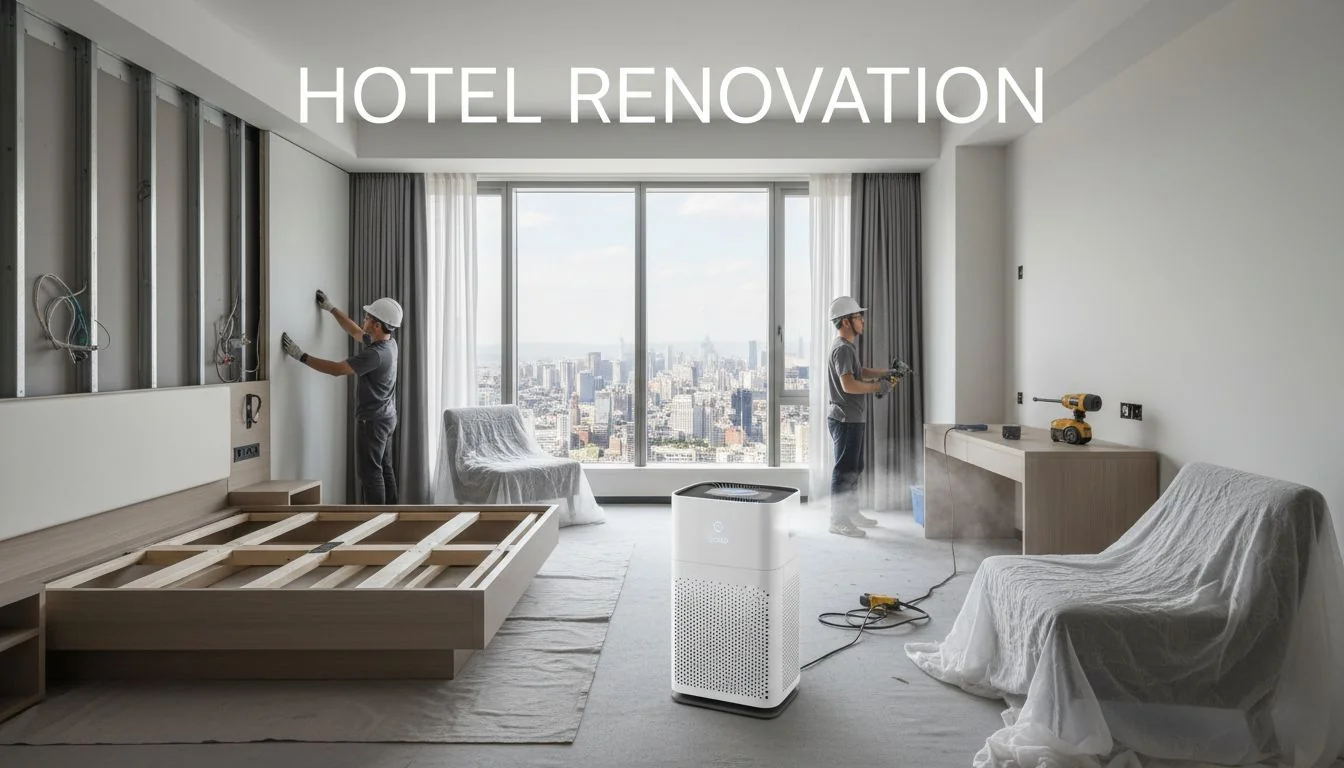
Wall-mounted units are perfect for both new builds and renovations. In new builds, hotels can hardwire the units directly into the electrical system behind the drywall. For renovations, designers can create slim surface-mounted wire channels that keep the installation looking clean.
Adapting to the Building Cycle
Hotels operate on strict renovation cycles. They usually update rooms every seven to ten years. Your product must fit into this cycle. I have helped clients design products that can be installed in two different ways to capture both markets.
Dual-Installation Design
You should design the back plate of the air purifier to accept both hardwired connections and plug-in cords. This requires a clever mold design with knock-out panels. The installer simply breaks away a small piece of plastic if they need to route a cord down the wall.
| Project Type | Wiring Method | Design Requirement |
|---|---|---|
| New Build | Hardwired behind wall | Large rear access hole |
| Renovation | Surface cord | Knock-out panel for cord exit |
| Both | Secure mounting | Universal metal wall bracket |
This flexibility makes your product highly attractive to hotel procurement teams. They can use the exact same unit across different properties in different stages of construction.
Wall-mounted air purifiers can only be installed in brand new hotel buildings.False
They can be installed during renovations using surface-mounted wire channels or plug-in options.
Knock-out panels in plastic parts allow installers to choose where a wire exits the device.True
Knock-outs are thin sections of plastic designed to be easily broken away to create a hole for wires.
What Should You Evaluate Before Specifying Wall-Mounted Units?
Choosing the wrong air purifier leads to noisy rooms and angry guests. If the unit vibrates against the wall, nobody will sleep. You must evaluate the mechanics carefully.
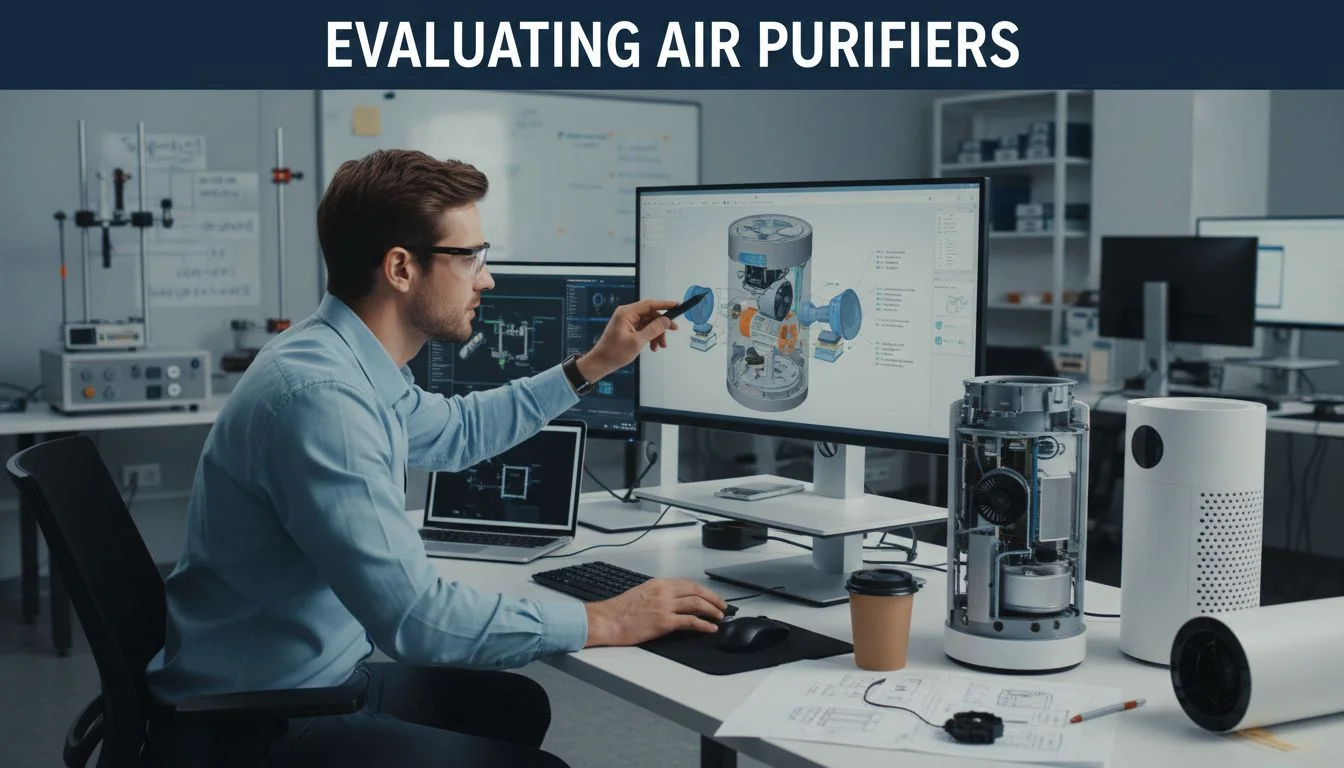
Before specifying a wall-mounted unit, hotels must evaluate noise levels, vibration control, and CAD integration. The unit must operate quietly. The mounting bracket must include vibration dampening to prevent the motor's hum from transferring through the hotel walls.
Controlling Noise and Vibration
When you mount a motor to a wall, the wall acts like a speaker. It amplifies the sound. As a mechanical designer, you must solve this problem before the mold is ever cut. I always advise my clients to focus heavily on the internal motor mounts.
Engineering the Solution
You need to use rubber isolators between the fan motor and the plastic housing. The wall bracket itself should have rubber pads. From a manufacturing perspective, you might consider overmolding. You can inject a soft rubber directly onto the hard plastic base to absorb vibrations.
| Evaluation Metric | Poor Design | Good Design |
|---|---|---|
| Motor Mounting | Screwed directly to plastic | Suspended on rubber isolators |
| Wall Bracket | Bare metal | Metal with rubber dampeners |
| Noise Level | Rattles against wall | Silent operation |
By evaluating these engineering details early, you ensure the product meets the strict acoustic standards required by luxury hotels.
Mounting a motor directly to a wall reduces the amount of noise it makes.False
The wall can act as an amplifier, making vibrations louder if they are not properly dampened.
Overmolding allows designers to combine hard plastic and soft rubber in one part.True
Overmolding is an injection molding process that shoots a second material, like rubber, over a rigid plastic substrate.
Conclusion
Wall-mounted air purifiers transform a fragile appliance into permanent room infrastructure. By mastering the design and molding process, you can create scalable, reliable solutions that hotels will reorder for years.
References
-
Explore how wall-mounted air purifiers enhance air quality and streamline hotel operations. ↩
-
Discover the significance of air quality standards for guest satisfaction and hotel reputation. ↩
-
Learn about the advantages of built-in infrastructure for consistent air quality in hotels. ↩
-
Understand the characteristics of commercial fixtures and their role in hotel infrastructure. ↩


 English
  Français
  Español
  Italiano
  Deutsch
  Português
  Русский
  العربية
  日本語
日本語  한국어
한국어  Tiếng Việt

