يفتح في علامة تبويب جديدة
حلول مبتكرة لجودة الهواء
هيسو إير
استفسر الآن

أفضل 6 شركات مصنعة لأجهزة تنقية الهواء المحمولة

Related Products

إن سوق أجهزة تنقية الهواء المحمولة لديها تقييم أكثر من 8.27 دولار أمريكي في عام 2019، ومن المتوقع أن ترتفع أكثر في السنوات القادمة. تعرّف على أكبر ست شركات مصنعة لأجهزة تنقية الهواء المحمولة في هذه المقالة.
تُعد أجهزة تنقية الهواء من أكثر المنتجات المرغوبة في السنوات الأخيرة بسبب تزايد المخاوف الصحية المتعلقة بالفيروسات وتلوث الهواء. من خلال استخدام تقنيات الترشيح وغيرها من التقنيات، يمكن لأجهزة تنقية الهواء إزالة الجسيمات والمواد المسببة للحساسية والكائنات الدقيقة الضارة من الهواء الذي يتنفسه الناس.
على مرّ السنين، اكتسبت أجهزة تنقية الهواء المحمولة شعبية كبيرة لأنها تتيح الكثير من التنوع في الاستخدام بالنسبة للكثيرين. قد يعد هذا السوق الضخم بعوائد جيدة، وقد تكون مهتمًا ببدء مشروع تجاري يتضمن المنتجات المذكورة. في هذه المقالة، قمنا بإدراج أفضل ست شركات مصنعة لأجهزة تنقية الهواء المحمولة في جميع أنحاء العالم. تحقق منها في الأقسام التالية!

قائمة بأفضل 6 شركات مصنعة لأجهزة تنقية الهواء المحمولة

فيما يلي نظرة عامة على الشركات المختلفة التي عرضناها في هذه القائمة. إذا كنت تريد معرفة معلوماتهم على الفور، يمكنك النقر على اسم الشركة المصنعة التي تريد التحقق منها. من ناحية أخرى، يقترح فريقنا بشدة أن تقرأ كل معلومة من معلومات كل شركة مصنعة لمقارنة أفضل.

  1. إل جي
  2. هوكو
  3. شركة هانيويل إنترناشيونال إنك
  4. سمارت إير
  5. كامفيل
  6. شركة فيلد كنترولز ذ.م.م

أفضل 6 شركات مصنعة لأجهزة تنقية الهواء المحمولة

عند اختيار الشركات المختلفة التي تم تضمينها في هذا المقال، أخذنا بعين الاعتبار تقنيات كل منها وإنجازاتها وشهاداتها وعوامل أخرى مماثلة قد تكون مؤشراً على أدائها في هذا المجال. كما قام فريقنا أيضًا بتجميع ملف تعريف قصير لكل شركة مصنعة يحتوي على تفاصيلها الأساسية.

1. LG
شعار LG
شعار LG

مصدر الصورة: إل جي

نوع العمل: الشركة المصنعة
المقر الرئيسي: برج LG Twin Tower 128 Yeoui-daero, Yeongdeungpo-gu Seoul, Seoul, 07336, جمهورية كوريا
الأسواق الرئيسية: عالمي
سنوات الخبرة: 75 عامًا
الشهادات: أيزو 14001، أيزو 45001، أيزو 50001، أيزو 9001
إل جي علامة تجارية مشهورة عالمياً في مجال الأجهزة الإلكترونية. الثلاجات وأجهزة التلفاز والراديو ليست سوى عدد قليل من أدواتها الكهربائية المعروفة. وهي موجودة منذ عام 1947، وهي تفتخر الآن بخط إنتاج واسع جداً، يشمل أجهزة تنقية الهواء، وأجهزة المطبخ، وعدداً من السلع الأخرى. لدى LG العديد من شهادات الأيزومما يكشف عن أن أنظمتها الإدارية في مجال مراقبة الجودة والإدارة البيئية والسلامة المهنية وغيرها من المجالات متطورة بشكل جيد.

المنتجات الرئيسية

  • المنتجات الإلكترونية
  • التلفاز
  • ثلاجات
  • أجهزة تنقية الهواء

2. هوكو

شعار هوكو
شعار هوكو

مصدر الصورة: هوكو

نوع العمل: الشركة المصنعة للمعدات الأصلية/المصنّع
المقر الرئيسي: No.613 طريق تاينان، مدينة دونغتشونغ، منطقة نانشا، قوانغتشو، الصين
الأسواق الرئيسية: الصين
سنوات الخبرة: 17 سنة
الشهادات: ISO 9001: 2015, ISO 14001: 2015, CE, RHS, ISO 9001: 2015, CE, RHS
إذا كنت تبحث عن شريك يمكنه تزويدك بمجموعة كبيرة من أجهزة تنقية الهواء، فقد تكون شركة HOKO، المعروفة في الأصل باسم شركة قوانغتشو هايكي للإلكترونيات التكنولوجية المحدودة (Guangzhou Haike Electronics Technology Co., Ltd.) خيارًا رائعًا. لا تشتهر هذه الشركة بالعديد من موديلات أجهزة تنقية الهواء فحسب، بل تشتهر أيضًا بتواجدها في الأسواق التي تشمل أدوات منزلية أخرى.
تمتلك HOKO العديد من الشهادات الدولية من حيث مراقبة الجودة والتأثير البيئي. كما أنها تتمتع بخبرة كبيرة في تصميم وإنتاج أجهزة تنقية الهواء، حيث تعمل في هذا المجال منذ عام 2005. ويتضح ذلك من حقيقة أن منتجاتها تتمتع بمعدل إزالة للجسيمات يبلغ 99.97%.

المنتجات الرئيسية

  • جهاز تنقية الهواء
  • مرطب الهواء
  • جهاز التخلص من مخلفات الطعام
  • مقياس حرارة الجبهة
  • منتجات منزلية أخرى

3. Honeywell International Inc.

شعار شركة هانيويل الدولية

مصدر الصورة: Honeywell International Inc.

نوع العمل: الشركة المصنعة
المقر الرئيسي: 300 ساوث تريون ستريت تشارلوت، نورث كارولاينا، الولايات المتحدة الأمريكية
الأسواق الرئيسية: عالمي
سنوات الخبرة: 116 سنة
لا شك أن شركة هانيويل إنترناشيونال هي شركة تنافسية بلا منازع عندما يتعلق الأمر بسنوات عملها. فقد تأسست في عام 1906 وتشارك في مجموعة متنوعة من المجالات، بما في ذلك البرمجيات والرعاية الصحية وإنتاج الأدوات المنزلية وغيرها. تمتلك شركة هانيويل حوالي 35000 براءة اختراع، وتضم مجموعة واسعة من المنتجات - معظمها عبارة عن فلاتر هواء وأجهزة تنقية الهواء.

المنتجات الرئيسية

  • أجهزة تنقية الهواء
  • المعجبون
  • السخانات
  • الفلاتر
  • أجهزة ترطيب الهواء

4. سمارت إير

شعار سمارت إير
شعار سمارت إير

مصدر الصورة: سمارت إير

نوع العمل: الشركة المصنعة
المقر الرئيسي: Medical Plaza Ortigas Ortigas, 25 San Miguel Avenue Ortigas Center, Brgy. San Antonio, Ortigas Center, Pasig City, 1605 الفلبين
الأسواق الرئيسية: آسيا
سنوات الخبرة: 9 سنوات
سمارت إير هو شركة B-corp المعتمدة التي تأسست مؤخراً في عام 2013 في الفلبين. ويتمثل المبدأ الأساسي لهذه الشركة في تطوير وتصنيع أجهزة تنقية الهواء بأسعار معقولة، مما يجعل الهواء النظيف في متناول معظم الناس. وقد قامت، حتى الآن، بتوصيل أكثر من 85000 منتج إلى أكثر من 51 دولة معظمها في آسيا.

المنتجات الرئيسية

  • أجهزة تنقية الهواء

5. كامفيل

شعار كامفيل
شعار كامفيل

مصدر الصورة: كامفيل

نوع العمل: الشركة المصنعة
المقر الرئيسي: ستوكهولم، السويد
الأسواق الرئيسية: عالمي
سنوات الخبرة: 59 سنة
تعمل شركة Camfil في مجال الأعمال التجارية منذ عام 1963، وهي تفتخر اليوم بوجود 31 منشأة تصنيع وستة مواقع للبحث والتطوير في جميع أنحاء العالم. يبلغ صافي مبيعات هذه الشركة حوالي 1.03 مليار دولار أمريكي، والتي تأتي بشكل رئيسي من تقنيات تنقية الهواء التي تستخدمها في مجموعة متنوعة من الصناعات.

المنتجات الرئيسية

  • فلاتر الهواء
  • أجهزة تنقية الهواء
  • مجمعات الغبار

6. Field Controls LLC

شعار شركة Field Controls LLC

مصدر الصورة: Field Controls LLC

نوع العمل: الشركة المصنعة
المقر الرئيسي:: 2630 Airport Road, Kinston, NC 28504, United States
الأسواق الرئيسية: الولايات المتحدة الأمريكية
سنوات الخبرة: 95 سنة
الشهادة: ISO 9001: 2008
شركة Field Controls LLC هي شركة عريقة مملوكة للنساء تأسست عام 1927. وهي متخصصة في تصنيع المنتجات التي تهدف بشكل عام إلى تحسين جودة الهواء الداخلي. وحاليًا، أسست شركة Field Controls LLC حضورًا قويًا في جميع أنحاء الولايات المتحدة الأمريكية مع أكثر من 6000 موزع في البلاد.

المنتجات الرئيسية

  • أجهزة تنقية الهواء
  • مخمدات التهوية
  • الثرموستات
  • أجهزة ترطيب الهواء

أفضل مصنع لأجهزة تنقية الهواء في الصين

الصين هي قوة التصنيع في العالم، حيث تقوم بتوريد ما يقرب من ثلث المنتجات الموجودة في العالم. إذا كنت مهتمًا بالتواصل مع أفضل مصنع لأجهزة تنقية الهواء في البلد المذكور، فتواصل مع HisoAir اليوم!

هيسو إير
شعار هيسو إير
شعار هيسو إير

مصدر الصورة: هيسو إير

نوع العمل: مُصنِّع المعدات الأصلية/صانع المعدات الأصلية/صانع المعدات المملوكة للغير، المورد
المقر الرئيسي: Room 712, Building 1, No. 4, Second Road, Songshan Lake Park, Dongguan City, Guangdong Province, China
الأسواق الرئيسية: عالمي
سنوات الخبرة: 19 years
الشهادات: سي، روهز، إن 1822

HisoAir specializes in manufacturing air purifiers that can be used in a medical setting. It was founded in 2003. It had achieved phenomenal success over its short eleven years in the industry with its more than a hundred accomplished projects all over the globe.

وقد حصلت الشركة على براءة اختراع لأكثر من 50 تصميمًا وطوّرت أنظمة تنقية هواء يمكنها إزالة 99.99% من الجسيمات الموجودة في الهواء. وقد تحققت SGS أيضًا من أن منتجاتها قادرة على تصفية 99.8% من عائلة فيروس كورونا، وهو ما سيكون مفيدًا في المجتمع الحالي حيث تستعر جائحة كوفيد-19.

المنتجات الرئيسية

  • أجهزة تنقية هواء من الدرجة الطبية

الخاتمة

كانت أجهزة تنقية الهواء من أكثر المنتجات المرغوبة في مجتمع اليوم. ومع تزايد المخاوف العالمية المتعلقة بالفيروسات وجودة الهواء، شهد سوق أجهزة تنقية الهواء نموًا كبيرًا. أجهزة تنقية الهواء المحمولة، وهي نوع من أجهزة تنقية الهواء، هي أيضًا منتجات شائعة يتم شراؤها بشكل أساسي لسهولة الاستخدام والراحة.
قمنا بإدراج أفضل ست شركات مصنعة لأجهزة تنقية الهواء المحمولة في هذه المدونة. إذا كنت مهتمًا بالعمل مع أفضل مصنع ومصدر لأجهزة تنقية الهواء في الصين، اتصل بفريق هيسو إير اليوم للحصول على عرض أسعار مجاني!
قد تكون المقالات التالية مفيدة لك أيضاً:
شارك:
Alwen Lee of HisoAir
Alwen Lee, an air purification expert with over 10 years of experience, is a devoted father of two and a passionate traveler, having explored more than 30 countries. With a love for public speaking and swimming, he has dedicated his life to the indoor air quality industry. His mission is to ensure that people around the world enjoy the freedom to breathe clean air and lead happy, healthy lives.

أرسل لنا رسالة

Related Products

المزيد للقراءة

Modern living room with a family enjoying a healthy indoor environment monitored by smart devices, natural lighting, and greenery.

After IFA 2026: The Healthy Home Is Moving Beyond Smart Devices

In our previous IFA 2026 column, Air Purification Is Becoming Part of the Healthy-Home Platform, we argued that the next generation of indoor-health products would ...
الأخبار
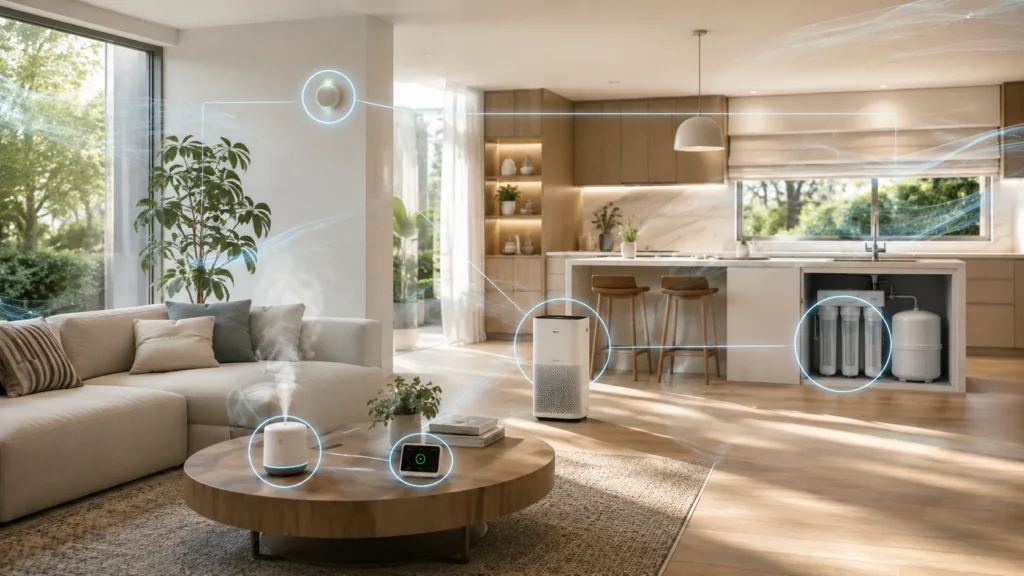
Modern living room and kitchen with smart home air quality devices including an air purifier, humidifier, and water filtration system, connected with visualized blue connectivity lines.

IFA 2026: Air Purification Is Becoming Part of the Healthy-Home Platform

Pre-IFA Industry Perspective | September 4, 2026 This article is based on official announcements and regulatory information available ahead of IFA 2026, which takes place ...
الأخبار
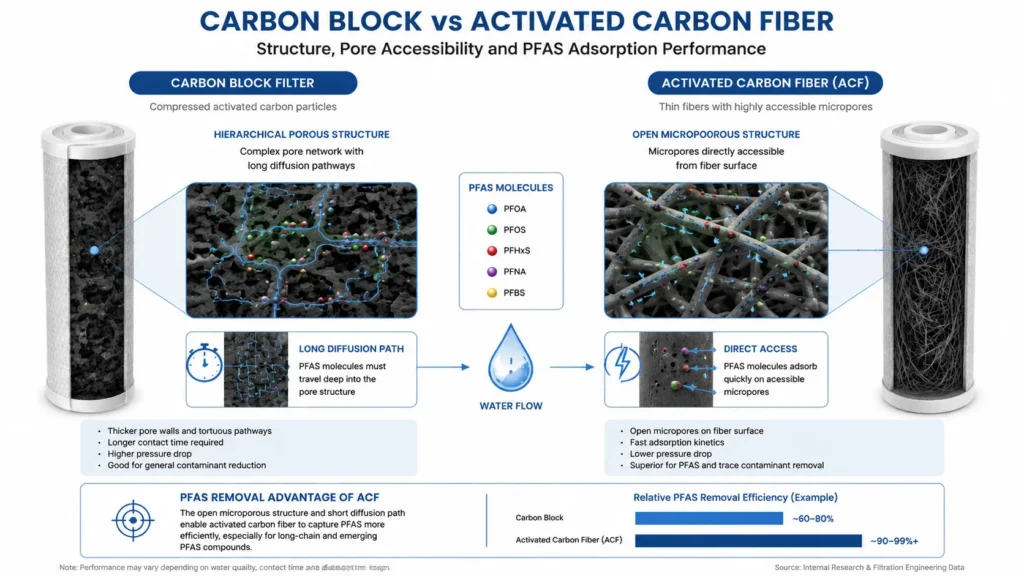
Comparison infographic showcasing the differences between carbon block filter and activated carbon fiber. Detailed diagrams illustrate the hierarchical porous structure of the carbon block with long diffusion paths and the open microporous structure of the activated carbon fiber with direct access for PFAS adsorption.

Carbon Block vs. Activated Carbon Fiber (ACF): Matching Media to Target Contaminants

Two carbon media. Same adsorption chemistry. Very different behaviour in a point-of-use cartridge. If you are specifying a water purifier platform for a PFAS-aware market, ...
الأخبار
NSF base listing and ANF private-label certification pathway for OEM water filters

What Is an NSF Master Listing? A Guide to Base Listings, ANF Certification and OEM Water Filters

For a brand preparing to launch an OEM water purifier, one of the most common supplier claims is: “We already have an NSF master listing, ...
News, Water Purifiers
Healthy-home brand team reviewing PFAS water filter certification, test data and product engineering

Entering the Water Category Is Easy. Building a Credible PFAS Claim Is Much Harder

For air purification, appliance and healthy-home brands, entering the water category can look surprisingly easy. A company can select an existing undersink system, customize its ...
الأخبار
Team in a business meeting discussing a water filtration system with product components and a comparison table displayed on a screen.

5 Leading OEM Water Purifier Manufacturers in China for Private Label Brands

China has thousands of companies selling water filters, reverse osmosis systems and drinking-water appliances. However, only a portion of them are suitable for private-label, OEM ...
الأخبار
Contaminant Engineering•3 min read

PFAS Water Filtration Technologies Explained: Carbon, Resin & RO

Key Takeaway:

PFAS reduction depends on the specific compounds present, treatment media, contact time, water chemistry, and system design. Activated carbon, ion exchange, and Reverse Osmosis address PFAS through different mechanisms.

PFAS are a large family of persistent fluorinated compounds that can occur in drinking-water supplies. Their treatment behavior varies significantly by molecular structure, chain length, functional group, concentration, and the chemistry of the source water.

Granular Activated Carbon (GAC) removes PFAS primarily through adsorption. It is generally more effective for many longer-chain PFAS, while shorter-chain compounds tend to break through more quickly. Carbon performance depends on media properties, Empty Bed Contact Time (EBCT), competing organic matter, loading, and replacement frequency.

Ion-exchange resins use charged functional sites to capture many PFAS compounds. Properly selected anion-exchange media can provide high capacity and may perform better than conventional activated carbon for some shorter-chain PFAS, although performance still depends on water chemistry and competing ions.

Reverse Osmosis (RO) uses membrane separation rather than adsorption. Properly designed RO systems can provide broad reduction across many PFAS compounds as well as dissolved salts and other contaminants. Unlike carbon or resin, however, RO also produces a concentrate stream that must be managed.

No single technology should be selected from a PFAS label alone. System design should consider which PFAS compounds are present, their concentrations, required reduction targets, flow rate, media life, and the applicable third-party certification or validation requirements.

HisoAir Water Technical Series
Product Discovery•3 min read

How to Choose an Under-Sink Water Purifier for Modern Kitchens

Key Takeaway:

Match the treatment technology to your water quality first, then evaluate cabinet space, faucet configuration, flow rate, drain and power requirements, and filter replacement needs.

Choosing an under-sink water purifier starts with water chemistry. Carbon filtration is well suited to chlorine, taste, odor, and many organic contaminants, while Reverse Osmosis is more appropriate when dissolved salts, fluoride, nitrates, or broader dissolved contaminants need to be reduced.

For compact kitchens, tankless RO systems eliminate the conventional storage tank and can significantly reduce the space required under the sink. However, membrane capacity stated in GPD does not directly equal faucet flow. When comparing systems, check the actual dispensing flow rate, inlet-pressure requirement, recovery ratio, and whether a booster pump is required.

Installation architecture also matters. Many RO systems require a drain connection, electrical power, and either a dedicated drinking-water faucet or a compatible multi-function faucet. High-flow carbon systems can often connect directly to the existing cold-water line with a simpler installation, but pressure drop and available faucet flow should still be verified.

RO also removes much of the naturally occurring dissolved mineral content. Where taste or mineral balance is a priority, a post-RO remineralization stage can be added. Filter life should be evaluated by both rated capacity and local water quality rather than replacement time alone.

The right system is therefore not simply the smallest or highest-GPD model. It is the configuration that matches the target contaminants, available cabinet space, desired faucet setup, peak dispensing demand, and maintenance expectations.

HisoAir Water Technical Series
Water Quality•2 min read

What Does TDS Mean in Drinking Water? Measurement vs Contaminant Reality

Key Takeaway:

A TDS meter estimates the overall concentration of dissolved ionic substances from electrical conductivity. It cannot identify specific contaminants or determine whether water is chemically safe.

Total Dissolved Solids (TDS) refers to the combined concentration of dissolved substances in water. Most handheld TDS meters do not measure TDS directly. Instead, they measure electrical conductivity (EC) and convert that reading into an estimated parts-per-million (ppm) value.

This means a TDS reading can indicate how much dissolved ionic material is present, but not what that material actually is. Calcium, magnesium, sodium, nitrates, and other dissolved ions can all contribute to conductivity, yet a simple TDS meter cannot distinguish between them.

TDS meters are also not suitable for detecting trace contaminants such as PFAS, many VOCs, pesticides, pharmaceuticals, or disinfection byproducts. These substances may be present at concentrations far below the level needed to noticeably change electrical conductivity.

A low TDS reading therefore does not guarantee safe drinking water, and a higher TDS reading does not automatically indicate contamination. Water-treatment decisions should be based on laboratory testing for specific contaminants of concern rather than TDS alone.

HisoAir Water Technical Series
Technology Selection•2 min read

RO vs UF Water Filtration: Understanding Pore Sizes & Dissolved Minerals

Key Takeaway:

Ultrafiltration can reduce bacteria, turbidity, and suspended particles while retaining most naturally occurring dissolved minerals. Reverse Osmosis provides much broader reduction of dissolved salts and smaller contaminants.

Ultrafiltration (UF) typically uses hollow-fiber membranes with pore sizes in the approximate 0.01–0.1 micron range. These membranes physically retain turbidity, suspended solids, colloids, and many microorganisms while allowing dissolved minerals and salts to remain in the water.

Reverse Osmosis (RO) operates at a much finer separation level. Unlike UF, RO can substantially reduce dissolved ions such as sodium, calcium, fluoride, nitrates, and other contributors to total dissolved solids (TDS). This makes RO more suitable when dissolved-salt reduction is a primary treatment objective.

UF generally requires less system pressure and produces little or no continuous concentrate stream in many point-of-use configurations. RO typically requires greater pressure and produces a reject-water stream, but delivers broader contaminant reduction.

For water with acceptable TDS and mineral content, UF can be a simpler mineral-retaining treatment option. Where dissolved salts, fluoride, nitrates, or broader dissolved contaminants are a concern, RO is generally the more appropriate technology.

HisoAir Water Technical Series
Technology Selection•4 min read

Carbon Block vs Reverse Osmosis: Which Fits Your Need?

Key Takeaway:

Choose RO for dissolved inorganic salts and heavy metals; choose Carbon Block for chemical taste/odor, no wastewater, and high line-pressure flow.

Reverse Osmosis (RO) and Carbon Block filtration represent two fundamentally different treatment methods: membrane separation and adsorption. Understanding these differences helps determine which technology is better suited to a specific water-quality requirement.

Reverse Osmosis uses a semi-permeable membrane with pore sizes of approximately 0.0001 microns. It can significantly reduce dissolved inorganic contaminants such as TDS, fluoride, nitrates, and certain heavy metals. Because water must be forced through the membrane, RO systems require sufficient pressure or a booster pump and generate a concentrated wastewater stream.

Carbon Block filtration relies primarily on adsorption through compressed activated carbon, commonly with nominal pore sizes around 0.5–5 microns. It is highly effective for chlorine, chloramines, VOCs, taste, and odor, while allowing substantially higher direct-flow rates without producing wastewater.

From an operating perspective, Carbon Block systems are generally simpler, require less energy, and avoid the water loss associated with RO. RO involves higher system complexity and operating cost, but provides substantially broader reduction of dissolved contaminants that Carbon Block alone cannot address.

HisoAir Water Technical Series

طلب عرض أسعار