يفتح في علامة تبويب جديدة
حلول مبتكرة لجودة الهواء
شعار هيسو-أير-لوجو
استفسر الآن

The Essential Guide to US Humidifier Manufacturers

Related Products

In today's increasingly health-conscious world, the focus on indoor air quality extends beyond just purification to encompass optimal humidity levels. Humidifiers, once considered seasonal appliances, are now recognized as essential tools for maintaining a comfortable and healthy indoor environment. They play a crucial role in alleviating dry skin, irritated throats, and respiratory issues, while also protecting wooden furniture and musical instruments from damage caused by dry air. This comprehensive guide delves into the leading humidifier manufacturers in the United States, offering insights into their contributions to creating healthier and more comfortable living spaces. We will also highlight HisoAir, a global leader in indoor air quality solutions with a significant presence in the US market, dedicated to providing innovative and high-quality humidification products.

The Evolving US Humidifier Market: Trends and Growth

The US humidifier market is experiencing steady growth, driven by a heightened awareness of indoor air quality, the increasing prevalence of respiratory conditions, and continuous technological advancements. According to recent market analyses, the US humidifiers market size was valued at approximately $1.85 billion USD in 2023 and is projected to reach around $3.90 billion USD by 2033, growing at a Compound Annual Growth Rate (CAGR) of 7.75%.

Factors contributing to this robust growth include:

  • Increased Health Awareness: A greater understanding of the link between proper humidity levels and overall health, particularly in preventing dry skin, sinus issues, and alleviating allergy and asthma symptoms.
  • Rising Respiratory Concerns: A growing number of individuals suffering from allergies, asthma, and other respiratory ailments are turning to humidifiers for relief.
  • Technological Innovations: Advancements in humidifier technology, such as smart features, improved energy efficiency, and enhanced safety mechanisms, are making these devices more appealing and accessible to a wider consumer base.
  • Comfort and Well-being: Consumers are increasingly seeking solutions that contribute to a more comfortable and pleasant living environment, especially during dry seasons or in arid climates.
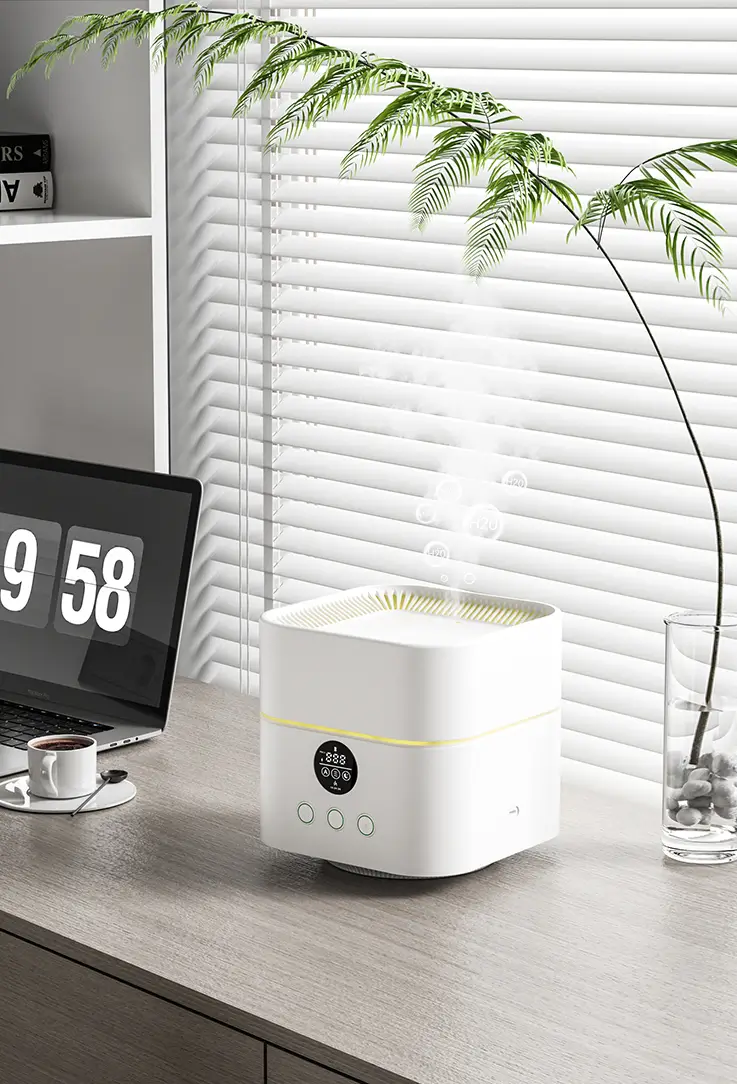
3 in 1 air purifier & humidifier & diffuser ha m18d

This dynamic market landscape presents significant opportunities for both established players and innovative newcomers. Understanding the key manufacturers and their offerings is crucial for consumers, businesses, and distributors alike seeking to invest in quality humidification solutions.

Leading Humidifier Manufacturers in the USA

The following companies represent some of the most influential and innovative humidifier manufacturers in the United States. Their commitment to research, development, and quality has positioned them as leaders in the industry.

1. Crane USA
crane usa

Crane USA is a well-known brand in the home comfort industry, particularly recognized for its stylish and functional humidifiers. They offer a wide range of humidifiers, including ultrasonic, evaporative, and warm mist models, often featuring unique designs and vibrant colors that appeal to families. Crane USA focuses on creating products that are easy to use, clean, and maintain, making them a popular choice for residential use.

Key Offerings: A diverse portfolio of humidifiers with an emphasis on design, ease of use, and child-friendly features.

2. Vornado

فورنادو 1

Vornado is renowned for its air circulation technology, which it applies effectively to its humidifier line. Vornado humidifiers are designed to humidify an entire room evenly, rather than just the immediate area around the unit. They often feature powerful fans and unique vortex action to distribute moisture efficiently. Vornado offers both evaporative and ultrasonic humidifiers, known for their robust performance and thoughtful design.

Key Offerings: Whole-room humidification, efficient moisture distribution, and durable, high-performance designs.

3. Pure Enrichment

شعار Pure Enrichmentment - علامة تجارية موثوق بها لصحة المنزل وتنقية الهواء

Pure Enrichment specializes in health and wellness products, with a strong presence in the humidifier market. Their humidifiers are often praised for their quiet operation, sleek designs, and advanced features such as automatic shut-off, night lights, and essential oil trays. Pure Enrichment aims to provide products that enhance overall well-being and create a more comfortable home environment.

Key Offerings: Quiet operation, modern aesthetics, and user-friendly features for personal and home wellness.

4. AIRCARE (Essick Air Products)
aircare

AIRCARE, a brand of Essick Air Products, is a leading manufacturer of evaporative humidifiers in the US. They are known for producing high-capacity humidifiers suitable for larger spaces and whole-house humidification. AIRCARE humidifiers often feature large water reservoirs and multiple fan speeds, providing extended operation and efficient moisture output. They are a trusted name for reliable and effective humidification solutions.

Key Offerings: High-capacity evaporative humidifiers for large areas and whole-house humidification, focusing on performance and reliability.

5. Humidifirst
humidifirst

Humidifirst is an American company that has been manufacturing ultrasonic humidifiers since 1993. They hold patents for their innovative designs and focus on producing high-quality, efficient ultrasonic humidifiers. Humidifirst emphasizes precision and control in their humidification solutions, catering to both residential and commercial needs.

Key Offerings: Patented ultrasonic humidification technology, precise humidity control, and durable construction.

6. Condair Group AG
condair group ag

While a global leader, Condair Group AG has a significant presence in the US market, specializing in commercial and industrial humidification systems. They offer a comprehensive range of humidifiers, including steam, adiabatic, and evaporative systems, designed for large-scale applications such as manufacturing facilities, hospitals, and data centers. Condair is known for its advanced technology, energy efficiency, and customized solutions for complex humidification requirements.

Key Offerings: Advanced commercial and industrial humidification solutions, energy efficiency, and tailored systems for diverse applications.

HisoAir: A Global Leader with a Strong US Presence

hisoair logo hd

While HisoAir is widely recognized for its innovative air purification systems, our expertise extends to comprehensive indoor air quality solutions, including advanced humidification technologies. With over 20 years of experience as an OEM/ODM expert, HisoAir is dedicated to providing tailored air quality solutions that purify, humidify, warm, or cool, meeting the diverse needs of our global clientele, including those in the United States.

At HisoAir, we understand that optimal indoor air quality is a holistic concept, encompassing not only the removal of pollutants but also the maintenance of ideal humidity levels. Our commitment to innovation is reflected in our integrated solutions, such as the 3-in-1 Air Purifier & Humidifier & Diffuser, which combines multiple functionalities into a single, efficient device. This product, featuring a 500ml tank and 30ml/h humidification, demonstrates our capability to deliver versatile and high-performance products that cater to modern living.
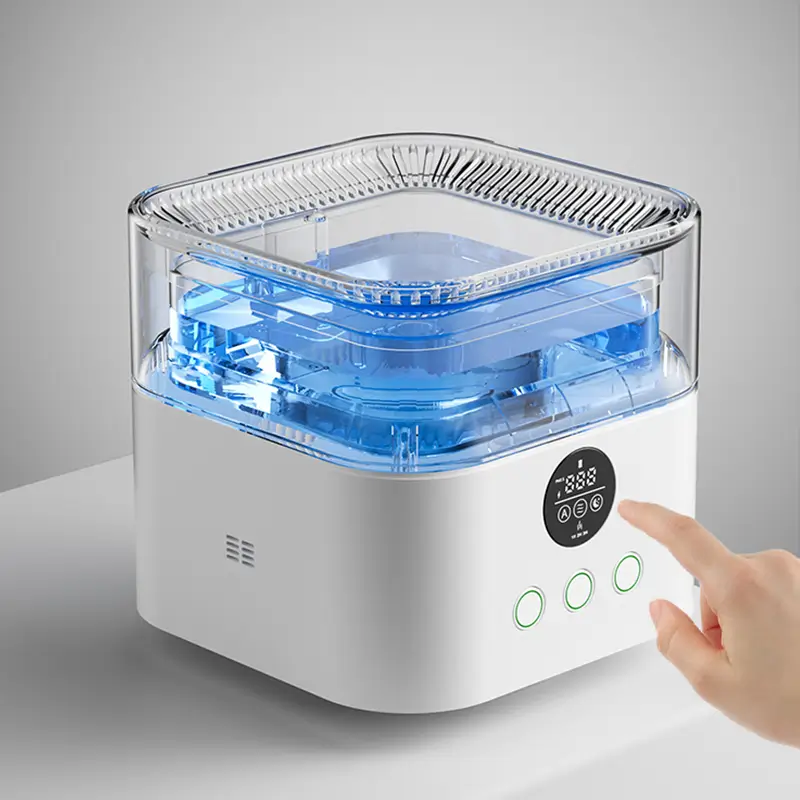
3 in 1 air purifier & humidifier & diffuser ha m18d
(HisoAir 3-in-1 Air Purifier & Humidifier & Diffuser HA-M18D)

HisoAir's Commitment to the US Market

HisoAir has a strong and growing presence in the United States, underscored by our US Office located at 2180 S WINEVILLE AVE ONTARIO, CA 91761. This strategic location allows us to better serve our American partners and customers, providing localized support, efficient logistics, and a deeper understanding of the US market's unique demands. Our global supply chain, supported by factories in China, Vietnam, Thailand, and Malaysia, ensures robust production capabilities and timely delivery to the US.

We pride ourselves on our rigorous quality control, with every product undergoing extensive testing for performance, noise levels, and durability. Our CNAS-Approved Lab ensures that all our products, including those with humidification features, comply with national and international standards. As a contributor to the development of national air filter standards, HisoAir sets the benchmark for quality and reliability in the indoor air quality industry.

Partnering with HisoAir

HisoAir is a trusted partner for leading brands and Fortune 500 companies, including Henry Singh, JP Morgan, AFLAC, and BlueAir. Our OEM/ODM and JDM (Joint Design Manufacturing) services allow businesses to launch their own branded air quality products, including humidifiers, with confidence. Whether you are looking for custom-designed solutions, joint development, or private label options, HisoAir offers unparalleled expertise and a streamlined process from concept to mass production.

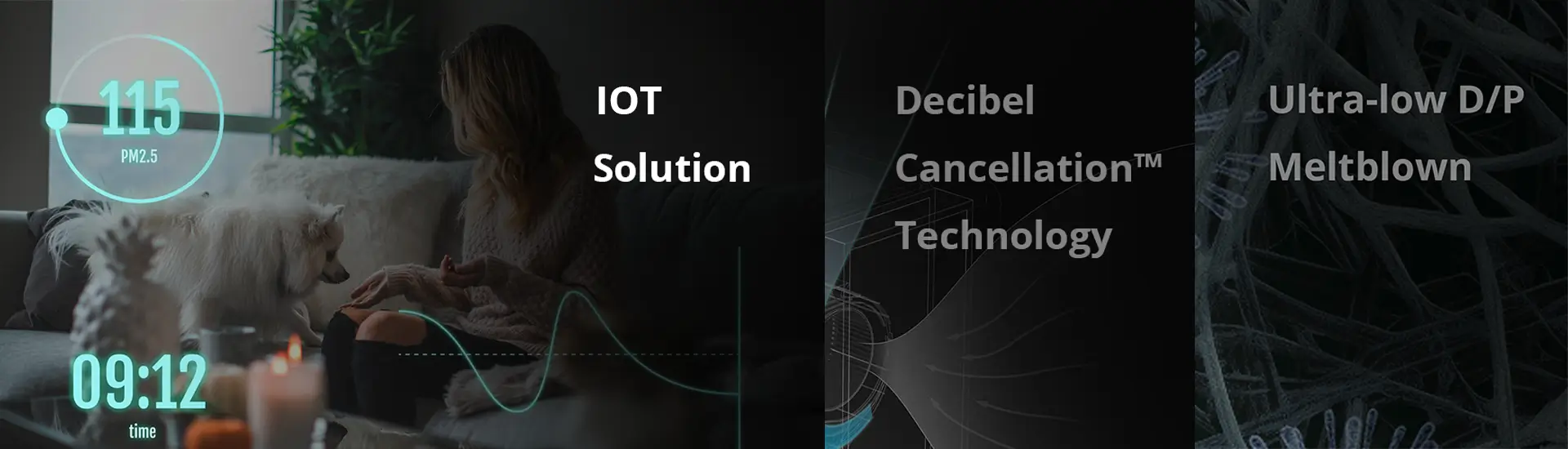
Our dedication to “Maximum Purification, Minimum Noise” extends to our humidification solutions, ensuring that our products not only deliver optimal humidity but also operate quietly, making them ideal for any environment. By partnering with HisoAir, businesses in the US can leverage our advanced technology, extensive manufacturing capabilities, and commitment to quality to bring superior humidification products to market.
Conclusion: Choosing the Right Humidifier for Optimal Indoor Comfort

Maintaining optimal indoor humidity levels is crucial for health, comfort, and the preservation of your home and belongings. The US humidifier market offers a wide array of choices, from personal units to whole-house systems, each designed to address specific needs. Leading manufacturers like Crane USA, Vornado, Pure Enrichment, AIRCARE, Humidifirst, and Condair Group AG are at the forefront of innovation, providing reliable and effective humidification solutions.

As you consider your options, remember that HisoAir stands as a global leader in indoor air quality, offering not only cutting-edge air purification but also integrated humidification solutions. With our dedicated US office, robust global supply chain, and unwavering commitment to quality and innovation, HisoAir is uniquely positioned to be your trusted partner for all your indoor air quality needs. Whether you are a consumer seeking a high-performance humidifier for your home or a business looking for a reliable OEM/ODM partner to develop your next line of humidification products, HisoAir is ready to deliver excellence.

We invite you to explore HisoAir's comprehensive range of indoor air quality solutions and discover how our advanced technologies can contribute to a healthier and more comfortable environment for you and your customers. Contact us today to learn more about our products and partnership opportunities in the US market.

شارك:
السيد لي مؤسس شركة هيسواير
Alwen Lee, an air purification expert with over 10 years of experience, is a devoted father of two and a passionate traveler, having explored more than 30 countries. With a love for public speaking and swimming, he has dedicated his life to the indoor air quality industry. His mission is to ensure that people around the world enjoy the freedom to breathe clean air and lead happy, healthy lives.

أرسل لنا رسالة

Related Products

المزيد للقراءة

Modern living room with a family enjoying a healthy indoor environment monitored by smart devices, natural lighting, and greenery.

After IFA 2026: The Healthy Home Is Moving Beyond Smart Devices

In our previous IFA 2026 column, Air Purification Is Becoming Part of the Healthy-Home Platform, we argued that the next generation of indoor-health products would ...
الأخبار
Modern living room and kitchen with smart home air quality devices including an air purifier, humidifier, and water filtration system, connected with visualized blue connectivity lines.

IFA 2026: Air Purification Is Becoming Part of the Healthy-Home Platform

Pre-IFA Industry Perspective | September 4, 2026 This article is based on official announcements and regulatory information available ahead of IFA 2026, which takes place ...
الأخبار
Comparison infographic showcasing the differences between carbon block filter and activated carbon fiber. Detailed diagrams illustrate the hierarchical porous structure of the carbon block with long diffusion paths and the open microporous structure of the activated carbon fiber with direct access for PFAS adsorption.

Carbon Block vs. Activated Carbon Fiber (ACF): Matching Media to Target Contaminants

Two carbon media. Same adsorption chemistry. Very different behaviour in a point-of-use cartridge. If you are specifying a water purifier platform for a PFAS-aware market, ...
الأخبار
NSF base listing and ANF private-label certification pathway for OEM water filters

What Is an NSF Master Listing? A Guide to Base Listings, ANF Certification and OEM Water Filters

For a brand preparing to launch an OEM water purifier, one of the most common supplier claims is: “We already have an NSF master listing, ...
News, Water Purifiers
Healthy-home brand team reviewing PFAS water filter certification, test data and product engineering

Entering the Water Category Is Easy. Building a Credible PFAS Claim Is Much Harder

For air purification, appliance and healthy-home brands, entering the water category can look surprisingly easy. A company can select an existing undersink system, customize its ...
الأخبار
Team in a business meeting discussing a water filtration system with product components and a comparison table displayed on a screen.

5 Leading OEM Water Purifier Manufacturers in China for Private Label Brands

China has thousands of companies selling water filters, reverse osmosis systems and drinking-water appliances. However, only a portion of them are suitable for private-label, OEM ...
الأخبار
Contaminant Engineering•3 min read

PFAS Water Filtration Technologies Explained: Carbon, Resin & RO

Key Takeaway:

PFAS reduction depends on the specific compounds present, treatment media, contact time, water chemistry, and system design. Activated carbon, ion exchange, and Reverse Osmosis address PFAS through different mechanisms.

PFAS are a large family of persistent fluorinated compounds that can occur in drinking-water supplies. Their treatment behavior varies significantly by molecular structure, chain length, functional group, concentration, and the chemistry of the source water.

Granular Activated Carbon (GAC) removes PFAS primarily through adsorption. It is generally more effective for many longer-chain PFAS, while shorter-chain compounds tend to break through more quickly. Carbon performance depends on media properties, Empty Bed Contact Time (EBCT), competing organic matter, loading, and replacement frequency.

Ion-exchange resins use charged functional sites to capture many PFAS compounds. Properly selected anion-exchange media can provide high capacity and may perform better than conventional activated carbon for some shorter-chain PFAS, although performance still depends on water chemistry and competing ions.

Reverse Osmosis (RO) uses membrane separation rather than adsorption. Properly designed RO systems can provide broad reduction across many PFAS compounds as well as dissolved salts and other contaminants. Unlike carbon or resin, however, RO also produces a concentrate stream that must be managed.

No single technology should be selected from a PFAS label alone. System design should consider which PFAS compounds are present, their concentrations, required reduction targets, flow rate, media life, and the applicable third-party certification or validation requirements.

HisoAir Water Technical Series
Product Discovery•3 min read

How to Choose an Under-Sink Water Purifier for Modern Kitchens

Key Takeaway:

Match the treatment technology to your water quality first, then evaluate cabinet space, faucet configuration, flow rate, drain and power requirements, and filter replacement needs.

Choosing an under-sink water purifier starts with water chemistry. Carbon filtration is well suited to chlorine, taste, odor, and many organic contaminants, while Reverse Osmosis is more appropriate when dissolved salts, fluoride, nitrates, or broader dissolved contaminants need to be reduced.

For compact kitchens, tankless RO systems eliminate the conventional storage tank and can significantly reduce the space required under the sink. However, membrane capacity stated in GPD does not directly equal faucet flow. When comparing systems, check the actual dispensing flow rate, inlet-pressure requirement, recovery ratio, and whether a booster pump is required.

Installation architecture also matters. Many RO systems require a drain connection, electrical power, and either a dedicated drinking-water faucet or a compatible multi-function faucet. High-flow carbon systems can often connect directly to the existing cold-water line with a simpler installation, but pressure drop and available faucet flow should still be verified.

RO also removes much of the naturally occurring dissolved mineral content. Where taste or mineral balance is a priority, a post-RO remineralization stage can be added. Filter life should be evaluated by both rated capacity and local water quality rather than replacement time alone.

The right system is therefore not simply the smallest or highest-GPD model. It is the configuration that matches the target contaminants, available cabinet space, desired faucet setup, peak dispensing demand, and maintenance expectations.

HisoAir Water Technical Series
Water Quality•2 min read

What Does TDS Mean in Drinking Water? Measurement vs Contaminant Reality

Key Takeaway:

A TDS meter estimates the overall concentration of dissolved ionic substances from electrical conductivity. It cannot identify specific contaminants or determine whether water is chemically safe.

Total Dissolved Solids (TDS) refers to the combined concentration of dissolved substances in water. Most handheld TDS meters do not measure TDS directly. Instead, they measure electrical conductivity (EC) and convert that reading into an estimated parts-per-million (ppm) value.

This means a TDS reading can indicate how much dissolved ionic material is present, but not what that material actually is. Calcium, magnesium, sodium, nitrates, and other dissolved ions can all contribute to conductivity, yet a simple TDS meter cannot distinguish between them.

TDS meters are also not suitable for detecting trace contaminants such as PFAS, many VOCs, pesticides, pharmaceuticals, or disinfection byproducts. These substances may be present at concentrations far below the level needed to noticeably change electrical conductivity.

A low TDS reading therefore does not guarantee safe drinking water, and a higher TDS reading does not automatically indicate contamination. Water-treatment decisions should be based on laboratory testing for specific contaminants of concern rather than TDS alone.

HisoAir Water Technical Series
Technology Selection•2 min read

RO vs UF Water Filtration: Understanding Pore Sizes & Dissolved Minerals

Key Takeaway:

Ultrafiltration can reduce bacteria, turbidity, and suspended particles while retaining most naturally occurring dissolved minerals. Reverse Osmosis provides much broader reduction of dissolved salts and smaller contaminants.

Ultrafiltration (UF) typically uses hollow-fiber membranes with pore sizes in the approximate 0.01–0.1 micron range. These membranes physically retain turbidity, suspended solids, colloids, and many microorganisms while allowing dissolved minerals and salts to remain in the water.

Reverse Osmosis (RO) operates at a much finer separation level. Unlike UF, RO can substantially reduce dissolved ions such as sodium, calcium, fluoride, nitrates, and other contributors to total dissolved solids (TDS). This makes RO more suitable when dissolved-salt reduction is a primary treatment objective.

UF generally requires less system pressure and produces little or no continuous concentrate stream in many point-of-use configurations. RO typically requires greater pressure and produces a reject-water stream, but delivers broader contaminant reduction.

For water with acceptable TDS and mineral content, UF can be a simpler mineral-retaining treatment option. Where dissolved salts, fluoride, nitrates, or broader dissolved contaminants are a concern, RO is generally the more appropriate technology.

HisoAir Water Technical Series
Technology Selection•4 min read

Carbon Block vs Reverse Osmosis: Which Fits Your Need?

Key Takeaway:

Choose RO for dissolved inorganic salts and heavy metals; choose Carbon Block for chemical taste/odor, no wastewater, and high line-pressure flow.

Reverse Osmosis (RO) and Carbon Block filtration represent two fundamentally different treatment methods: membrane separation and adsorption. Understanding these differences helps determine which technology is better suited to a specific water-quality requirement.

Reverse Osmosis uses a semi-permeable membrane with pore sizes of approximately 0.0001 microns. It can significantly reduce dissolved inorganic contaminants such as TDS, fluoride, nitrates, and certain heavy metals. Because water must be forced through the membrane, RO systems require sufficient pressure or a booster pump and generate a concentrated wastewater stream.

Carbon Block filtration relies primarily on adsorption through compressed activated carbon, commonly with nominal pore sizes around 0.5–5 microns. It is highly effective for chlorine, chloramines, VOCs, taste, and odor, while allowing substantially higher direct-flow rates without producing wastewater.

From an operating perspective, Carbon Block systems are generally simpler, require less energy, and avoid the water loss associated with RO. RO involves higher system complexity and operating cost, but provides substantially broader reduction of dissolved contaminants that Carbon Block alone cannot address.

HisoAir Water Technical Series

طلب عرض أسعار