

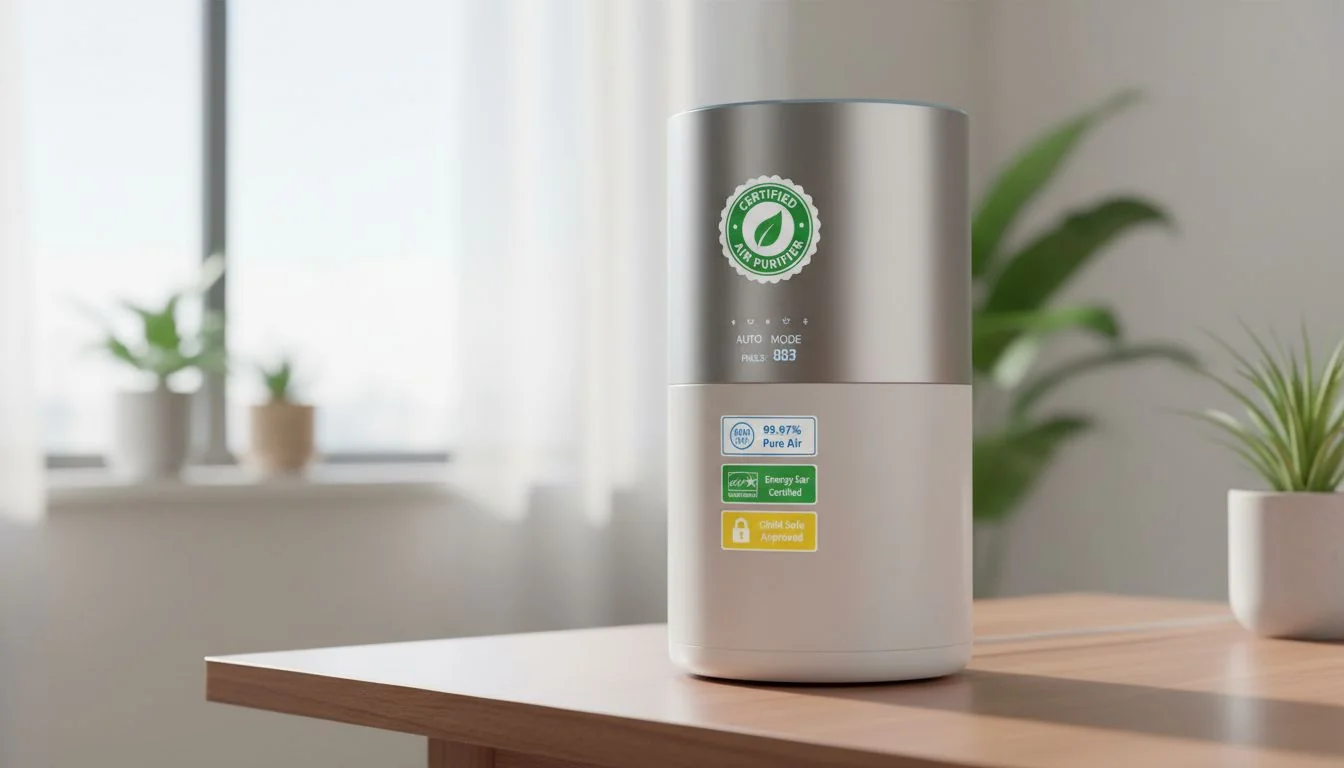
You design a perfect product, but it sits in the warehouse unsold. Why? Because buyers do not trust it yet. You need a way to prove quality instantly.
Certifications are the fastest way to build trust in the B2B market1. They act as a third-party validation of safety, performance, and efficiency. For air purifiers, badges like CARB, ETL, and Energy Star are not just legal requirements; they are powerful sales tools that separate premium products from cheap copies.

Many designers view certifications as a final hurdle. They see it as just paperwork. This is a mistake. If you treat certification as a core feature, you change your business strategy. It becomes a weapon against competitors. In my years in the mold and manufacturing industry, I have seen great designs fail because they ignored this. Today, I will explain how specific standards like CARB and ETL can accelerate your sales and protect your brand.
Certifications are purely for legal compliance and have no marketing value.Falsch
Certifications build trust and act as a primary differentiator in B2B sales, often allowing for higher price points.
Pre-certified products can reduce time-to-market by several months.Wahr
Using a pre-certified platform saves the 6-9 months typically required for lab testing and approval.
Why Is "Trust" the Ultimate Feature for B2B Buyers?
You want to sell to big clients, but they are afraid of risk. They worry about safety lawsuits and faulty products. How do you calm their fears?
Trust is the most valuable feature you can sell to a commercial buyer. When a product is "Pre-Certified," it tells the buyer that the hard work is already done. It removes the risk of regulatory failure and allows them to launch immediately without waiting for long lab tests.

The Value of Speed and Reliability
Let's look at this from a business perspective. In the manufacturing world, time is money. If you want to get an ETL or CARB certification2 from scratch, you are looking at a long road. It usually takes 6 to 9 months. It also costs upwards of $20,000. For a startup or a brand trying to pivot quickly, this is a massive barrier.
This is where the concept of "Pre-Certified" becomes your strongest value proposition. At Hisoair, we position our products as "Ready-to-Sell" platforms. We have already done the heavy lifting. We handled the lab tests. We paid the fees. The client simply lists their brand using a process called multiple listing3.
You are not just selling an air purifier. You are selling them time. You are selling them a 9-month head start against their competition. For a designer like you, Jacky, this means your design choices must align with these standards from day one. You cannot add compliance at the end. It must be baked into the mold design and component selection. When you offer a client a product that is ready to go, you relieve their biggest pain point. You become their partner, not just a vendor.
Getting a new ETL/CARB certification takes less than 2 weeks.Falsch
The process typically takes 6 to 9 months due to rigorous testing and documentation review.
Multiple Listing allows a brand to use an existing certification under their own name.Wahr
This process allows brands to leverage the manufacturer's existing approvals to sell products legally and quickly.
How Does Compliance Differ from True Differentiation?
Most factories do the bare minimum to avoid fines. They want to pass the test and move on. Is this enough to win the market?
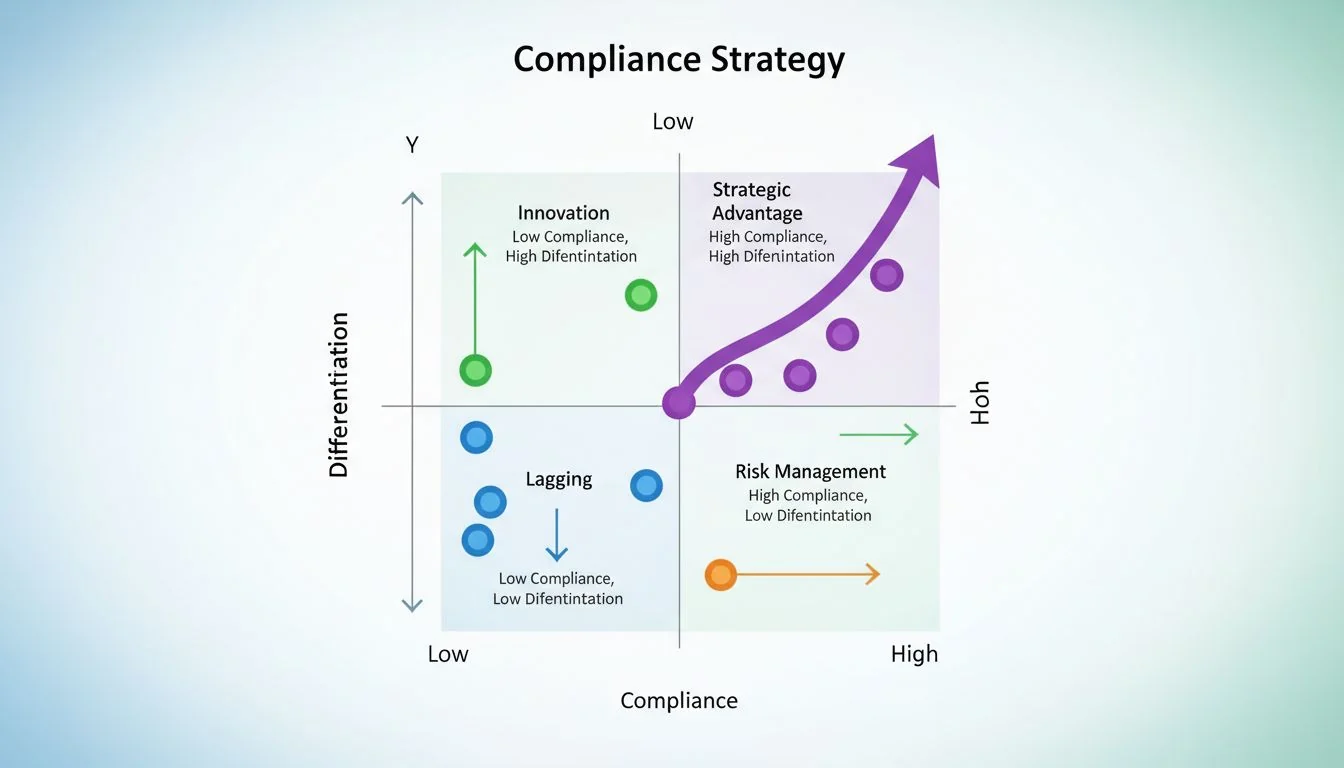
Compliance keeps you out of jail, but differentiation gets you the contract. Basic compliance means you meet the lowest legal standard. Differentiation means you use those standards to prove your product is superior to the low-cost options flooding the market.
Positioning as the Expert
There is a big difference between "passing a test" and "owning the standard." Many brand founders hate paperwork. They are creative people. They want to do marketing and sales. They do not want to read 100-page PDF files about ozone emission limits.
This creates an opportunity for you. You can position yourself—or your manufacturing partner—as the "Chief Compliance Officer" for their brand. You tell them, "We handle the lab tests; you handle the marketing." This relieves a major headache for startups.
But you must go further. You must use compliance to highlight quality. For example, if your mold design allows for better airflow, you might pass Energie-Effizienz4 tests that others fail. You need to frame your technical achievements as business wins. When you talk to a client, do not just say "we are compliant." Say "our compliance level allows you to sell in markets your competitors cannot touch." This shifts the conversation from price to value. It shows that you understand their business, not just the plastic parts.
Brand founders usually enjoy handling technical compliance paperwork.Falsch
Most founders find compliance paperwork tedious and prefer to focus on marketing and sales.
Handling compliance for a client adds value beyond the physical product.Wahr
It acts as a service that saves the client time and reduces their operational burden.
Why Is CARB the "Gatekeeper" to the US Market?
California has the strictest air quality laws in the world. If you cannot sell there, you lose a huge chunk of the market. Why is this standard so hard to meet?
CARB (California Air Resources Board) certification is the gold standard for ozone safety. It measures ozone emissions to ensure they are near zero. This certification acts as a filter that blocks low-quality factories from entering the lucrative US market.
The "Luxury" Filter
I like to call CARB a "Luxury" filter. Here is why. Many low-end factories produce cheap air purifiers. To make them seem effective, they use cheap ionizers. These ionizers release a lot of ozone. Ozone is harmful to lungs. These factories cannot pass the strict CARB ozone tests.
By highlighting your CARB Compliance, you are doing something very clever. You are implicitly labeling those non-compliant competitors as "unsafe" or "low-tech." It is a powerful negative marketing tool. You do not even have to name the rivals. You just show the badge.
For a mold designer, this impacts the internal structure. You need space for high-quality filtration media rather than relying on cheap electronic gimmicks. You might need to design the housing to prevent any ozone leakage if an ionizer is used. When you meet this standard, you tell the buyer: "This is a safe, modern machine." It reassures families. It reassures pet owners. It opens the door to the entire North American market, not just California. It proves your manufacturing precision is high enough to control emissions perfectly.
Cheap ionizers often produce high levels of ozone.Wahr
Low-cost components often lack the regulation mechanisms to limit ozone production to safe levels.
CARB certification is only required if you manufacture in California.Falsch
CARB certification is required for any air cleaning device sold into California, regardless of where it is made.
What Makes ETL / UL the "Safety Shield"?
Electricity scares people. No one wants a device that might catch fire in their bedroom. How do you prove your unit is safe to run 24/7?
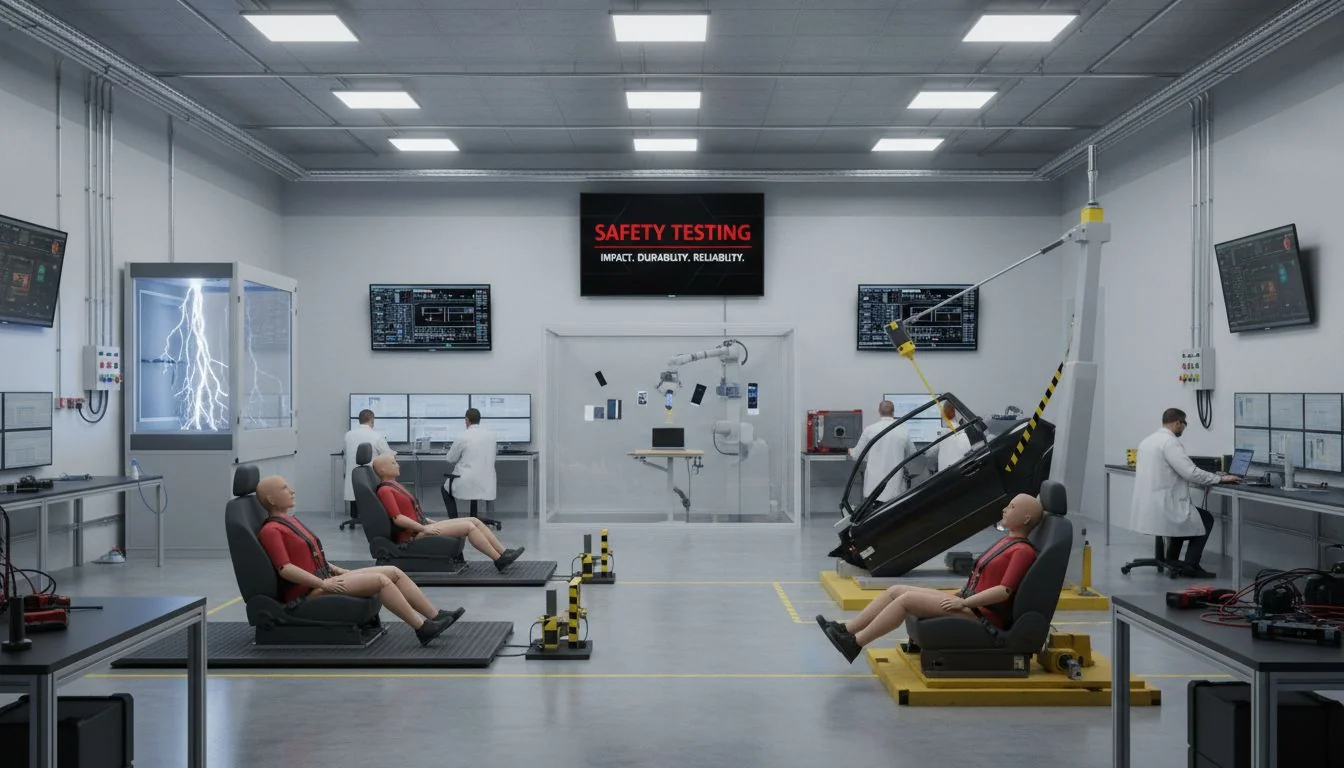
ETL and UL marks are the most recognized safety symbols in North America. They prove that an independent lab has tested your product for fire and electrical hazards. This is the "Safety Shield" that protects the brand's reputation.
Wall-Mounted Integrity and Thermal Management
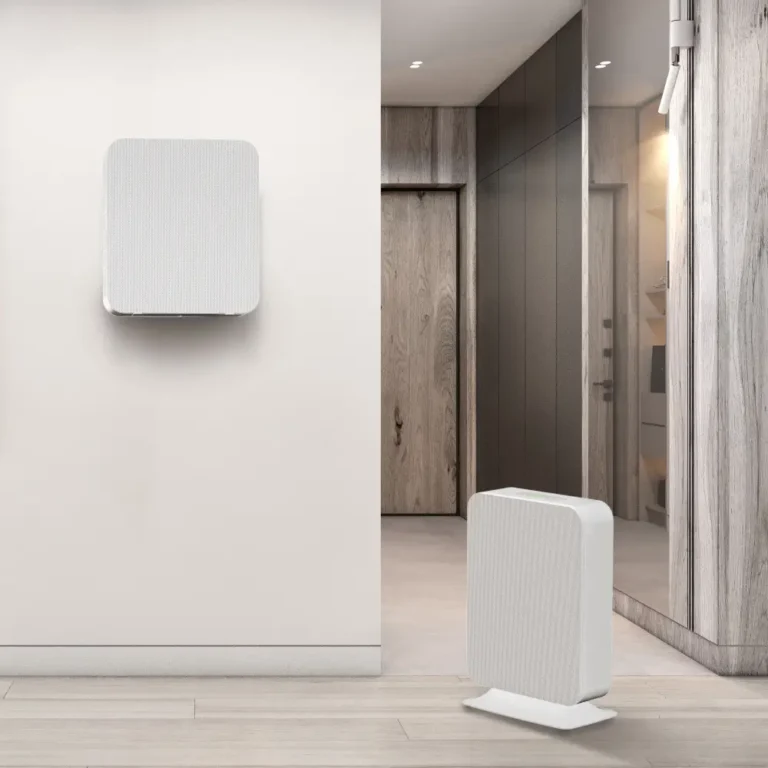
Certification is not just about the plug. It is about the whole unit. This is especially true for wall-mounted air purifiers. This is a unique area where design meets safety.
When a unit is on the wall, heat dissipation is different than when it is on the floor. The airflow is different. The risk of overheating is higher if the design is poor. Certification tests for this. They test "Thermal Management" and "Mounting Integrity."
Use this to your advantage in your pitch. You can say, "Our wall units are safety-tested to run 24/7 inside a wall enclosure." This is a huge comfort to commercial buyers. Think about a school or a hospital. They cannot have a unit fall off the wall. They cannot have a unit overheat.
As a designer, this means you must choose the right plastics. You need materials with a V0 flammability rating. You need a mold design that encourages natural convection cooling. When you have the ETL/UL badge, you are proving that your engineering is sound. You are telling the buyer that this product is built to last, not just built to look good.
Wall-mounted units have the same thermal properties as floor units.Falsch
Wall mounting changes airflow patterns and heat dissipation, requiring specific testing and design considerations.
V0 flammability rating is important for safety certification.Wahr
Plastics with a V0 rating stop burning within 10 seconds, which is critical for preventing fire spread.
How Do ISO & Medical Standards Win Commercial Contracts?
Schools and government buildings have different rules than home buyers. They have strict procurement lists. How do you get on those lists?
ISO standards and Energy Star5 ratings are often mandatory requirements for government and B2B contracts. These certifications prove efficiency and consistent manufacturing quality. They turn your product into a "Contract-Winning" machine.

Energy Efficiency as a Sales Tool
If your client wants to sell to schools, they will likely face a procurement officer. This officer has a checklist. One of the top items is usually "Energy Efficiency." They are buying hundreds of units. The electricity bill matters.
This is where "Energy Star" becomes vital. It is not just a green sticker. It is a key to the door. To achieve this, we often use smart AI and DC motors in our designs. DC motors are more efficient than AC motors. They run cooler and quieter.
Highlighting this is a "Contract-Winning Feature." You are not just selling clean air; you are selling lower operating costs. Furthermore, ISO 13485 (Medical Devices) or ISO 9001 (Quality Management) shows that your factory is disciplined. It shows consistency. For a commercial buyer, consistency is everything. They need to know that unit #1 and unit #1000 are exactly the same. Your mold design plays a role here too. Consistent cycle times and precise cooling in the mold ensure that every part is identical, which helps maintain these high standards.
Government contracts rarely require energy efficiency ratings.Falsch
Government procurement policies heavily favor or mandate energy-efficient products to reduce long-term costs.
DC motors are generally more energy-efficient than AC motors.Wahr
DC motors consume less power and offer better speed control, contributing to Energy Star compliance.
Schlussfolgerung
Certifications are not obstacles; they are your most powerful sales accelerators. By leveraging CARB, ETL, and Energy Star, you build trust, ensure safety, and open doors to lucrative B2B contracts.
References
-
Understanding the B2B market's trust dynamics can enhance your sales strategy and product positioning. ↩
-
Exploring CARB certification reveals its critical role in ensuring air quality and market access. ↩
-
Understanding multiple listing can help brands leverage existing certifications for faster market access. ↩
-
Energy efficiency can lower operational costs, making it a key selling point for B2B transactions. ↩
-
Energy Star certification can significantly boost sales by appealing to eco-conscious consumers. ↩


 English
  Français
  Español
  Italiano
  Deutsch
  Português
  Русский
  العربية
  日本語
日本語  한국어
한국어  Tiếng Việt

