Se abre en una pestaña nueva
Soluciones innovadoras para la calidad del aire

5 Best Air Purifier Manufacturers in India (2026) – HisoAir

Related Products

Si busca el mejores fabricantes de purificadores de aire de la India ha llegado a la página correcta. En este post, hemos reunido 5 de las mejores fábricas y empresas de filtros de aire en la India.
Tener un purificador de aire en casa o en zonas de espera públicas puede reducir significativamente las posibilidades de que las bacterias permanezcan en el interior. Con el creciente número de casos de pacientes COVID-19, las personas son más conscientes de la buena higiene de las manos y una buena ventilación del aire. Por lo tanto, El mercado de purificadores de aire ha aumentado significativamente en 2020 y se espera que alcance $39 millones en 2023.

Si está pensando en aprovechar esta exigente oportunidad y vender purificadores de aire, la mejor opción es buscar fabricantes cualificados. Y en este artículo vamos a hablar de los principales exportadores, proveedores y fábricas de purificadores de aire de la India.

Nota: Esta lista de los principales fabricantes de purificadores de aire de la India se ha elaborado en función de los siguientes criterios:

  • Proveedores y exportadores con grandes series de fabricación y que producen millones de existencias al mes
  • Capacidades de investigación y desarrollo
  • Certificación completa de la fábrica, como ISO y GMP
  • Produce humidificadores y Purificadores de aire HEPA
  • Ofrece opciones asequibles de venta al por mayor

Los 5 mejores fabricantes de purificadores de aire de la India

¿Tiene prisa? Aquí están los mejores purificadores de aire HEPA hechos en la India por fabricantes cualificados:

  1. Elofic - Haryana, India
  2. Air Concept - Ahmedabad, Gujarat
  3. STULZCHSPL India - Mumbai
  4. Wardwizard Solutions India - Vadodara, Gujarat
  5. Hi Tech Sweet Water Technologies - Secunderabad, Telangana

5 mejores fabricantes indios de purificadores y limpiadores de aire

Ahora, le presentaremos más detalles de las empresas purificador de aire en la India.

1. Elofic

Sede central: Haryana, India
Años de experiencia: 67 años
Certificados: ISO: 9001

Logotipo de Elofic

Elofic Industries es una de las empresas reconocidas que fabrican purificadores de aire en la India. La empresa dispone de una gama completa de sistemas de filtrado y unidades de filtración para combustibles, aire y aceite. Estos equipos y unidades de filtración se utilizan para el hogar, automoción y zonas de oficinas.

Elofic suministra más de 85 millones de filtros al año con los que exporta ⅓ de sus productos a todo el mundo. Cuentan con más de 67 años de experiencia en la fabricación y distribución de purificadores y sistemas de filtración de aire. Además de 3 fábricas con certificación ISO, cuenta con un centro de I+D en Faridabad. Elofic también ofrece Servicios OEM.

2. Concepto Aire

Headquarters: 3rd Floor, Aalin, Opp.Gujarat Vidhyapith, Near Ajanta Commercial complex River front main gate, Ashram Rd, Ahmedabad, Gujarat 380014, India
Años de experiencia: 25 años
Certificados: ISO: 9001

Logotipo Air Concept

Air Concept es un fabricante fiable de purificadores de aire de gama alta en la India. La empresa fabrica una línea innovadora de productos purificadores de aire para interiores que han ganado popularidad en la India y en todo el mundo. Una de sus mayores ventajas es la rentabilidad de los productos que aún mantienen su calidad.

Los purificadores de Air Concept pueden identificar los contaminantes del aire y controlar de forma inteligente el índice de calidad del aire en tiempo real. Esto facilita a los clientes el control de la calidad real del aire de forma intuitiva. La empresa también ha introducido purificadores de aire WIFI que se pueden controlar a través del teléfono móvil.

Aparte de esto, Air Concept también ha desarrollado varios purificadores con quioscos de postes para la limpieza de carreteras y calles.

3. STULZCHSPL India

Sede central: A-173 & 173-1, TTC Industrial Area, Kopar Khairane, MIDC, Navi Mumbai-400 710
Años de experiencia: 21 años
Certificados: ISO 9001:2015

Logotipo STULZCHSPL
Logotipo STULZCHSPL

Stulzchspl tiene una de las mayores fábricas de purificadores de aire de la India, con una superficie de 200.000 pies cuadrados. Cuenta con más de 14 sucursales en todo el país y una amplia red de distribución en todo el mundo.
La empresa fabrica diversos equipos y accesorios de aire acondicionado para uso doméstico e industrial. Aparte de su popular línea de purificadores de aire, la empresa también ofrece unidades de refrigeración de precisión, unidades de tratamiento de aire, terminales de distribución de aire y humidificadores.

4. Wardwizard Solutions India

Sede central: Parcela 222, Makarpura GIDC, Makarpura, Vadodara, Gujarat 390010
Años de experiencia: 4 años
Certificados: ISO 9001: 2015

Logotipo de Wardwizard

Wardwizard Solutions es una empresa que cotiza en la Bolsa de Bombay (BSE) y en la Bolsa de Calcuta (CSE). La empresa no sólo suministra purificadores de aire, sino también una serie de equipos energéticamente eficientes como vehículos eléctricos, televisores LED, acondicionadores de aire, fabricantes de agua alcalina y vasos de agua de hidrógeno. La empresa ofrece purificadores de aire de gama alta que se exportan a todo el mundo.

5. Tecnologías de agua dulce Hi Tech

Sede central: EC Nagar Colony, Cherlapalli, Secunderabad, Telangana 500051, India
Años de experiencia: 25 años
Certificados: ISO : 9001:2008, 14001:2004, 18001:2007

Logotipo Hi Tech
Logotipo Hi Tech

Hitech es uno de los proveedores de purificadores de aire de confianza en la India. La empresa está especializada en la fabricación de sistemas de purificación y depuración de agua. Han desarrollado varios purificadores de agua, sistemas de ósmosis inversa, purificadores de aire y sistemas de agua alcalina. También proporcionan bombas, accesorios de control de calidad , membranas de ósmosis inversa, cartuchos de filtro de agua y muchos más.

Uno de sus productos más vendidos son sus purificadores de aire diseñados y fabricados con materias primas de alta calidad procedentes de proveedores de confianza. La empresa también afirma utilizar las últimas tecnologías procedentes de EE.UU. para fabricar purificadores de agua y aire.

Fabricante líder de purificadores de aire en China

China es la potencia manufacturera del mundo, ya que suministra casi un tercio de los productos que se encuentran en el planeta. Si está interesado en conectar con el principal fabricante de purificadores de aire de dicho país, ¡trabaje con HisoAir hoy mismo!

HisoAir

Logotipo de HisoAir
Logotipo de HisoAir

Fuente de la imagen: HisoAir

Tipo de negocio: OE/OD/JD Fabricante, proveedor
Sede central: Room 712, Building 1, No. 4, Second Road, Songshan Lake Park, Dongguan City, Guangdong Province, China
Mercados principales: Global
Años de experiencia: 18 years
Certificados: CE, ROHS, EN1822

HisoAir specializes in manufacturing air purifiers that can be used in a medical setting. It is formally recognized as Shenzhen HisoAir Co., Ltd., and it was founded in 2003. It had achieved phenomenal success over its short eleven years in the industry with its more than a hundred accomplished projects all over the globe.

La empresa ha patentado más de 50 diseños y desarrollado sistemas de purificación del aire capaces de eliminar el 99,99% de las partículas presentes en el aire. La SGS también ha verificado que sus productos pueden filtrar el 99,8% de la familia de los coronavirus, lo que sería beneficioso en la sociedad actual, donde la pandemia de COVID-19 está haciendo estragos.

Productos clave

  • Purificadores de aire de grado médico

Conclusión

Para prosperar en un entorno más sano y fresco, los purificadores de aire ayudan a filtrar el aire del polvo, la suciedad y los virus. Los purificadores de aire son uno de los principales productos que aumentaron en demanda en 2020 y definitivamente estamos viendo que crecerá en 2021. Así que si usted está buscando fabricantes y proveedores de confianza de purificadores de aire en la India para revender, dropship o comprar al por mayor, hemos enumerado los mejores fabricantes con los que puede ponerse en contacto en la India.

¿Quiere más opciones? ¿Qué le parece comprar purificadores de aire en China? Lea nuestro blog sobre " Los 5 mejores purificadores de aire de China ".
Comparte:
fundador de hisoair, sr. lee
Alwen Lee, an air purification expert with over 10 years of experience, is a devoted father of two and a passionate traveler, having explored more than 30 countries. With a love for public speaking and swimming, he has dedicated his life to the indoor air quality industry. His mission is to ensure that people around the world enjoy the freedom to breathe clean air and lead happy, healthy lives.

Envíenos un mensaje

Related Products

Más que leer

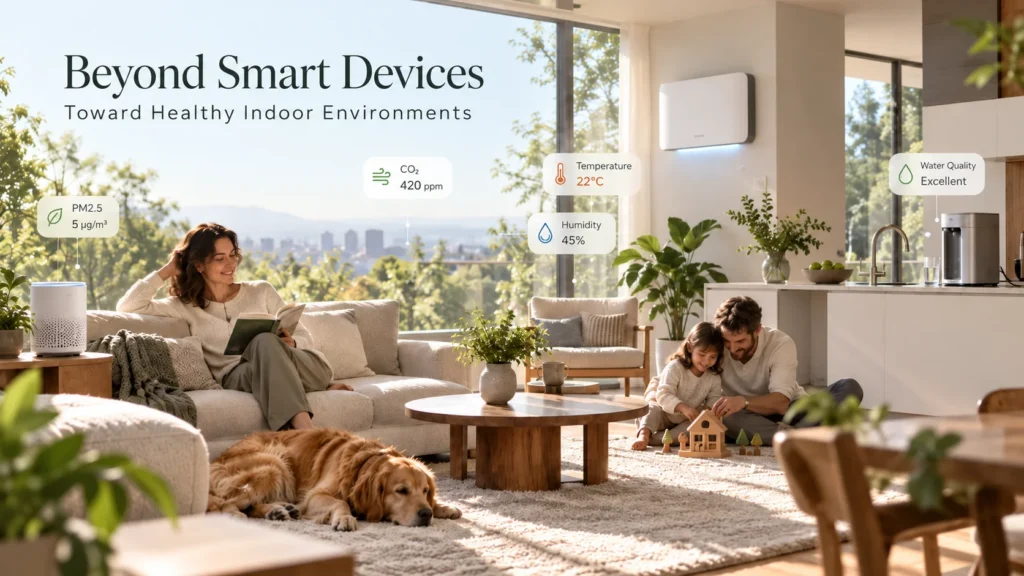
Modern living room with a family enjoying a healthy indoor environment monitored by smart devices, natural lighting, and greenery.

After IFA 2026: The Healthy Home Is Moving Beyond Smart Devices

In our previous IFA 2026 column, Air Purification Is Becoming Part of the Healthy-Home Platform, we argued that the next generation of indoor-health products would ...
Noticias
Modern living room and kitchen with smart home air quality devices including an air purifier, humidifier, and water filtration system, connected with visualized blue connectivity lines.

IFA 2026: Air Purification Is Becoming Part of the Healthy-Home Platform

Pre-IFA Industry Perspective | September 4, 2026 This article is based on official announcements and regulatory information available ahead of IFA 2026, which takes place ...
Noticias
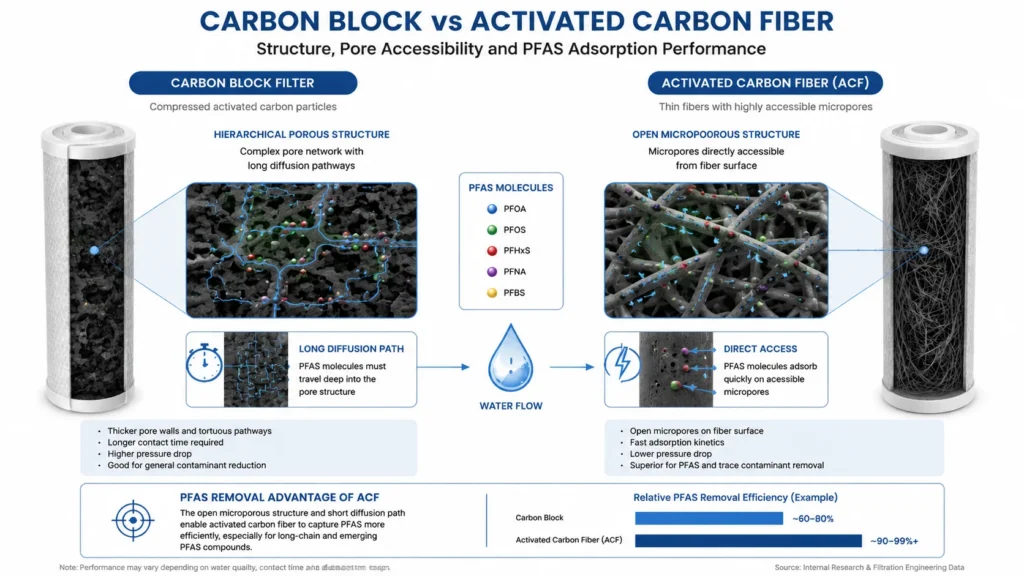
Comparison infographic showcasing the differences between carbon block filter and activated carbon fiber. Detailed diagrams illustrate the hierarchical porous structure of the carbon block with long diffusion paths and the open microporous structure of the activated carbon fiber with direct access for PFAS adsorption.

Carbon Block vs. Activated Carbon Fiber (ACF): Matching Media to Target Contaminants

Two carbon media. Same adsorption chemistry. Very different behaviour in a point-of-use cartridge. If you are specifying a water purifier platform for a PFAS-aware market, ...
Noticias
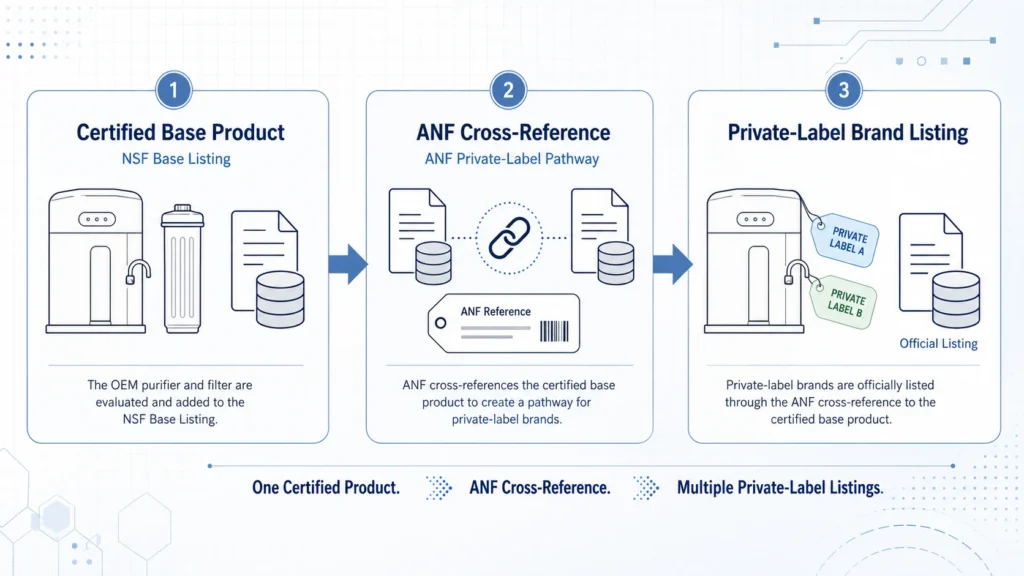
NSF base listing and ANF private-label certification pathway for OEM water filters

What Is an NSF Master Listing? A Guide to Base Listings, ANF Certification and OEM Water Filters

For a brand preparing to launch an OEM water purifier, one of the most common supplier claims is: “We already have an NSF master listing, ...
News, Water Purifiers
Healthy-home brand team reviewing PFAS water filter certification, test data and product engineering

Entering the Water Category Is Easy. Building a Credible PFAS Claim Is Much Harder

For air purification, appliance and healthy-home brands, entering the water category can look surprisingly easy. A company can select an existing undersink system, customize its ...
Noticias
Team in a business meeting discussing a water filtration system with product components and a comparison table displayed on a screen.

5 Leading OEM Water Purifier Manufacturers in China for Private Label Brands

China has thousands of companies selling water filters, reverse osmosis systems and drinking-water appliances. However, only a portion of them are suitable for private-label, OEM ...
Noticias
Contaminant Engineering•3 min read

PFAS Water Filtration Technologies Explained: Carbon, Resin & RO

Key Takeaway:

PFAS reduction depends on the specific compounds present, treatment media, contact time, water chemistry, and system design. Activated carbon, ion exchange, and Reverse Osmosis address PFAS through different mechanisms.

PFAS are a large family of persistent fluorinated compounds that can occur in drinking-water supplies. Their treatment behavior varies significantly by molecular structure, chain length, functional group, concentration, and the chemistry of the source water.

Granular Activated Carbon (GAC) removes PFAS primarily through adsorption. It is generally more effective for many longer-chain PFAS, while shorter-chain compounds tend to break through more quickly. Carbon performance depends on media properties, Empty Bed Contact Time (EBCT), competing organic matter, loading, and replacement frequency.

Ion-exchange resins use charged functional sites to capture many PFAS compounds. Properly selected anion-exchange media can provide high capacity and may perform better than conventional activated carbon for some shorter-chain PFAS, although performance still depends on water chemistry and competing ions.

Reverse Osmosis (RO) uses membrane separation rather than adsorption. Properly designed RO systems can provide broad reduction across many PFAS compounds as well as dissolved salts and other contaminants. Unlike carbon or resin, however, RO also produces a concentrate stream that must be managed.

No single technology should be selected from a PFAS label alone. System design should consider which PFAS compounds are present, their concentrations, required reduction targets, flow rate, media life, and the applicable third-party certification or validation requirements.

HisoAir Water Technical Series
Product Discovery•3 min read

How to Choose an Under-Sink Water Purifier for Modern Kitchens

Key Takeaway:

Match the treatment technology to your water quality first, then evaluate cabinet space, faucet configuration, flow rate, drain and power requirements, and filter replacement needs.

Choosing an under-sink water purifier starts with water chemistry. Carbon filtration is well suited to chlorine, taste, odor, and many organic contaminants, while Reverse Osmosis is more appropriate when dissolved salts, fluoride, nitrates, or broader dissolved contaminants need to be reduced.

For compact kitchens, tankless RO systems eliminate the conventional storage tank and can significantly reduce the space required under the sink. However, membrane capacity stated in GPD does not directly equal faucet flow. When comparing systems, check the actual dispensing flow rate, inlet-pressure requirement, recovery ratio, and whether a booster pump is required.

Installation architecture also matters. Many RO systems require a drain connection, electrical power, and either a dedicated drinking-water faucet or a compatible multi-function faucet. High-flow carbon systems can often connect directly to the existing cold-water line with a simpler installation, but pressure drop and available faucet flow should still be verified.

RO also removes much of the naturally occurring dissolved mineral content. Where taste or mineral balance is a priority, a post-RO remineralization stage can be added. Filter life should be evaluated by both rated capacity and local water quality rather than replacement time alone.

The right system is therefore not simply the smallest or highest-GPD model. It is the configuration that matches the target contaminants, available cabinet space, desired faucet setup, peak dispensing demand, and maintenance expectations.

HisoAir Water Technical Series
Water Quality•2 min read

What Does TDS Mean in Drinking Water? Measurement vs Contaminant Reality

Key Takeaway:

A TDS meter estimates the overall concentration of dissolved ionic substances from electrical conductivity. It cannot identify specific contaminants or determine whether water is chemically safe.

Total Dissolved Solids (TDS) refers to the combined concentration of dissolved substances in water. Most handheld TDS meters do not measure TDS directly. Instead, they measure electrical conductivity (EC) and convert that reading into an estimated parts-per-million (ppm) value.

This means a TDS reading can indicate how much dissolved ionic material is present, but not what that material actually is. Calcium, magnesium, sodium, nitrates, and other dissolved ions can all contribute to conductivity, yet a simple TDS meter cannot distinguish between them.

TDS meters are also not suitable for detecting trace contaminants such as PFAS, many VOCs, pesticides, pharmaceuticals, or disinfection byproducts. These substances may be present at concentrations far below the level needed to noticeably change electrical conductivity.

A low TDS reading therefore does not guarantee safe drinking water, and a higher TDS reading does not automatically indicate contamination. Water-treatment decisions should be based on laboratory testing for specific contaminants of concern rather than TDS alone.

HisoAir Water Technical Series
Technology Selection•2 min read

RO vs UF Water Filtration: Understanding Pore Sizes & Dissolved Minerals

Key Takeaway:

Ultrafiltration can reduce bacteria, turbidity, and suspended particles while retaining most naturally occurring dissolved minerals. Reverse Osmosis provides much broader reduction of dissolved salts and smaller contaminants.

Ultrafiltration (UF) typically uses hollow-fiber membranes with pore sizes in the approximate 0.01–0.1 micron range. These membranes physically retain turbidity, suspended solids, colloids, and many microorganisms while allowing dissolved minerals and salts to remain in the water.

Reverse Osmosis (RO) operates at a much finer separation level. Unlike UF, RO can substantially reduce dissolved ions such as sodium, calcium, fluoride, nitrates, and other contributors to total dissolved solids (TDS). This makes RO more suitable when dissolved-salt reduction is a primary treatment objective.

UF generally requires less system pressure and produces little or no continuous concentrate stream in many point-of-use configurations. RO typically requires greater pressure and produces a reject-water stream, but delivers broader contaminant reduction.

For water with acceptable TDS and mineral content, UF can be a simpler mineral-retaining treatment option. Where dissolved salts, fluoride, nitrates, or broader dissolved contaminants are a concern, RO is generally the more appropriate technology.

HisoAir Water Technical Series
Technology Selection•4 min read

Carbon Block vs Reverse Osmosis: Which Fits Your Need?

Key Takeaway:

Choose RO for dissolved inorganic salts and heavy metals; choose Carbon Block for chemical taste/odor, no wastewater, and high line-pressure flow.

Reverse Osmosis (RO) and Carbon Block filtration represent two fundamentally different treatment methods: membrane separation and adsorption. Understanding these differences helps determine which technology is better suited to a specific water-quality requirement.

Reverse Osmosis uses a semi-permeable membrane with pore sizes of approximately 0.0001 microns. It can significantly reduce dissolved inorganic contaminants such as TDS, fluoride, nitrates, and certain heavy metals. Because water must be forced through the membrane, RO systems require sufficient pressure or a booster pump and generate a concentrated wastewater stream.

Carbon Block filtration relies primarily on adsorption through compressed activated carbon, commonly with nominal pore sizes around 0.5–5 microns. It is highly effective for chlorine, chloramines, VOCs, taste, and odor, while allowing substantially higher direct-flow rates without producing wastewater.

From an operating perspective, Carbon Block systems are generally simpler, require less energy, and avoid the water loss associated with RO. RO involves higher system complexity and operating cost, but provides substantially broader reduction of dissolved contaminants that Carbon Block alone cannot address.

HisoAir Water Technical Series

SOLICITAR PRESUPUESTO