新しいタブで開きます
革新的な空気品質ソリューション

5 Best Air Purifier Manufacturers in India (2026) – HisoAir

Related Products

をお探しなら インドの空気清浄機メーカー あなたは正しいページに到着しました!この記事では、インドのトップ空気清浄機工場と企業の5つを集めました。
を持つことだ。 家庭用空気清浄機 または公共の待合室で、細菌を室内に滞留させる可能性を大幅に下げることができる。COVID-19患者の増加に伴い、手指衛生や換気に対する意識が高まっている。したがって、空気清浄機市場は2020年に大幅に増加し、2023年には$39百万に達すると予想されている。

もしあなたがこの需要な機会を利用し、空気清浄機の販売を検討しているのであれば、最適な選択肢は適格なメーカーを探すことです。この記事では、インドのトップ空気清浄機輸出業者、サプライヤー、工場について説明します。

注: このインドのトップ空気清浄機メーカーのリストは、以下の基準に基づいて抽出されている:

  • 月産数百万個の在庫を生産する大規模な製造工程を持つサプライヤーおよび輸出業者
  • 研究開発能力
  • ISO、GMPなどの工場認証を取得
  • 加湿器と HEPA空気清浄機
  • 手頃な価格の卸売りオプションを提供

インドの空気清浄機メーカー トップ5

お急ぎですか?インド製のHEPA空気清浄機の中で、適格なメーカーによる最高の製品をご紹介します:

  1. エロフィック - インド、ハリヤナ州
  2. エアコンセプト - グジャラート州アーメダバード
  3. STULZCHSPL インド - ムンバイ
  4. Wardwizard Solutions India - バドダラ、グジャラート州
  5. ハイテク・スウィート・ウォーター・テクノロジーズ - セクンダラバード、テランガーナ州

空気清浄機と空気清浄機のインドのベストメーカー5社

では、インドの空気清浄機メーカーの詳細を紹介しよう。

1. エロフィック

本社インド、ハリヤナ州
経験年数67年
証明書ISO: 9001

エロフィック・ロゴ

Elofic Industries社は、インドで空気清浄機を製造する著名な企業の一つである。同社は、燃料、空気、油のためのフィルターシステムとろ過装置のフルレンジを持っています。これらの機器や濾過装置は家庭で使用される、 自動車 とオフィスエリア。

エロフィックは年間8500万枚以上のフィルターを供給し、その製品の⅓を世界中に輸出している。空気清浄機と空気ろ過システムの製造・販売で67年以上の経験を持つ。ISO認証を取得した3つの工場とともに、ファリダバードに研究開発施設がある。Eloficは以下の製品も提供している。 OEMサービス。

2. エア・コンセプト

本社380014 インド・グジャラート州アーメダバード、アシュラムロード、アジャンタ・コマーシャル・コンプレックス・リバーフロント・メインゲート近く、グジャラート・ヴィディヤピス(Gujarat Vidhyapith)向かい、アーリン(Aalin)3階
経験年数:25年
証明書ISO: 9001
エア・コンセプト・ロゴ
エア・コンセプト・ロゴ

エアコンセプトは、インドの信頼できるハイエンド空気清浄機メーカーである。同社は革新的な室内空気清浄機製品を製造しており、インドのみならず世界中で人気を博している。同社の最大の特長のひとつは、品質を保ちながらコストパフォーマンスの高い製品である。

エアコンセプトの清浄機は、空気汚染物質を識別し、空気の質指標をリアルタイムでスマートにモニターすることができます。これにより、顧客は直感的な方法で実際の空気の質をモニターしやすくなる。同社はまた、携帯電話でモニターできるWIFI空気清浄機も発表している。

これ以外にも、エアコンセプトは道路や街路の清掃用のポールキオスクを備えた清浄機もいくつか開発している。

3. STULZCHSPL インド

本社A-173 & 173-1, TTC Industrial Area, Kopar Khairane, MIDC, Navi Mumbai-400 710
経験年数:21年
証明書ISO 9001:2015

STULZCHSPLロゴ
STULZCHSPLロゴ

Stulzchspl社は、20万平方フィートの敷地を持つインド最大級の空気清浄機工場を持っている。全国に14以上の支店があり、世界中に大規模な販売網を持っている。
同社は、家庭用および産業用の空調機器やアクセサリーを製造している。人気の高い空気清浄機ラインのほか、同社は精密冷却ユニット、エアハンドリングユニット、空気分配ターミナル、加湿器も提供している。

4. ワードウィザード・ソリューションズ・インディア

本社390010 グジャラート州ヴァドダラ市マカルプラGIDC222区画
経験年数4年
証明書ISO 9001: 2015
ワードウィザードのロゴ
ワードウィザードのロゴ

ワードウィザード・ソリューションズは、ボンベイ証券取引所(BSE)とカルカッタ証券取引所(CSE)の上場企業である。同社は空気清浄機だけでなく、電気自動車、LEDテレビ、エアコン、アルカリ水メーカー、水素水コップなど、エネルギー効率の高い機器を数多く供給している。同社が提供する最高級の空気清浄機は世界中に輸出されている。

5. ハイテク・スウィート・ウォーター・テクノロジーズ

本社EC Nagar Colony, Cherlapalli, Secunderabad, Telangana, 500051, India
経験年数:25年
証明書ISO : 9001:2008、14001:2004、18001:2007

ハイテク・ロゴ
ハイテク・ロゴ

ハイテックは、インドで信頼されている空気清浄機プロバイダーのひとつである。同社は浄水器と浄化システムの製造を専門としている。浄水器、逆浸透システム、空気清浄機、アルカリ水システムなどを開発。また、ポンプ、QC継手、RO膜、浄水器カートリッジなども提供している。

同社のベストセラー製品のひとつが、信頼できるサプライヤーから調達した高品質の原材料を使用して設計・製造された空気清浄機だ。同社はまた、最新の技術を使用していると主張している。 米国から調達 浄水器と空気清浄機の製造に使用される。

中国のトップ空気清浄機メーカー

中国は世界の製造大国であり、世界中の製品のほぼ3分の1を供給しています。この国のトップ空気清浄機メーカーとお知り合いになりたいとお考えなら、今すぐヒソエアにご相談ください!

ヒソエア

ヒソエアのロゴ
ヒソエアのロゴ

画像ソース ヒソエア

ビジネスタイプ OE/OD/JDメーカー、サプライヤー
本社 Room 712, Building 1, No. 4, Second Road, Songshan Lake Park, Dongguan City, Guangdong Province, China
主な市場 グローバル
経験年数: 18 years
証明書:CE, ROHS, EN1822

HisoAir specializes in manufacturing air purifiers that can be used in a medical setting. It is formally recognized as Shenzhen HisoAir Co., Ltd., and it was founded in 2003. It had achieved phenomenal success over its short eleven years in the industry with its more than a hundred accomplished projects all over the globe.

同社は50以上の設計特許を取得し、空気中に存在する粒子の99.99%を除去できる空気浄化システムを開発した。SGSはまた、同社の製品がコロナウイルス・ファミリーの99.8%を除去できることを検証しており、これはCOVID-19パンデミックが猛威を振るっている現在の社会では有益であろう。

主要製品

  • 医療用空気清浄機

まとめ

より健康的で新鮮な環境で成長するために、空気清浄機はホコリや汚れ、ウイルスから空気をろ過するのに役立ちます。空気清浄機は2020年に需要が高まった主要製品の一つであり、2021年も間違いなく成長すると見られている。インドで空気清浄機を再販、ドロップシッピング、大量購入するために信頼できるメーカーやサプライヤーをお探しの場合、インドでコンタクト可能な最高のメーカーをリストアップしました。

もっと選択肢が欲しい?空気清浄機を中国から調達するのはどうでしょう?私たちのブログをお読みください。 5 中国のベスト空気清浄機 ".

シェアする
ヒソエア創設者のリー氏
Alwen Lee, an air purification expert with over 10 years of experience, is a devoted father of two and a passionate traveler, having explored more than 30 countries. With a love for public speaking and swimming, he has dedicated his life to the indoor air quality industry. His mission is to ensure that people around the world enjoy the freedom to breathe clean air and lead happy, healthy lives.

メッセージを送る

Related Products

もっと読む

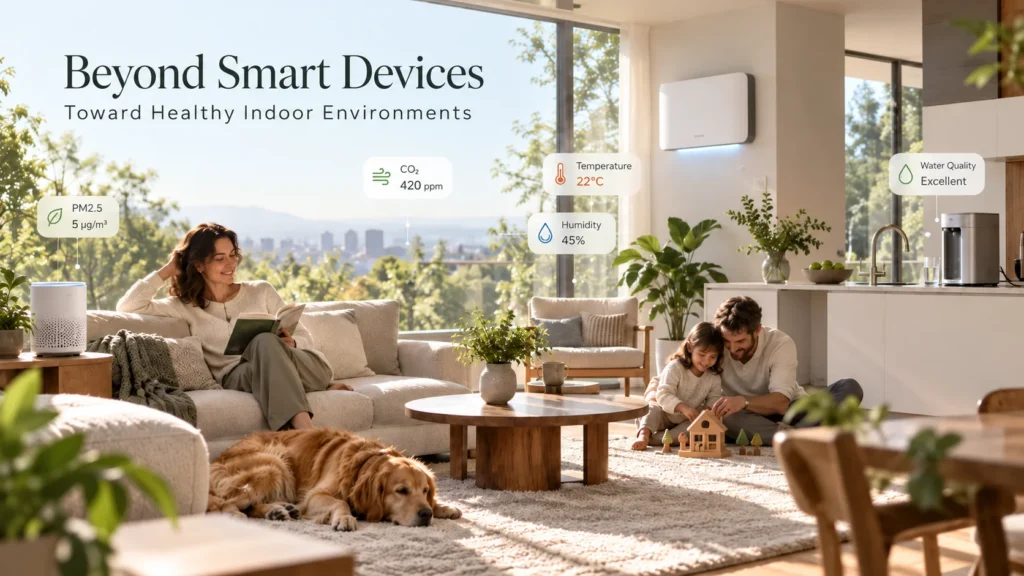
Modern living room with a family enjoying a healthy indoor environment monitored by smart devices, natural lighting, and greenery.

After IFA 2026: The Healthy Home Is Moving Beyond Smart Devices

In our previous IFA 2026 column, Air Purification Is Becoming Part of the Healthy-Home Platform, we argued that the next generation of indoor-health products would ...
ニュース
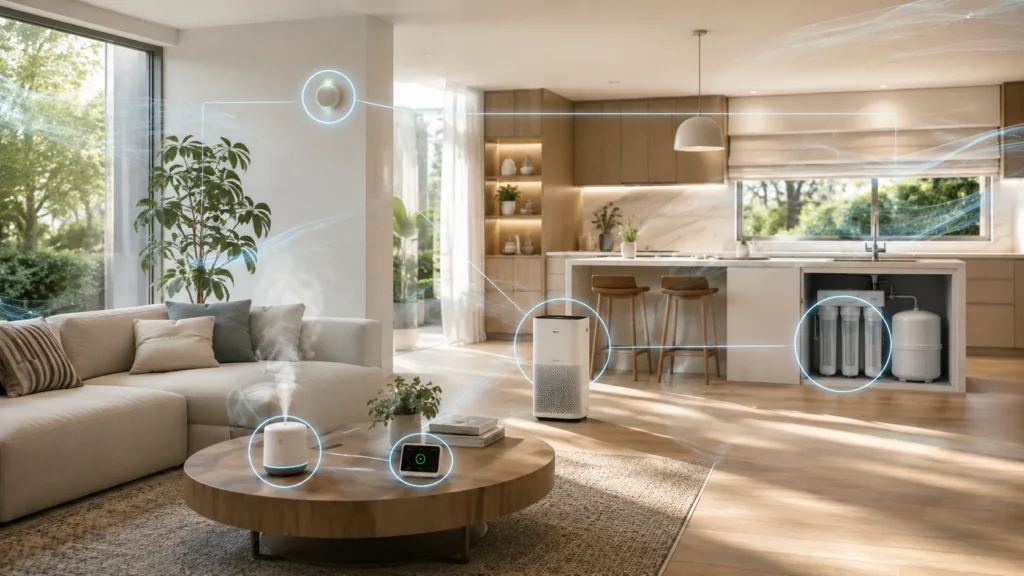
Modern living room and kitchen with smart home air quality devices including an air purifier, humidifier, and water filtration system, connected with visualized blue connectivity lines.

IFA 2026: Air Purification Is Becoming Part of the Healthy-Home Platform

Pre-IFA Industry Perspective | September 4, 2026 This article is based on official announcements and regulatory information available ahead of IFA 2026, which takes place ...
ニュース
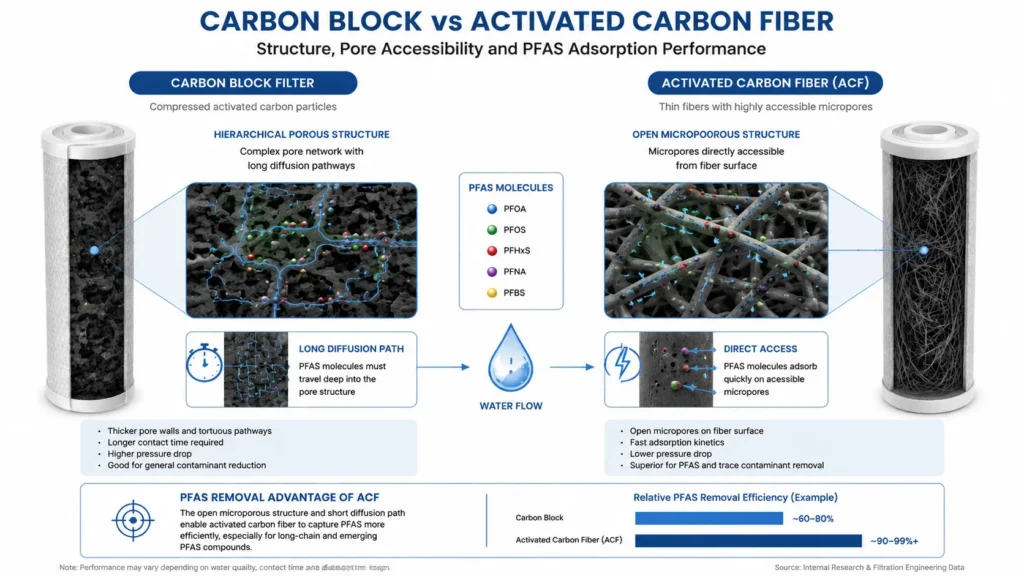
Comparison infographic showcasing the differences between carbon block filter and activated carbon fiber. Detailed diagrams illustrate the hierarchical porous structure of the carbon block with long diffusion paths and the open microporous structure of the activated carbon fiber with direct access for PFAS adsorption.

Carbon Block vs. Activated Carbon Fiber (ACF): Matching Media to Target Contaminants

Two carbon media. Same adsorption chemistry. Very different behaviour in a point-of-use cartridge. If you are specifying a water purifier platform for a PFAS-aware market, ...
ニュース
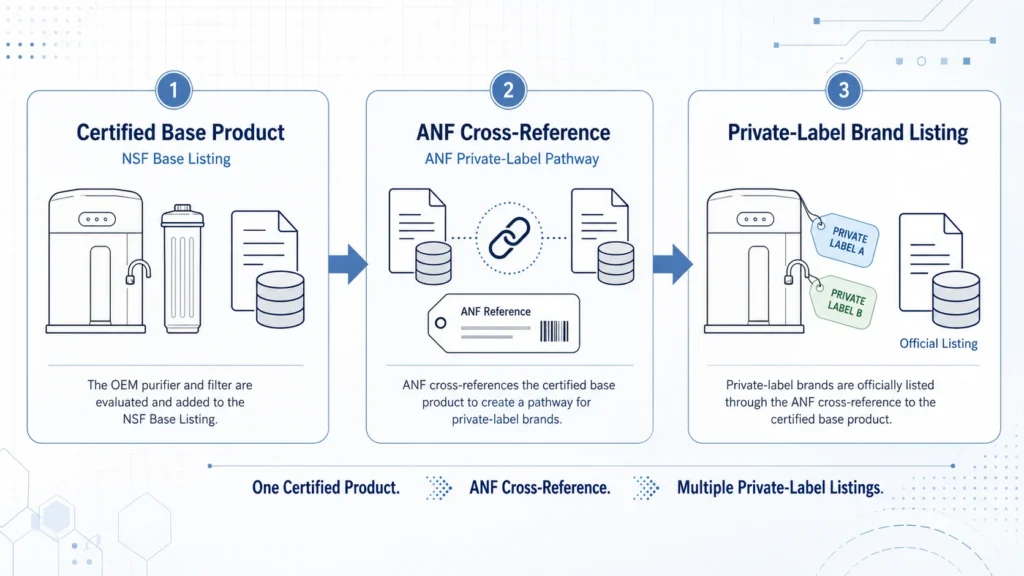
NSF base listing and ANF private-label certification pathway for OEM water filters

What Is an NSF Master Listing? A Guide to Base Listings, ANF Certification and OEM Water Filters

For a brand preparing to launch an OEM water purifier, one of the most common supplier claims is: “We already have an NSF master listing, ...
News, Water Purifiers
Healthy-home brand team reviewing PFAS water filter certification, test data and product engineering

Entering the Water Category Is Easy. Building a Credible PFAS Claim Is Much Harder

For air purification, appliance and healthy-home brands, entering the water category can look surprisingly easy. A company can select an existing undersink system, customize its ...
ニュース
Team in a business meeting discussing a water filtration system with product components and a comparison table displayed on a screen.

5 Leading OEM Water Purifier Manufacturers in China for Private Label Brands

China has thousands of companies selling water filters, reverse osmosis systems and drinking-water appliances. However, only a portion of them are suitable for private-label, OEM ...
ニュース
Contaminant Engineering•3 min read

PFAS Water Filtration Technologies Explained: Carbon, Resin & RO

Key Takeaway:

PFAS reduction depends on the specific compounds present, treatment media, contact time, water chemistry, and system design. Activated carbon, ion exchange, and Reverse Osmosis address PFAS through different mechanisms.

PFAS are a large family of persistent fluorinated compounds that can occur in drinking-water supplies. Their treatment behavior varies significantly by molecular structure, chain length, functional group, concentration, and the chemistry of the source water.

Granular Activated Carbon (GAC) removes PFAS primarily through adsorption. It is generally more effective for many longer-chain PFAS, while shorter-chain compounds tend to break through more quickly. Carbon performance depends on media properties, Empty Bed Contact Time (EBCT), competing organic matter, loading, and replacement frequency.

Ion-exchange resins use charged functional sites to capture many PFAS compounds. Properly selected anion-exchange media can provide high capacity and may perform better than conventional activated carbon for some shorter-chain PFAS, although performance still depends on water chemistry and competing ions.

Reverse Osmosis (RO) uses membrane separation rather than adsorption. Properly designed RO systems can provide broad reduction across many PFAS compounds as well as dissolved salts and other contaminants. Unlike carbon or resin, however, RO also produces a concentrate stream that must be managed.

No single technology should be selected from a PFAS label alone. System design should consider which PFAS compounds are present, their concentrations, required reduction targets, flow rate, media life, and the applicable third-party certification or validation requirements.

HisoAir Water Technical Series
Product Discovery•3 min read

How to Choose an Under-Sink Water Purifier for Modern Kitchens

Key Takeaway:

Match the treatment technology to your water quality first, then evaluate cabinet space, faucet configuration, flow rate, drain and power requirements, and filter replacement needs.

Choosing an under-sink water purifier starts with water chemistry. Carbon filtration is well suited to chlorine, taste, odor, and many organic contaminants, while Reverse Osmosis is more appropriate when dissolved salts, fluoride, nitrates, or broader dissolved contaminants need to be reduced.

For compact kitchens, tankless RO systems eliminate the conventional storage tank and can significantly reduce the space required under the sink. However, membrane capacity stated in GPD does not directly equal faucet flow. When comparing systems, check the actual dispensing flow rate, inlet-pressure requirement, recovery ratio, and whether a booster pump is required.

Installation architecture also matters. Many RO systems require a drain connection, electrical power, and either a dedicated drinking-water faucet or a compatible multi-function faucet. High-flow carbon systems can often connect directly to the existing cold-water line with a simpler installation, but pressure drop and available faucet flow should still be verified.

RO also removes much of the naturally occurring dissolved mineral content. Where taste or mineral balance is a priority, a post-RO remineralization stage can be added. Filter life should be evaluated by both rated capacity and local water quality rather than replacement time alone.

The right system is therefore not simply the smallest or highest-GPD model. It is the configuration that matches the target contaminants, available cabinet space, desired faucet setup, peak dispensing demand, and maintenance expectations.

HisoAir Water Technical Series
Water Quality•2 min read

What Does TDS Mean in Drinking Water? Measurement vs Contaminant Reality

Key Takeaway:

A TDS meter estimates the overall concentration of dissolved ionic substances from electrical conductivity. It cannot identify specific contaminants or determine whether water is chemically safe.

Total Dissolved Solids (TDS) refers to the combined concentration of dissolved substances in water. Most handheld TDS meters do not measure TDS directly. Instead, they measure electrical conductivity (EC) and convert that reading into an estimated parts-per-million (ppm) value.

This means a TDS reading can indicate how much dissolved ionic material is present, but not what that material actually is. Calcium, magnesium, sodium, nitrates, and other dissolved ions can all contribute to conductivity, yet a simple TDS meter cannot distinguish between them.

TDS meters are also not suitable for detecting trace contaminants such as PFAS, many VOCs, pesticides, pharmaceuticals, or disinfection byproducts. These substances may be present at concentrations far below the level needed to noticeably change electrical conductivity.

A low TDS reading therefore does not guarantee safe drinking water, and a higher TDS reading does not automatically indicate contamination. Water-treatment decisions should be based on laboratory testing for specific contaminants of concern rather than TDS alone.

HisoAir Water Technical Series
Technology Selection•2 min read

RO vs UF Water Filtration: Understanding Pore Sizes & Dissolved Minerals

Key Takeaway:

Ultrafiltration can reduce bacteria, turbidity, and suspended particles while retaining most naturally occurring dissolved minerals. Reverse Osmosis provides much broader reduction of dissolved salts and smaller contaminants.

Ultrafiltration (UF) typically uses hollow-fiber membranes with pore sizes in the approximate 0.01–0.1 micron range. These membranes physically retain turbidity, suspended solids, colloids, and many microorganisms while allowing dissolved minerals and salts to remain in the water.

Reverse Osmosis (RO) operates at a much finer separation level. Unlike UF, RO can substantially reduce dissolved ions such as sodium, calcium, fluoride, nitrates, and other contributors to total dissolved solids (TDS). This makes RO more suitable when dissolved-salt reduction is a primary treatment objective.

UF generally requires less system pressure and produces little or no continuous concentrate stream in many point-of-use configurations. RO typically requires greater pressure and produces a reject-water stream, but delivers broader contaminant reduction.

For water with acceptable TDS and mineral content, UF can be a simpler mineral-retaining treatment option. Where dissolved salts, fluoride, nitrates, or broader dissolved contaminants are a concern, RO is generally the more appropriate technology.

HisoAir Water Technical Series
Technology Selection•4 min read

Carbon Block vs Reverse Osmosis: Which Fits Your Need?

Key Takeaway:

Choose RO for dissolved inorganic salts and heavy metals; choose Carbon Block for chemical taste/odor, no wastewater, and high line-pressure flow.

Reverse Osmosis (RO) and Carbon Block filtration represent two fundamentally different treatment methods: membrane separation and adsorption. Understanding these differences helps determine which technology is better suited to a specific water-quality requirement.

Reverse Osmosis uses a semi-permeable membrane with pore sizes of approximately 0.0001 microns. It can significantly reduce dissolved inorganic contaminants such as TDS, fluoride, nitrates, and certain heavy metals. Because water must be forced through the membrane, RO systems require sufficient pressure or a booster pump and generate a concentrated wastewater stream.

Carbon Block filtration relies primarily on adsorption through compressed activated carbon, commonly with nominal pore sizes around 0.5–5 microns. It is highly effective for chlorine, chloramines, VOCs, taste, and odor, while allowing substantially higher direct-flow rates without producing wastewater.

From an operating perspective, Carbon Block systems are generally simpler, require less energy, and avoid the water loss associated with RO. RO involves higher system complexity and operating cost, but provides substantially broader reduction of dissolved contaminants that Carbon Block alone cannot address.

HisoAir Water Technical Series

見積依頼