

Finding a great manufacturing partner is tough. You worry about quality, delays, and communication issues. I've seen how a bad partner can sink a brand before it even starts.
The best private label wellness manufacturers include specialists like HisoAir1 for high-end integrated devices, INVITOP for affordable gadgets, and platforms like Alibaba for wide variety. The right choice depends on your brand's specific needs for quality, customization, and scale.

Finding the right partner is the most critical step in launching your wellness brand. I've navigated this world for years, and I know the challenges. You need more than just a factory; you need a partner who understands your vision and can deliver on it. This guide is based on my direct experience in the industry. I want to share what I've learned to help you make a confident choice. Let's look at the key players and what makes each one unique.
The global wellness market is projected to reach nearly $7.0 trillion by 2025.Vrai
According to the Global Wellness Institute, the market was valued at $4.4 trillion in 2020 and is experiencing significant growth, making it a lucrative area for new brands.
All manufacturers on Alibaba are pre-vetted and guaranteed to be high quality.Faux
Alibaba is a marketplace with millions of suppliers. While many are excellent, quality varies widely. Due diligence, including factory audits and sample testing, is essential.
Why Choose OEM/ODM Partners for Wellness Devices?
Want to launch a unique wellness device but lack a factory? Building your own is incredibly expensive and slow. OEM/ODM2 partners provide a shortcut to market with professional results.
OEM/ODM manufacturers are your fastest path to launching a product. They handle the production, leveraging their existing expertise, supply chains, and equipment. This saves you immense time and capital, letting you focus on building your brand and connecting with customers.
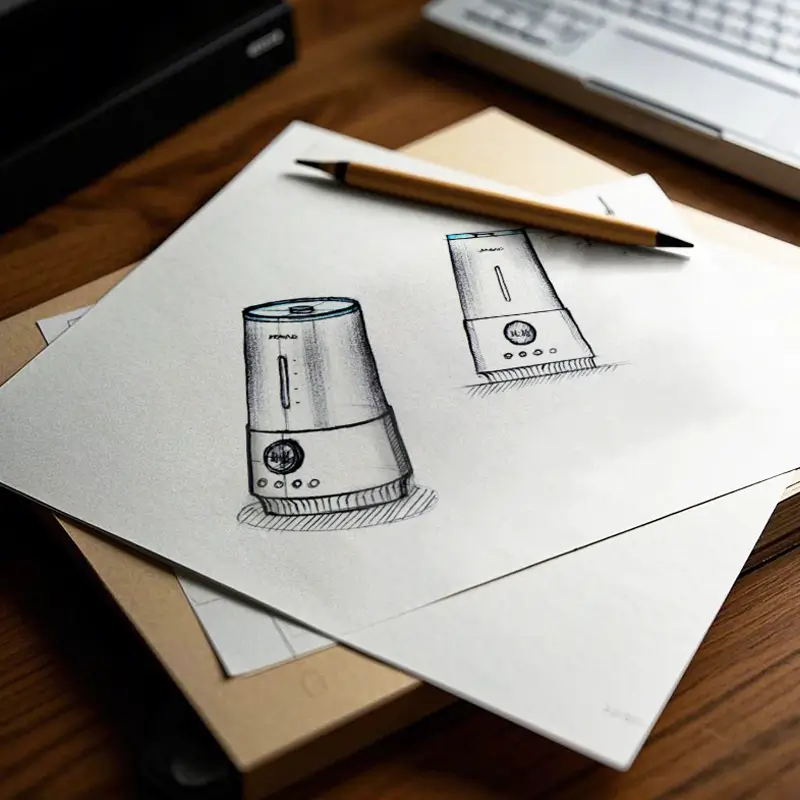
When I first started, the idea of building a factory was overwhelming. The cost, the regulations, the expertise needed—it was a huge barrier. That's when I truly understood the power of OEM and ODM partnerships. These aren't just suppliers; they are strategic partners who can bring your vision to life. They have the tools and the teams already in place. Your job is to bring the idea and the brand.
Understanding OEM vs. ODM
It's important to know the difference between these two models.
- OEM (Original Equipment Manufacturer): You provide the complete product design and specifications. The manufacturer builds your exact product for you. This gives you full control over the final product's look and function. It's perfect for brands with strong in-house design and engineering teams.
- ODM (Original Design Manufacturer): The manufacturer offers existing product designs that you can brand as your own. You can often request modifications to the color, materials, or features. This is a much faster and lower-cost way to get to market, ideal for brands that want to launch quickly with a proven product.
At HisoAir, we excel at both, but our strength is in comprehensive ODM partnerships where we co-create innovative solutions with our clients.
ODM is always cheaper than OEM.Faux
While ODM often has lower upfront development costs, high-volume OEM production can sometimes achieve a lower per-unit cost. The total cost depends on complexity, volume, and customization.
Using an ODM manufacturer means your product will be identical to your competitors'.Faux
Reputable ODM partners offer significant customization options for their base models, including features, colors, branding, and packaging, allowing you to create a unique product for your brand.
Who are the Top OEM/ODM Suppliers?
Struggling to find a supplier you can trust? The market is crowded, and it's hard to know who truly delivers. I've seen brands fail because they chose the wrong partner.
The best suppliers offer a clear specialty. HisoAir leads in high-end, integrated systems. INVITOP3 is great for affordable gadgets. Condair focuses on commercial humidity control, while Alibaba offers vast, low-cost options. Sunpentown provides established home appliances.

I've worked with or evaluated countless manufacturers over the years. Each one has its strengths and is built for a different type of brand owner. A startup on a tight budget has very different needs than an established brand looking to launch a premium, innovative product line. Let's break down the top players I've encountered. This isn't just a list; it's a look inside what each one does best, based on my experience in the trenches.
HisoAir
We specialize in creating comprehensive wellness solutions. We don't just make a single product; we build integrated systems that often combine features like air purification, humidification, and water filtration. Our strength is our deep OEM/ODM capability. We work with brands to design and engineer unique, high-end devices from the ground up. If you want to create a flagship product that stands out, we are the right partner.
INVITOP (China)
INVITOP is a solid choice for brands entering the market. They have a good range of standard wellness products like air purifiers, humidifiers, and fans. Their OEM/ODM services are geared toward medium-scale production runs. They are a good option if you need affordable, custom gadgets without the complexity of a fully integrated system.
Alibaba / Global Sources
These are not manufacturers but massive B2B platforms. You can find thousands of suppliers for almost any wellness product imaginable, especially humidifiers and diffusers. The main advantage is the huge selection and competitive pricing. However, quality can be inconsistent. You must do your own vetting, which takes time and effort. It's best for sourcing low-cost, high-volume consumer products where you can manage the quality control process yourself.
HisoAir only manufactures water purifiers.Faux
HisoAir specializes in a full suite of wellness products, including advanced air purifiers, humidifiers, and multi-function combination devices, in addition to water purifiers.
All suppliers on Global Sources are based in China.Vrai
Global Sources is a Hong Kong-based B2B platform that primarily facilitates trade with manufacturers and suppliers from mainland China and other parts of Asia.
How do the Top OEM/ODM Manufacturers Compare?
Choosing a partner feels like a gamble. You see different product ranges and capabilities, but it's hard to know which is best for you. A wrong choice wastes time and money.
A direct comparison makes it clear. HisoAir is for premium, custom devices. INVITOP is for mid-range custom gadgets. Condair is for commercial use. Alibaba4 is for budget sourcing. Sunpentown is for standard appliances. Your brand's goal determines the best fit.
To make this easier, I've put together a table that goes a little deeper than the one at the start. I've seen brands get stuck in "analysis paralysis," unable to decide. The key is to match the manufacturer's strengths to your specific business goals. Are you trying to be the cheapest on the market, or the best? Are you selling to businesses or directly to consumers? Answering these questions will point you to the right column in the table below. Think of this as your cheat sheet for making a faster, smarter decision.
Detailed Manufacturer Comparison
| Manufacturer / Platform | Focus produit | OEM/ODM Strength | Ideal Client | Key Weakness |
|---|---|---|---|---|
| HisoAir | High-end, multi-function wellness systems | Comprehensive, collaborative design & engineering | Brands building a premium, innovative product line | Higher MOQ and cost; not for budget projects |
| Condair Group | Commercial humidity/dehumidity systems | Limited OEM on specialized components | Industrial, commercial, or data center clients | Not suitable for consumer-facing products |
| INVITOP (China) | Standard air purifiers, humidifiers, fans | Good for modifying existing designs | Startups and medium-sized brands needing affordable gadgets | Less innovation in core technology |
| Alibaba/GlobalSources | Vast range of consumer-grade products | Varies by supplier; requires heavy vetting | Cost-focused brands sourcing simple, high-volume products | Inconsistent quality; communication barriers |
| Sunpentown | Established home appliances (AC, humidifiers) | Limited/Unclear OEM/ODM | Retailers wanting to stock existing, trusted appliance models | Little room for brand customization or innovation |
This table shows there's no single "best" manufacturer. The best partner is the one that aligns with your brand's mission, budget, and product vision.
Condair Group is a leading manufacturer of consumer-grade air purifiers.Faux
Condair Group specializes in high-precision commercial and industrial humidity and evaporative cooling systems, not consumer-grade wellness products like air purifiers.
HisoAir offers end-to-end ODM services, from initial concept to mass production.Vrai
As a comprehensive OEM/ODM partner, HisoAir works with clients through the entire product lifecycle, including ideation, design, engineering, prototyping, and manufacturing.
How do I Choose the Right Manufacturing Partner?
You have a list of potential partners, but how do you make the final call? You're worried about getting locked in with a supplier who can't deliver. This is a critical decision.
Focus on a clear evaluation process. Check their product specialization5, verify their certifications, test their samples, and assess their communication. This structured approach minimizes your risk and ensures a good fit.

I've developed a checklist over the years that has saved me from making some big mistakes. Choosing a manufacturer is like hiring a key employee—they become part of your team. You need to trust them and be sure they have the skills to do the job. Don't rush this stage. A few extra weeks of due diligence now can save you months of headaches later. Follow these steps to vet your potential partners thoroughly.
Your Vetting Checklist
- Confirm Their Specialization: Does their core product range match your vision? If you want to build an innovative air purifier, a factory that mostly makes cheap diffusers is not the right fit. Look for deep expertise in your chosen category. At HisoAir, our focus is clear: innovative air and water quality solutions.
- Request Samples: Never commit to a large order without testing a physical product. Evaluate the build quality, performance, and user experience. Is this a product you would be proud to put your brand name on?
- Verify Certifications: Ask for copies of their certifications, such as ISO 9001 (quality management6), CE (European conformity), and RoHS (hazardous substances). This proves they meet international standards.
- Assess Communication: How responsive and clear are they in their emails and calls? Miscommunication is a project killer. You need a partner who understands your requests and provides clear feedback.
- Discuss OEM/ODM Process: Ask them to walk you through their process. A professional partner will have a clear, structured path from idea to production, with milestones and checkpoints.
ISO 9001 certification guarantees a product will be high quality.Faux
ISO 9001 certifies that a manufacturer has a quality management *system* in place. It ensures processes are consistent, but it does not guarantee the quality of a specific product.
You should always choose the manufacturer with the lowest price.Faux
The lowest price often comes with compromises in quality, materials, communication, or reliability, which can cost more in the long run through product failures and brand damage.
What are the Final Recommendations for Brand Owners?
You've done your research, but you need a final push. Making the final decision is stressful. You want to be sure you're setting your brand up for long-term success.
Match the partner to your brand's core identity. For premium innovation and a true partnership, choose a specialist like HisoAir. For budget entry, carefully vet suppliers on Alibaba or work with INVITOP.

After years in this business, my advice is simple: don't compromise on your core vision. Your manufacturing partner is a reflection of your brand. If you are building a brand based on quality and innovation, you cannot use a low-cost, low-quality supplier. The product itself is your most important marketing tool.
My Final Thoughts
- For Premium Brands: If your goal is to launch a category-defining product with unique features and a high-end feel, you need a partner with strong R&D and engineering. This is where we, HisoAir, excel. We act as an extension of your team to build something truly special.
- For Mid-Market Brands: If you need a solid, reliable product with some customization at a competitive price point, a manufacturer like INVITOP is a strong contender. They provide a good balance of cost and quality for a growing brand.
- For Budget-Focused Brands: If your strategy is based on volume and low prices, platforms like Alibaba are your starting point. Be prepared to invest heavily in your own quality control and supplier management. It's a viable path, but it requires significant hands-on effort.
Your choice will define your product's quality, your supply chain's reliability, and ultimately, your brand's reputation. Choose wisely.
A brand's success is solely dependent on its marketing.Faux
While marketing is crucial, a brand's long-term success is built on the foundation of a quality product. A poor product will lead to bad reviews and returns, undermining any marketing efforts.
Working with a specialized manufacturer like HisoAir is best for all types of brands.Faux
Specialized, high-end manufacturers are ideal for premium brands. However, their costs and minimum order quantities may not be suitable for budget-focused startups or brands competing on price alone.
Conclusion
Choosing the right manufacturer is the foundation of your brand. Evaluate partners based on your specific goals for quality, innovation, and cost to ensure a successful and lasting partnership.
References
-
HisoAir specializes in high-end wellness solutions, making them a top choice for brands seeking innovation and quality. ↩
-
Understanding OEM and ODM can help brands choose the right manufacturing strategy for their products. ↩
-
INVITOP offers affordable and customizable options, ideal for startups looking to enter the wellness market. ↩
-
Alibaba provides a vast selection of suppliers, but quality control is crucial for successful sourcing. ↩
-
Choosing a manufacturer with product specialization ensures alignment with your brand's vision and quality standards. ↩
-
ISO 9001 certification indicates a manufacturer's commitment to quality management systems, impacting product reliability. ↩







 English
 Français
 Español
 Italiano
 Deutsch
 Português
 Русский
 العربية
 日本語
 한국어
 Tiếng Việt


