S’ouvre dans un nouvel onglet
Air & Water Purification OEM/ODM Manufacturer | HisoAir

Purificateur d'air pour animaux de compagnie (HA-360)

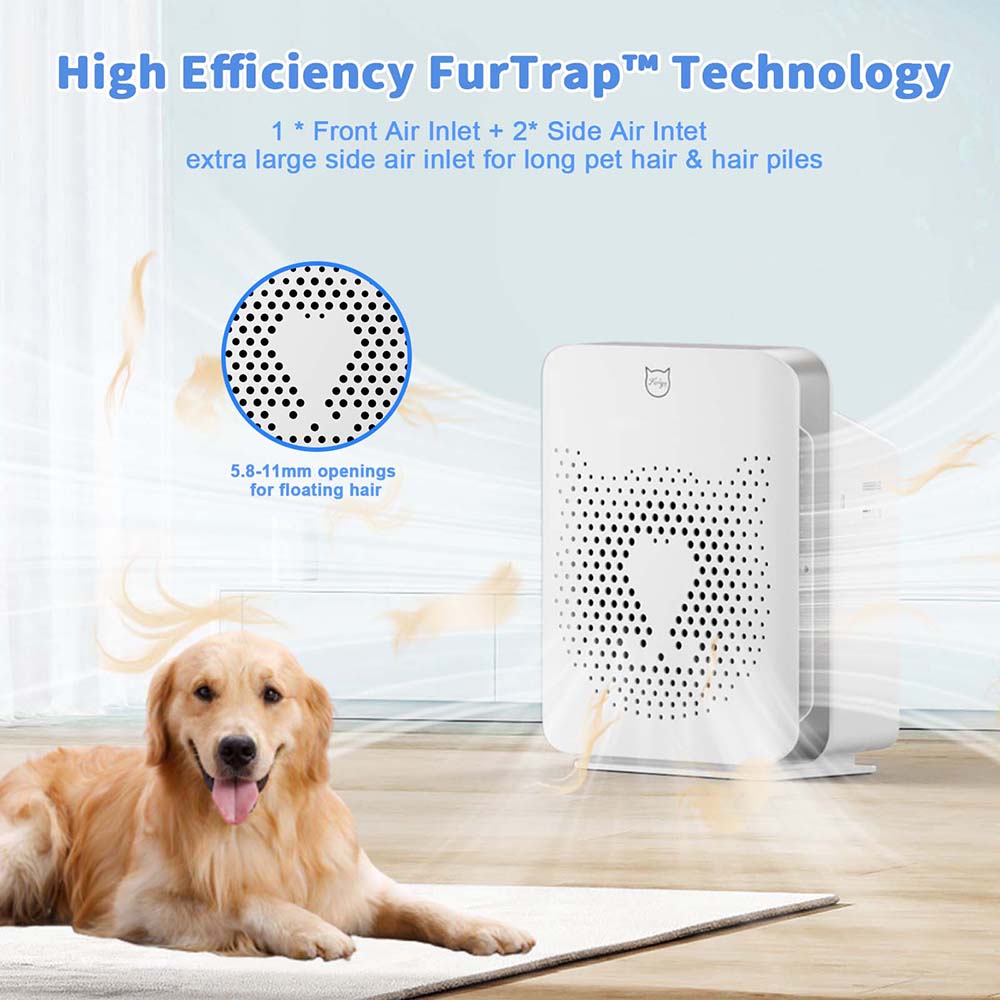
Purificateur d'air pour animaux de compagnie avec technologie FurTrap™ à haute efficacité

Découvrez la technologie FurTrap™, conçue pour les foyers accueillant des animaux de compagnie. Doté d'entrées d'air frontales et latérales, il capture sans effort les poils longs et courts des animaux de compagnie.

Les ouvertures de 5,8 mm à 11 mm garantissent un piégeage efficace sans obstruction, ce qui permet à votre maison de rester propre et fraîche. Profitez d'un environnement sans poils et d'une qualité d'air supérieure grâce à notre purificateur d'air avancé.

Obtenir un devis immédiat

Respirez tranquillement avec une efficacité de 99,99%

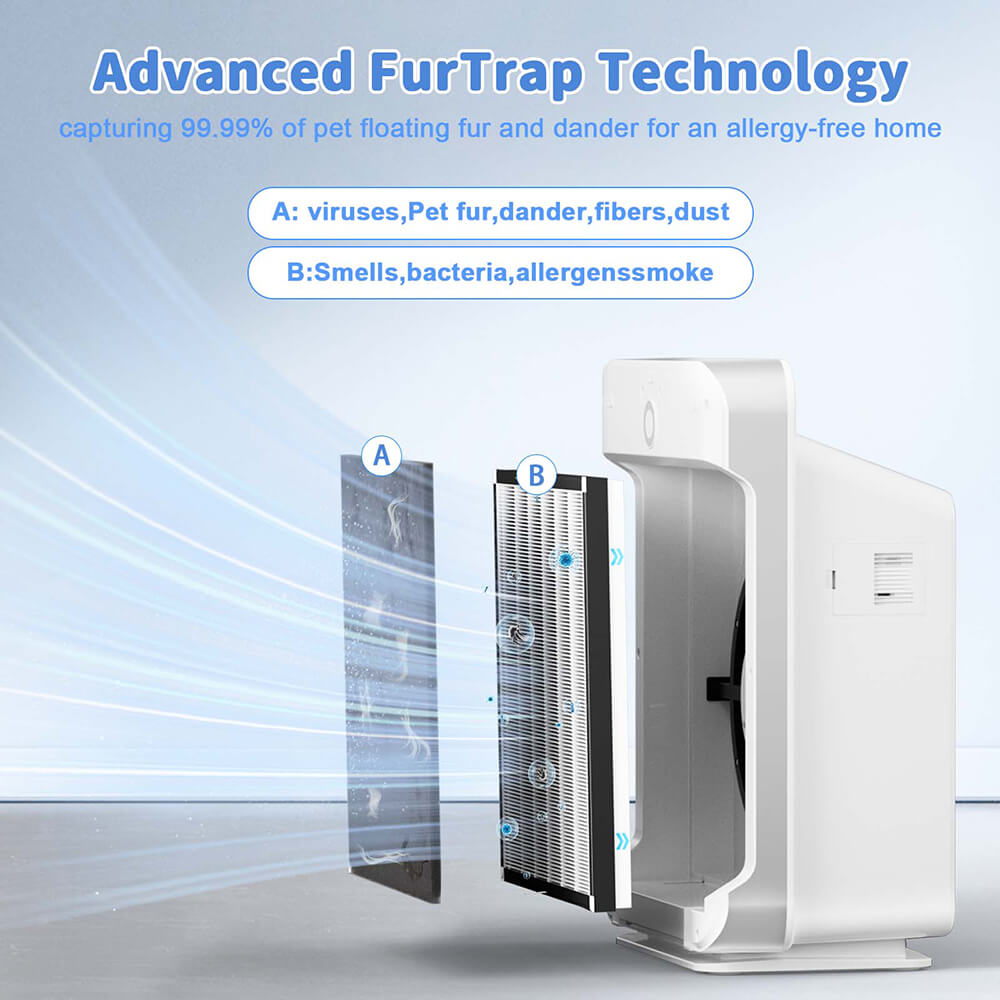
Découvrez la technologie avancée FurTrap™, qui capture 99,99% des poils d'animaux, des squames et des allergènes pour une maison sans allergies. Notre système de filtration à double couche cible différents contaminants. La couche A (pré-filtre à charbon actif) piège les virus, les poils, les squames, les fibres et la poussière.

La couche B (filtre HEPA) élimine les odeurs, les bactéries, les allergènes et la fumée. Profitez d'un air plus pur et d'un environnement plus sain grâce à notre purificateur de pointe, idéal pour les propriétaires d'animaux et les personnes souffrant d'allergies.
Obtenir un devis immédiat
Technologie Decibel Cancellation™

Un confort silencieux pour vous et vos animaux de compagnie

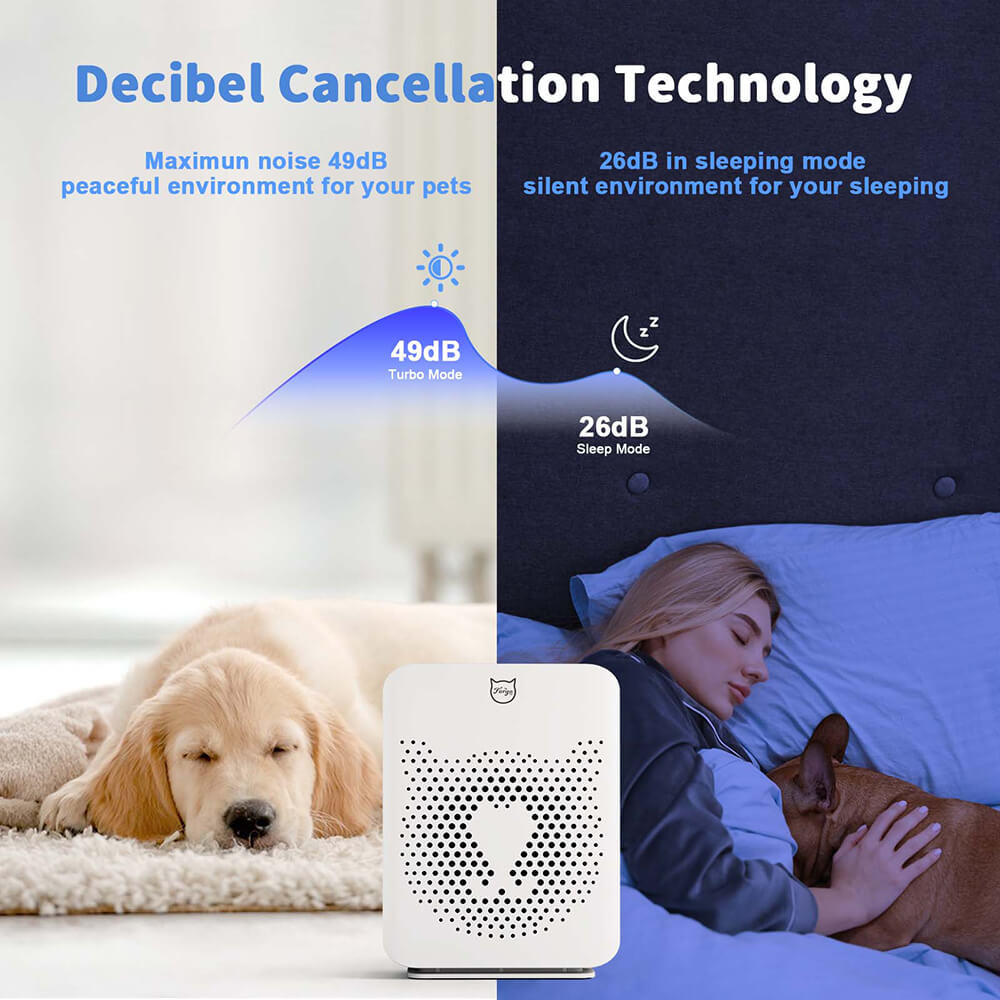
Découvrez notre technologie d'annulation des décibels, qui crée un environnement paisible pour vous et vos animaux de compagnie. Avec un niveau sonore maximal de 49 dB en mode Turbo, il garantit une atmosphère calme. Passez en mode Sommeil pour un niveau sonore ultra-silencieux de 26 dB, idéal pour des nuits reposantes.

Profitez d'une qualité d'air supérieure sans le bruit, et faites de votre maison un sanctuaire de tranquillité et de confort grâce à notre purificateur d'air avancé. Idéal pour les propriétaires d'animaux de compagnie qui recherchent à la fois la tranquillité et l'air pur.

Obtenir un devis immédiat

Sécurité et respect des animaux de compagnie

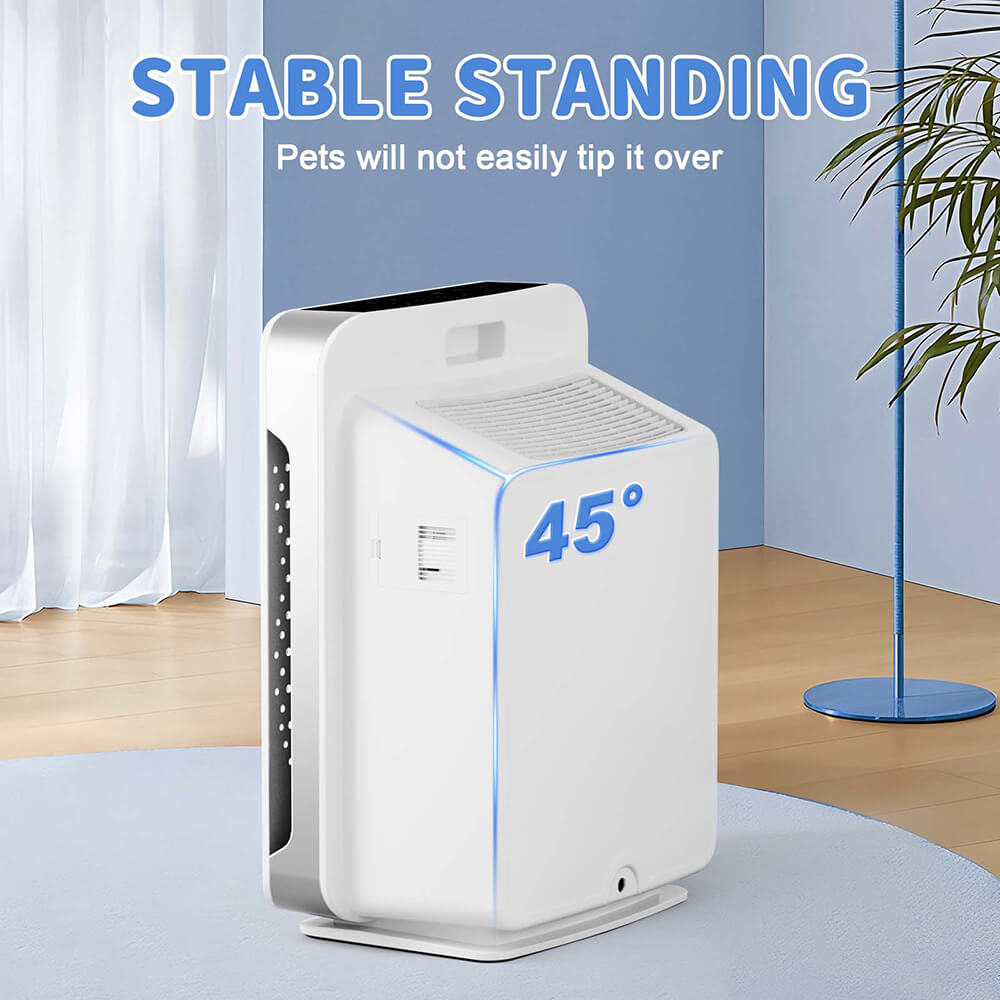
Grâce à sa conception stable, notre purificateur d'air reste en position verticale, même dans les foyers occupés avec des animaux domestiques. L'angle de 45 degrés empêche tout basculement, ce qui constitue une solution sûre et fiable pour le maintien de la qualité de l'air.

Vous avez l'esprit tranquille en sachant que votre purificateur reste en place, offrant une performance continue sans interruption. Parfait pour les propriétaires d'animaux domestiques qui recherchent à la fois la sécurité et l'efficacité dans leur environnement domestique.
Obtenir un devis immédiat

Air sûr, maison sûre : Protégez vos proches

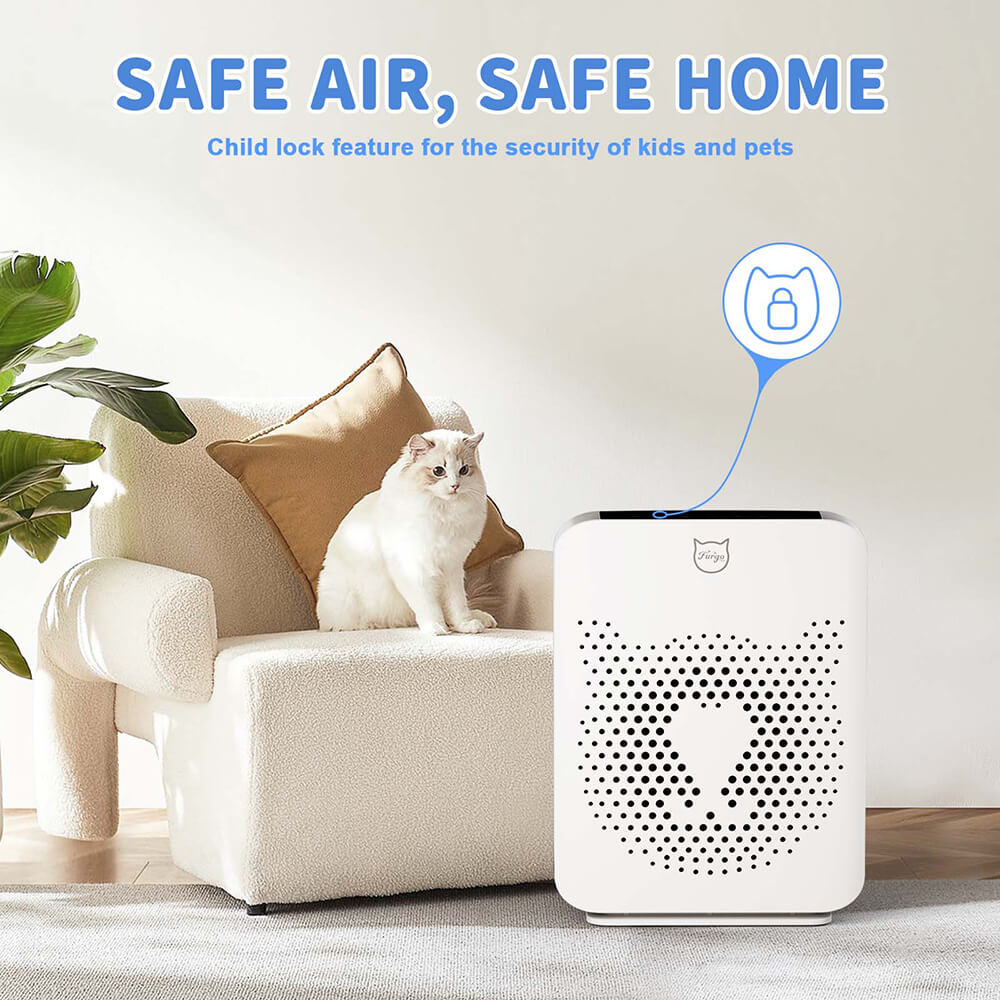
Assurez la sécurité et la santé de votre foyer grâce à notre purificateur d'air doté d'un dispositif de verrouillage pour les enfants et les animaux domestiques.

Le verrouillage des enfants empêche toute modification accidentelle des paramètres et assure la protection de votre famille. Le verrouillage des enfants empêche toute modification accidentelle des paramètres.

Obtenir un devis immédiat

DEMANDER UN DEVIS

envoyez un message ci-dessous

Nous vous répondrons dans les plus brefs délais !

GARDER LE CONTACT

Informations sur le contact

Votre demande est importante pour nous.
Nous nous mettrons en contact rapidement et vos données resteront toujours sécurisées.
sales@hisoair.com
+86 138 0961 9940

Bureau des États-Unis2180 S WINEVILLE AVE ONTARIO, CA 91761

Bureau: Room 712~713, Building 1, No. 4, Second Road, Songshan Lake Park, Dongguan City, Guangdong Province, 523429.

Usine : Chine | Vietnam | Thaïlande | Malaisie

Contaminant Engineering•3 min read

PFAS Water Filtration Technologies Explained: Carbon, Resin & RO

Key Takeaway:

PFAS reduction depends on the specific compounds present, treatment media, contact time, water chemistry, and system design. Activated carbon, ion exchange, and Reverse Osmosis address PFAS through different mechanisms.

PFAS are a large family of persistent fluorinated compounds that can occur in drinking-water supplies. Their treatment behavior varies significantly by molecular structure, chain length, functional group, concentration, and the chemistry of the source water.

Granular Activated Carbon (GAC) removes PFAS primarily through adsorption. It is generally more effective for many longer-chain PFAS, while shorter-chain compounds tend to break through more quickly. Carbon performance depends on media properties, Empty Bed Contact Time (EBCT), competing organic matter, loading, and replacement frequency.

Ion-exchange resins use charged functional sites to capture many PFAS compounds. Properly selected anion-exchange media can provide high capacity and may perform better than conventional activated carbon for some shorter-chain PFAS, although performance still depends on water chemistry and competing ions.

Reverse Osmosis (RO) uses membrane separation rather than adsorption. Properly designed RO systems can provide broad reduction across many PFAS compounds as well as dissolved salts and other contaminants. Unlike carbon or resin, however, RO also produces a concentrate stream that must be managed.

No single technology should be selected from a PFAS label alone. System design should consider which PFAS compounds are present, their concentrations, required reduction targets, flow rate, media life, and the applicable third-party certification or validation requirements.

HisoAir Water Technical Series
Product Discovery•3 min read

How to Choose an Under-Sink Water Purifier for Modern Kitchens

Key Takeaway:

Match the treatment technology to your water quality first, then evaluate cabinet space, faucet configuration, flow rate, drain and power requirements, and filter replacement needs.

Choosing an under-sink water purifier starts with water chemistry. Carbon filtration is well suited to chlorine, taste, odor, and many organic contaminants, while Reverse Osmosis is more appropriate when dissolved salts, fluoride, nitrates, or broader dissolved contaminants need to be reduced.

For compact kitchens, tankless RO systems eliminate the conventional storage tank and can significantly reduce the space required under the sink. However, membrane capacity stated in GPD does not directly equal faucet flow. When comparing systems, check the actual dispensing flow rate, inlet-pressure requirement, recovery ratio, and whether a booster pump is required.

Installation architecture also matters. Many RO systems require a drain connection, electrical power, and either a dedicated drinking-water faucet or a compatible multi-function faucet. High-flow carbon systems can often connect directly to the existing cold-water line with a simpler installation, but pressure drop and available faucet flow should still be verified.

RO also removes much of the naturally occurring dissolved mineral content. Where taste or mineral balance is a priority, a post-RO remineralization stage can be added. Filter life should be evaluated by both rated capacity and local water quality rather than replacement time alone.

The right system is therefore not simply the smallest or highest-GPD model. It is the configuration that matches the target contaminants, available cabinet space, desired faucet setup, peak dispensing demand, and maintenance expectations.

HisoAir Water Technical Series
Water Quality•2 min read

What Does TDS Mean in Drinking Water? Measurement vs Contaminant Reality

Key Takeaway:

A TDS meter estimates the overall concentration of dissolved ionic substances from electrical conductivity. It cannot identify specific contaminants or determine whether water is chemically safe.

Total Dissolved Solids (TDS) refers to the combined concentration of dissolved substances in water. Most handheld TDS meters do not measure TDS directly. Instead, they measure electrical conductivity (EC) and convert that reading into an estimated parts-per-million (ppm) value.

This means a TDS reading can indicate how much dissolved ionic material is present, but not what that material actually is. Calcium, magnesium, sodium, nitrates, and other dissolved ions can all contribute to conductivity, yet a simple TDS meter cannot distinguish between them.

TDS meters are also not suitable for detecting trace contaminants such as PFAS, many VOCs, pesticides, pharmaceuticals, or disinfection byproducts. These substances may be present at concentrations far below the level needed to noticeably change electrical conductivity.

A low TDS reading therefore does not guarantee safe drinking water, and a higher TDS reading does not automatically indicate contamination. Water-treatment decisions should be based on laboratory testing for specific contaminants of concern rather than TDS alone.

HisoAir Water Technical Series
Technology Selection•2 min read

RO vs UF Water Filtration: Understanding Pore Sizes & Dissolved Minerals

Key Takeaway:

Ultrafiltration can reduce bacteria, turbidity, and suspended particles while retaining most naturally occurring dissolved minerals. Reverse Osmosis provides much broader reduction of dissolved salts and smaller contaminants.

Ultrafiltration (UF) typically uses hollow-fiber membranes with pore sizes in the approximate 0.01–0.1 micron range. These membranes physically retain turbidity, suspended solids, colloids, and many microorganisms while allowing dissolved minerals and salts to remain in the water.

Reverse Osmosis (RO) operates at a much finer separation level. Unlike UF, RO can substantially reduce dissolved ions such as sodium, calcium, fluoride, nitrates, and other contributors to total dissolved solids (TDS). This makes RO more suitable when dissolved-salt reduction is a primary treatment objective.

UF generally requires less system pressure and produces little or no continuous concentrate stream in many point-of-use configurations. RO typically requires greater pressure and produces a reject-water stream, but delivers broader contaminant reduction.

For water with acceptable TDS and mineral content, UF can be a simpler mineral-retaining treatment option. Where dissolved salts, fluoride, nitrates, or broader dissolved contaminants are a concern, RO is generally the more appropriate technology.

HisoAir Water Technical Series
Technology Selection•4 min read

Carbon Block vs Reverse Osmosis: Which Fits Your Need?

Key Takeaway:

Choose RO for dissolved inorganic salts and heavy metals; choose Carbon Block for chemical taste/odor, no wastewater, and high line-pressure flow.

Reverse Osmosis (RO) and Carbon Block filtration represent two fundamentally different treatment methods: membrane separation and adsorption. Understanding these differences helps determine which technology is better suited to a specific water-quality requirement.

Reverse Osmosis uses a semi-permeable membrane with pore sizes of approximately 0.0001 microns. It can significantly reduce dissolved inorganic contaminants such as TDS, fluoride, nitrates, and certain heavy metals. Because water must be forced through the membrane, RO systems require sufficient pressure or a booster pump and generate a concentrated wastewater stream.

Carbon Block filtration relies primarily on adsorption through compressed activated carbon, commonly with nominal pore sizes around 0.5–5 microns. It is highly effective for chlorine, chloramines, VOCs, taste, and odor, while allowing substantially higher direct-flow rates without producing wastewater.

From an operating perspective, Carbon Block systems are generally simpler, require less energy, and avoid the water loss associated with RO. RO involves higher system complexity and operating cost, but provides substantially broader reduction of dissolved contaminants that Carbon Block alone cannot address.

HisoAir Water Technical Series

DEMANDER UN DEVIS