S’ouvre dans un nouvel onglet
Solutions innovantes pour la qualité de l'air
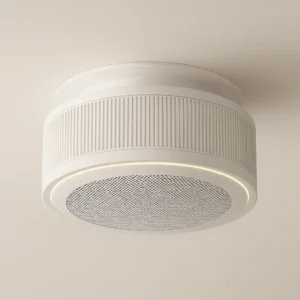
Commercial Ceiling-Mounted Air Purifier Platform
HisoAir develops fixed ceiling-mounted air purification systems for offices, schools, clinics, and other continuously occupied environments, combining high-efficiency filtration with out-of-reach safety.
Explore PlatformRequest Project Evaluation
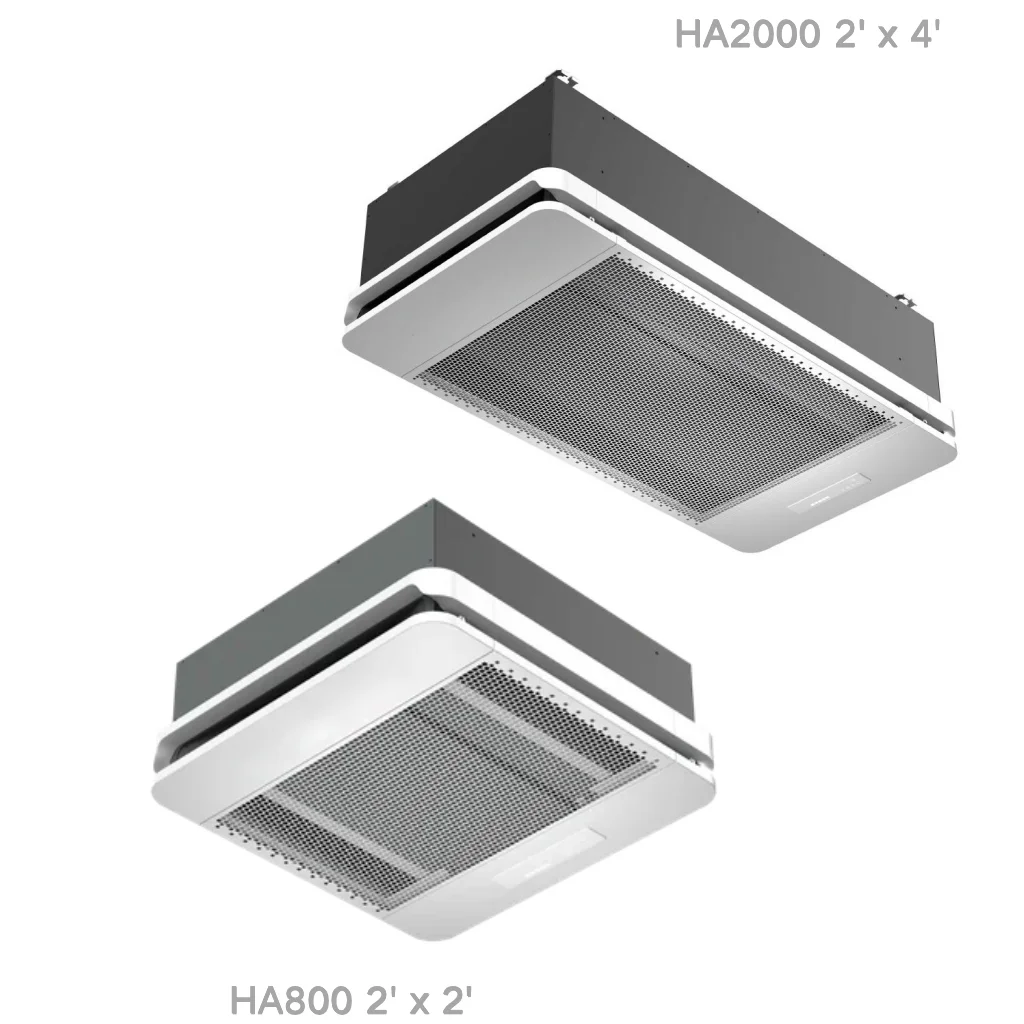
HA2000 and HA800 ceiling-mounted air filtration units with dimensions labeled as 2'x4' and 2'x2', showcasing design and size differences.
HA800 / HA2000
•
Up to 1176 CFM
•
H13/H14 HEPA
•
Commercial Ceiling Mount
•
OEM/ODM

What is a ceiling-mounted air purifier?

A ceiling-mounted air purifier is a fixed commercial air-cleaning system installed above occupied floor space. It draws room air upward through high-efficiency particle and gas-phase filtration before returning clean air to the room. This architecture preserves floor space, prevents tampering, and supports continuous operation in high-traffic commercial environments.

BEST SUITED FOR:
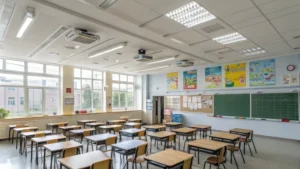
Les écoles
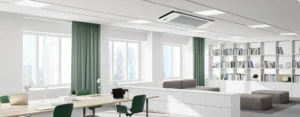
Bureaux
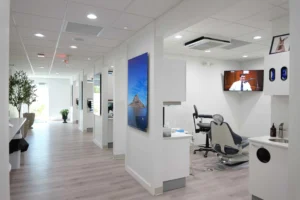
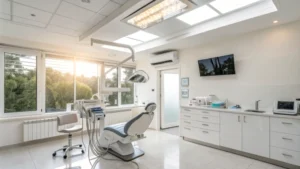
Clinics
Hospitality
Commercial Buildings
Which ceiling air purifier platform should I choose?

HA800

For standard classrooms, offices and smaller commercial zones
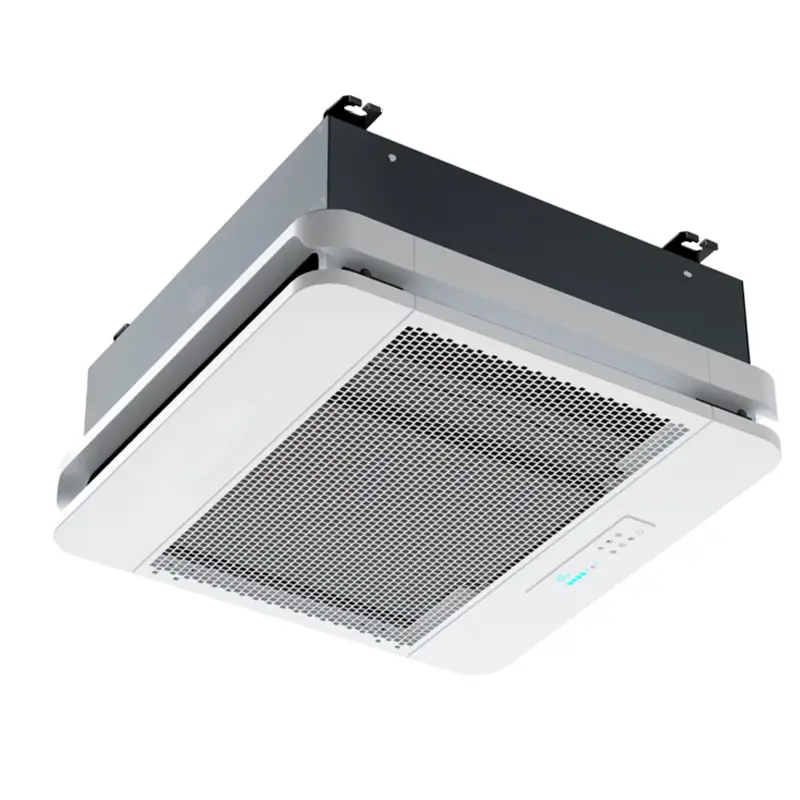
Un climatiseur de plafond moderne au design épuré et aux commandes numériques.
CADR
430 CFM (730 m³/h)
NOISE
22.5–47.5 dBA
DIMENSIONS
24" x 24" x 14" 
FILTER
H13 / H14 HEPA or Customized Filtration Solution
Capteur
capteur de proximité
Contrôle
Touch button+Remote control
TYPICAL APPLICATION
Single-zone or distributed deployment
Optional Function
UVC lamp, PM2.5 sensor, CO2 sensor, WIFI (Tuya),Activated carbon filter

HA2000

For larger commercial spaces or projects requiring substantially higher airflow
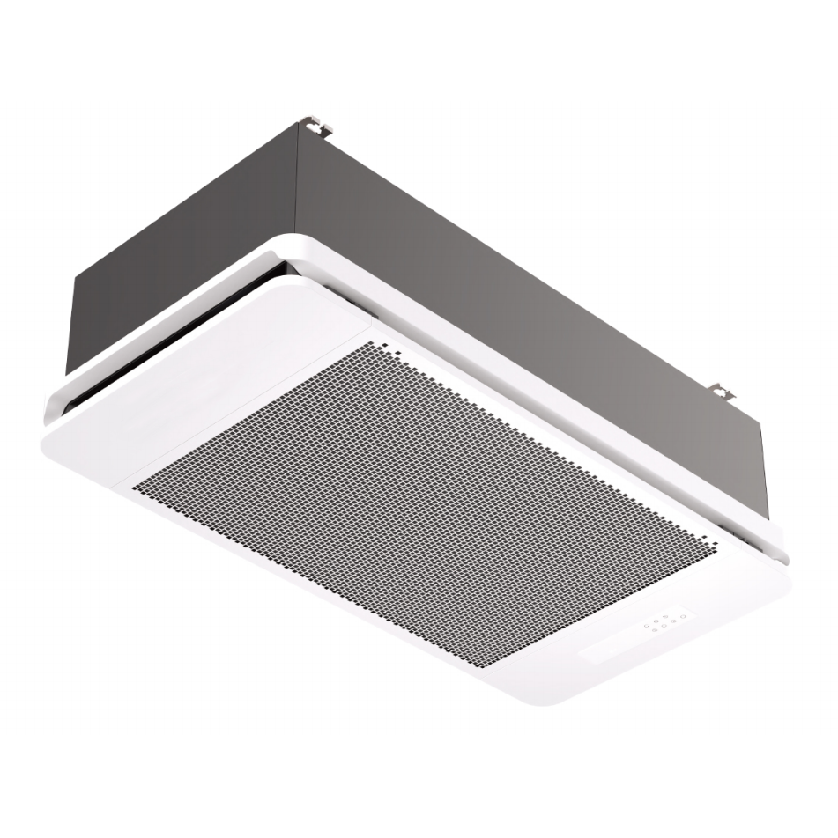
ceiling air purifier ha2000
CADR
1176 CFM (2000 m³/h)
NOISE
38.0–58.5 dBA
DIMENSIONS
48" x 24" x 18"
FILTER
H13 / H14 HEPA or Customized Filtration Solution
Capteur
capteur de proximité
Contrôle
Touch button+Remote control
TYPICAL APPLICATION
High-capacity centralized deployment
Optional Function
UVC lamp, PM2.5 sensor, CO2 sensor, WIFI (Tuya),Activated carbon filter
430 CFM
MAX AIRFLOW (HA800)
22.5–47.5 dBA
MEASURED ACOUSTIC RANGE
H13 HEPA
PARTICLE FILTRATION
24/7
COMMERCIAL OPERATION

How loud is the ceiling-mounted air purifier?

Designed specifically for occupied commercial environments, the platform balances high clean air delivery rates with minimal acoustic intrusion.

MEASURED ACOUSTIC PROFILE
Bar length is a visual scale; the measured airflow and acoustic values are shown in each label.
ENGINEERING TEST CONTEXT
MODEL
HA800 standard unit
FILTER CONFIGURATION
H13 HEPA (standard resistance)
TEST DISTANCE
1.0m below outlet
TEST ENVIRONMENT
Hemi-anechoic chamber
DATA TYPE: HisoAir internal engineering validation
DATE: 2026-01-15

Filtration Engineering

Scientific capture mechanisms for complex airborne particles and gaseous pollutants.

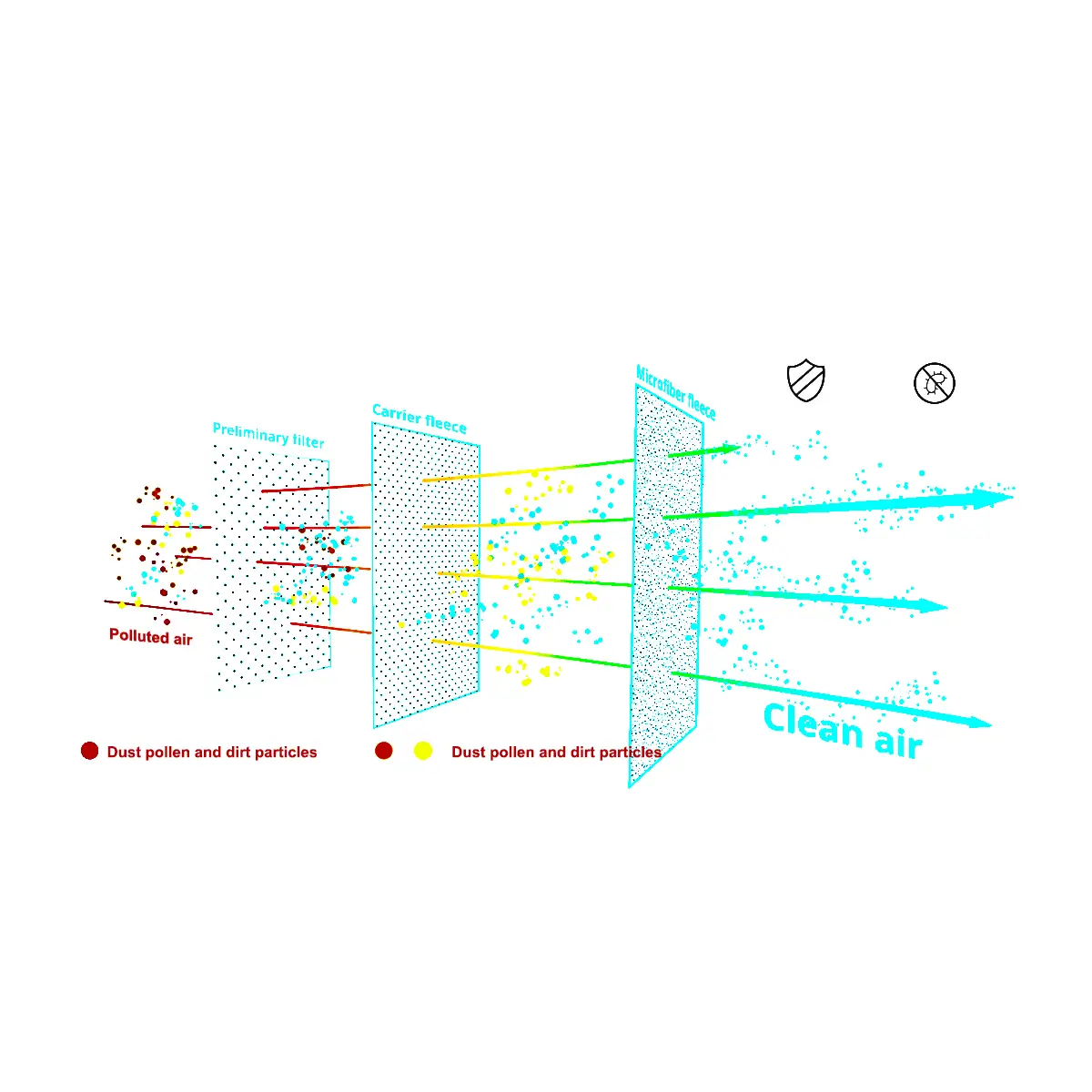
How does the ceiling purifier remove airborne particles?
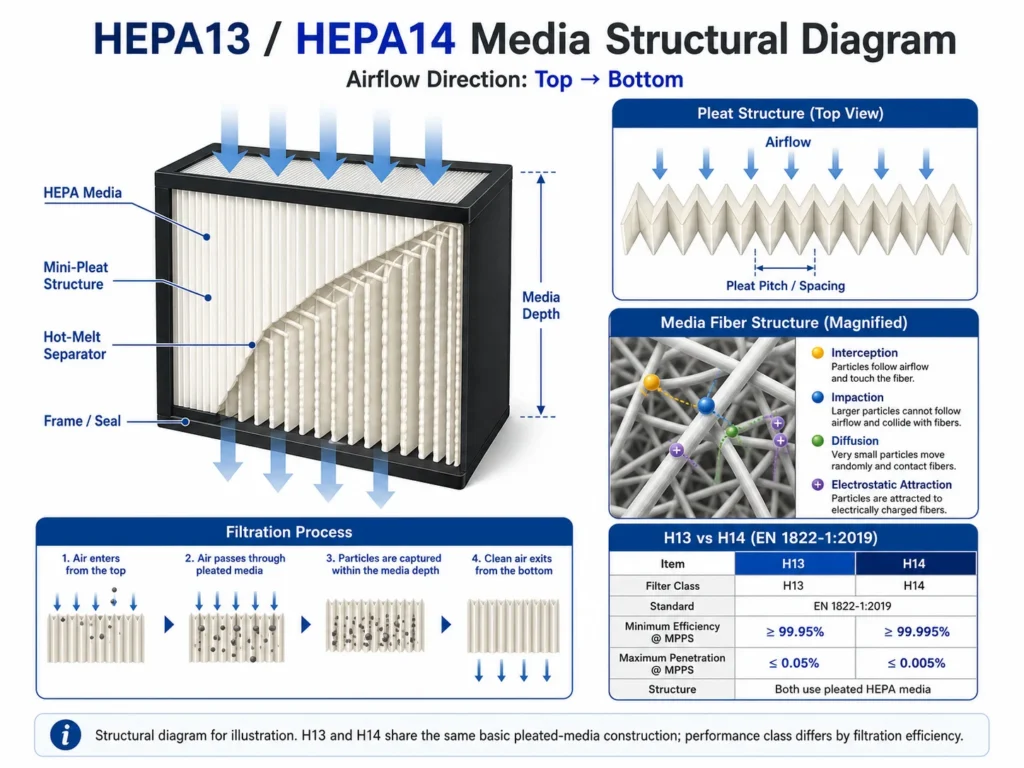
Diagram illustrating the structure and filtration process of HEPA13 and HEPA14 filters, including pleated media, airflow direction, and magnified fiber structure.
01
Préfiltre
Captures large dust and lint, protecting the lifespan of the primary HEPA filter.
↓
02
H13 HEPA
Guaranteed ≥99.95% capture efficiency at the most penetrating particle size (MPPS) of 0.3μm.
↓
03
Capture des particules
Clean air is continuously discharged back into the room environment.
EN 1822 Fractional Efficiency

How does activated carbon help reduce VOCs and odors?
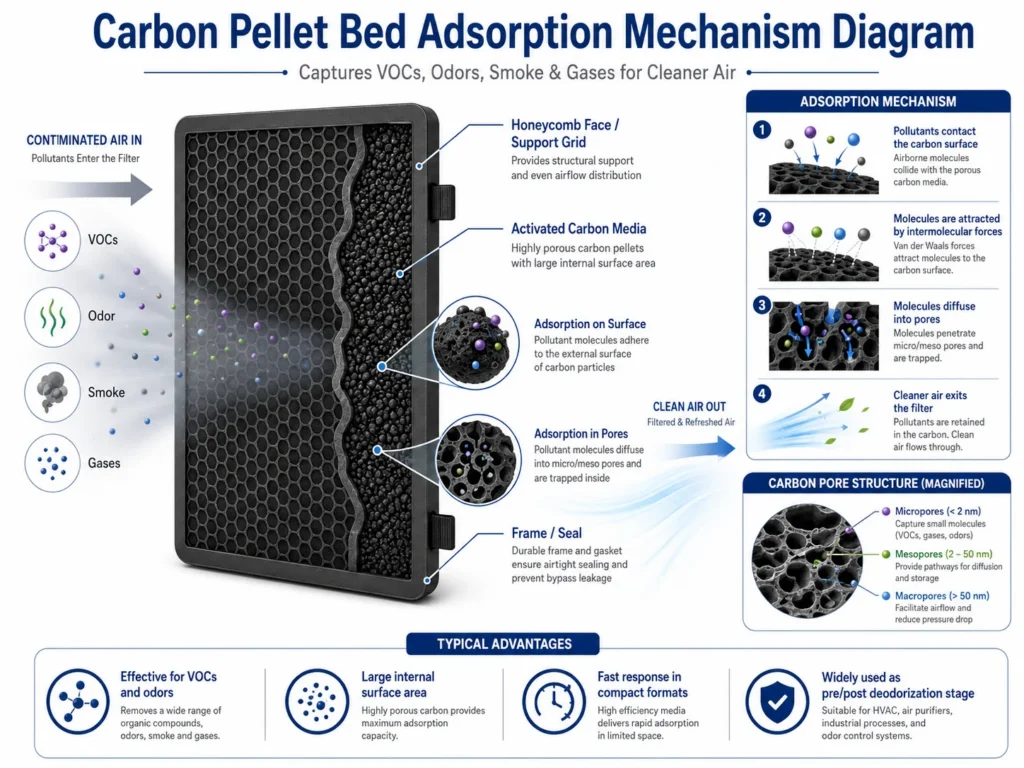
Diagram illustrating the carbon pellet bed adsorption mechanism, showing how pollutants like VOCs, odors, smoke, and gases are captured by activated carbon media to filter and purify air.
01
Carbon Media
High-density pelletized carbon maximizes the molecular surface area.
↓
02
Gas Adsorption
Chemicals, odors, and VOCs are physically adsorbed into the carbon pores.
↓
03
Application Loading
Bed thickness is tuned to balance saturation lifespan with pressure-drop limits.
Gas-Phase Filtration Engineering

Why does the ceiling air purifier use a dual-fan architecture?
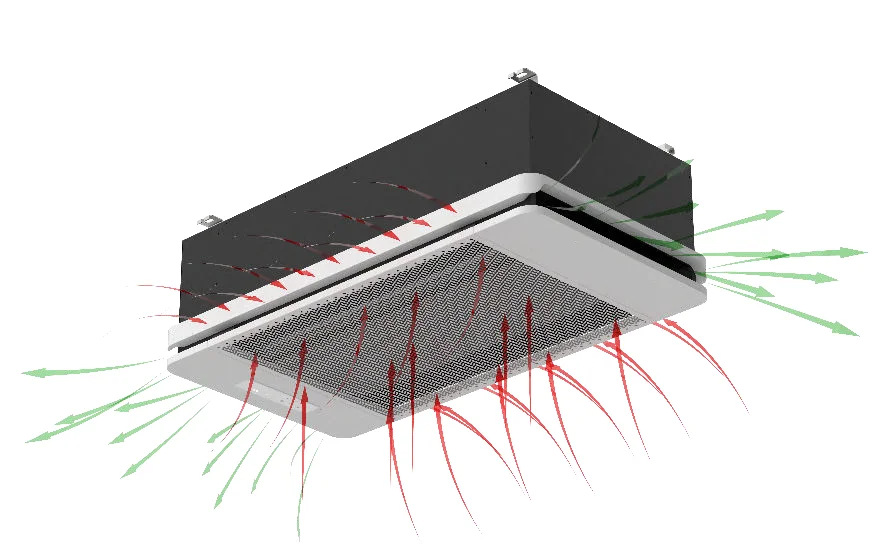
Dual Fan
↓
More uniform airflow across filter media
↓
Lower fan loading per individual fan
↓
High airflow delivery without excessive RPM
↓
Optimized airflow-to-acoustic balance
↓
MEASURED OUTCOME
Up to 430 CFM at 47.5 dBA
in the tested HA800 configuration
ENGINEERING SCHEMATIC
Ceiling-mounted air purifier showing airflow direction with red and green arrows indicating intake and output.
Room Air → Filter → Dual Fan → Clean Air Discharge
DOCUMENT: AIRFLOW DYNAMICS VALIDATION

Where are ceiling-mounted air purifiers most useful?

TYPICAL IAQ CHALLENGES
High occupant density
Airborne pathogens
Noise sensitivity during instruction
Risk of tampering with equipment
WHY CEILING INSTALLATION FITS

Ceiling installation removes the unit from student reach, eliminating tampering risks and freeing up floor space, while allowing central placement for optimal air distribution without creating drafts.

INSTALLATION / MAINTENANCE CONSIDERATIONS
CADR sizing for minimum 3 ACH
Operating noise strictly
Filter maintenance schedule during breaks
RECOMMENDED CONFIGURATION
HA800 (Dual units for standard 900 sq.ft classroom to achieve 4-5 ACH at lower speeds)
TYPICAL IAQ CHALLENGES
Open plan circulation
VOCs from furnishings
HVAC integration
Aesthetic integration
WHY CEILING INSTALLATION FITS
Integrates seamlessly into standard drop-ceilings. Provides supplementary localized filtration without occupying premium real estate or disrupting office aesthetics.
INSTALLATION / MAINTENANCE CONSIDERATIONS
Integration with BMS
CO2 and PM2.5 monitoring
Draft-free air distribution
RECOMMENDED CONFIGURATION
HA800 (Distributed) or HA2000 (Open Plan)
TYPICAL IAQ CHALLENGES
Aerosol generating procedures
Strict infection control
Odors and chemicals
Space constraints
WHY CEILING INSTALLATION FITS
Integrates seamlessly into standard drop-ceilings. Provides supplementary localized filtration without occupying premium real estate or disrupting office aesthetics.
INSTALLATION / MAINTENANCE CONSIDERATIONS
H14 HEPA requirement
High ACH (6-10)
Enhanced gas-phase filtration
RECOMMENDED CONFIGURATION
HA800 with H14 HEPA + Heavy Duty Carbon

Is a ceiling-mounted air purifier right for your project?

Ceiling-mounted systems are typically a strong fit when preserving floor space, preventing tampering and supporting fixed permanent commercial operation are priorities. Wall-mounted systems offer similar space-saving benefits with easier service access, while portable units are better suited when mobility and immediate plug-and-play installation are required without facility modifications.

EVALUATION ASPECT
Ceiling-Mounted
Portable Floor-Standing
Montage mural
Floor space
Zero footprint required.
Requires dedicated floor space.
Requires clear wall space.
Installation
Fixed, structural hardwiring.
Plug-and-play.
Fixed, bracket required.
Mobilité
None (Permanent fixture).
High (Wheels/casters).
None (Permanent fixture).
Tamper resistance
High (Out of reach).
Low (Accessible controls).
Medium (Often accessible).
Maintenance access
From below (ladder required).
Direct floor access.
Direct standing access.
High-airflow suitability
Excellent (Draft-free dispersion).
Moderate (Can cause drafts).
Good (Directional throw).
Permanent commercial deployment
Ideal.
Temporary/Supplementary.
Ideal.
Floor space
Ceiling-Mounted
Zero footprint required.
Portable Floor-Standing
Requires dedicated floor space.
Montage mural
Requires clear wall space.
Installation
Ceiling-Mounted
Fixed, structural hardwiring.
Portable Floor-Standing
Plug-and-play.
Montage mural
Fixed, bracket required.
Mobilité
Ceiling-Mounted
None (Permanent fixture).
Portable Floor-Standing
High (Wheels/casters).
Montage mural
None (Permanent fixture).
Tamper resistance
Ceiling-Mounted
High (Out of reach).
Portable Floor-Standing
Low (Accessible controls).
Montage mural
Medium (Often accessible).
Maintenance access
Ceiling-Mounted
From below (ladder required).
Portable Floor-Standing
Direct floor access.
Montage mural
Direct standing access.
High-airflow suitability
Ceiling-Mounted
Excellent (Draft-free dispersion).
Portable Floor-Standing
Moderate (Can cause drafts).
Montage mural
Good (Directional throw).
Permanent commercial deployment
Ceiling-Mounted
Ideal.
Portable Floor-Standing
Temporary/Supplementary.
Montage mural
Ideal.

Installation & Maintenance

Designed for facility managers: flush ceiling integration and tool-free service access from below.
DRAWING REF
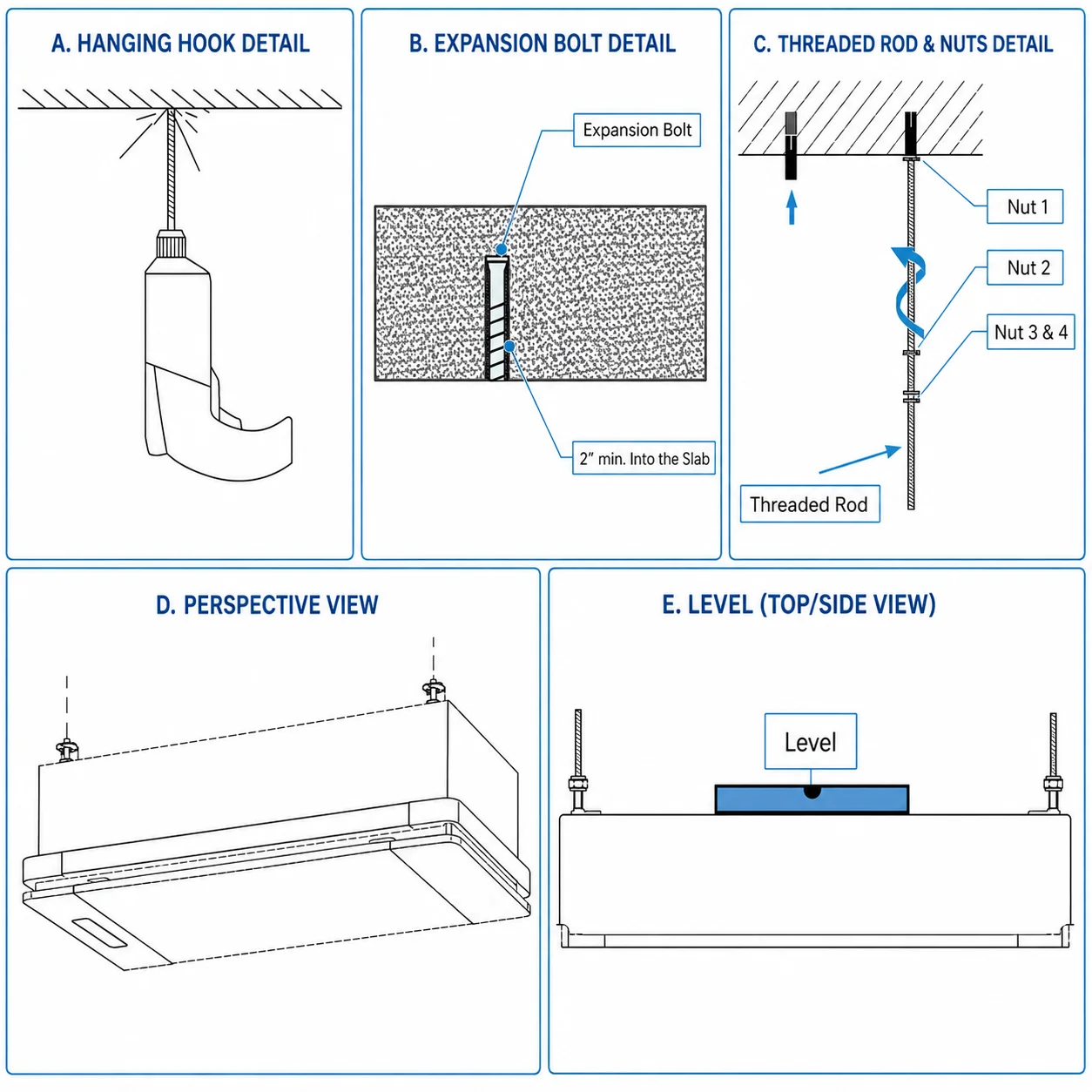
Mounting Drawing
Suspended threaded rod or direct joist mount.
Instructional diagram with labeled details for mounting an HVAC unit, showing a hanging hook, expansion bolt, threaded rod with nuts, perspective, and level views.
DRAWING REF
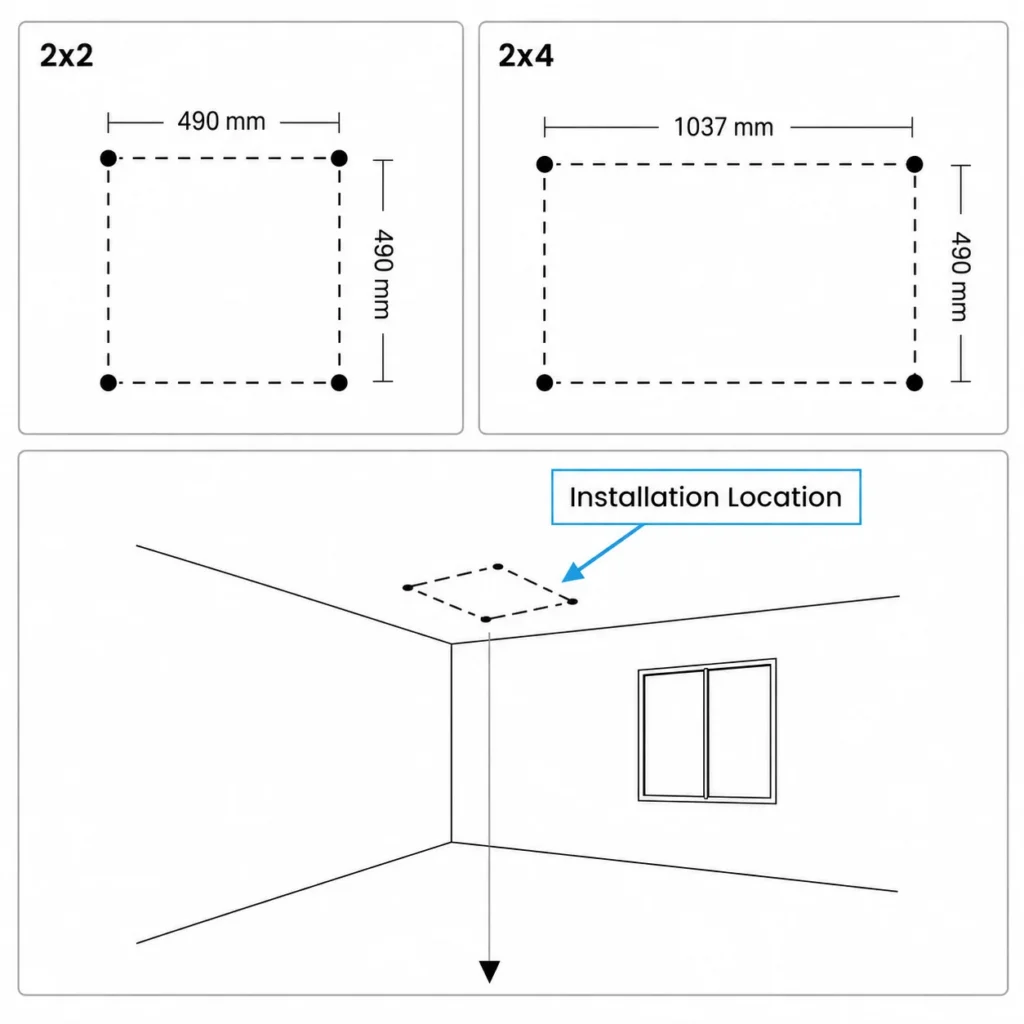
Ceiling Dimensions
Minimum 14 inches clearance above drop grid.
Diagram showing installation dimensions for ceiling lights in 2x2 and 2x4 configurations, along with an installation location in a room.
SPEC REF
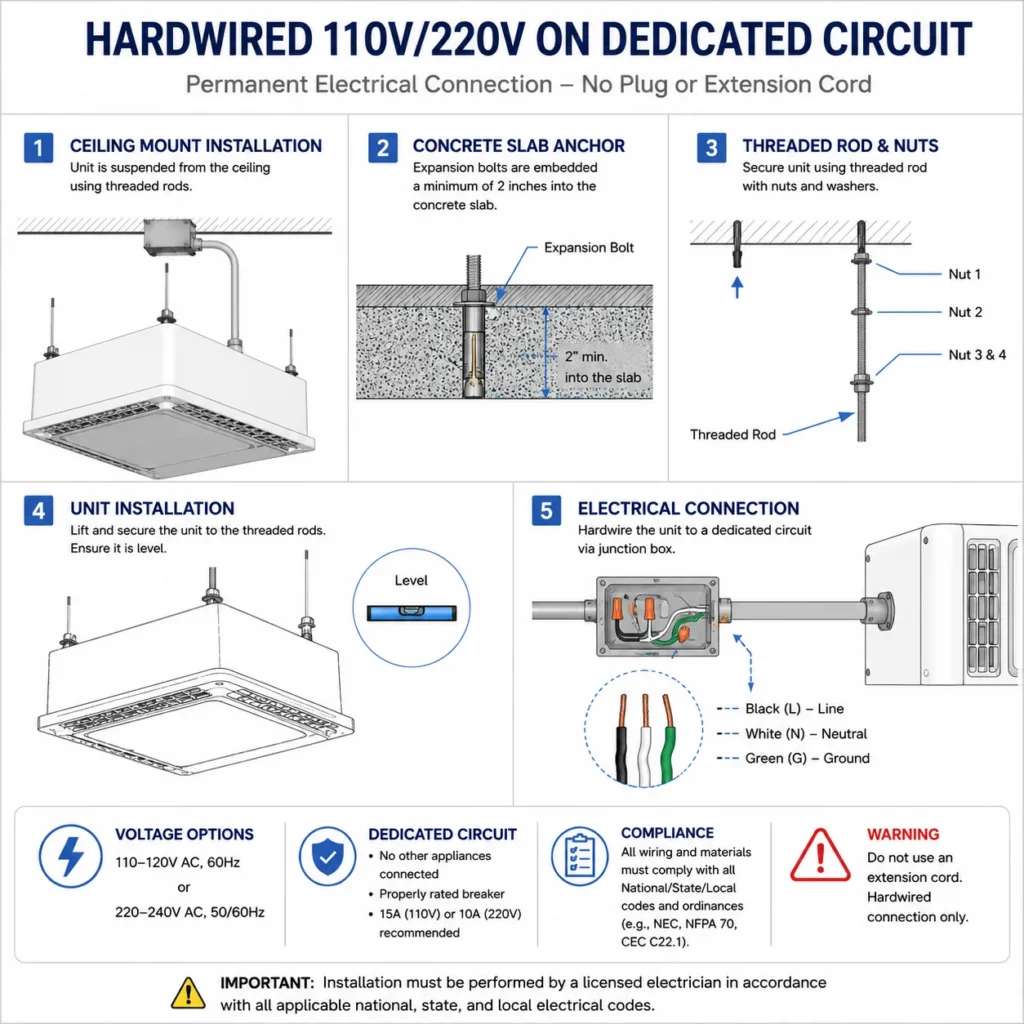
Electrical Connection
Hardwired 110V/220V on dedicated circuit.
Step-by-step guide for hardwiring a 110V/220V unit on a dedicated circuit, showing ceiling mount, concrete slab anchor, threaded rods, and electrical connections.

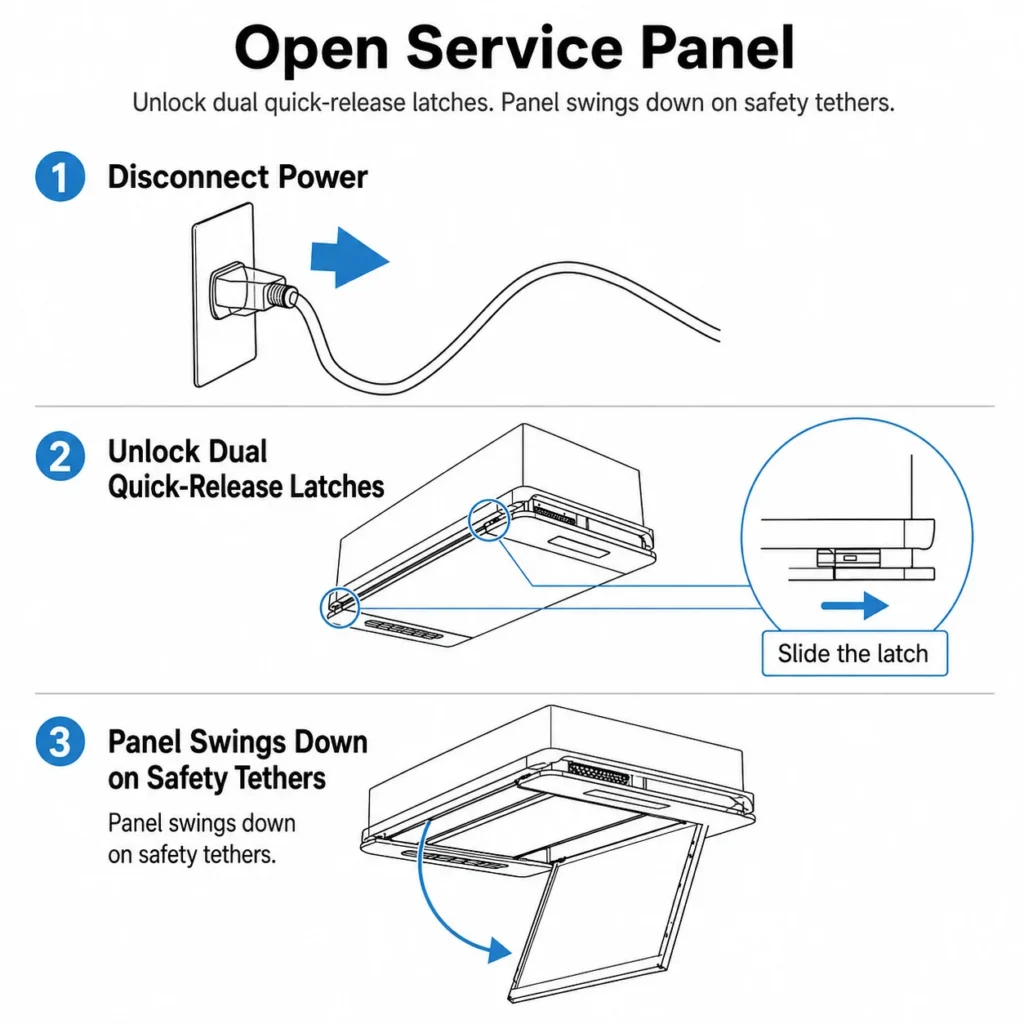
How is the filter serviced?

Step-by-step guide to open a service panel, including disconnecting power, unlocking latches, and swinging down the panel on safety tethers.
01
Open Service Panel

Unlock dual quick-release latches. Panel swings down on safety tethers.

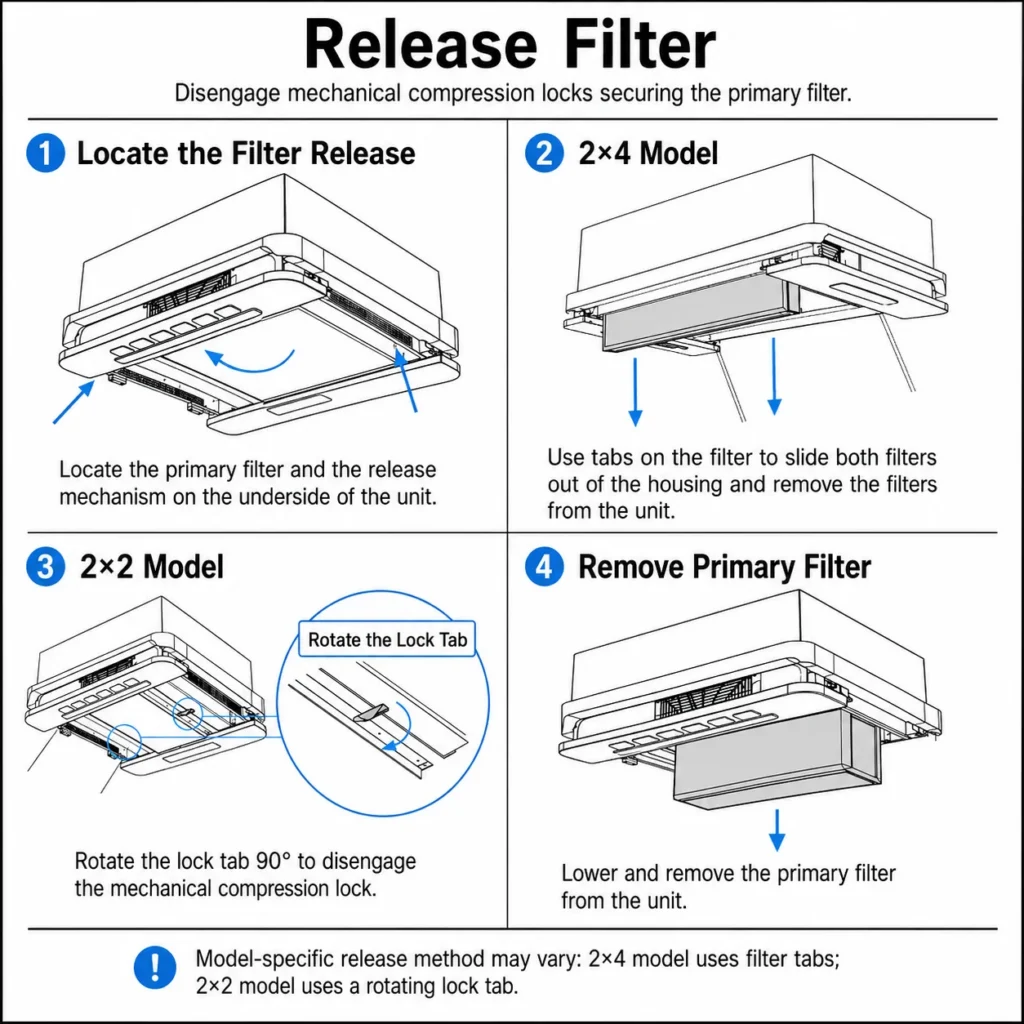
Diagram showing step-by-step instructions for removing an air filter, including locating the release, disengaging locks, and removing the filter.
02
Release Filter

Disengage mechanical compression locks securing the primary filter.
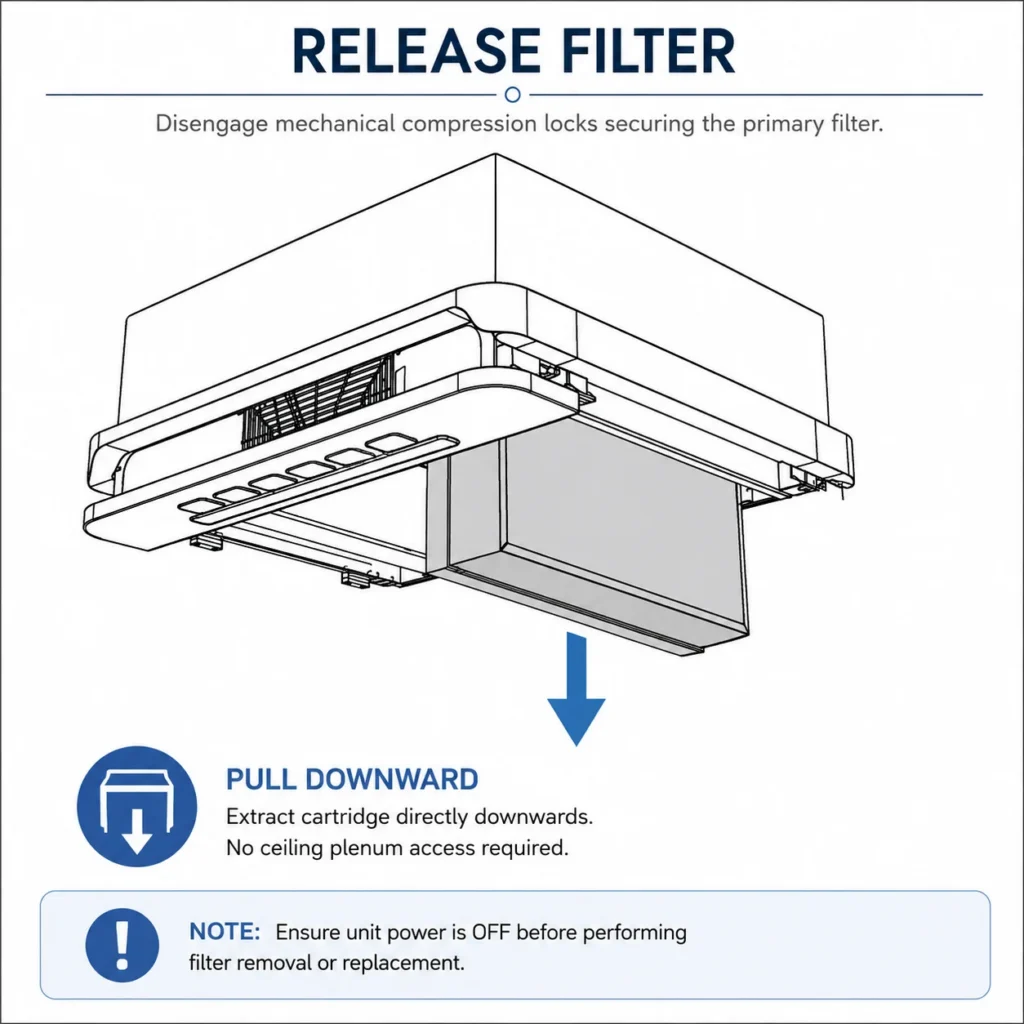
Diagram showing how to remove the primary air filter from a ceiling unit by pulling downward, with instructions to ensure power is off before removal.
03
Pull Downward

Extract cartridge directly downwards. No ceiling plenum access required.
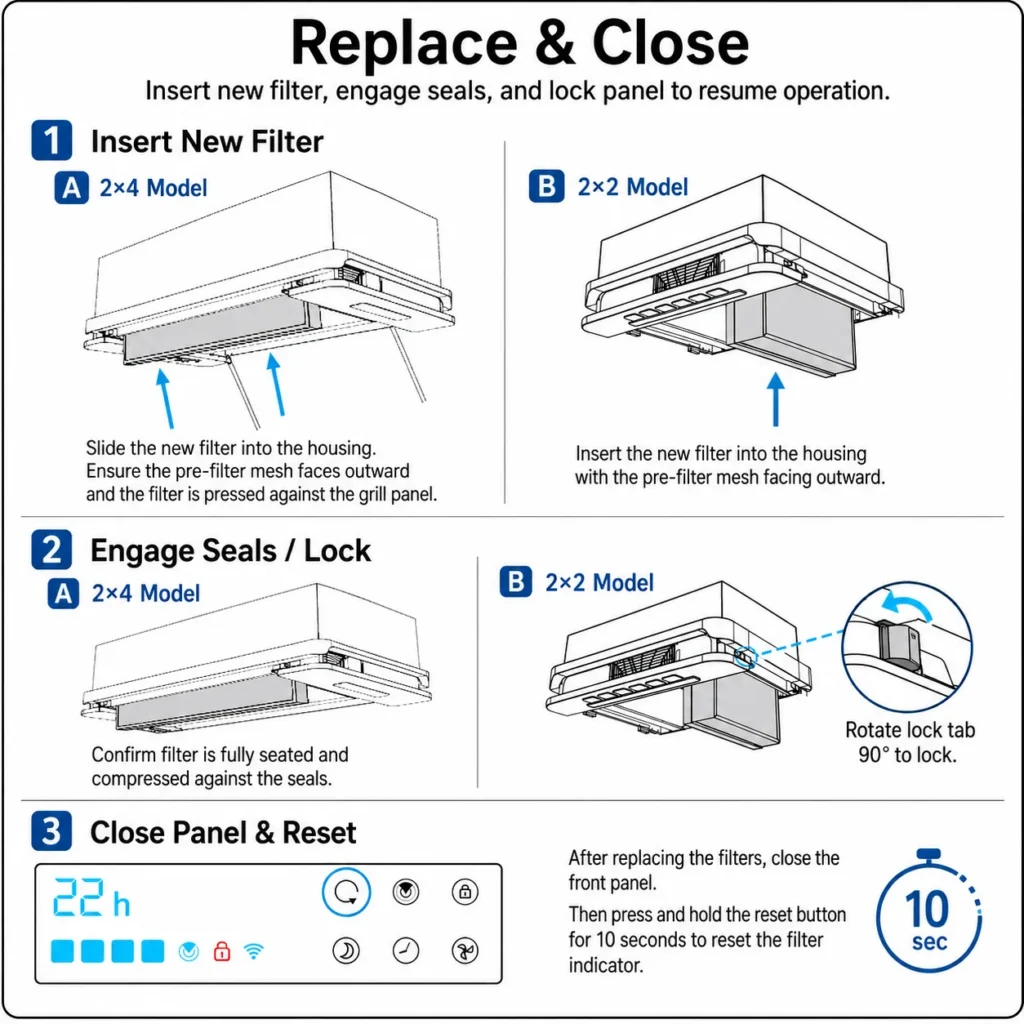
Step-by-step illustrated guide showing how to replace and secure air filters for 2×4 and 2×2 models, with panel resetting instructions.
04
Replace & Close

Insert new filter, engage seals, and lock panel to resume operation.

Sensor & Connectivity Integration

Intelligent IAQ monitoring and building management system (BMS) readiness.

Standard (HA2000)

Onboard PM2.5 Sensing

Integrated PM2.5 sensing provides real-time particle monitoring and supports automatic purifier operation based on indoor air quality.

Optional Configuration

External IAQ Integration

Compatible with Sense+ or third-party sensor gateways to separate the monitoring zone from the physical unit location.

OEM / Custom

Connected Controls

Matter, Thread, or Wi-Fi integration available for customized fleet monitoring. Modbus/BACnet integration for BMS networks.
low noise

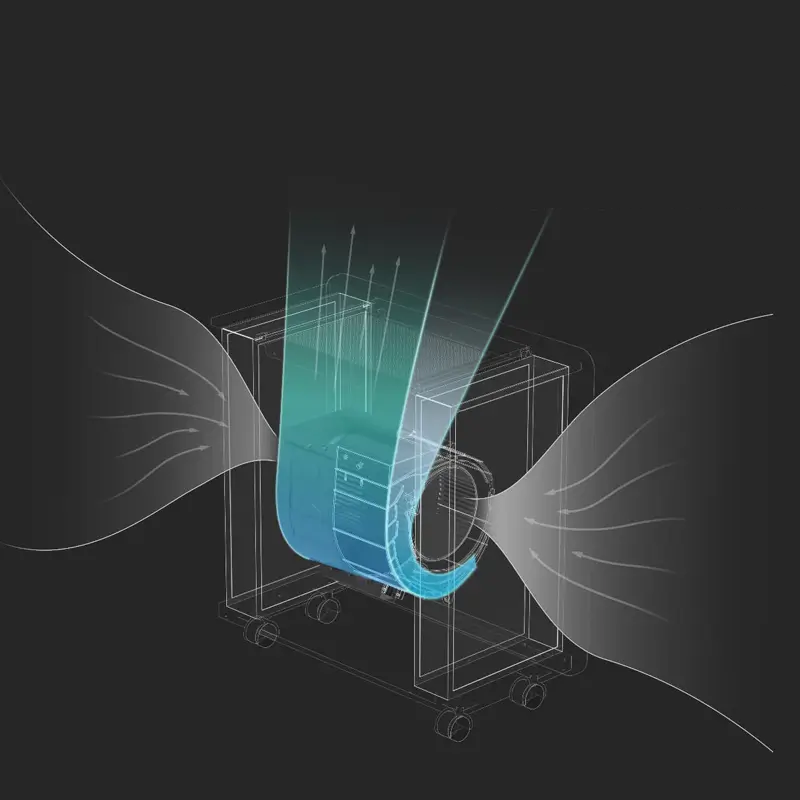
Technologie Decibel Cancellation™

Most purifiers trade power for noise. Our proprietary Decibel Cancellation™ Technology changes that — delivering powerful purification in near silence. Designed through rigorous testing of materials, airflow, and fan positioning, it creates a calm and comfortable environment wherever it’s installed.

  • Ideal for restful sleep & deep focus

  • Perfect for offices, hotels, and classrooms

  • Advanced engineering for peace of mind

Obtenir un devis immédiat

Conception de conduits d'air silencieux

Notre conception avancée d'entrée d'air double face et de sortie simple face double le volume d'air, garantissant des performances CADR élevées même à des vitesses de moteur plus faibles.

Matériau de réduction du bruit

Nous utilisons des matériaux antibruit de première qualité autour du moteur, ce qui permet de réduire le bruit de 10 à 15 dB par rapport à d'autres purificateurs d'air.

Technologie des éoliennes

Notre ventilateur centrifuge est plus petit et plus silencieux. Il fonctionne à des vitesses modérées, ce qui garantit un faible niveau sonore et une grande efficacité.

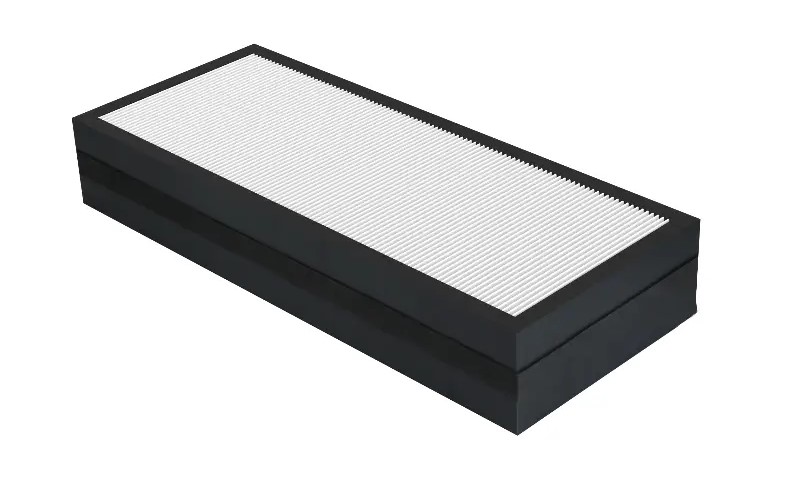
Véritable filtre HEPA

Notre technologie de pression différentielle ultra-faible (D/P) garantit un débit d'air supérieur sans compromettre l'efficacité. Les noyaux fondus-soufflés sont tissés de manière complexe pour capturer des particules aussi petites que 0,3μm, offrant une filtration exceptionnelle.
hepa
Type de filtre Efficacité D/P (autre) D/P (HISO)
H11 95% 15 Pa 8 Pa / 11 Pa
H12 99.50% 25 Pa 13 Pa / 18 Pa
H13 99.97% 30 Pa 22 Pa / 25 Pa
H14 99.99% 45 Pa 30 Pa / 35 Pa
Standard: EN 143, NaCl, 0.3 μm, @ 5.33 cm/s
Nous contacter

Microbial Treatment Technology

microbial treatment solutions 3Nous contacter
microbial treatment solutions 1
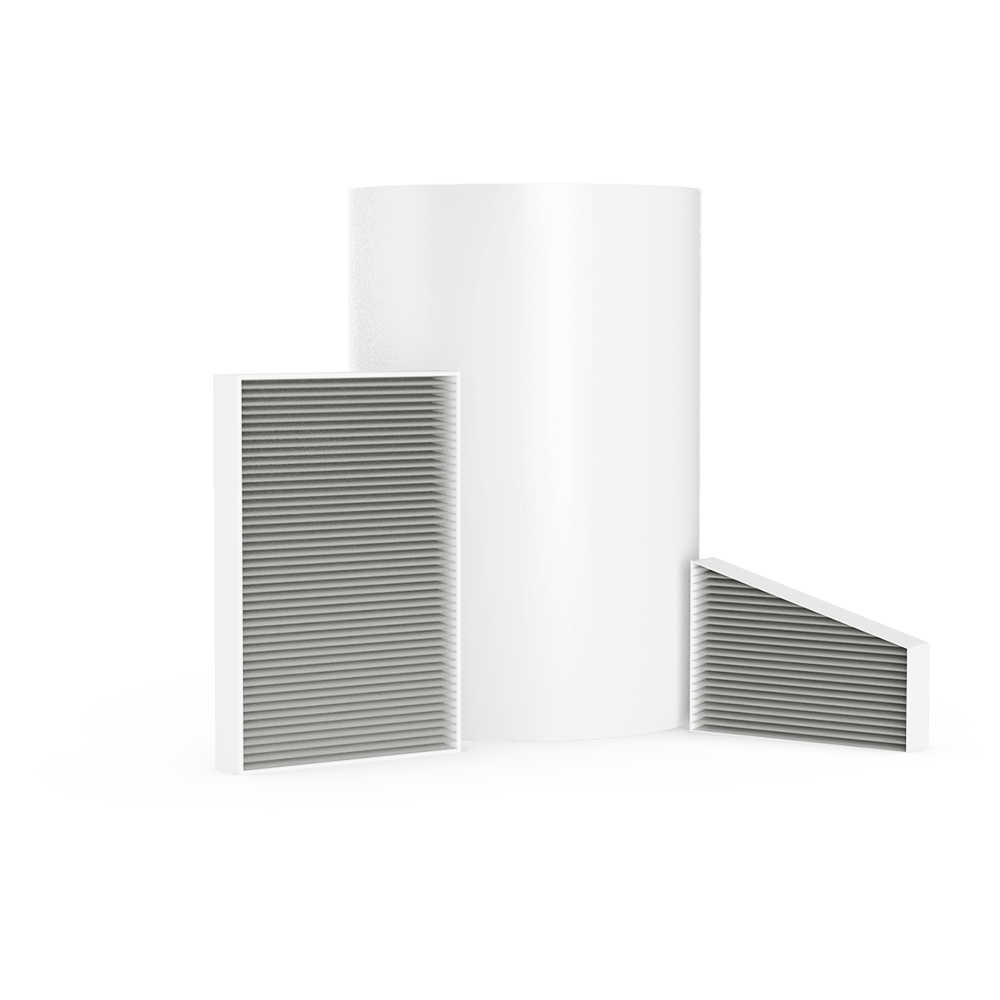
filtre

Modular Composite Filter

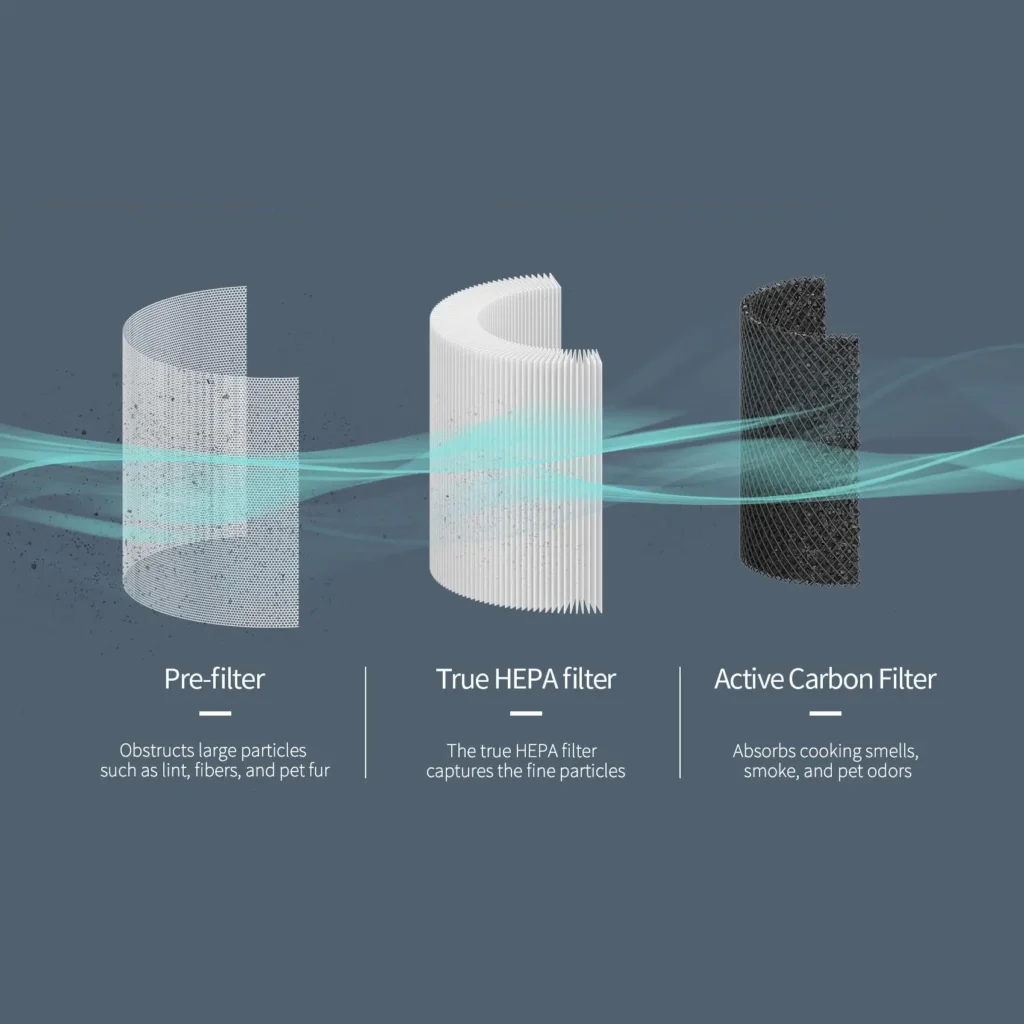
Pre-filter:
Captures large particles like dust, lint, pet hair, and fibers, helping extend the life of the main filters.

HEPA filter:
Effectively traps fine airborne particles and common allergens, helping to improve overall air quality.

Activated carbon:
Absorbs odors, harmful gases, VOCs, smoke, and household fumes—ensuring a fresher indoor environment.

Obtenir un devis

High Dust Holding Capacity Technology

Electrostatic Adsorption
The filter material is given an electrostatic charge through special processes, which enables it to attract and hold airborne particles through electrostatic forces.

Physical Interception
The filter material has small pores and tightly bound fibers, forming a dense physical barrier that prevents particles from passing through.

High Dust Holding Capacity
Principle: The structure of the filter material is optimized to increase the surface area of the fibers and the depth of the pores, allowing it to hold more dust.

High Efficiency and Longevity
Principle: The combination of electrostatic adsorption and physical interception ensures stable performance of the filter material, maintaining high-efficiency filtration over the long term.
Nous contacter

Multiple Integrated Sensors Technology

Optional integrated sensors for customized air quality monitoring.

sensors (2)

Advanced PM2.5 Sensor

It is capable of continuously monitoring indoor air quality. In auto mode, the purifier intelligently adjusts fan speed based on PM2.5 levels, ensuring optimal purification performance.

Obtenir un devis immédiat

ap ht m1549rs

Precision Temperature & Humidity Sensor

Optional temperature & humidity sensor offering accurate, real-time environmental monitoring with wide range, fast response, and robust performance in demanding conditions.

Obtenir un devis immédiat

High-Precision Radar Sensor

Advanced radar technology for reliable detection of objects, motion, and environment—ideal for automotive, industrial, and security applications.

Obtenir un devis immédiat

Technologie Noise Sensor™

An embedded acoustic sensor constantly listens to both the purifier’s airflow and the room’s ambience. When the household settles down—for instance at bedtime—the fan automatically drifts into whisper-quiet mode, so fresh air keeps moving while you hardly notice a sound, creates a calmer, healthier living space where you can sleep deeper, work happier, and simply enjoy the peace.
Obtenir un devis immédiat

Light Sensor™ Technology

Réglant automatiquement la luminosité pour un éclairage optimal, nos détecteurs améliorent le confort et l'efficacité énergétique. Idéal pour créer l'ambiance parfaite et garantir un environnement bien éclairé et adaptable qui répond à vos besoins à toute heure du jour ou de la nuit.

Obtenir un devis immédiat

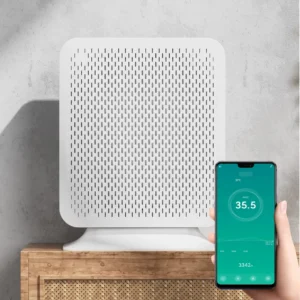
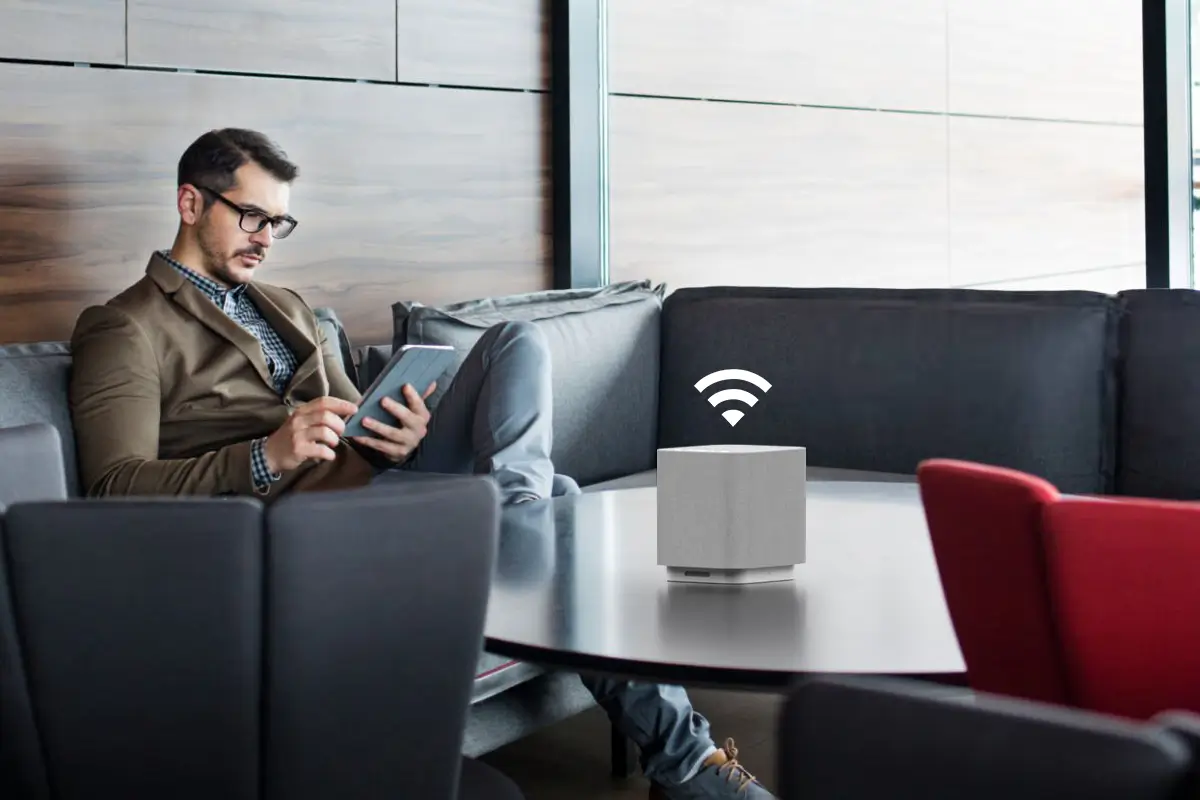
Wi-Fi Remote Control & Real-time Monitoring

Through the Tuya application, clients can remotely control the device and monitor air quality in real-time anytime, anywhere.

Nous contacter
ha100d wifi (1)
matter

Matter™ Universal Smart-Home Integration

HisoAir also supports the Matter™ universal smart home integration protocol, meaning devices can easily connect to multiple platforms like Apple HomeKit, Google Home, Amazon Alexa for unified control.

Nous contacter

Thread Ultra-Reliable Mesh Network

Thread ultra-reliable mesh networking technology is also available as an optional configuration, providing low-power, self-healing connectivity to ensure uninterrupted performance and extended range and response time.

Nous contacter
thread

Certifications & Compliance Standards

Un purificateur d'air de qualité supérieure sur lequel vous pouvez compter

Our Key Testing Capabilities

  • Essais CADR : Mesure l'efficacité de l'élimination des polluants.
  • Noise Testing: Ensures ultra-quiet operation, as low as 32dB(A).
  • Test de durabilité des filtres : Vérifie la longévité des filtres HEPA.
  • Étalonnage des capteurs d'air : Garantit des relevés précis de la qualité de l'air.
  • Essais de sécurité et de fiabilité : Validation de l'adaptabilité environnementale et de la sécurité électrique.

Nous proposons également des solutions personnalisées pour améliorer l'efficacité et la durée de vie de la filtration, en fonction de vos besoins.
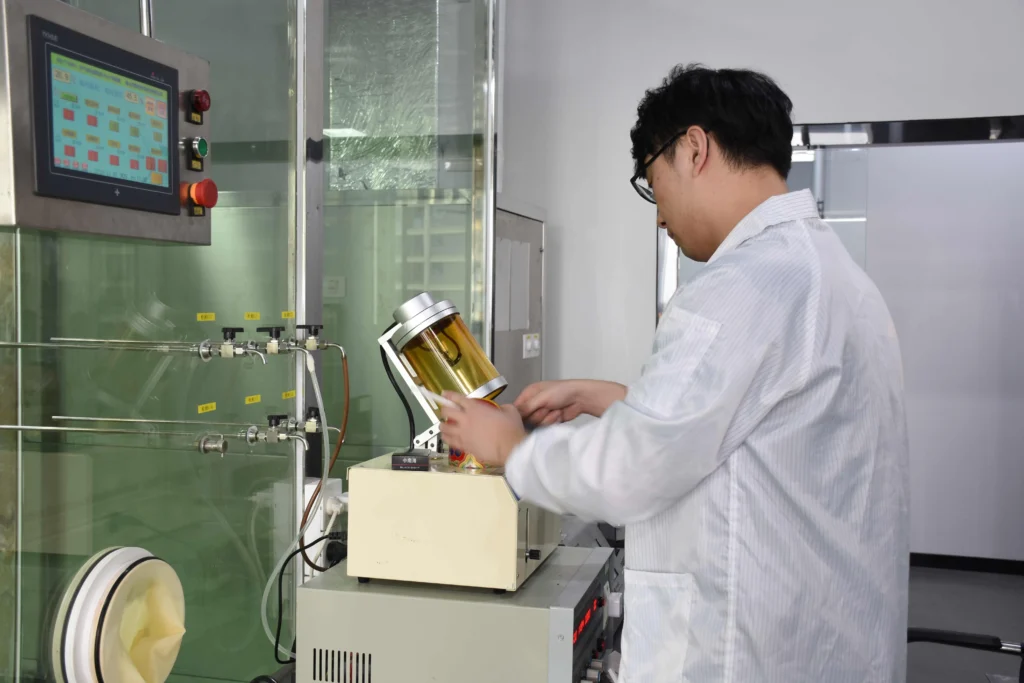
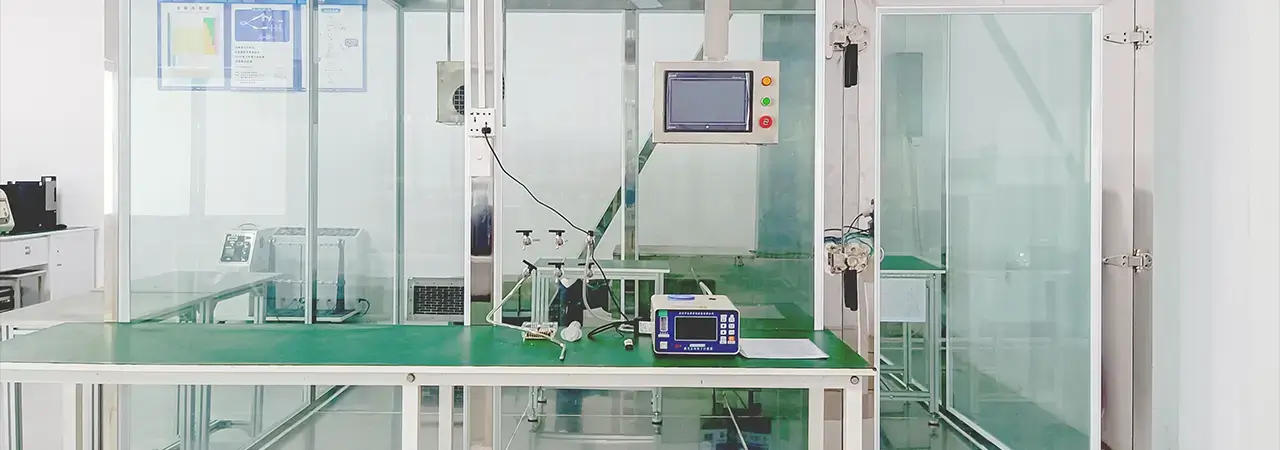
Technicien effectuant des tests de qualité des filtres à air dans un laboratoire.

Reliable Testing & Quality Control

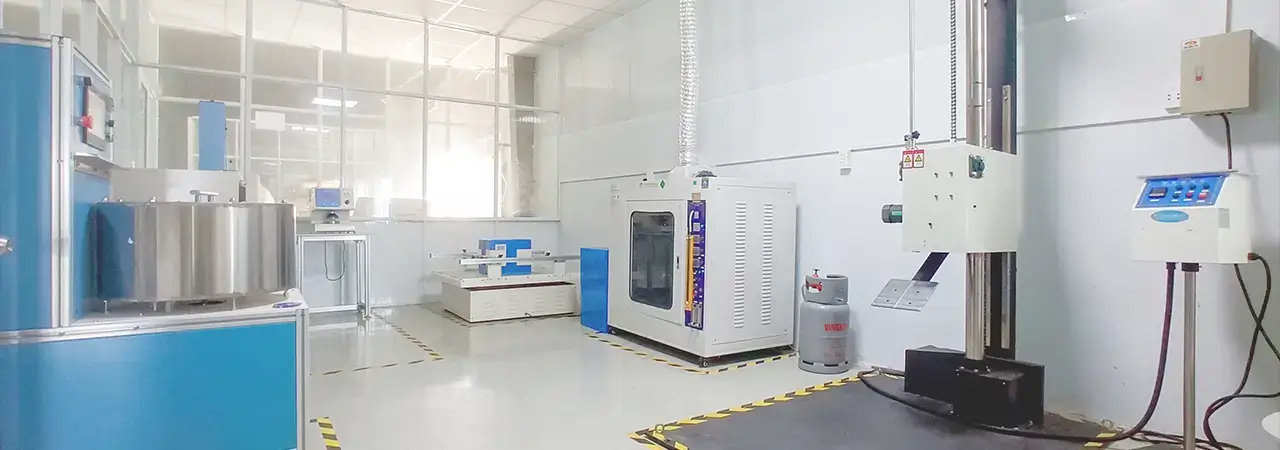
Every air purifier undergoes strict testing in our CNAS-accredited laboratory, including CADR performance, noise level, and durability assessments. We ensure consistent, high-quality output before any unit leaves the factory.
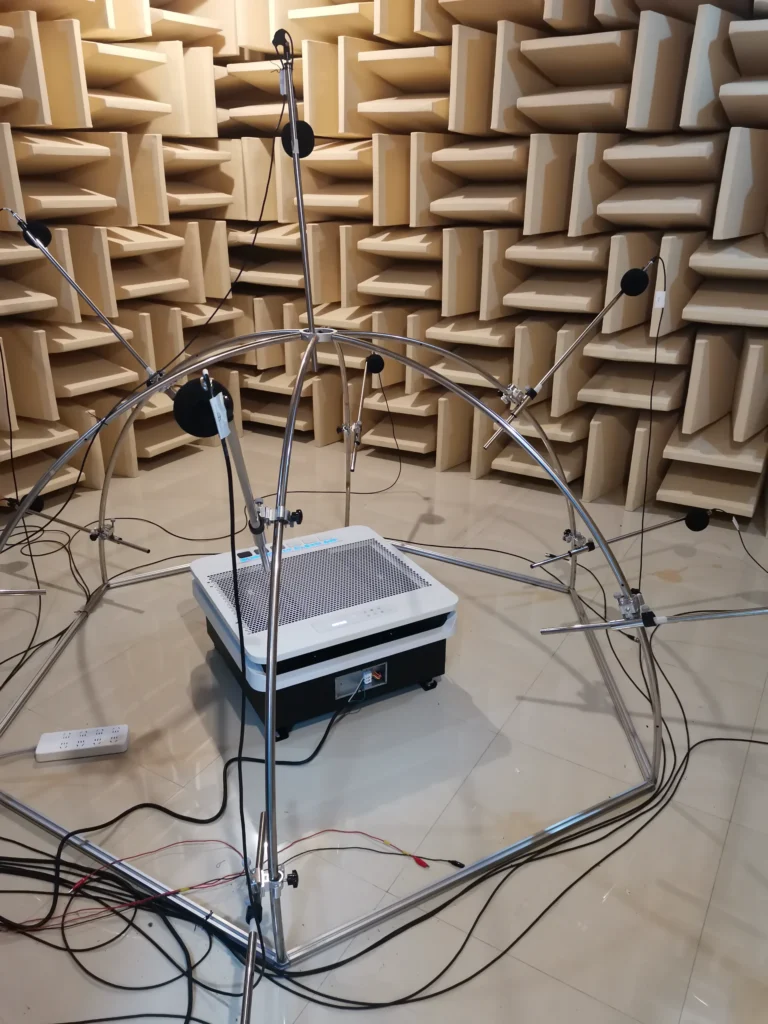
Anechoic chamber with soundproof walls and a setup featuring multiple microphones mounted on a metal frame surrounding a device for acoustic testing.

Certified to International Standards

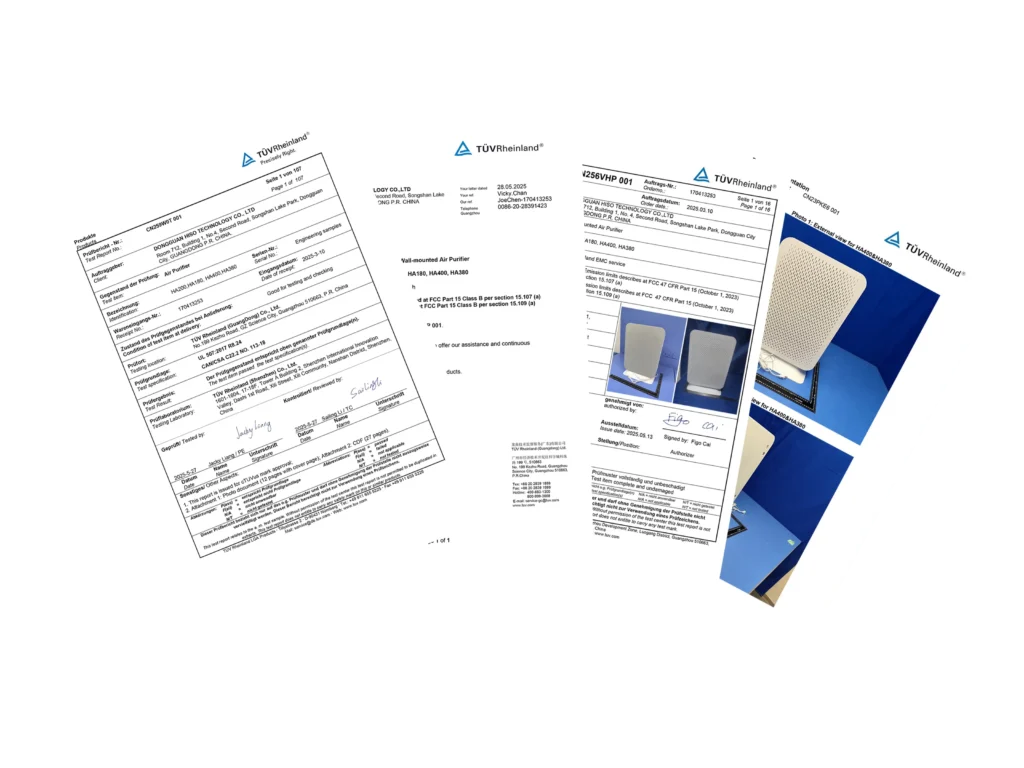
Our air purifiers are fully certified by ETL and FCC, ensuring they meet international standards for electrical safety and electromagnetic compatibility—trusted for both residential and commercial use.


Parlez à notre expert
ha200 ha400 ha180 ha380 certifications
energy star
Logo de certification UL
etl
logo fcc
logo CE
doe
aham
ca65
Logo du Conseil d'accréditation de la santé publique (PHAB)
logo rohs
logo
Logo Ashare - Fournisseur de solutions professionnelles pour la qualité de l'air

Why Choose Us

Choisissez HisoAir pour son expertise inégalée en matière de purification de l'air, où notre engagement "Purification maximale, bruit minimal" répond aux normes rigoureuses des plus grandes marques mondiales et des entreprises du classement Fortune 500, notamment : Henry Singh, JP Morgan, AFLAC et BlueAir.

Partenariats prestigieux: Reconnu par des leaders de l'industrie tels que Henry Singh, JP Morgan, Aflac et BlueAir, HisoAir est un fournisseur de premier plan de solutions de purification de l'air, qui répond aux exigences élevées des marques mondiales.

Technologie Decibel Cancellation™: Notre technologie unique permet une purification de l'air silencieuse et performante, ce qui rend nos purificateurs idéaux pour les environnements sensibles au bruit.

Des solutions sur mesure et performantes: Nous proposons des purificateurs d'air de première qualité adaptés aux besoins de chaque client, garantissant une qualité d'air supérieure et dépassant les attentes des clients.

Founders of HisoAir

Contactez des experts pour améliorer et maintenir la qualité de votre air intérieur.
alween lee hisoair founder
Alwen Lee
Founder & CEO

As the founder of HisoAir, I am deeply passionate about improving indoor air quality and the well-being of our environment.

With a commitment to clean air and healthy living spaces, I am dedicated to developing innovative solutions that make a significant difference.

My expertise lies in social media marketing and global brand distribution, allowing me to bring our air quality products to a wider audience.

evelyn
Evelyn Wen
Co-Founder

With over 16 years of experience as a Product and Quality Engineer in Apple's supply chain, Evelyn Wen is a dedicated expert in designing high-quality products that improve indoor air quality.

She is passionate about user experience and committed to creating innovative solutions that enhance the well-being of customers through cleaner, healthier living environments.

mr wu
Mr. Wu
Co-Founder

With over 20 years of experience in air treatment, he is an expert in product design and manufacturing. He has dedicated his career to developing advanced solutions for improving indoor air quality.

Passionate about innovation, he leads the design and production of high-performance air purification systems that create healthier, more comfortable living environments.

Global Manufacturing
- China+1 Strategy Ready

China / Vietnam / Thailand / Malaysia
Nous contacter

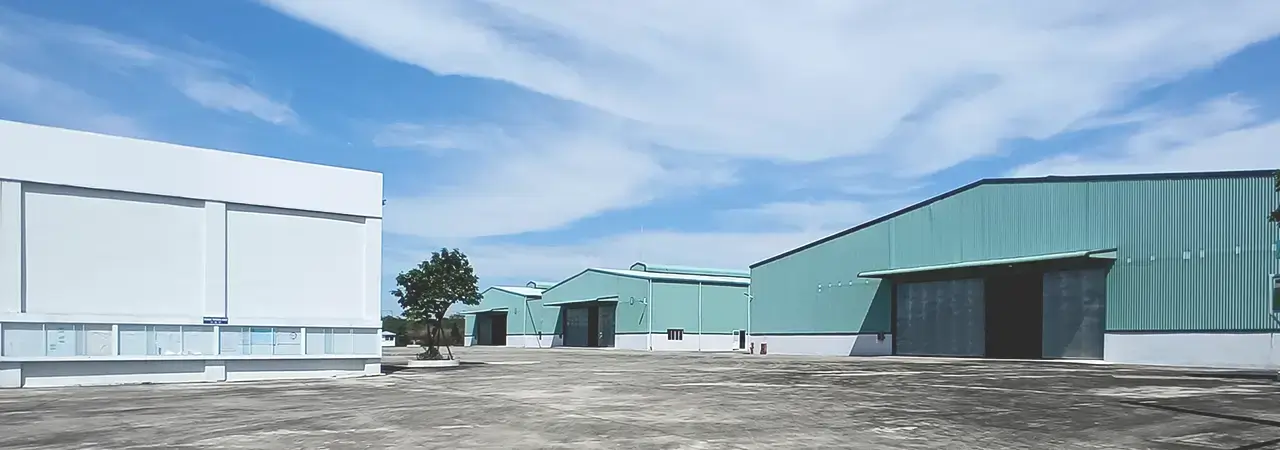
Usine du Vietnam

Rationaliser les échanges commerciaux avec les États-Unis grâce à la rentabilité et à la rapidité de livraison.
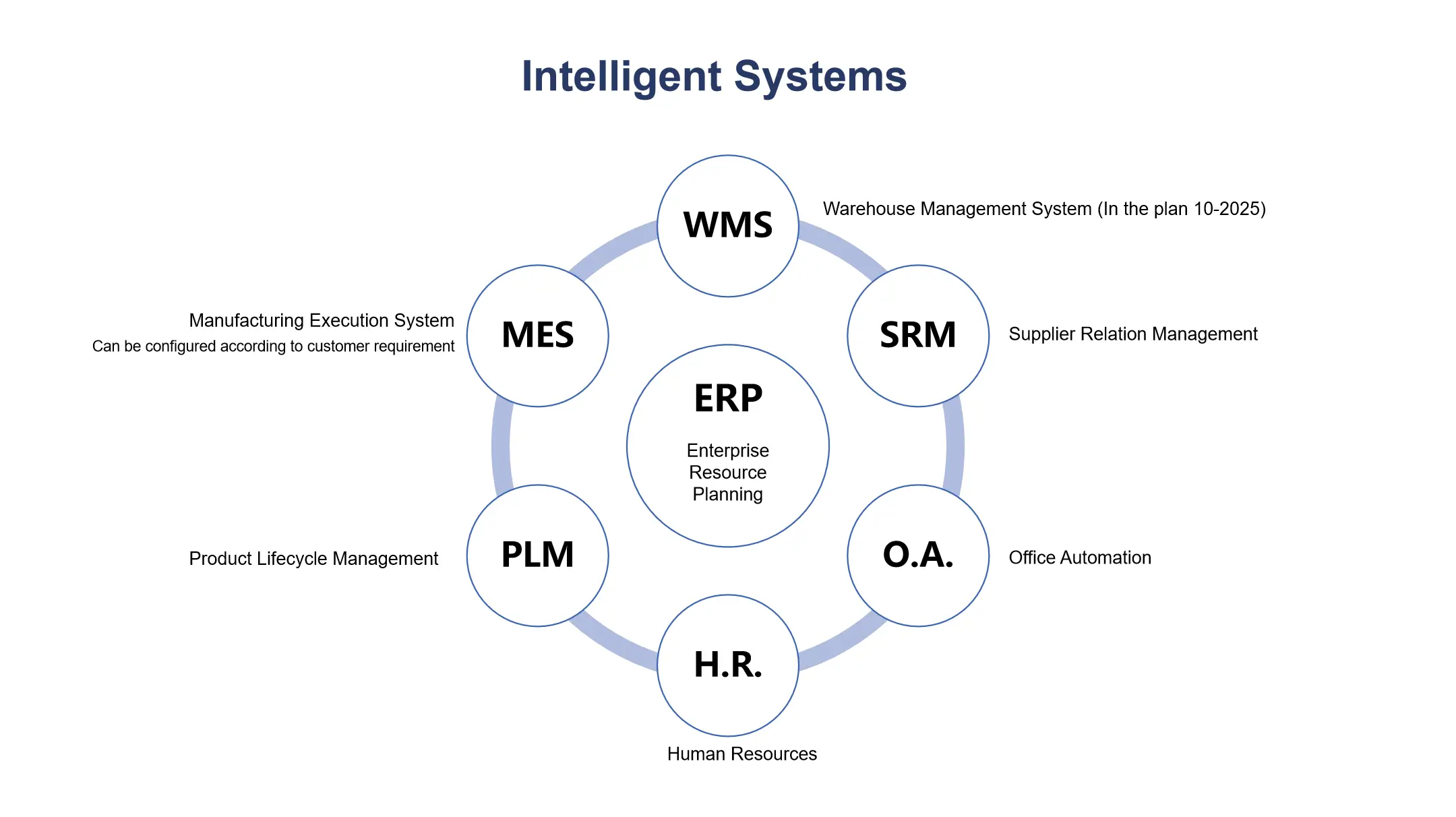
intelligent systems
  • Established: 2020
  • Building Area: 20000㎡
  • Focus On Environment-Friendly Appliances
  • Employee: 400+
  • Assembly Line: 4+3
  • Production Heating Elements In House
  • Own Testing & Verification Lab
  • Annual Capacity: 2 Million Units
vietnam1
vietnam
vietnam2
vietnam7
vietnam4
vietnam1
vietnam
vietnam2
vietnam7
vietnam4

Thaïlande Usine

Usine de remplacement en dehors de la Chine
hisoair usine de Thaïlandehisoair thailandaise usine 2

Private Label —Launch Your Brand Fast

Customize a proven platform and start shipping in weeks
home icon logo
Custom Logo
home icon color
Colour Palette
home icon material
Matériaux
home icon finish
Surface Finish
home icon package
Packaging Design
home icon img07
Production de masse
home icon delivery
Global Delivery

Customer Testimonial

" J'ai trouvé le site web d'hisoair sur Google et, pour être honnête, je n'étais pas sûr de leur fiabilité au début, mais ils ont répondu aux exigences de mon projet en un mois et demi. Et lorsque le projet a nécessité l'ajout urgent d'un capteur de CO2, ils ont fourni un nouvel échantillon en moins d'une semaine, ce qui fait d'eux le fabricant le plus professionnel et le plus orienté vers le client avec lequel j'ai jamais travaillé "
tms 1
Thomas
Fournisseur du gouvernement allemand
" Nous savons tous que le COVID a été une terrible catastrophe pour le monde entier, en particulier pour l'Inde, j'ai acheté un purificateur d'air chez HisoAir, cela a été très utile pour moi et mon bureau, ma maison, ma famille et mes amis. Je travaille avec Alwen depuis 7 ans, qui est de HisoAir, je peux dire que c'est une personne très fiable, très efficace et très professionnelle ".
témoignages de clients 2
Ranjith Bala
Importateur de produits médicaux en Inde
" Nous sommes une entreprise avec plus de 15 ans d'expérience dans le travail avec les institutions privées et les secteurs privés, nous avons collaboré avec Hiso pendant 3 ans, et nous sommes vraiment reconnaissants pour les travaux que Hiso nous a fournis. Nous sommes reconnaissants de la collaboration avec Cherry et M. Lee "
témoignages de clients
Herina
Hôpitaux et fournisseurs gouvernementaux de Roumanie

Questions fréquemment posées

A ceiling-mounted air purifier is a fixed air-cleaning system installed above occupied floor space. It draws room air through particle and optional gas-phase filtration before returning filtered air to the room, making it suitable for commercial spaces where floor space, continuous operation and fixed installation are important considerations.

It actively draws contaminated air upward, passes it through a pre-filter, an optional activated carbon gas-phase filter, and a primary HEPA filter. Clean air is then discharged back into the room either through a 360-degree diffuser or directional louvers.

A standard 900 sq.ft classroom typically requires at least 450-600 CFM of clean air delivery to achieve 3-4 Air Changes per Hour (ACH). This is often achieved using two HA800 units operating at medium speed to keep noise levels below 35 dBA.

Noise levels vary by fan speed and model. The HA800 platform ranges from an ultra-quiet 22.5 dBA at lowest speed up to 47.5 dBA at maximum 430 CFM delivery, optimized specifically for occupied environments.

Yes, they are highly recommended for schools. Ceiling installation removes the unit from the floor, eliminating tripping hazards and tampering risks while freeing up valuable classroom space.

Choose a ceiling-mounted system when preserving floor space, preventing tampering, and supporting long-term fixed operation are priorities. Choose a portable unit if you require mobility and immediate plug-and-play installation without facility modifications.

In standard commercial environments operating 12 hours a day, HEPA filters typically require replacement every 12 to 18 months. Pre-filters should be checked and cleaned or replaced every 3 to 6 months depending on particulate load.

Yes. The platform utilizes industrial-grade Brushless DC (BLDC) motors rated for continuous 24/7 commercial duty cycles without overheating or premature failure.

Yes, configured units equipped with gas-phase filtration utilize specialized activated carbon (and optional impregnates) to adsorb volatile organic compounds (VOCs), odors, and specific gaseous pollutants.

It can be suspended via threaded rods to the true ceiling or mounted directly to structural joists. It is designed to sit flush with or slightly below standard drop-ceiling grids.

Yes. The HA2000 series supports optional integration with PM2.5/CO2 sensors and can connect to Building Management Systems (BMS) via Modbus/RS485 or Wi-Fi modules.

Maintenance is performed from below. The hinged bottom access panel drops down safely on tethers, allowing filters to be pulled directly downward without requiring access to the ceiling plenum or specialized tools.

DEMANDER UN DEVIS

envoyez un message ci-dessous

Nous vous répondrons dans les plus brefs délais !

GARDER LE CONTACT

Informations sur le contact

Votre demande est importante pour nous.
Nous nous mettrons en contact rapidement et vos données resteront toujours sécurisées.
sales@hisoair.com
+86 138 0961 9940

Bureau des États-Unis2180 S WINEVILLE AVE ONTARIO, CA 91761

Bureau: Room 712~713, Building 1, No. 4, Second Road, Songshan Lake Park, Dongguan City, Guangdong Province, 523429.

Usine : Chine | Vietnam | Thaïlande | Malaisie

Contaminant Engineering•3 min read

PFAS Water Filtration Technologies Explained: Carbon, Resin & RO

Key Takeaway:

PFAS reduction depends on the specific compounds present, treatment media, contact time, water chemistry, and system design. Activated carbon, ion exchange, and Reverse Osmosis address PFAS through different mechanisms.

PFAS are a large family of persistent fluorinated compounds that can occur in drinking-water supplies. Their treatment behavior varies significantly by molecular structure, chain length, functional group, concentration, and the chemistry of the source water.

Granular Activated Carbon (GAC) removes PFAS primarily through adsorption. It is generally more effective for many longer-chain PFAS, while shorter-chain compounds tend to break through more quickly. Carbon performance depends on media properties, Empty Bed Contact Time (EBCT), competing organic matter, loading, and replacement frequency.

Ion-exchange resins use charged functional sites to capture many PFAS compounds. Properly selected anion-exchange media can provide high capacity and may perform better than conventional activated carbon for some shorter-chain PFAS, although performance still depends on water chemistry and competing ions.

Reverse Osmosis (RO) uses membrane separation rather than adsorption. Properly designed RO systems can provide broad reduction across many PFAS compounds as well as dissolved salts and other contaminants. Unlike carbon or resin, however, RO also produces a concentrate stream that must be managed.

No single technology should be selected from a PFAS label alone. System design should consider which PFAS compounds are present, their concentrations, required reduction targets, flow rate, media life, and the applicable third-party certification or validation requirements.

HisoAir Water Technical Series
Product Discovery•3 min read

How to Choose an Under-Sink Water Purifier for Modern Kitchens

Key Takeaway:

Match the treatment technology to your water quality first, then evaluate cabinet space, faucet configuration, flow rate, drain and power requirements, and filter replacement needs.

Choosing an under-sink water purifier starts with water chemistry. Carbon filtration is well suited to chlorine, taste, odor, and many organic contaminants, while Reverse Osmosis is more appropriate when dissolved salts, fluoride, nitrates, or broader dissolved contaminants need to be reduced.

For compact kitchens, tankless RO systems eliminate the conventional storage tank and can significantly reduce the space required under the sink. However, membrane capacity stated in GPD does not directly equal faucet flow. When comparing systems, check the actual dispensing flow rate, inlet-pressure requirement, recovery ratio, and whether a booster pump is required.

Installation architecture also matters. Many RO systems require a drain connection, electrical power, and either a dedicated drinking-water faucet or a compatible multi-function faucet. High-flow carbon systems can often connect directly to the existing cold-water line with a simpler installation, but pressure drop and available faucet flow should still be verified.

RO also removes much of the naturally occurring dissolved mineral content. Where taste or mineral balance is a priority, a post-RO remineralization stage can be added. Filter life should be evaluated by both rated capacity and local water quality rather than replacement time alone.

The right system is therefore not simply the smallest or highest-GPD model. It is the configuration that matches the target contaminants, available cabinet space, desired faucet setup, peak dispensing demand, and maintenance expectations.

HisoAir Water Technical Series
Water Quality•2 min read

What Does TDS Mean in Drinking Water? Measurement vs Contaminant Reality

Key Takeaway:

A TDS meter estimates the overall concentration of dissolved ionic substances from electrical conductivity. It cannot identify specific contaminants or determine whether water is chemically safe.

Total Dissolved Solids (TDS) refers to the combined concentration of dissolved substances in water. Most handheld TDS meters do not measure TDS directly. Instead, they measure electrical conductivity (EC) and convert that reading into an estimated parts-per-million (ppm) value.

This means a TDS reading can indicate how much dissolved ionic material is present, but not what that material actually is. Calcium, magnesium, sodium, nitrates, and other dissolved ions can all contribute to conductivity, yet a simple TDS meter cannot distinguish between them.

TDS meters are also not suitable for detecting trace contaminants such as PFAS, many VOCs, pesticides, pharmaceuticals, or disinfection byproducts. These substances may be present at concentrations far below the level needed to noticeably change electrical conductivity.

A low TDS reading therefore does not guarantee safe drinking water, and a higher TDS reading does not automatically indicate contamination. Water-treatment decisions should be based on laboratory testing for specific contaminants of concern rather than TDS alone.

HisoAir Water Technical Series
Technology Selection•2 min read

RO vs UF Water Filtration: Understanding Pore Sizes & Dissolved Minerals

Key Takeaway:

Ultrafiltration can reduce bacteria, turbidity, and suspended particles while retaining most naturally occurring dissolved minerals. Reverse Osmosis provides much broader reduction of dissolved salts and smaller contaminants.

Ultrafiltration (UF) typically uses hollow-fiber membranes with pore sizes in the approximate 0.01–0.1 micron range. These membranes physically retain turbidity, suspended solids, colloids, and many microorganisms while allowing dissolved minerals and salts to remain in the water.

Reverse Osmosis (RO) operates at a much finer separation level. Unlike UF, RO can substantially reduce dissolved ions such as sodium, calcium, fluoride, nitrates, and other contributors to total dissolved solids (TDS). This makes RO more suitable when dissolved-salt reduction is a primary treatment objective.

UF generally requires less system pressure and produces little or no continuous concentrate stream in many point-of-use configurations. RO typically requires greater pressure and produces a reject-water stream, but delivers broader contaminant reduction.

For water with acceptable TDS and mineral content, UF can be a simpler mineral-retaining treatment option. Where dissolved salts, fluoride, nitrates, or broader dissolved contaminants are a concern, RO is generally the more appropriate technology.

HisoAir Water Technical Series
Technology Selection•4 min read

Carbon Block vs Reverse Osmosis: Which Fits Your Need?

Key Takeaway:

Choose RO for dissolved inorganic salts and heavy metals; choose Carbon Block for chemical taste/odor, no wastewater, and high line-pressure flow.

Reverse Osmosis (RO) and Carbon Block filtration represent two fundamentally different treatment methods: membrane separation and adsorption. Understanding these differences helps determine which technology is better suited to a specific water-quality requirement.

Reverse Osmosis uses a semi-permeable membrane with pore sizes of approximately 0.0001 microns. It can significantly reduce dissolved inorganic contaminants such as TDS, fluoride, nitrates, and certain heavy metals. Because water must be forced through the membrane, RO systems require sufficient pressure or a booster pump and generate a concentrated wastewater stream.

Carbon Block filtration relies primarily on adsorption through compressed activated carbon, commonly with nominal pore sizes around 0.5–5 microns. It is highly effective for chlorine, chloramines, VOCs, taste, and odor, while allowing substantially higher direct-flow rates without producing wastewater.

From an operating perspective, Carbon Block systems are generally simpler, require less energy, and avoid the water loss associated with RO. RO involves higher system complexity and operating cost, but provides substantially broader reduction of dissolved contaminants that Carbon Block alone cannot address.

HisoAir Water Technical Series

DEMANDER UN DEVIS