S’ouvre dans un nouvel onglet
Solutions innovantes pour la qualité de l'air
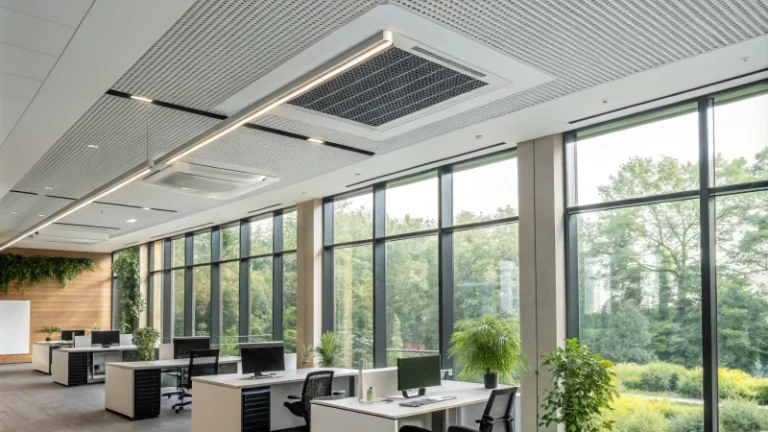
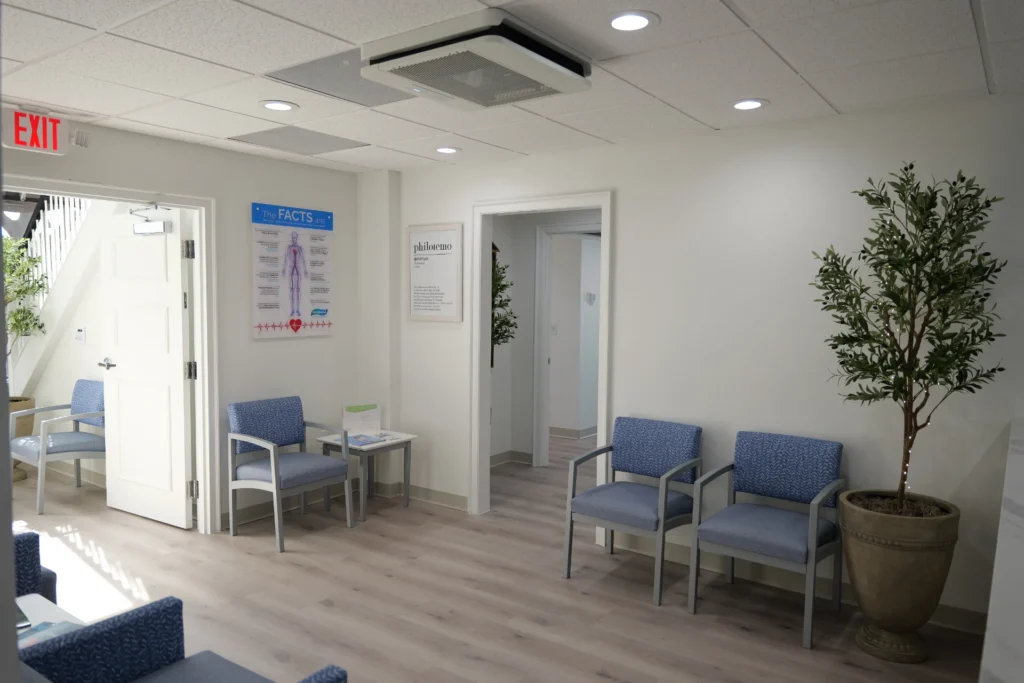
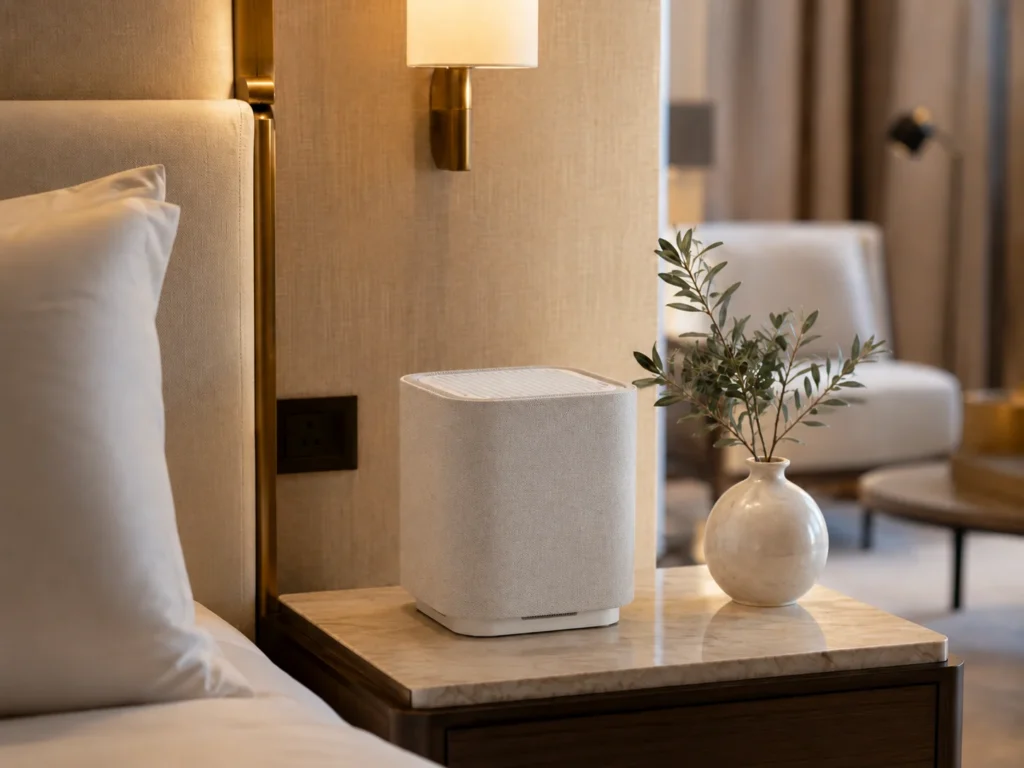
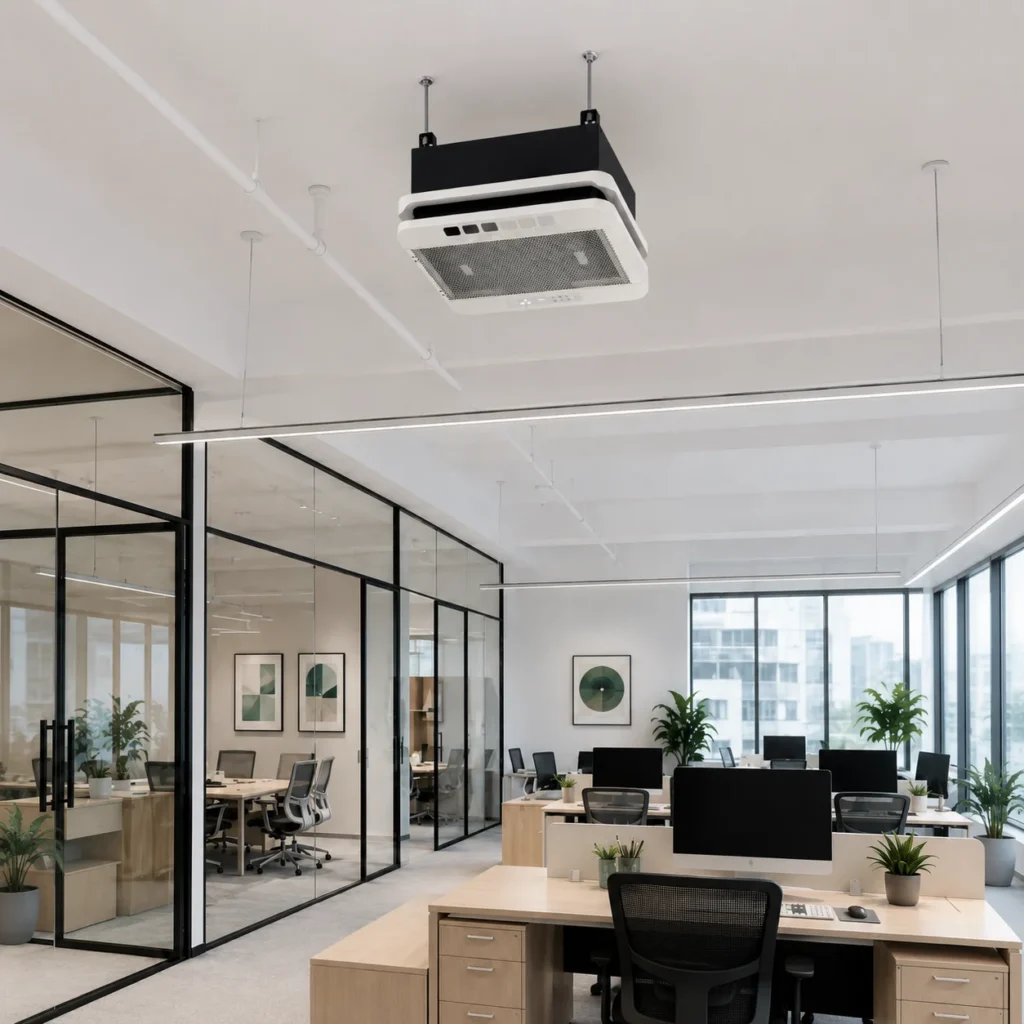
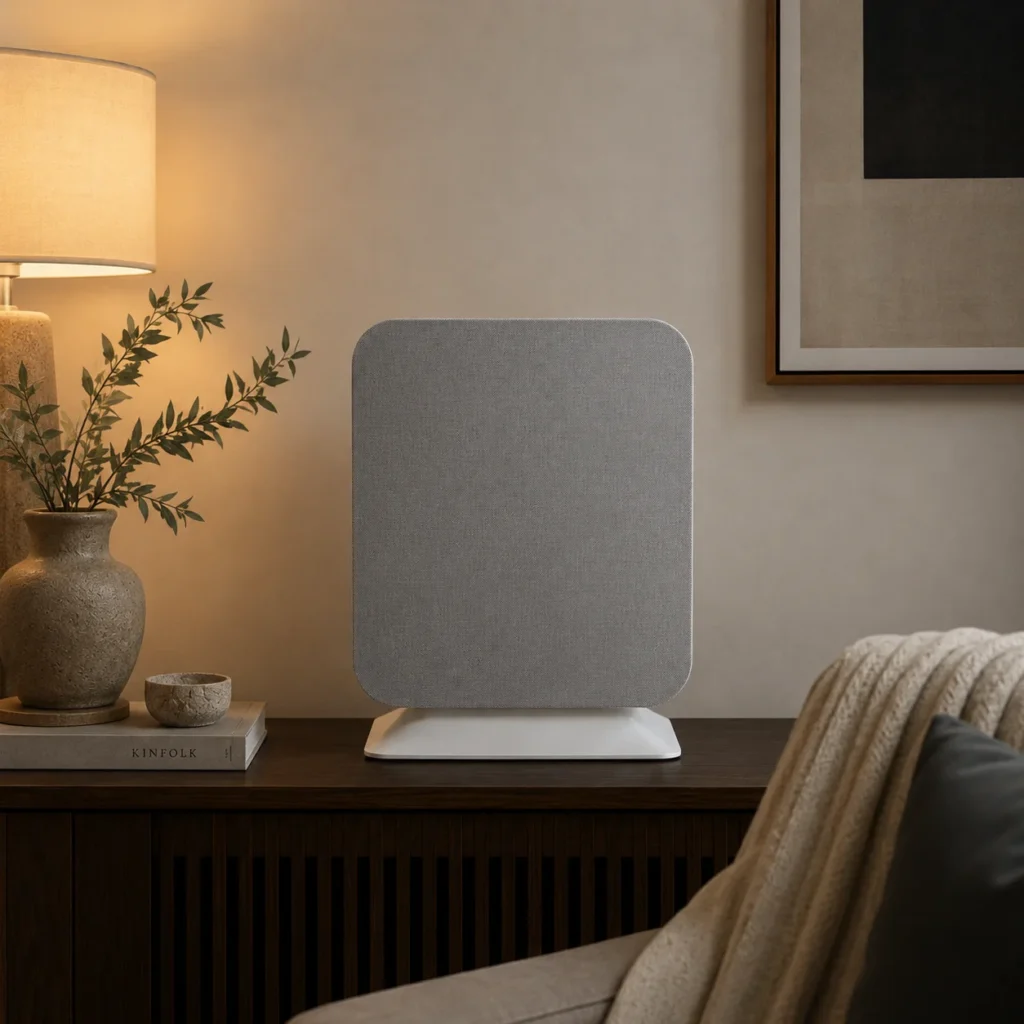
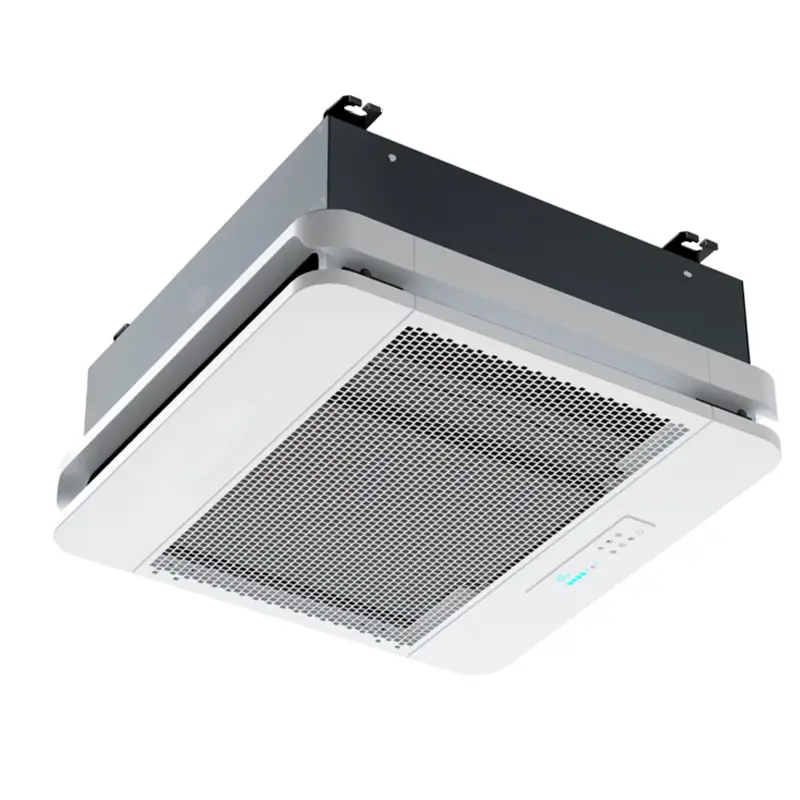
Un climatiseur de plafond moderne au design épuré et aux commandes numériques.

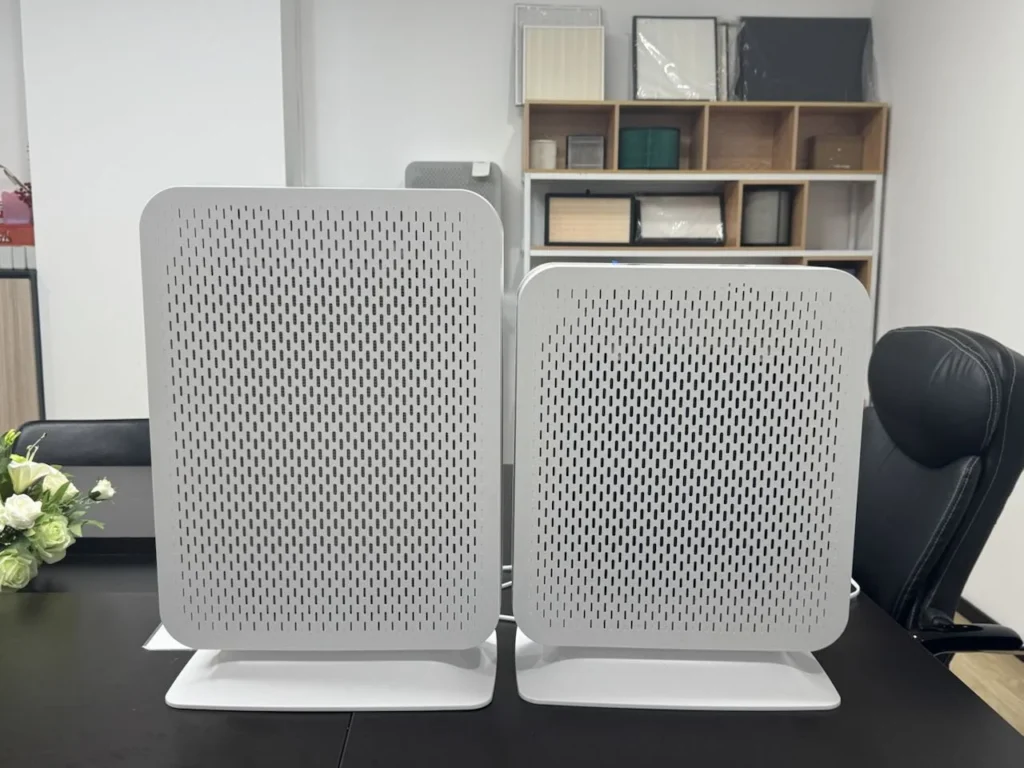
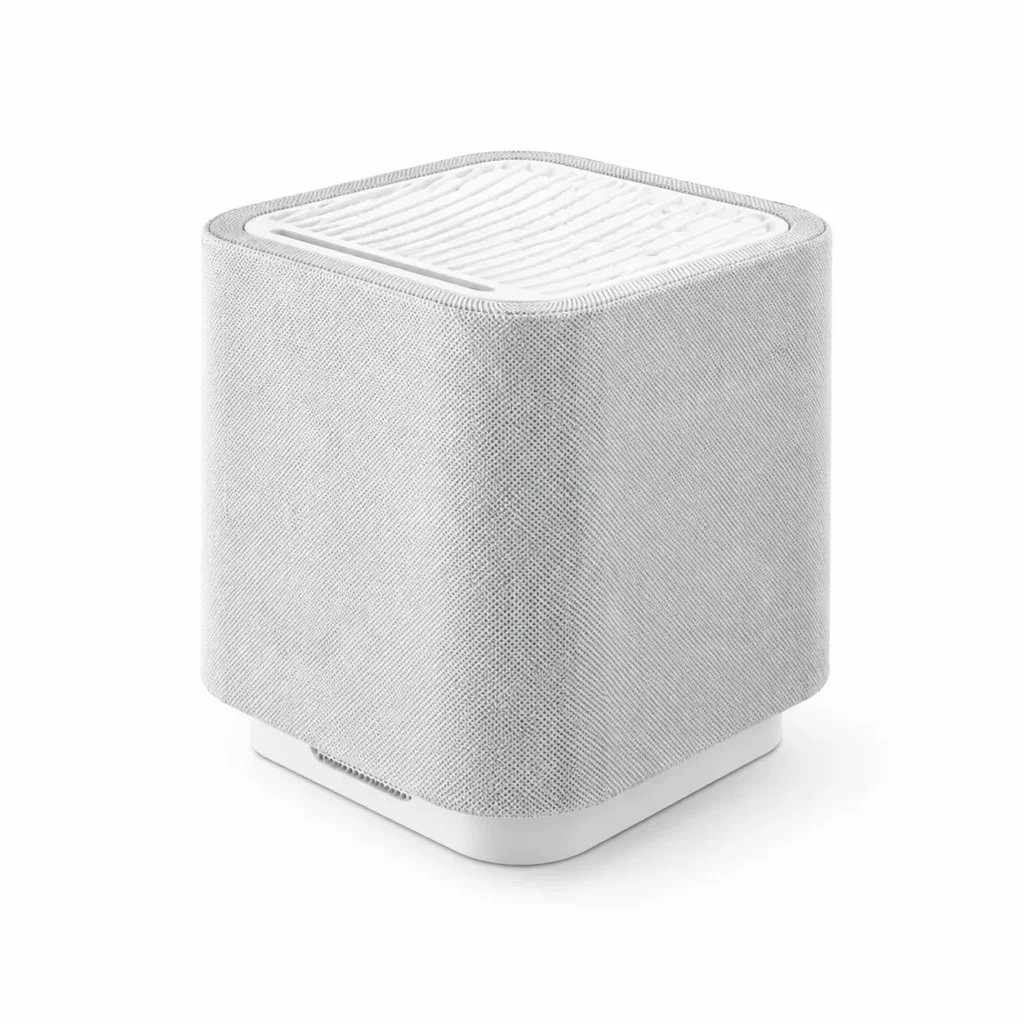
Purificateur d'air de plafond HA800

  • Puissant et silencieux: Équipé d'une filtration HEPA pour une purification efficace tout en maintenant un fonctionnement ultra-silencieux pour divers environnements.
  • Conception compacte, large couverture: Covers spaces of 50-80m² with four air volume options to suit various needs.
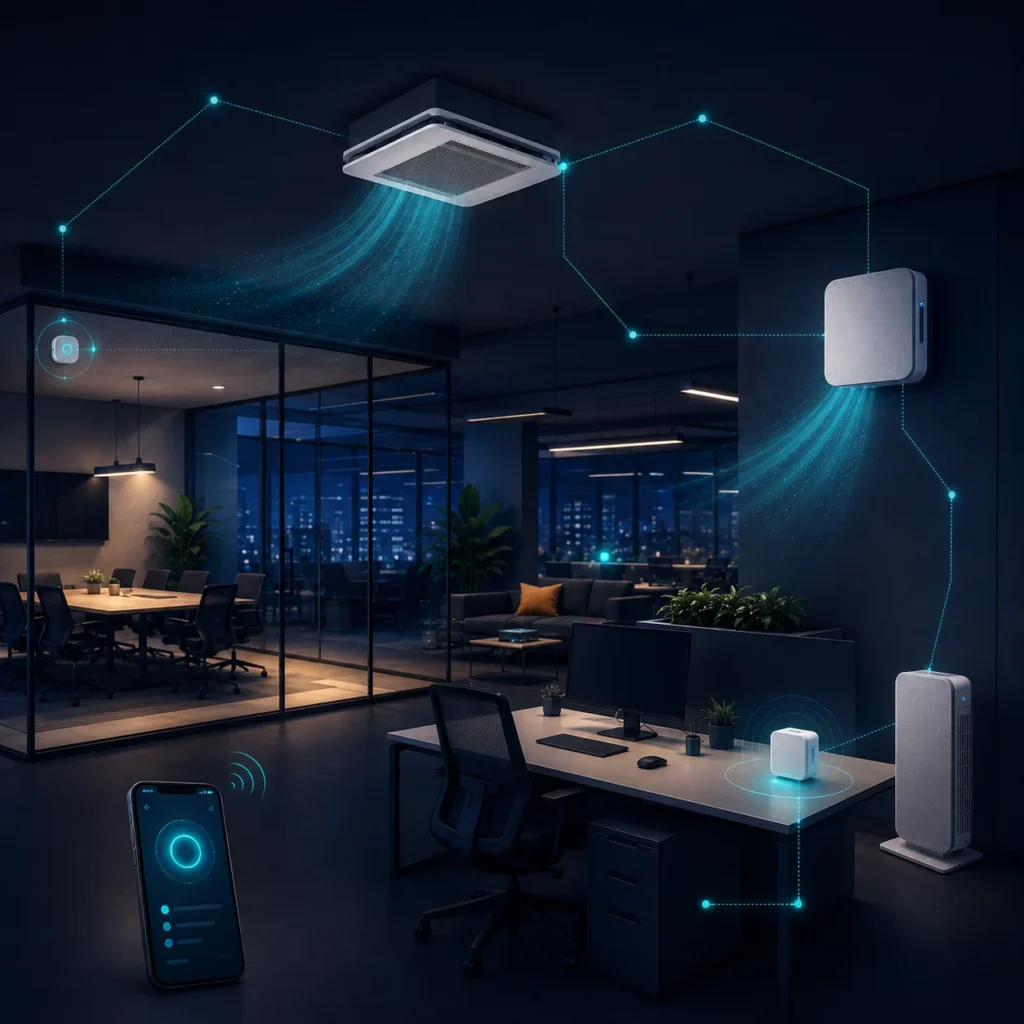
  • Capteur radar intégré: Détecte l'occupation des pièces en temps réel et ajuste automatiquement le fonctionnement pour une performance et une efficacité énergétique optimales.
  • Circulation efficace de l'air: Favorise un flux d'air régulier, garantissant une distribution uniforme de l'air pur dans les grands espaces tels que les salles de conférence et les bureaux.
  • Gestion intelligente de l'énergie: S'ajuste automatiquement en fonction de l'occupation, économisant l'énergie tout en maintenant une qualité d'air supérieure.
Demande de devis

Description du produit

CEILING-MOUNTED AIR PURIFICATION

High-Airflow Purification Without Taking Up Floor Space

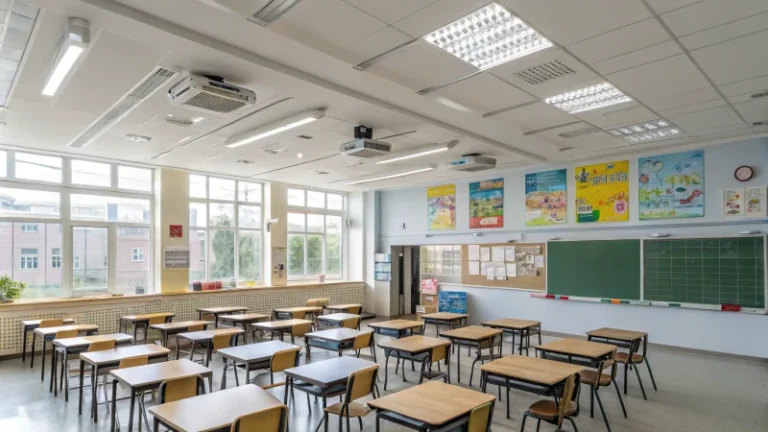
The HA800 is a commercial ceiling-mounted air purifier designed for offices, classrooms, meeting rooms and other occupied spaces where floor space, airflow and acoustic performance matter.

Its metal ceiling-integrated design combines up to 700 m³/h (414 CFM) airflow with H13 HEPA filtration and four operating levels, providing a fixed air-purification solution without adding freestanding equipment to the room.
700 m³/h Maximum Airflow
22–47 dB Specified Noise Range*
H13 HEPA Standard Filtration
50–80 m² Recommended Area*
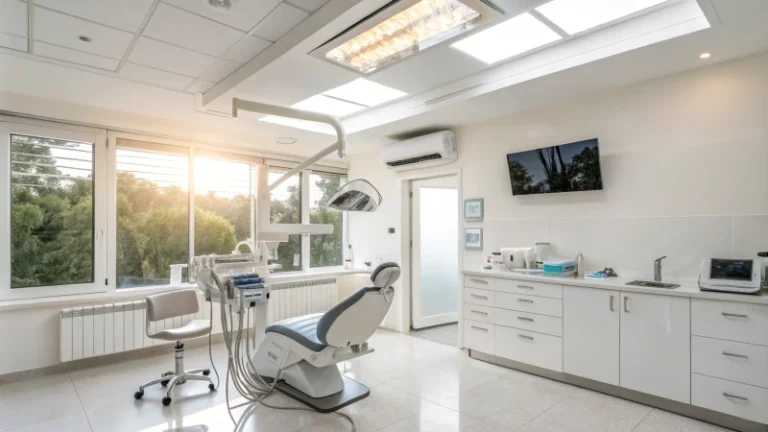
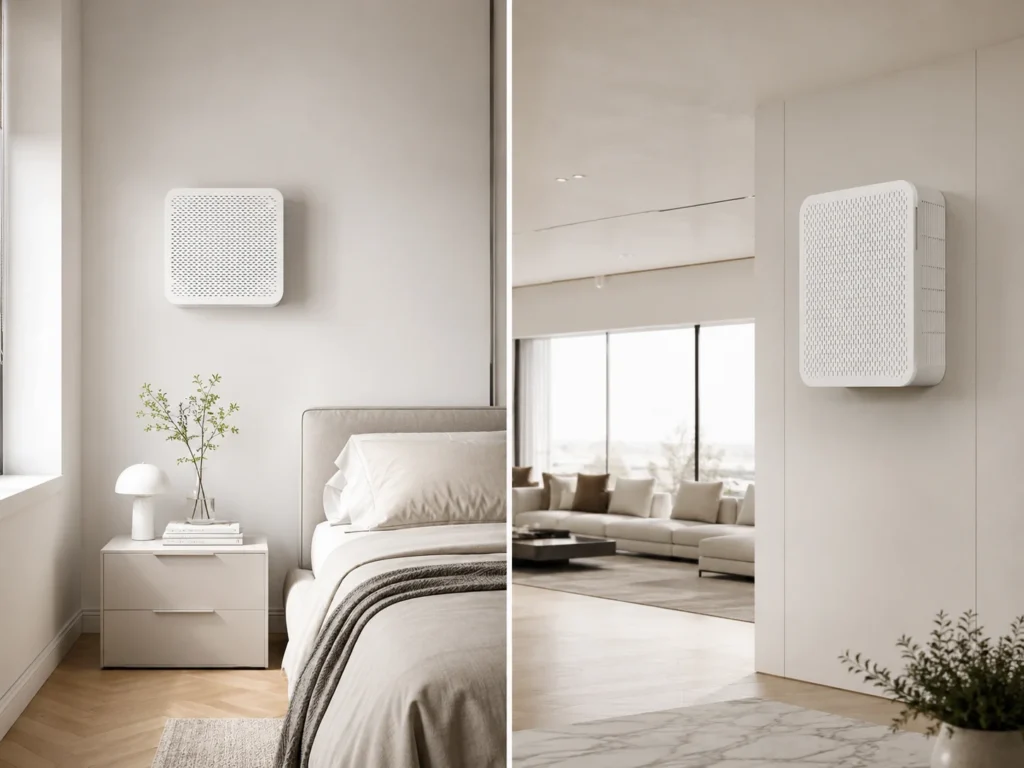
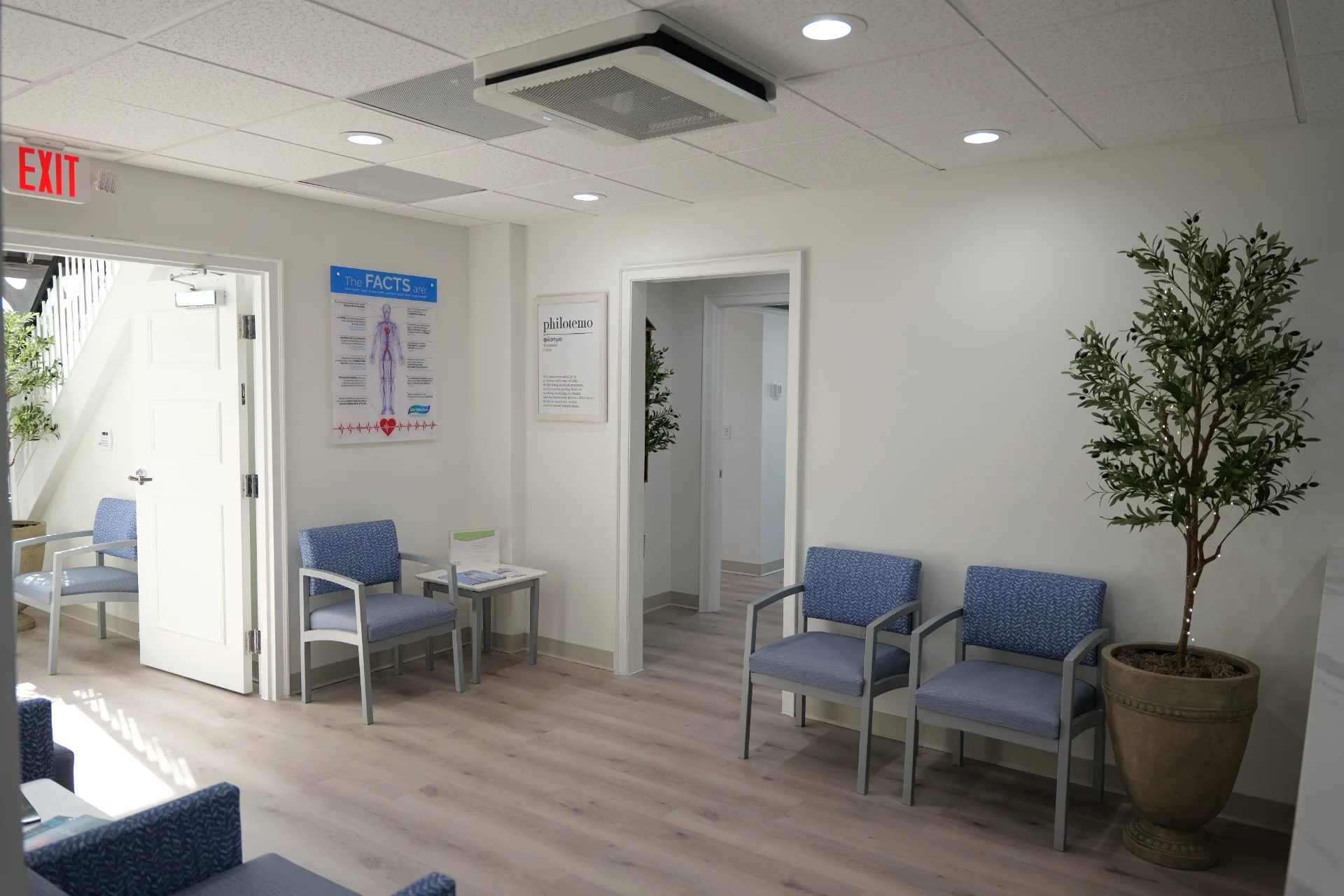
HA800 ceiling-mounted air purifier installed in a commercial space
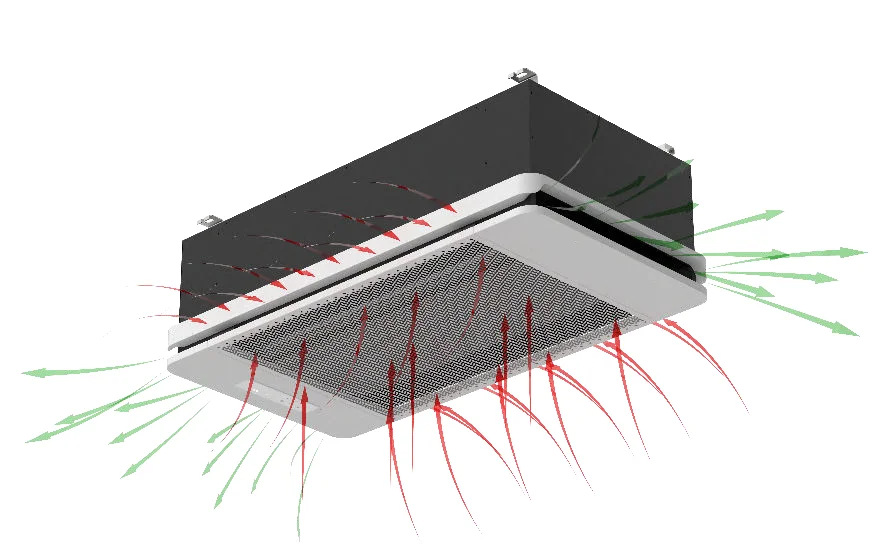
HA800 ceiling air purifier airflow design
AIRFLOW & ACOUSTICS

Four Airflow Levels for Different Commercial Environments

The HA800 provides four airflow settings from 160 to 700 m³/h. This allows airflow output to be matched to different room conditions while maintaining a specified acoustic range of 22–47 dB.

160 m³/h 22 dB*
280 m³/h 27 dB*
460 m³/h 38 dB*
700 m³/h 47 dB*
Explore Ceiling Air Purifier Engineering →
SPACE-SAVING DESIGN

Designed for Permanent Ceiling Installation

The HA800 uses a durable metal enclosure with a 490 × 490 mm footprint designed for ceiling-mounted installation. Moving the purification system above the occupied space helps preserve usable floor and wall area while maintaining a clean, integrated appearance.

  • Fixed ceiling-mounted configuration
  • Metal construction for commercial applications
  • Suitable for offices, classrooms and meeting spaces
  • Touch-button and remote-control operation
HA800 commercial ceiling installation and space-saving design
HA800 built-in proximity sensor and control detail
CONFIGURABLE PLATFORM

Built-In Proximity Sensor with Optional Smart Upgrades

The standard HA800 configuration includes a capteur de proximité, touch controls and remote control. For projects requiring additional indoor-air-quality monitoring, filtration or connectivity, the platform can be configured with selected optional functions.

PM2.5 Sensor CO₂ Sensor Carbone activé Wi-Fi / Tuya UVC

Optional functions depend on the final product configuration and project requirements.

* Performance figures shown above should be maintained against the latest approved HA800 product specification and applicable test data.
Spécifications

Tension
110V/ 220V, 50-60Hz
Puissance
75W
Matériau
Métal
Bruit
22-47 dB
Affichage
Affichage LED
Capteur
capteur de proximité
Taille de la machine
636*636*255mm
Domaine d'application
50-80m²
Gear 1 CADR - Noise
160m³/h (94 CFM)-22dB
Gear 2 CADR - Noise
280m³/h (167 CFM)-27dB
Gear 3 CADR - Noise
460m³/h (274 CFM)-38dB
Gear 4 CADR - Noise
700m³/h (414 CFM)-47dB
Filtre
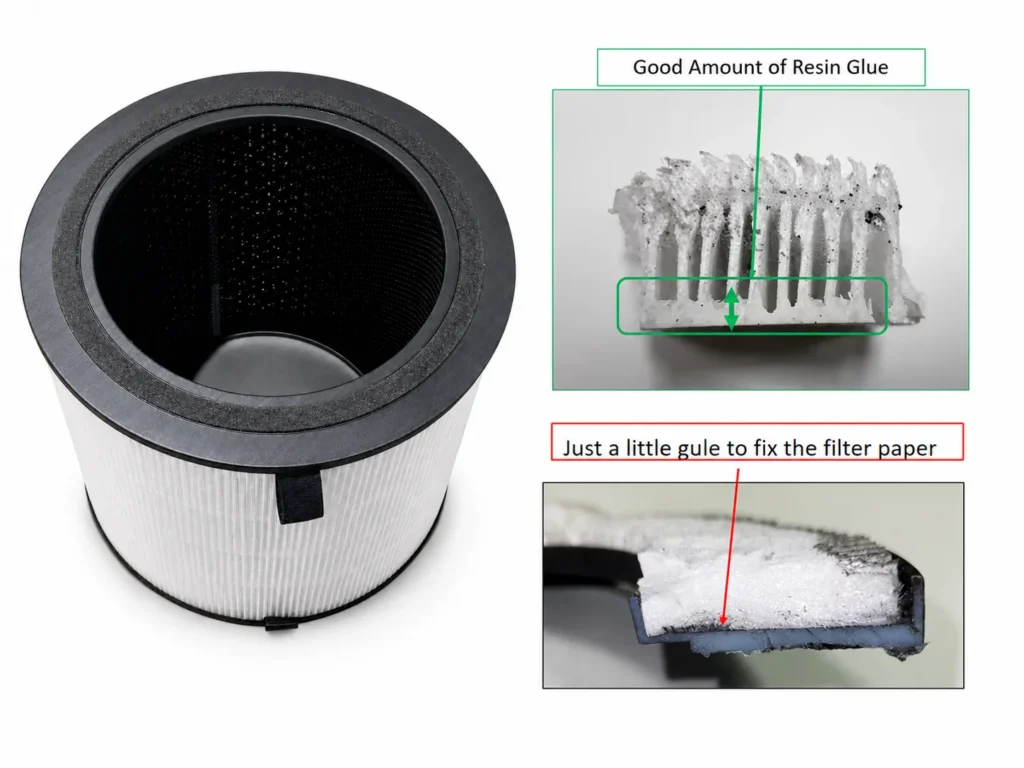
Préfiltre+Filtre HEPA H13
Taille du filtre
395mm*230mm*80mm
Quantité de filtres
2pcs
Surface du filtre HEPA
7.2m²
Contrôle :
Bouton tactile + Télécommande
Function for option
UVC lamp, PM2.5 sensor, CO2 sensor, WIFI (Tuya),Activated carbon filter

Téléchargements de documents connexes

Aucun téléchargement n'est disponible.

Pourquoi choisir nos purificateurs d'air ?

High-Performance Air Purification
Advanced Filtration Options
99,9% bactérienne
taux d'élimination
CADR élevé
(Taux de distribution d'air pur)
H13/H14 HEPA Filtration Options
Optional 270–280 nm UVC Module
H14 H13 extended filter life
lifespan HEPA filters
Third-Party Tested Filtration Performance

Les 3 premiers fabricants de purificateurs d'air OEM/ODM en Chine

Marquage privé pour les purificateurs d'air de marque depuis des décennies

HisoAir propose des services de marquage privé de purificateurs d'air aux clients qui ont déjà examiné et approuvé la conception et les spécifications des purificateurs d'air HisoAir. Une fois l'accord signé, les produits sélectionnés seront étiquetés au nom du client.

Purificateurs d'air OEM du début à la fin

HisoAir fournit des services de purification d'air OEM aux partenaires qui ont les spécifications nécessaires pour un produit. HisoAir assure la recherche, la conception, l'ingénierie, les maquettes ou les modifications, les essais et la production en série sur la base de la conception finalisée du client.

Logo de la société 3M en rouge.
logo du transporteur
logo haier
Logo Alen - La confiance dans la purification de l'air
tcl logo 0
Logo Honeywell - Leader des solutions de purification et de filtration de l'air
Logo LG - Innovateur en matière d'appareils ménagers intelligents et de solutions de purification de l'air
Logo Philips - Leader dans le domaine des technologies de la santé et des solutions de purification de l'air

Des marques mondiales de renom lui font confiance

Avec plus de 20 ans d'expertise, nous sommes spécialisés dans la fourniture de solutions IAQ qui s'intègrent parfaitement aux besoins des marques les plus reconnues au monde. Faites équipe avec nous pour obtenir des performances exceptionnelles adaptées à votre marché.

TESTIMONIALES

" J'ai trouvé le site web d'hisoair sur Google et, pour être honnête, je n'étais pas sûr de leur fiabilité au début, mais ils ont répondu aux exigences de mon projet en un mois et demi. Et lorsque le projet a nécessité l'ajout urgent d'un capteur de CO2, ils ont fourni un nouvel échantillon en moins d'une semaine, ce qui fait d'eux le fabricant le plus professionnel et le plus orienté vers le client avec lequel j'ai jamais travaillé "
tms 1
Thomas
Fournisseur du gouvernement allemand
" Nous savons tous que le COVID a été une terrible catastrophe pour le monde entier, en particulier pour l'Inde, j'ai acheté un purificateur d'air chez HisoAir, cela a été très utile pour moi et mon bureau, ma maison, ma famille et mes amis. Je travaille avec Alwen depuis 7 ans, qui est de HisoAir, je peux dire que c'est une personne très fiable, très efficace et très professionnelle ".
témoignages de clients 2
Ranjith Bala
Importateur de produits médicaux en Inde
" Nous sommes une entreprise avec plus de 15 ans d'expérience dans le travail avec les institutions privées et les secteurs privés, nous avons collaboré avec Hiso pendant 3 ans, et nous sommes vraiment reconnaissants pour les travaux que Hiso nous a fournis. Nous sommes reconnaissants de la collaboration avec Cherry et M. Lee "
témoignages de clients
Herina
Hôpitaux et fournisseurs gouvernementaux de Roumanie

Rejoignez les leaders mondiaux qui s'appuient sur notre expertise en matière de solutions de filtration de l'air.

Votre demande est importante pour nous. Nous vous contacterons dans les plus brefs délais et vos données resteront toujours sécurisées.
Nous avons collaboré avec Hiso pendant 3 ans et nous sommes vraiment reconnaissants pour les travaux qu'Hiso nous a fournis. Nous sommes reconnaissants de la collaboration avec Cherry et M. Lee.
tms 1
Thomas
Fournisseur du gouvernement allemand
Contaminant Engineering•3 min read

PFAS Water Filtration Technologies Explained: Carbon, Resin & RO

Key Takeaway:

PFAS reduction depends on the specific compounds present, treatment media, contact time, water chemistry, and system design. Activated carbon, ion exchange, and Reverse Osmosis address PFAS through different mechanisms.

PFAS are a large family of persistent fluorinated compounds that can occur in drinking-water supplies. Their treatment behavior varies significantly by molecular structure, chain length, functional group, concentration, and the chemistry of the source water.

Granular Activated Carbon (GAC) removes PFAS primarily through adsorption. It is generally more effective for many longer-chain PFAS, while shorter-chain compounds tend to break through more quickly. Carbon performance depends on media properties, Empty Bed Contact Time (EBCT), competing organic matter, loading, and replacement frequency.

Ion-exchange resins use charged functional sites to capture many PFAS compounds. Properly selected anion-exchange media can provide high capacity and may perform better than conventional activated carbon for some shorter-chain PFAS, although performance still depends on water chemistry and competing ions.

Reverse Osmosis (RO) uses membrane separation rather than adsorption. Properly designed RO systems can provide broad reduction across many PFAS compounds as well as dissolved salts and other contaminants. Unlike carbon or resin, however, RO also produces a concentrate stream that must be managed.

No single technology should be selected from a PFAS label alone. System design should consider which PFAS compounds are present, their concentrations, required reduction targets, flow rate, media life, and the applicable third-party certification or validation requirements.

HisoAir Water Technical Series
Product Discovery•3 min read

How to Choose an Under-Sink Water Purifier for Modern Kitchens

Key Takeaway:

Match the treatment technology to your water quality first, then evaluate cabinet space, faucet configuration, flow rate, drain and power requirements, and filter replacement needs.

Choosing an under-sink water purifier starts with water chemistry. Carbon filtration is well suited to chlorine, taste, odor, and many organic contaminants, while Reverse Osmosis is more appropriate when dissolved salts, fluoride, nitrates, or broader dissolved contaminants need to be reduced.

For compact kitchens, tankless RO systems eliminate the conventional storage tank and can significantly reduce the space required under the sink. However, membrane capacity stated in GPD does not directly equal faucet flow. When comparing systems, check the actual dispensing flow rate, inlet-pressure requirement, recovery ratio, and whether a booster pump is required.

Installation architecture also matters. Many RO systems require a drain connection, electrical power, and either a dedicated drinking-water faucet or a compatible multi-function faucet. High-flow carbon systems can often connect directly to the existing cold-water line with a simpler installation, but pressure drop and available faucet flow should still be verified.

RO also removes much of the naturally occurring dissolved mineral content. Where taste or mineral balance is a priority, a post-RO remineralization stage can be added. Filter life should be evaluated by both rated capacity and local water quality rather than replacement time alone.

The right system is therefore not simply the smallest or highest-GPD model. It is the configuration that matches the target contaminants, available cabinet space, desired faucet setup, peak dispensing demand, and maintenance expectations.

HisoAir Water Technical Series
Water Quality•2 min read

What Does TDS Mean in Drinking Water? Measurement vs Contaminant Reality

Key Takeaway:

A TDS meter estimates the overall concentration of dissolved ionic substances from electrical conductivity. It cannot identify specific contaminants or determine whether water is chemically safe.

Total Dissolved Solids (TDS) refers to the combined concentration of dissolved substances in water. Most handheld TDS meters do not measure TDS directly. Instead, they measure electrical conductivity (EC) and convert that reading into an estimated parts-per-million (ppm) value.

This means a TDS reading can indicate how much dissolved ionic material is present, but not what that material actually is. Calcium, magnesium, sodium, nitrates, and other dissolved ions can all contribute to conductivity, yet a simple TDS meter cannot distinguish between them.

TDS meters are also not suitable for detecting trace contaminants such as PFAS, many VOCs, pesticides, pharmaceuticals, or disinfection byproducts. These substances may be present at concentrations far below the level needed to noticeably change electrical conductivity.

A low TDS reading therefore does not guarantee safe drinking water, and a higher TDS reading does not automatically indicate contamination. Water-treatment decisions should be based on laboratory testing for specific contaminants of concern rather than TDS alone.

HisoAir Water Technical Series
Technology Selection•2 min read

RO vs UF Water Filtration: Understanding Pore Sizes & Dissolved Minerals

Key Takeaway:

Ultrafiltration can reduce bacteria, turbidity, and suspended particles while retaining most naturally occurring dissolved minerals. Reverse Osmosis provides much broader reduction of dissolved salts and smaller contaminants.

Ultrafiltration (UF) typically uses hollow-fiber membranes with pore sizes in the approximate 0.01–0.1 micron range. These membranes physically retain turbidity, suspended solids, colloids, and many microorganisms while allowing dissolved minerals and salts to remain in the water.

Reverse Osmosis (RO) operates at a much finer separation level. Unlike UF, RO can substantially reduce dissolved ions such as sodium, calcium, fluoride, nitrates, and other contributors to total dissolved solids (TDS). This makes RO more suitable when dissolved-salt reduction is a primary treatment objective.

UF generally requires less system pressure and produces little or no continuous concentrate stream in many point-of-use configurations. RO typically requires greater pressure and produces a reject-water stream, but delivers broader contaminant reduction.

For water with acceptable TDS and mineral content, UF can be a simpler mineral-retaining treatment option. Where dissolved salts, fluoride, nitrates, or broader dissolved contaminants are a concern, RO is generally the more appropriate technology.

HisoAir Water Technical Series
Technology Selection•4 min read

Carbon Block vs Reverse Osmosis: Which Fits Your Need?

Key Takeaway:

Choose RO for dissolved inorganic salts and heavy metals; choose Carbon Block for chemical taste/odor, no wastewater, and high line-pressure flow.

Reverse Osmosis (RO) and Carbon Block filtration represent two fundamentally different treatment methods: membrane separation and adsorption. Understanding these differences helps determine which technology is better suited to a specific water-quality requirement.

Reverse Osmosis uses a semi-permeable membrane with pore sizes of approximately 0.0001 microns. It can significantly reduce dissolved inorganic contaminants such as TDS, fluoride, nitrates, and certain heavy metals. Because water must be forced through the membrane, RO systems require sufficient pressure or a booster pump and generate a concentrated wastewater stream.

Carbon Block filtration relies primarily on adsorption through compressed activated carbon, commonly with nominal pore sizes around 0.5–5 microns. It is highly effective for chlorine, chloramines, VOCs, taste, and odor, while allowing substantially higher direct-flow rates without producing wastewater.

From an operating perspective, Carbon Block systems are generally simpler, require less energy, and avoid the water loss associated with RO. RO involves higher system complexity and operating cost, but provides substantially broader reduction of dissolved contaminants that Carbon Block alone cannot address.

HisoAir Water Technical Series

DEMANDER UN DEVIS