
You see many water filters on the market, and it gets confusing. If you choose the wrong one, you might still drink dirty water. I will explain the engineering differences today.
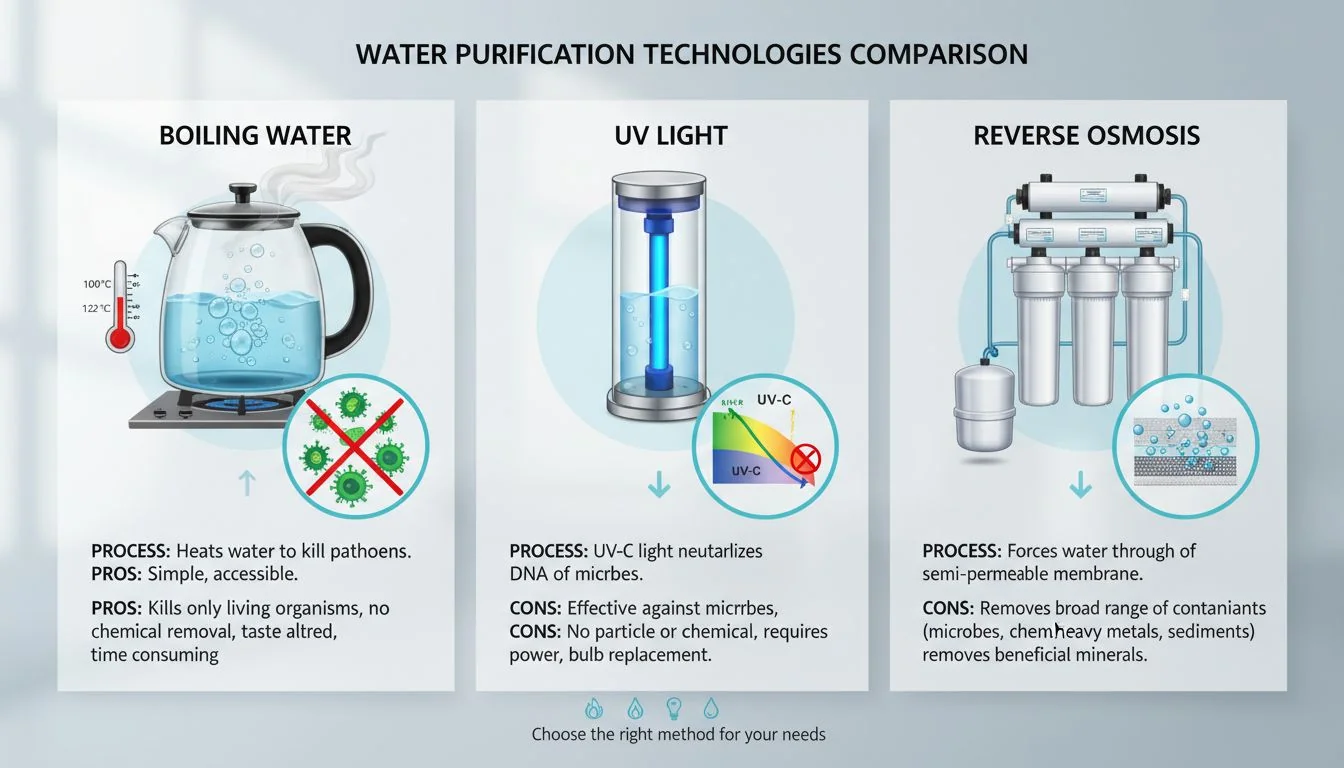
The best purification method depends on what you need to remove. Boiling kills bacteria but concentrates heavy metals. UV light neutralizes viruses but leaves chemicals. Reverse Osmosis1 (RO) physically removes solids and chemicals. For total safety, a system combining RO and UV offers the highest protection.
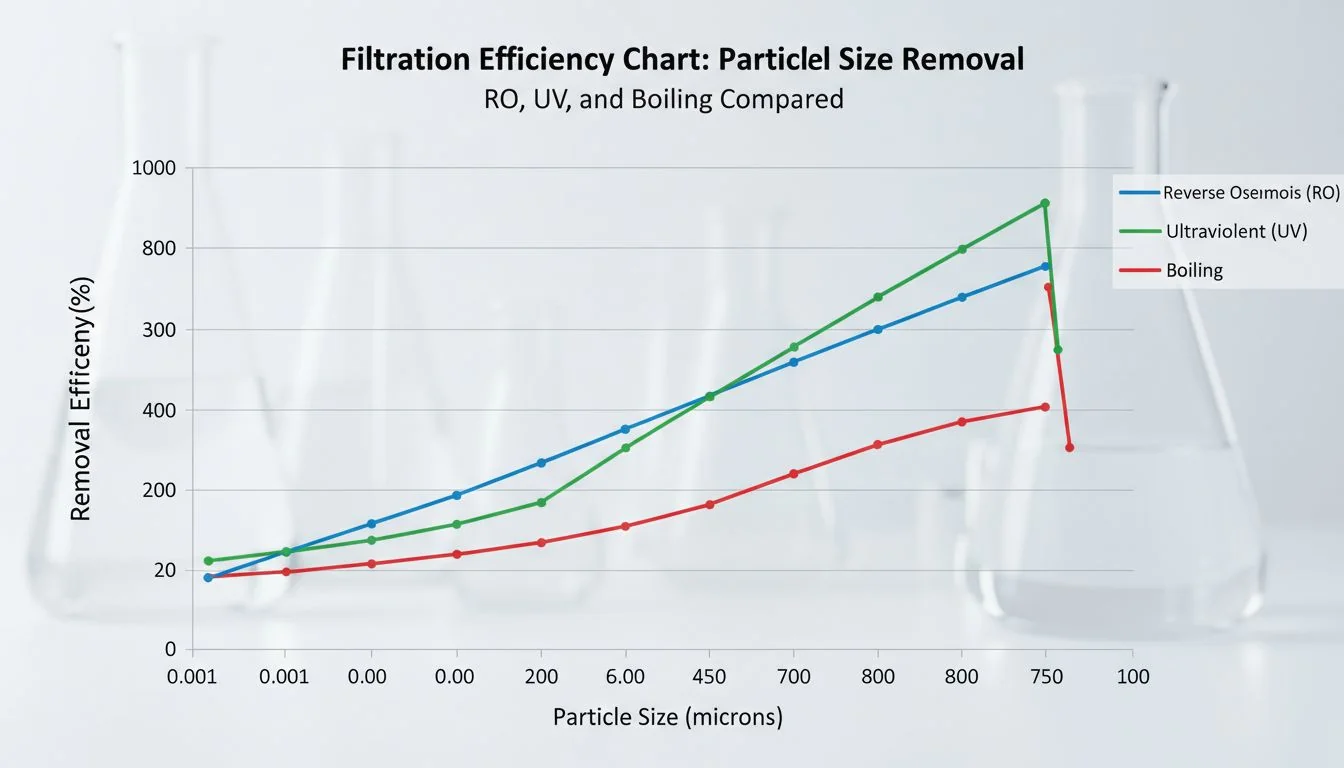
Many people think boiling is enough, but that is a dangerous myth. Let me break down why specific technologies matter more than tradition.
Boiling water removes chemical contaminants like lead and chlorine.Faux
Boiling only kills biological contaminants; it actually increases the concentration of heavy metals as water evaporates.
Reverse Osmosis removes up to 99% of dissolved solids.Vrai
RO membranes have a pore size of approximately 0.0001 microns, effectively blocking heavy metals and salts.
Introduction: "Safe" vs. "Pure" – Do You Know the Difference?
We often use "safe" and "pure" to mean the same thing. But in engineering terms, they are very different concepts.
"Safe" water means it will not make you sick immediately from bacteria. "Pure" water means it has no contaminants, including heavy metals2 or microplastics. Understanding this distinction is the first step to choosing the right hardware for your home or design project.
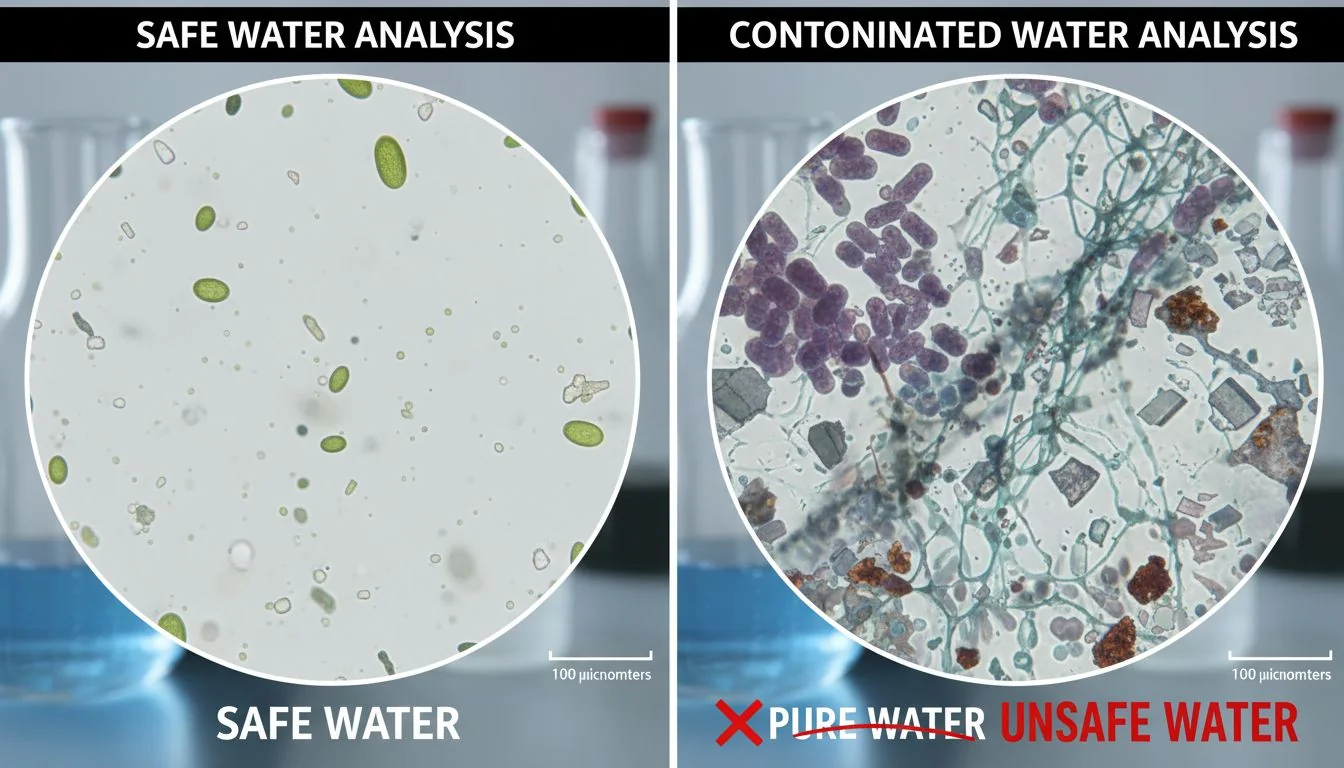
As a mold designer and someone who has worked in manufacturing for years, I look at water purification through the lens of specifications. When we design a product, we have tolerances. Water quality has tolerances too. "Safe" usually refers to biological safety. This means the water does not contain active cholera or E. coli. However, "safe" water can still contain lead, mercury, or PFAS (forever chemicals).
"Pure" water implies the removal of physical and chemical impurities. In the modern world, our biggest threat is not always bacteria. Municipal water treatment handles bacteria well. The real threat comes from aging pipes leaching lead or industrial runoff. We need to look at the particle size we are trying to catch. It is like choosing the right mesh for a sieve in a factory. If the mesh is too big, the bad parts get through. We must define our goal: do we want to kill a virus, or do we want to remove a heavy metal molecule? They require completely different engineering solutions.
Municipal water treatment removes all harmful substances before reaching your tap.Faux
Water can pick up contaminants like lead and microplastics from aging infrastructure after it leaves the treatment plant.
Chemical pollutants are often smaller than biological contaminants.Vrai
Viruses are small, but heavy metal ions and chemical molecules are significantly smaller and harder to filter.
Technology #1: Boiling (The "Survival" Method)?
Boiling is the oldest method we know. It is great for survival, but it has a major flaw regarding modern toxins.
Boiling kills living things like bacteria and parasites. However, it does not remove physical things like lead or microplastics3. In fact, boiling makes these problems worse.
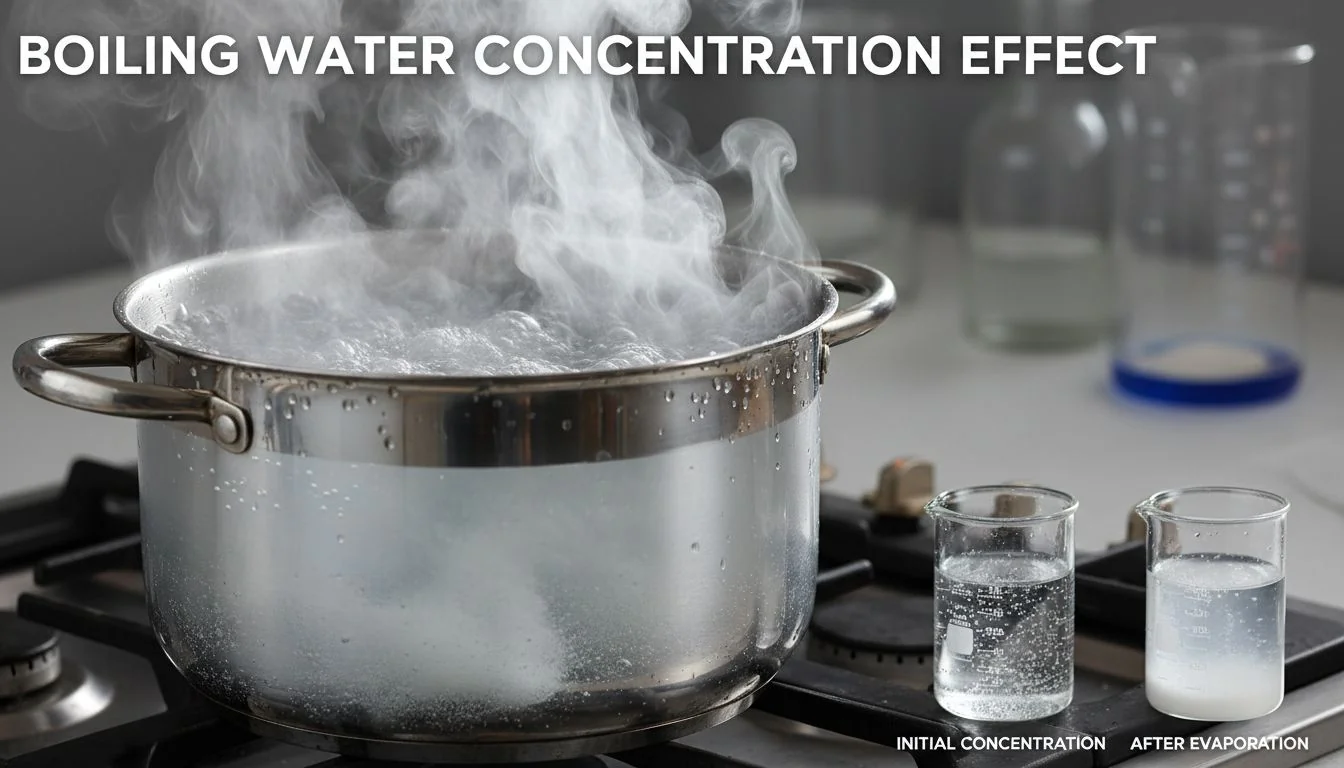
I want to share a counter-intuitive point that often shocks people. We think boiling cleans water. But think about what happens physically during boiling. You apply heat, and pure water turns into steam and leaves the pot. The volume of water decreases. However, the heavy metals, salts, and microplastics do not evaporate. They stay in the pot.
This means the concentration of toxins actually increases. It is exactly like reducing a sauce in a kitchen. If you boil a soup for an hour, it becomes saltier. The amount of salt did not change, but the water decreased. If you have water with a small amount of lead, and you boil it for 20 minutes, you now have water with a higher concentration of lead. This is why I call boiling the "Survival" method. It stops you from dying of cholera in the woods. But in a modern city, where we fear chemical runoff and heavy metals, boiling is not the right tool. It fails to address the chemical composition of the fluid.
Boiling water reduces the volume of water but keeps the same amount of heavy metals.Vrai
Evaporation removes pure H2O, leaving solids behind in a more concentrated solution.
Boiling is the most effective way to remove microplastics.Faux
Microplastics do not evaporate and remain in the boiled water.
Technology #2: UV Purification (The "Silent Sterilizer")?
UV light is a high-tech solution often used in industrial settings. It works by using light energy to disrupt cells.
UV Purification4 does not "remove" anything from the water. It "neutralizes" living organisms. The bacteria are still there, but they are dead and cannot reproduce.
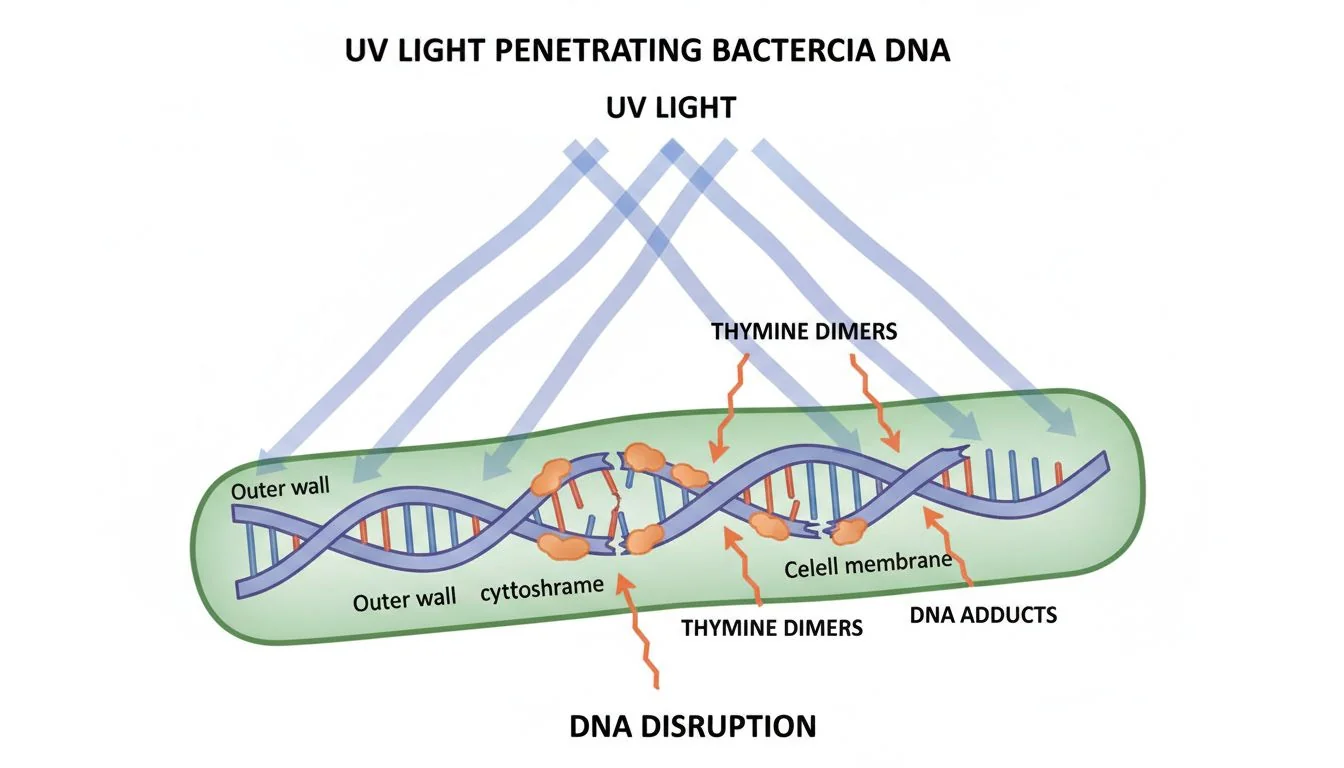
We need to differentiate between "removal" and "neutralization." UV systems use a specific wavelength of light. When water passes the lamp, the light penetrates the cell walls of viruses and bacteria. It scrambles their DNA. This prevents them from replicating. If a virus cannot replicate, it cannot make you sick. This is excellent technology because it adds no chemicals to the water.
However, from a design perspective, UV has limitations. It is a "line of sight" technology. If the water is cloudy, the light cannot hit the bacteria. More importantly, UV does nothing to non-living threats. If your water contains lead, arsenic, or microplastics, the UV light just shines on them. The lead passes right through. The microplastics pass right through. Modern consumers are usually more afraid of long-term chemical exposure than sudden bacterial infection. Therefore, UV is a powerful tool, but it is incomplete on its own. It is best used as a final polish, not the primary defense.
UV light physically filters particles out of water.Faux
UV light uses energy to damage DNA; it does not physically separate particles from water.
UV purification is effective against viruses.Vrai
UV-C light effectively inactivates viruses by damaging their genetic material.
Technology #3: Reverse Osmosis (The "Gold Standard")?
Reverse Osmosis, or RO, is the most thorough filtration method available. It uses pressure to force water through a semi-permeable membrane.
RO removes physical contaminants, including heavy metals, chemicals, and viruses. It provides the highest level of purity but creates "empty" water.
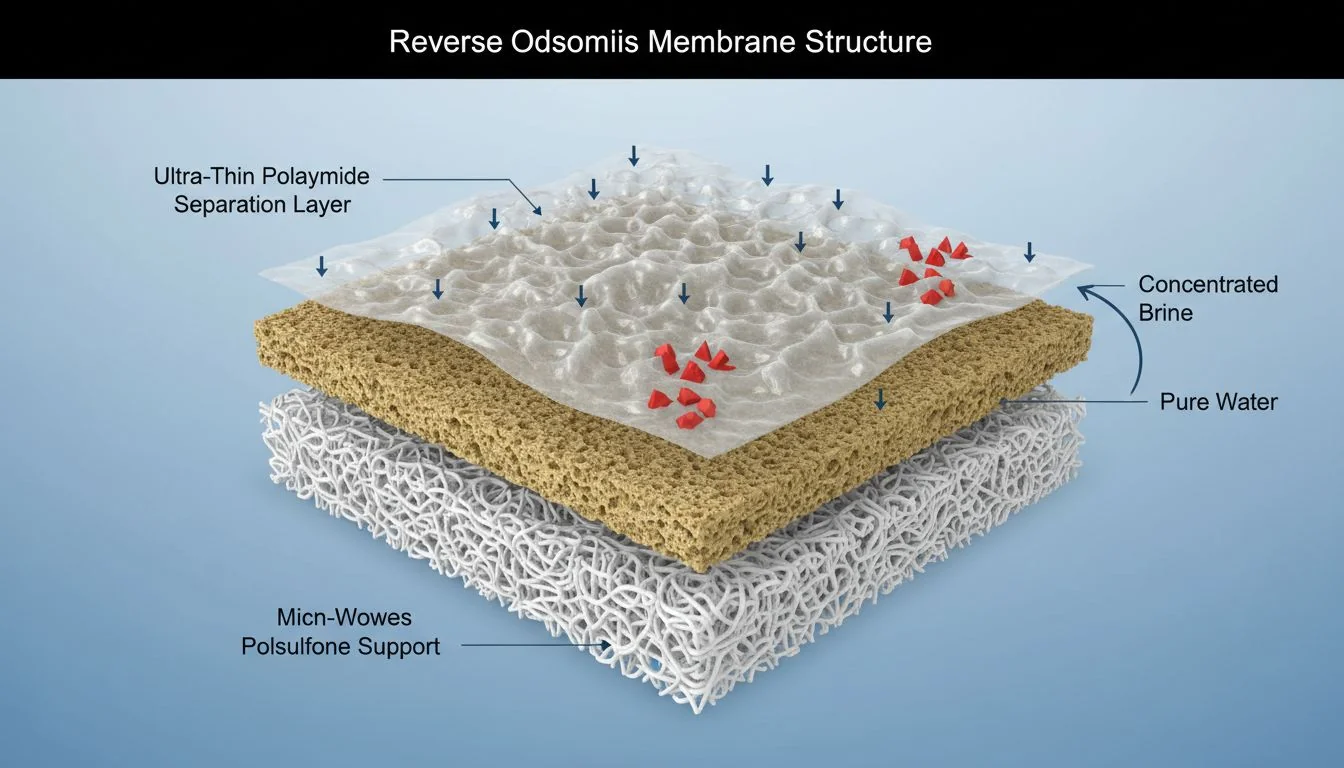
In the mold and manufacturing industry, we respect precision. RO is the precision tool of water filtration. The membrane has pores so small (0.0001 microns) that basically only water molecules can fit through. It rejects lead, mercury, chlorine, and even viruses. It is a physical barrier. This addresses the "Chemicals/Microplastics" fear that most modern families have. It is a higher-value proposition because it handles the hardest contaminants.
However, RO is so good that it removes everything, including healthy minerals like calcium and magnesium. We call this "empty" water. Drinking empty water is not ideal for long-term health because it can be slightly acidic. This creates a design challenge. A good system must manage this. This is where I see brands like Hisoair innovating. They do not just sell an RO membrane. They add a "Remineralization" stage. The RO takes the bad stuff out, and then a mineral cartridge puts the good stuff (like Magnesium) back in. This completes the cycle. It is smart engineering to restore the natural balance after purification.
Reverse Osmosis removes beneficial minerals along with contaminants.Vrai
The membrane size is too small to distinguish between harmful heavy metals and beneficial minerals like calcium.
RO water is naturally alkaline.Faux
RO water is often slightly acidic because the alkaline minerals have been removed.
The "Fourth Variable": The Storage Tank (Where Tech Fails)?
You can have the best filter in the world, but if you store the water in a dirty tank, it does not matter. The storage method is the hidden variable.
Most systems use plastic tanks, which can degrade. A premium system uses stainless steel to maintain purity. This is where hardware integration becomes key.
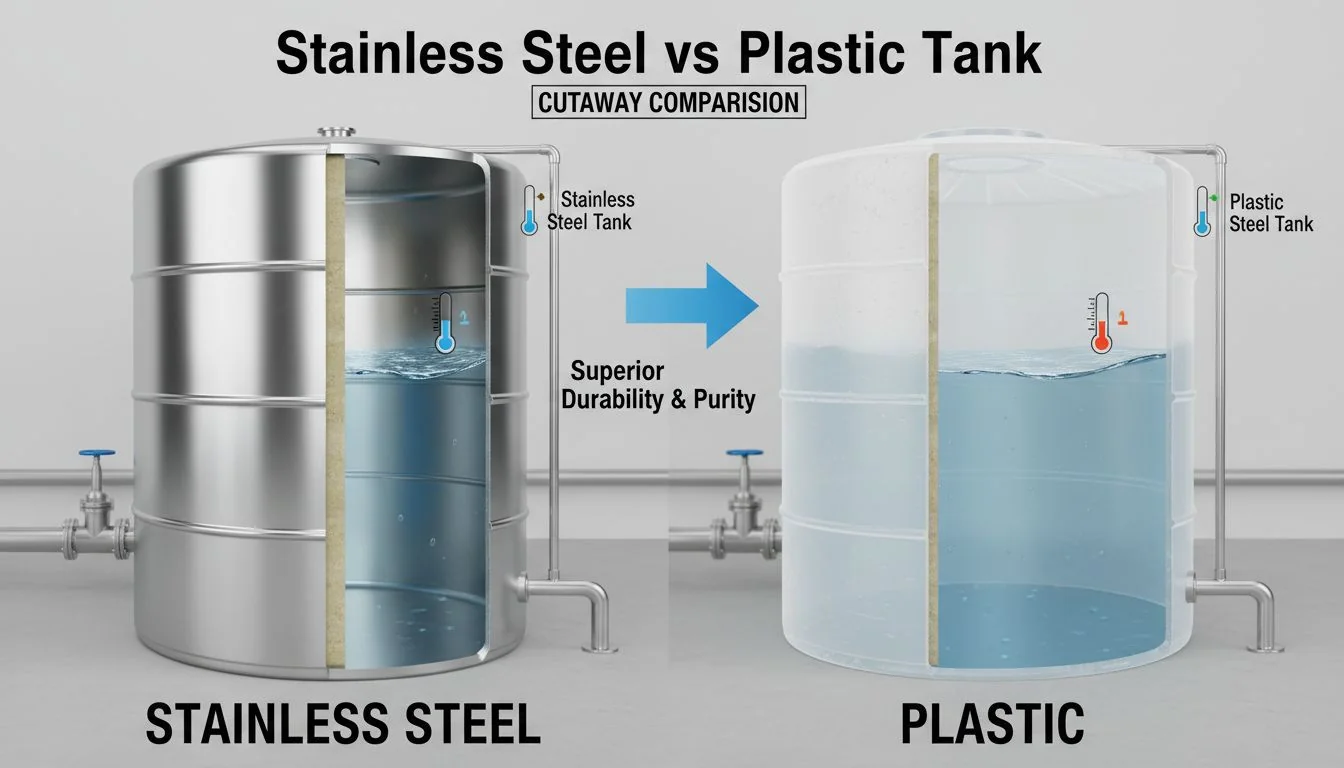
I often see great designs fail because of one cheap component. In water purification, that component is the storage tank. Standard RO systems filter water slowly, so they store it in a tank for when you need it. If that tank is made of cheap plastic, you risk "secondary pollution." The water sits there, and the plastic can leach chemicals back into your pure water. Bacteria can also grow on the rough surface of the plastic.
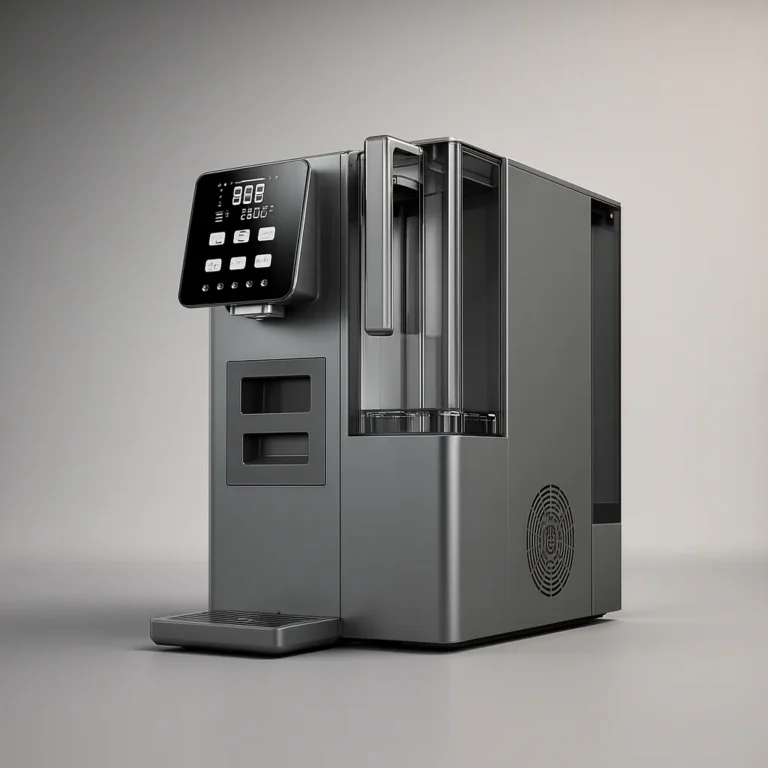
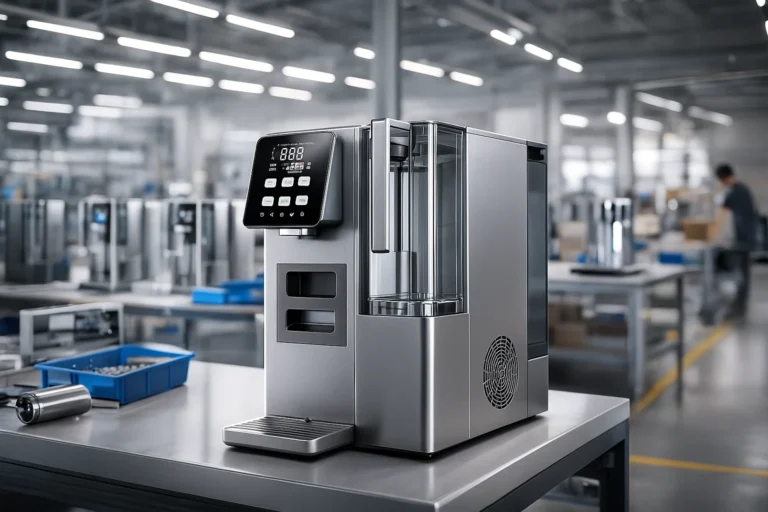
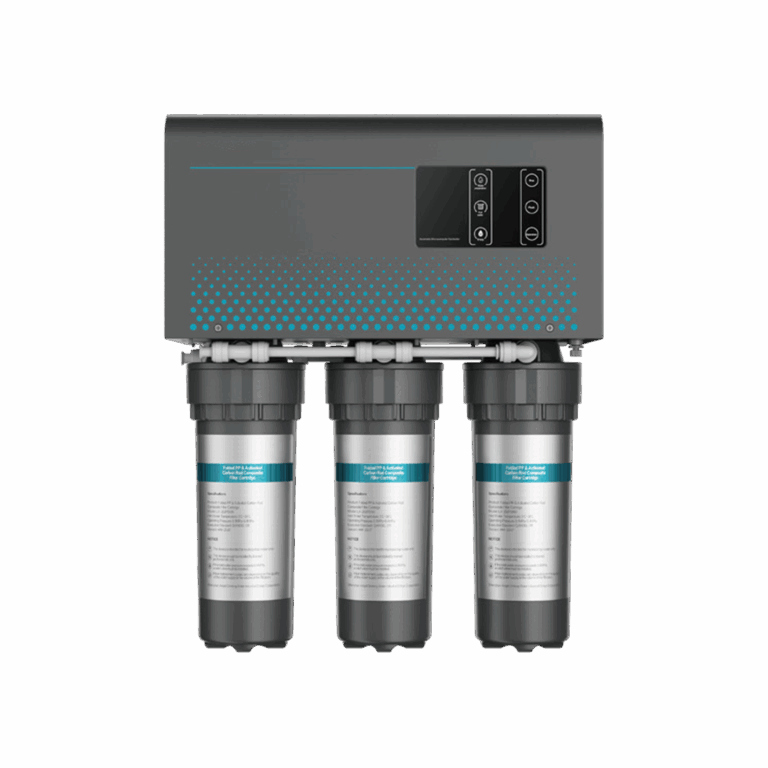
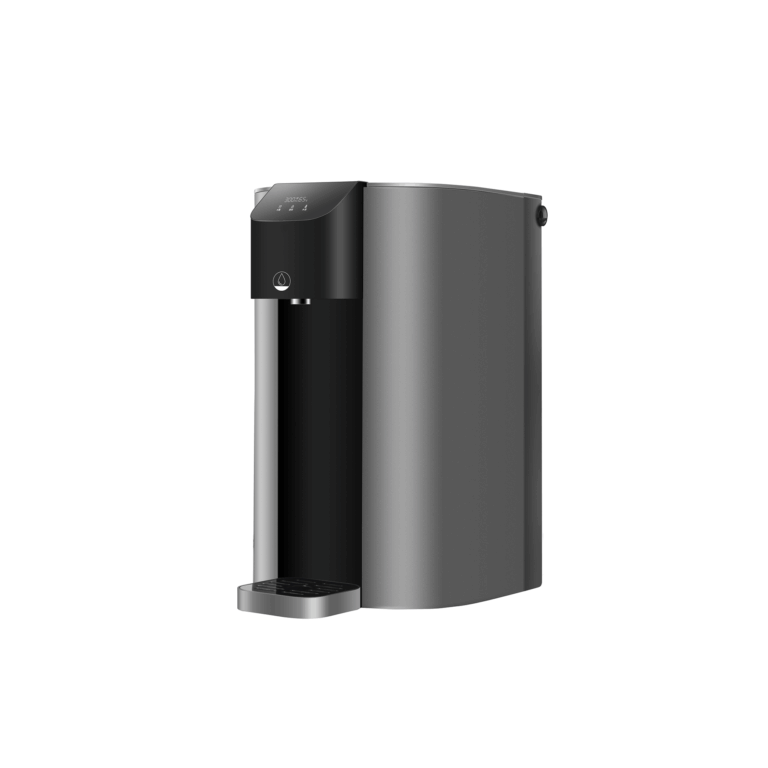
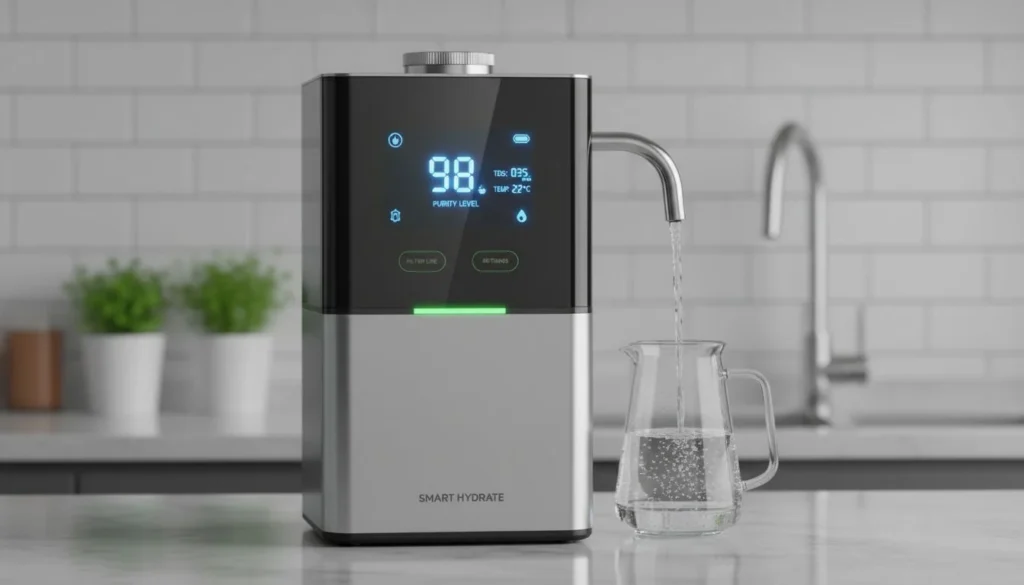
This is why I appreciate the "Hardware Stack" argument. You need layers of quality. A premium device should have RO (Primary) + UV (Final Polish) + Stainless Steel (Storage). This justifies a high-ticket appliance. For example, Hisoair acts as a system integrator here. They combine the RO, the UV, and a heating element into a seamless Stainless Steel unit. They are not just selling a filter cartridge; they are selling a complete engineered system. As a mold guy, I prefer stainless steel (like 304 grade) because it is non-porous and easy to sanitize. It ensures the water stays as pure as when it left the membrane.
Plastic storage tanks are immune to bacterial growth.Faux
Plastic surfaces can develop biofilm over time, leading to secondary contamination of the water.
Stainless steel is less reactive than plastic.Vrai
Stainless steel does not leach chemicals and is highly resistant to corrosion and bacterial adhesion.
Conclusion
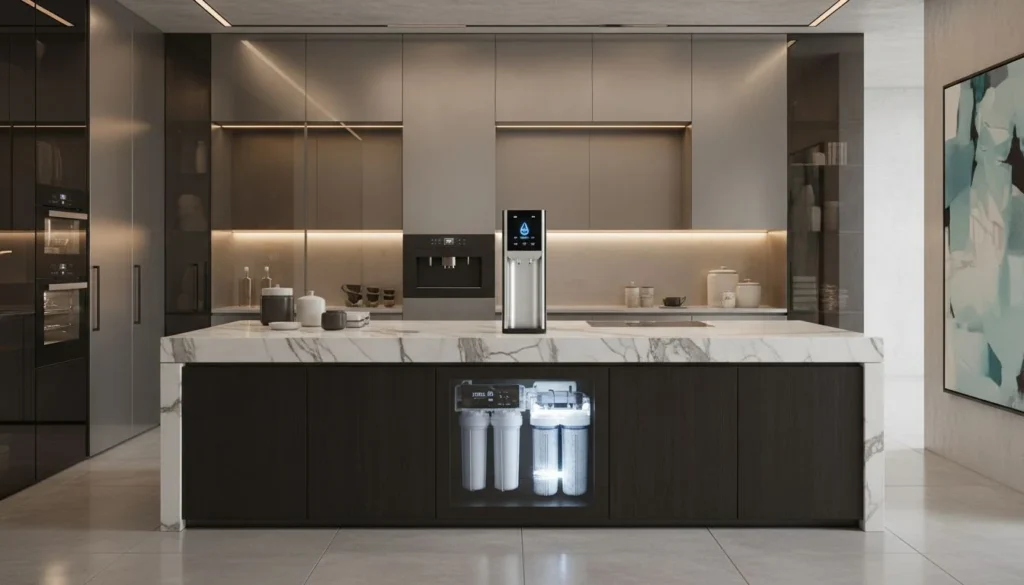
To get the best water, you cannot rely on just one technology. Boiling concentrates toxins, and UV only kills bacteria. The ultimate solution is a "stack": use Reverse Osmosis to remove chemicals, UV to sterilize, and a stainless steel system to store it safely.
References
-
Understanding Reverse Osmosis is crucial for effective water purification, as it removes harmful contaminants. ↩
-
Understanding the impact of heavy metals on health emphasizes the need for effective filtration systems. ↩
-
Exploring microplastics helps highlight a growing concern in water quality and the need for advanced filtration. ↩
-
Exploring UV Purification reveals its effectiveness in neutralizing pathogens, making it a vital part of water safety. ↩

 Français
  English
  Español
  Italiano
  Deutsch
  Português
  Русский
  العربية
  日本語
日本語  한국어
한국어  Tiếng Việt

