
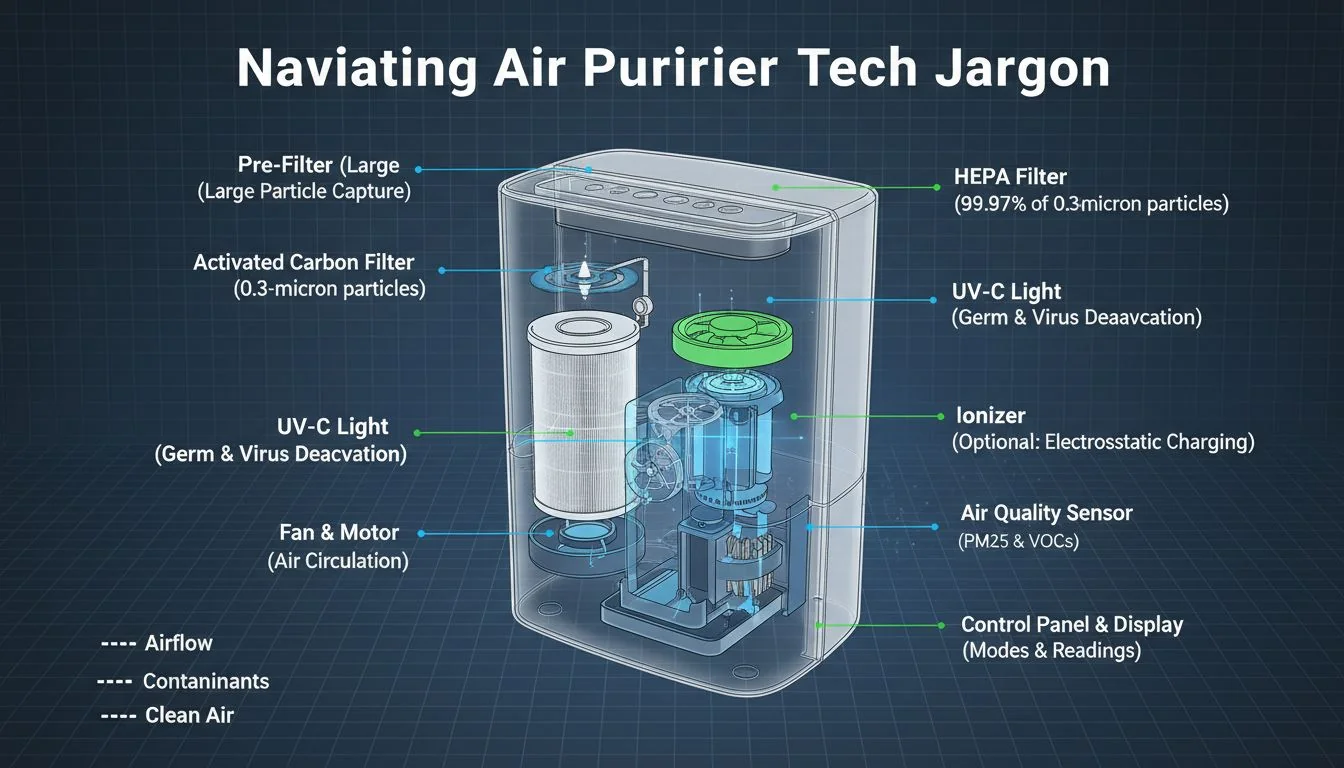
Confused by "HEPA-Type1" or "Plasma" labels? You aren't alone. Manufacturers love fancy words, but they often hide the real performance data you need to make good decisions.
To navigate air purifier tech jargon, focus on standardized metrics over marketing terms. Look for "Véritable HEPA2" (H13/H14) for filtration, check CADR ratings relative to room size, and distinguish between passive filtration and active sterilization. This guide translates complex specs into practical benefits for smarter buying decisions.
I have seen thousands of spec sheets in my career. It is easy to get lost in the "alphabet soup" of acronyms. Let’s cut through the noise and look at what matters.
Manufacturers use non-standard terms to hide lower specs.Vrai
Terms like 'HEPA-Type' are often used to disguise filters that do not meet the strict 99.97% efficiency standard of True HEPA.
All air purifiers use the same filtration technology.Faux
There is a significant difference between passive filtration (trapping particles) and active sterilization (killing pathogens via UV or Plasma).
Is It True HEPA or Just Marketing Hype?
You see "HEPA-Type" on a box and think it is safe. But this slight word change can mean a massive drop in filtration quality and safety.
"True HEPA" refers to filters meeting strict standards (removing 99.97% of particles at 0.3 microns). "HEPA-Type" is an unregulated marketing term for inferior filters. Always verify the specific grade, such as H133 or H14, to ensure medical-grade safety rather than just basic dust collection.
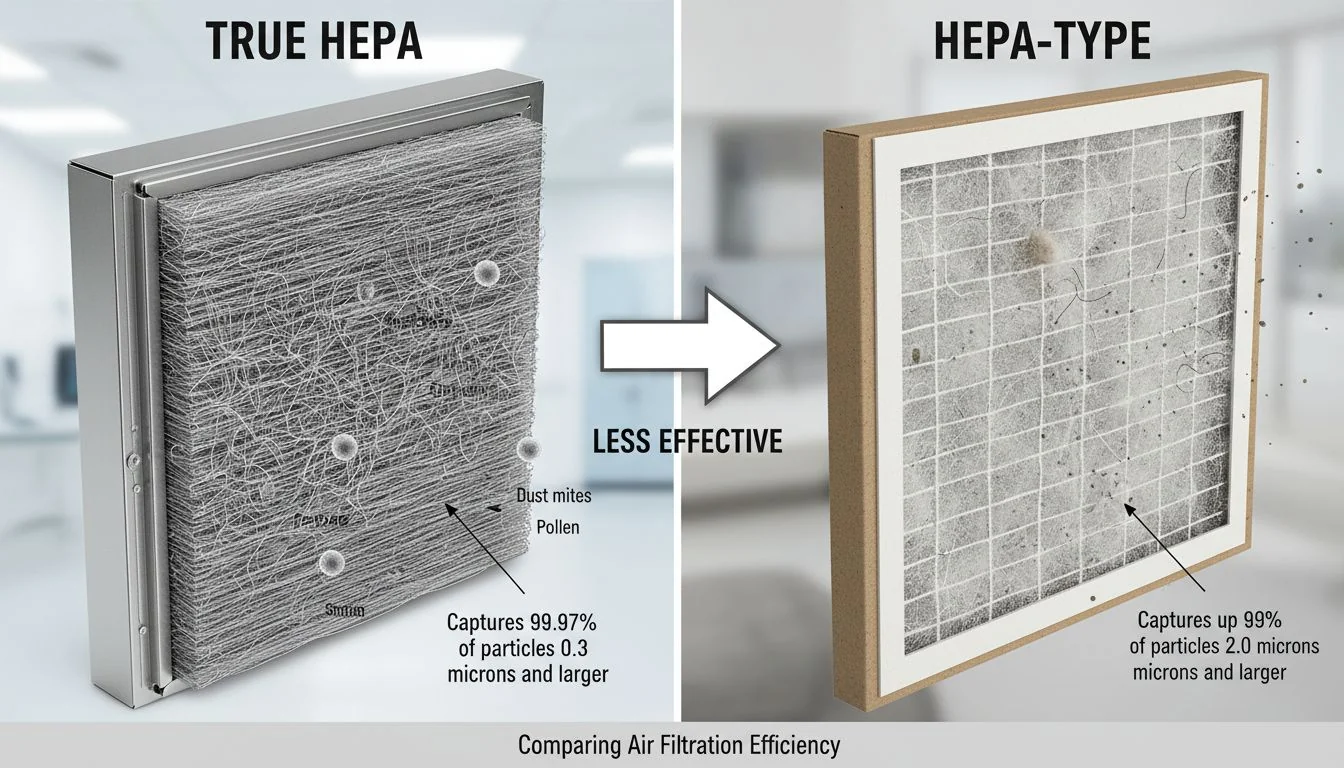
In the manufacturing world, we rely on standards. If a mold is off by a micron, the product fails. The same logic applies to air filtration. The term "HEPA" is a standard, but "HEPA-Type" is a marketing trick. It usually means the filter looks like a HEPA filter but does not perform like one.
The Translation Tactic
When you are buying for a business or a client, you need to translate these specs into benefits. A "True HEPA" filter, specifically H13 or H14 grade, translates to "Medical Safety." It captures viruses and bacteria. A "HEPA-Type" filter translates to "Basic Dusting." It might catch pet hair, but it will miss the dangerous microscopic particles.
Comparing Filter Standards
I always tell my clients to look for the specific "H" rating. Here is how the grades break down:
| Filter Term | Efficiency Rating | Best Application |
|---|---|---|
| HEPA-Type | Unregulated (often <99%) | Basic home dust, pet hair |
| True HEPA (H13) | 99.97% @ 0.3 microns | Offices, Schools, Clinics |
| True HEPA (H14) | 99.995% @ 0.3 microns | Operating Rooms, Clean Rooms |
As a designer, you know that specs define performance. Do not let a marketing brand fool you with a "Super-Nano-Filter" label. Stick to the global engineering standards like H13. This builds trust with your team and ensures you are getting the performance you paid for.
HEPA H13 filters capture 99.97% of particles at 0.3 microns.Vrai
This is the global standard definition for H13 True HEPA filtration.
HEPA-Type filters are the same as True HEPA.Faux
HEPA-Type is a marketing term for filters that do not meet the strict efficiency standards of True HEPA.
Does High CADR Always Mean a Bulky Unit?
High Clean Air Delivery Rate (CADR4) usually means a giant machine taking up floor space. But modern design is changing how we measure efficiency in tight spaces.
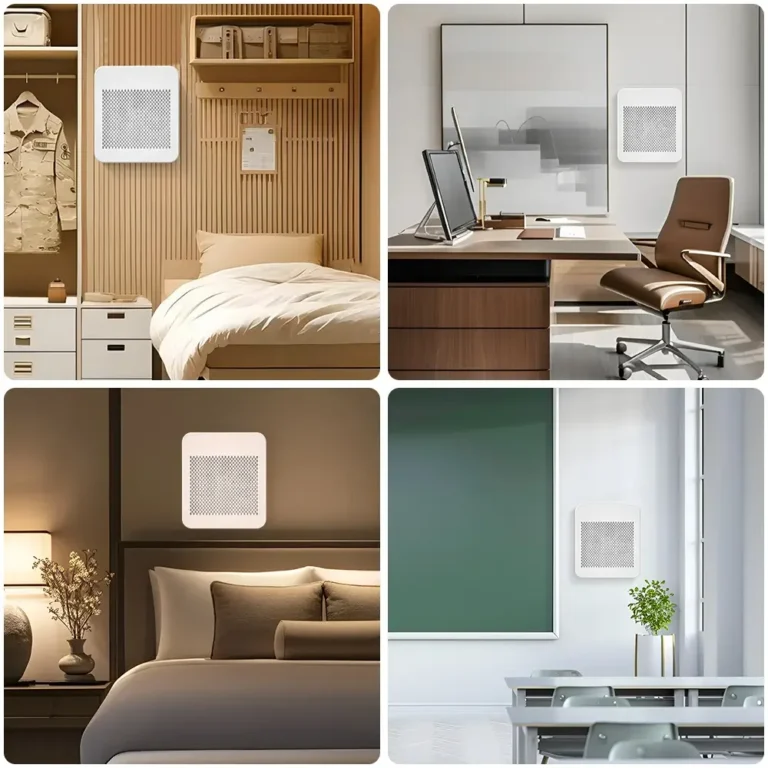
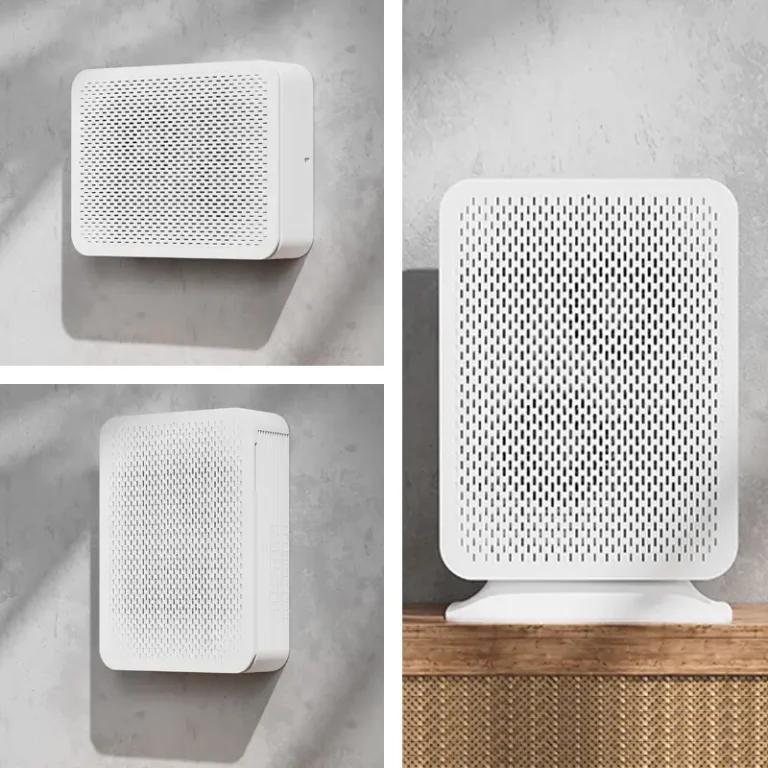
CADR measures how fast a unit cleans air, but "Space-Efficient CADR5" is the new metric to watch. It evaluates performance relative to the unit's physical footprint. Wall-mounted units offer high efficiency without sacrificing floor space, making them superior for crowded offices or classrooms compared to bulky floor models.
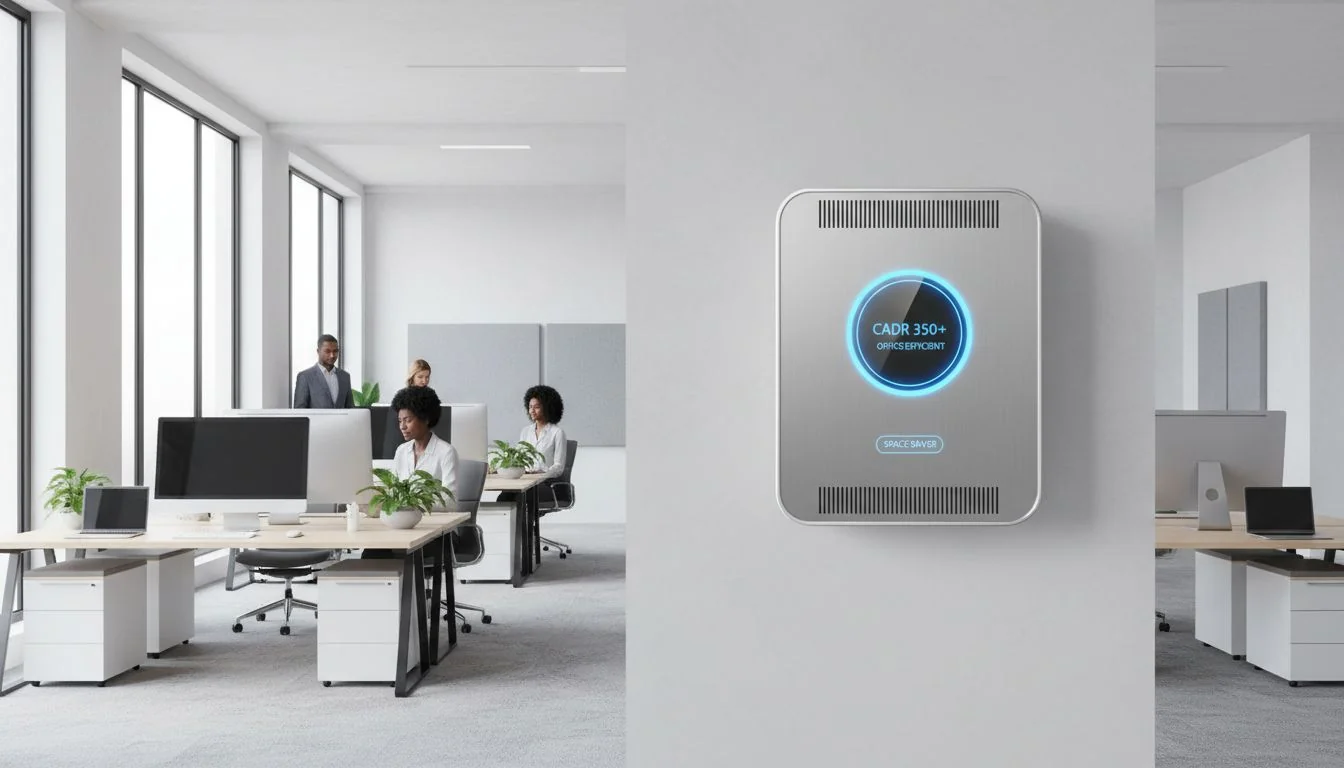
CADR (Clean Air Delivery Rate) is the industry standard for speed. It tells you how much clean air comes out of the machine per minute. Historically, if you wanted a high CADR, you had to buy a big, ugly box that sat on the floor. In a crowded classroom or a small office, that floor space is valuable real estate.
Redefining the Metric
We need to pivot our thinking. Instead of just looking at raw power, look at "CADR per Square Foot" of the unit itself. This is where engineering meets design. A wall-mounted unit removes the footprint problem entirely.
The Real Estate Advantage
When I evaluate equipment for a factory, I look at the footprint. The same applies here.
- Floor Units: High CADR, but they create tripping hazards and eat up usable space.
- Wall-Mounted Units: High CADR, zero floor footprint.
| Fonctionnalité | Floor Unit | Wall-Mounted Unit |
|---|---|---|
| Débit d'air | Often blocked by furniture | Unobstructed circulation |
| Sécurité | Tripping hazard / Cable clutter | Out of reach / Safe |
| Space Cost | High (takes up floor area) | Zero (uses vertical space) |
By framing CADR this way, you solve a logistical problem for the buyer. You are not just selling clean air; you are selling "Real Estate Savings." This is a powerful argument for schools and commercial buildings where every square foot counts.
CADR stands for Clean Air Delivery Rate.Vrai
It is the standard metric for measuring the volume of filtered air an air purifier delivers.
Wall-mounted units always have lower CADR than floor units.Faux
Modern engineering allows wall-mounted units to achieve high CADR while saving floor space.
Is Active Sterilization Worth the Extra Cost?
Standard filters trap dust, but they don't kill germs. If you need to stop a virus, Passive filtration6 might not be enough for your safety requirements.
Passive filtration traps pollutants, while "Active Sterilization7" uses technologies like UV-C light or Plasma to destroy pathogens at a molecular level. This distinction is crucial for premium safety. Active systems don't just hold bacteria; they neutralize it, justifying the investment for high-risk environments like schools or clinics.
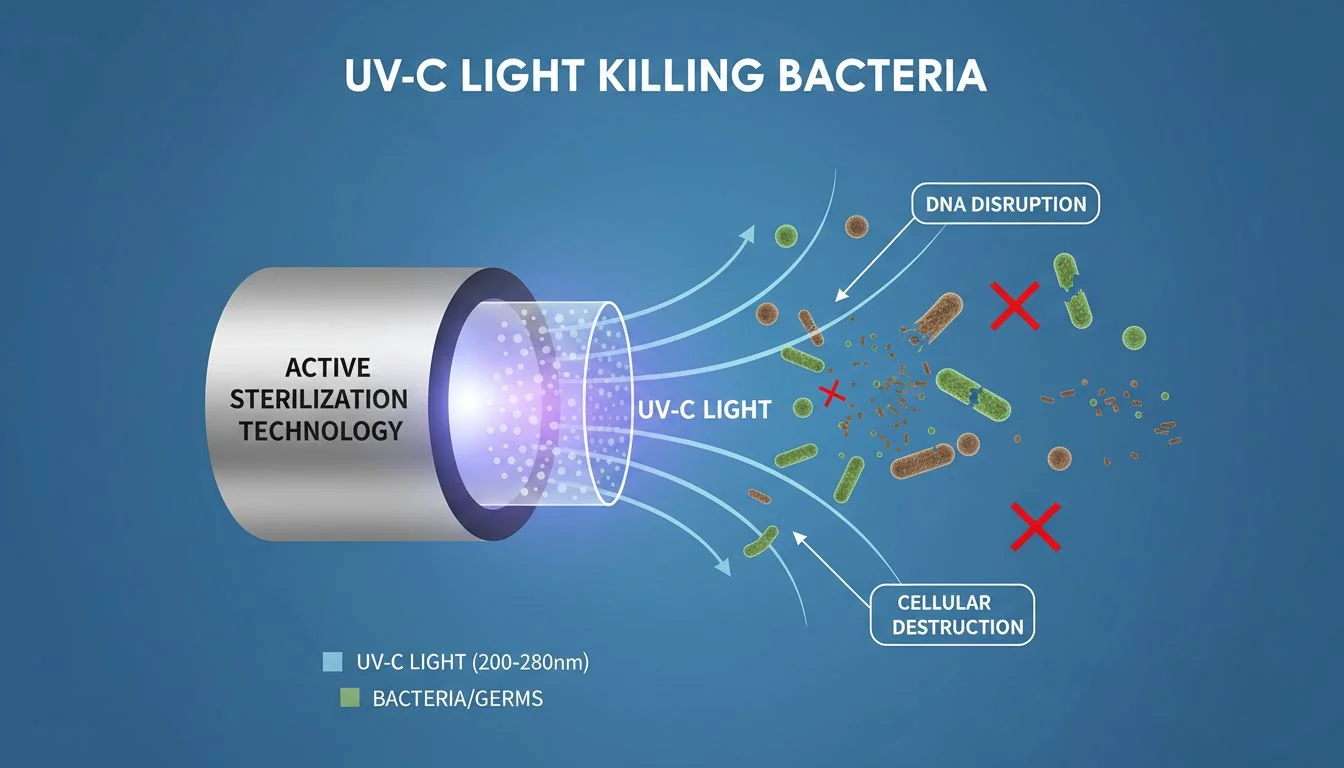
There is a major technological leap between "Passive" and "Active" purification. Most standard units are passive. They are essentially fancy fans with a net. They catch the dust and hold it there. This is fine for allergies, but it is not enough for infection control.
The Premium Differentiation
"Active" purification involves UV-C light or Plasma8 technology. These components attack the DNA of bacteria and viruses. They do not just trap the enemy; they kill it. This is a crucial distinction when you are justifying a higher price point or a premium model.
Technology Breakdown
- UV-C9: Uses ultraviolet light to disrupt the DNA of pathogens. It works best when the air moves slowly enough past the lamp.
- Plasma: Generates ions that attach to airborne particles, neutralizing them or weighing them down.
| Méthode | Action | Result |
|---|---|---|
| Passive (Filter) | Traps | Pathogen stays alive on filter |
| Active (UV-C) | Irradiates | Pathogen is neutralized |
| Active (Plasma) | Ionizes | Pathogen is deactivated |
When you explain this to a buyer, it sounds like a technological leap, not just a price hike. You are upgrading from a "trap" to a "defense system." This positions the product as a necessary tool for health, rather than just a household appliance.
UV-C light can destroy the DNA of bacteria.Vrai
Short-wavelength ultraviolet light damages DNA/RNA, rendering pathogens unable to reproduce.
Passive filters kill viruses automatically.Faux
Passive filters only trap particles; they do not actively kill or neutralize biological pathogens.
Can AI Features Actually Save You Money?
"Smart" devices often just mean they have an app. But true AI-Driven10 air purification offers more than just remote control; it offers real efficiency and savings.
While "Smart" implies connectivity, "AI-Driven" refers to automation that reacts to real-time air quality. These units adjust fan speeds automatically, lowering energy consumption when air is clean. For B2B buyers, this translates to significant long-term electricity savings, making the "Green" technology a cost-effective choice.
We see the word "Smart" on everything now. Usually, it just means you can turn it on with your phone. That is convenient, but it is not a game-changer. "AI-Driven" is different. It implies intelligence and automation that directly impacts your operating costs.
AI as an Energy Saver
Don't just sell AI as a "cool" feature. Sell it as a "Cost-Saving" feature. An AI unit uses sensors to constantly sniff the air.
- Dirty Air: The unit ramps up to full power.
- Clean Air: The unit drops to a low, energy-saving idle mode.
The "Green" Angle
For a school or an office building running 50 units, this difference is massive. A standard unit might run at 100% power all day. An AI unit might only run at 100% power for two hours.
| Fonctionnalité | Fonction | Bénéfice |
|---|---|---|
| Basic Smart | Wi-Fi / App Control | Commodité |
| AI-Driven | Auto-adjusts to pollution | Efficacité énergétique |
| Manual | User sets speed | High Human Error / Waste |
This justifies the cost of the technology. You are paying for the brain inside the machine that lowers your electricity bill. It turns an expense into an eco-friendly investment.
AI-driven units adjust fan speed based on air quality.Vrai
Sensors detect pollution levels and the AI regulates the motor to optimize performance and energy use.
Smart features always increase energy consumption.Faux
AI automation often reduces energy consumption by idling the motor when the air is clean.
Conclusion
Don't get distracted by marketing fluff. Focus on features that solve problems: H13 for safety, wall-mounts for space, and AI for energy savings. Empower yourself with the right specs.
References
-
Learn why HEPA-Type filters may not provide the same level of protection as True HEPA filters. ↩
-
Understanding True HEPA filtration is crucial for ensuring air quality and safety in your environment. ↩
-
H13 filtration is essential for medical-grade air purification; understanding it can improve health outcomes. ↩
-
CADR is a key metric for evaluating air purifier efficiency; knowing it helps in making informed choices. ↩
-
Space-Efficient CADR helps maximize air purification in limited spaces; essential for modern living. ↩
-
Understanding passive filtration helps you know its limitations and when to consider more advanced options. ↩
-
Discover how Active Sterilization technologies can enhance air quality and safety beyond standard filtration. ↩
-
Plasma technology offers advanced air purification methods; learn how it works and its benefits. ↩
-
UV-C technology is a powerful method for neutralizing pathogens; learn how it enhances air safety. ↩
-
AI-Driven technology can significantly reduce energy costs while maintaining air quality; find out how. ↩

 Français
  English
  Español
  Italiano
  Deutsch
  Português
  Русский
  العربية
  日本語
日本語  한국어
한국어  Tiếng Việt

