
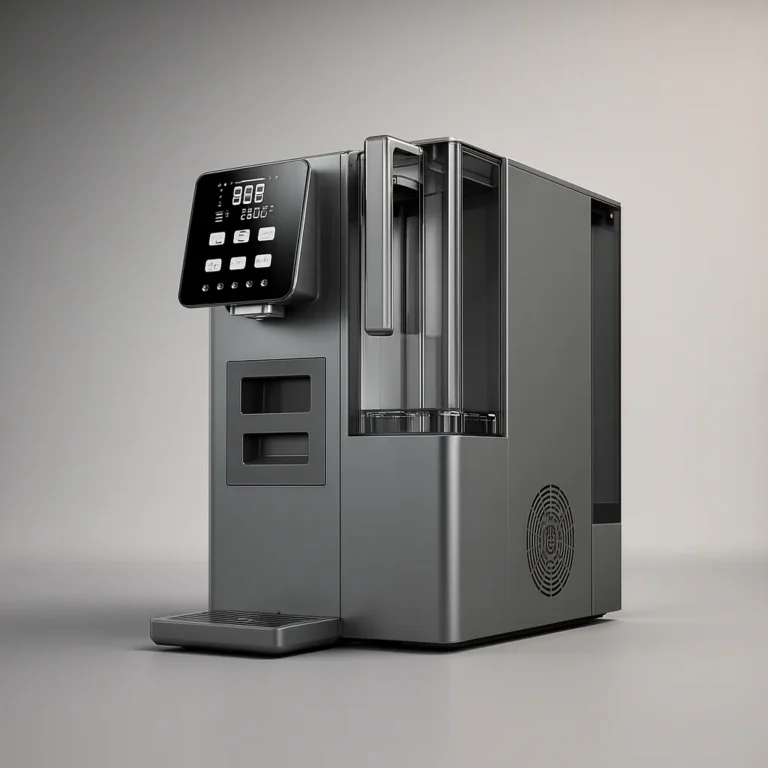
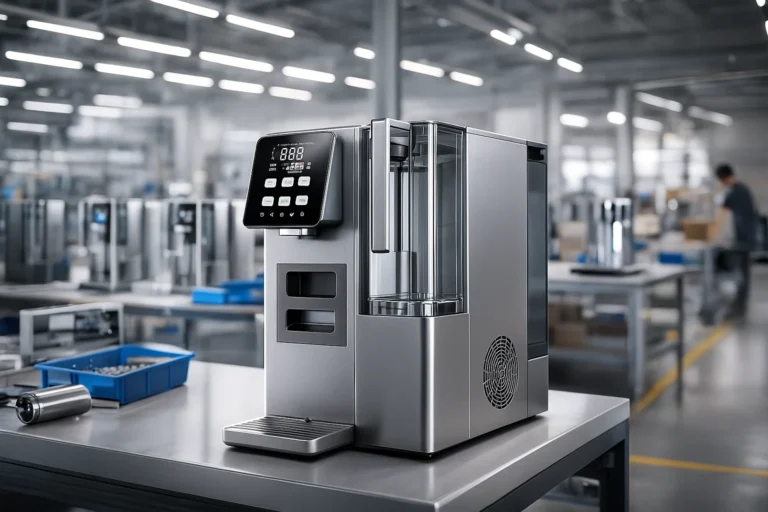

Are you struggling to design water systems for tight RV spaces? Poor filtration ruins the travel experience. I will show you how top OEMs source custom, factory-installed water systems.
RV and marine manufacturers source custom onboard drinking water systems by partnering with vendors who engineer compact, vibration-resistant, and freeze-tolerant units. They require strict NSF certifications1, 12V/24V electrical integration, and multi-year cartridge supply programs to support their dealer networks and meet rising consumer demands.

You might think standard residential filters work fine in a motorhome. They do not. Let us look at the real engineering and procurement rules that drive this massive market shift.
RV buyers still prefer to buy cheap aftermarket water filters at Camping World.Faux
The market has shifted. Buyers paying $80K-$400K now expect factory-installed, premium water filtration as a standard feature.
Factory installation of a compact water filter costs an OEM between $80 and $180.Vrai
OEMs can install these systems for $80-$180 in volume, while retail customers pay $200-$600 for the same setup aftermarket.
Why Onboard Water Filtration Has Become Standard Spec in RV and Marine OEM Production — The 2026 Market Shift From Aftermarket Upgrade to Factory-Installed Feature?
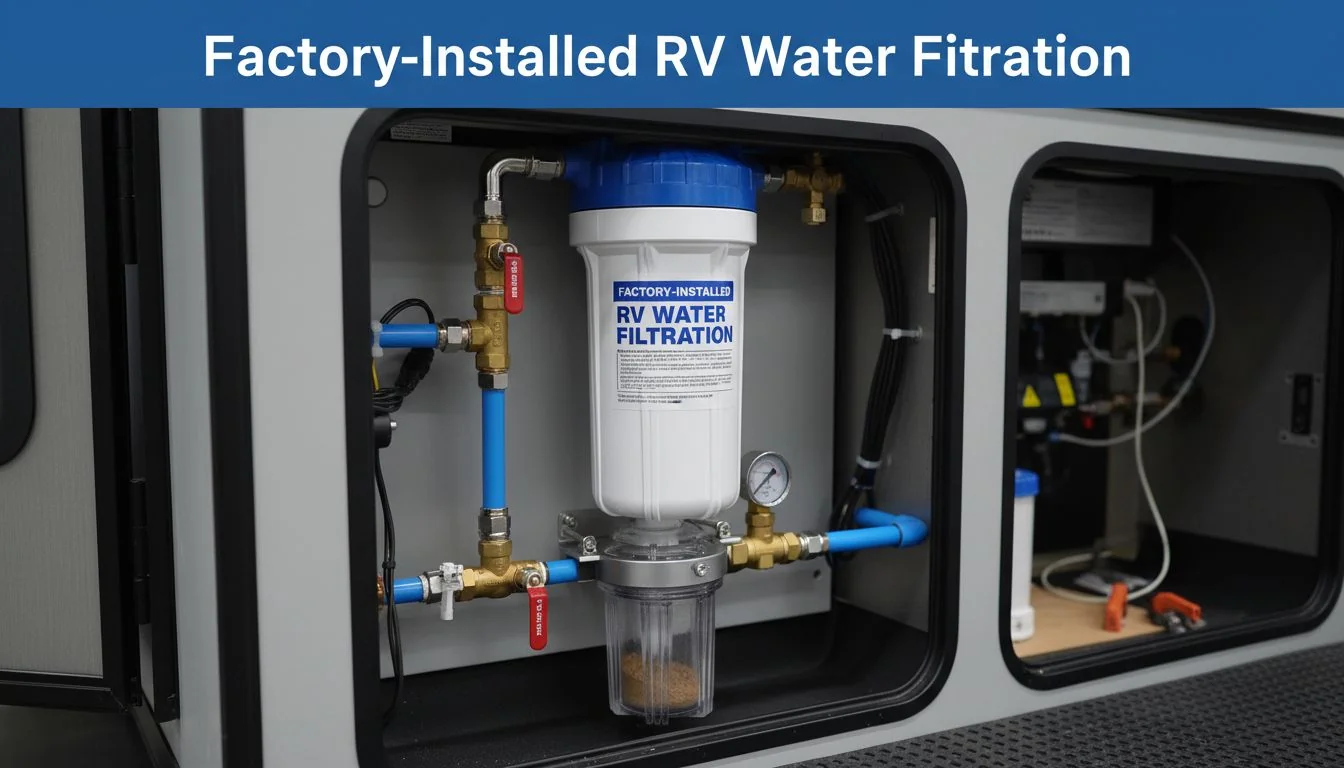
Do your clients complain about bad campground water? Unsafe water risks their health. factory-installed filtration2 solves this, shifting from a cheap upgrade to a standard OEM feature.
The shift to factory-installed filtration is driven by high consumer expectations, unpredictable water sources, and favorable OEM economics. Buyers of expensive RVs and boats expect home-quality water. OEMs gain profit margins by installing $80-$180 systems that add massive perceived value.
The Three Forces Driving the OEM Shift
When I first started looking at mold designs for water housings, most were bulky. Now, everything must be compact. The RV and marine markets have changed fast over the last 36 months. First, consumer expectations are higher. A buyer spending $400K on a Class A motorhome wants to drink straight from the tap. Second, source water is highly variable. Travelers hook up to city water, well water, and marina docks. Sometimes they rely on onboard tanks where biofilm grows. The filter must handle it all. Third, the economics make sense for the manufacturer.
OEM vs Aftermarket Economics
| Metric | OEM Factory Install | Retail Aftermarket |
|---|---|---|
| Cost to Buyer/OEM | $80 - $180 | $200 - $600 |
| Value Perception | High (Standard Feature) | Variable (DIY Hassle) |
| Margin Benefit | Goes to OEM | Goes to Retailer |
I remember helping a client redesign a bulky housing. We had to shave off every extra millimeter. This scale is huge. North America sees up to 500,000 new RVs and 250,000 boats yearly. The installed base is over 11 million units. Vendors must co-engineer with OEMs to win these contracts. You cannot just sell a rugged residential filter. You must design for mobile reality. The factory installation cost is low for the OEM. It runs between $80 and $180. The retail buyer pays much more. This gives the OEM a great profit margin.
RV travelers always have access to clean municipal water.Faux
Travelers use highly variable water sources, including well water, marina docks, and onboard tanks prone to stagnation.
The installed base of RVs in North America exceeds 11 million units.Vrai
There are over 11 million RVs in North America, creating a massive multi-year replacement cartridge market.
The Engineering Reality of Onboard Water Systems — Why RV and Marine Water Filtration Is a Completely Different Specification Category from Residential?
Are your residential filter designs failing in mobile tests? Road vibrations destroy standard housings. You must engineer specifically for the harsh realities of RV and marine environments.
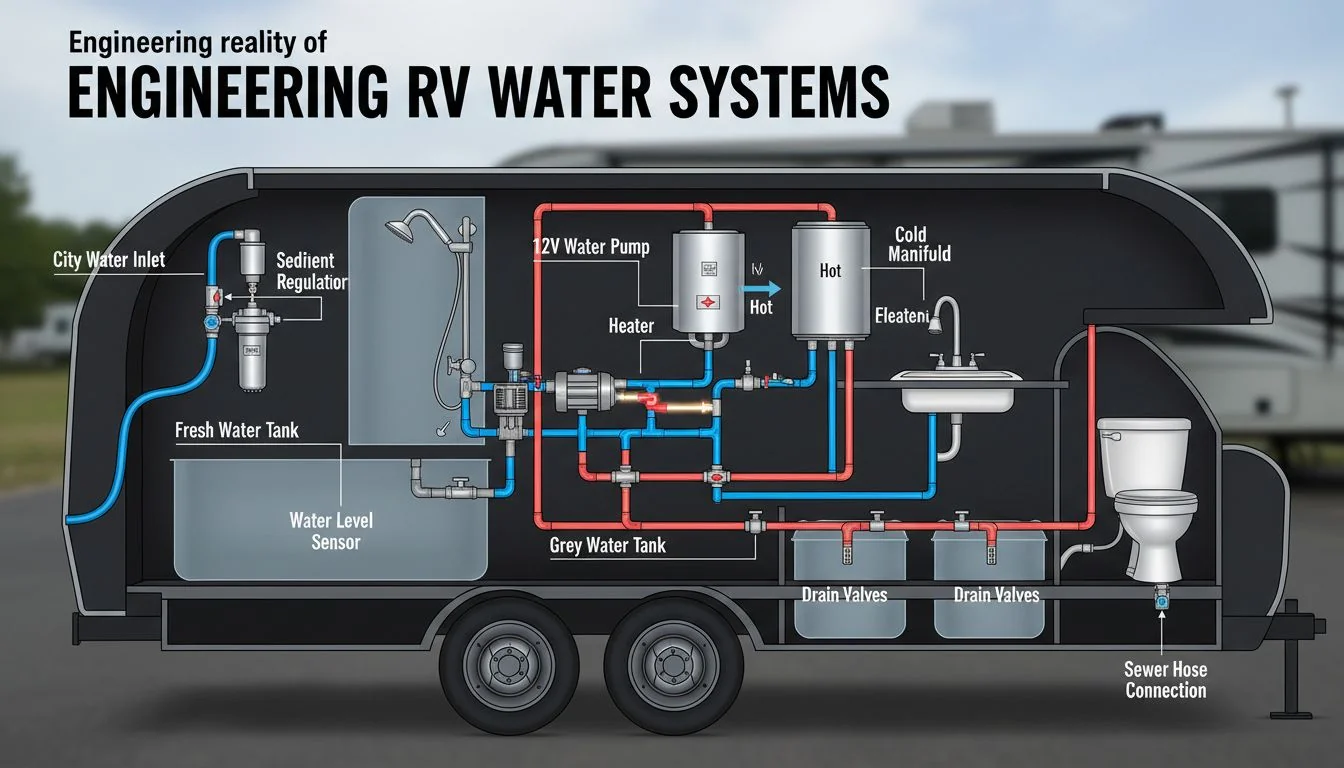
RV and marine water systems require completely different engineering than residential units. They need ultra-compact form factors, strict weight optimization, high vibration tolerance, and freeze-thaw durability. They must also integrate with 12V/24V DC power and handle variable pump pressures without restricting flow.
Designing for the Mobile Environment
I have seen many designers fail because they treat an RV like a house. A residential under-sink filter uses 8 to 14 inches of depth. An RV galley cabinet only gives you 3 to 5 inches. You must redesign the cartridge orientation and mounting hardware. Weight is also critical. Every extra pound hurts the vehicle's cargo capacity. If your design adds 6 pounds when 2 pounds works, you will lose the contract.
Key Engineering Constraints
| Constraint | Residential System | RV & Marine System |
|---|---|---|
| L'espace | 8-14 inches depth | 3-5 inches depth |
| Environment | Static, climate-controlled | High vibration, freeze-thaw cycles |
| Puissance | 110V AC | 12V or 24V DC |
| Plumbing | Standard city pressure | 30-55 PSI on-demand pumps |
Vibration and shock tolerance are massive factors. Boats hit waves. RVs hit potholes. The fittings and housings must survive cyclic stress. Also, RVs sit in freezing weather. The filter media and housing must survive freeze-thaw cycles without breaking. You must include drain valves for easy winterization. The plumbing integration is also unique. RV water pumps cycle on-demand at 30 to 55 PSI. Your filtration system must not restrict this flow. You must match the manufacturer's plumbing platform, which is usually PEX.
Residential water filters work perfectly in RVs without any design changes.Faux
Residential filters lack the compact size, vibration tolerance, and freeze resistance required for RVs.
RV water pumps typically operate at 30 to 55 PSI.Vrai
Onboard RV water pumps cycle on-demand at 30-55 PSI, and filters must not restrict this flow.
The OEM Procurement Map — How Winnebago, Thor, Forest River, Brunswick, and Bénéteau Source Water Filtration, and Why the Aftermarket Channel Buys Differently?
Is your sales team targeting the wrong buyers? Wasting time on aftermarket channels will not get you OEM deals. You need to understand how major manufacturers actually buy.
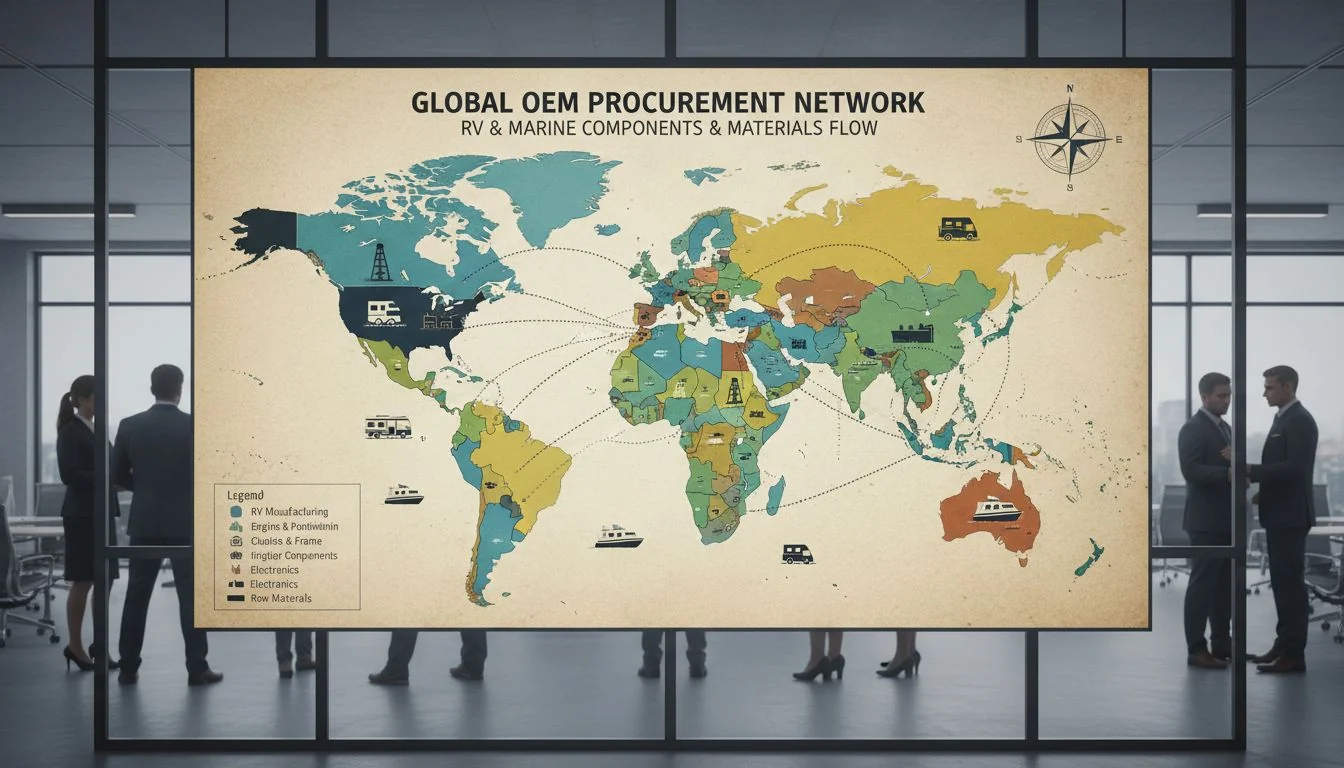
OEM procurement3 runs through dedicated production engineers at major brands like Thor, Winnebago, and Brunswick. They require 9 to 18-month approval cycles for platform-specific designs. In contrast, the aftermarket channel buys standard SKUs quickly. Winning OEMs requires supporting their dealer networks with replacement cartridges.
Navigating the OEM Landscape
I always tell my clients to map out the decision makers. The RV and marine markets are highly concentrated. A few big players own many brands. Thor Industries owns Airstream and Jayco. Brunswick owns Sea Ray and Boston Whaler. But you cannot just sell to the parent company. Procurement happens at the brand level. An approved filter for a Winnebago Travato might not be approved for a Newmar coach. You must build relationships with specific production engineers.
OEM vs Aftermarket Procurement
| Fonctionnalité | OEM Channel | Aftermarket Channel |
|---|---|---|
| Buyer | Production Engineers | Retail Buyers (Camping World) |
| Sales Cycle | 9 to 18 months | Short, standard SKU approval |
| Volume | 2,000 - 25,000 units/platform | Variable, consumer-driven |
| Focus | Engineering & Supply Chain | Brand visibility & Retrofit |
The real money is in the replacement cartridges4. A factory-installed system creates a 5 to 10-year revenue stream. OEMs want to know you can supply these cartridges to their dealers. If you only focus on the aftermarket, you miss the OEM relationship leverage. The best strategy integrates both. You must support the dealer channel with good margins. This makes the OEM relationship a long-term annuity rather than a one-time hardware sale.
Getting approved by Thor Industries means your product is automatically used in all their RV brands.Faux
Procurement is platform-specific. Approval for one brand or model does not guarantee approval for others under the same parent company.
The OEM sales cycle for new vendor approval takes 9 to 18 months.Vrai
OEMs require extensive engineering and supply chain validation, making the sales cycle 9 to 18 months long.
The Certification, Compliance, and Material Stack Required for Factory-Installed Onboard Water Filtration in North America?
Are compliance failures delaying your product launch? Missing a single certification ruins your chances. You must provide a complete, layered compliance package5 to pass OEM technical reviews.
Factory-installed water filters require strict certifications. You need NSF/ANSI 42 for taste, NSF/ANSI 53 for health contaminants, and NSF/ANSI 372 for lead-free materials. Every wetted part needs NSF/ANSI 61. You also need California Prop 65 compliance and compatibility with RV or marine plumbing codes.

The Required Certification Stack
Many vendors fail here. They think basic residential certs are enough. They are not. The OEM quality team will check everything. You must prove your product is safe and durable. NSF/ANSI 42 is just the starting point. If you want premium positioning, you need NSF/ANSI 53 for lead and VOCs.
Key Compliance Standards
| Standard | Objectif | Requirement Level |
|---|---|---|
| NSF/ANSI 42 | Chlorine, taste, odor reduction | Mandatory entry-level |
| NSF/ANSI 372 | Lead-free wetted materials | Mandatory for all parts |
| NSF/ANSI 61 | Wetted material safety | Mandatory at component level |
| NSF/ANSI 401 | Emerging contaminants (PFAS) | Required for premium claims |
Every single part that touches water needs NSF/61. This includes the housing, O-rings, and fittings. You also need California Prop 65 compliance because these vehicles travel everywhere. The materials must survive extreme temperatures, from -20°F in winter to 120°F in summer. If your product uses power, you need UL or CSA electrical certifications. You must hand the OEM a complete package on day one. Vendors who deliver this package move quickly through technical review. Those who cannot are eliminated early.
NSF/ANSI 42 certification is the only requirement for premium RV water filters.Faux
Premium filters also require NSF/ANSI 53, NSF/ANSI 372, NSF/ANSI 61, and often NSF/ANSI 401 for PFAS reduction.
NSF/ANSI 372 certification is mandatory for any product wetted by drinking water.Vrai
OEM quality engineering teams require lead-free declaration documentation (NSF/ANSI 372) for plumbing inspection sign-off.
Vendor Evaluation for RV and Marine OEM Programs — Compact Form Factor Engineering, Custom Tooling Speed, and Multi-Year Cartridge Supply Continuity?
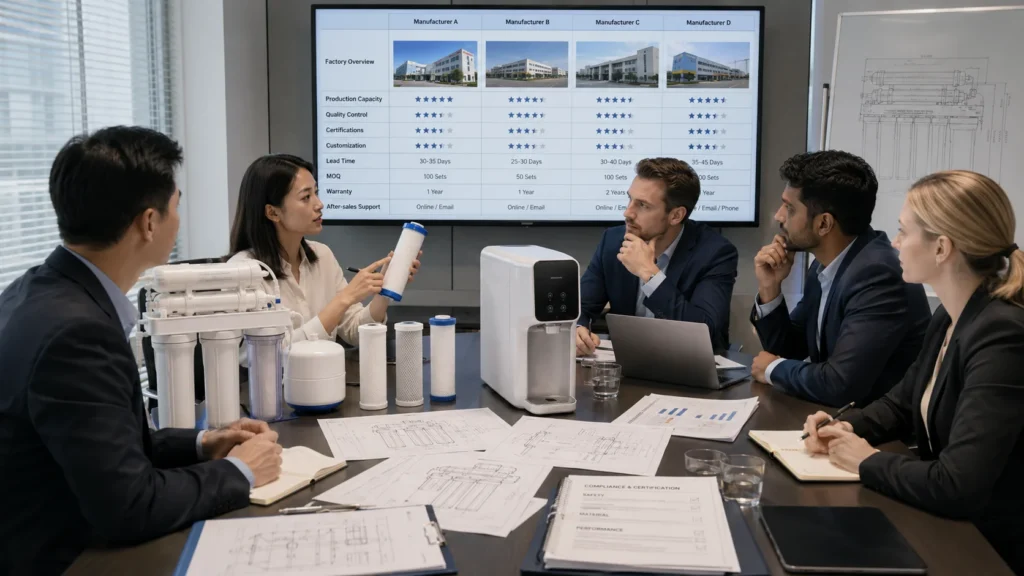
Are you losing OEM bids to faster competitors? Slow tooling and rigid designs kill deals. You must prove you can engineer custom solutions quickly and support long-term supply.
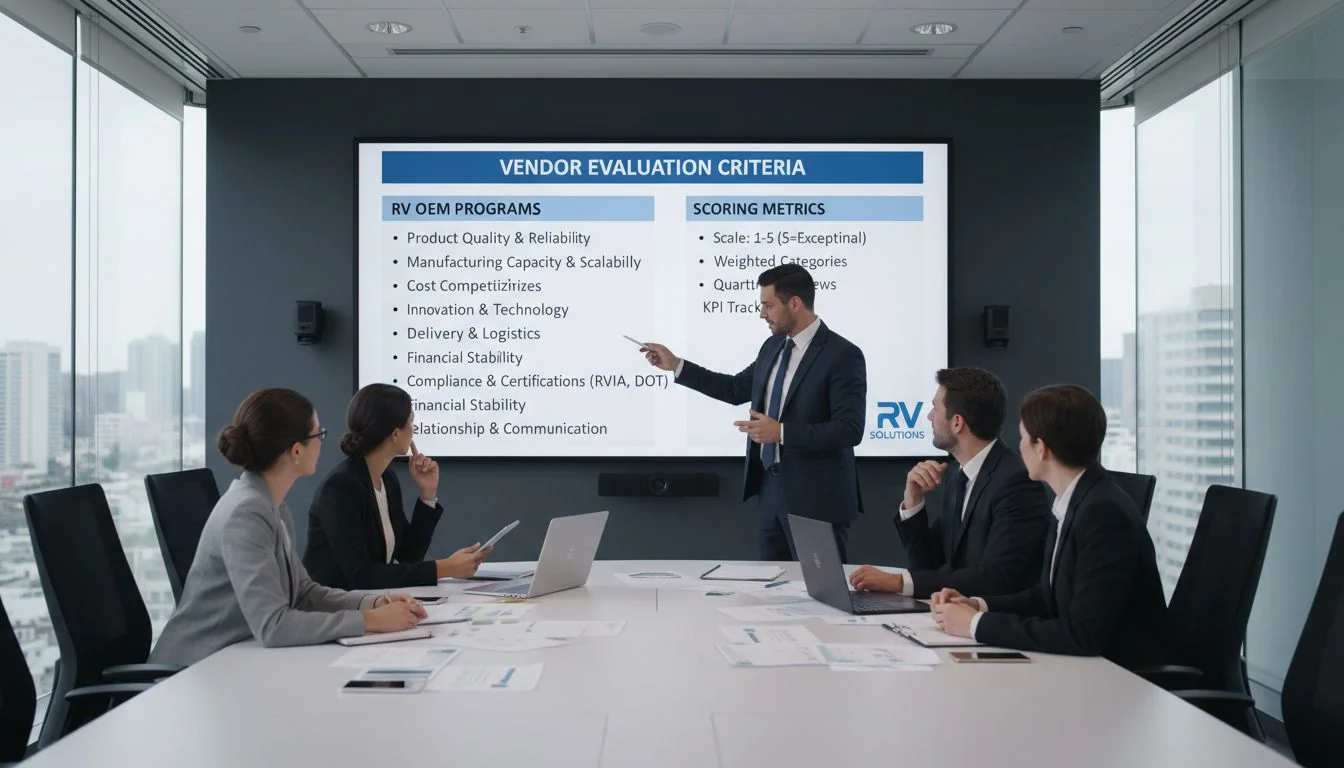
OEMs evaluate vendors on five key capabilities: fast custom form factor engineering, in-house tooling speed, private label branding, multi-year cartridge supply6 continuity, and seasonal manufacturing scalability. Vendors must design platform-specific units within 6 to 10 weeks and guarantee stable pricing over a 7 to 10-year lifecycle.
Winning the OEM Partnership
In my mold trading business, I learned that speed wins. OEMs need custom form factors fast. Every RV cabinet is different. If you can engineer a custom fit in 6 to 10 weeks, you become a strategic partner. If you only sell fixed catalog sizes, you will lose. You need in-house tooling to adjust cartridge sizes and fitting types quickly.
Top Vendor Evaluation Criteria
| Capacité | Why It Matters |
|---|---|
| Custom Engineering | Fits unique platform constraints in 6-10 weeks |
| Private Labeling | Matches OEM brand aesthetic |
| Supply Continuity | Secures 7-10 year replacement cartridge revenue |
| Capacity Scaling | Handles 30-50% seasonal demand surges |
OEMs also want their own logos on the filters. Custom branding helps them sell more. But the biggest factor is the replacement program. A 15,000-unit platform needs 15,000 new cartridges every year. You must support the dealer network with good margins and drop-ship logistics. You must also prove financial stability. The OEM needs you to be there for the entire 10-year life of the vehicle. You must show contractual discipline on tooling and pricing.
OEMs prefer vendors who only sell standard, fixed-size catalog products.Faux
OEMs prefer vendors who can engineer custom, platform-specific form factors within 6 to 10 weeks.
RV and marine OEM platforms experience seasonal demand surges.Vrai
Boat builders ramp up before spring, and RV builders before camping season, requiring vendors to flex production by 30-50%.
Conclusion
To win RV and marine OEM contracts, you must engineer compact, durable systems, meet strict certifications, and provide reliable, multi-year cartridge supply for their dealer networks.
References
-
Understanding NSF certifications is crucial for ensuring compliance and quality in water filtration systems. ↩
-
Understanding the benefits of factory-installed filtration can help you meet consumer expectations. ↩
-
Gaining insights into OEM procurement can help you navigate the RV manufacturing landscape. ↩
-
Learning about replacement cartridges can enhance your product offerings and customer satisfaction. ↩
-
Understanding compliance packages is vital for successfully launching water filtration products. ↩
-
Discover the importance of multi-year cartridge supply programs for maintaining water filtration systems. ↩


 English
  Français
  Español
  Italiano
  Deutsch
  Português
  Русский
  العربية
  日本語
日本語  한국어
한국어  Tiếng Việt

