

Sourcing humidifiers from China can feel overwhelming. You risk choosing the wrong partner, wasting time and money. I'm here to give you a clear roadmap to success.
The top 5 humidifier manufacturing hubs in China are the Pearl River Delta1 (Shenzhen, Dongguan), Guangzhou, the Yangtze River Delta (Shanghai, Suzhou), Central China (Anhui, Henan), and Southwest China (Chengdu, Chongqing). Each region offers unique strengths for different business needs.
Finding the right manufacturing partner is the most critical step for your business. After more than two decades in the air quality industry, I've seen firsthand how a supplier can make or break a brand. The location of your manufacturer says a lot about their capabilities, costs, and innovation potential. China is not a single, uniform market. It's a collection of powerful, specialized industrial clusters. Understanding these hubs is the first step to making a smart sourcing decision. Let's explore where you should look.
China produces over 70% of the world's home appliances, including humidifiers.Vrai
China's massive manufacturing infrastructure, integrated supply chains, and economies of scale have made it the global leader in home appliance production for decades.
All humidifier manufacturers in China offer the same low price.Faux
Costs and quality vary significantly by region. Premium hubs like Shanghai focus on high-end innovation, while central regions offer more cost-effective mass production.
Where Are China's Top 5 Humidifier Manufacturing Hubs Located?
Struggling to pinpoint the best region for your humidifier needs? The sheer number of options can be confusing, leading to poor sourcing choices. Let me break it down for you.
China's key humidifier hubs are concentrated in five main areas: the Pearl River Delta for electronics, Guangzhou2 for exports, the Yangtze River Delta for innovation, Central China for cost-effective scale, and the Southwest for emerging smart technology. Each has distinct advantages.
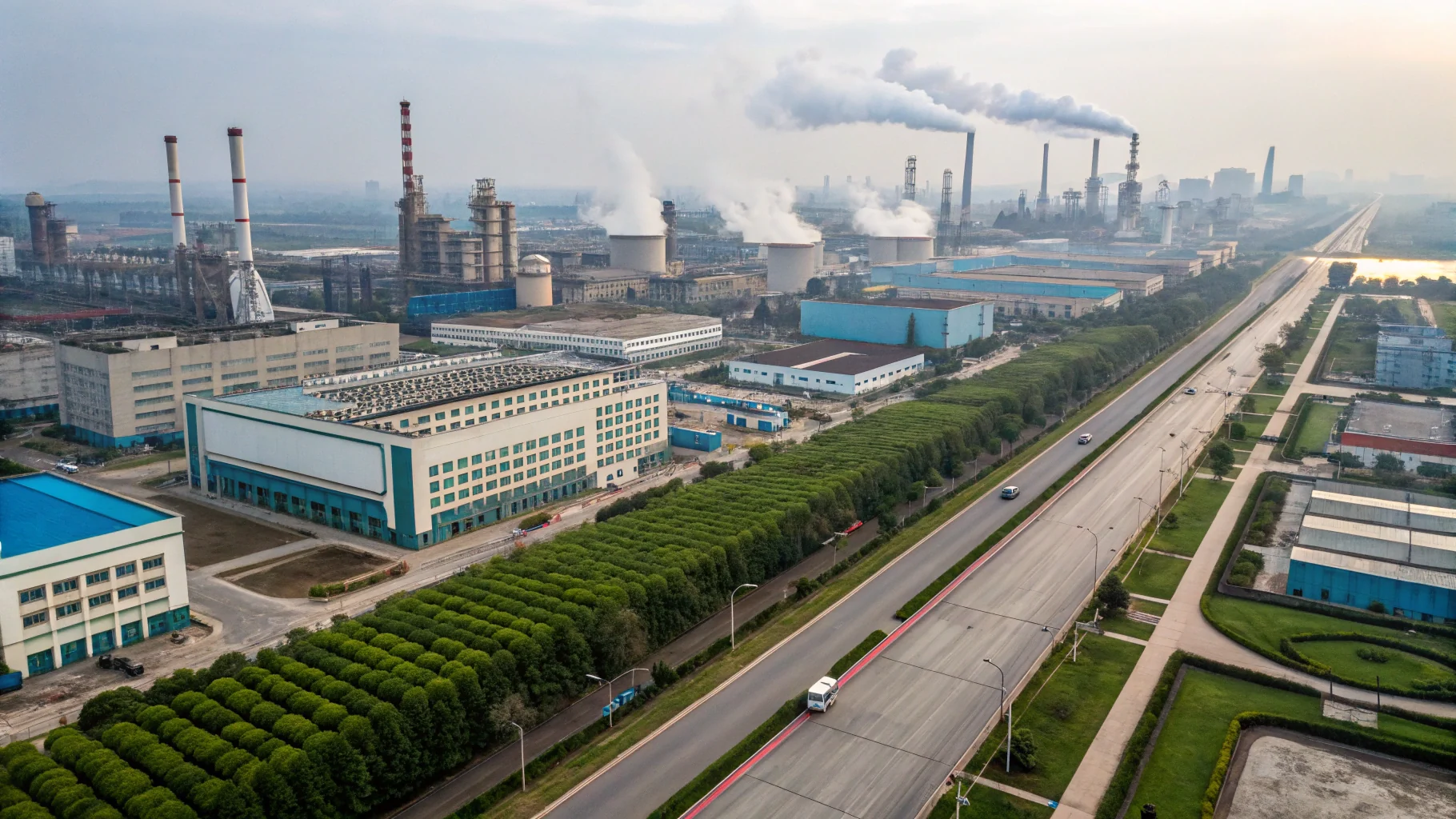
Since we started HisoAir in 2003, I've built relationships with partners across all these regions. Each one serves a different purpose in the global supply chain. Choosing the right one depends entirely on your product goals, whether you need a basic model in huge quantities or a high-tech smart humidifier. I'll guide you through the specific strengths of each hub so you can see which one aligns with your brand's vision.
1. Shenzhen & Dongguan (Pearl River Delta)
This area is the undisputed heart of electronics and home appliance manufacturing. I often call it the "Silicon Valley of Hardware." If your humidifier needs advanced electronic components, smart features, or seamless integration with apps, this is your go-to region. The supply chain here is incredibly mature. You can find everything from custom circuit boards to high-quality plastics within a few square miles. This concentration makes it perfect for OEM/ODM3 projects with international brands that demand speed and precision.
2. Guangzhou
Guangzhou is a powerhouse for export. Its biggest advantage is its proximity to the Canton Fair4, the world's largest trade fair. For decades, buyers from all over the globe have come here to find reliable suppliers. This has created a large cluster of mid-to-high-end humidifier producers who are experienced in international trade, logistics, and certifications. If you are looking for a partner who understands the demands of the global market, Guangzhou is a very safe bet.
3. Shanghai & Suzhou (Yangtze River Delta)
When I think of premium design and cutting-edge R&D, I think of the Yangtze River Delta5. This region is home to top universities and design firms, fostering a culture of innovation. Manufacturers here excel in producing high-end, aesthetically pleasing humidifiers with advanced features. They are also experts in navigating complex international standards like CE, RoHS, and ISO. If you are building a premium brand and quality is your top priority, this is the region to explore.
4. Anhui & Henan (Central China)
For businesses focused on volume and cost-efficiency, Central China6 has become a major player. These provinces offer lower operational costs and a large, stable workforce. Government policies have actively supported the growth of the appliance industry here. This makes Anhui and Henan ideal for mass production of reliable, mid-range humidifiers. They have the capacity to handle massive orders while keeping prices competitive.
5. Chengdu & Chongqing (Southwest China)
This is the emerging frontier for smart appliances. Driven by a strong domestic market and a growing pool of tech talent, the Southwest is quickly becoming a hub for IoT-enabled devices. Manufacturers here are agile and quick to adopt new technologies. If your brand is focused on connected, smart-home humidifiers, this region offers exciting opportunities for innovation and growth.
| Hub Location | Primary Strength | Best For |
|---|---|---|
| Pearl River Delta | Electronics & Supply Chain | Smart Humidifiers, OEM/ODM |
| Guangzhou | Export & Trade Fairs | Mid-to-High-End Global Brands |
| Yangtze River Delta | R&D7 & Premium Design | High-End, Innovative Products |
| Central China | Cost & Scale | Mass Market, Mid-Range Models |
| Southwest China8 | Emerging Tech & IoT | Next-Gen Smart Humidifiers |
The Canton Fair in Guangzhou is the largest trade fair in the world.Vrai
Established in 1957, the Canton Fair is the most comprehensive trade show in China, attracting hundreds of thousands of buyers from around the globe twice a year.
Shenzhen is only known for making phone cases.Faux
While it's a hub for accessories, Shenzhen is a global epicenter for all electronics, from drones and robots to advanced components for smart home appliances like humidifiers.
Why Does China Dominate the Humidifier Market?
You see "Made in China" on almost every humidifier. But have you ever wondered why this is the case? It's easy to assume it's just about low cost.
China's dominance comes from a powerful combination of a complete supply chain, massive economies of scale, strong government support, and a highly skilled workforce. This ecosystem makes production fast, efficient, and innovative.
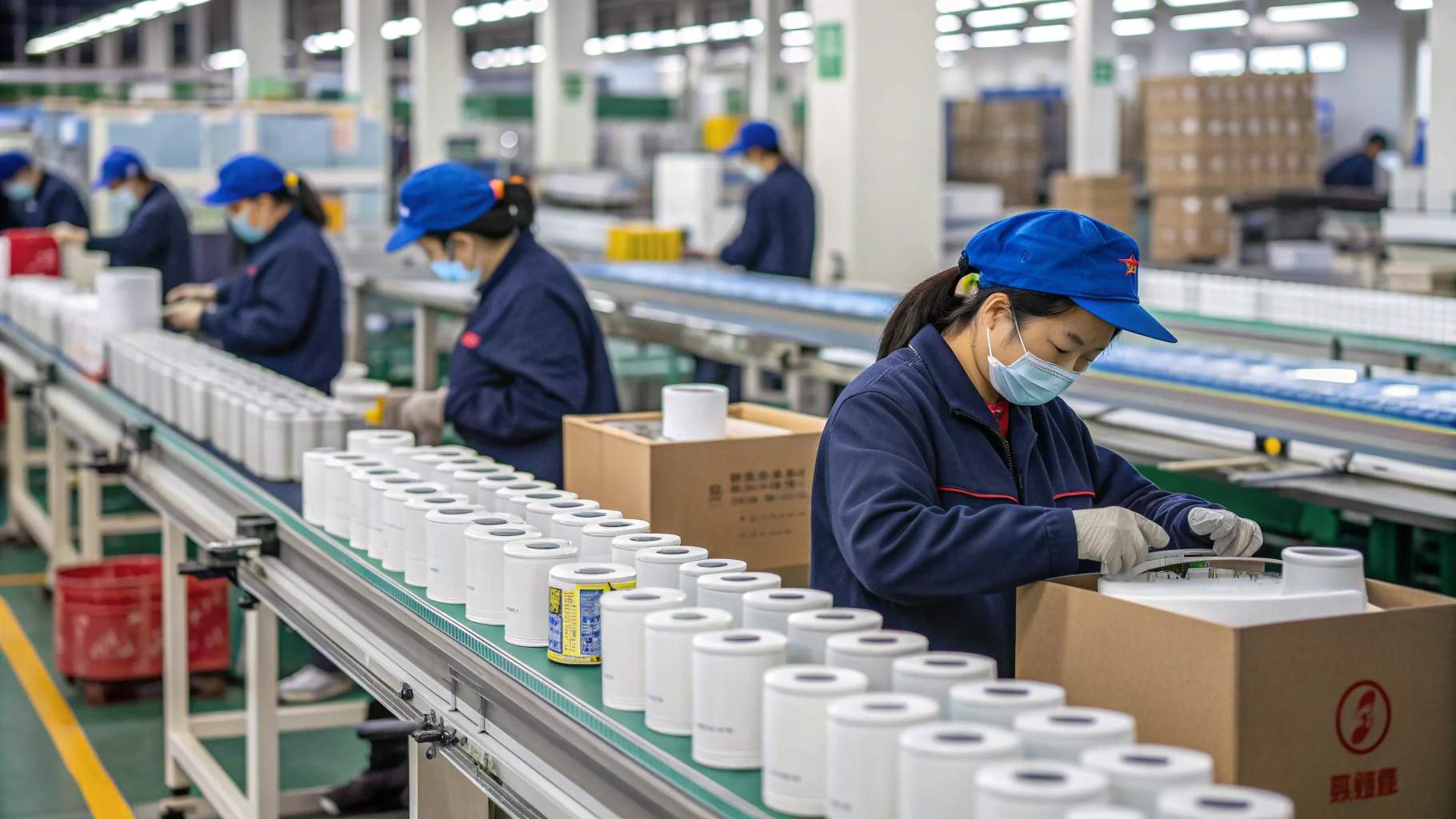
It's a question I get a lot from our B2B clients. The answer isn't just one thing; it's a system built over decades. I've witnessed this evolution myself. When we started, the focus was on simple manufacturing. Today, it's about a complete solution from raw material to Technologie intelligente9. This integrated approach is what gives Chinese manufacturers, including us at HisoAir, a significant edge. Let's break down these key advantages.
The Power of the Ecosystem
China's manufacturing strength isn't just about individual factories. It's about the entire ecosystem.
- Integrated Supply Chains: In a place like the Pearl River Delta, a factory can source every single component—from the plastic shell to the ultrasonic nebulizer and the smart chip—from suppliers located just a few miles away. This drastically reduces lead times and logistics costs.
- Economies of Scale: The sheer volume of production lowers the cost per unit for everything. Raw materials are purchased in bulk, and production lines are optimized for maximum output. This benefit is passed on to the customer, making prices highly competitive.
- Skilled Workforce: China has a vast and experienced workforce, not just for assembly but also for engineering, Contrôle de la qualité10, and supply chain management. This expertise ensures that complex products are built efficiently and to a high standard.
- Soutien du gouvernement : The government has strategically invested in infrastructure, technology parks, and export-friendly policies. This creates a stable and supportive environment for manufacturers to grow and innovate.
This combination means we can develop, prototype, and mass-produce a new humidifier model faster and more efficiently than almost anywhere else in the world.
China's manufacturing output is larger than that of the United States and Germany combined.Vrai
According to UN data, China has been the world's largest manufacturer by output for over a decade, accounting for nearly 30% of the global total.
Manufacturing in China is only about copying Western designs.Faux
While OEM/ODM is a large part of the industry, Chinese companies are now global leaders in R&D and patent filings, especially in areas like smart home technology and electronics.
How Does HisoAir Stand Out as a Leading Manufacturer?
With so many manufacturers, how do you choose the right one? You need a partner who offers more than just production. You need innovation, quality, and reliability.
HisoAir, established in 2003, combines two decades of experience with a commitment to innovation. We leverage China's manufacturing strengths while focusing on proprietary R&D, strict quality control, and customer-centric solutions.
When I founded HisoAir, my goal was not just to be another manufacturer. It was to provide "Innovative Air Quality Solutions." This has been our guiding principle ever since. We are not just an assembler; we are a technology partner for our clients. We understand the nuances of the global market and use our deep roots in China's manufacturing ecosystem to deliver superior products.
Our Commitment to Quality and Innovation
At HisoAir, we've built our reputation on three core pillars.
- Deep Industry Experience: Being in this business since 2003 means we've seen it all. We have navigated supply chain shifts, technological changes, and evolving market demands. This experience allows us to provide stable, reliable partnership to our B2B and D2C clients. We know what works.
- In-House R&D: We don't just follow trends; we help create them. Our dedicated research and development team works on creating more efficient, quieter, and smarter humidifiers. We invest in our own designs and technologies, giving our clients a unique edge in the market.
- Rigorous Quality Control: We implement a multi-stage quality control process. It starts with vetting raw material suppliers and continues through every step of the assembly line, all the way to final product testing. This ensures that every unit that leaves our factory meets the highest international standards and lives up to the HisoAir name.
We are proud to be a part of China's powerful manufacturing landscape, but we are defined by our own commitment to excellence.
HisoAir was founded in 2003.Vrai
Our company has over two decades of experience in the air quality solutions industry, providing a long history of reliability and expertise.
HisoAir only makes products for the Chinese domestic market.Faux
We are a global supplier with extensive experience serving B2B and D2C clients worldwide, meeting a wide range of international certification and market requirements.
Conclusion
Choosing the right manufacturing hub in China is vital. Each region offers unique benefits, and HisoAir is your expert partner to navigate them and deliver innovative air quality solutions.
References
-
Explore the unique strengths of the Pearl River Delta, a hub for electronics and supply chain efficiency. ↩
-
Discover why Guangzhou is a powerhouse for export and trade, making it ideal for global partnerships. ↩
-
Learn how OEM/ODM partnerships can enhance product development and market entry strategies. ↩
-
Find out how the Canton Fair connects global buyers with reliable suppliers in China. ↩
-
Learn about the innovation and design excellence in the Yangtze River Delta, perfect for high-end products. ↩
-
Understand the cost advantages and production capabilities of Central China for mass-market humidifiers. ↩
-
Discover the role of research and development in creating innovative and competitive humidifier products. ↩
-
Explore the exciting developments in smart technology and IoT from the Southwest China region. ↩
-
Explore the latest trends in smart technology that are revolutionizing the humidifier market. ↩
-
Understand the importance of rigorous quality control processes in ensuring product reliability and safety. ↩







 English
  Français
  Español
  Italiano
  Deutsch
  Português
  Русский
  العربية
  日本語
日本語  한국어
한국어  Tiếng Việt

