
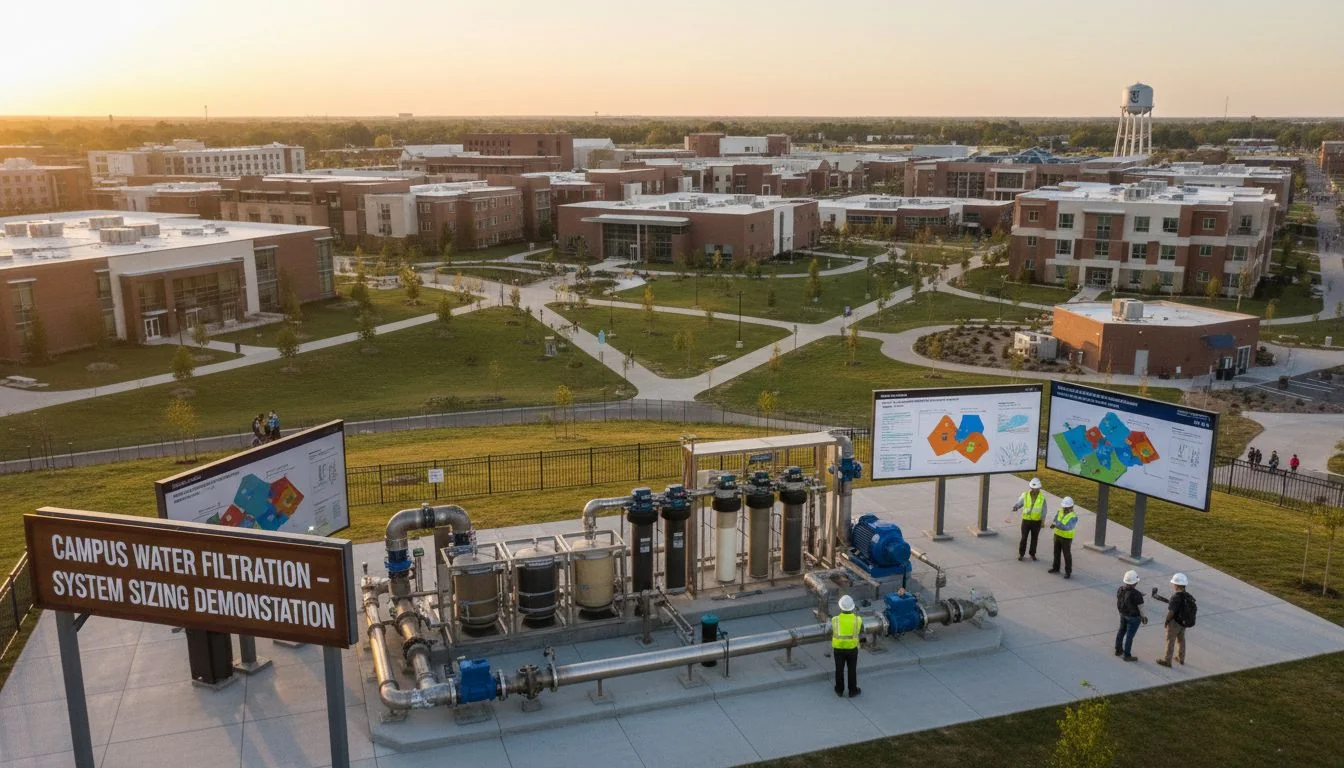
Are your campus water filters clogging too fast? This causes low water pressure and angry students. I will show you how to size these systems the right way.
To size a water filtration system for a residence hall, you must calculate the total student population, identify peak usage times, and determine the required flow rate in gallons per minute. This ensures steady water pressure and sets a predictable maintenance cycle1.

I learned early in my engineering career that guessing numbers always leads to failure. If you want to stop replacing filters every week and build a system that actually works, you need to follow a strict calculation process.
You can guess the size of a water filter based on the size of the building.False
Building size does not equal water demand. You must calculate based on the actual student population and peak flow rates.
Peak usage times directly determine the required flow rate of a water system.True
Systems must be sized to handle the maximum amount of water drawn at the busiest time of day.
Why Sizing Drives Cost and Student Satisfaction?
Do you buy the biggest filter just to be safe? That wastes money. But a small filter breaks down fast. Proper sizing balances your budget and keeps students happy.
Sizing drives cost because oversized systems waste money on unused capacity and expensive parts. Undersized systems cost more in frequent maintenance and replacement filters. Correct sizing gives you the best flow rate for the lowest long-term cost.

The Balance Between Capacity and Budget
In my mold design business, I always tell clients that over-engineering wastes money. The same rule applies to water systems. If you buy a massive commercial filter for a small common area, you pay too much upfront. You also pay more for replacement parts. But if you go too small, the filter clogs quickly. This drops the water pressure. Students will complain immediately.
You must look at the total cost of ownership2. This includes the initial price and the maintenance cycle. A well-sized system runs smoothly for months before it needs a new filter. I use a simple matrix to explain this to my engineering team.
| System Size | Upfront Cost | Maintenance Cost | Student Satisfaction |
|---|---|---|---|
| Undersized | Low | High | Low (Low pressure) |
| Oversized | High | Low | High (But wastes money) |
| Correctly Sized | Medium | Medium | High (Steady pressure) |
You want to hit that middle row every time. It keeps your project on budget and your users happy.
Oversized water systems are always the best choice for campus buildings.False
Oversized systems waste money on high upfront costs and expensive replacement parts that you do not need.
Undersized systems lead to low water pressure and frequent maintenance.True
When a filter is too small for the demand, it clogs faster and restricts water flow.
How to Estimate Demand for Residence Halls and Common Areas?
Are you struggling to figure out how much water a building uses? Guessing leads to bad designs. You must count the people and the water fixtures to get real numbers.
To estimate demand, count the total number of students living in the hall. Next, count all water fixtures like sinks, showers, and drinking fountains. Multiply the number of fixtures by their standard flow rates to find the maximum possible water demand.

Counting People and Fixtures
You cannot design a system without knowing the load. In mechanical engineering, we always start with the maximum load. For a residence hall, the load is the water demand. First, look at the population. A dorm with 500 students needs a lot more water than a common area that sees 50 students a day.
Next, you must map out the locations of all water fixtures. You need to know exactly how many showers, toilets, and sinks are in the building. Each fixture has a specific flow rate. We measure this in gallons per minute (GPM). I always make a list of these fixtures before I do any math.
| Fixture Type | Average Flow Rate (GPM) | Usage Frequency |
|---|---|---|
| Shower | 2.0 to 2.5 | High |
| Bathroom Sink | 1.0 to 1.5 | High |
| Drinking Fountain | 0.5 | Medium |
| Kitchen Sink | 1.5 to 2.0 | Low |
When you add up the GPM of all fixtures, you get the absolute maximum demand. But remember, not every fixture runs at the exact same time. We will adjust this number later.
You only need to know the building size to estimate water demand.False
You must know the student population and the exact number of water fixtures to estimate demand.
Each water fixture has a specific flow rate measured in gallons per minute.True
Fixtures like showers and sinks are rated by how many gallons of water they output per minute.
What Are the Peak Usage Patterns on a Campus?
Do you know when students use the most water? If you miss the peak times, your system will fail. Campus life has very specific daily routines you must plan for.
Campus peak usage happens in the morning before classes and in the early evening. This differs from military barracks where everyone wakes up and showers at the exact same time. Campus usage is slightly more spread out, which lowers the absolute peak flow rate requirement.
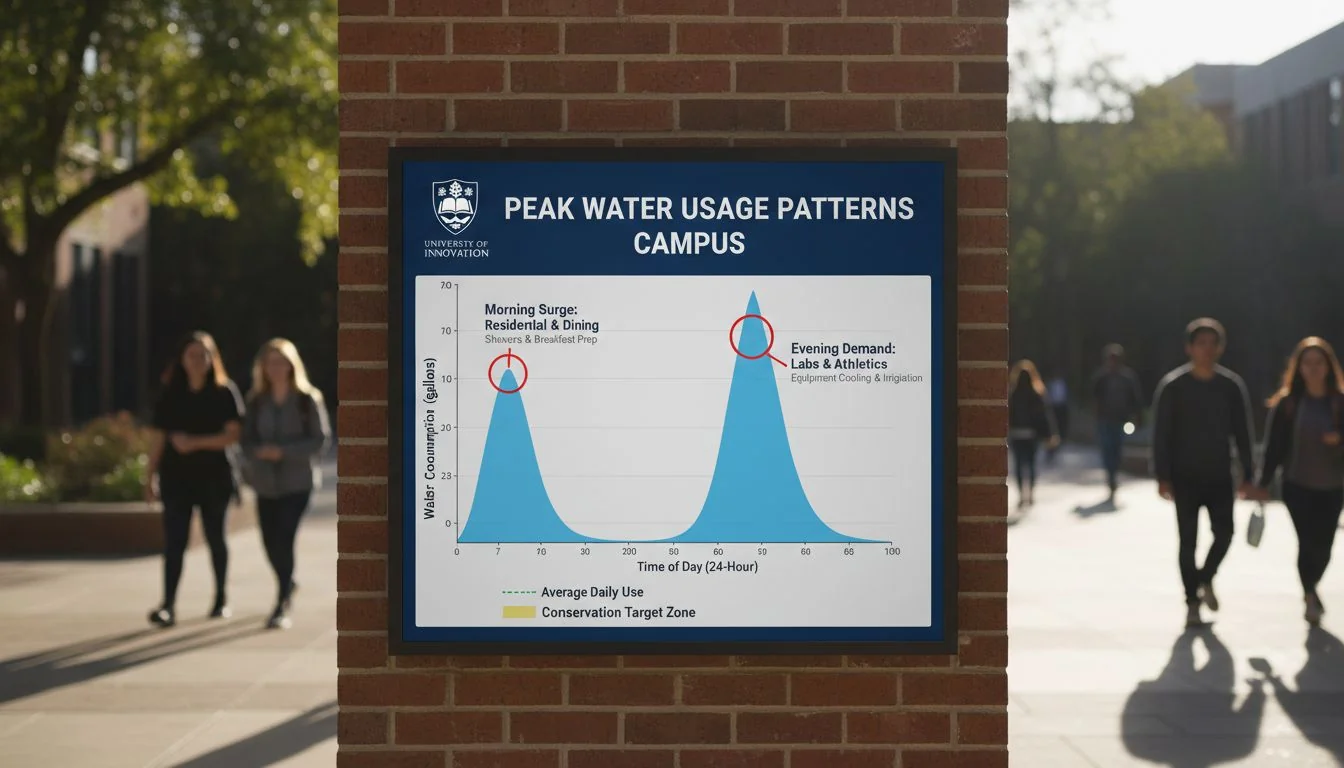
Campus vs. Barracks Usage
Understanding peak periods is critical. I once helped a client who treated a college dorm like a military barracks. That was a big mistake. In a barracks, 500 soldiers wake up at 5:00 AM. They all shower at the exact same time. The peak flow rate is massive.
A college campus is different. Students have different class schedules. Some wake up at 7:00 AM. Others sleep until 10:00 AM. The morning peak period is spread over three or four hours. This means the peak flow rate is lower than a barracks, even with the same population.
You must design for this specific campus curve. If you use barracks math for a campus, you will oversize the system and waste money.
| Facility Type | Peak Period Duration | Peak Flow Multiplier |
|---|---|---|
| Military Barracks | 1 Hour (Very narrow) | 0.8 (80% simultaneous use) |
| Residence Hall | 3 to 4 Hours (Spread) | 0.4 (40% simultaneous use) |
| Common Area | All Day (Random) | 0.1 (10% simultaneous use) |
Always use the correct multiplier for your specific location. This keeps your engineering calculations accurate and your costs down.
College students and military soldiers have the exact same water usage patterns.False
Soldiers use water at the exact same time, while student usage is spread out over several hours.
A spread-out peak period lowers the maximum flow rate requirement.True
When people use water at different times, the system does not need to supply as much water all at once.
Which Water Quality Inputs Affect System Selection?
Is your local water full of dirt or sand? High sediment ruins filters fast. You must test the incoming water quality before you choose your filtration equipment.
Water quality inputs like turbidity, sediment levels, and mineral content directly affect system selection. High sediment requires a heavy-duty pre-filter to catch large particles. If you ignore these inputs, your main filters will clog quickly, and your maintenance cycle will become too short and expensive.
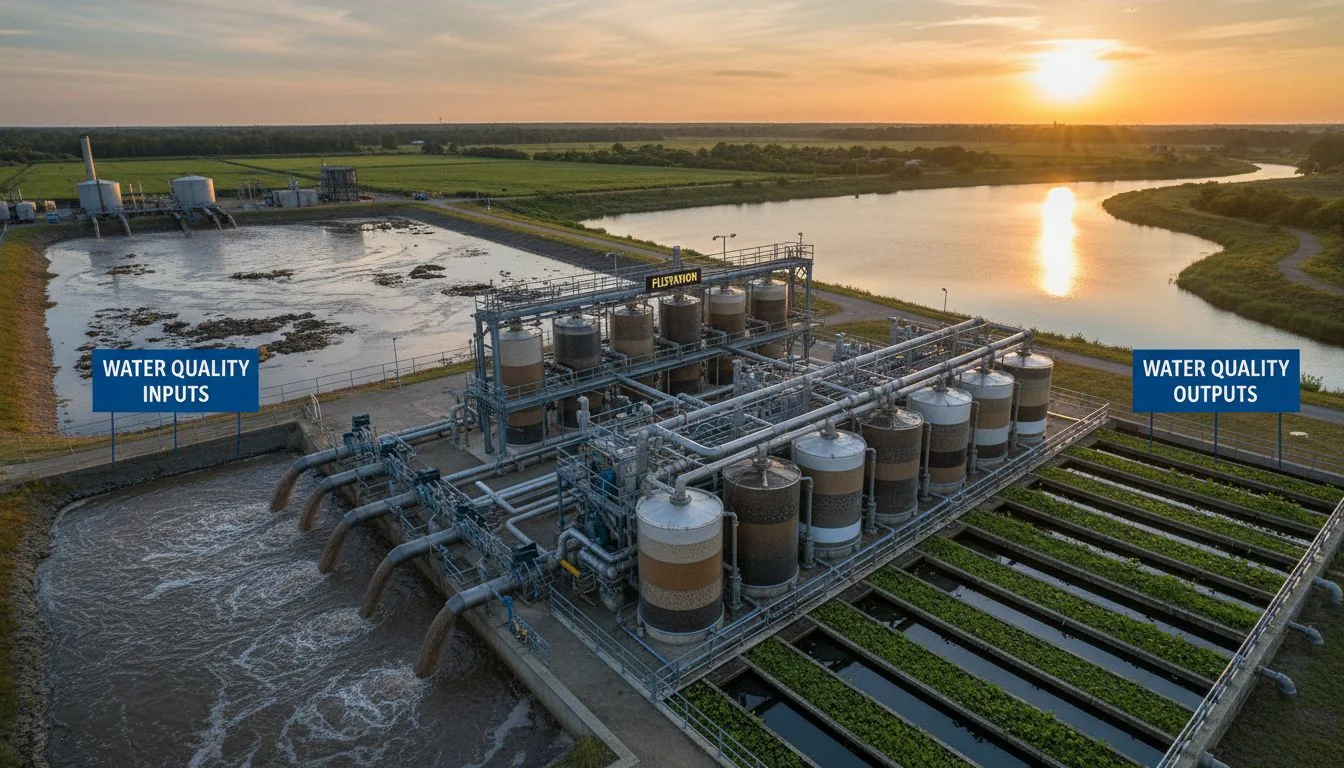
Designing for Local Water Conditions
You cannot pick a filter based on flow rate alone. You must look at the physical properties of the water. This is just like choosing the right steel for a mold. If the material is wrong, the tool breaks.
We only look at physical sizing factors here, not health impacts. The main factor is sediment. If the city water has high turbidity, it carries a lot of dirt. This dirt will blind a fine filter in days. To fix this, you must add a pre-filter. A pre-filter catches the big dirt. This protects the expensive main filter and extends your maintenance cycle.
| Water Condition | Physical Impact on System | Required System Adjustment |
|---|---|---|
| High Sediment | Clogs fine filters rapidly | Add a 50-micron pre-filter |
| High Hardness | Causes scale buildup on pipes | Add a scale inhibitor stage |
| Clear City Water | Normal filter wear | Standard single or dual stage |
Always test the water first. Knowing the sediment load helps you calculate exactly how many months a filter will last before you must change it.
You can use the exact same filter setup for any city water supply.False
Different cities have different sediment levels, which require different pre-filter setups to prevent clogging.
A pre-filter catches large dirt particles to protect the main filter.True
Pre-filters remove heavy sediment first, which extends the life of the more expensive fine filters.
How Does a Worked Sizing Example for a Typical Residence Hall Look?
Do you want to see the actual math? Let us walk through a real calculation. This worksheet will show you exactly how to find the right system size.
For a 200-student hall, assume 100 showers at 2 GPM each. Total maximum flow is 200 GPM. Using a campus peak multiplier of 0.4, the required peak flow is 80 GPM. You must size your filtration system to handle 80 GPM continuously during the morning rush.
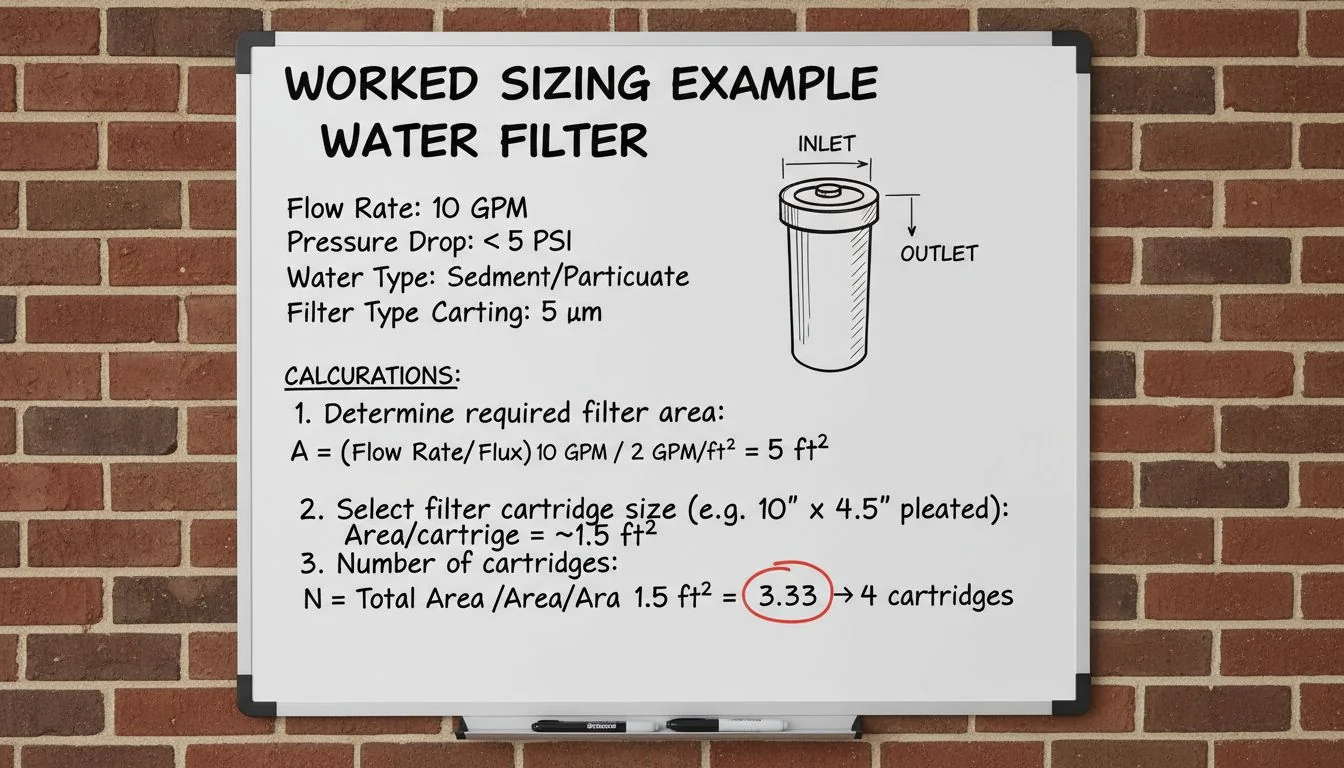
The Engineering Calculation Worksheet
I love using worksheets. They remove the guesswork from engineering. Let us build a simple calculation worksheet for a typical residence hall. This will help you generate accurate technical specs.
Imagine a building with 200 students. We count 100 showers and 100 sinks. We need to find the peak flow rate.
First, calculate the maximum possible flow.
100 showers x 2.0 GPM = 200 GPM.
100 sinks x 1.0 GPM = 100 GPM.
Total maximum flow = 300 GPM.
Next, apply the campus peak multiplier. We know students do not all shower at once. We use a 0.4 multiplier for residence halls.
| Calculation Step | Formula | Result |
|---|---|---|
| 1. Max Shower Flow | 100 x 2.0 GPM | 200 GPM |
| 2. Max Sink Flow | 100 x 1.0 GPM | 100 GPM |
| 3. Total Max Flow | 200 + 100 | 300 GPM |
| 4. Apply Multiplier | 300 GPM x 0.4 | 120 GPM Peak |
Your system must handle 120 GPM. If you buy a system rated for only 60 GPM, the water pressure will drop by half during the morning rush. This simple math saves you from making huge mistakes.
You must size the system to handle 100% of all fixtures running at the same time.False
You apply a peak multiplier because not every fixture is used at the exact same moment.
A calculation worksheet helps prevent undersizing the water filtration system.True
Using exact math and multipliers ensures the system can handle the actual peak flow rate.
What Sizing Information Should You Hand to Your Supplier?
Are you ready to order your system? Do not just ask for a quote. You must give your supplier specific engineering data so they build exactly what you need.
Hand your supplier a document detailing the peak flow rate in GPM, the pipe connection size, the local water sediment levels, and your target maintenance cycle. This data ensures the supplier selects the correct housing size and filter cartridges for your specific campus building.

Creating a Clear Technical Inquiry
When I ran my trading company, I saw many bad inquiries. A client would say, "I need a filter for a big building." That means nothing to an engineer. You must provide hard data. If you give bad data, you get a bad product.
You need to hand your supplier a clear specification sheet. This sheet must include your calculated flow rates and your physical constraints. Tell them how often you want to change the filters. If you want a six-month maintenance cycle, they must provide larger filter housings to hold more dirt.
| Specification | Why the Supplier Needs It | Example Data |
|---|---|---|
| Peak Flow Rate | To size the pipe and housing | 120 GPM |
| Pipe Size | To match your building plumbing | 2-inch Copper |
| Sediment Level | To choose the pre-filter micron rating | High Turbidity |
| Maintenance Cycle | To calculate total dirt holding capacity | 6 Months |
When you hand this table to a supplier, they know you are a professional. They will give you an accurate quote and a system that actually works for your residence hall.
Telling a supplier the building is large is enough information to get a quote.False
Suppliers need exact engineering data like peak GPM and pipe size to quote the right system.
Your target maintenance cycle affects the physical size of the filter housing.True
A longer maintenance cycle requires a larger housing to hold more dirt before it clogs.
Conclusion
Properly sizing a water filtration system requires accurate population counts, peak flow calculations, and clear supplier communication. Use these engineering steps to keep costs low and student satisfaction high.





 English
  Français
  Español
  Italiano
  Deutsch
  Português
  Русский
  العربية
  日本語
日本語  한국어
한국어  Tiếng Việt

